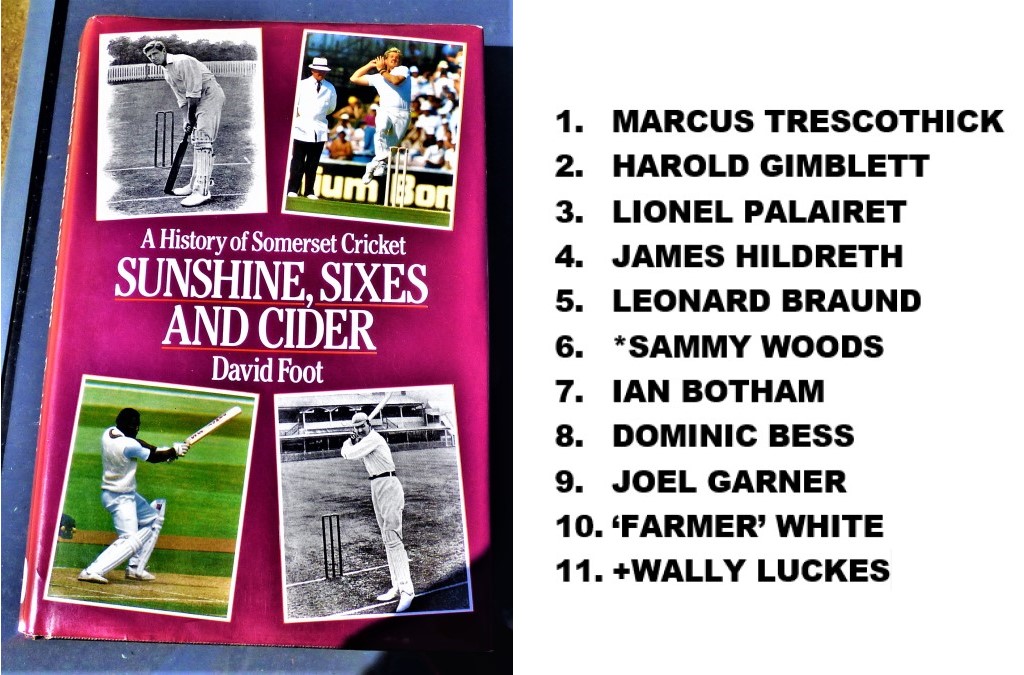
All Time XIs – Yorkshire

Continuing my all-time XIs series with Yorkshire.

INTRODUCTION

This is the fourth all-time XI post I have done (Surrey, Gloucestershire and Worcestershire were the first three). I have an ancestral connection to Yorkshire, and I lived in Barnsley for six years. As you would expect of the county that has by far the most outright championships (32 at the present time), there is a positive embarrassment of riches to choose from.

YORKSHIRE ALL TIME XI

  1. Herbert Sutcliffe – a big occasion player, as witnessed by the progression of his averages (overall FC 52.02, overall test 60.73, Ashes 66.85), he also overlapped for a few years at first class level and rather longer at club level (both were raised in Pudsey) with the person I have chosen as the other opener. He could claim that both World Wars affected his career since the first prevented his entry into first class cricket until he was 24, and the second led to his retirement from the game (and his 1939 performances were not those of a man preparing to lay aside his bat for the last time, though resuming after a six season layoff when past the age of 50 was obviously not going to happen). He tallied over 50,000 first class runs in total with 149 centuries.
  2. Leonard Hutton – a man who averaged 56.7 in test cricket and was also hugely productive in first class cricket, in spite of missing six of what would have been prime development years to World War II, from which he emerged with one arm shorter than the other due a training accident. In 1953 as captain he regained the Ashes which had been in Australian hands since Woodfull’s 1934 triumph, and eighteen months later he led England to victory down under.
  3. David Denton – in the first decade of the 20th century only one Yorkshire cricketer gained England selection purely on the strength of batting skill, and that person was David Denton. He was known as ‘lucky’ Denton because he seemed to benefit from plenty of dropped chances but there are two counters to that, firstly there is Napoleon’s “give me a lucky general rather than a good one”, and secondly people noticed him benefitting from dropped chances for the very simple reason that he made it count when such occurred.
  4. Maurice Leyland – a left handed bat and a bowler of ‘chinamen’, he scored heavily for both Yorkshire and England.
  5. Joe Root – the current England test captain, and a bat of proven world class, though his off spin would not see much use in this team, and you will note that I have not named as captain of this team.
  6. George Hirst – rated by his long time county captain Lord Hawke as the greatest of all county cricketers, he batted right handed and bowled left-arm pace. He achieved the season double of 1,000 runs and 100 wickets in first class matches 14 times, 10 of them in successive seasons. In each of 1904 and 1905 he had over 2,000 runs and 100 wickets, and in 1906 uniquely he had over 2,000 runs and 200 wickets. He was also noted for his fielding at mid-off.
  7. *Wilfred Rhodes – the other of the ‘Kirkheaton twins’, a right handed bat and slow left arm bowler with over 4,000 first class wickets and almost 40,000 first class runs in his career, the longest ever test career in time terms (31 and a half years between his first and last appearances) his astonishing career linked the era of Grace with that of Bradman. I have named as captain because although being a humble professional he never officially had the job I believe he would have been excellent at it- when asked about Percy Chapman as England captain Rhodes said “‘ee wor a good ‘un – he allus did what me an’ Jack telt him”.
  8. Tom Emmett – a left arm pace bowler who took his wickets very economically and was a good enough wielder of the willow to have a first class hundred at a time when they were not easy to come by. He accounted for W G Grace 36 times (as well as Gloucs v Yorks, there were fixtures such as North v South, Gentlemen vs Players etc, so top cricketers came up against one another frequently) and was highly rated by ‘The Doctor’.
  9. Fred Trueman – “T’finest bloody fast bowler that ever drew breath” at least in his own oft stated opinion, and it was close enough to true for the exaggeration to be pardonable. He was the first to take 300 test wickets, and in a 20 year first class career he bowled an average of 800 overs per year. He could also handle a bat and was a good fielder.
  10. Schofield Haigh – a right arm quick medium/ off cutter bowler and lower order bat who sometimes made useful contributions. He often bowled devastatingly in tandem with Hirst and/or Rhodes.
  11. +David Hunter – the only non-international in the XI, he made 1,200 dismissals as Yorkshire wicket keeper, and with the depth of the batting in this side I felt it right to go for the best wicket keeper irrespective of batting ability.

There are a stack of players who could have merited inclusion but for the limit of 11. Among the openers Louis Hall, Jack Brown and Percy Holmes (partner of Herbert Sutcliffe in 74 century opening stands, 69 of them for Yorkshire) could all have been considered, while Brian Close would have his advocates in the middle order, as would various others. Off spinning all rounders Ted Wainwright and Billy Bates could have had a place, and there are a number of slow left armers who could have been given the nod – any of Ted Peate, Bobby Peel, Hedley Verity, Johnny Wardle or Alonzo Drake. Among the faster bowlers for whom no space could be found were George Freeman, Emmett’s regular opening partner for a few years, who took his first-class wickets at less than 10 a piece, George Macaulay, Emmott Robinson, Darren Gough and Chris Silverwood, all of whom might have their advocates. Similarly I could have given the gloves to Arthur Dolphin, Arthur Wood (“always wor a good man for a crisis” when coming in at 770-6 at the Oval in 1938), Jimmy Binks, David Bairstow or Jonny Bairstow. One big name who I refuse to call unlucky to miss out is Geoffrey Boycott – I pick teams to win, not to draw, and Yorkshire’s record in the two seasons in which Boycs averaged over 100 is testimony to the problems his approach created in that regard. Undoubtedly he has the best career record of anyone I have neglected to pick for one of these teams, but too often his runs were not made in a winning cause. I try to balance my sides as well as possible, and in the one I chose I have five top of the range batters, two of the greatest all-rounders to ever play the game, three great and contrasting bowlers and a super gloveman. The bowling options include two different types of left arm pace (Emmett and Hirst), right arm pace (Trueman), right arm medium fast (Haigh), left arm spin (Rhodes), left arm wrist spin (Leyland) and at a push off spin in the person of Root and right arm  leg spin courtesy of Hutton. Also, if I am going to err in selecting a side it will be in the direction of stronger bowling rather than stronger batting – you will note that both two actual overseas players I have picked in previous posts and the potential one that I mentioned in the Surrey post are all bowlers. There are examples of teams with less than stellar batting but excellent bowling being big winners – Yorkshire in several of their most outstanding periods, Surrey in the 1950s and a few others, but there are few examples of the converse. Sussex in the the first decade of the 20th century had a powerful batting line up, with Fry and Ranjitsinhji among the all time greats and Joe Vine are top drawer opening partner for Fry plus a few other useful contributors, but they never came close to being champions because they did not have the bowling to press home the advantage that batting should have given them.

PHOTOGRAPHS

P1310397 (2)P1310398 (2)P1310399 (2)P1310400 (2)P1310401 (2)

P1310402 (2)
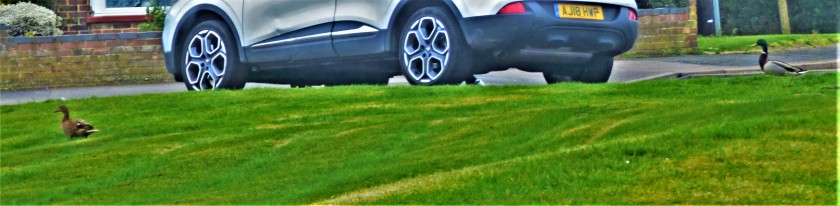
The cars in the background are parked, not travelling anywhere.

P1310403 (2)P1310404 (2)P1310405 (2)P1310406 (2)

All Time XIs – Worcestershire

Continuing my series of all time XIs with Worcestershire.

INTRODUCTION

Welcome to the next post in my series of All Time XIs. Today, following from the opening post which featured Surrey and the second about Gloucestershire the focus is on Worcestershire.

WORCESTERSHIRE

  1. Peter Richardson – an England opener in the 1950s, and an obvious choice for this side.
  2. Don Kenyon – from the same sort of era is Richardson, and unlucky not to play more international cricket than he did.
  3. Graeme Hick – a massively prolific batter at county level who was badly mishandled at international level. The rules of qualifying for England by residence were changed in his favour and he was then rushed into the side at the first opportunity, struggled badly against a four-pronged West Indies pace attack and was then left out of the one-off match against Sri Lanka which should have been earmarked for his debut. He never fully recovered from this at the top level and finished with a test average of 31. He is the only person to have scored first class triple centuries in three different decades (1980s, 1990s and 2000s), although W G Grace scored two of his three in 1876 and the third in 1896.
  4. Reginald Foster – a superb middle order batter who had the big occasion temperament – 171 in the Varsity Match, a century in each innings for the Gentlemen against the Players in 1900 and 287 on test debut at Sydney (one of two records he still holds, and the other of being the only man to captain full England teams at both cricket and football will definitely remain his).
  5. Wilfrid Foster – a second member of an extraordinary family, seven brothers from which played for the county. I have opted for him in spite of his brief career rather than his brother H K Foster because he and brother Reginald once achieved a family double of each scoring two centuries in the same game – proof of how well they could bat together (this dual feat of high scoring was later emulated by Ian and Greg Chappell playing for Australia against New Zealand).
  6. Basil D’Oliveira – attacking middle order batter and useful medium pacer who came late to first class cricket due being born in apartheid South Africa with non-white skin. With all due respect to Kevin Pietersen’s astounding Ashes clinching innings of 2005 he remains the author of the most influential innings of 158 ever to be played at The Oval – his effort triggered a series of events that led to South Africa spending a quarter of a century in cricketing isolation. Test series between England and South Africa are (when circumstances permit) contested for the D’Oliveira Trophy, currently in English hands after a very convincing victory in South Africa just a few months ago.
  7. +Steve Rhodes – a fine wicketkeeper.
  8. Robert Burrows – a speedster who still holds the record for sending a bail the furthest distance from the stumps (67 yards and six inches) and also capable of useful contributions with the bat.
  9. *Norman Gifford – a slow left arm bowler who played for Worcestershire and Warwickshire at different stages of his very long career.
  10. Len Coldwell – a medium pacer who spearheaded Worcestershire’s bowling the first two times they won the county champtionship (in 1964 and 1965, by which time Coldwell had already been on an Ashes tour).
  11. Glenn McGrath – my overseas player, he would of course open the bowling, probably with Coldwell, possibly with Burrows. The second highest tally of test wickets by a pace bowler (behind James Anderson)

I could have picked any number of fast-medium bowlers who have played for Worcestershire down the years, but I think that Burrows’ outright speed combined with the control of Coldwell and McGrath would work well, with Gifford providing the main spin option. D’Oliveira and Hick could also both bowl some overs, and each would bring something different to the table in that department. The batting also looks solid.

PHOTOGRAPHS

Here are a few of my latest…

P1310358 (2)

P1310364 (2)
The first jay of 2020 (two pics)

P1310365 (2)P1310367 (2)P1310369 (2)P1310370 (2)P1310372 (2)P1310380 (2)P1310390 (2)

P1310391 (2)
The first bee of 2020 (photographed while out getting my exercise for the day).

P1310393 (2)

All Time XIs – Gloucestershire

The next in my series of “All time XI’ posts, this time looking at Gloucestershire.

INTRODUCTION

Welcome to the continuation of my all-time XIs series that I started with my previous post on here. I started with Surrey, having grown up in south London. I am now moving west to the county of my birth, Gloucestershire.

GLOUCESTERSHIRE ALL TIME XI

  1. *W G Grace – his record was quite simply astonishing, and he was in many ways the creator of modern cricket. His apparently moderate test record is redeemed by the fact that he was 32 when he made is debut in the first test match on English soil in 1880 and almost 51 when he bowed after the opening match of the 1899 series at Trent Bridge. Gloucestershire was named as Champion County in 1876 and 1877 when he was in his prime. He is the first name on the team sheet for a Gloucetsershire all-time XI not just in terms of his place in the batting order, but in terms of selection.
  2. Charlie Barnett – an attack minded opener, who in the Trent Bridge test match of 1938 was 98 not out by lunch on the first day (yes, he did complete that ton).
  3. Tom Graveney – over 47,000 runs and 126 centuries in first class cricket, and apparently an incredibly stylish player as well. I have a set a rule for this series that I will pick a player for only one county, so although in the latter part of his career he played there Graveney will not feature in my Worcestershire XI (note to the proprietor of the fulltoss blog I have already selected this squad).
  4. Walter Hammond – the third leading all-time scorer of first class centuries, with 167 in all, of which 36 were doubles, including four triples. In 1927 after missing a whole season due to illness he came out and scored over 1,000 runs in May, starting that season on May 7th and reaching his 1,000th run on May 28th. In the winter of 1928-9 he was the batting star of the Ashes series, racking up 905 runs at 113.125 including 251 at Sydney, 200 not out at Melbourne and twin tons at Adelaide.
  5. Charles Townsend – a middle order batter and leg spin bowler who in 1899 became only the second first-class cricketer after W G Grace to score 2,000 runs and take 100 wickets in the same season, also the first half of the first father and son pair to both represent England.
  6. Gilbert Jessop – the most consistently aggressive and fast scoring batter ever (see this post – and bear in mind that for almost his whole career a ball had to be sent out of the ground to count six), an intelligent pace bowler (in 1900 he emulated Grace and Townsend by scoring 2,000 runs and taking 100 wickets in a first class season) and a fielder who was reckoned to be worth at least 30 runs an innings to his side in that department.
  7. Mike Procter – attacking middle order bat and superb fast bowler, my choice as overseas player.
  8. +Jack Russell – a brilliant wicket keeper, and the sight of him coming in at no 8 after the top seven above would not be a welcome one to any opposition bowlers. He was one of two English cricketers whose stocks unequivocally rose during the disastrous 1989 Ashes, Robin Smith being the other.
  9. David Lawrence – a genuinely fast bowler whose England chances were spoiled by injury and the fact that the selectors of the day were always too cowardly to select him and Devon Malcolm in the same side
  10. Charlie Parker – a slow left armer who took more first class wickets than anyone other than Freeman (3,776) and Rhodes (4,187). He did the hat trick six times in first class cricket, including a spell in his benefit match when he hit the stumps five times in succession, but the second was called no-ball.
  11. Tom Goddard – the leading first class wicket taker among off spinners, with 2,979 scalps in his career (5th all-time). He started as a fast bowler, and indeed took a hat trick in that style, before deciding that he did not enough of a future with that style, and remodelling himself as an off-spinner.

Probably unluckiest of all those who missed out was Reg Sinfield, a top order batter and off spinner, who would certainly by 12th man for me. Also slow left armer George Dennett who took over 2,000 first class wickets without ever gaining international recognition. Arthur Milton, Martin Young and Bill Athey all got to bat for England in their day. Courtney Walsh was also a possible overseas player, but I am limiting myself to one overseas player per XI, and I think that the multi-dimensional Procter has a clear advantage over genuine no11 Walsh. However my chosen combo has an awesome balance – Procter and Lawrence to take the new ball, with very good back up seam bowling options in the form of Jessop and Hammond, a spinner of each type and of course W G himself, making eight genuine bowling options, and the batting is also very strong, with seven definitely recognized batters plus Russell at 8.

PHOTOGRAPHS

P1310341 (2)
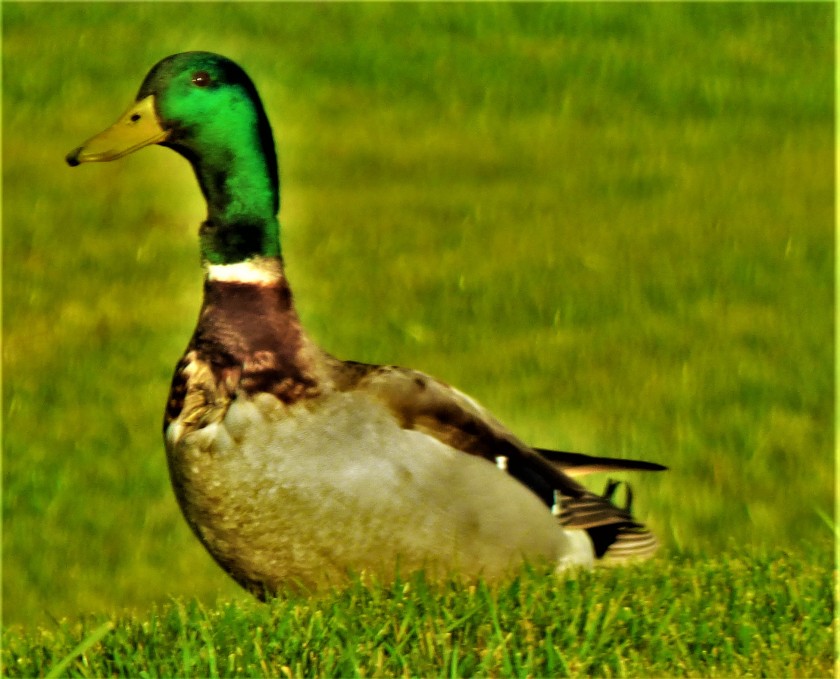
However superstitious you might be there is no need to worry about duck pictures in a cricket post this time – any resumption of live cricket is definitely some time away.

P1310342 (2)P1310343 (2)P1310344 (2)P1310345 (2)P1310346 (2)P1310347 (2)

All Time XIs – Surrey

My all-time Surrey XI, as I find ways to make up for the absence of live cricket.

INTRODUCTION

Since there will be no cricket, or any other sport come to that, for a while I am going to fill the void by playing selector for a few all-time squads. Since I grew up in south London I will start with Surrey.

MY SURREY XI EXPLAINED

  1. Jack Hobbs – more first class runs and more first class hundreds than anyone else, also still has the England record for Ashes runs – 3,636 of them, including another record, 12 centuries in those matches. He was also a more than handy bowler of medium pace and a brilliant fielder at cover point. His claim to an opening slot is unanswerable.
  2. John Edrich – the left hander was one of three strong contenders for this slot, and both of the other two, Andrew Sandham and Tom Hayward, actually did open the innings with Hobbs, but although I see the value of picking an existing partnership, Edrich’s left handedness creates an extra problem for the fielding side to contend with, and for me that is the crucial factor.
  3. Ken Barrington – finding big run scorers associated with Surrey is not difficult, but what sets Barrington apart (and no 3 is has natural position) is that he was even more of a heavy scorer at test level (average 58.67).
  4. Graham Thorpe – that rara avis an English middle order batter from the 1990s with a record to boast about. A century on debut against Australia and an average in the mid 40s maintained through precisely 100 test caps tells its own story about his consistency.
  5. Peter May – In what was an overall low scoring decade (the 1950s) he maintained a test average of 46.77, and was also highly prolific for his county.
  6. +Alec Stewart – in spite of the fact that doing so loses some of the brilliance of Stewart the batter I name him as keeper for the sake of the balance of the side. The leading scorer of test runs in the 1990s, and a very able keeper. Given the top five he would very likely be coming in with free rein to play his strokes.
  7. *Percy Fender – a fine all-rounder, a highly respected captain who many felt should have had the England job and precisely the right kind of person to be batting no 7 in a strong team – he holds the record (35 minutes) for the fastest century against genuinely first class bowling.#
  8. Alec Bedser – a man who in the period immediately after World War two was not just the spearhead, but pretty much the entire spear of England’s bowling attack, and the first to take 200 wickets for England.
  9. Jim Laker – probably the finest of all orthodox offspinners, and for Surrey he was frequently more successful away than at home (in each of seasons 1955, 1956 and 1957 this applied to name but three).
  10. Tony Lock – the other half of the great spin pairing of the 1950s, a slow left-armer.
  11. Tom Richardson – a fast bowler who took more wickets for Surrey than any other bowler in their history. His 1,000th first class wicket came in his 134th first class match, and his 2,000th in his 327th.

This team consists of an awesome top five, a batter-keeper at six, an all-rounder and four frontline bowlers. There are two left handers among the top batters, and the bowling contains the new ball pair of Richardson and Bedser, an offspinner, a slow left armer and a leg spinner (Fender), plus Hobbs’ medium pace if required. I have not included an overseas player, but if mandated to do so I would bring in Waqar Younis in place of Richardson.

George Lohmann (definitely in an all-time Surrey tour party as cover for Bedser), Martin Bicknell, Bill Lockwood and Alf Gover all merit consideration as bowlers, while other than the openers I could not accommodate Douglas Jardine and Eric Bedser were two of the better batters to miss out. Mark Ramprakash did not come into my calculations because his record at the highest level was ordinary, and the bulk of his runs for Surrey came while they were in division 2 and not up against the strongest bowling attacks.

PHOTOGRAPHS


P1310263 (2)
I am rationoing my photographs at the moment because I cannot be sure of getting opportunities to take more in the immediate future.

P1310264 (2)P1310265 (2)P1310266 (2)P1310336 (2)P1310340 (2)

Brief Update

A quick update about my situation vis a vis coronavirus.

INTRODUCTION

In view of the the coronavirus situation I thought I would let all of you know about what is happening with me.

WHERE I AM AT

With my lungs probably still damaged from the cancer that nearly killed me less than a year an a half ago and my immune system almost certainly still compromised from the chemo used to treat that cancer I am in an at risk group. Therefore my external activities for the foreseeable future will be kept to a minimum – I hope to still visit the two libraries that are within walking distance of me, and for the moment I intend to keep on doing my own food shopping, although I have a backup plan in place should even these excursions have to stop. I have already put my plans to return to work on hold, and my employer has indicated that he will try to arrange for me to do some imaging from home while I cannot risk travel by public transport. I am at the moment quite well, and definitely do not have a fever – I have been taking my temperature daily for several weeks now and it it is consistently reading in the 36 degrees range. My life is never exactly a dizzy whirl of social activities in any case, so such a minimalist approach as I am having to take is probably less of a hardship to me than it would be to many. Good luck to all of you finding ways to cope in these difficult times, and I will try to find more things to blog about in the coming period. Here are a few recent pictures to finish:

P1310330 (2)P1310331 (2)P1310333 (2)P1310334 (2)P1310334 (3)P1310335 (2)

Cornish Winter Break 17: National Maritime Museum Cornwall Ground Floor

Starting my coverage of the National Maritime Museum Cornwall.

INTRODUCTION

Welcome to my latest post about my Cornish Winter Break. In my last post in this series I paved the way for a series of posts about the National Maritime Museum Cornwall. I now commence with the ground floor.

BOATS THROUGH THE AGES

The ground floor of this museum contained a wide variety of boats, with accompanying detail about their history.

P1300645 (2)P1300646 (2)P1300647 (2)P1300648 (2)P1300649 (2)P1300650 (2)P1300651 (2)P1300652 (2)P1300653 (2)P1300654 (2)P1300655 (2)P1300656 (2)P1300657 (2)P1300658 (2)P1300659 (2)P1300660 (2)P1300661 (2)P1300662 (2)P1300663 (2)P1300664 (2)P1300665 (2)P1300666 (2)P1300667 (2)P1300668 (2)P1300670 (2)P1300671 (2)P1300672 (2)P1300673 (2)P1300674 (2)P1300675 (2)P1300676 (2)P1300677 (2)P1300678 (2)P1300679 (2)P1300680 (2)P1300681 (2)P1300682 (2)P1300683 (2)P1300684 (2)P1300685 (2)P1300686 (2)P1300687 (2)P1300688 (2)P1300689 (2)P1300690 (2)P1300691 (2)P1300692 (2)P1300693 (2)

Not Weird, Just Limited Edition: Inside the Autistic Mind – Book Review

My review of Not Weird, Just Limited Edition: Inside the Autistic Mind. I urge you to all to buy copies of this fabulous little book.

INTRODUCTION

You may remember that a couple of posts ago on here I mentioned a new book about Autism titled “Not Weird, Just Limited Edition: Inside the Autistic Mind”. Well the copy of that book that I ordered arrived yesterday, and now it is time for a quick review.

A LITTLE GEM OF A BOOK

The book, written by Faye Flint, who was diagnosed as autistic only at the age of 27 (regular readers of this blog will recall that I was 31 when I got my own diagnosis, so this is a situation that is more than a little familiar to me). It is 108 pages long, with the text very generously spaced. Each page is a separate event, recording a particular thought or train of thought, and each is beautifully clear, and for obvious reasons many are instantly recognizable to me. If you are autistic yourself, or know/ are related to someone autistic, or even just have an interest in autism this book, written as it is by someone who is actually autistic is an absolute must read. I am going to share some of my personal favourites (I have selected six out of 108 pages to quote – and the quotes will be indented and italicised to set them apart from my own writing:

First, page 31:

I was a child with Asperger’s.
I will remain an adult with Asperger’s.

Page 45:

No, I won’t ‘grow out’ of my Asperger’s.
Asperger’s is who I am.
But I have lived with myself for 30 years.
I have learned how to manage myself.
To be able to fit into society more appropriately.

Page 49 (I am bolding as well as italicising this one for reasons that should become obvious):

“But you don;t seem like my friend’s son who is autistic?”
Ahh, well maybe that’s because…
I am a grown autistic woman,
Not a 7 year old autistic child.
Yes, there really is a difference.

Page 64:

No, my Asperger’s cannot be cured.
Nor would I want it to be.
This took me a long time after such a late diagnosis.
However,
It has made me, me.
And I kind of like me.
In fact,
Many people say my ‘differences’ are what they love most!

Page 69 (another one that I chosen to bold as well as italicise)

Just ask.
If you want to know about the spectrum,
Ask someone who is on it!
We aren’t offended.
If anything,
It makes us happy that you care enough to want to learn.
There is nobody better to ask,
Than someone who goes through it,
Every.
Single.
Day.

Finally, page 81:

I promise I am listening to you.
But my brain has 2,644 other tabs open right now.
It is very distracting.

The book is available in paperback or on kindle (click here to order).

FF1 (2)
The front cover
FF2 (2)
The back cover.

FF2 (3)FF2 (4)

Cornish Winter Break 16: Falmouth – Getting There and Setting the Scene

The first of several posts in my Cornish Winter Break series relating to Falmouth.

INTRODUCTION

I continue my series about my Cornish Winter Break. Today’s is the first of what will be quite a few posts dealing with the last trip that I made as part of that holiday. This trip was unique in two ways among those I made during this holiday:

  1. It was my idea
  2. It featured a train journey

GETTING THERE

My mother and I got on the train at St Germans at 10:36, changed at Truro for the shuttle service to Falmouth Docks, and arrived at Falmouth just after 12:00. Falmouth was a planned port, first built in the late 16th century to provide an extra starting point for the export of china (it was intended to augment the existing port of Fowey, not challenge it – the person who planned it was actually a native of Fowey). It is a magnificent setting (my camera battery ran out before the end of the trip, but not before I had taken some fine pictures). After a pause to orient ourselves we headed for the National Maritime Museum Cornwall, which will get several posts of its own. The museum occupied as for quite some time, and then we had a brief look at the rest of the town, but I was getting tired by then, and we headed back not very long after finishing at the museum. I intend to revisit both the town and the museum.

PHOTOGRAPHS

P1300529 (2)
There are a number of these old train carriages in the grounds of St Germans – I am considering staying in one of them when I am in Cornwall in August.

P1300530 (2)P1300531 (2)P1300532 (2)P1300533 (2)P1300534 (2)P1300535 (2)

P1300536 (2)
The train approaching.

P1300538 (2)P1300539 (2)P1300540 (2)P1300543 (2)P1300544 (2)P1300545 (2)P1300546 (2)P1300547 (2)P1300548 (2)P1300549 (2)P1300550 (2)P1300551 (2)P1300552 (2)P1300553 (2)P1300554 (2)P1300555 (2)P1300556 (2)P1300558 (2)P1300559 (2)P1300560 (2)P1300561 (2)P1300562 (2)P1300563 (2)P1300564 (2)P1300565 (2)P1300566 (2)P1300567 (2)P1300568 (2)P1300569 (2)P1300570 (2)P1300571 (2)P1300572 (2)P1300573 (2)P1300574 (2)P1300575 (2)P1300576 (2)P1300577 (2)P1300578 (2)P1300579 (2)P1300580 (2)P1300581 (2)P1300582 (2)P1300585 (2)P1300588 (2)P1300589 (2)P1300590 (2)P1300591 (2)P1300592 (2)P1300593 (2)P1300594 (2)P1300595 (2)P1300596 (2)P1300597 (2)P1300598 (2)P1300599 (2)P1300600 (2)P1300601 (2)P1300602 (2)P1300603 (2)

P1300607 (2)
A superb mosaic at Falmouth Docks

P1300608 (2)P1300609 (2)P1300611 (2)P1300612 (2)P1300613 (2)P1300614 (2)P1300615 (2)P1300616 (2)P1300617 (2)P1300618 (2)P1300619 (2)P1300620 (2)P1300621 (2)P1300622 (2)P1300623 (2)P1300624 (2)P1300625 (2)P1300626 (2)P1300627 (2)P1300628 (2)P1300629 (2)P1300630 (2)P1300631 (2)P1300632 (2)P1300633 (2)P1300634 (2)

P1300635 (2)
The museum

P1300636 (2)P1300637 (2)P1300638 (2)P1300639 (2)P1300640 (2)P1300641 (2)P1300642 (2)P1300643 (2)P1300644 (2)P1310005 (2)P1310006 (2)P1310007 (2)P1310007 (3)

Cornish Winter Break 15: Signature Dish

An account of cooking my signature dish to serve six, plus a mention of a new book about autism.

INTRODUCTION

This one will be somewhat different from the other posts in my Cornish Winter Break series – it is about the supper I cooked for six people near the end of my stay. I accompany it with pictures that don’t belong to any of the places I give specific posts to. Before getting into the main body of the post I have a small matter to attend to:

A NEW BOOK ABOUT AUTISM

Not Weird, Just Limited Edition: Inside the Autistic Mind” is now available in kindle and paperback. It is by Faye Flint, who happens to be the niece of NAS West Norfolk chair Karan McKerrow. I am looking forward to reading it, and you may be sure that when I have done so I will give it a full blog post. If you wish to join me in ordering a copy click here – the kindle version is the third item down and the paperback is the sixth.

THE MEAL

I was cooking my signature dish – my own version of Lemony Chicken and Coriander (the original recipe is by Madhur Jaffrey, but I have made so many changes that I now claim this as entirely my own. For a description of the cooking process when I do it for myself visit this post. This version differed from my usual in several ways – I was cooking twice as much (it reheats superbly, so cooking three meals worth at once works well), my mother was cooking rice tog with it whereas I do pasta, and there was also going to be broccoli. Additionally, rather than having fresh lemons to squeeze I was using a bottle of lemon juice. The meal came together beautifully, the bottled lemon juice worked pretty much as well as the real thing, and the final product was excellent – a view evidenced by the fact that hardly a molecule of it was left at the end of the meal. I am aware that different cultures have different opinions on this matter, but as far I am concerned a total lack of leftovers is a sign of success in this situation.

PHOTOGRAPHS

My usual sign off…

P1290806 (2)P1290807 (2)

P1290808 (2)
The building in which my parent’s apartment is located.

P1290809 (2)P1290810 (2)P1290893 (2)P1290896 (2)P1290898 (2)P1290901 (2)P1290903 (2)P1290904 (2)P1290905 (2)P1290906 (2)P1300129 (2)P1300130 (2)P1300132 (2)P1300133 (2)P1300134 (2)P1300135 (2)P1300522 (2)P1300524 (2)P1300525 (2)P1300526 (2)P1300527 (2)

P1300528 (2)
This bumper sticker was on a car parked near St Germans station.

Cornish Winter Break 14: The Shipwreck Museum at Charlestown

An account of my visit to the shipwreck museum at Charlestown, mainly told by way of photographs.

INTRODUCTION

Welcome to the latest post in series about my winter holiday in Cornwall. Following on from my last post about Charlestown, our focus today is the Shipwreck Museum there.

SHIPWRECKS ACROSS THE MILLENNIA

This museum features salvage from wrecks that span over 18 centuries. It is an interesting museum and I enjoyed my visit. The story of my visit is best told in…
PICTURES