A Must watch-video and some good accompanying notes from DPAC:
Source: Please watch and share this video on the £30/week ESA Cut for people in the WRAG #NoESACut
To comment please visit the original post and give credit where it is due.

A Must watch-video and some good accompanying notes from DPAC:
Source: Please watch and share this video on the £30/week ESA Cut for people in the WRAG #NoESACut
To comment please visit the original post and give credit where it is due.
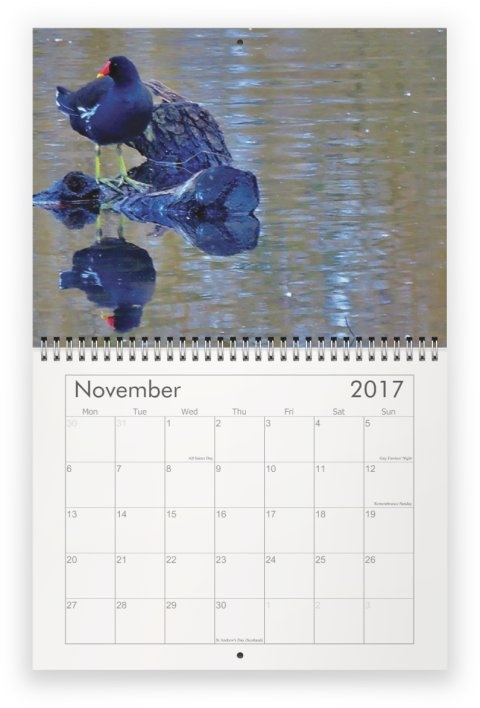
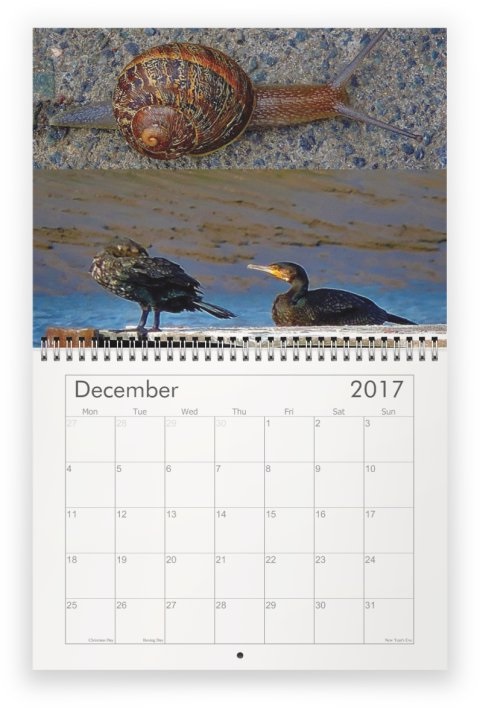
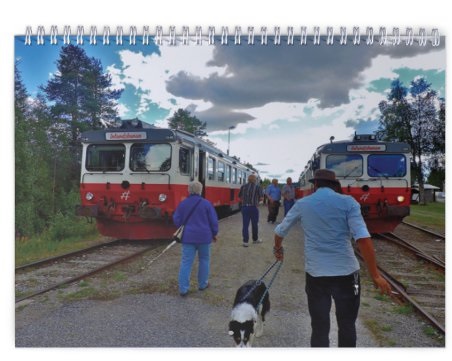
A sneak preview of the 2017 Photographic Wall Calendar.
As some of you know I created photographic wall calendars last year. I recently mentioned that I was going to do again this year. This morning my inbox contained an offer from Vistaprint that was too good to refuse, so the calendars will be arriving with me some time around October 20th.
This time, there will be no borders, and no added text. It will surprise few who have followed this blog recently to find out that I have chosen an Inlandsbanan picture for the front cover…

The actual calendar will be much bigger than this of course.
Here are the individual pages for each month…

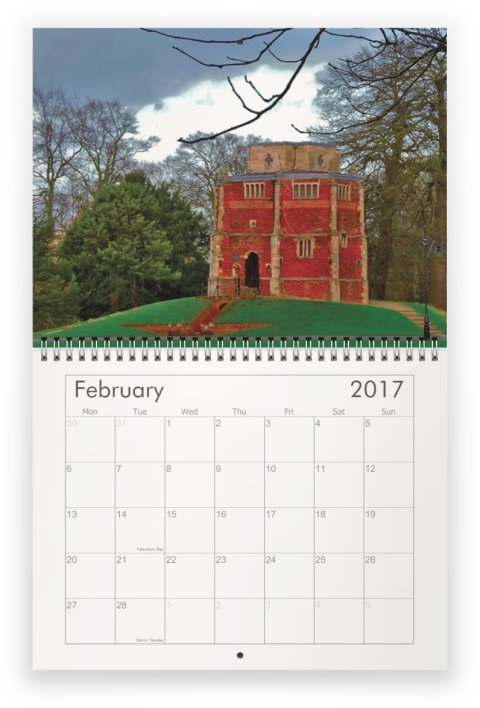
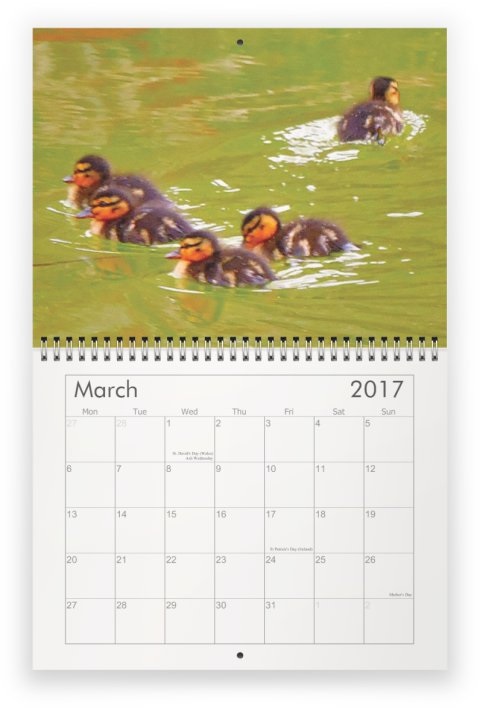


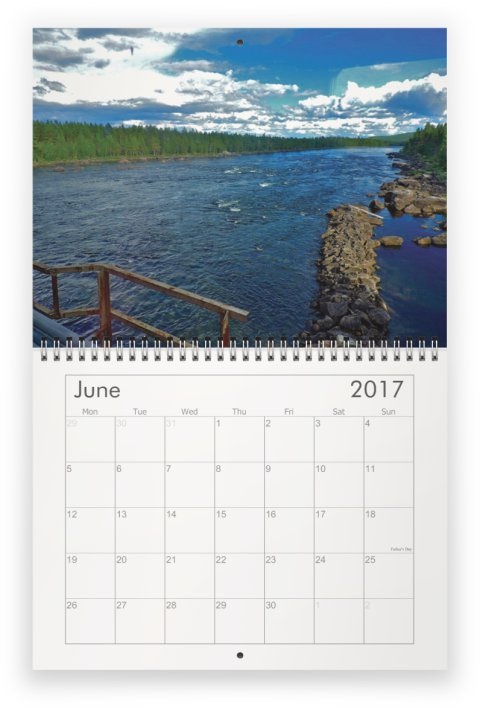


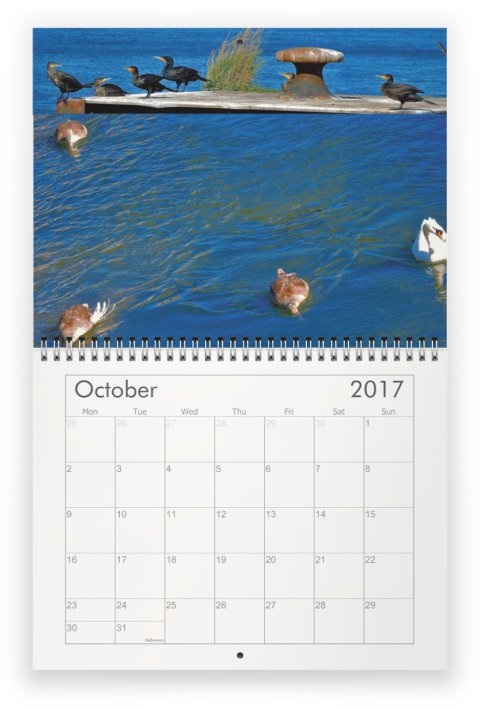
An account of “Autism Positive”, An Amazing (and exhausting!) Day for Autism, in the fine city Norwich.
On Monday the Theatre Royal Norwich, located right in the heart of that fine city, played host to “Autism Postive”, an event organised by Autism Anglia. This post is about my experiences at that event, and has been delayed until today because I was exhausted when I arrived back home on Monday evening and was working yesterday. Before I get into the main meat of the post here is a map of central Norwich (I have put a red square around the theatre to highlight it) and a timetable of what was on besides the various stalls people had at the event.


I had decided I needed the extra flexibility given by the First Eastern Counties X1 route (as opposed to the Stagecoach X29 route which stops quite early in the evening), so got the 7:51AM bus (I had arranged a meet-up in the foyer with the other person who would be running the NAS West Norfolk stall at approx 10AM). My journey was slightly affected by traffic, and the bus pulled into Norwich bus station only just before 10AM, but it turned out that the traffic affecting my journey was comparatively minor – it would be another 15 minutes or so before the other person arrived. Here are some photos from the journey in…


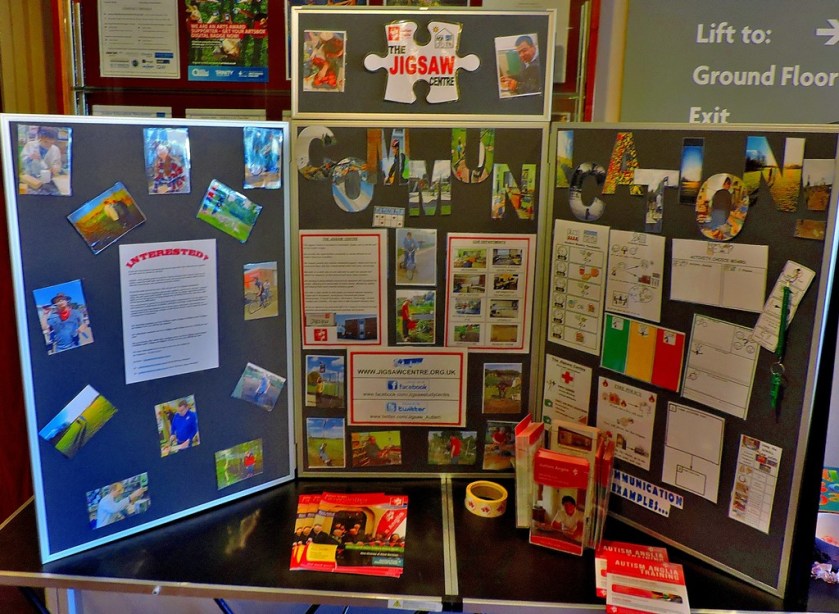
The set up was further delayed by because Autism Anglia had failed to realise that we would be coming, so we had to wait while space was located for our stall to be set up. This is what our stall looked like once the set up was complete…
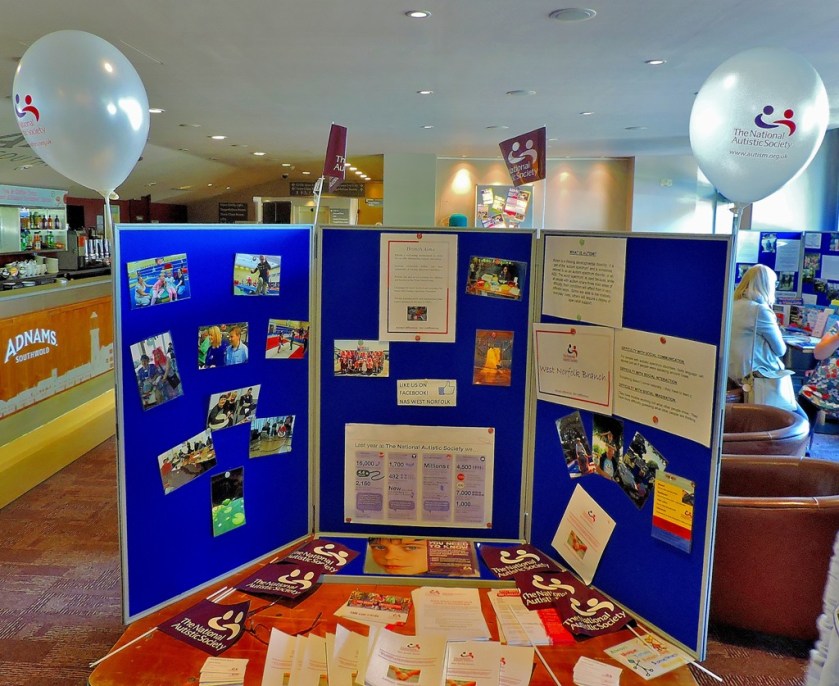
Here are close ups of some of the stuff we had on display….
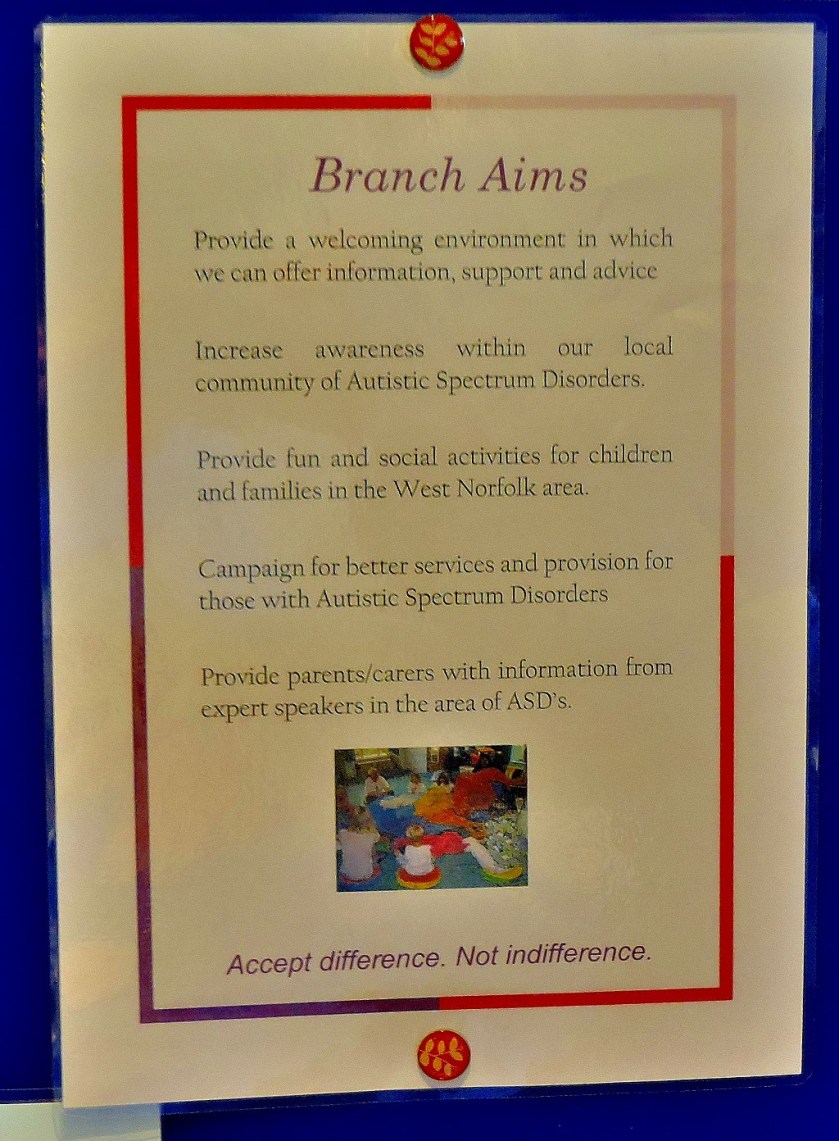
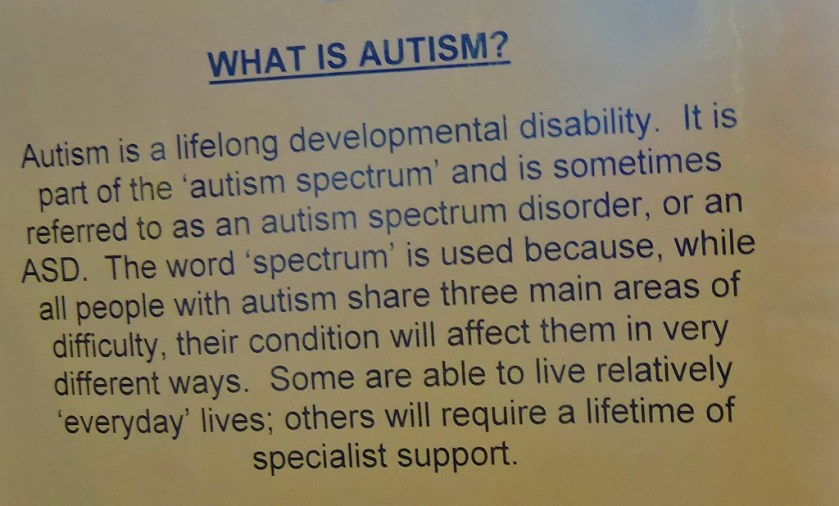
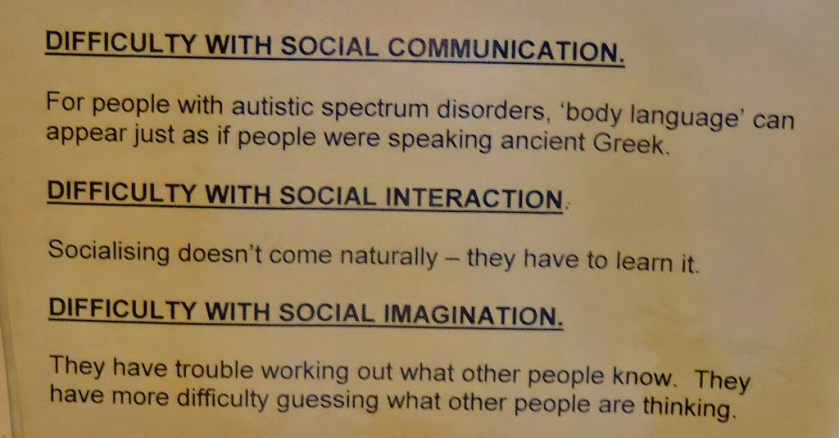

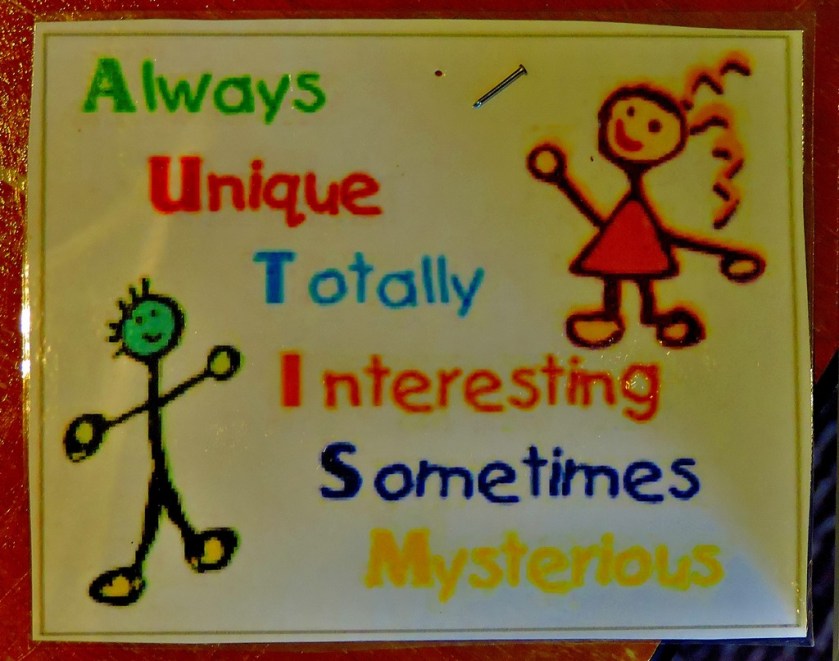
A combination of late arrival and subsequent delays eliminated the possibility of attending Callum Brazzo’s talk, which I understand was a huge success, but once the stall was set up I had an opportunity to take a look at what other stalls there were.


I got some more pictures a little later after a period covering the stall…



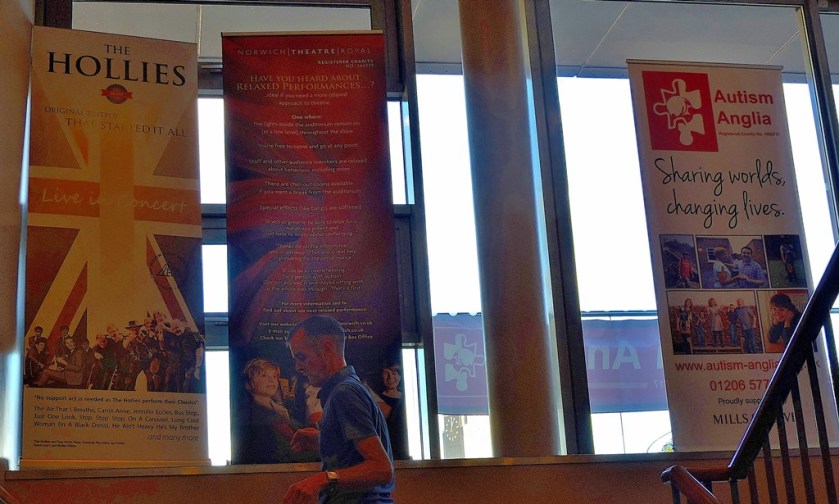
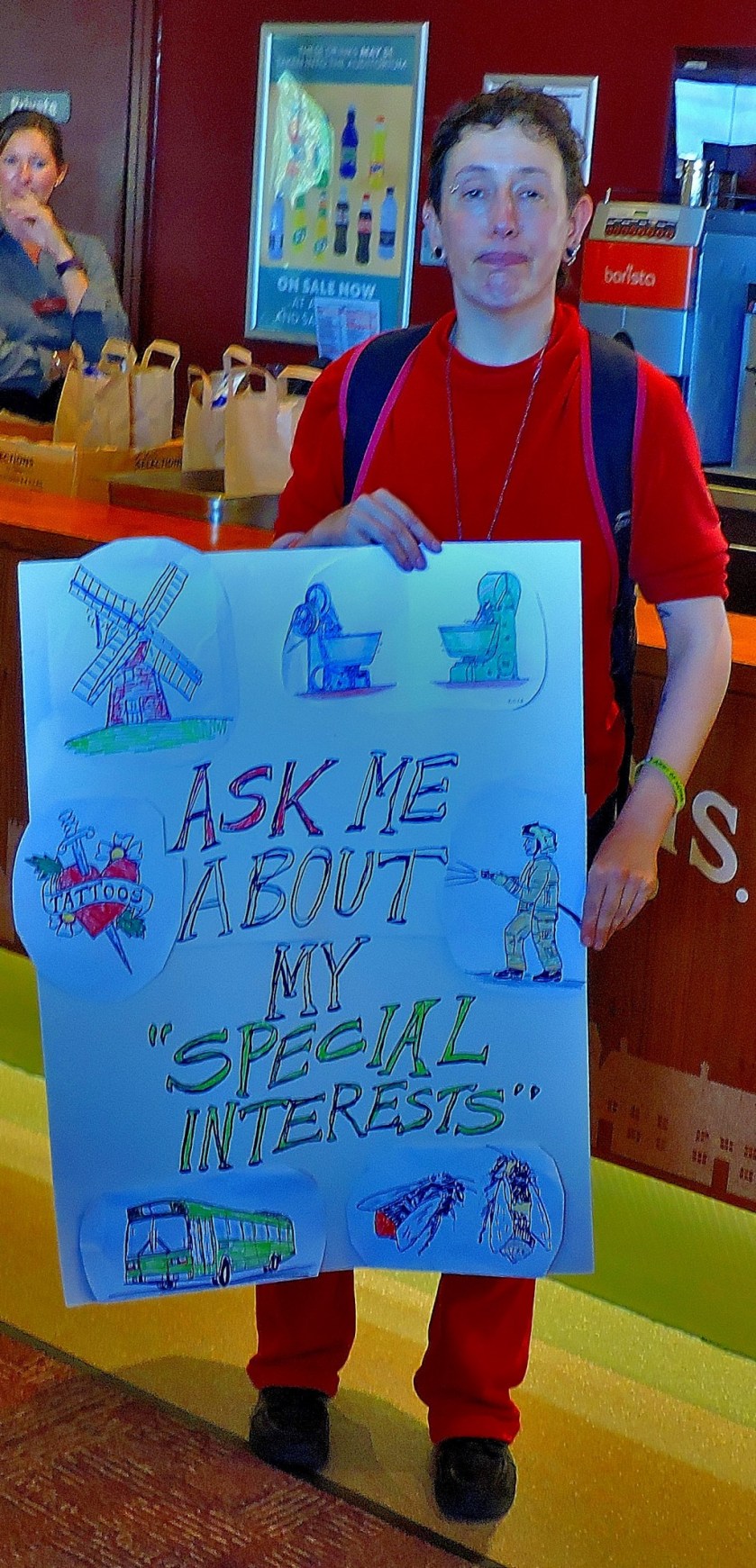
Due to the communication failure mentioned earlier we did not have lunches booked for us as others did, so Karan bought us sandwiches. She then went to a talk given by a friend of hers while I covered the stall for that period. Post lunch there were a couple of sessions I wished to attend, so Karan covered the stall while I did so.
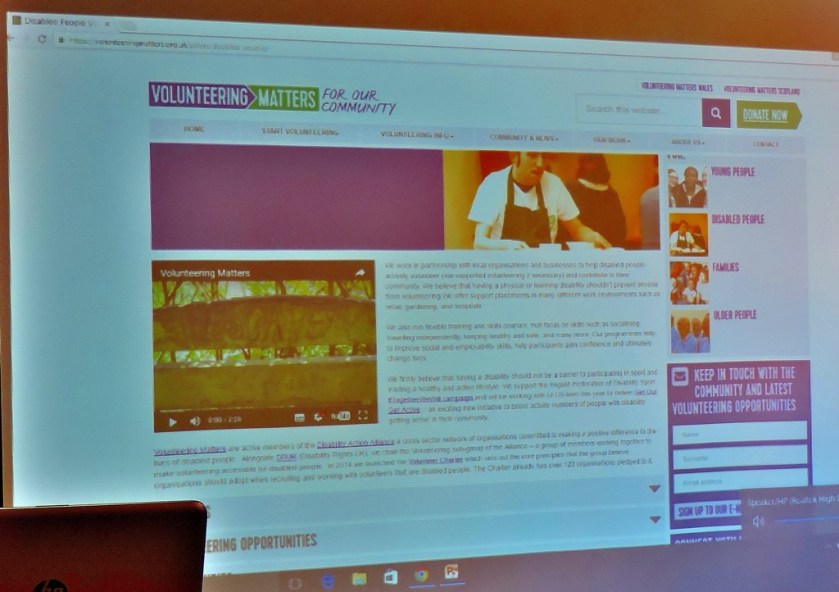
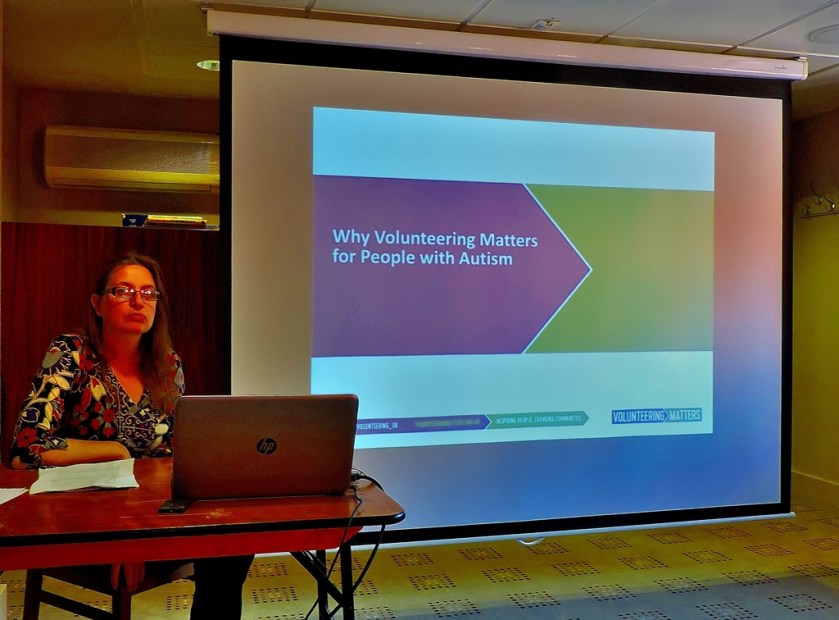
I thought that as an autistic person with a lot of experience of volunteering this would be a good session to attend, and I did enjoy it. However, rather than being about autism and volunteering in general, it was touting one particular volunteering organisation who work with autistic people.
Vicki Howling of Volunteering Matters gave the talk, with an assist from one of their volunteers, William Taylor, who talked about his experiences and how valuable it had been to him to become a volunteer.
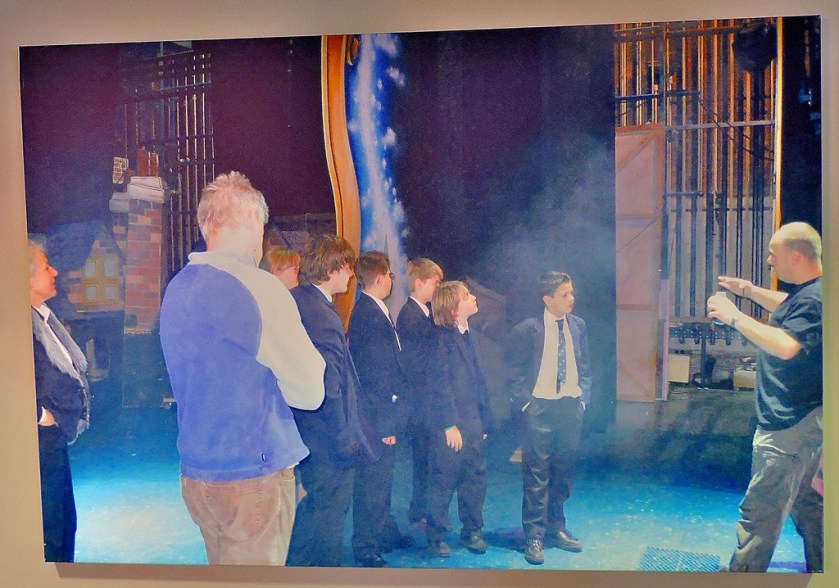
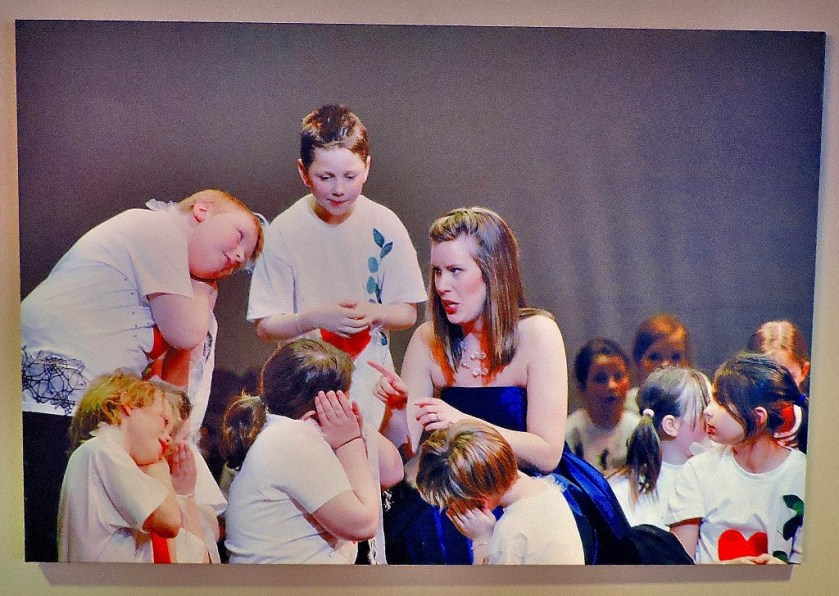
Here are some pictures from this talk…



However, it was the the final session in the main auditorium that I really wanted to attend, titled…
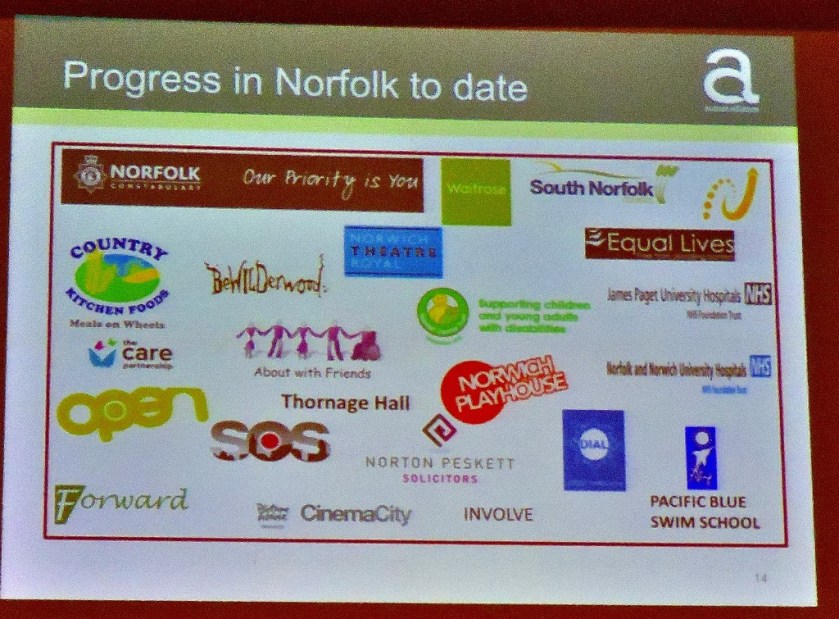
Anne Ebbage from Autism Anglia opened the session before introducing various people from organisations who were already doing good stuff. Here to set the scene is an outline of the Autism Charter and a picture of the Auttism Friendly logo…


Anne had various other slides to accompany her talk…
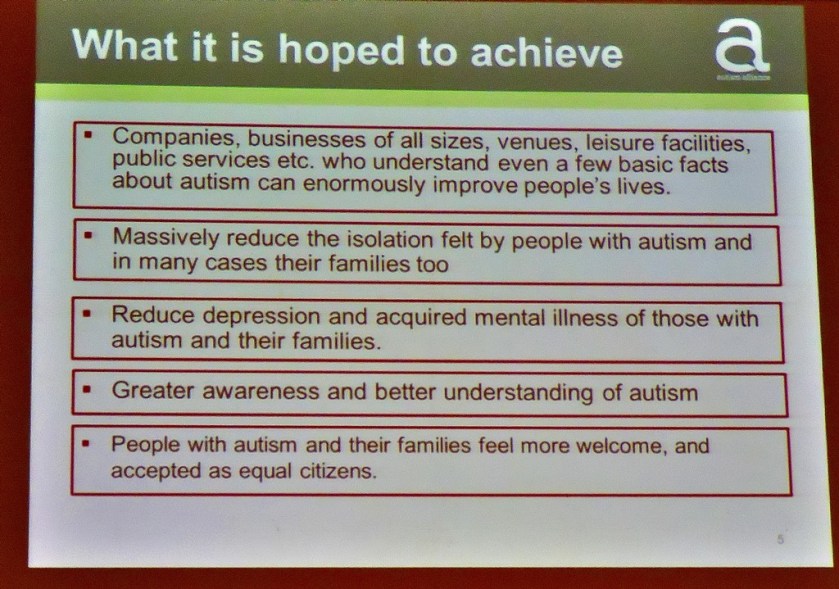


The webiste shown above: www.autism-connect.org.uk
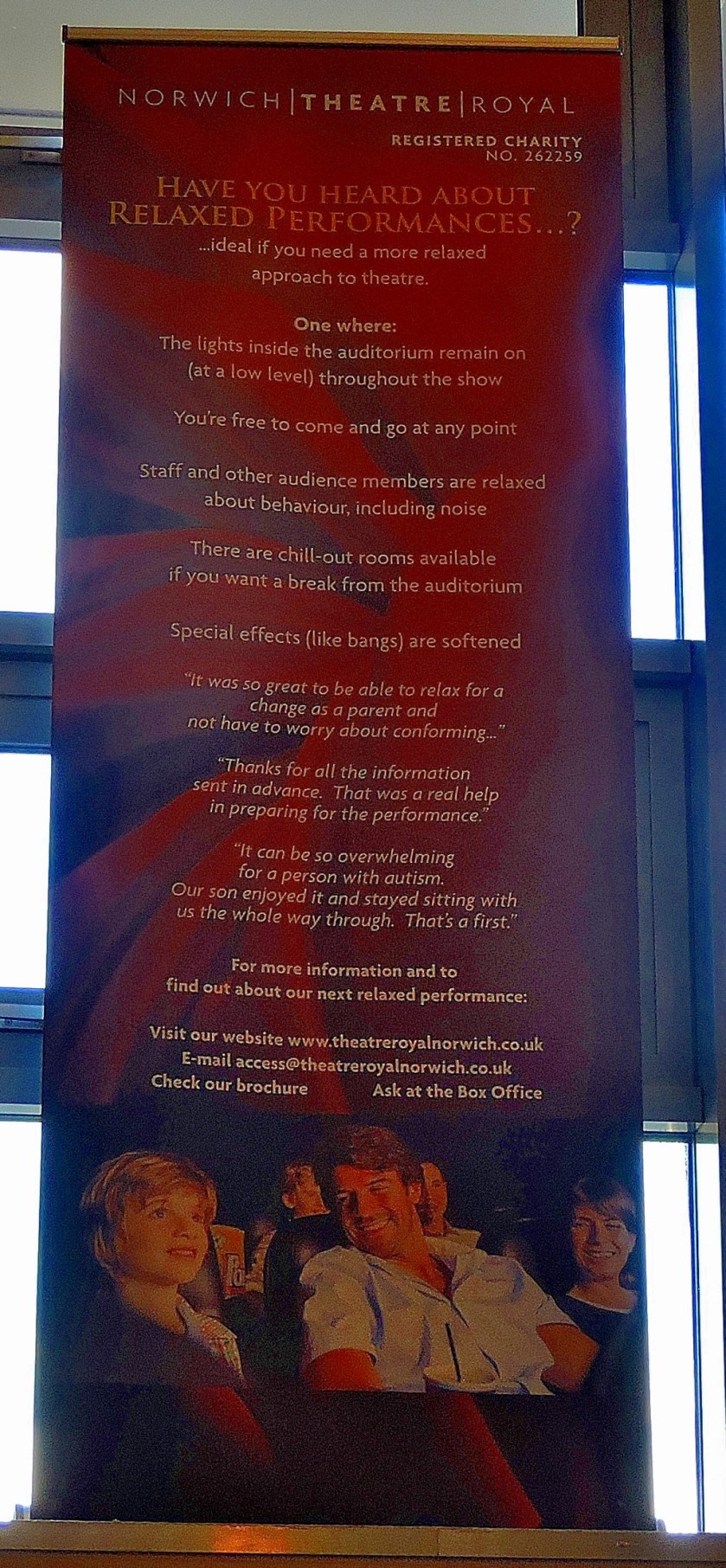
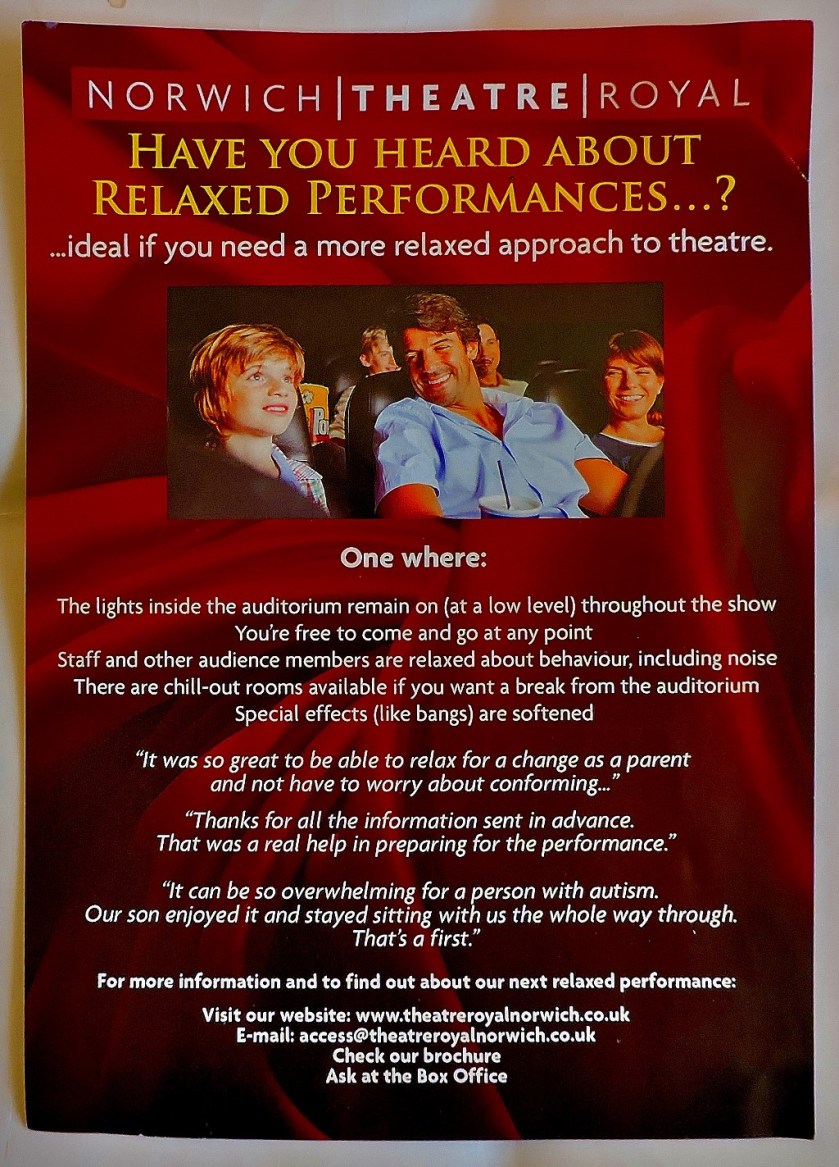
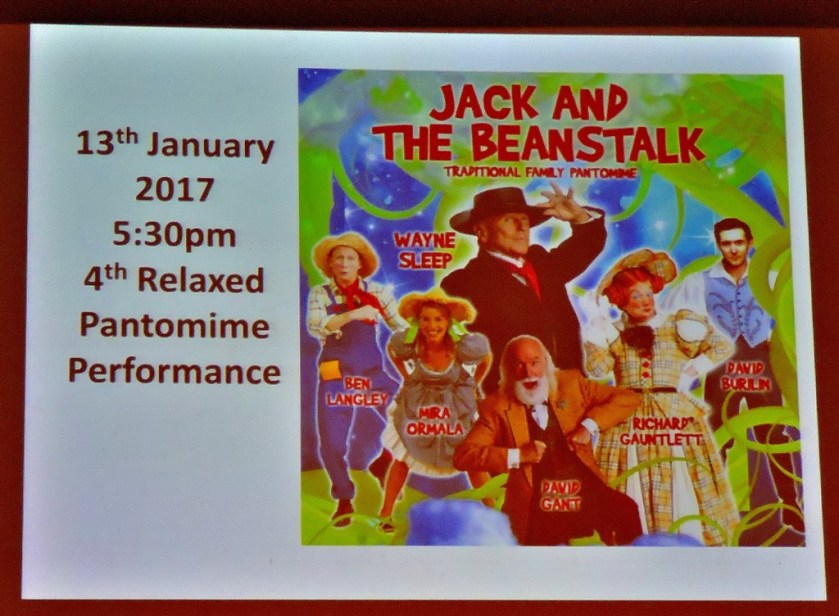
Although these are no presented in strict chronological order, I start with the person who was actually first to be called in this section, Matthew Piper who is Access Manager at the Theatre Royal Norwich itself, who deserve huge thanks for the job they did in hosting this event and for their willingness to stage ‘relaxed performances’. I have a photo of a leaflet about this which will follow this little bit of text – a leaflet I was more than happy to display on our stall when asked. While a ‘relaxed performance’ means a loss of income ion the immediate term because you can only half sell the auditorium, and of course fewer people being there also means that attendant sales are also reduced it is bad thinking to allow this to influence you against putting them on. Matthew Piper was able to provide evidence of people who have come to a ‘relaxed performance’ and subsequently, having managed this have had the confidence to come to ordinary performances.
As well as telling us about what they are doing, the three people from Norwich International Airport were receiving their ‘Autism Friendly Badges’, and a bag full for the rest of their staff. They have an aeroplane that is kept permanently on the ground so that they can give people a sample of the journey through the airport from arriving there to boarding the plane. They told us about a family who have never been able to travel before who having experienced this sample trip through the airport will be going to Lapland this December. I have already linked to the airport’s website, but here is an extra link to their page on special travel assistance.
Having already featured the theatre who were also hosting the event it was time for a cinema to be in the limelight, with Ellie, Acting Manager and also Autism Friendly Screenings Co-ordinator at Cinema City explaining what they do. Cinema City is part of the Picture House group, who were the first cinema company to do autism friendly screenings – the very first was at the Clapham Picture House 10 years ago, while Cinema City have been doing them for two and a half years. What does an autism friendly screening entail?
There are two such screenings coming up at Cinema City: The Lion King on Sunday and Finding Dory in November. As well as the website to which I linked earlier, there is also picturehouseblog.
I have saved to the last Tom Blofeld, who runs BeWILDerwood. In addition to making every effort to ensure accessibility for all to this attraction, autistic groups from schools get admitted free during term time. As with Cinema City they have a blog.
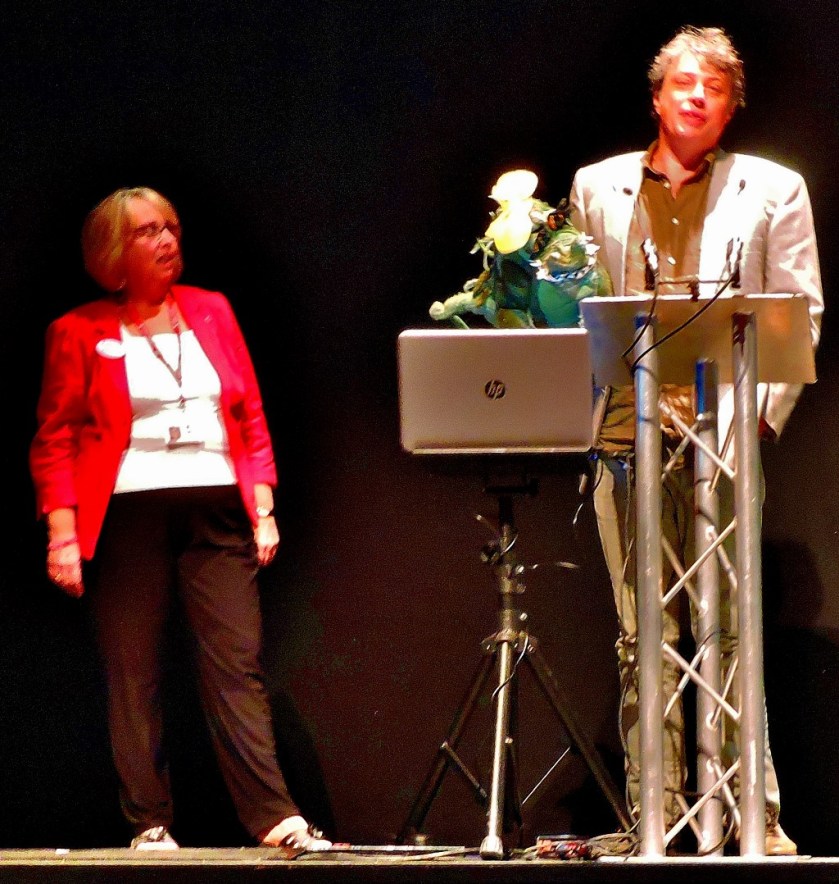
Tom Blofeld, special guest Mildred and to the left as you look Anne Ebbage of Autism Anglia.
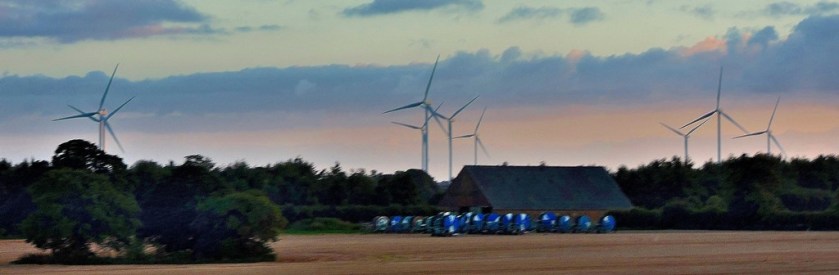
When this session finished it was time to get back to the stall for the final stages of the day. Even at this late stage we got plenty of attention, and we spoke to plenty of people through the day, with many leaflets and contact cards going out. The event was a tremendous success, with lots of information and inspiration on display. Once we had taken down our stall I took the opportunity to visit the library before heading home. Here are some photos from that journey home…

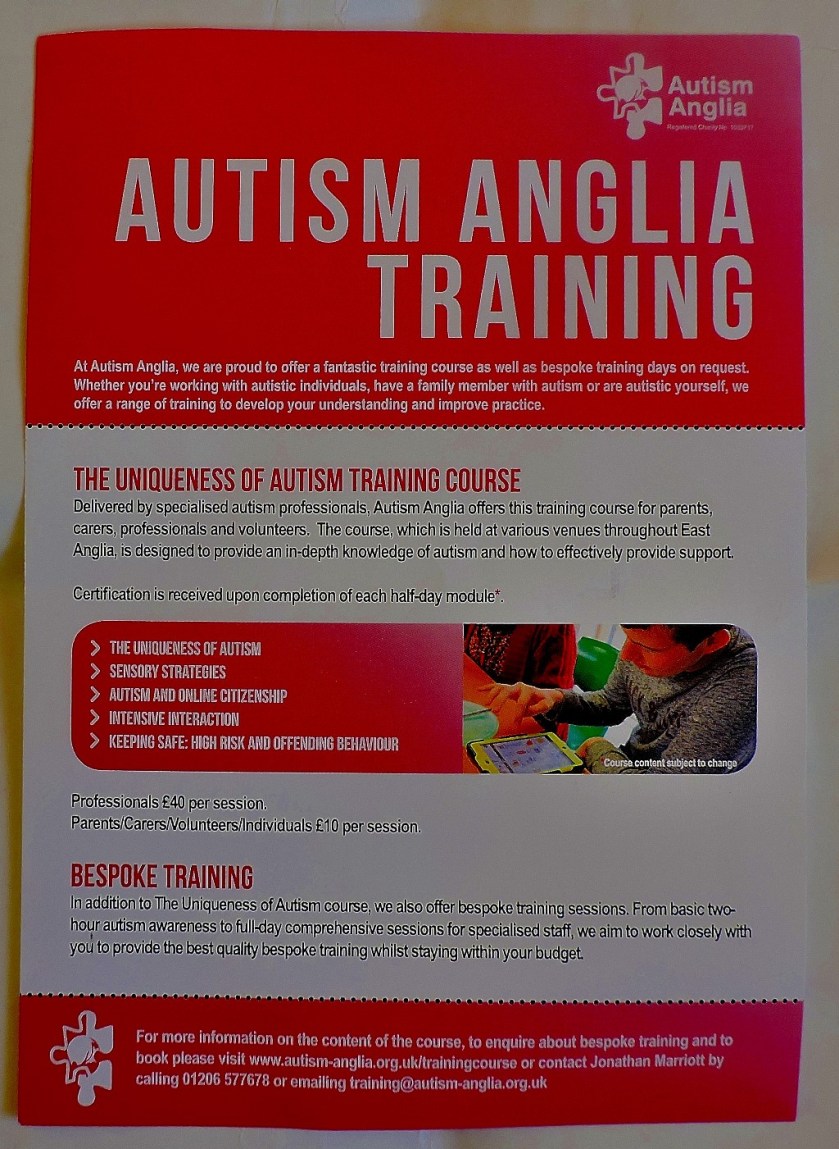
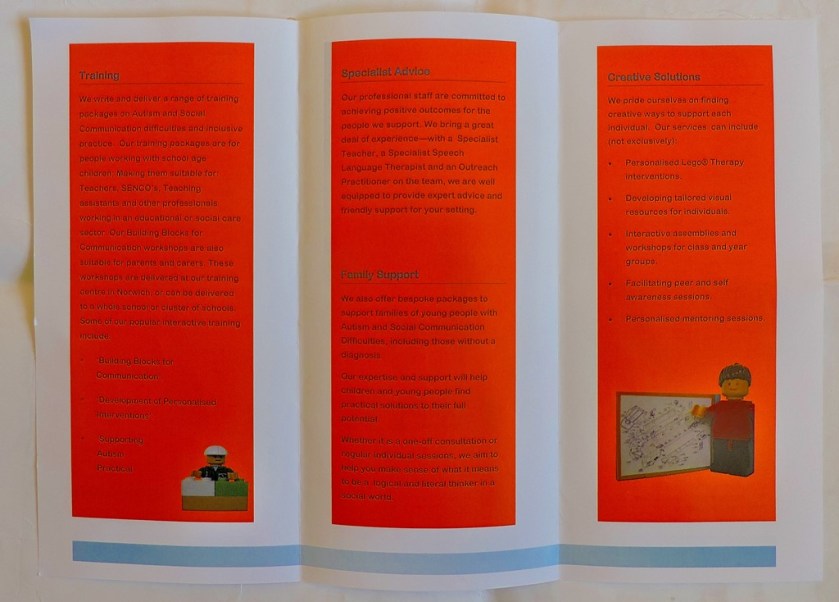
Here are pictures of some of the leaflets that were available at the event…
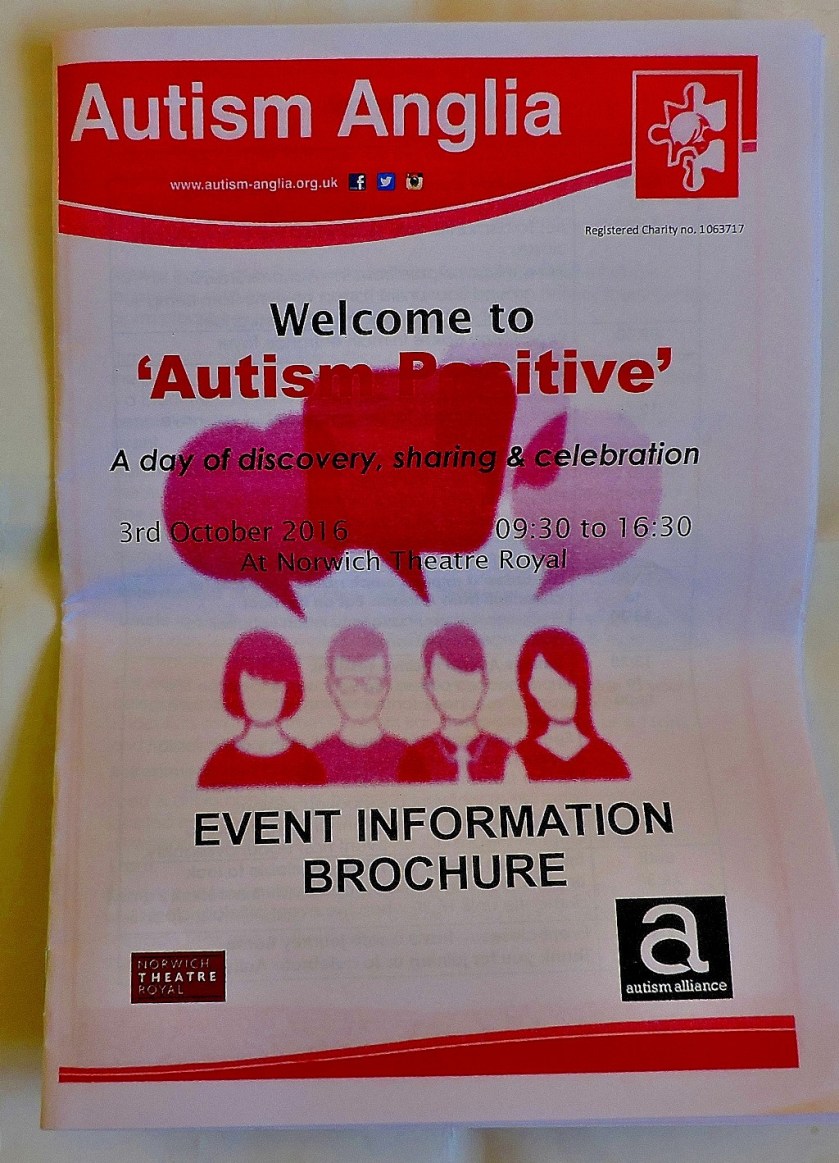
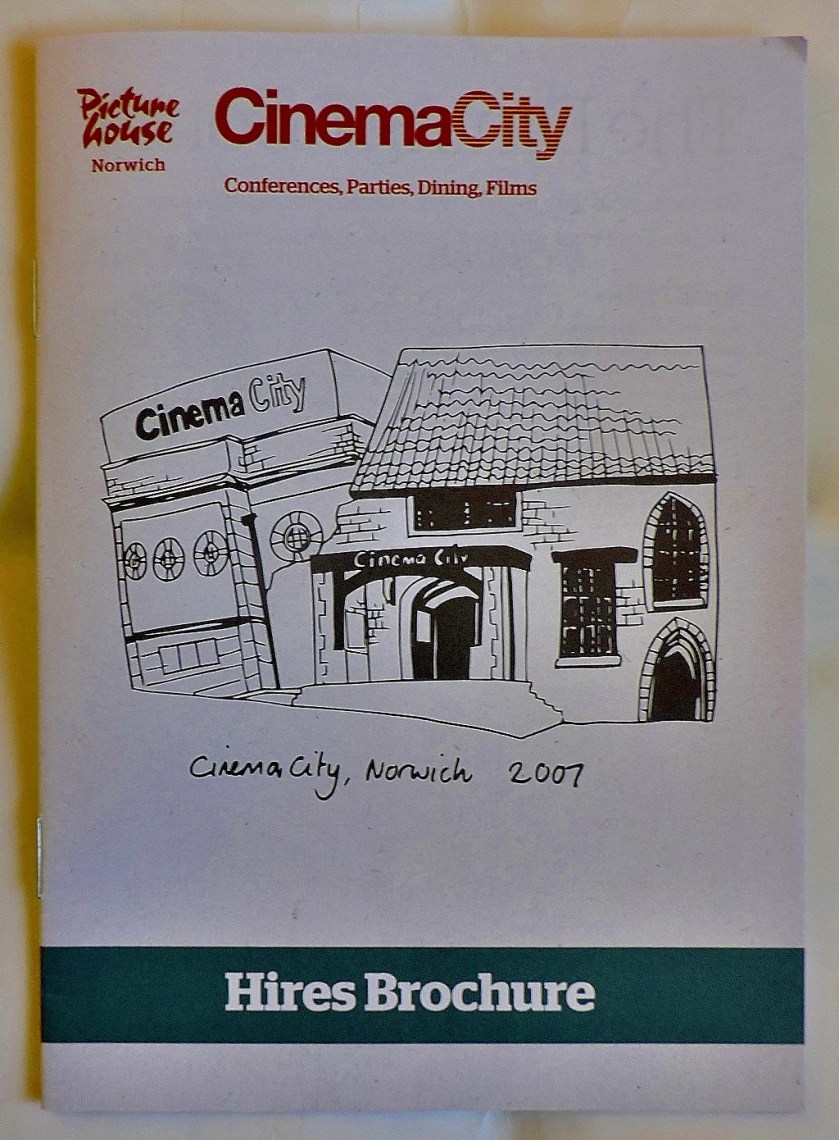


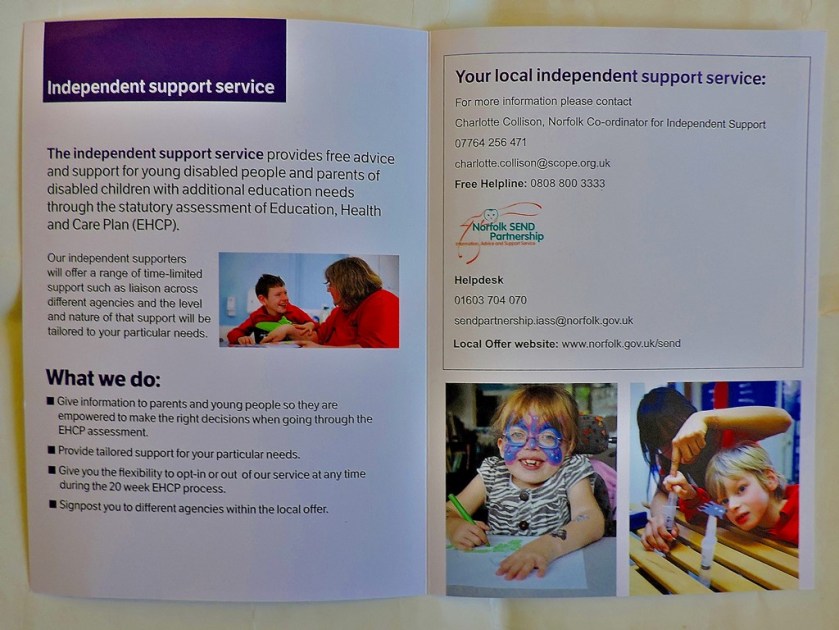



I have included many links within the text, but these do not belong there, although ebing autism related they do belong in a large post that has been autism related.
The National Autistic Society have a survey running at the moment which you can see here.
Yesterday I saw these two posts, written by sisters (the first, from autism mom, linked to the second), and having read and enjoyed them yesterday, I share them to finish this post…
Some stuff about autism, some important links and some photographs.
Although this post includes some links that are not specific to autism, and of course some photos, enough of it is autism related to warrant the first word of the title.
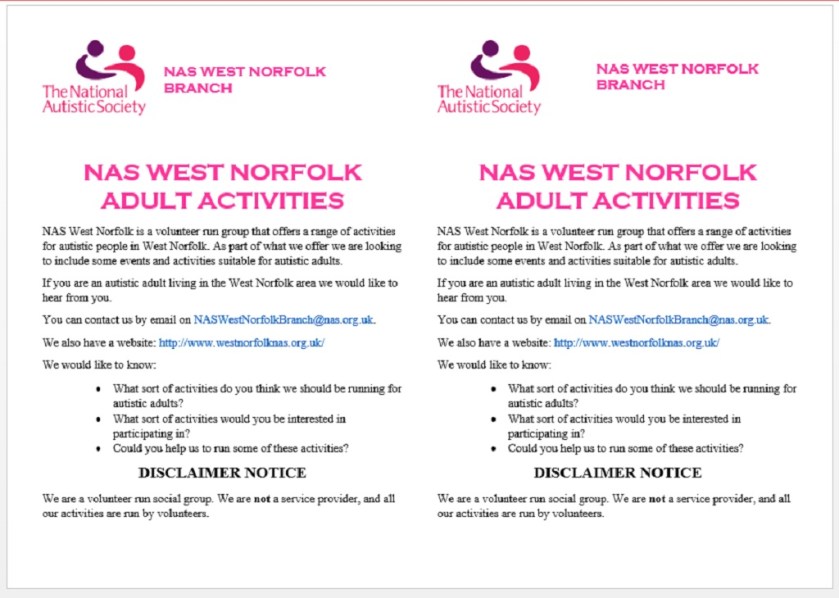
This Monday an ‘autism positive’ event is taking place at the Theatre Royal in Norwich. I will be present in the dual capacity of autistic adult and branch secretary of NAS West Norfolk. As well as a display with full information about our branch we will be distributing leaflets about efforts to get some adult oriented events and activities going. Apart from the official NAS branding and header which I copied and pasted from the website the leaflets are entirely my work…

Advertising attended to, the second part of this section relates to:
First of all, here is the grim truth about autistic people and employment in the UK:
So, what can be done about this? Well, recruitment practices need to change and here is for me the single most important thing that could be done:
Abolish standard interviews, which place one in a position that one will never be in when in the job, making skills testing mandatory instead. Many autistic people however mujch preparation they put in cannot do themselves justice in interviews, while if you have them do the kind of work that they would be doing in the job they will fare much better, and you will learn not whether they can say the right things but whether they can actually do the work.
As a segue into the next section of the post, here is a link to a petition created by an autistic adult (Chris Packham), which calls on the Government to:
My first link in this section comes courtesy of the consumer group Which? who have managed to get the Consumer Rights Act to cover all travel sectors. Please read the full piece here.
My second link, courtesy of Richard Murphy at Tax Research UK is to a piece that demonstrates that Jeremy Corbyn’s investment program will cost less than the Tories current QE program.
I give the last word before the photographs to DPAC, who have prepared some online action to coincide with the Tory conference for the benefit of those who cannot make it to Birmingham but want to be part of the protest. Please click the link below to see how you can be part of…
All the photographs below were taken yesterday…









Richard Murphy of Tax Research UK takes on the notion that Corbyn needs a ‘magic money tree’
Source: Corbyn’s investment plans will cost less than the government’s QE programme
An account of james and Sons’ September auction, with a spotlight on the October auction.
James and Sons’ September auction took place this Wednesday at Fakenham Racecourse, while apart from on that day my recent work has mainly been focussed on the October auction (Wednesday 26th, Maids Head Hotel, Norwich.
I was not involved with setting this auction up on the Tuesday due to having other work to do back at base, but I did make a flying visit to the racecourse that day to resolve some queries that people had raised at the last minute about auction items (one potential customer wanted an image that had been missed and another wanted a detailed condition report on pair of vintage spectacles – the fact that both items sold to the customers who had made the inquiries was final proof that their queries had been resolved). That just left…
My work day did not get off to the best of starts, because I fell victim to a recent timetable change and arrived at the racecourse a little later than I would have liked (I now have a copy of the timetable that will come into force from this Sunday). Fortunately there were no serious issues with the IT, and the auction started on time.
With the auctioneer needing regular breaks from the rostrum, and the only person capable of substituting for him being also the only person who could substitute for my role on the rostrum I was at my post while the first 650 lots went under the hammer, finally getting to consume my sandwiches at 2:20PM, before resuming my post for the last 50 or so lots (the auction ended at lot 781). This, combined with the heavy lifting work at the end, made for an exhausting and stressful day.
The auction began with banknotes and coins, which fared pretty well overall. Then there were a large number of stamp lots, which predictably enough did not attract huge attention (www.the-saleroom.com while good for many things are poor on stamps, and there were not many people there in the room). After that there were a variety of different items, some of which sold well. In among the medley of items in this middle and latter part of the auction was lot 461, four decorative plates produced by Coalport, all in their original boxes with paperwork. This might not sound like the kind of lot to catch the photographer’s eye, but the the images below may provide some explanation…
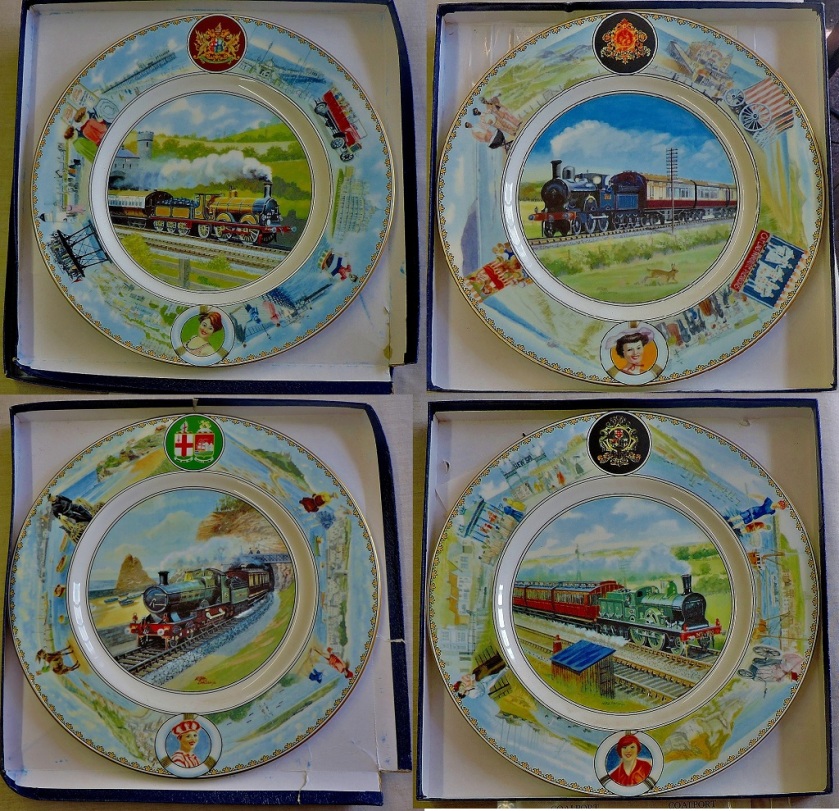
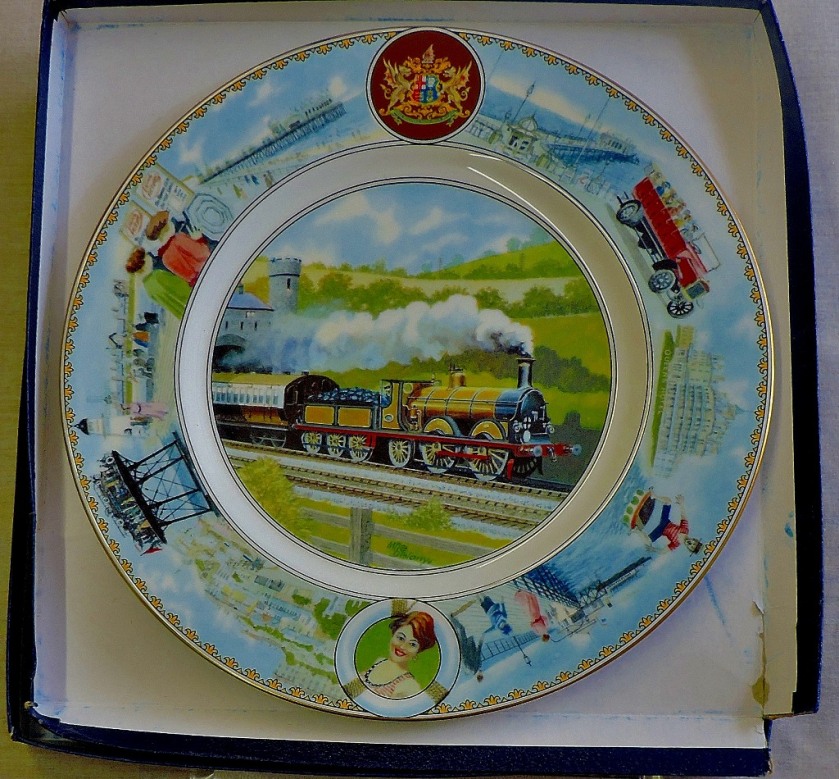
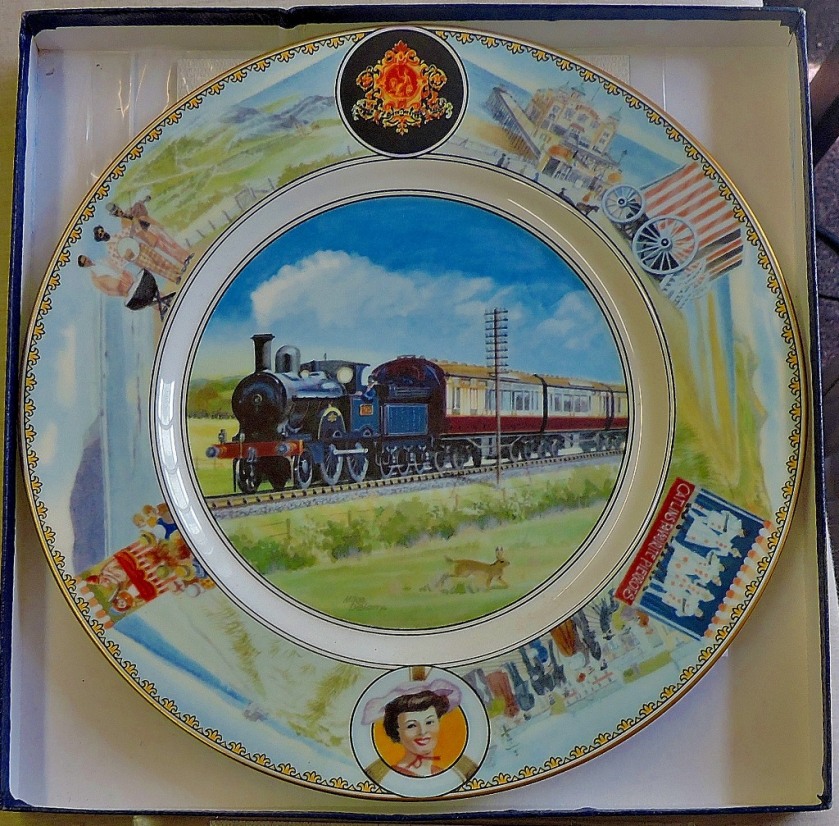

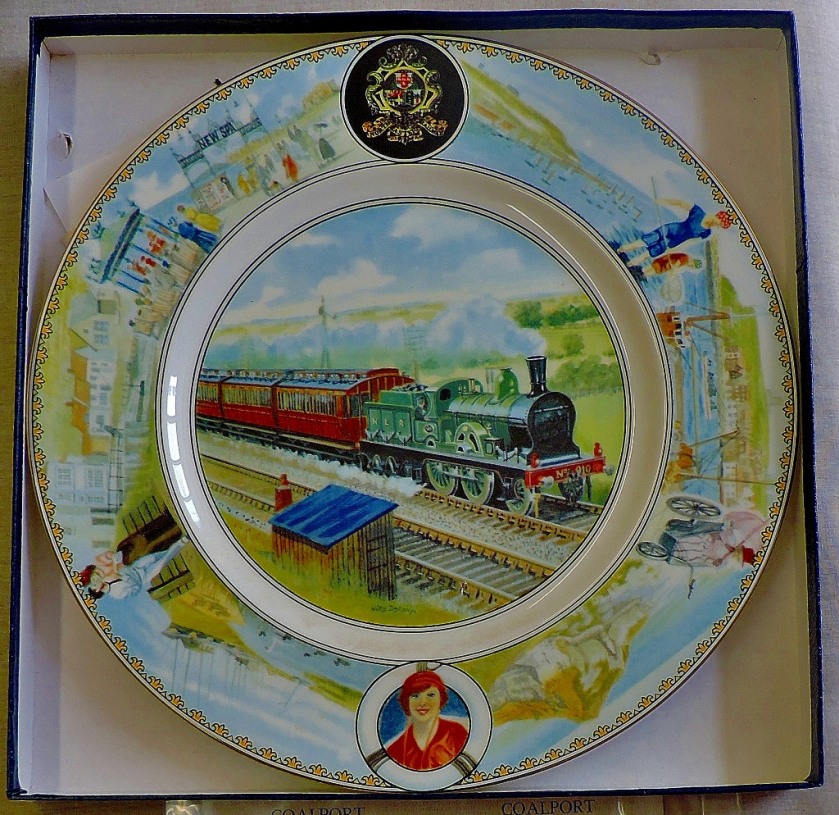
My opening bid of £12 proved sufficient to secure the items (I had prepared for the possibility of success by bringing a stout, empty, fabric bag with me to transport them).
The auction ended with some ‘Bradbury’ stamp pages, which may as well not have gone under the hammer at all since by then there was no one left in the room save staff.
Overall it was a successful sale.
While two of my colleagues took a few items to our storage unit near the village of Syderstone (principally the rostrum and the stools that we sit on behind it) I moved as much stuff as I could (almost all of it) over to the door so that it could be loaded straight on to the van once they were back. The van duly loaded it was time to head back into town, and thanks to my colleague dropping me on Oak Street I was just able to catch the 16:38 bus home. The bus to work yesterday morning was 20 minutes late leaving King’s Lynn, so by the time I arrived there were a mere five boxes of stuff left to carry in to the building, a task I accomplished in not much more time than it took the kettle to boil for my coffee.

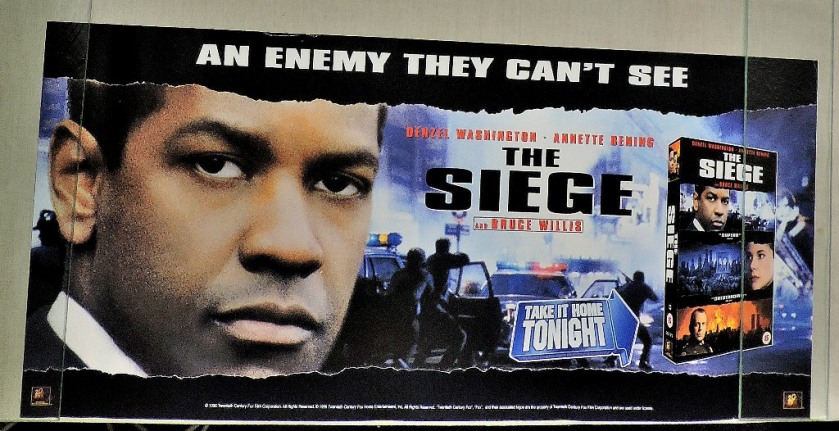
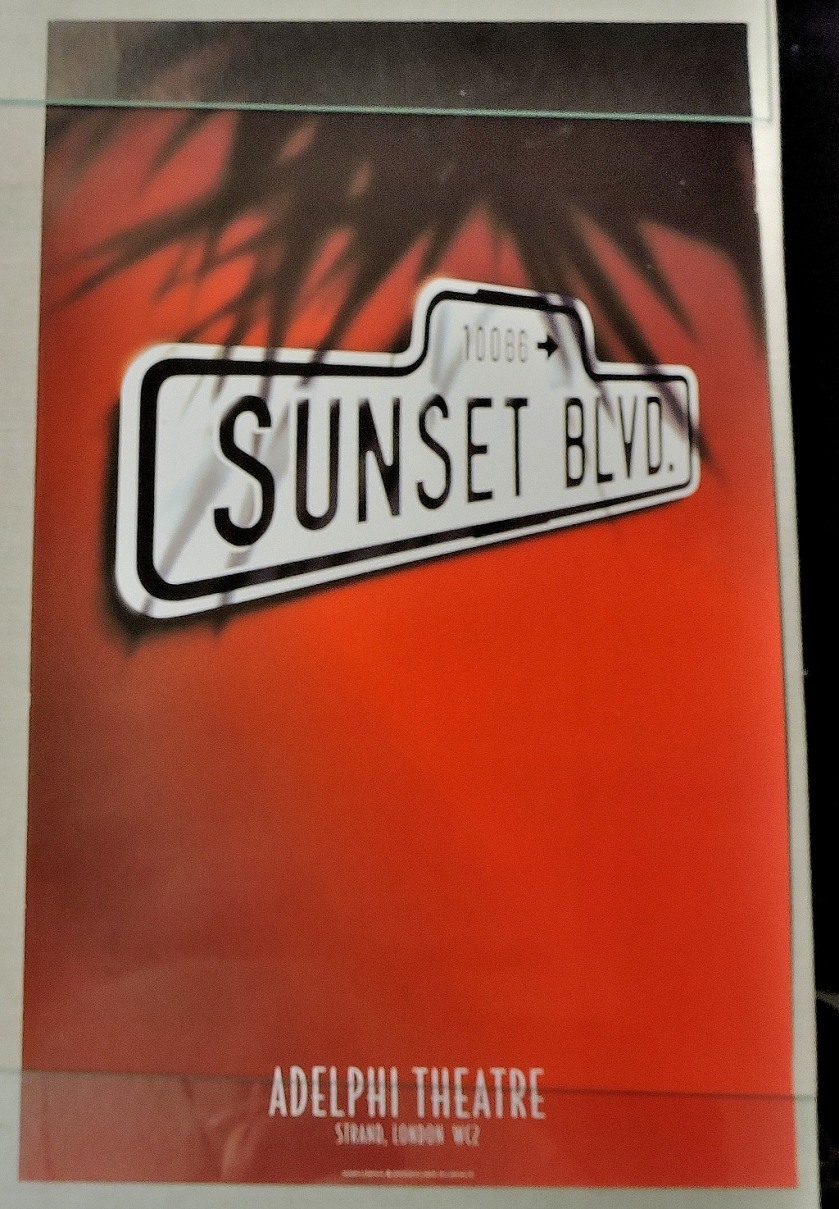
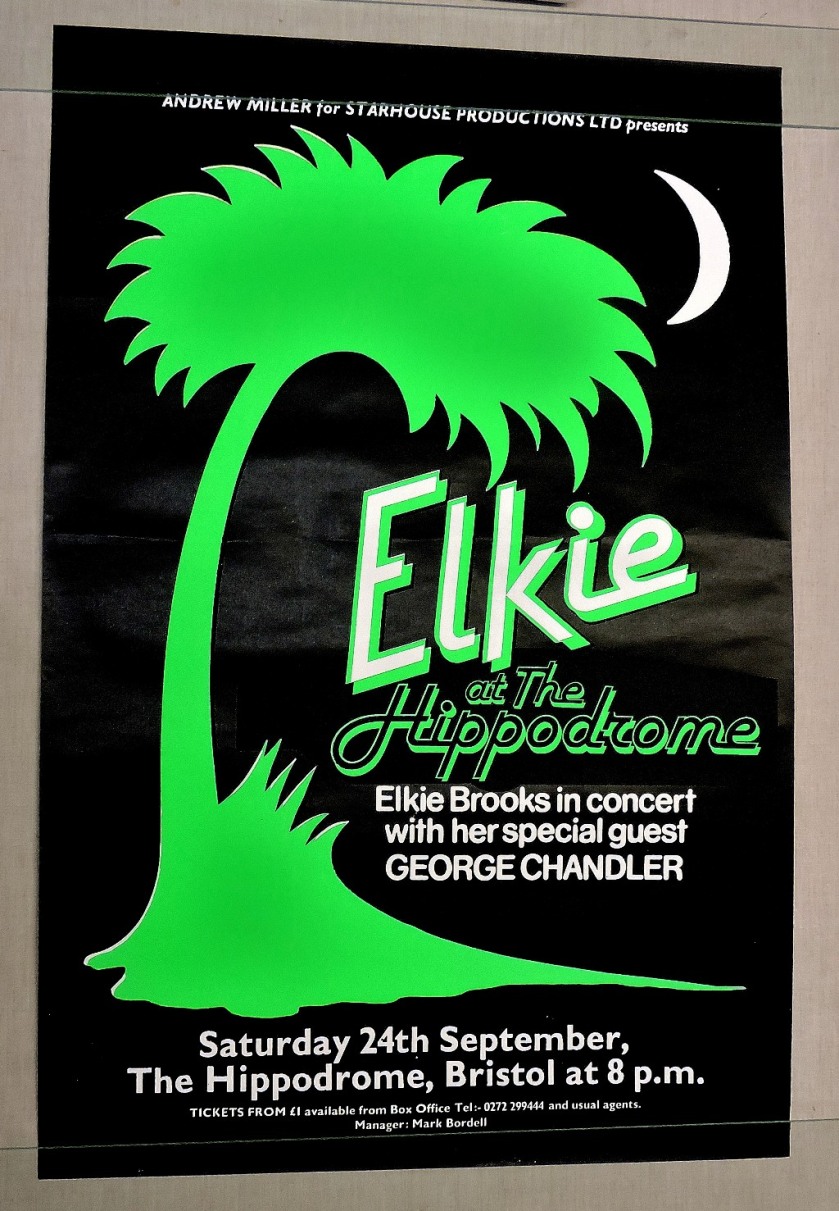
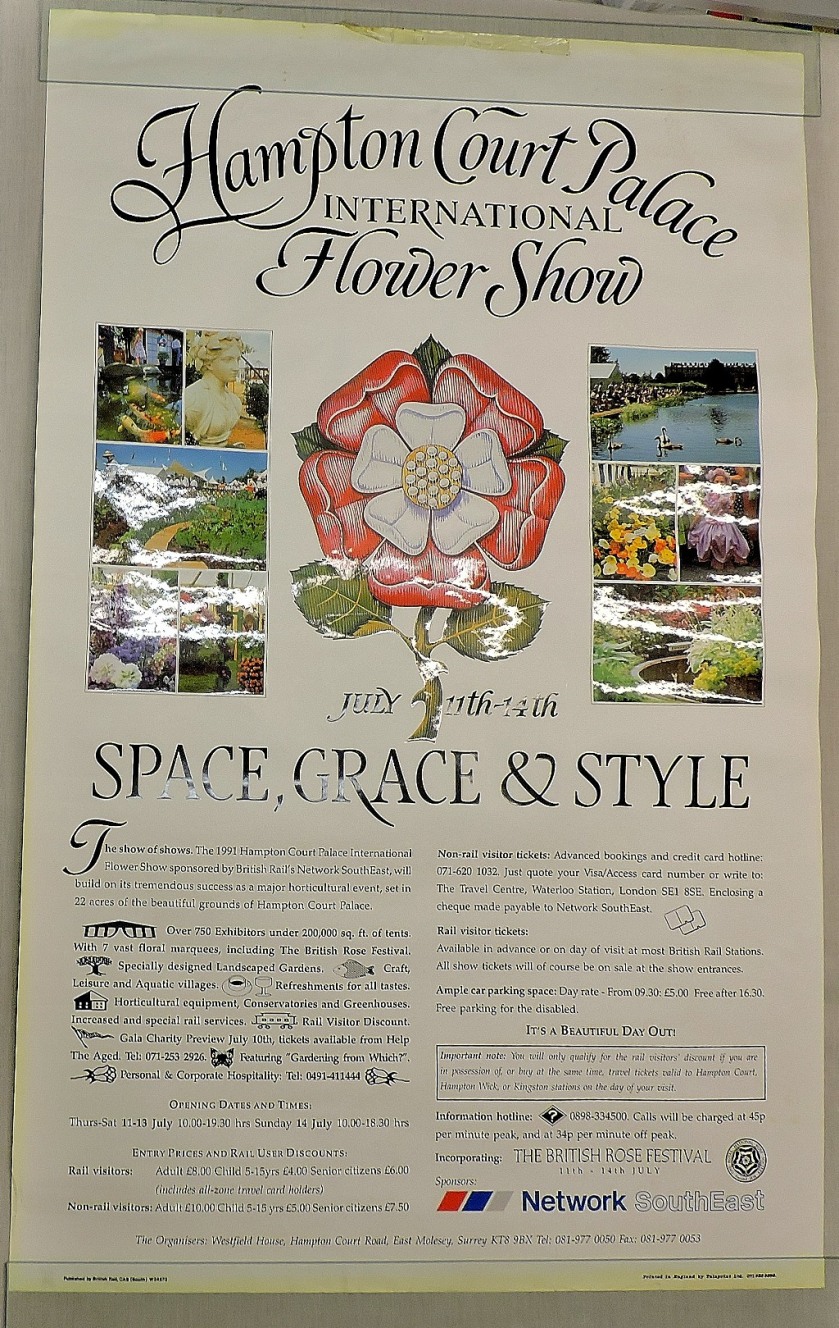
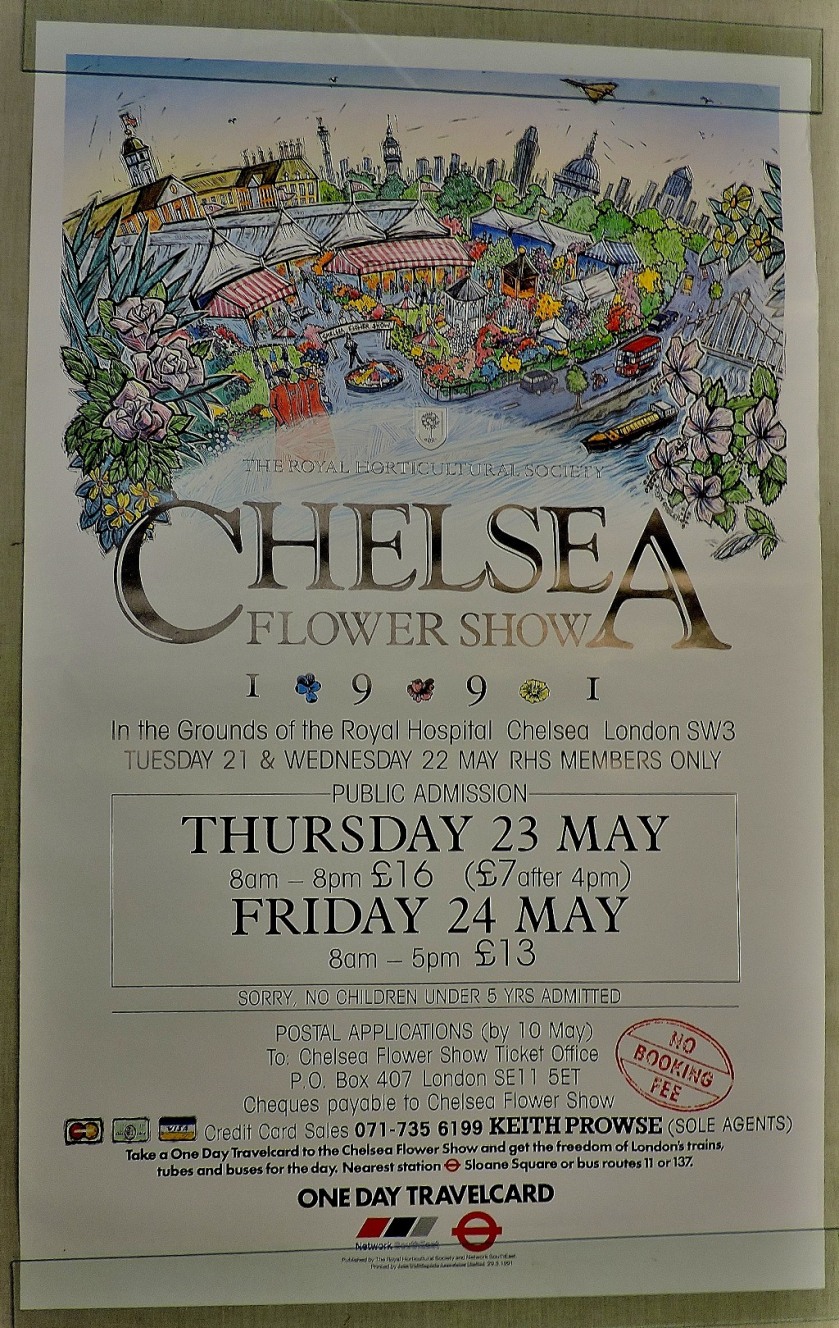
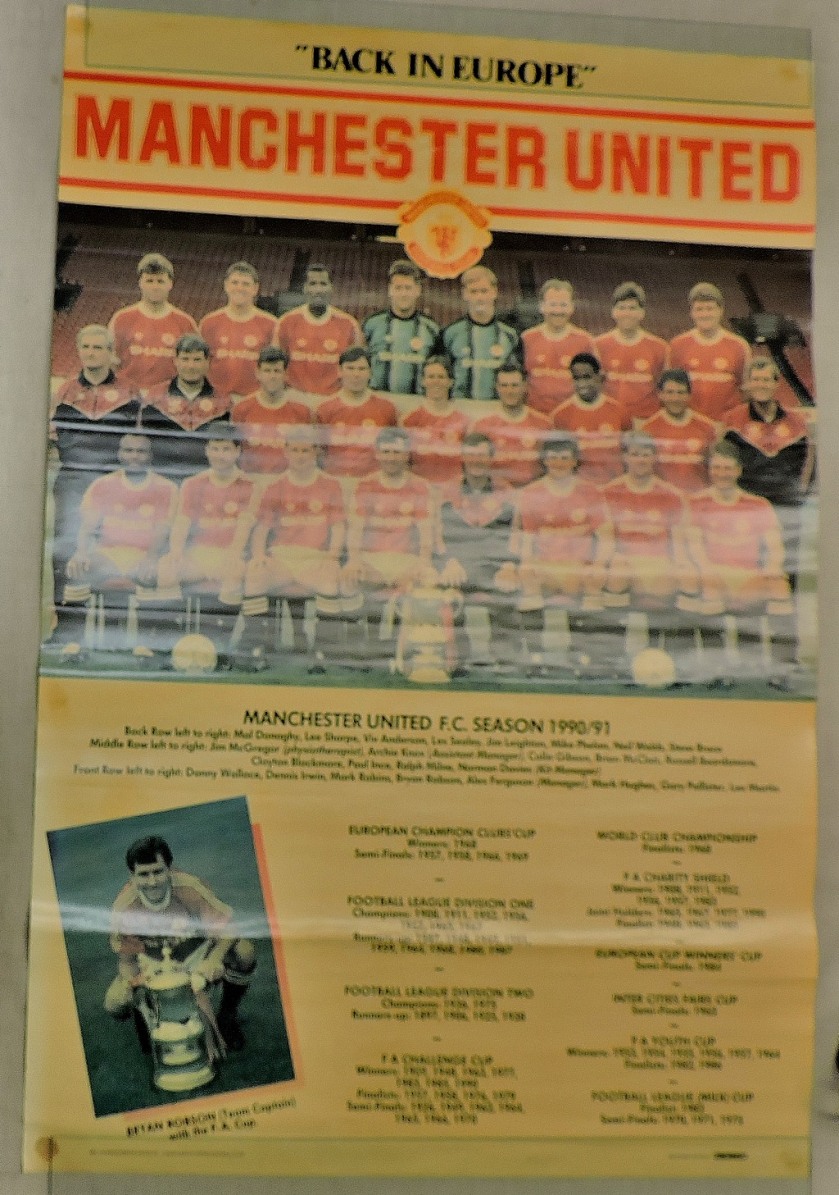
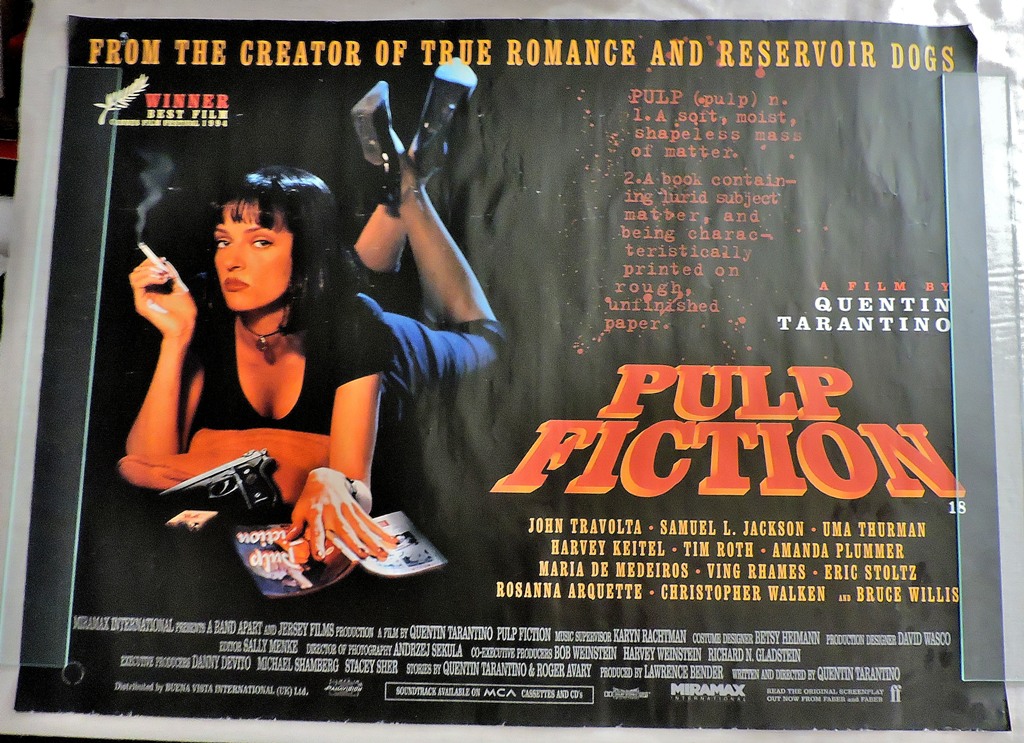
Wednesday apart, since September 15 I have been engaged on a major project at work – describing and imaging a vast number of posters – a task that is not quite finished, but which is responsible for almost 250 lots so far. The first 230 or so of these lots were film posters, ranging in size from a colossal 40 inches by 30 to 16.5 inches by 16.5. Here are a few examples…
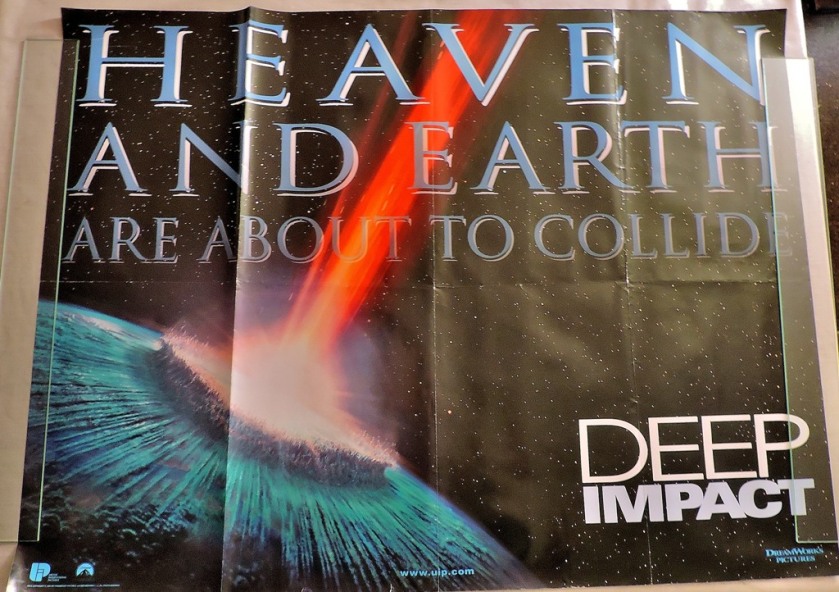
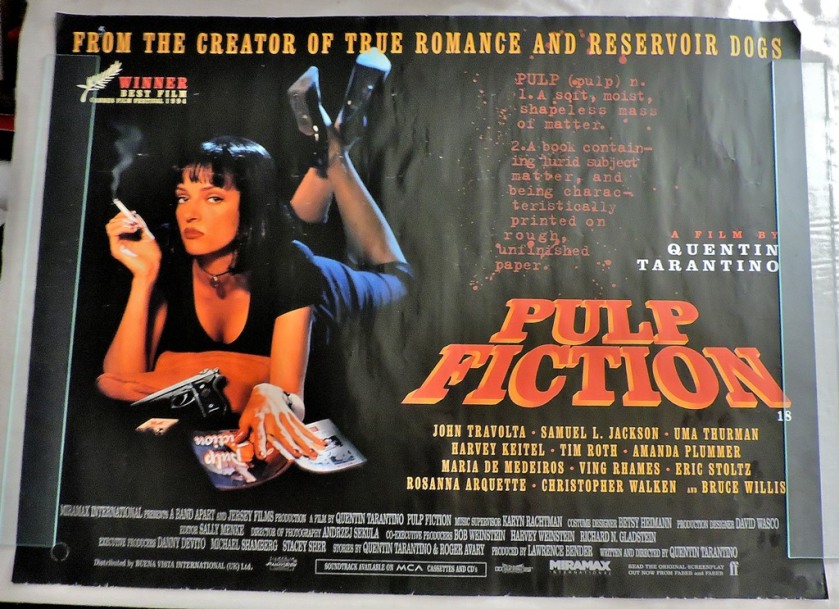
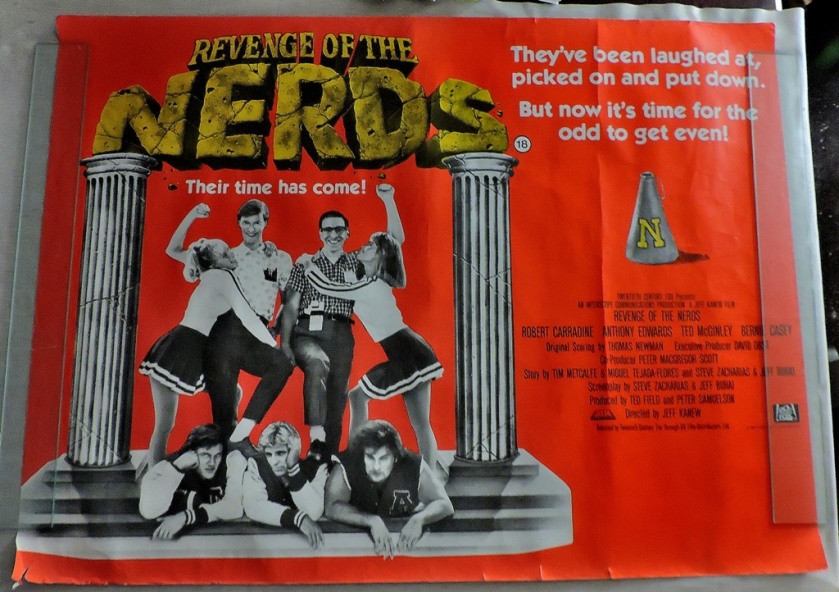

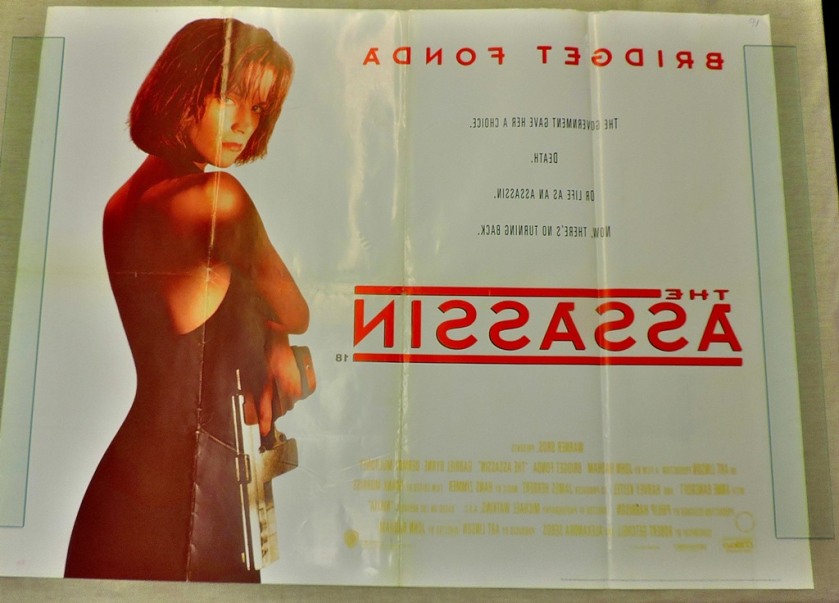
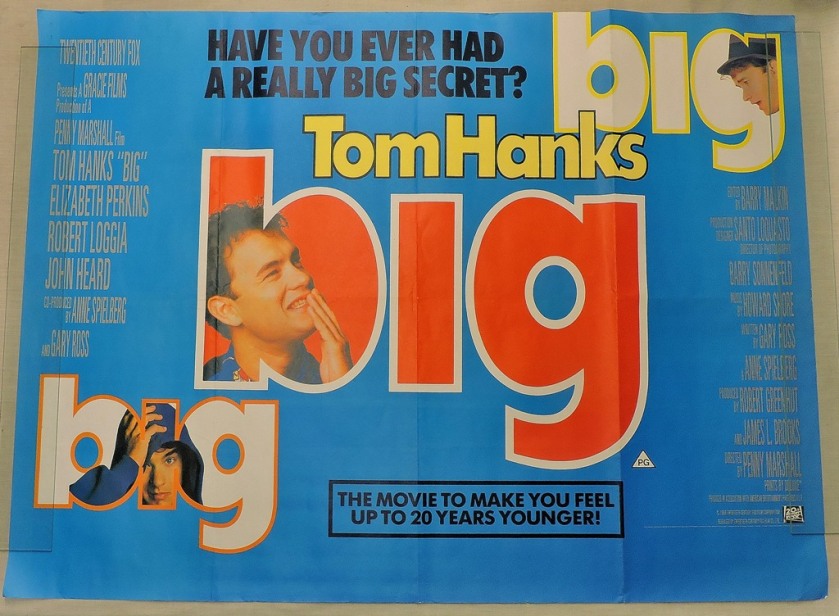
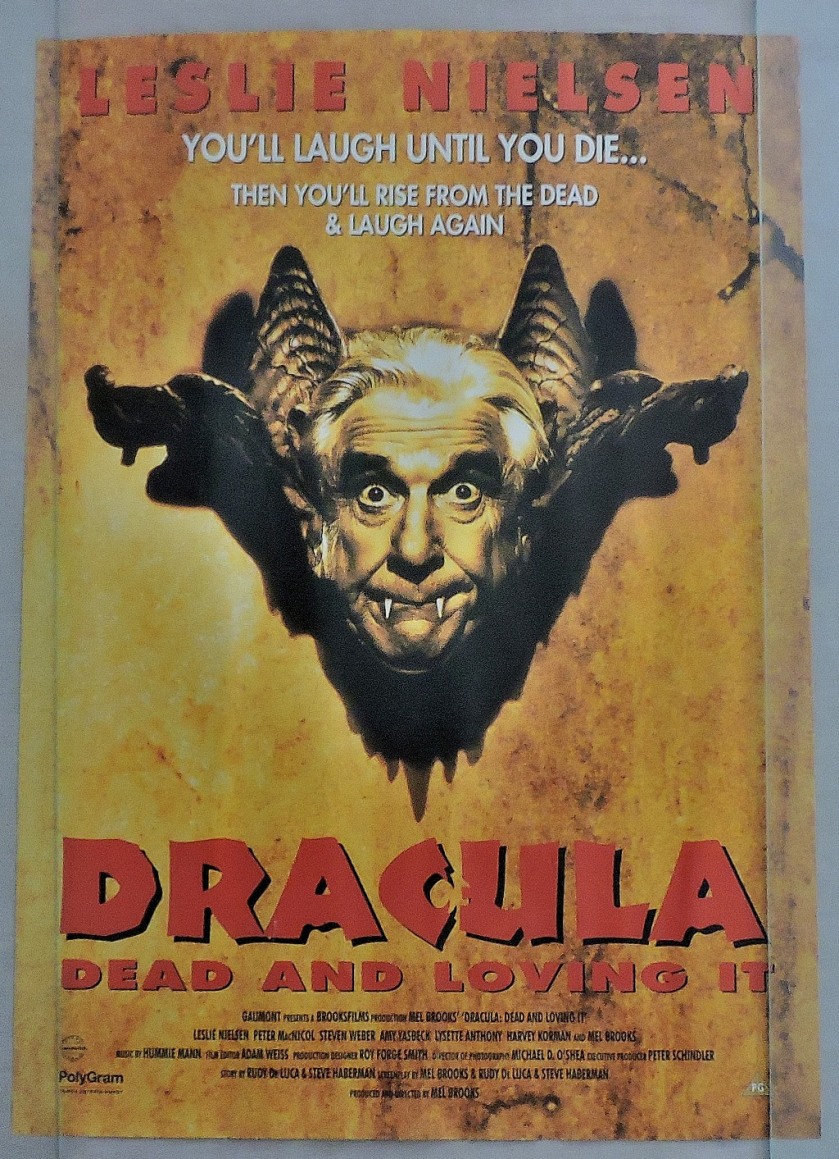
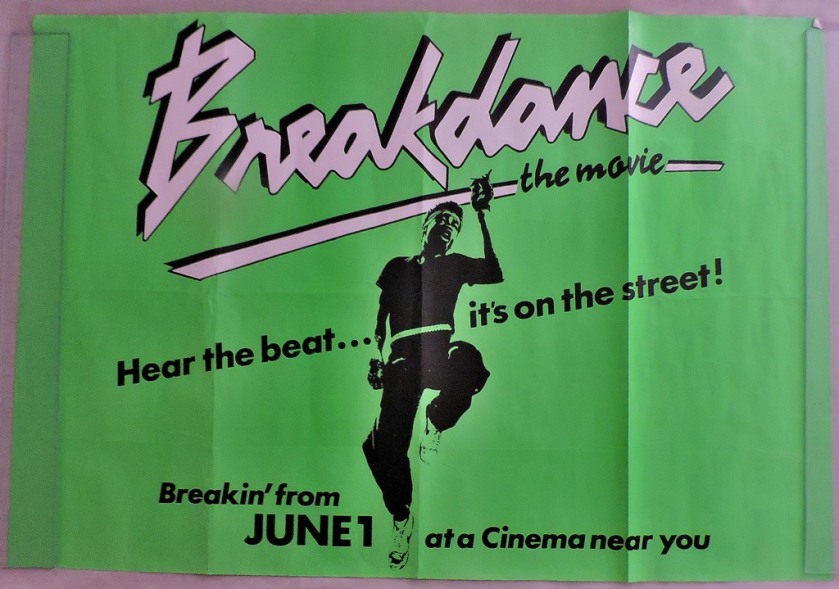

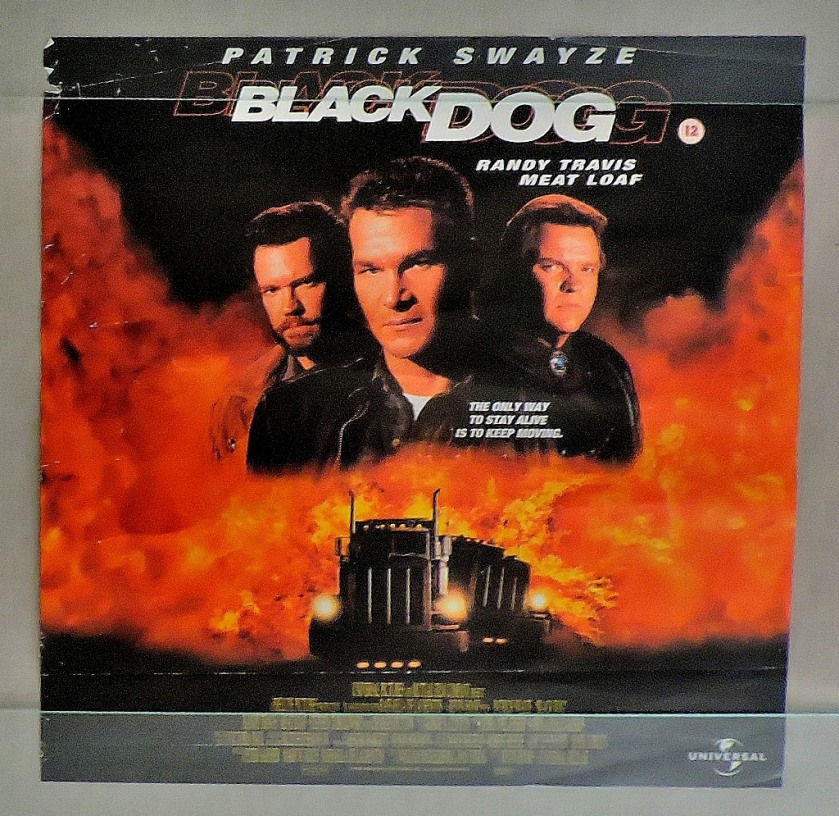
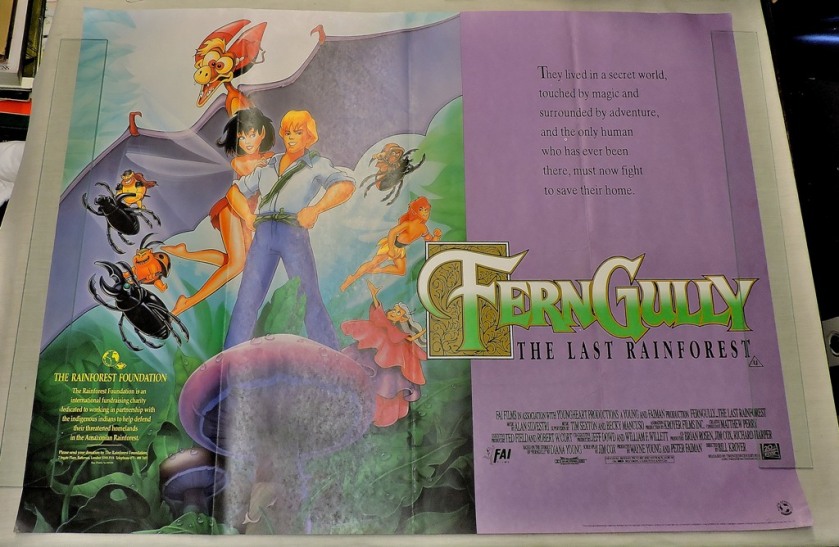
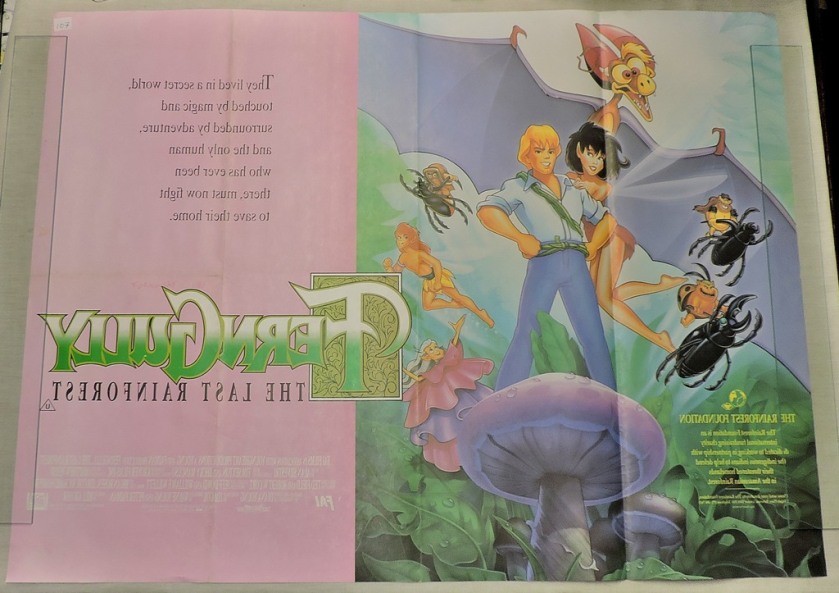

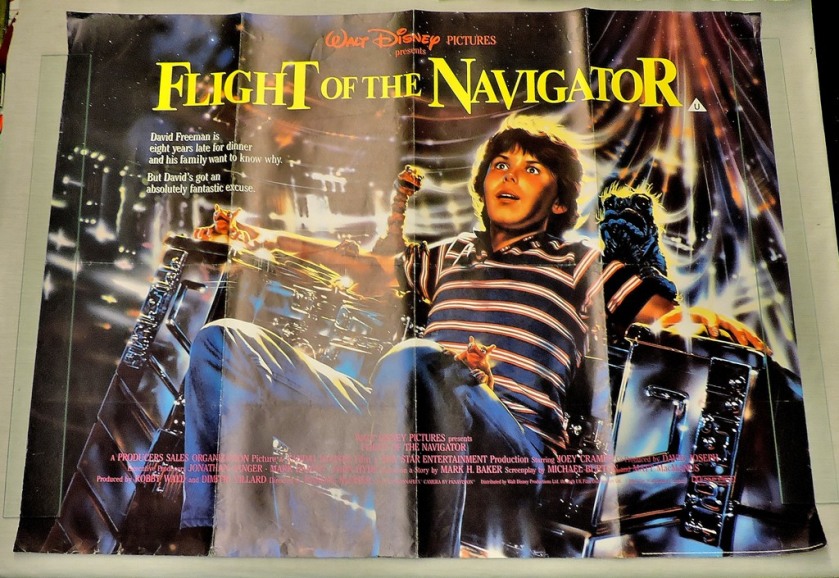
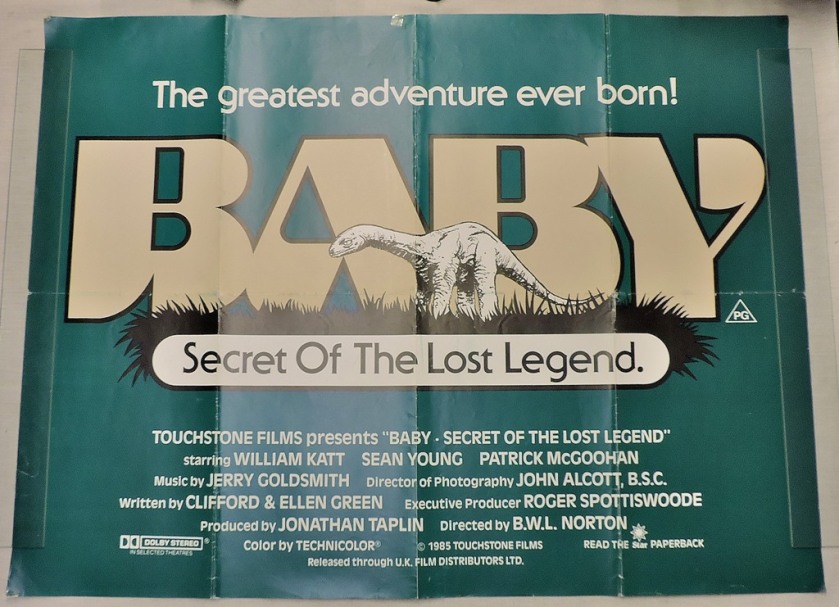
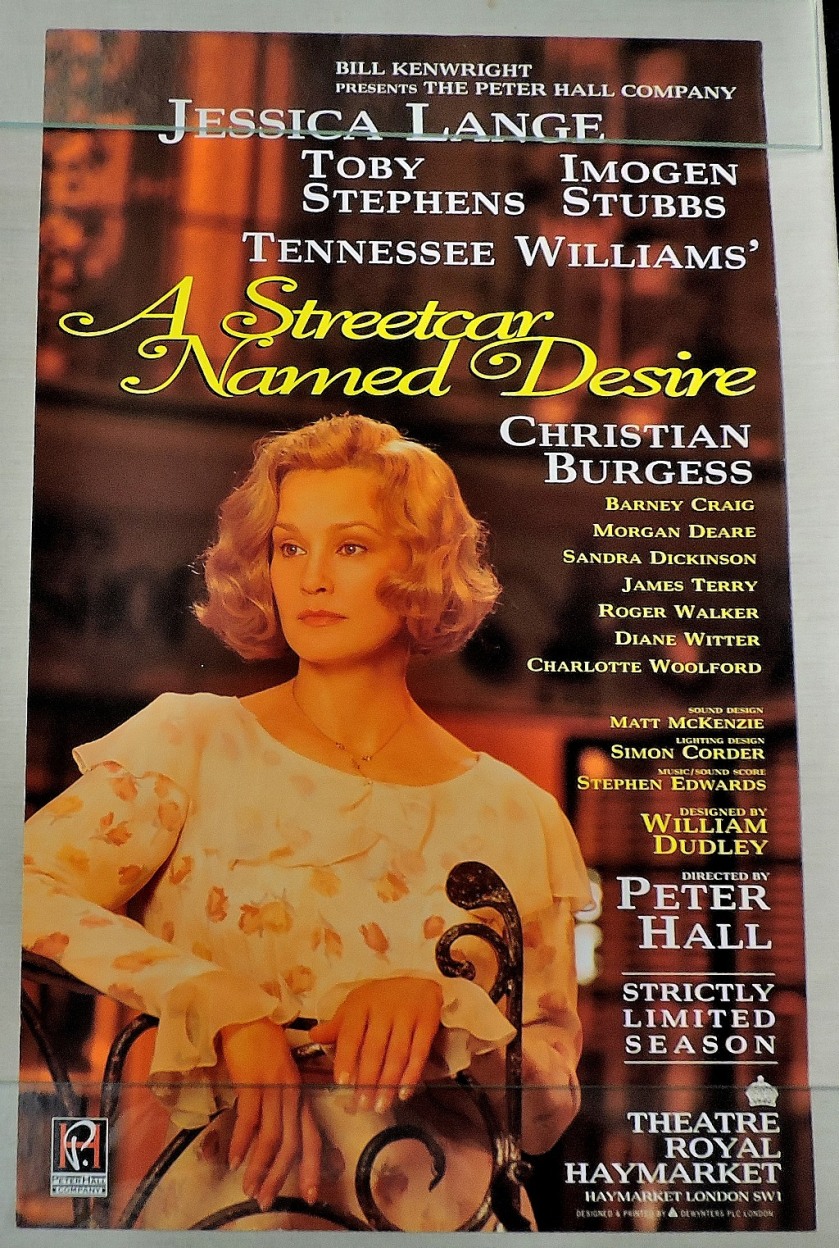
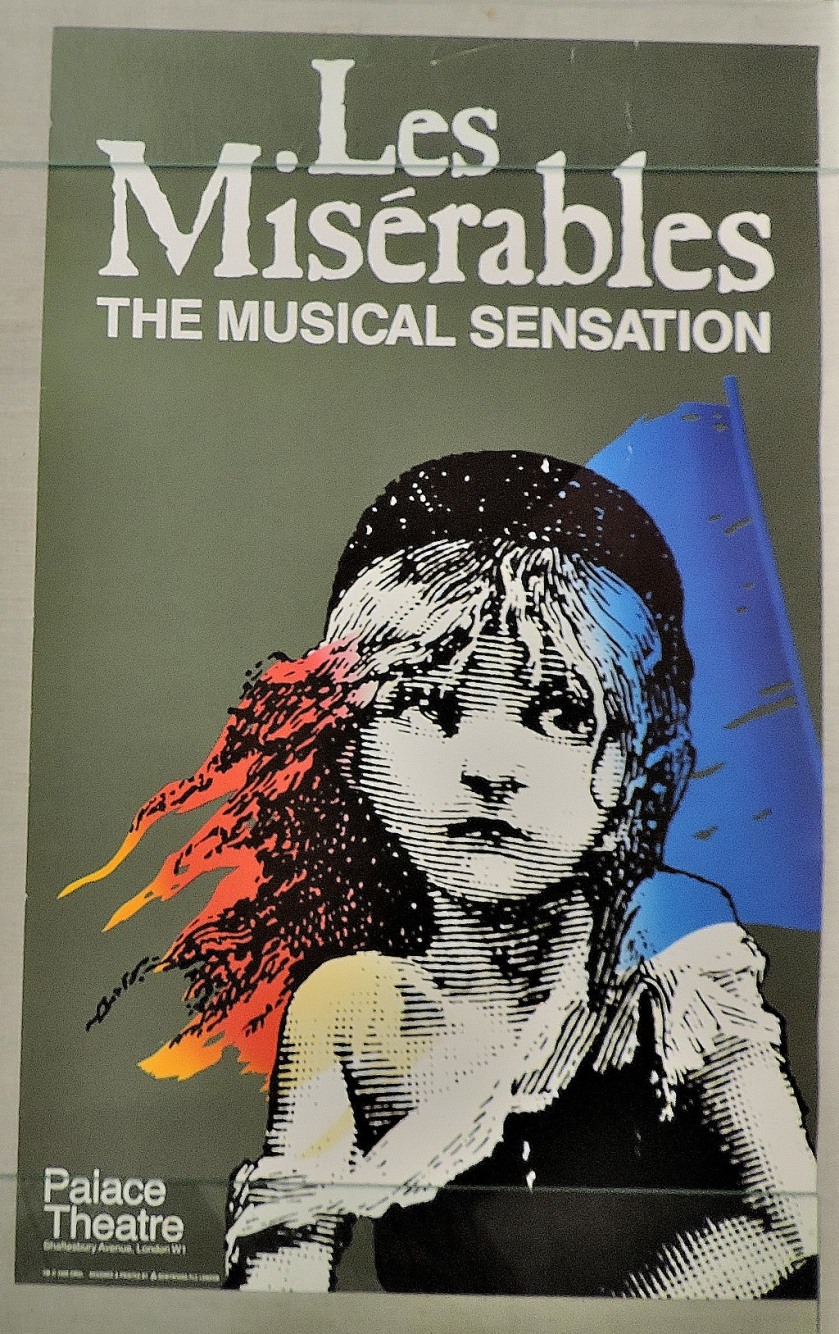
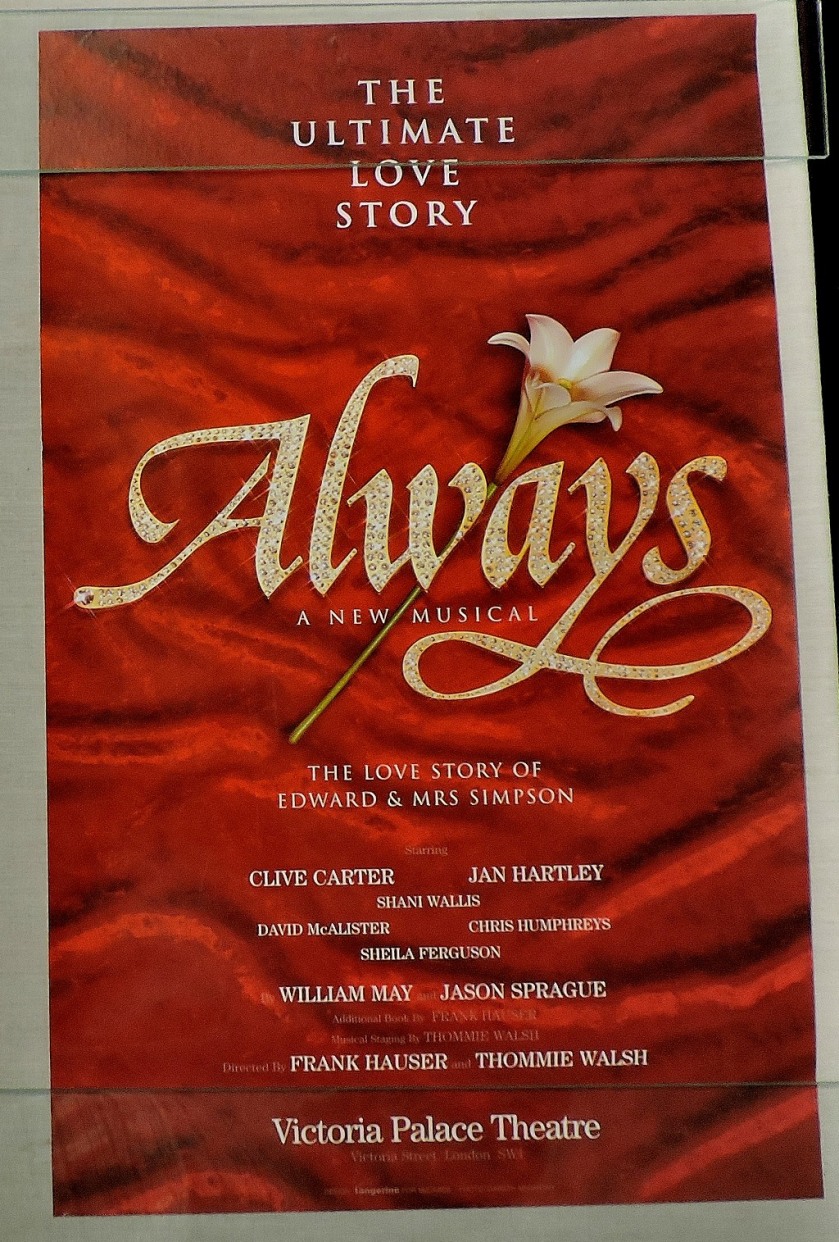
Yesterday, after a few more film posters I finally got some variety…


A very interesting post here making a jolly good fist of explaining how it feels to be autistic…
Just some stuff I found in my inbox this morning and decided to share.
I am sharing a few highlights from this morning’s inbox – to comment you will have to visit the pieces I flag up..
My first item comes from…
This little squib comes under the heading “The Most Desperate Tweet Ever” – to see it you will have to follow the link, but here, from the comments section of the original post is a classic counter version:
Nasty
Evil
Obscene
Leeching
Imperialist
Brutal
Excruciating
Ruthless
Aloof
Loathesome
Injurious
Spiteful
Malevolent
Well done to John M whoever you are for coming up with that.
For our next piece we turn to…
Disabled People Against Cuts to give them their full title have produced something about changes to the appeal process.
The remaining links I am sharing with you are concerned with…
All of the following links were contained in this morning’s Autism Newsletter from The Mighty. Firstly, written by Audra Cederquist, is this piece titled “5 Things You Should Never Say To The Parent Of A Child With Autism“.For full detail and to comment you will have to follow the link, but here are the five things not be said:
1. “What’s wrong with him?”
2. “I’m sorry.”
3. “Just tell him to stop.”
4. “Isn’t he too old/big for that?”
5. “He’ll grow out of it.”
My final piece, created by Stephanie Cooper, who is both mother of an autistic child and a former police officer, is entitled “Mom Creates Autism Law Enforcement Response Training for Police Officers” and includes a short video:
A variety of things that have come to my attention recently.
This post is about a mixture of things from the last few days, hence the title.
Some of you may remember that I put this post up on Thursday, with Somerset having secured an emphatic win in their game and Middlesex and Yorkshire going head to head in theirs. Sadly, when I checked what was going on on Friday afternoon, Lyth and Lees (the two opening batsmen, neither with any sort of status as bowlers) were purveying out-and-out filth for Yorkshire to help Middlesex set an agreed target. Yorkshire paid for accepting such an arrangement when their batting subsequently collapsed handing the title to Middlesex. Sadly, Somerset were innocent victims of this scam by Middlesex and Yorkshire, being robbed of would have been their first ever county championship not by good cricket but by dirty back room dealings.
This refers to two important issues that came up this weekend. Firstly, Greenpeace have exposed Bayer and Syngenta as having covered up evidence that their products were hugely damaging to bees. Greenpeace’s release can be viewed here, and here is a copy of their accompanying picture:

The parks part of the title of this section refers to an effort by 38 Degrees to secure better protection for our parklands. Living in King’s Lynn at this time gives this a particular resonance for me, so:
Britain’s parks are at risk. There’s no legal responsibility to look after them and squeezed budgets mean our local green spaces – from playgrounds, to the park you relax in on your lunch break – don’t have the money they need. We could end up being forced to pay to use our parks – or lose them altogether.
A group of MPs are looking into the crisis right now. They’re thinking of making protecting parks a legal requirement, and they’ll advise the government on what to do. A huge petition, signed by all of us, will prove how much we love our parks. It could convince the MPs to come up with a water-tight plan for protecting them.
Can you sign the petition now and demand that looking after our parks is made a legal requirement by the government? It only takes 30 seconds to add your name:
https://secure.38degrees.org.uk/save-our-parks
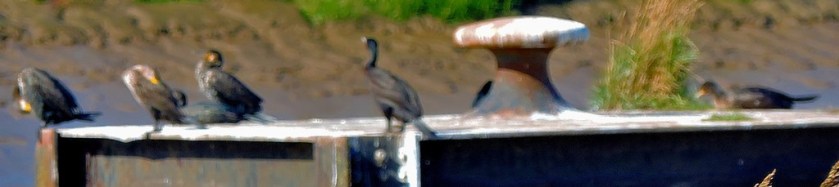
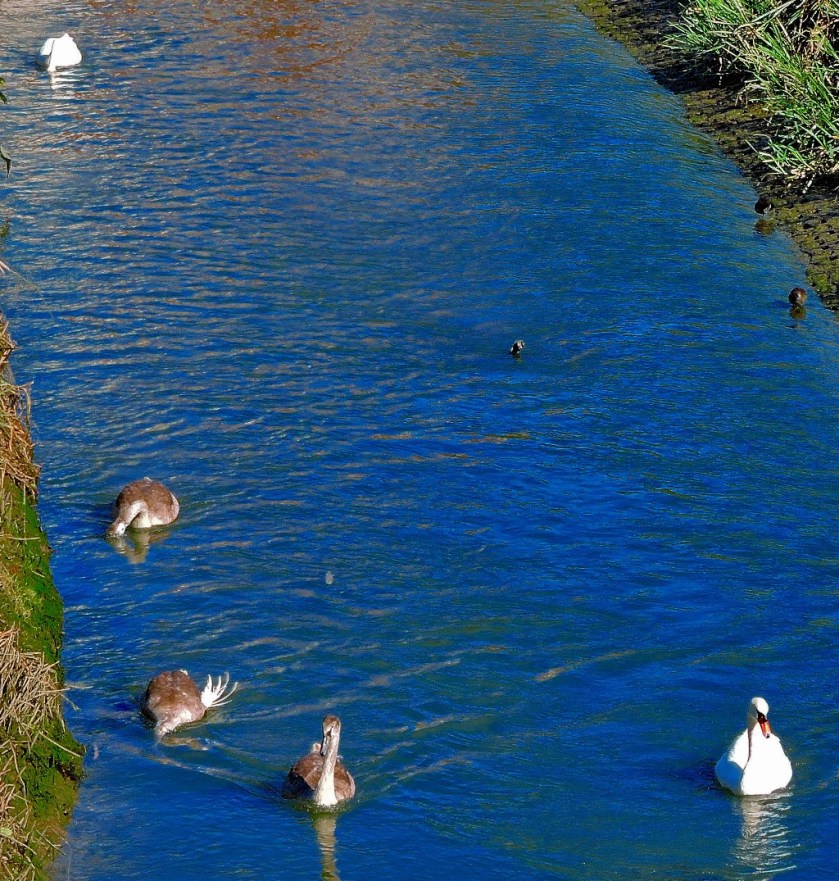
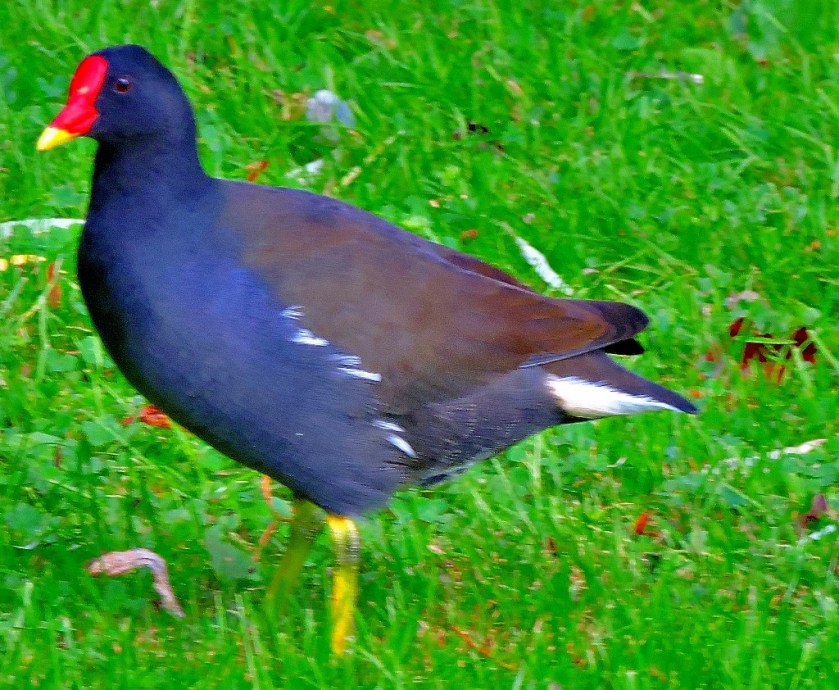
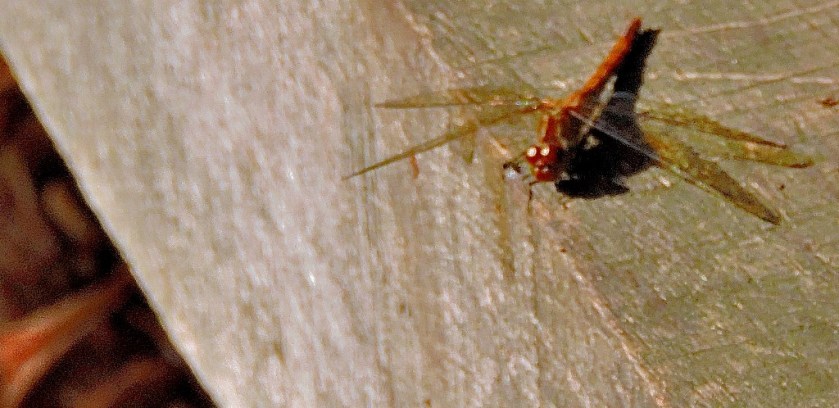
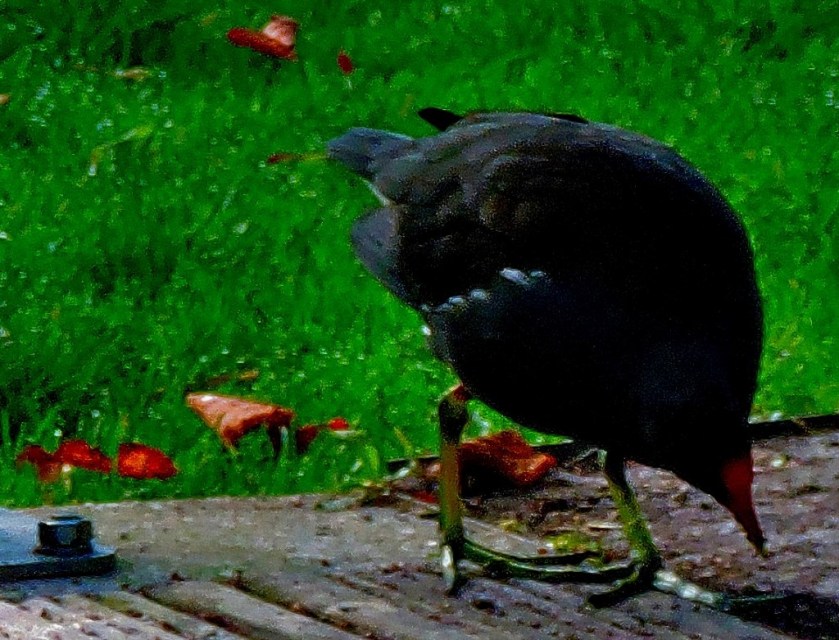
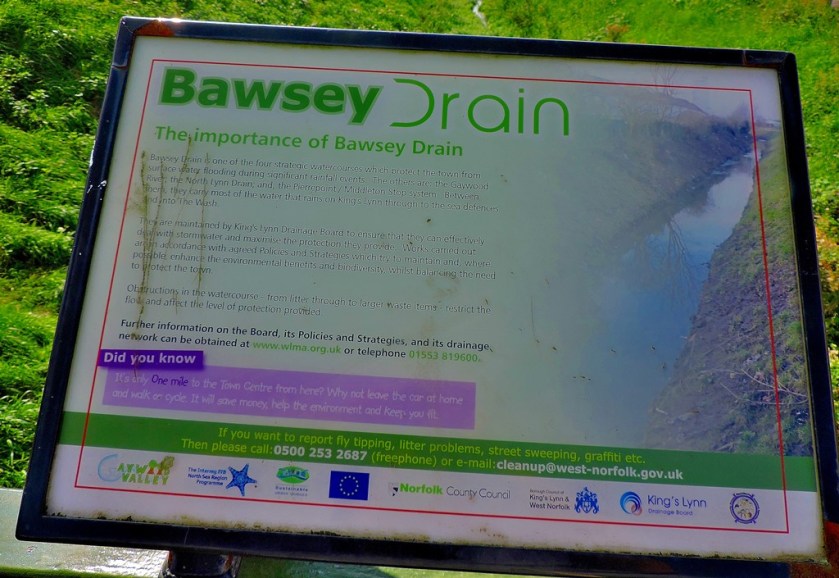
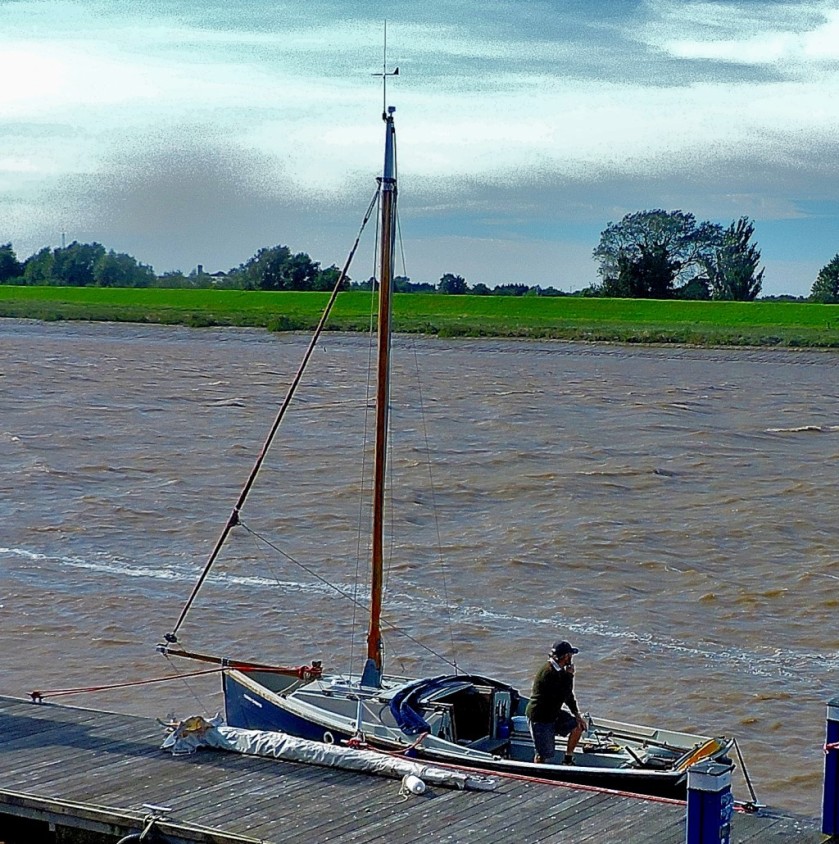
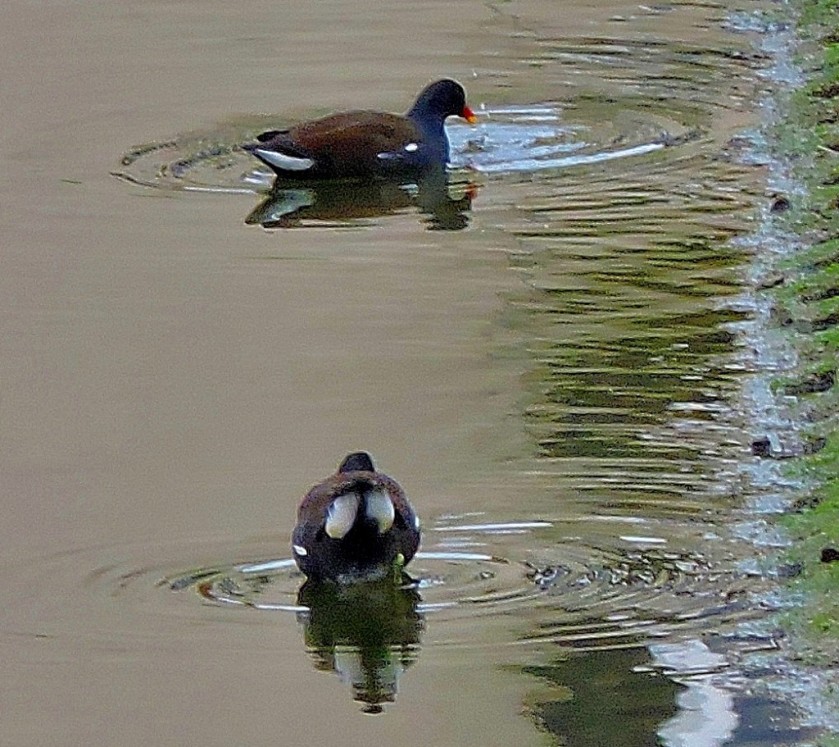
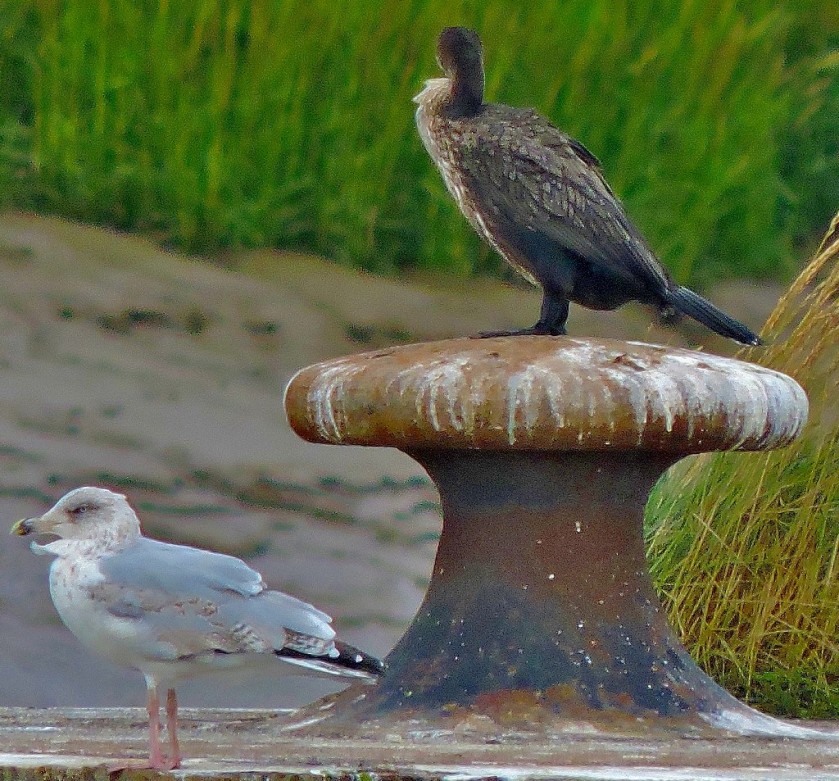
Here are some pictures of my own, including a few from King’s Lynn’s own parkland areas:


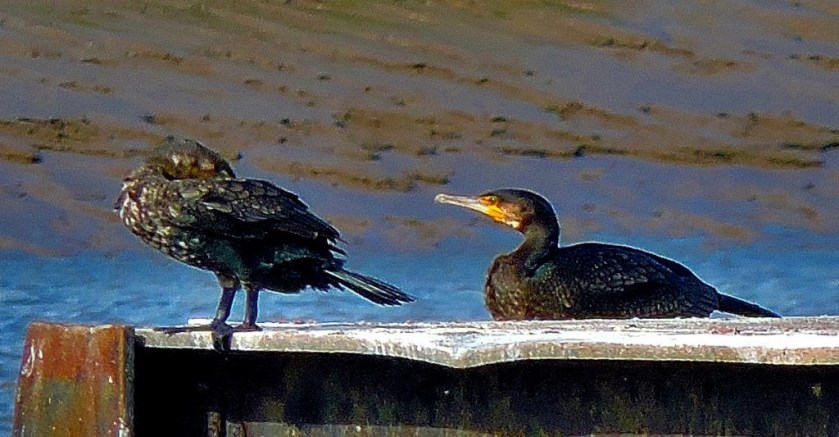
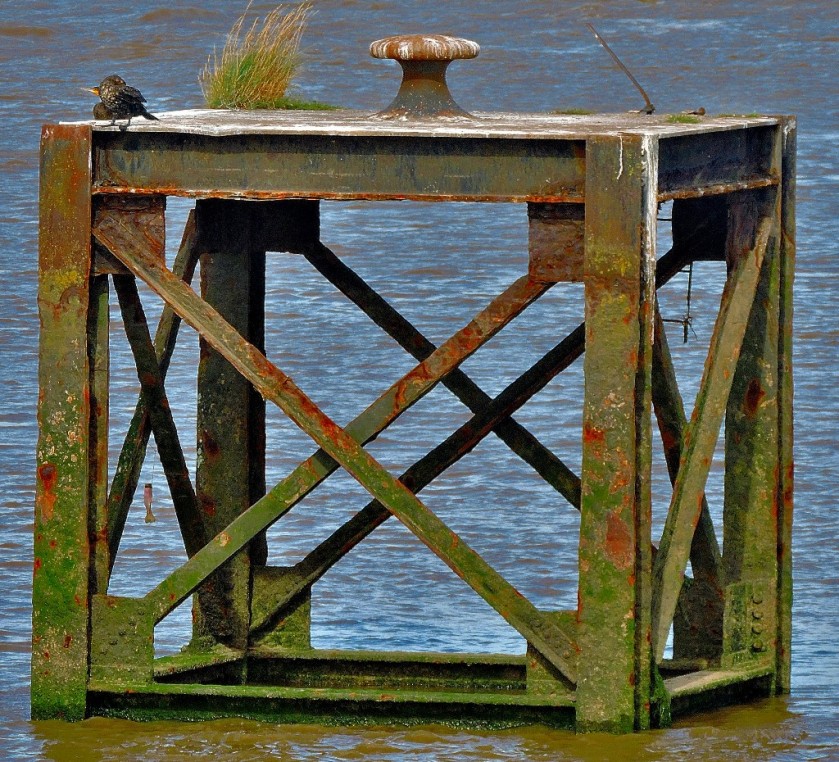
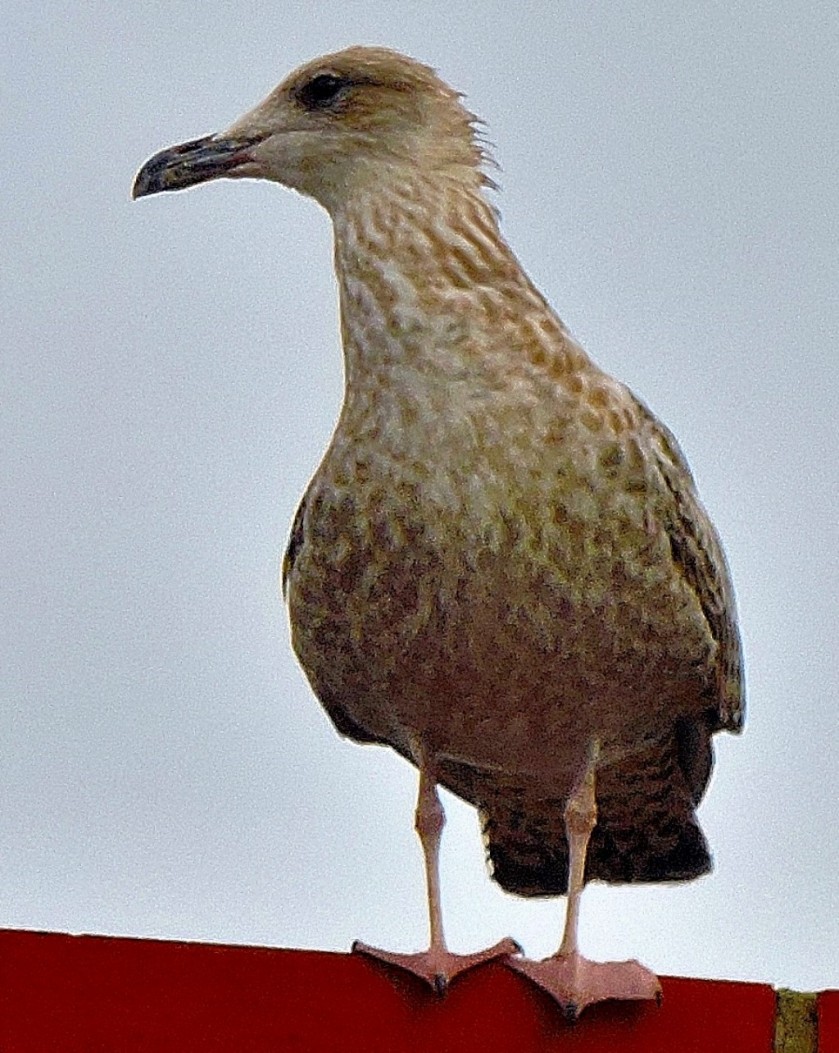
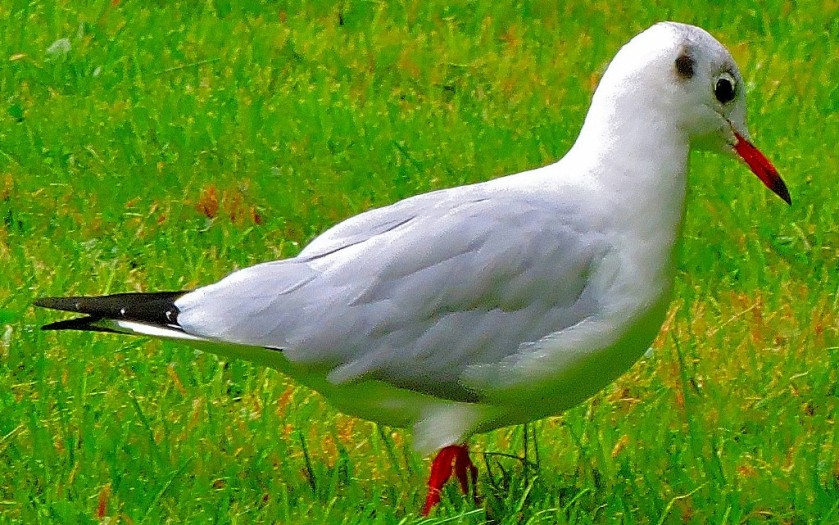


I will let these beautiful infographics culled from twitter do the talking for me on this one:


As NAS West Norfolk Branch Secretary and as someone who is #ActuallyAutistic I am always glad to share really excellent autism related content, and I have two absolute gems for you:
Finally to end this section, as regular readers will know one of the activities I am involved in via NAS West Norfolk is Musical Keys, and this is an advert they have recently produced:

One of my favourite blogs is that of singer Charlotte Hoather, who has just started at the Royal College of Music in London. Her post about her first week there can be viewed here.
To end this post I give you a series of pictures starring a snail…






Some thoughts on the closing stages of this years County Championship, as it goes into its final day with three potential winners.
Somerset are within touching distance of their first ever County Cricket Championship, but the situation is complicated by the fact that their only two rivals are in direct opposition.
Courtesy of cricinfo, here is the situation in the key matches:
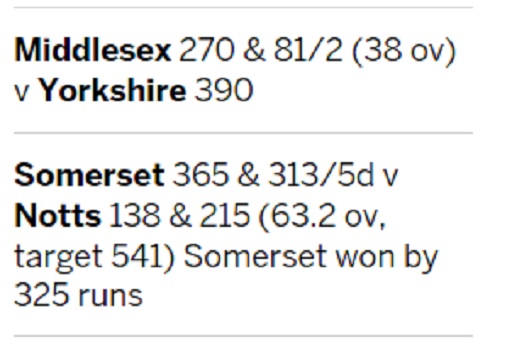
The situation is that a draw in the Middlesex v Yorkshire game is not enough for either side – the five points they would each gain from that would still leave them adrift of Somerset. Tomorrow is the last day of the match, which means that time constraints are well and truly in play. Clearly, with a draw rendered worthless by the situation both sides will do all in their power to win the game, which leads given time limitations to the question of just what would be acceptable in the way of a third innings declaration by Middlesex. It is possible that Yorkshire could win the match in the most satisfactory way, by taking the remaining eight Middlesex wickets early enough to give themselves an easy fourth innings target. For Middlesex the question would be how much risk could they take in setting a target bearing in mind that they have to have a legitimate chance of taking 10 wickets to do so?
Given that Middlesex are still 39 runs behind, unless Yorkshire deliberately concede runs to hasten a declaration (which would certainly cause raised eyebrows in Taunton) it is unlikely that Middlesex would be in a position to consider a declaration much before teatime. My own rough and ready view is that if come the tea break tomorrow Middlesex have a lead of somewhere in the region of 170 that in the circumstances would be an acceptable risk – Yorkshire would have to go for the target, and an asking rate of approximately 5.5 an over with no fielding restrictions would introduce enough risks that Middlesex could hope for the 10 wickets they need. A declaration giving Yorkshire 120 or so to chase in that final session would definitely (albeit actuated by very different motives) be verging on ‘Cronje’ territory, and almost regardless of when it was made, a declaration giving a target of under 100 should be considered as out and out match fixing.
Although I have indicated previously that as an underdog supporter I would like to see Somerset win, the key thing here is that any victory for Middlesex or Yorkshire should be seen to have been won out on the field, and not in the dressing rooms.



 aspiblog