An account of the 1st ODI between England and the West Indies.
INTRODUCTION
After a test match series most of which is best forgotten England last night started the ODI series against the West Indies in emphatic style. I followed the action on cricinfo, since there was no live commentary.
A RUN FEAST
Chris Gayle, playing his last international series at the age of 39, clubbed a spectacular century for the West Indies. The problem was that although he was smashing sixes like the Gayle of old he was no longer able to run at any sort of speed, and as a result his overall scoring rate was not actually that quick by modern standards as there were too many scoreless deliveries there.
The early lead in England’s response to the West Indies 360 was taken by Jason Roy who pretty much matched Gayle for freedom of stroke play and was also able to run properly, with the result that his strike rate was colossally impressive. Joe Root and Eoin Morgan then took over once he was out, and just before the end Root reached the third inidvidual hundred of the day, while Ben Stokes made an unbeaten 20 at the end to ensure that there would be no final wobble. Root was out at the death, caught of a dreadful full toss that was only just a legal delivery, but England’s margin was six wickets, with eight balls to spare, and at no point during the England innings did the West Indies look other than second favourites.
Although Gayle had a higher score the player of the match award went quite rightly to Jason Roy whose innings put England firmly in the driving seat, a position they never subsequently relinquished. In a match in which 724 runs were scored in 98.4 overs Ben Stokes’ bowling figures (3-37 from 8 overs) were noteworthy. Chris Gayle’s 135 came off 129 balls, so just above 100 runs per 100 balls, while Jason Roy’s 123 occupied just 85 balls – a strike rate of over 140 runs per 100 balls. A full scorecard can be viewed here.
In the early hours of tomorrow morning UK time, the England women take on India in an ODI, while the second match of the series in the West Indies gets underway later the same day.
Some thoughts on the opening day of the test series between the West Indies and England, and a couple of NAS West Norfolk related bits.
INTRODUCTION
England’s latest test series in the West Indies is under way, and for the most part this post deals with the opening day’s play which happened yesterday.
ANDERSON SHOWS THAT
CLASS IS PERMANENT
At the age of 36, by when many bowlers of his type have retired, James Anderson showed once again just how magnificent he can be. Yesterday he bowled 24 overs and finished with figures of 4-33 in a West Indies total of 264-8. He was well backed up by Ben Stokes (3-47 from 19.2 overs – the last taken on the brink of the close, hence the over not being completed). Several of the West Indians got starts, but unless Hetmeyer (56 not out overnight) does something remarkable in company with the tail none have gone on to make really big scores, and that is why their total looks decidedly modest, especially given that they won the toss and chose to bat.
Before very long we shall see how England handle batting on this surface. I anticipate a fairly handy lead on first innings for England. For the moment however, and for the umpteenth time it is a case of “take a bow, Jimmy”.
A COUPLE OF EXTRAS
On Tuesday morning I attended an NAS West Norfolk committee meeting for the first time since becoming ill, and earlier today I typed up my notes and emailed them to the branch chair. For reasons that should not need explaining I cannot share any details of that meeting here.
Still on the NAS West Norfolk front, a lady named Claire who is a carer for the younger son of our branch chair is running in the year’s GEAR (Grand East Anglia Run) to raise funds for NAS West Norfolk. You can find her Just Giving page here, and I can assure you that every penny received by NAS West Norfolk is used to help autistic people (we spend about £15,000 per year running activities for our members and donations are our only source of income).
Christmas report on the England men’s team, and some Muscovy duck pictures.
INTRODUCTION
While the England Women’s team have had a fabulous year, thoroughly deserving to win Team of the Year at the BBC Sports Personality of the Year awards (and had there been any justice Anya Shrubsole would have been Sports Personality of the Year) life has been tougher for the men. The confirmation in the early hours of Monday morning UK time that the Ashes had been lost (yes folks, I was listening to TMS right to the bitter end) lies behind this post (going up now through a combination of thinking before I wrote and work commitments yesterday). I end as usual with some of my own photographs.
THE FIRST THREE TEST MATCHES
Gritty fifties from Stoneman and Vince on the opening day notwithstanding Brisbane was a bad match for England. The ease with which Warner and Bancroft knocked off the 170 needed to win in the second innings, and the immovability of Aussie skipper Smith in their first innings were the most worrying sings.
Adelaide kicked off with Joe Root deciding to field first when he won the toss. An Australian tally of 442-8D in the course of the first day and a half made that decision look worse than it was (it was still poor, though not down there with Nasser Hussain at Brisbane 2002). England were then all out for 227, and as this was as a day-night test with the night session due to start it seemed mandatory to enforce the follow-on, but Steve Smith declined to do so. Australia stuttered under the lights to 50-4, and England’s best bowling effort of the series so far continued the following morning reducing Australia to 138 all out, leaving England 354 to get. England made a decent fist of things, and at 170-3 it looked like they might just get them. Unfortunately both for England and for cricket as a whole (there are a lot of captains these days who almost automatically decline to enforce the follow-on, and had England chased down this target of 354 it might have made those people think) a wicket just before the close of day 4 and then a clatter the following morning put paid to that.
So it was on the Perth for the last Ashes game to be staged at the WACA (a new stadium just across the road will stage future Perth tests), a venue where England had only one once, way back in 1978. Precedents for a comeback from 0-2 down in a five match series are equally thin on the ground – the only successful example being Don Bradman’s 1936-7 Aussies (Bradman himself produced scores of 270, 212 and 169 in the third, fourth and fifth matches of that series, and also produced a tactical masterstroke in those days of uncovered pitches in that third test when faced with a terror track he sent in tail-enders O’Reilly and Fleetwood-Smith to miss everything until the close of that day – Bradman emerged the following day at 97-5 to join regular opener Jack Fingleton who had come at no 6, and with the pitch now eased they put on 346 for the sixth wicket to settle the issue), although 42 years earlier Australia had won the 3rd and 4th matches after being 0-2 down before England won the final game of that series.
England batted first in Perth, and at 131-4 a familiar pattern seemed to be emerging, but then Dawid Malan and Jonny Bairstow got going, and both made hundreds. Malan went on to 140. Once their 237 run partnership was broken the rest of the innings subsided quickly, but 403 still seemed a respectable total. When Australia were 248-4 England still looked in with a shout, but by the end of day 3 Australia were 549-4, Smith having set a new career best and Mitchell Marsh in front of his home crowd turning his maiden test hundred into 181 not out. Smith and Marsh both fell quickly the following morning, and Starc was also out cheaply, but Tim Paine and Pat Cummins made useful contributions, and Australia declared at 662-9, leaving England four and a half sessions to survive for the draw. By the close of that fourth day Bairstow and Malan were together once more, with the only convincing batting effort up to then having come from Vince, who played very well for his 55 and was unlucky to get an absolute brute of a ball from Starc.
It rained overnight, and the covers at the WACA proved inadequate, leaving a wet patch on a good length at one end, which delayed the start of the fifth day’s play. Root argued for an abandonment, while Smith of course tried to hasten the start of play. I fully understand why Root tried to get play abandoned, but actually I am glad he failed in the attempt – to keep a series alive in that fashion would have been deeply unsatisfactory. At Headingley in 1975 a delicately poised final day (Australia 220-3 needing 445 to win, and Rick McCosker five away from what would have been a maiden test hundred) was abandoned after protesters sabotaged the pitch (“George Davis is innocent” – according to Peter Chappell, namesake of two members of that Australian team, but not according to the courts, or his future record – released from that sentence for armed robbery, he was soon back inside for another armed robbery to which he pleaded guilty).
Once the game finally commenced it was soon obvious which way the wind was blowing, and for the third time in the space of a year (following two occasions against India last winter) England had managed to lose by an innings margin after tallying 400 first up.
ENGLAND PLAYER BY PLAYER
Alastair Cook: 150 tests, the last 148 of them in sequence – remarkable longevity. At the moment he is having a rough trot, and when Cook is having a rough trot (as he did in the early part of 2010) it is often hard to imagine where his next run is coming from.
Mark Stoneman: some gritty performances thus far, but he needs to start turning those fifties in to hundreds some time soon.
James Vince: to put it mildly a controversial choice for the crucial number three slot, and notwitshstanding two fine innings so far, one in Brisbane and one in Perth, he has not yet done enough to convince – see my closing comment about Stoneman.
Joe Root: would seem to be the latest in a long line of England players to suffer captaincy-itis, not only he is failing to make runs, he is getting out in un-Rootlike ways. England need his batting to be at its best, so perhaps someone else should be made captain (see later for my controversial suggestion).
Dawid Malan: his 140 at Perth and fighting effort in the second innings as well confirms his arrival as a test batsman of quality. Also, while it never looked threatening his part time leg spin was at least economical.
Jonny Bairstow: other than his first innings performance at Perth not thus far a great series for the wicketkeeper-batsman.
Moeen Ali: Fulfils a useful all-round role, although England offspinners have rarely been successful in Australia (the chief exceptions being Laker in 1958-9, Titmus in 1962-3 and Emburey in 1986-7). Also, if England do decide that Root needs to be replaced as captain to enable him to concentrate solely on what he does best – his batting – then Moeen would be my choice for the job.
Chris Woakes: Save for his bowling in the second innings at Adelaide he has not looked very threatening in this series. That game was also the scene of his only significant batting effort of the series so far. Right-arm medium fast when the ball is not deviating (and it generally doesn’t in Australia) simply will not trouble good batsmen.
Craig Overton: Looks like he belongs at this level, but my comments about Woakes’ style of bowling in Australian conditions also apply to him.
Stuart Broad: A nightmare series for him, not because he has bowled especially badly, though he has consistently been pitching it too short, but because he has looked completely unthreatening and has bowling figures that reflect that.
Jimmy Anderson: continues to climb the wicket taking charts. His 12 wickets at 25 apiece in this series, while all his colleagues have been taking drubbings is a remarkable effort in the face of adversity. I fully expect that in the early stages at Melbourne he will move ahead of Courtney Walsh in the wicket takers list (current Anderson 518, Walsh 519), leaving only Glenn McGrath among the quick bowlers ahead of him. He has bowled beautifully this series but with Broad off the boil his ‘support’ has simply not been up to standard.
THE REST OF THE SERIES
Before I get into this section let me clear that I do not believe for an instant that had the likes of Ben Stokes, Mark Wood and Toby Roland-Jones been available England would be doing a whole lot better. Certainly to be deprived of the services of three such excellent cricketers simultaneously is unfortunate but England are 3-0 down because they have been outclassed throughout this series (only in Adelaide to England ever look close to making a game of it – the Malan-Bairstow partnership in the first innings at Perth was the only other major period in the series to date in which England had the whip hand).
The good news for England is that their records at Melbourne and Sydney are better tahn their records elsewhere in Australia. While the batsmen need to score more runs, it is the bowlers who (Anderson apart) really need to pick things up – England have not yet taken 20 wickets in a match in this series, and at Perth they failed to even take 10.
I think England can pick themselves up and win at least one of the two remaining matches. In many ways it would be an injustice to Australia were England to win both and make it look respectable at 3-2 – this England side does not deserve better than 4-1 (though I also think it does not deserve worse – it is not as shambolic as Flintoff’s 2006-7 squad who really did deserve to be on the wrong end of a 5-0, as in the end they were.
The take home message of the three matches played so far is one that England should already have learned a long time ago – a bowling ‘attack’ of four right-arm medium-fast bowlers and an offspinner will not cut the mustard in Oz.
PHOTOGRAPHS
A little while back I reported sighting some birds which turned out to be Muscovyducks (Cairina moschata). Well, I have seen another (this time a single bird), this time in The Walks.
The first four pictures were taken on Monday afternoon.
These are all from today – six pictures of the whole bird…
The cricket section of the BBC website gives you a chance to pick your XI for the opening ashes match this winter. It is not a free selection – they give you a pool of names to pick from, which is why I am producing this post.
MY SELECTION ON THE BBC WEBSITE
Restricted by the BBC website I selected the following XI:
Cook, Stoneman, Joe Clarke, Root, Liam Livingstone, Stokes, Bairstow, Moeen Ali, Roland-Jones, Anderson, Leach – yes I overlooked Stuart Broad, but I was being deliberately controversial…
VARIOUS POSSIBLE XIs
In actual fact, depending on conditions my selections could vary considerably. England spinners have rarely enjoyed themselves at Brisbane, so in practice I would probably not select two spinners for that particular match, while at Perth I might even consider leaving out Moeen Ali. At Adelaide, where the pitch tends to be exceedingly batsman friendly I would want more bowling options, and if the pitch was obviously going to favour spin then Moeen might even be third spinner in the XI. Thus here are some possible XIs, unerestricted by the BBC website’s preselections:
Fast bowlers’ paradise (Perth would be a possible): Cook, Stoneman, Westley, Root (C), Lawrence, Stokes, Bairstow, (WK), Woakes, Roland-Jones, Broad, Anderson.
On a ‘bunsen’ (rhyming slang, bunsen burner = turner) – unlikely in Oz but you never know: Cook, Stoneman, Westley, Root (C), Lawrence, Stokes, Bairstow (WK), Moeen Ali, Dominic Bess, Jack Leach, Anderson (this is a colossal gamble, relying on Anderson and Stokes to do all the fast bowling between them, a more cautious approach still catering for lots of spin would see Broad retain his place and Ali and Bess or Bess and Leach have the spin bowling roles).
For the batsman’s paradise (e.g Adelaide, or the Bellerive Oval, Hobart): Cook, Stoneman, Root (C), Lawrence, Stokes, Moeen Ali, Bairstow (WK), Roland-Jones, Bess, Broad, Anderson (note that to play the extra bowler I move Ali up two places, keeping Bairstow at 7 – there is a reason why Gilchrist never moved up from number 7 in Australia’s great days).
some thoughts about the recent test match between England and the West Indies, declarations and umpires.
INTRODUCTION
This post is devoted the second test match of the current England versus West Indies series, which ended at about 6:45PM on Tuesday.
THE EARLY EXCHANGES
England batted first and reached 258 only because Ben Stokes(100) and Joe Root (59) were reprieved early in their innings by bad West Indies fielding. Kraigg Brathwaite(134) and Shai Hope (147) were the cornerstones of a the West Indies response, which eventually reached 427, a lead of 169. In the second England innings no-one reached three figures but there were solid efforts all the way down the line, and at 490-8 Joe Root decided to declare and give the West Indies a little session of batting just before the close of the fourth day.
THE FINAL INNINGS
The West Indies made it to the close of the fourth day without losing a wicket. Brathwaite made 95 in this second innings, coming within five of becoming the first batsman ever to score twin centuries in a first-class match at Headingley (and this was the 534th such fixture at the ground), a feat that was finally achieved by player of the match Shai Hope, who also received support from Roston Chase(30) and Jermaine Blackwood (a rapid 41 in the closing stages) who ended up 118 not out, and appropriately enough scored the winning runs.
There are two features that I am going to make specific comments about, starting with…
JOE ROOT’S DECLARATION
For all that the end result was not what he would have wanted I still say, as I said on twitter at the time, and again a day later when the result was imminent, that this was a good declaration, and that Root was entirely right to go for victory. I remember (though few others will as it was not actually a pafrticularly good match) the Australia v West Indies test match at Adelaide in 2009 when the West Indies were one match down in the series after being soundly defeated at the ‘Gabbatoir’ (a nickname for the Woolloongabba stadium in Brisbane, also known as the Gabba) based on what often happens to visiting teams there) but declined to declare, batting on into the final day. Australia faced a target of 330 off 81, and skipper Pontingdecided to settle for the draw rather than going after this target. By the end of the day there were not many people left in the ground (I know whereof I write – I was one of the few who did stay right to the end). I condemn Ponting for this decision to preserve his team’s 1-0 lead in the series rathwer than trying to make it 2-0, as also I condemn the decision of Ryan Ten Doeschate today to extend the Essex second innings into the final afternoon rather than make a serious attempt to win the matchby declaring at or even before lunch. PS when I wrote this paragraph I did not realise that Somerset’s “resistance” would be quite so utterly spineless – it now looks like Essex may get their victory after all.
While I do not quite as far as the legendary Sammy Woods (who played for Somerset in the lat 19th and early 20th centuries) who once responded to an enquiry about whether his team might have played for a draw in a game they ended up losing responded with “draws…they’re for bathing in” but I do not hold the draw in high regard and would much prefer a team take risks in the attempt to win than see them play safely for the draw. In the special case of a team being one match to the good going into the final match of a series I would condone a more cautious approach being taken, although Kevin Pietersen’smagnificent series clinching innings at The Oval in 2005 was hardly cautious!
To finish this section: Joe Root was justified in declaring when he did (as was David Gower at Lord’s in 1984 when the result was even more embarrassing for England, courtesy of a magnificent 214 not out from Gordon Greenidge), and this result stands to the credit of the West Indies batting, especially that of Brathwaite and Hope and not to the debit of Root’s declaration.
SOME SENSIBLE UMPIRING
According to the strict letter of the law play in a purely day game cannot continue if the floodlights are providing more light than the natural light. I congratulate the umpires in this match for not acting with Emeritus Professor of Biosophistry like pedantry and curtailing play due to the light, thus depriving the West Indies of their well-earned victory. There seems little doubt that the light was bad enough to have warranted taking the players off, but the umpires realised given the match situation was such that the players should be kept out there.
Here are a couple of links relating to this test match:
The final match of this series should be good, and almost certainly will feature a moment of history as James Anderson goes into it with 497 test wickets to his credit. Then England have the task of taking on Australia in Australia. This is a seriously tough task, but I think that this England squad can do it.
PHOTOGRAPHS
As always I end this post with some of my own photographs:
My thoughts on the recently concluded series between England and South Africa mens teams, plus some photographs from work.
INTRODUCTION
On Monday I listened to what turned out to be the final day of the test series between England and South Africa (Tuesday would have been available had South Africa taken the game that far but they never really looked like doing so). In this post I look back at the match and the series.
THIS MATCH
England batted first and made at least 50 more than they should have done in the circumstances, getting to 360. When the ninth England wicket fell South Africa turned to the “clever ruse” of dropping the field back to allow the major batter (Jonny Bairstow on this occasion) to take singles so that they could bowl at the no11. This is a dubious tactic in any case, but South Africa’s execution of it was downright bad – on a number of occasions Bairstow took twos early in the over, which should never happen when this tactic is in play. I can think of no occasion on which it can be demonstrated that a side fared worse by attacking at both ends than they would be adopting this tactic, whereas I offer the following examples of times where adopting it caused problems:
Perth 1978 – Australia eight down for not many facing and England total of over 300, Mike Brearley gives Peter Toohey with 50 to his name singles so as to attack Geoff Dymock. The ninth wicket pair stage a very irritating partnership. In the end England’s superior skill and professionalism tell (Australia were depleted by the Packer affair and Graham Yallop proved to be a very poor captain). My source for this story is Brearley himself in “The Art of Captaincy”.
Melbourne 1982 – The ninth Australian wicket in their second innings falls with them still needing 74 for victory. England allow Border singles so they can attack Thomson, the no 11. Australia get to within a boundary hit of victory before Thomson flashes at a wide one from Botham and is caught by Miller with an assist from Tavare.
Sydney 2010 – Pakistan have bossed the game against Australia, leading by over 200 on first innings, and Australia are only 80 to the good with two second innings wickets standing going into the 4th morning. Pakistan decline to attack Hussey, and Siddle plays a straight bat the relatively few deliveries he has to face. In the end Pakistan need 176 to win, which is far more than they were expecting. The pressure is too much for an inexperienced batting line up, especially once Mohamed Yousuf has compounded his failure as captain by falling to a very poor shot to leave his side 57-4. Australia end up winning by almost 40 runs.
South Africa’s response, if it can be so described, was to scrape together 226 for a deficit of 136. A fine innings by Moeen Ali in the second England innings takes England to a lead of 379. Dean Elgar fell cheaply to start the South African second innings, and by the lunch interval Heino Kuhn and Temba Bavuma had also been accounted for. Amla and Duplessis resisted stoutly for a time, but the dismissal of Amla sparked a collapse, with no one else making a significant contribution as 163-3 at the high point of the innings subsided to 202 all out. Moeen Ali took five of the wickets to finish with 25 for the series alongside over 250 runs for the series (the first time this double has been achieved in a series of fewer than five matches). Moeen Ali was player of the match, and also player of the series for his all-round efforts.
THE SERIES AS A WHOLE
Barring the aberration at Trent Bridge this was a series that England dominated, and 3-1 is a fair reflection of that fact. Lord’s (it is named after Thomas Lord of Thirsk, so Lord’s is technically correct) saw the only really huge first innings tally of the series, and from that point on England were always going to win that match. I wrote in some detail about the Trent Bridge debacle at the time. At The Oval (these days there is always a sponsor’s name attached but I refuse to mention them whoever they may be) England made a respectable first innings total and South Africa crumbled, while this final match at Old Trafford went along similar lines.
THE PLAYERS
I am going to finish the text element of this post by looking at both sets of players, starting with South Africa.
Dean Elgar – a tough competitor whose second innings 136 at The Oval when all around him were surrendering was a stand out performance.
Heino Kuhn – resembles a test-class opener about as closely as Liam Dawson resembles a test-class all-rounder. The only surprise out his dismissal during the morning session fo what turned into the final day of the series was that it did not come sooner.
Hashim Amla – a magnificent batter now nearing the end of his illustrious career. This was not a great series for him but his fighting 83 in the final innings was a splendid effort.
Quinton De Kock – fine wicketkeeper and on his day a very destructive batter, but was miscast in the key number four role where was too often coming in with the team reeling from early blows. He was moved down for the final match of the series, but this was his equivalent of Adam Gilchrist’s 2005 in England – batting wise a series to forget.
Faf Du Plessis – it continues to be debatable whether he is worth a place as a batter, but the team play much better under his captaincy than when he is not present.
Temba Bavuma – a very reliable batter. He needs to develop ways of keeping the scoreboard ticking – at the moment it takes him a very long time to score his runs.
Theunis De Bruyn – anonymous in this series, he did nothing significant with the bat and his bowling was not much used.
Chris Morris – occasional moments with his hard-hitting batting but his bowling was very expensive.
Vernon Philander – a great cricketer, but like Alan Davidson and Chris Old before him he is somewhat of a hypochondriac. He did not contribute fully to this series.
Keshav Maharaj – South Africa’s leading wicket taker of the series.
Kagiso Rabada – A fine fast bowler who bowled well in this series and at times did enough with the bat to have embarrassed some of bhis supposed betters in that department.
Morne Morkel – A solid series – it was not South Africa’s bowlers who were chiefly responsible for their defeat in this series.
Duanne Olivier – more will certainly be seen of this young fast bowler.
Now for England…
Alastair Cook – continues to steadily ascend the test run scoring lists – in the course of this series he went past Allan Border’s aggregate. His effort on the truncated first day at The Oval put England in control of that game, a position consolidated by Ben Stokes’ century.
Keaton Jennings – surely he has run out chances after a series in which his highest individual score was 48 and during which he never looked convincing.
Gary Ballance – given a chance to re-establish himself in the side because he scores so many in domestic cricket he failed, and looked out of place. He was deservedly one of the casualties of the Trent Bridge debacle.
Tom Westley – a solid start to his test career. He looks like he belongs in the test arena and I expect to see a lot more of him.
Joe Root – his first series as test captain, and with a 3-1 series win and himself being leading run scorer on either side for the series it was a splendid start.
Dawid Malan – came in to the side after the loss at Trent Bridge and has not yet done much.
Jonny Bairstow – an excellent series with both bat and gloves.
Ben Stokes – regular contributor of runs, wickets and catches. Like the man I will be dealing with next he is that rarity, a genuine all-rounder.
Moeen Ali – deservedly named player of the series, he was outstanding with bat and ball.
Liam Dawson – my comments about Heino Kuhn suggest that I do not rate Mr Dawson, and that impression is correct. He has neither the batting nor the bowling to be of use in test match cricket. If conditions warrant two spinners pick a real spinner, and if they don’t Moeen Ali will be the sole spinner.
Toby Roland-Jones – he started his test career firing with both barrels – a five-for including the top four in the opposition batting order, and has done well in both his matches so far.
Stuart Broad – a good series for the big fast bowler.
Mark Wood – two matches in the series, total figures 1-197 – ’nuff said.
James Anderson – 20 wickets in the series at 14 each. At the age of 35 he remains arguably the finest user of a new ball in world cricket. The authorities at his home ground of Old Trafford have recently paid him the compliment of naming one of their bowling ends in his honour – and he responded by taking four cheap wickets from that end at the first time of asking. I reckon he still has a couple of good years left in him which would enable him to sign off with a home world cup followed by a home Ashes series.
PHOTOGRAPHS
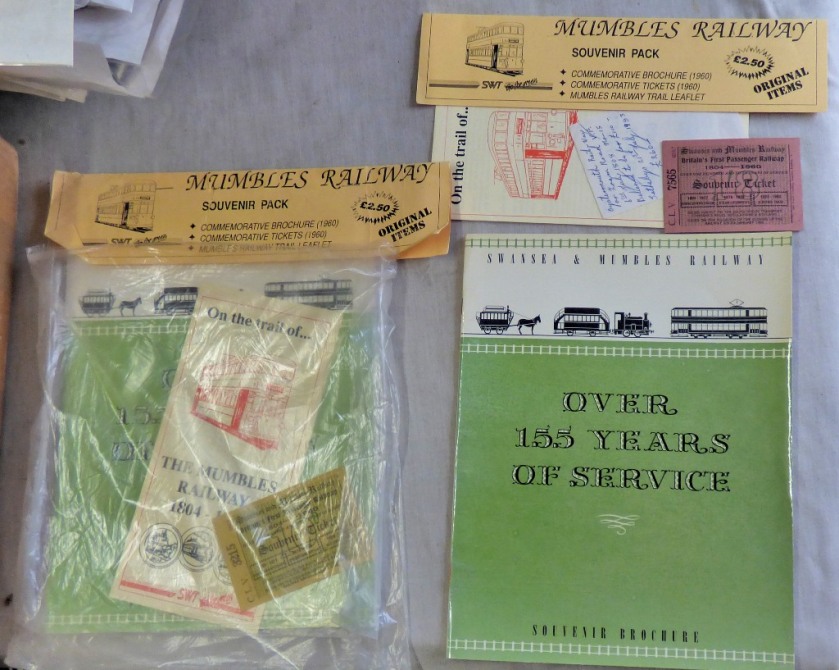
I always like to include photographs in my posts, and although I have none relating to cricket, here are a few from yesterday at work (these will be going under the hammer on August 30th, our second end of August auction, with a sale happening at our shop on Friday August 25th – more on this in a later post):
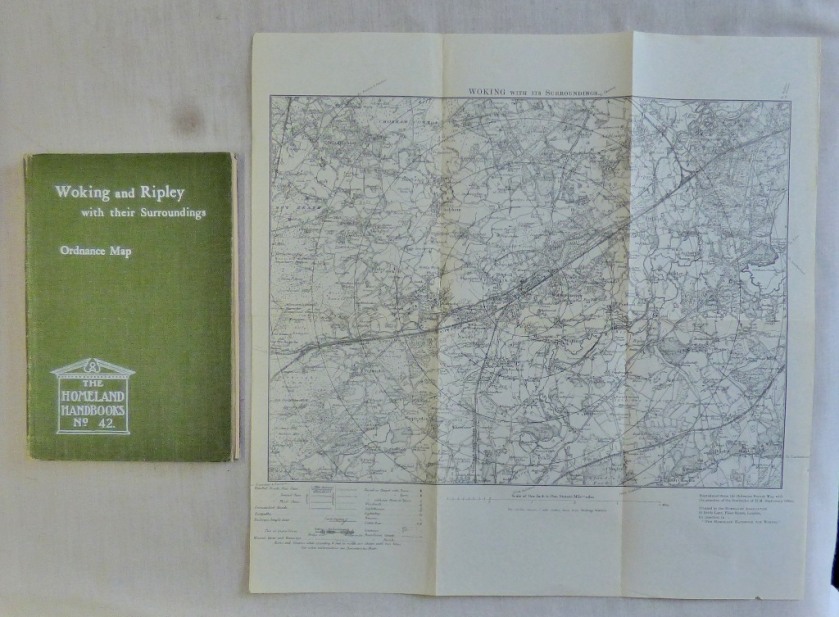
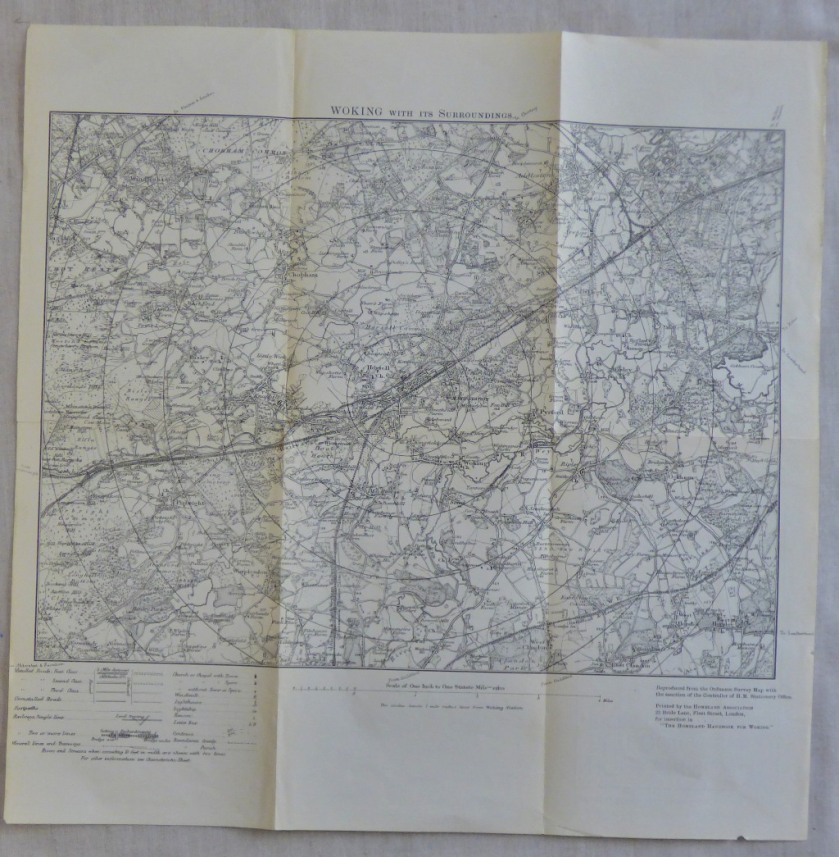
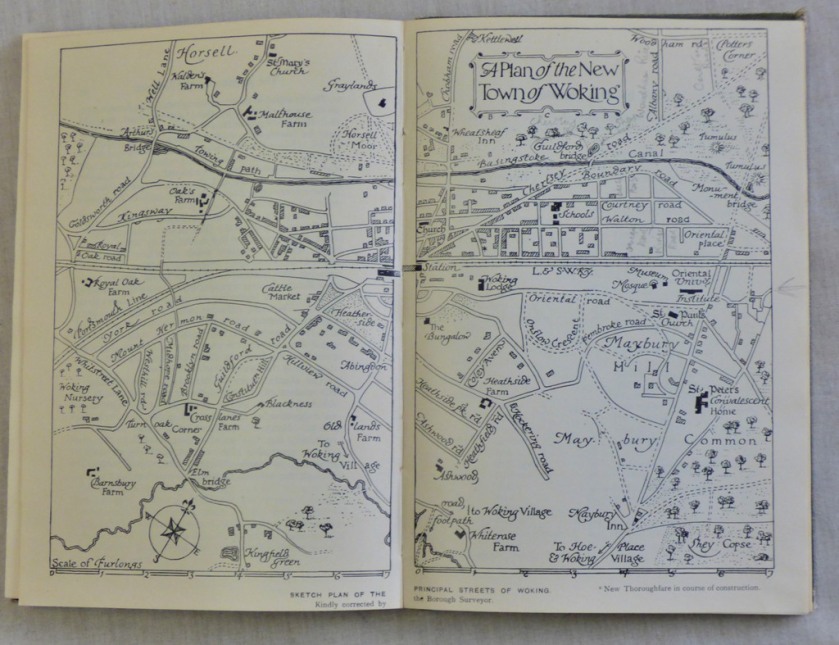
Lot 1403 – there is a little wallet incorporated in the inside back cover of the book to store the map when folded.
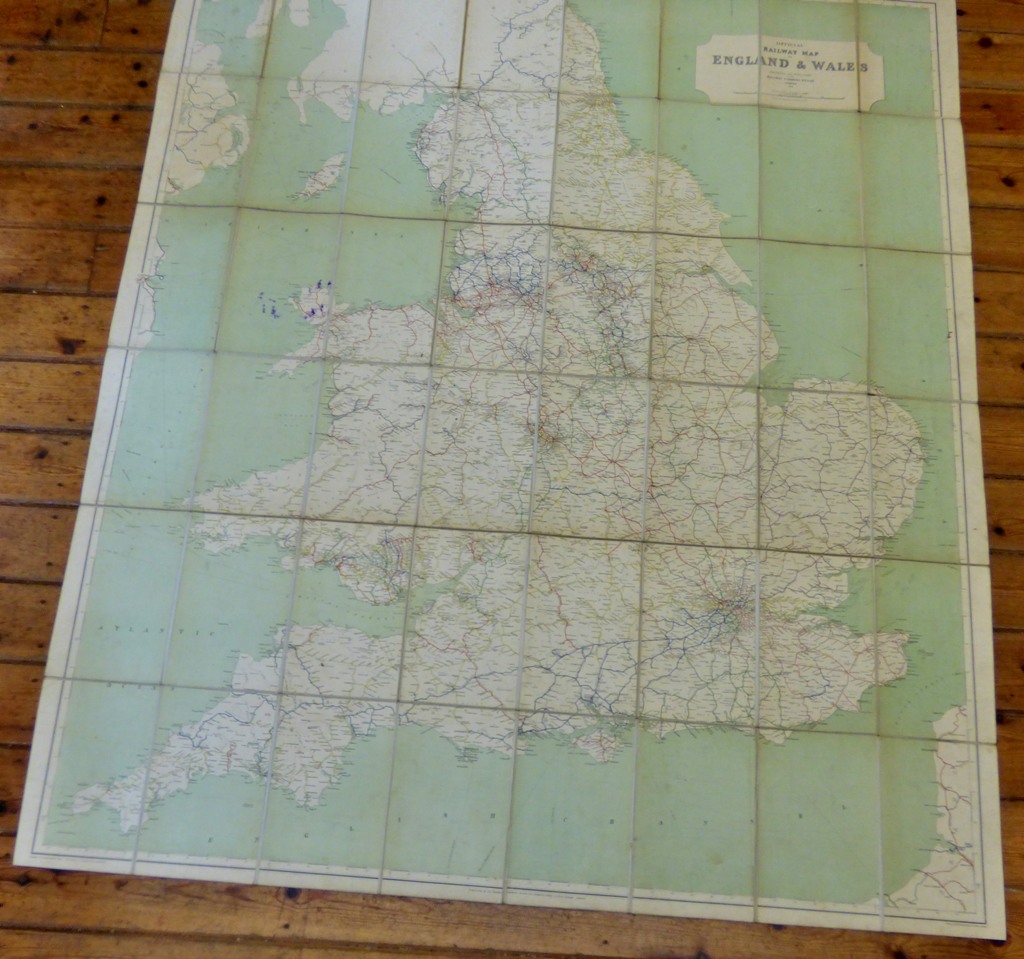
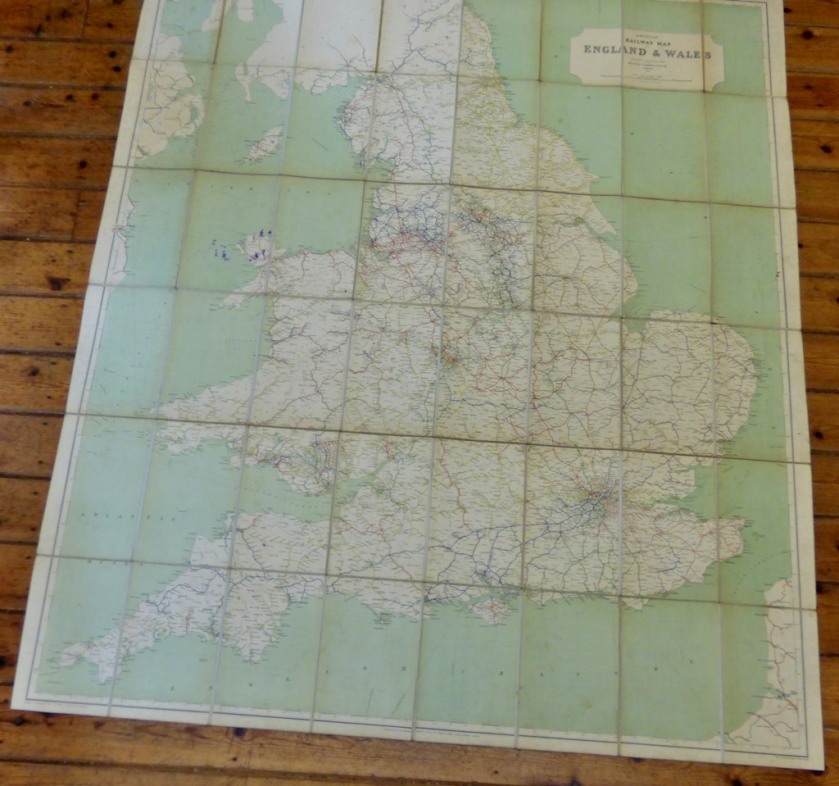
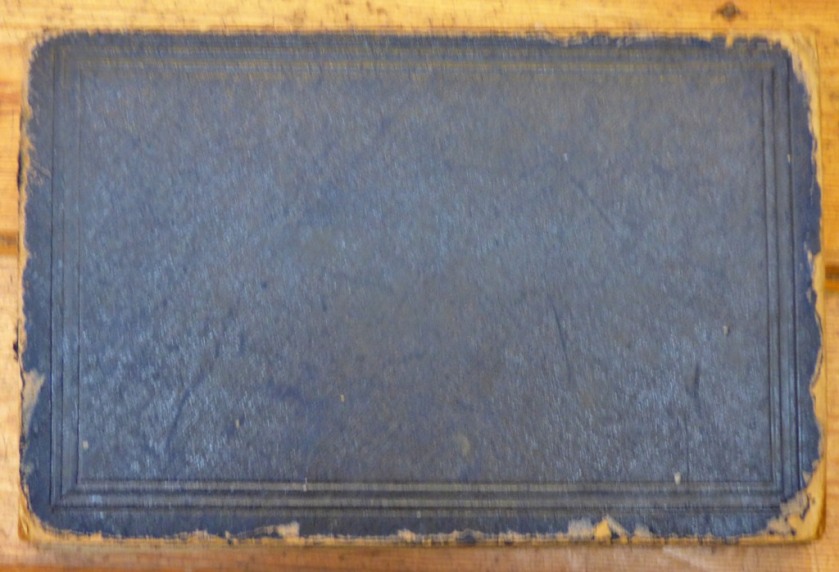
Lot 1415 – the largest railway map I have ever seen – and it has stout front and back panels so that when folded it looks a bit like a book.
A stamp on the back of one the ordinary panels.The front panelThe back panelLot 1422 – A more modern and much smaller railway map, with promotional material on the reverse (four images)
A post about Englanbd’s victory in the third test ,match against South Africa, with as a prequel a video in which Aggers stitches up Boycott.
INTRODUCTION
This post is about England’s remarkable victory over South Africa, which has just been completed. Before I get to the details I start with a highlight from the commentary box…
BEAUTIFULLY BOWLED, AGGERS
BBC Cricket Correspondent Jonathan Agnew with some assistance from statistician Andrew Sampson pulled a classic stunt on Geoffrey Boycott earlier today – check out the video below:
England started today needing six wickets to win and go 2-1 up in the series, while South Africa needed to bat the day out to save the game. Roland-Jones took two of the wickets in successive balls after quiet start to the day, and then Moeen Ali snapped up the seventh wicket with the last ball of the morning session. The second session also started quietly before Moeen broke through, accounting for Dean Elgar for 136. One sensed that Soutrh Africa’s last hopes of saving the game went with the opener. This sense heightened when Rabada edged his first ball to Stokes who made no mistake. Morkel was hit on the pads by the next delivery, given not out by the on-field umpire and instantly reviewed, with all 11 members of the fielding side indicating simultaneously. The technology showed that it was out, and the game was over, with Moeen having a hat trick to his credit.
THE ETYMOLOGY OF THE TERM HAT TRICK
This term, which has been borrowed by other sports for less dramatic associations with the number three dates back to a match at Hyde Park, Sheffield in the 1850s in which Heathfield Stephenson, then captain of the All-England Eleven, took three wickets with successive balls, and the crowd spontaneously recognised the feat by passing a hat around to collect money that was then presented to Stephenson. Thus the feat was termed a ‘hat trick’ and has been so called ever since.
THE PLAYER OF THE MATCH AWARD
Ben Stokes has been confirmed as Player of the Match for his century, plus some useful second innings runs, wickets and catches. The only other appraoch to a contender was debutant Toby Roland-Jones (sometimes referred to as the ‘Sunbury Shotgun’ because he played club cricket at Sunbury early in his career and has a double-barrelled surname) who batted well in both innings and took wickets, including the top four of the South African order in the first innings. Tom Westley also had a good debut, looking composed in both innings.
A post focussing on me giving a radio interview. Some mention of a roller-skating session and of the current test-match. And of course some photographs.
INTRODUCTION
The title part of this post refers to one of the things I did yesterday. I also have some pictures to share.
AN AUTISM CENTRED MORNING
Of course, as branch secretary of the National Autistic Society’s West Norfolk branch and an #actuallyautistic person there is a way in which autism is always at the heart of what I do. After three days carrying out my concatenation of roles at a James and Sons auction (operator of the system that enables us to take online bids, database administrator, query fielder, in-house ‘Gordianus’, occasional customer service person – see here for a full account) I had a day on which my only preset commitment was to supervise a roller-skating session at Lynnsport between 11 and 12. In the absence of direct confirmation of a time that would be convenient to speak to Ashleigh at KLFM 96.7 (our local radio station) about our upcoming 10th anniversary I decided that I would set off early for Lynnsport and see if I could speak to her on the way or as a fall-back arrange to call in on my way back.
Ashleigh was able to fit me in straight away, and the interview went well (she will be sending me both a recording and an online article that will accompany the actual broadcast), and I left for Lynnsport with my spirits high – I had helped myself, advertised our upcoming 10th anniversary event and due its connection with the foregoing also made mention of our gardening grant and the allotment on Ferry Lane + plans for a sensory garden in part of the plot. It is because of this gardening stuff that we gained the use of the magnificent garden where our 10th anniversary celebration will be held.
The roller-skating passed without incident and I was able to listen to some of the action from the third test-match (even assuming I had both the ability and the willingness to pay the Biased Bull****ting Conservatives £150 per year I would choose to follow cricket by listening to radio commentaries rather than watching on TV). Yesterday was truncated by rain, but England have had a good day today – first reaching 353 largely thanks to a magnificent innings from Stokes and now bagging a South African wicket before tea – debutant Toby Roland-Jones breaking through.
PHOTOGRAPHS
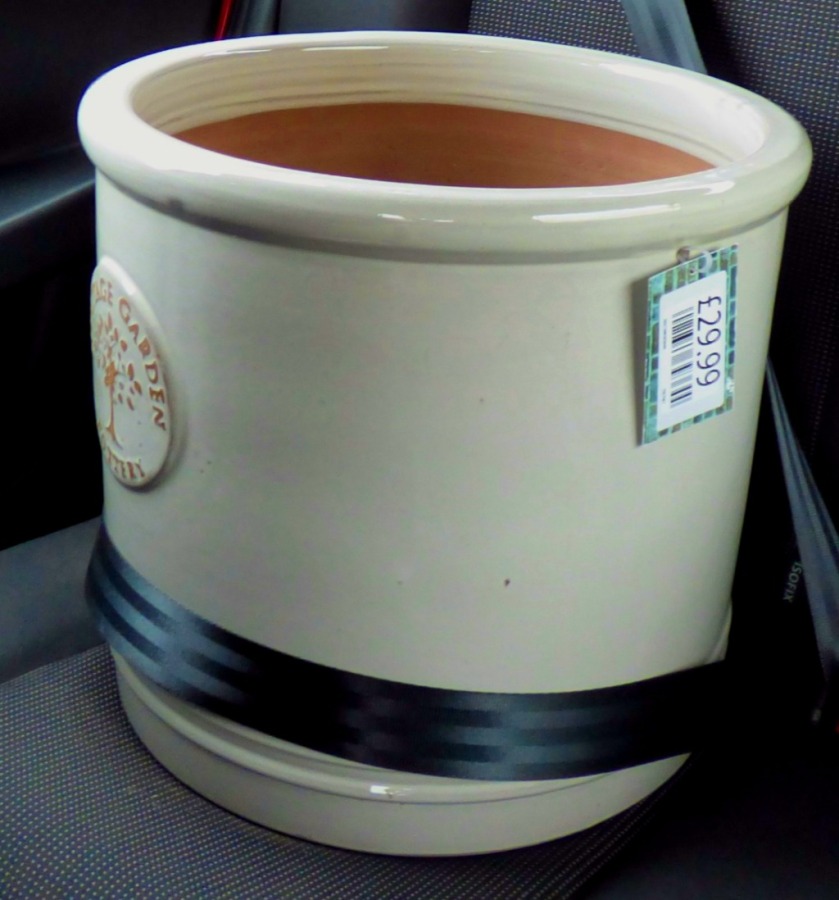
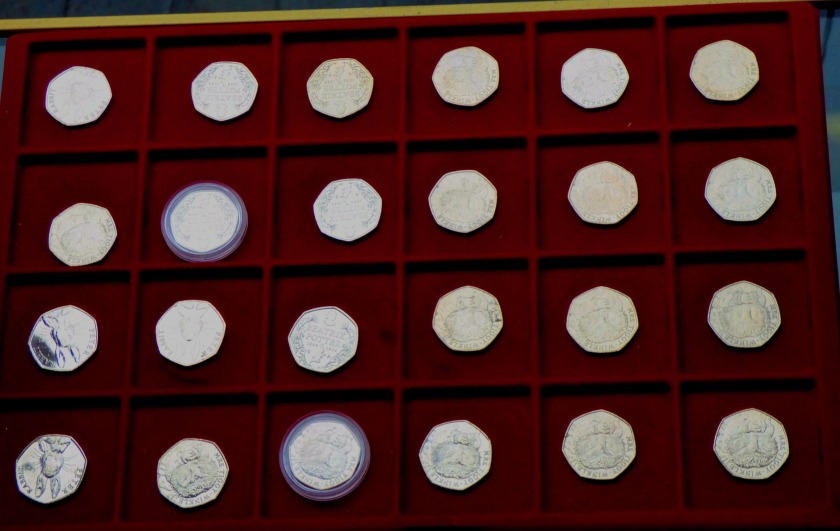
Being vertical sided these pots should not blow over in the wind (there were two of them).The first of two shots showing James and Sons’ tray of Beatrix Potter coins
I don;t know what the original purpose of this object was, but it has been a feature of James and Sons longer than I have!Wild marjoram is useful as a herb, as well playing a vital role as a plant that bees just love .
My account of the first test match between India and England at Rajkot.
INTRODUCTION
At just after 11AM GMT yesterday the first test match of the five match series between Inida and England was confirmed as a draw.
THE FIRST INNINGS
Alastair Cook made the first right move of the series when he won the toss and chose to bat (on a plumb pitch, with the only hope of interesting developments being if it deteriorated this was a clear cut decision). Gary Ballance’s wretched form had finally caught up with him, and 19 year old Haseeb Hameed whose family originated in these parts came in for his debut, with Ben Duckett dropping to number four so that Hameed could open. In the two match series in Bangladesh England’s top five had a combined record of three 50 plus scores in 20 innings with no one reaching three figures. Here Joe Root and Moeen Ali (nos 3 and 5 respectively) racked up centuries, and Ben Stokes, for once given a base from which he could build rather than attempt to rebuild added another as England totalled 537, effectively putting defeat out of the question right from the start.
Ravi Ashwin, the offspinner who was expected to prove far too good for England’s batting finished with the less than commanding innings figures of 2-167. Jadeja, on home turf (with that surname he is definitely connected to the old royal family of Nawanagar, who ruled here in the days of the princely states, and produced cricketing legends of earlier times Ranjitsinhji and Duleepsinhji) took three wickets.
THE SECOND INNINGS
Murali Vijay and Chesteshwar Pujara each reached three figures, while Ashwin somewhat redeemed his bowling figures with 70. India were all out for 488, giving England a lead of 49. These two huge first innings scores had been acquired comparatively slowly as both sides bowled tightly, and the fourth of five days was nearing its conclusion by the time India’s last wicket fell. Adil Rashid, given the opportunity to bowl with runs on the board, picked up 4-114, while the other spinners, Moeen Ali and Zafar Ansari each picked up two wickets. None of the faster bowlers were able to extract anything from this pitch, but Stuart Broad, playing in his 100th test, was economical, taking 1-78 from his 29 overs and Woakes who finished wicketless was positively Scrooge like in only conceding 57 from 31 overs.
THE THIRD INNINGS
While it would have been nice to see England go on the all-out attack and see if they could make a genuinely challenging declaration I can fully understand, especially given events in Dhakanot so long ago, why Cook took the safer option of batting the game into oblivion before declaring to see if his bowlers could take a few Indian wickets at the end.Cook himself made 130, his 30th test century, while the debutant Hameed made 82, and Ben Stokes, promoted to have a bash before the declaration made 29 not out in quick time. England called a halt at 260-3, leaving India a purely nominal target of 310 off 49 overs. Ashwin took 1-63 in this innings, giving him match figures of 3-230.
THE FOURTH INNINGS
Given that four and a half days of action had produced a combined 1295-23 it was most unlikely that any result other than a draw would eventuate, so the real question was whether England could nab some wickets and thereby claim a moral victory. In the event, India finished on 172-6, with only Virat Kohli, 49 not out, emerging from the innings with real credit. Rashid took 3-64, emerging with comfortably the best match bowling performance on either side, while Woakes, Ansari and Ali all picked up wickets.
THE FINAL VERDICT
A total match score over the five days of 1467-29 makes the truth about this game obvious. The pitch, which never offered serious assistance to any kind of bowler, won hands down. For England almost everyone emerged with some kind of credit, with most of the batsmen making runs and the bowlers sticking well to the Sisyphean task inflicted on them by the groundsman. India, although never in serious danger of losing this game have less to be happy about – although he is a spinner rather than a quick bowler Ashwin’s 3-230 in this match have a bit of a look of Gillespie ’05 about them. England have bounced back well from their disaster in Dhaka. Haseeb Hameed has made a splendid start to his career, and has probably settled the question of an opening partner for Cook – in a few years time England will probably be faced with finding someone to replace Cook as Hameed’s opening partner.
PICTURES
These pictures are from work…
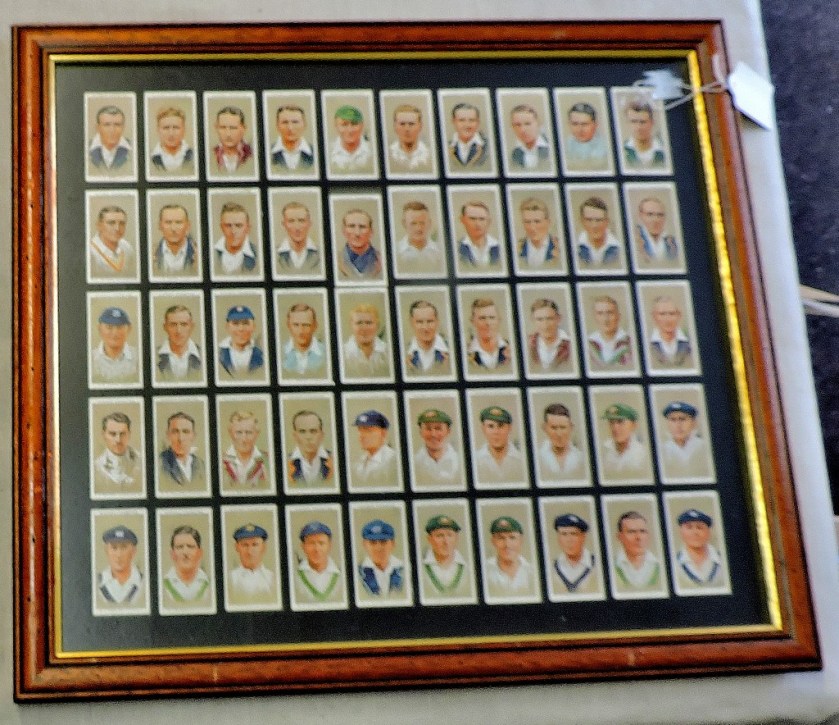
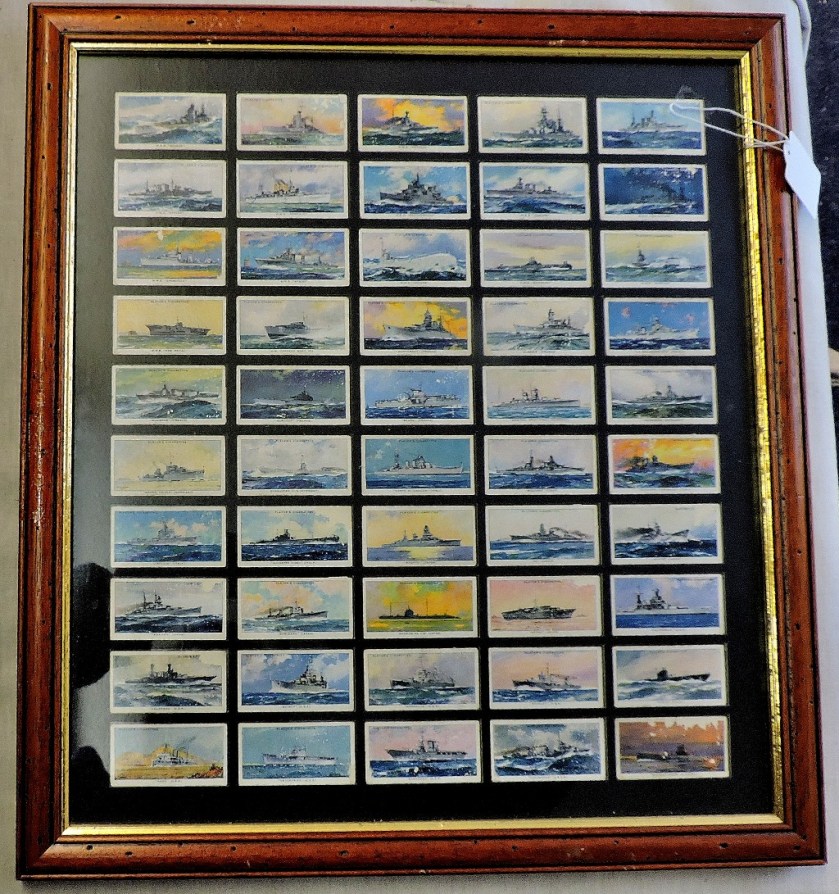
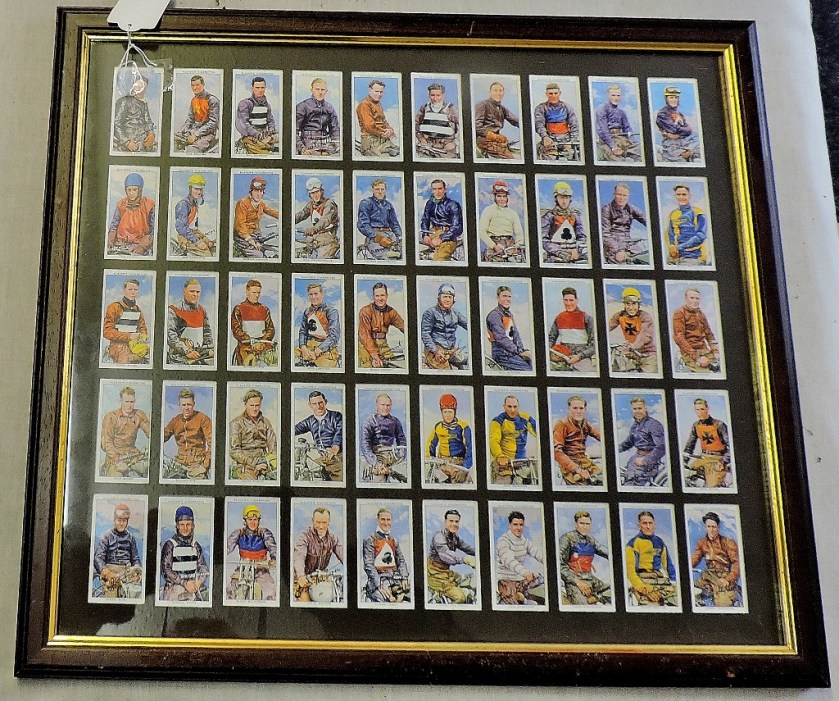
The first ten images here are of framed sets of cigarette cards, the first two bieing crickets from 1938 and 1934 respectively.
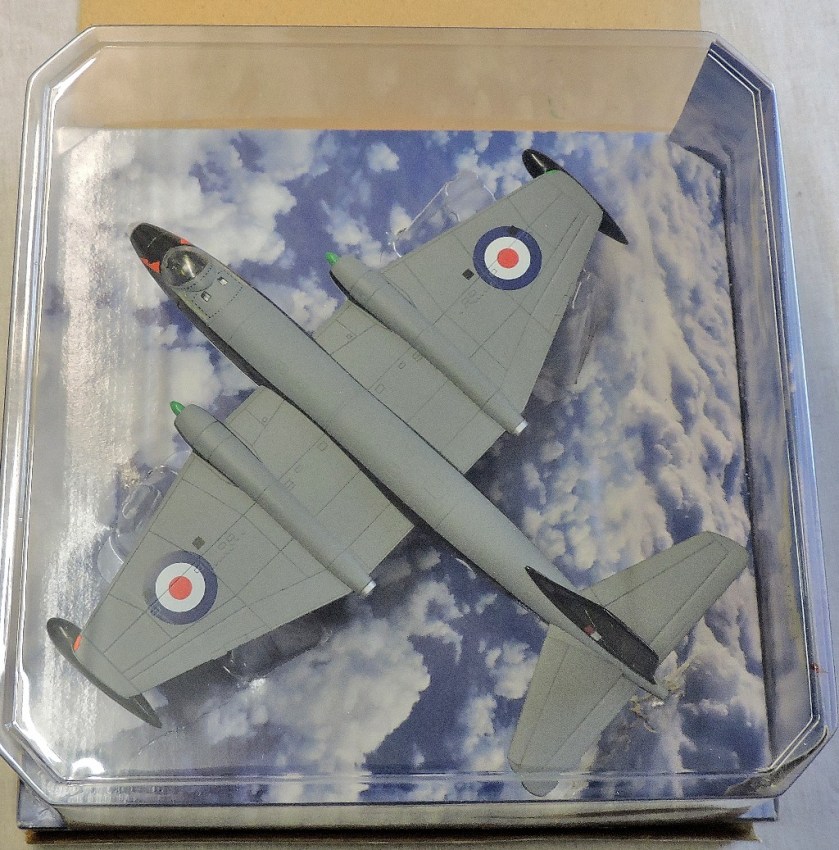
These two images are of the last of the collector’s models
Not an auction lot – this collection of brass taps and fitments are being sold on ebay!
Musical Keys, Cricket, Photography and some links.
INTRODUCTION
The title of this post refers to Saturday’s Musical Keys session at the Scout Hut on Beulah Street (a place that by now is almost as familiar to me as my own humble abode such is the number of events I have attended there). I also have plenty of other stuff to share.
MUSICAL KEYS
Having missed the previous Musical Keys session because I was attending the “Marxism and Nature” Day Schoolin London (well done to the International Socialism Journal team, you organised a great event) I was anticipating this session more eagerly than usual. Then came the news that the branch chair would probably not be able to attend as her son was playing up, which meant that I would be the sole NAS West Norfolk committee member present.
THE WALK THERE
I decided to go via Bawsey Drain (there was no decision to make as regards the mode of transport although it is a longish walk) and I was able to take some pictures along the way.
Another splendid tree (to see lots of tree pics visit Anna’s blog and look at some of the recent posts there)
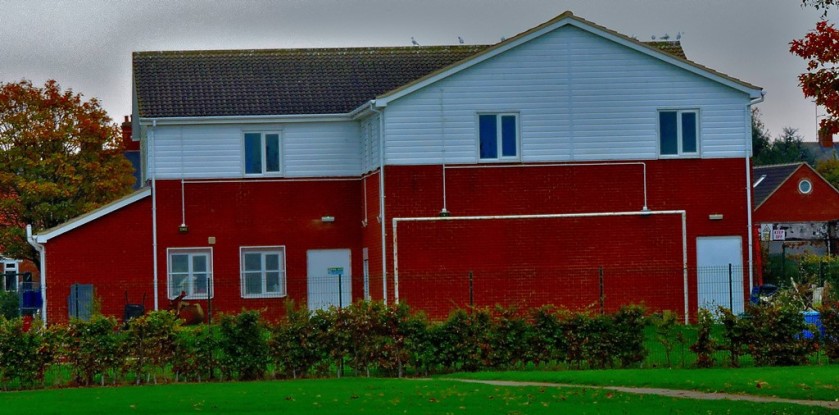
The outside of the scout hut.This section of path has recently been resurfaced.
THE SESSION ITSELF
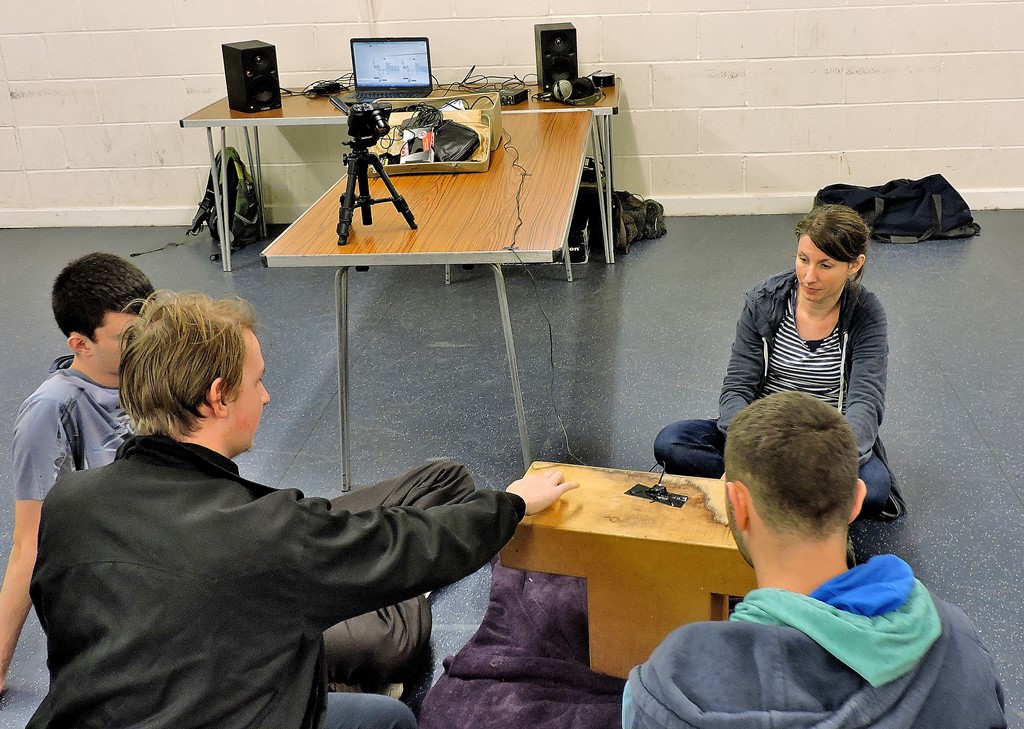
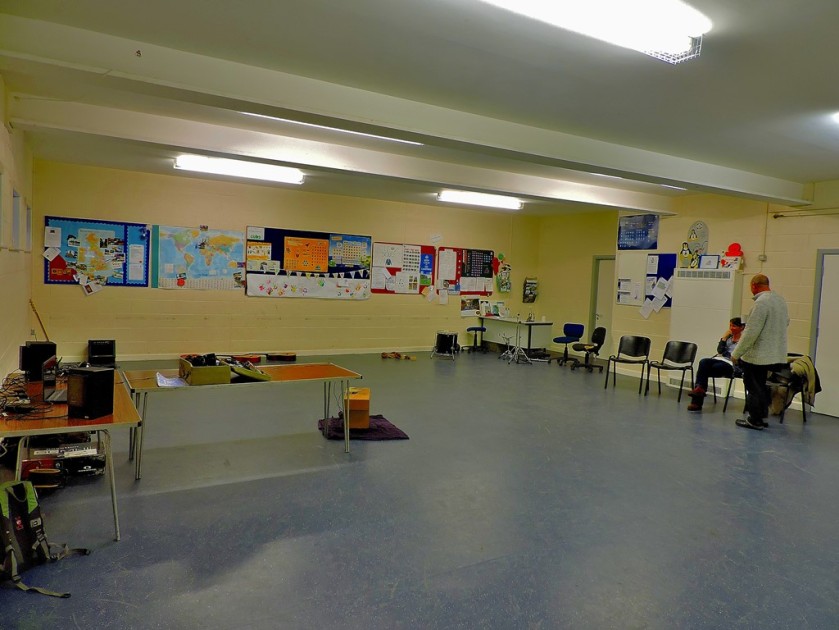
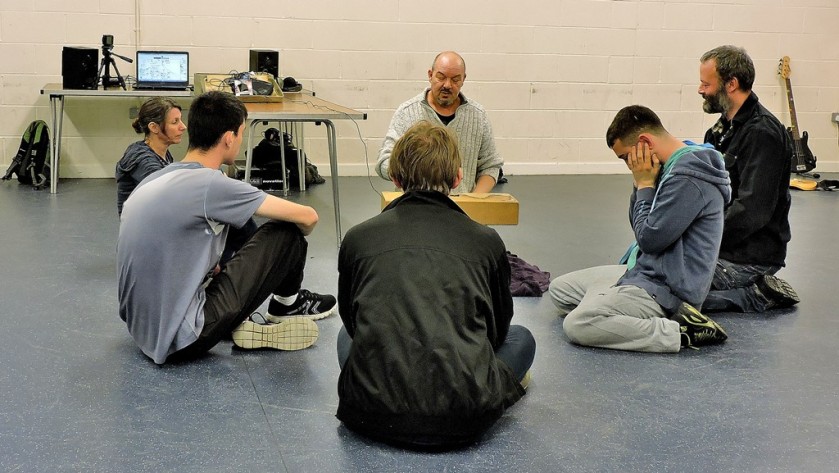
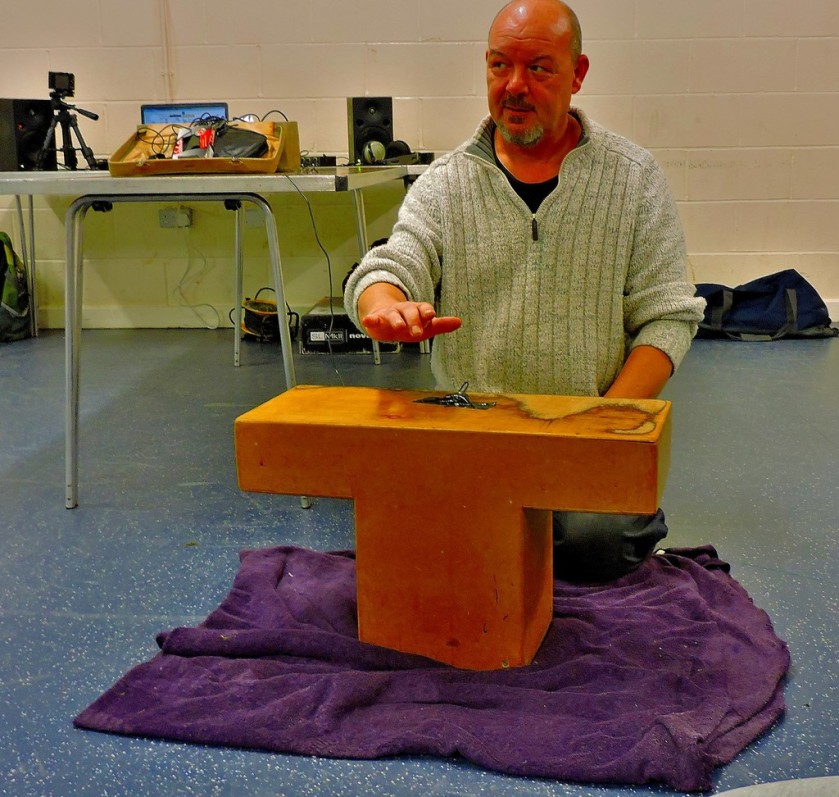
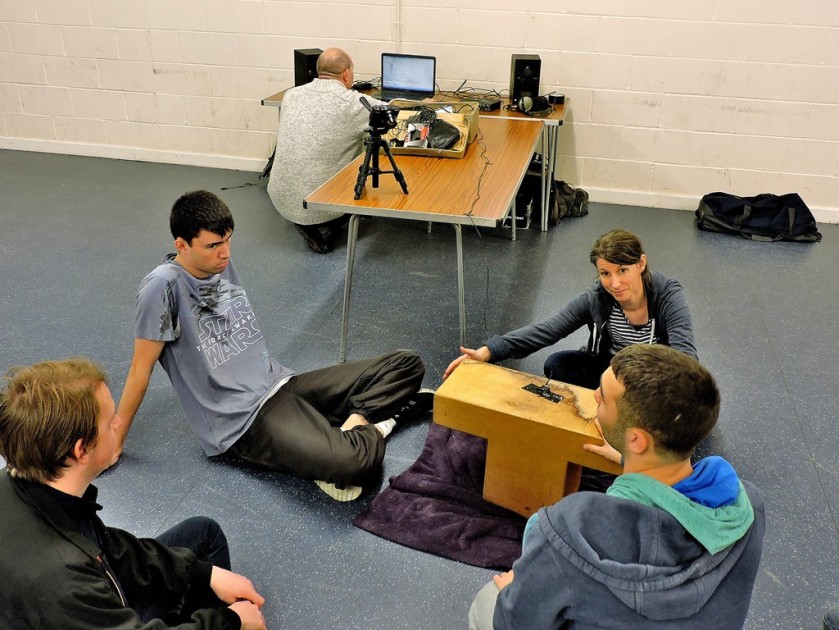
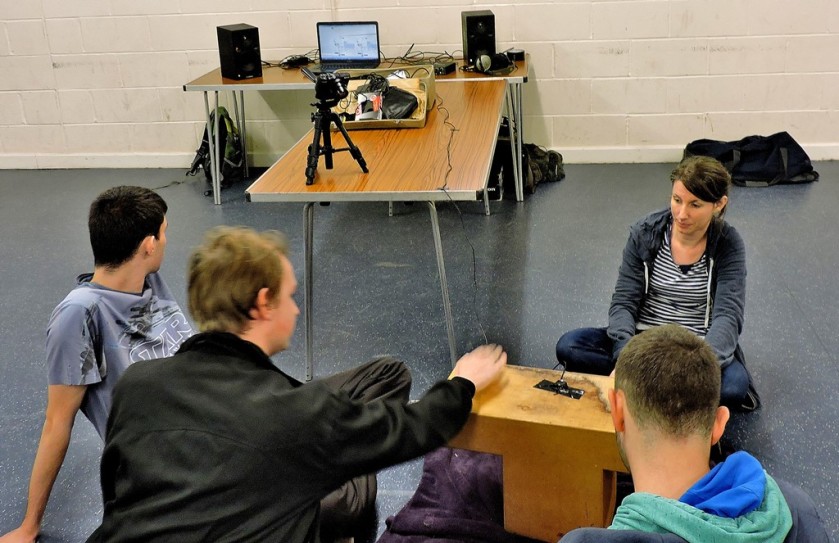
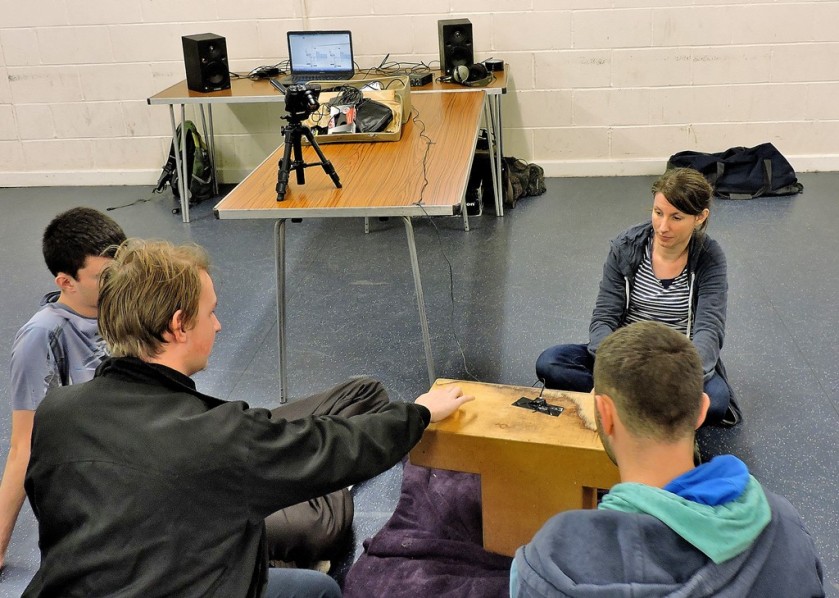
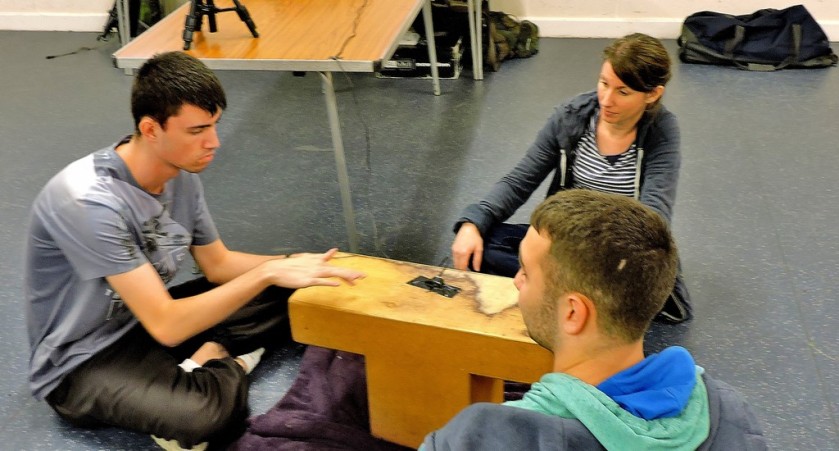
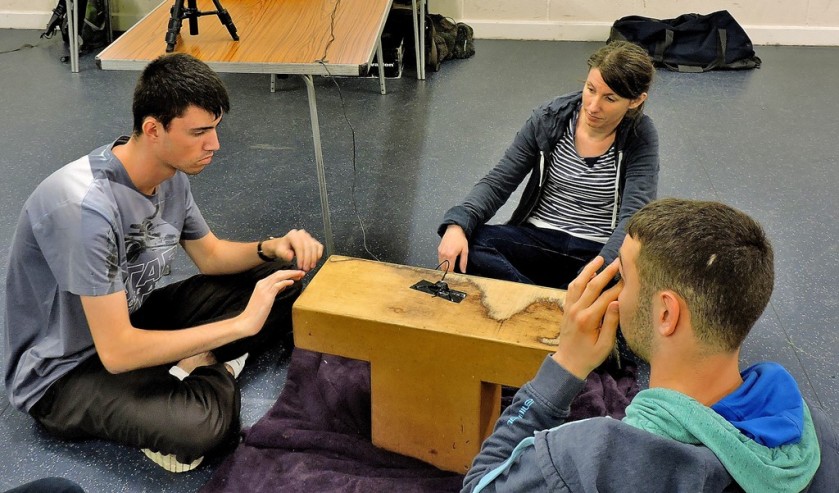
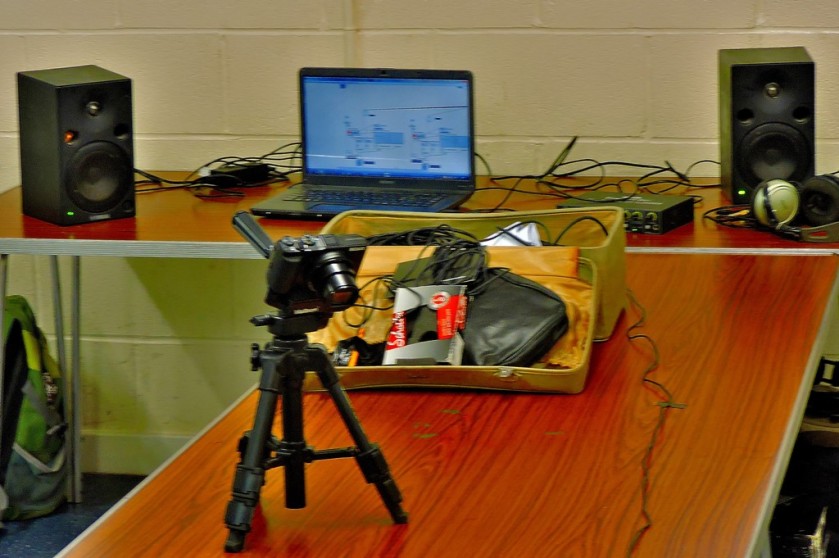
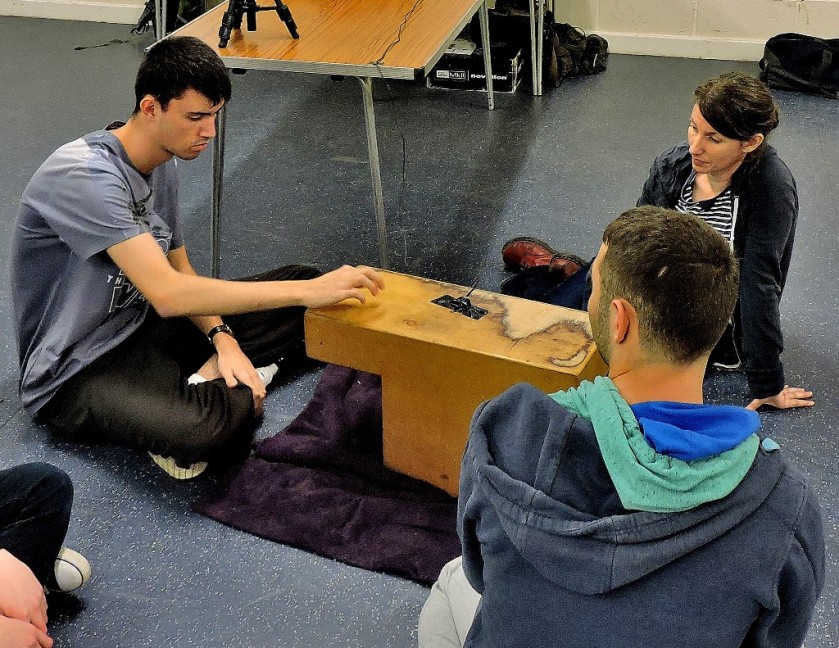
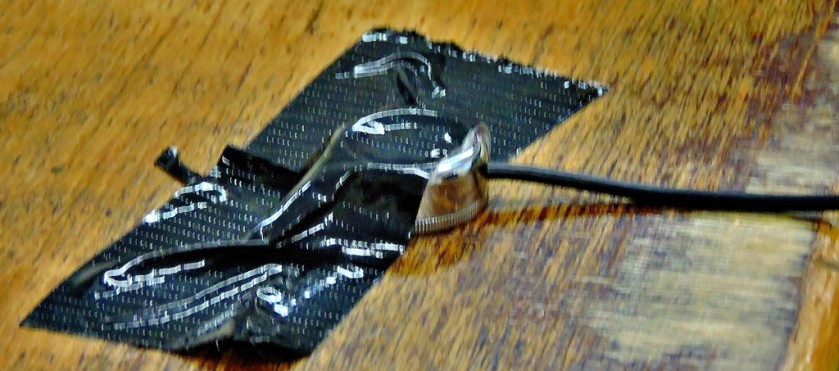
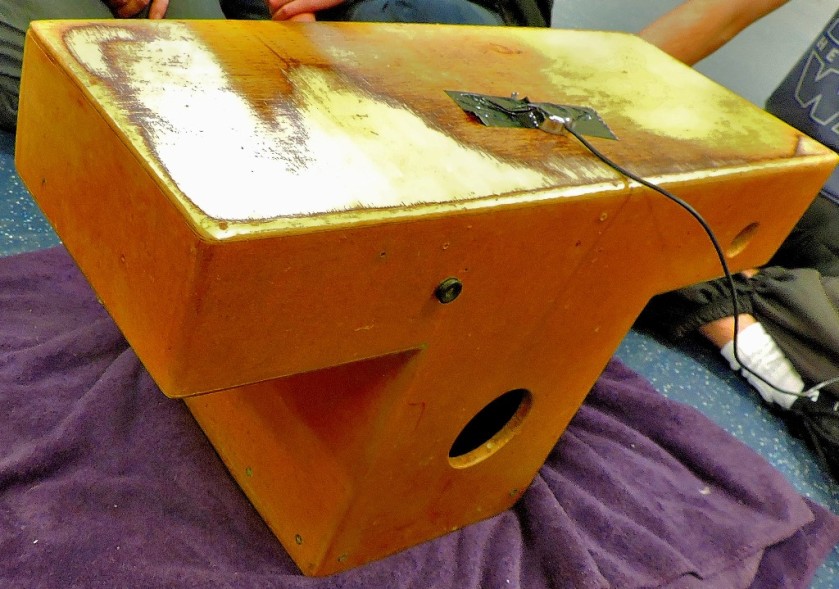
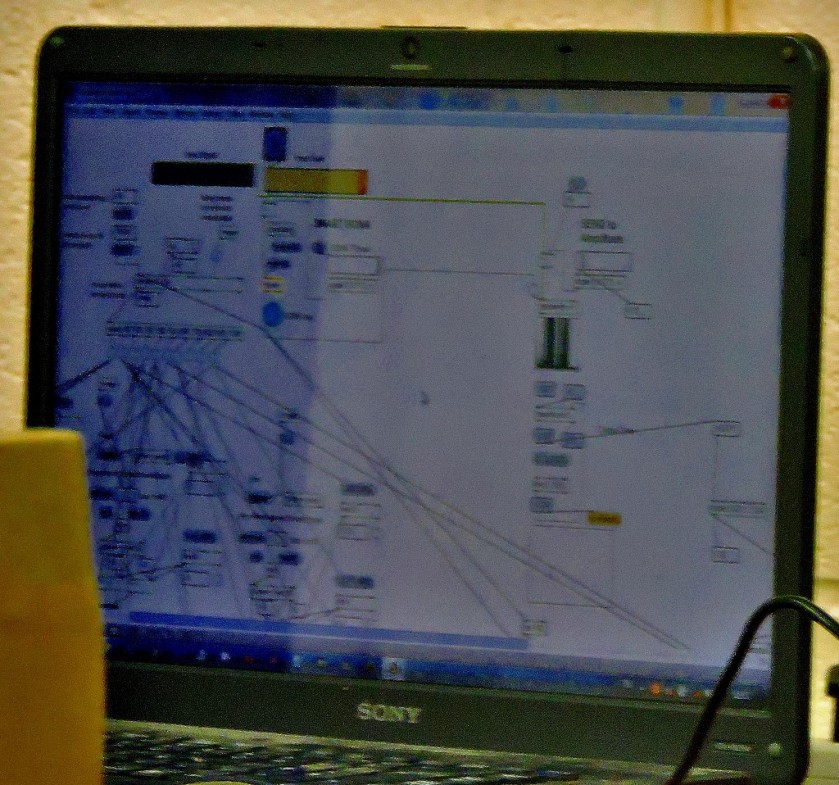
I was specifically requested to take pictures during this session by John and Kirsten, who run the sessions for Musical Keys. Therefore I have lots of pictures. The session began with the focus exclusively on a kind of wooden drum, shaped like a three dimensional capital T, which had been cunningly wired up to a computer.
How this wooden instrument was wired up to a computer.
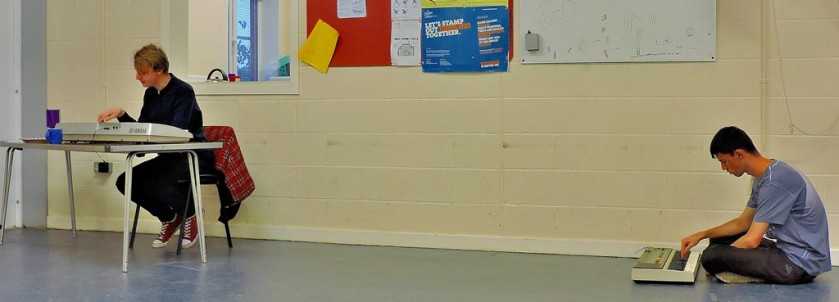
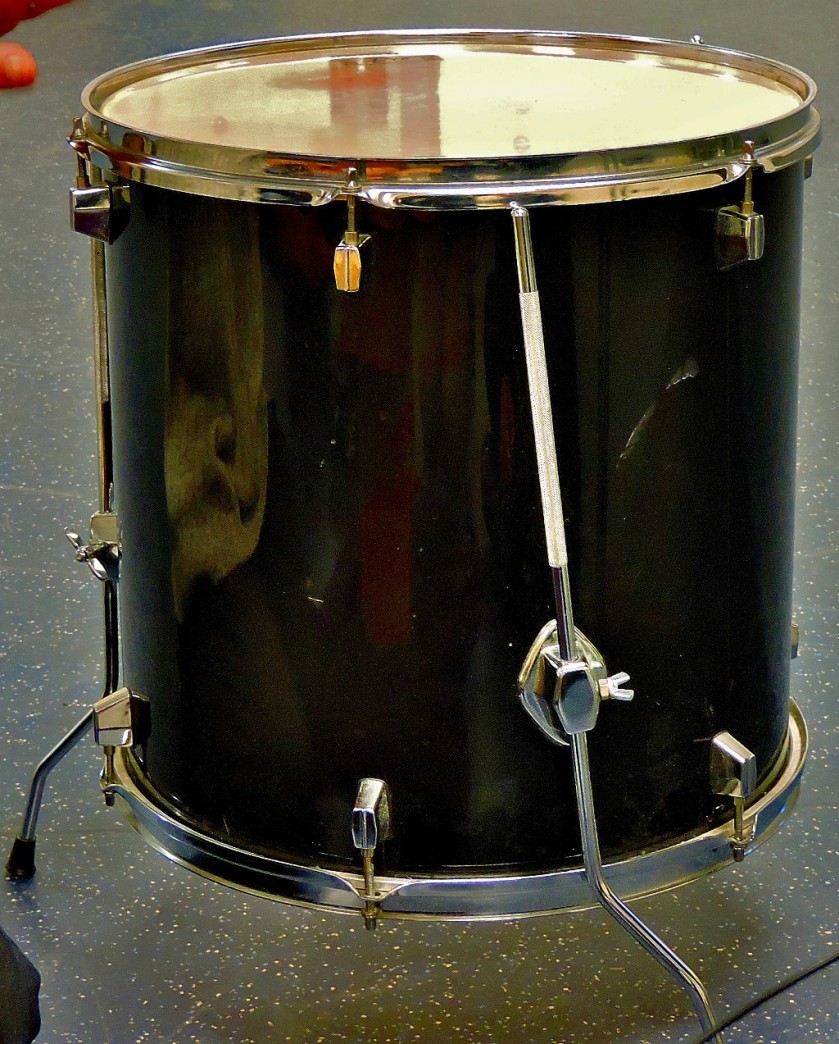
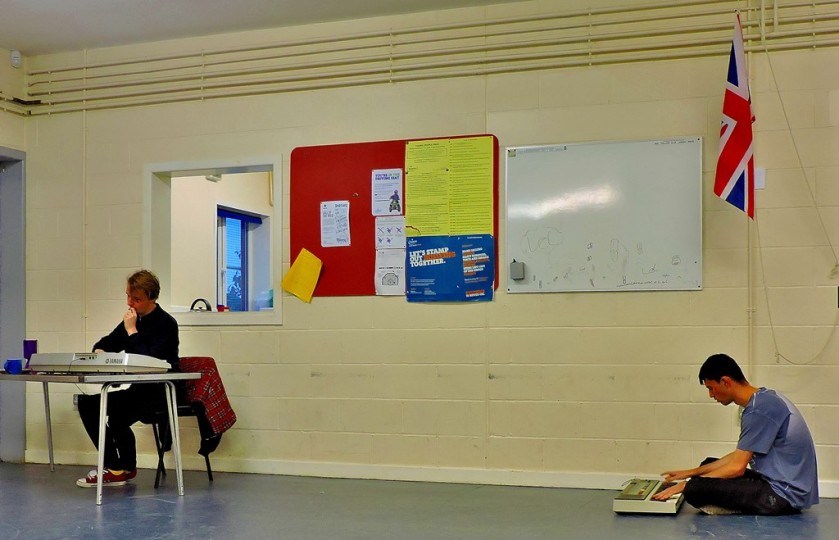
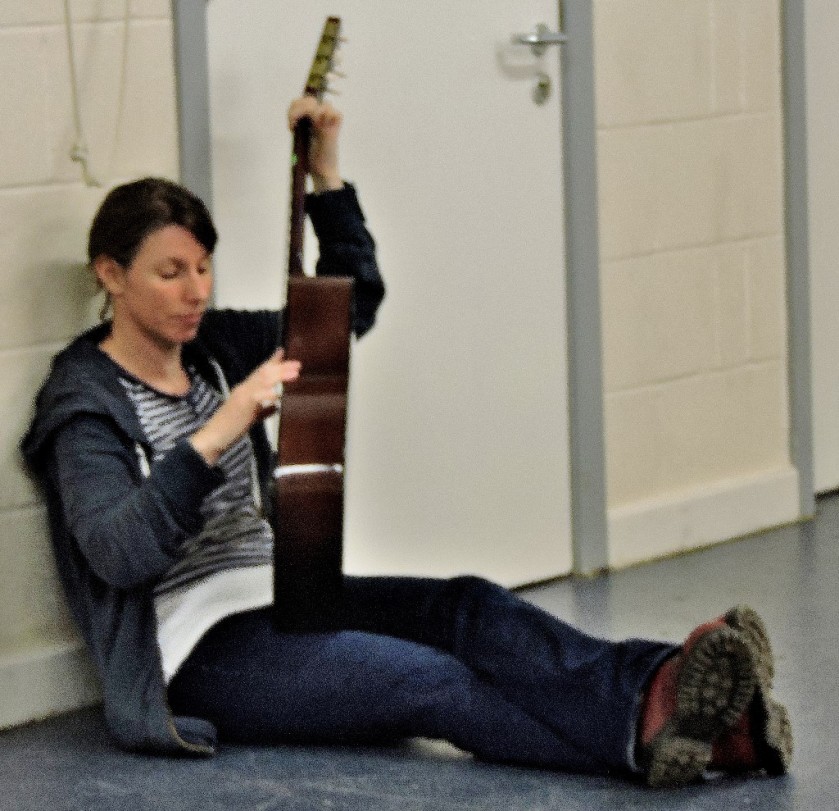
Later in the session people were encouraged to try other instruments – two electronic keyboards were available and both were used, I sampled an acoustic guitar and also an electric bass guitar, and a single drum was available for most of the session, with the full set (which tends to drown out everything else) in action for the last few minutes.
The keyboards being played.A stand alone drum
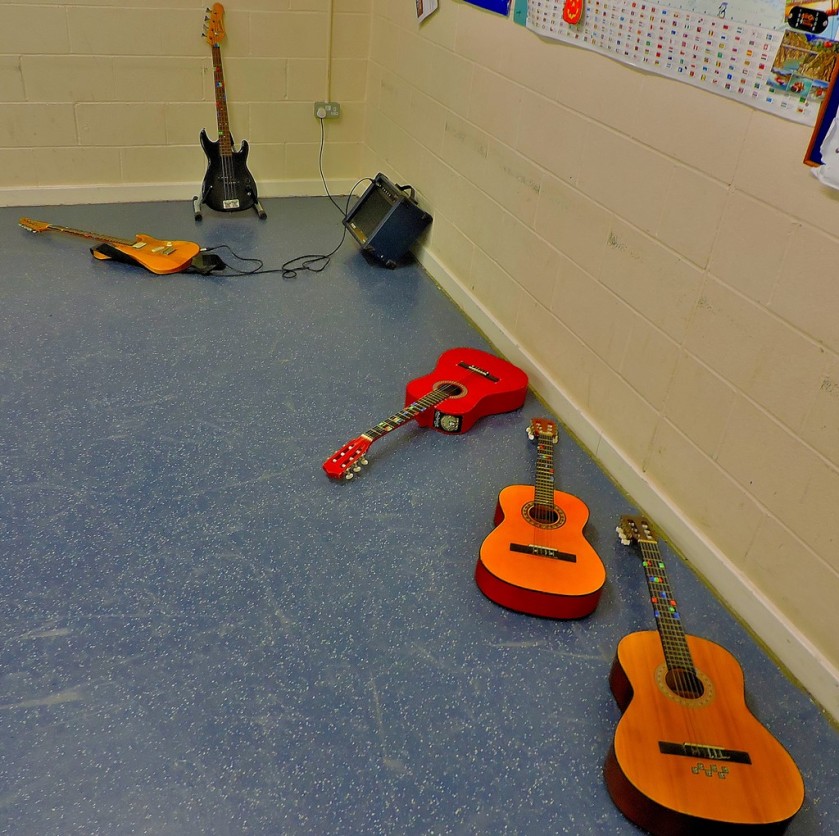
The range of guitars.A couple of close-ups of the particular acoustic guitar that I played.
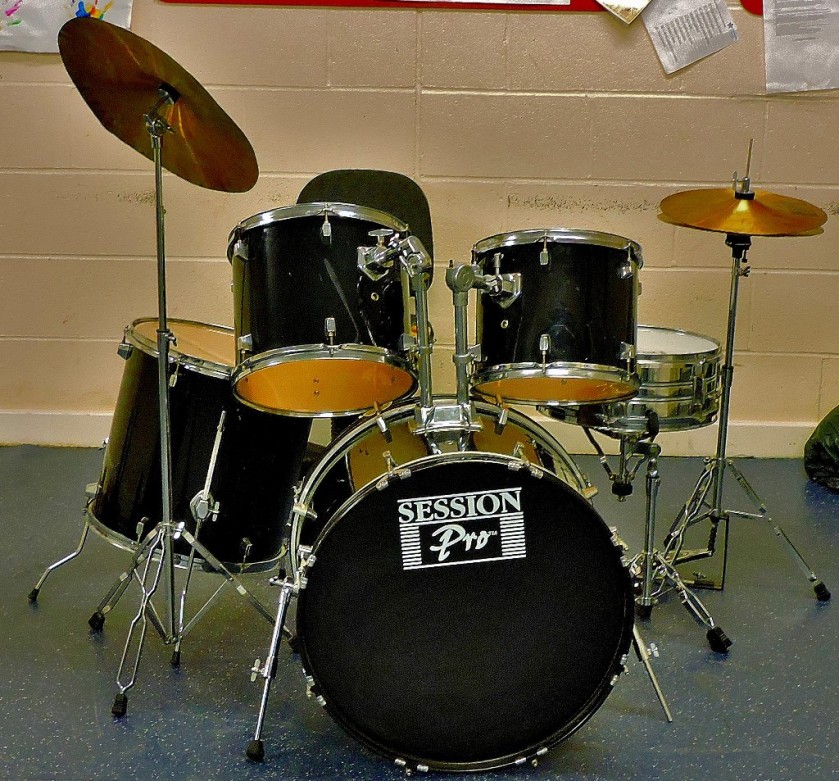
The full drum set ready for actionThe drum set in use.Kirsten (one of the two people who run the sessions) playing an acoustic guitar.
SOME FINAL THOUGHTS ON THE BANGLADESH – ENGLAND SERIES
The result of the second match in this two match series, which I celebrated here, was splendid not just for Bangladesh, but also for cricket as a whole. England now head for a five match series in India, where they can confidently expect every pitch to be turning from minute one of every match (and can have no complaints given the number of times they have had sub-continental teams play on green seamers at places such as Durham and Leeds early in the English season). Frankly having seen how England have handled spin friendly conditions in Bangladesh, India should probably reckon that any series outcome other than 5-0 to them is a disappointment.
England this series have been exposed in several areas:
Top order batting – in four completed innings the top five contributed only three individual scores above 50 between them, one a piece for Joe Root, Moeen Ali and Ben Duckett. Cook’s 39 in his final innings of the series was his best effort, while Ballance failed badly in all four innings, being out to a particularly gruesome shot in the final one.
Spin bowling – of the four front-line spinners played by England in this series (Moeen Ali, Adil Rashid, Zafar Ansari and Gareth Batty) none produced a really convincing performance overall, although Moeen Ali took five wickets during Bangladesh’s collapse from 170-1 to 220 all out in the first innings at Dhaka and Rashid 4-52 in second innings of that same match. England, in a spin dominated series, were saved from complete embarrassment by Ben Stokes who captured 11 wickets at 10.09 to be their joint leading wicket taker, as well as being their leading run scorer.
Captaincy – Alastair Cook had an even poorer series in this respect than he did with the bat. Whenever the spinners were bowling they had right from the word go fielders at deep long off and at deep point – meaning that singles were always easily obtainable. These field setting seem horribly like covering the bad ball (of which it must be said there were far too many from all of England’s spinners).
I am going to finish this section with individual player ratings for all those used by England (the player of the series on either side was Mehedi of Bangladesh btw).
Alastair Cook (C): a poor series with the bat and a poorer one as captain. Rating 3/10.
Ben Duckett: looked unconvincing in his first three innings, but redeemed himself to an extent in the fourth – his approach in that innings got Bangladesh on the back foot. His dismissal straight after tea in that innings was the trigger for Bangladesh’s greatest ever session in the field in test cricket. Rating 5/10
Joe Root: a gritty 50 in the first innings at Dhaka when no one else offered serious resistance until the partnership between Rashid and Woakes was his only major contribution with the bat. Rating 5/10
Gary Ballance: after his first three innings of this series I commented that he was not batting long enough to know what sort of form he was in. His fourth innings was equally brief, but the shot with which it ended was truly dreadful. Rating 0/10
Moeen Ali: a useful 50 in Chittagong, and wickets in both games. However as an off-spinner he was comprehensively outclassed by 19 year old Mehedi on the other side. Rating 7/10
Ben Stokes: England’s player of the series, his 85 at Chittagong was England’s highest individual score of the series, he was the teams overall leading run scorer and joint leading wicket taker (this latter in a series were quick bowlers were mainly bystanders). Without his efforts this series would certainly have been 2-0 to Bangladesh. Rating 9/10
Jonny Bairstow (WK): A competent series with gloves in difficult conditions and a fifty in the first match. Rating 6/10
Zafar Ansari: his selection in place of fellow Surrey man Batty for the second match of the series gave England a more varied bowling attack, and he picked up a couple of wickets. He failed to contribute with the bat. Rating 4/10
Chris Woakes: significant contributions with the bat in both matches, though his bowling was not of much significance in this series. Rating 5/10
Adil Rashid: A useful batting effort in the first innings at Dhaka, when he and Woakes rescued their supposed betters and gave England a lead, his bowling in favourable conditions was disappointing. Rating 5/10
Stuart Broad: Bowled well at Chittagong, was rested for Dhaka. Rating 5/10
Gareth Batty: His selection for this tour at the age of 39 and after a 12 year hiatus in his international career was a major indictment of English spin bowling, and he contributed little in the one match he played, at Chittagong. Rating 2/10
Stephen Finn: Came in for Stuart Broad at Dhaka, and his only contribution of note was to become the answer to the quiz question “whose dismissal gave Bangladesh their first ever test victory against England?” Rating 1/10
FAWKES IN THE WALKS
This has historically been a very successful event and I hope it will be so again. However, as an autistic person who reacts badly to sudden loud noises, I would also like to say that fireworks should be restricted to official displays of this sort.
My next and penultimate link is to Anna’s effort to get people to post about tree walks. To view her most recent post on the subject click on the screenshot below.
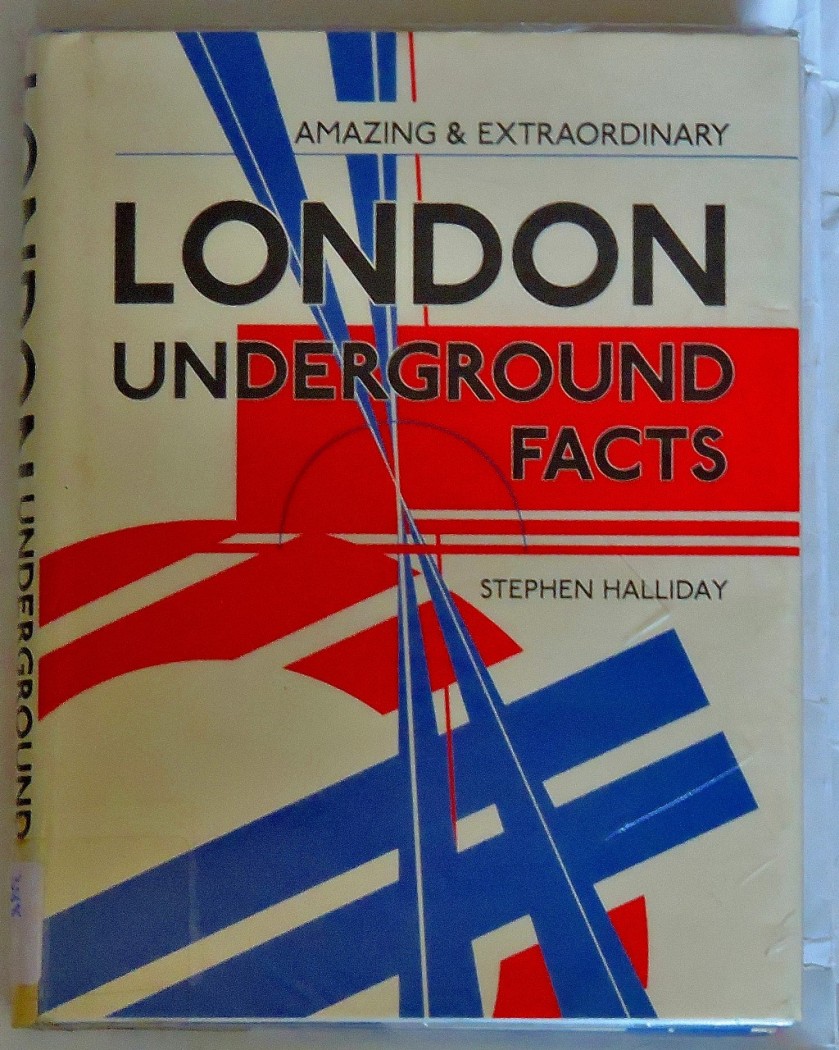
My final link is to a book review on my London transport themed website – click the screenshot below to visit it.
































































 aspiblog