My gloss on an excellent little fact sheet produced by George Monbiot.
INTRODUCTION
This post was inspired by a fact sheet created by environmental campaigner George Monbiot which you can read in full by clicking the screenshot below:
CARS
This short piece outlines some very valid objections to the over-use of cars. However, the pollution aspect of the problems caused by the over-use of cars (which in this country has reached scandalous proportions) is more properly a criticism of the fact that the vast majority of cars continued to be powered by the infernal combustion engine. There are many non-polluting means of powering vehicles available these days. Addressing the pollution issue however does not address the problem of congestion. To avoid misunderstandings: Monbiot’s fact sheet is bang on the money, and everyone should read it in full.
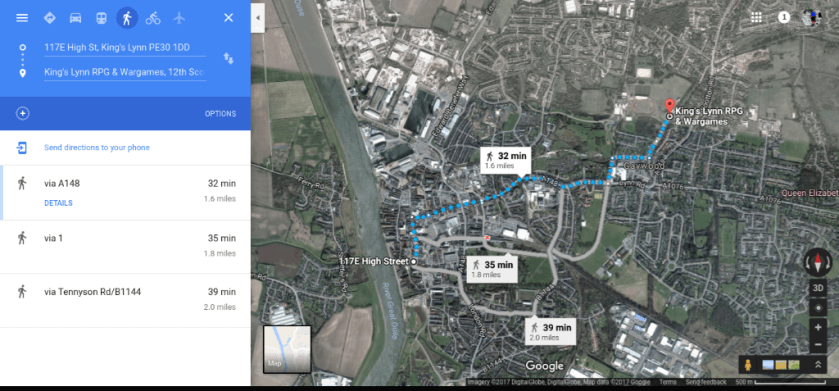
As an example of my own approach as a non-driver, here courtesy of google maps is a suggested walking route from my home to the scout hut on Beulah Street, which I quite often have cause to visit:
My usual choices of walking routes are actually longer than those recommended above because I prefer routes that spend less time around roads even if they take longer (see this postfrom yesterday for examples of two routes that I used on Saturday). There is a bus route that I could use if so inclined – there is a stop close to the Wootton Road end of Beulah Street but for a journey of this distance I positively prefer Shanks’ pony.
However, I freely acknowledge that while cars are over-used for short journeys there is another reason why there are far too many cars on British roads, and that leads to the next section of this post…
BUSES AND TRAINS
British public transport is in a shocking state. There are many people, particularly in rural areas, who have no public transport options available to them, and even where there are public transport options they are overpriced and unreliable. It is only by creating a public transport system that works for those who use it that we can seriously reduce car usage.
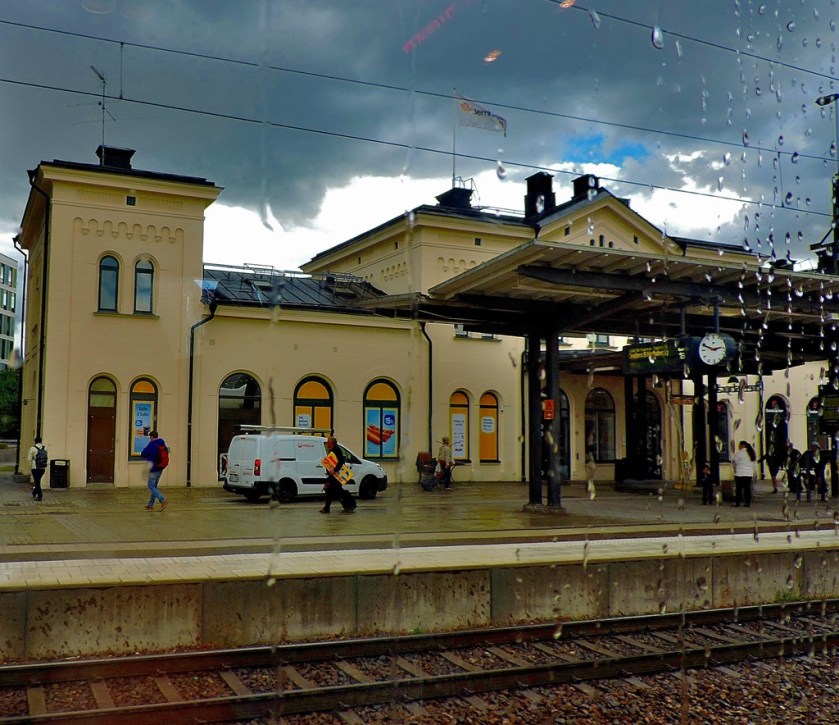
I always like to include photographs in my posts, so to conclude this little post here is a shot of the front of King’s Lynn railway station:
A link to an excellent and important petition, and also a mathematical teaser.
INTRODUCTION
There will be no photographs in this post, but I wanted to put something up today because I several new people are following this blog – my thanks to you all.
THE PUZZLE
This puzzle comes from one my books at home (cannot remember which) and has a particular relevance which I will reveal in my next post: take any three digit number, and multiply by 7, then multiply the new number 11 and finally multiply that number by 13. What do you notice about this latest answer as compared to your original number? For a bonus what two numbers would you need to use as multipliers to achieve an equivalent effect with a four digit starting number?
A REALLY EXCELLENT PETITION
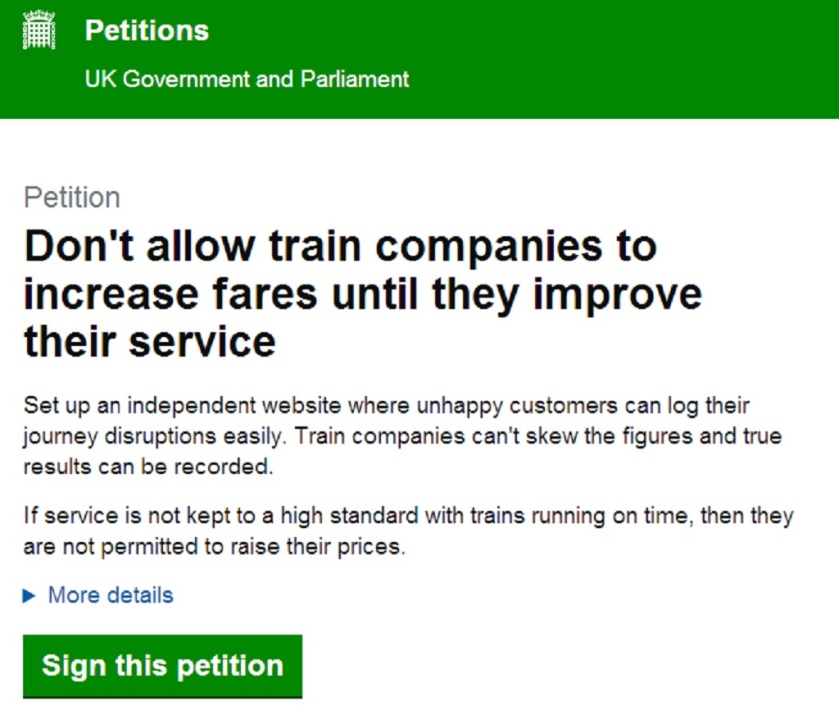
My latest twitter follower, Laura Warwick by name, has created a petition on the British government’s official petitions site (which means it is open only to UK citizens to sign) calling on the government to not allow train companies to increase their fares until they have improved their services. Click the screenshot below to sign and share the perition:
The latest post in my series about my holiday in Sweden.
INTRODUCTION
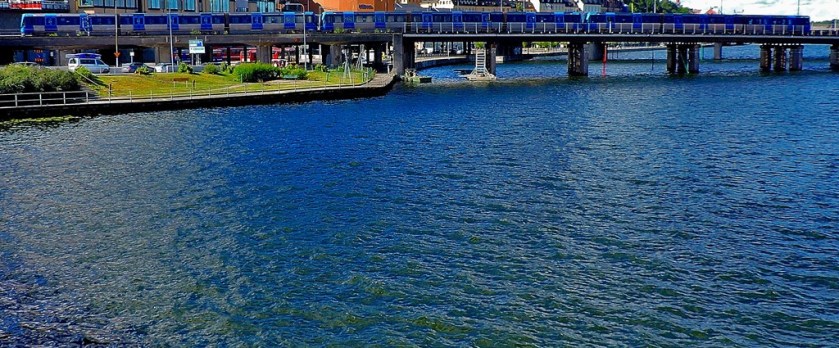
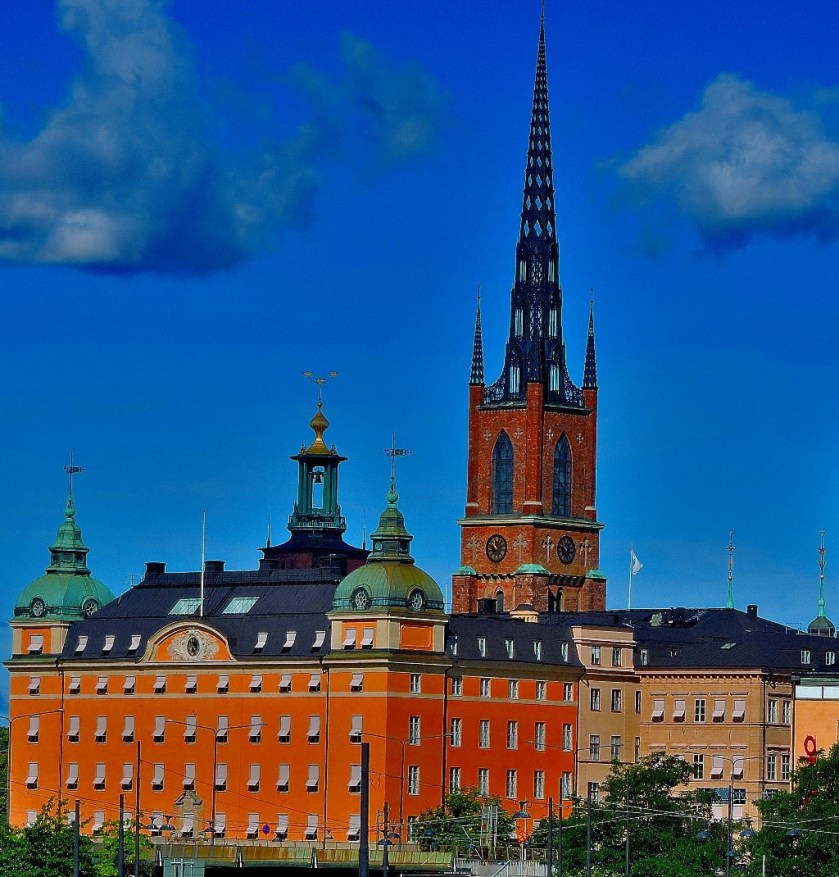
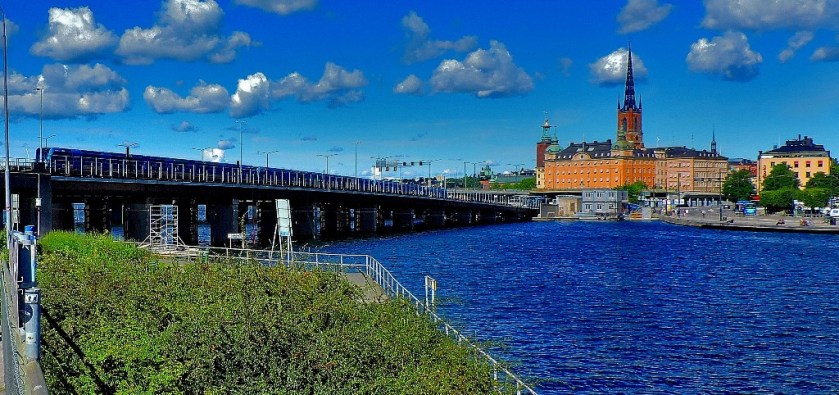
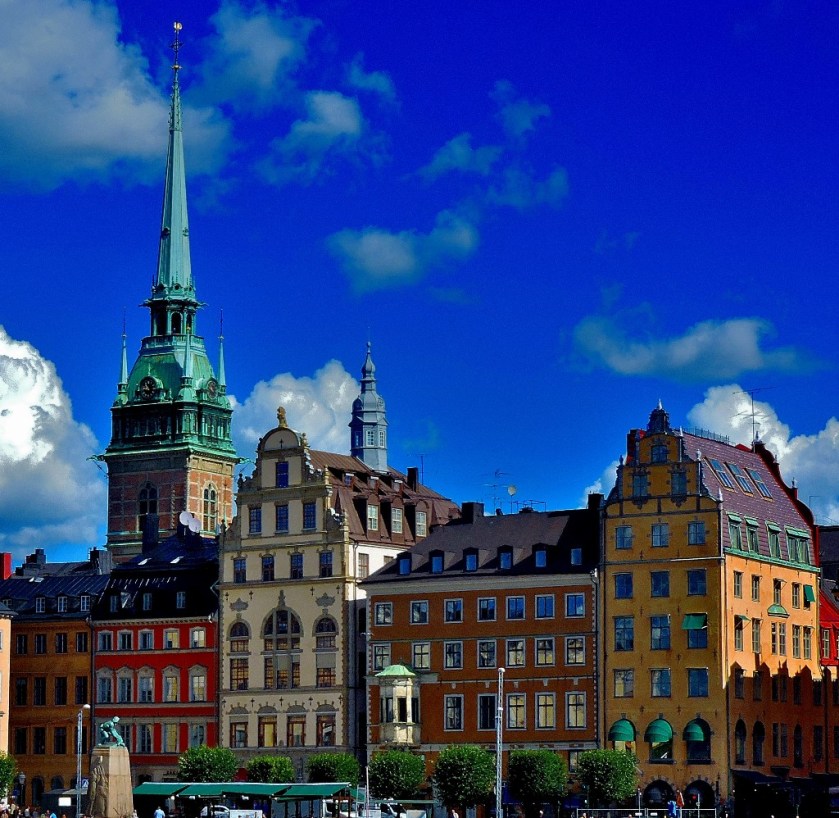
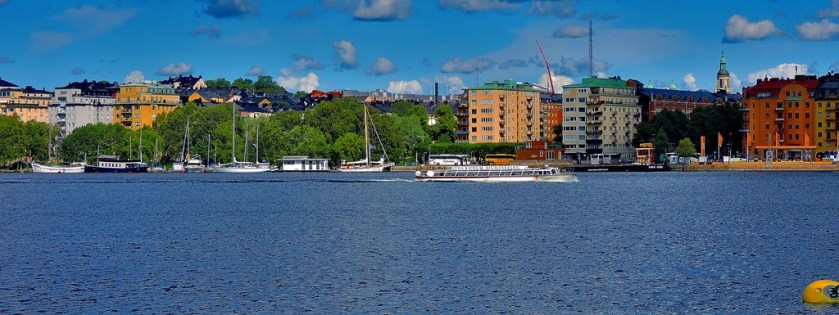
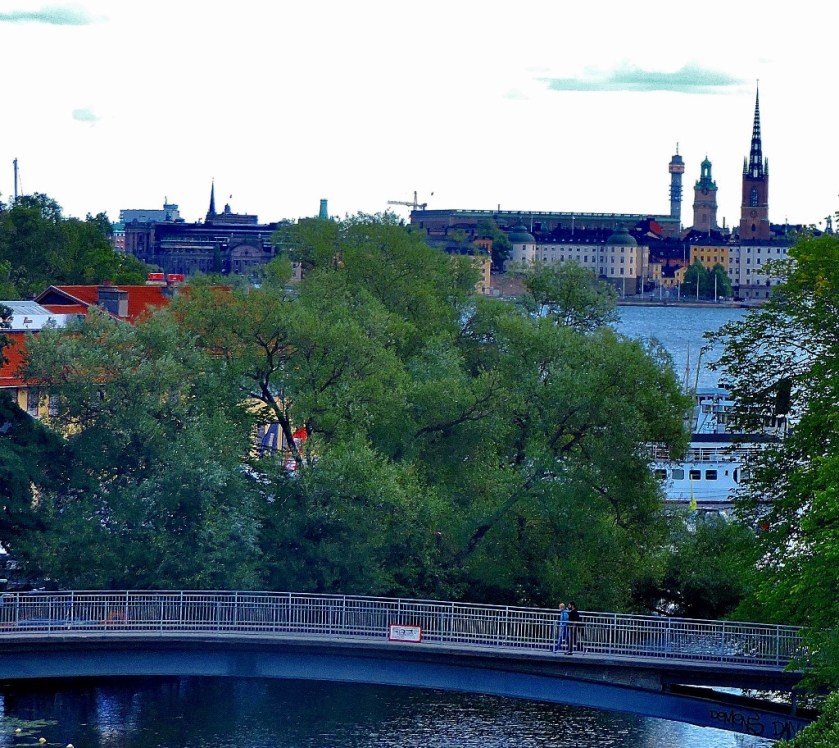
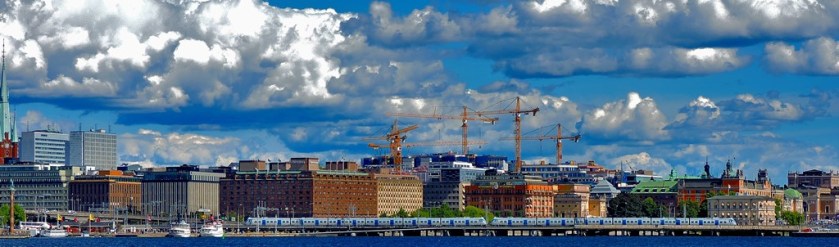
Welcome to the latest installment in my series of posts about my recent holiday in Sweden. Readers of my previous post will recall that I alluded briefly to a waterside walk that started and finished at Gamla Stan. This post tells the story of that walk. I also included some pictures from the city of Stockholm in the first post in this series.
AT GAMLA STAN
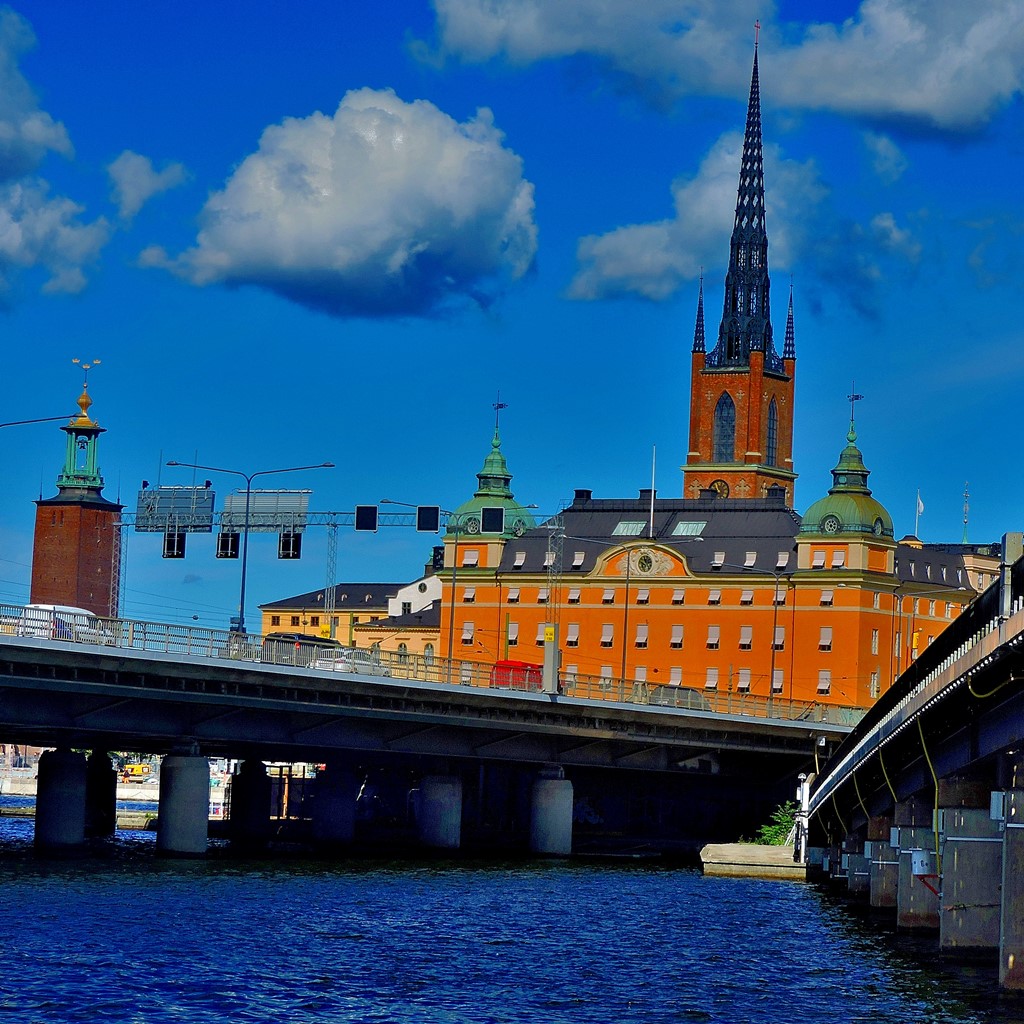
Although it is on what is classed as an underground railway the station at Gamla Stan is actually slightly elevated, so that you exit it by going down to street level. It had always been in my plans to do some exploring around Gamla Stan and the sight of the waterside was enough to decide exactly what I would be doing…
THE WALK
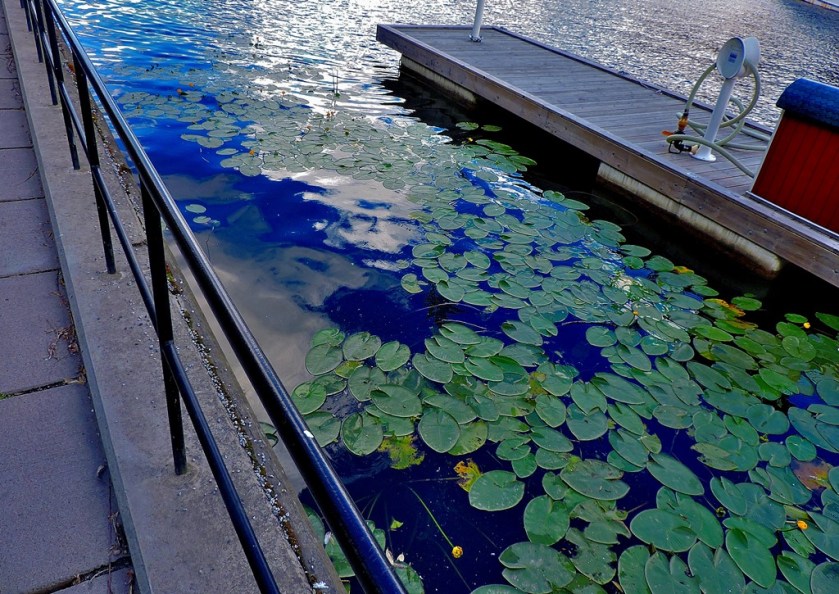
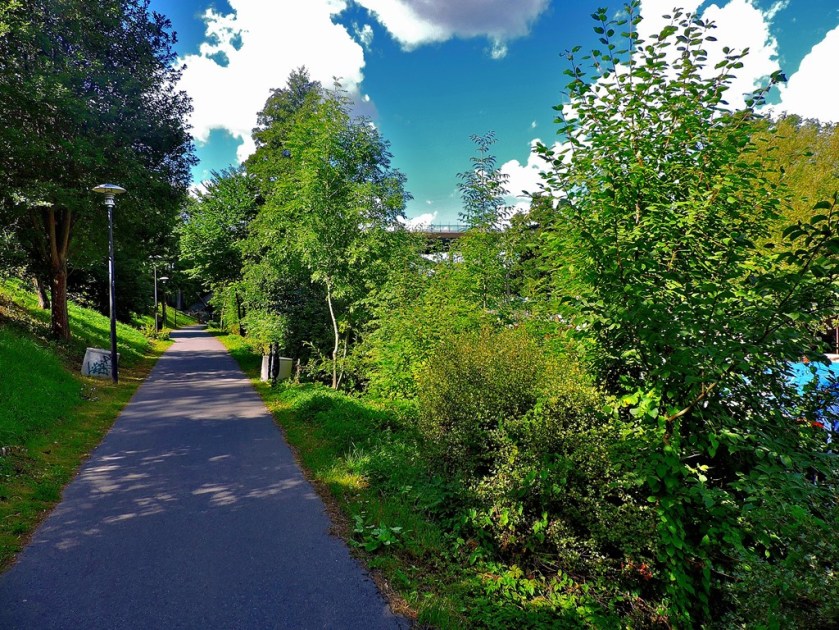
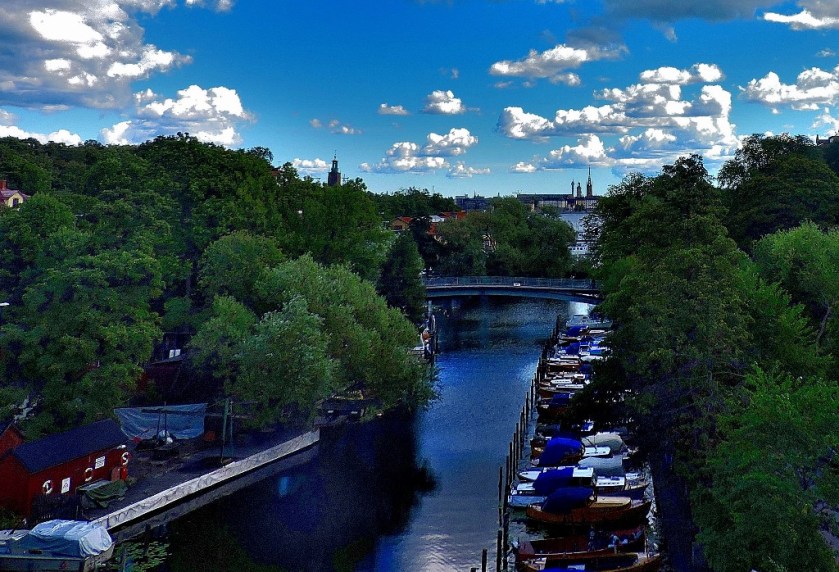
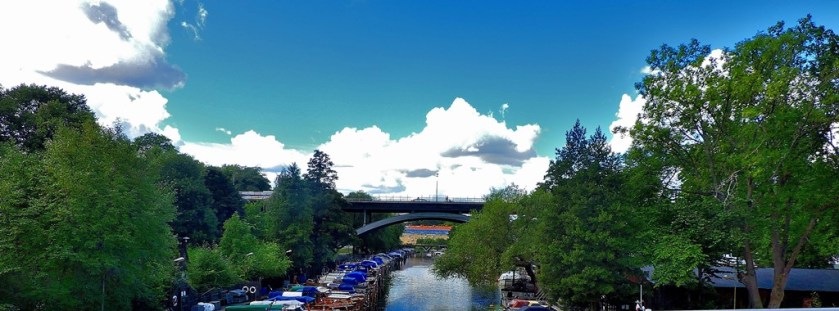
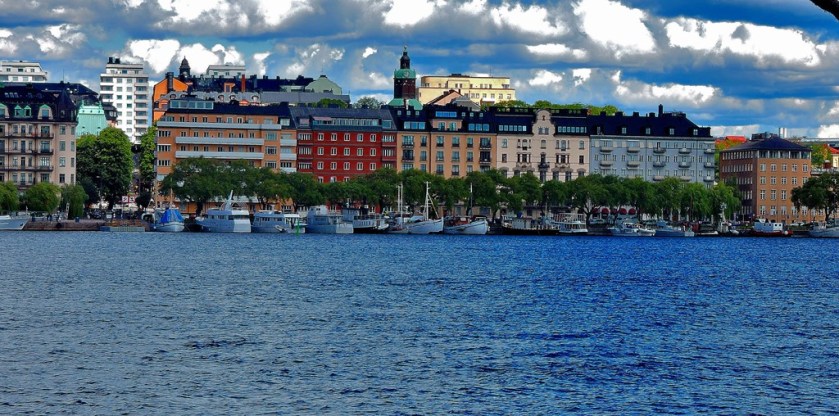
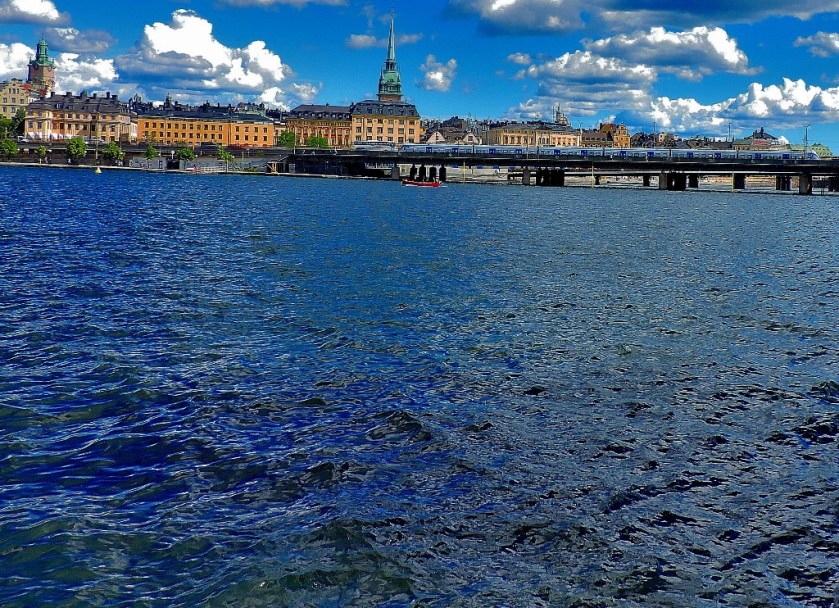
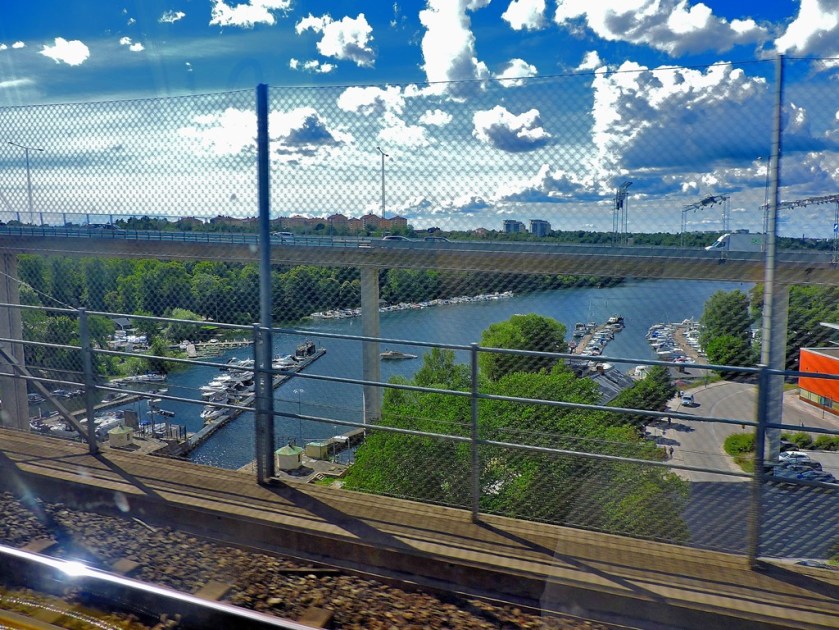
I crossed the water and was delighted to find a waterside path on the other side, which I duly set off along it.
The bridge in the distance became my target – I envisaged crossing it and heading back along the other side.
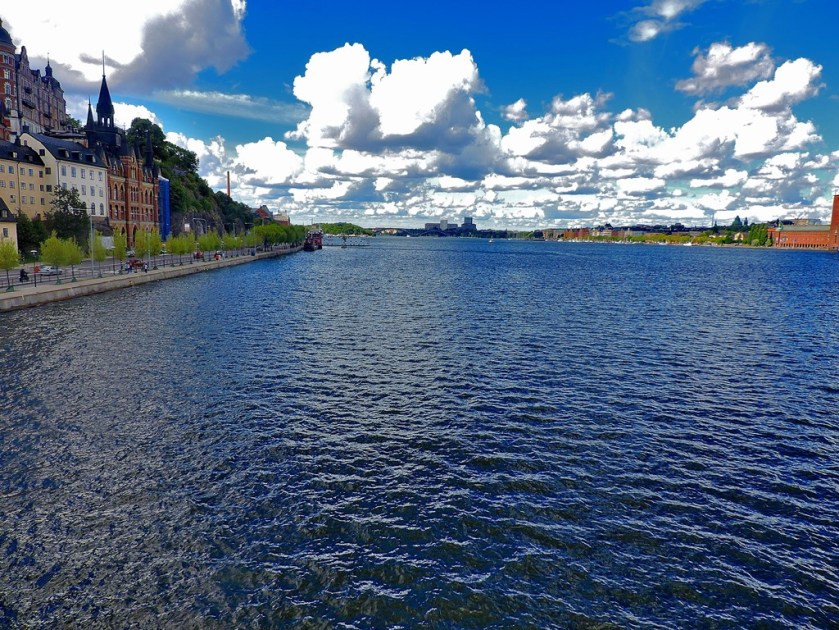
Another facet of Stockholm well shown up during this walk is how many cliffs there are.
Approaching the bridge that I had marked out as my first target I found the water narrowing…
As you will see from the next set of pictures the view from the bridge gave me reason to believe that I could fulfill my plan of walking back along the other side of the water.
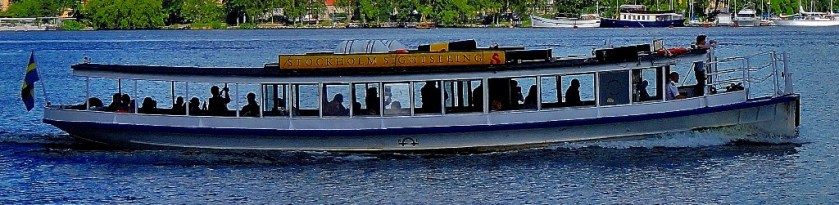
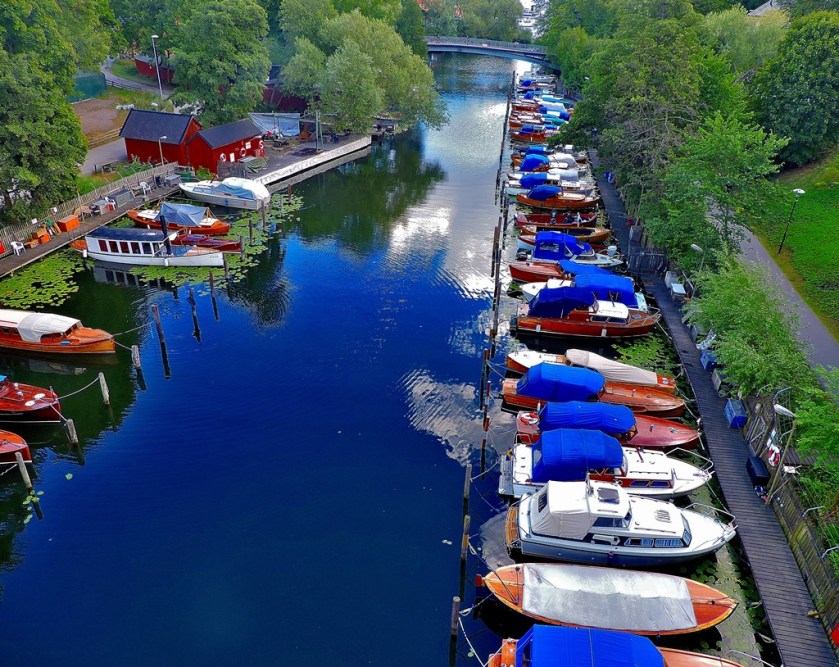
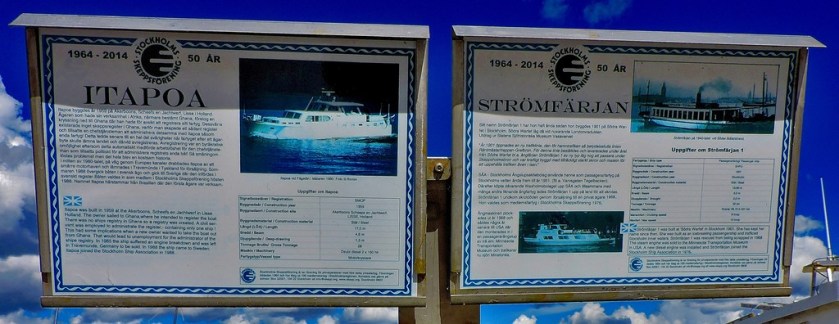
Although I located this path without difficulty it soon swung away from the water, and not long after that it became plain that the only waterside route was the one I had already taken, so I crossed a small pedestrian bridge to head back along that path. I paid close attention to the boats this time round, rather than picturing just a few…
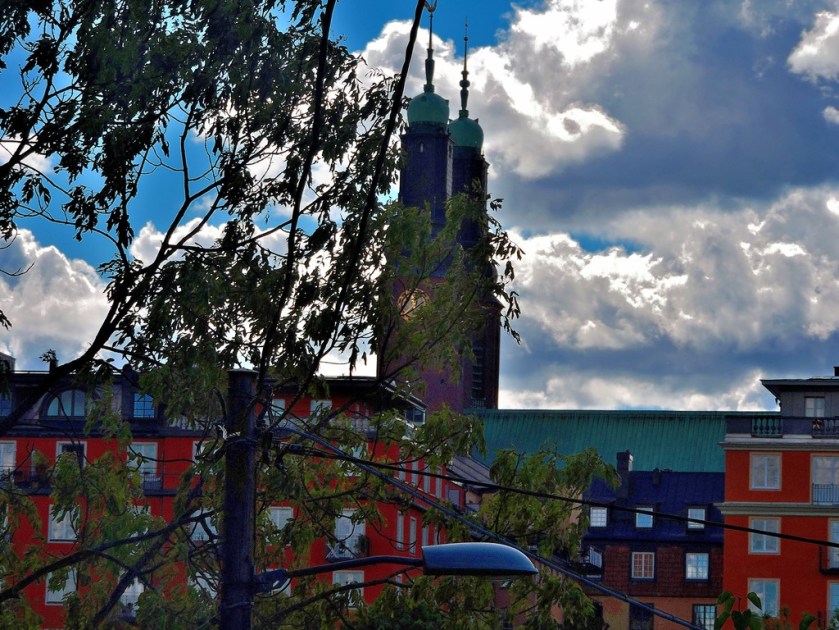
I crossed one last bridge and headed back to Gamla Stan station to resume my travels, having thoroughly enjoyed my exploration of the heart of Stockholm.
The latest in my series of posts about my holiday in Sweden. This post covers Tunnelbana in detail, thereby providing a framework for my remaining posts about Stockholm.
INTRODUCTION
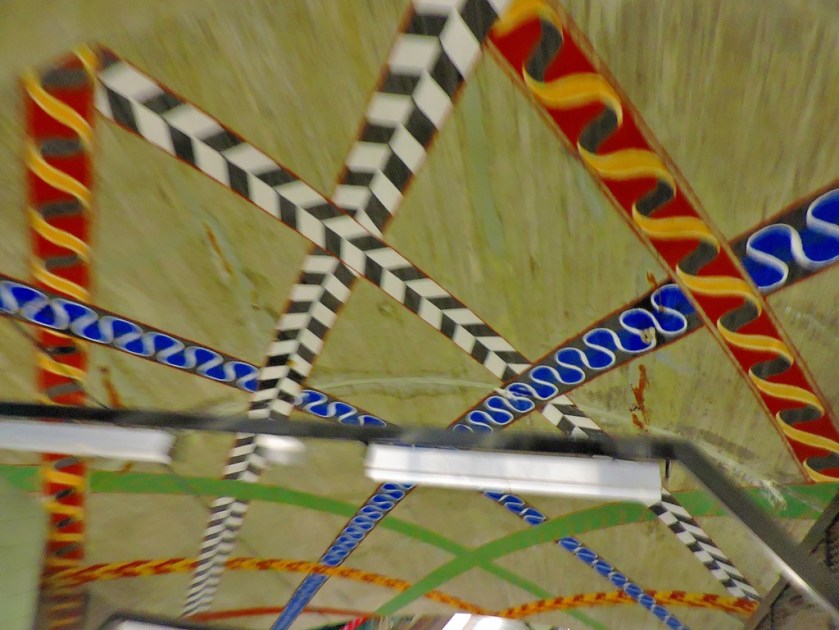
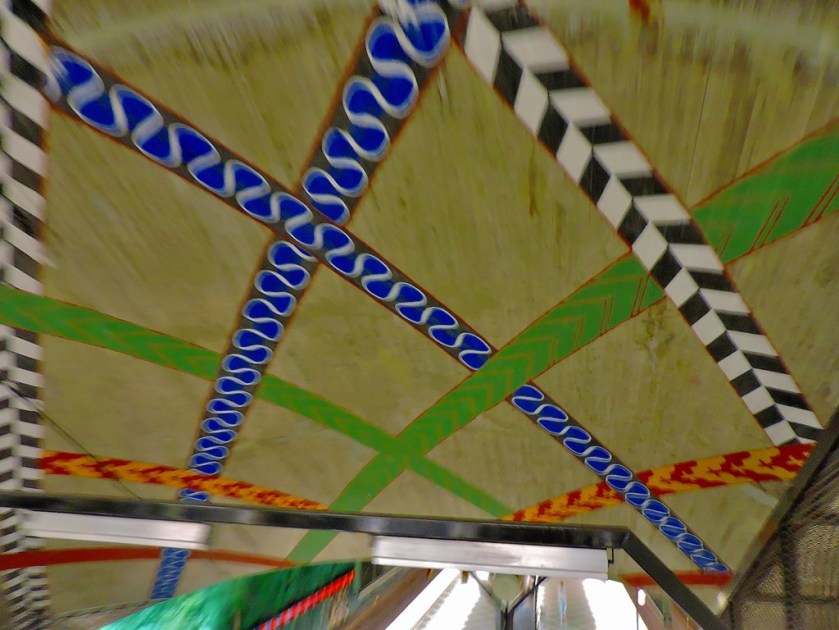
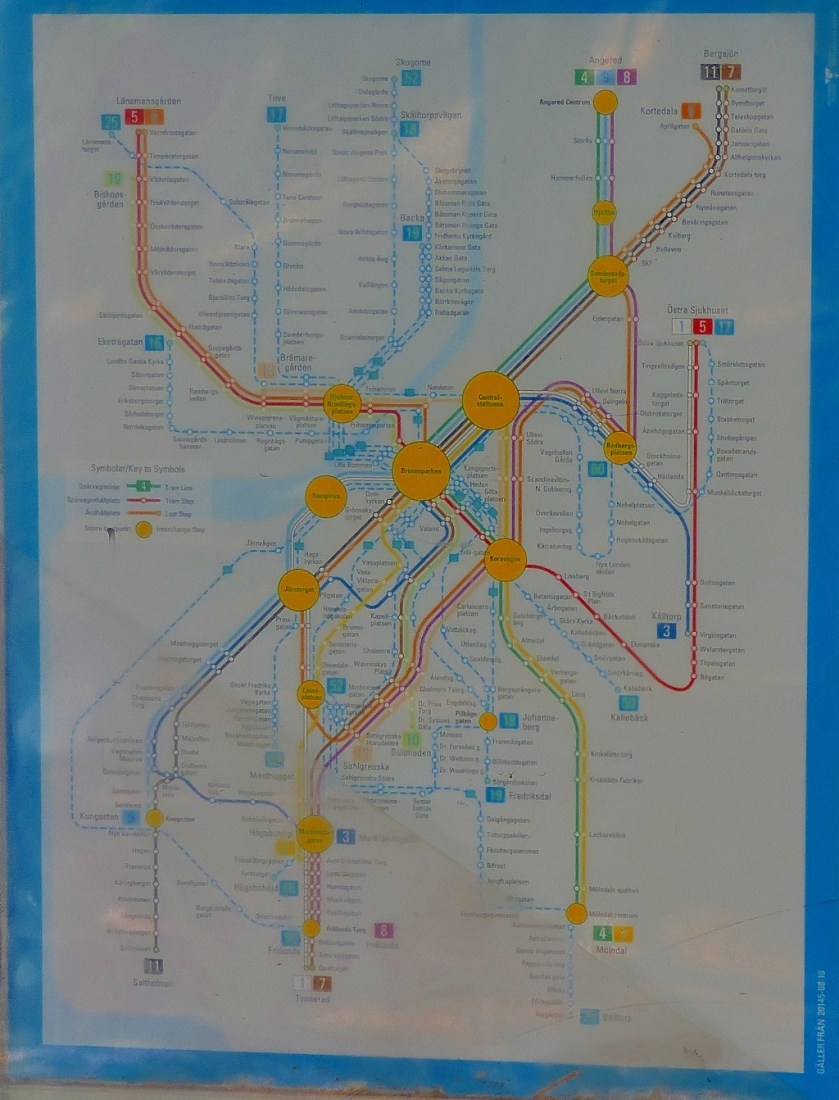
Welcome to the latest installment in my series of posts about my holiday in Sweden. To set the scene for the rest of this post here is picture:
TUNNELBANA AND MY HOLIDAY
Although I made some use of the Tunnelbana at the beginning of my holiday, it was during my last full day in Stockholm at the end that I really got to know they system, having decided that in addition to exploring the city I would do some serious travelling on the system. I had seen enough even early on to realise that it was going to warrant a post.
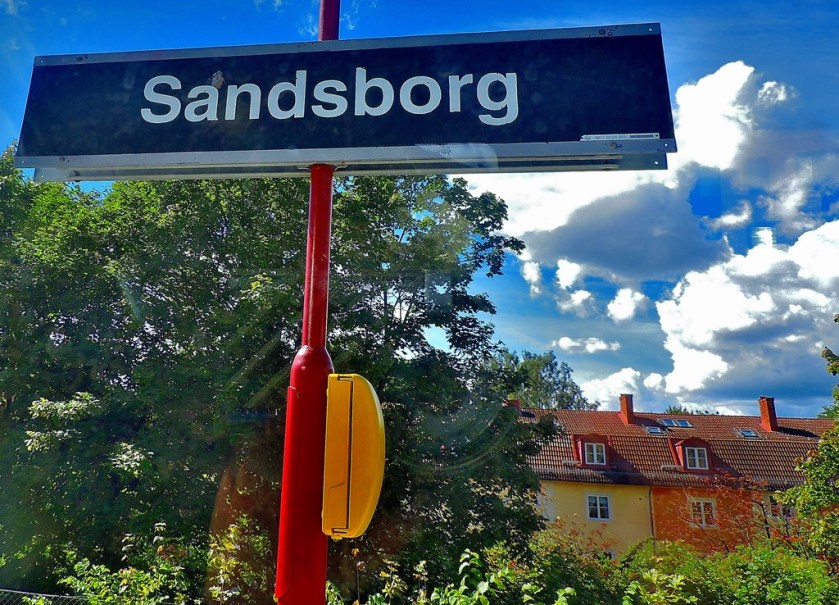
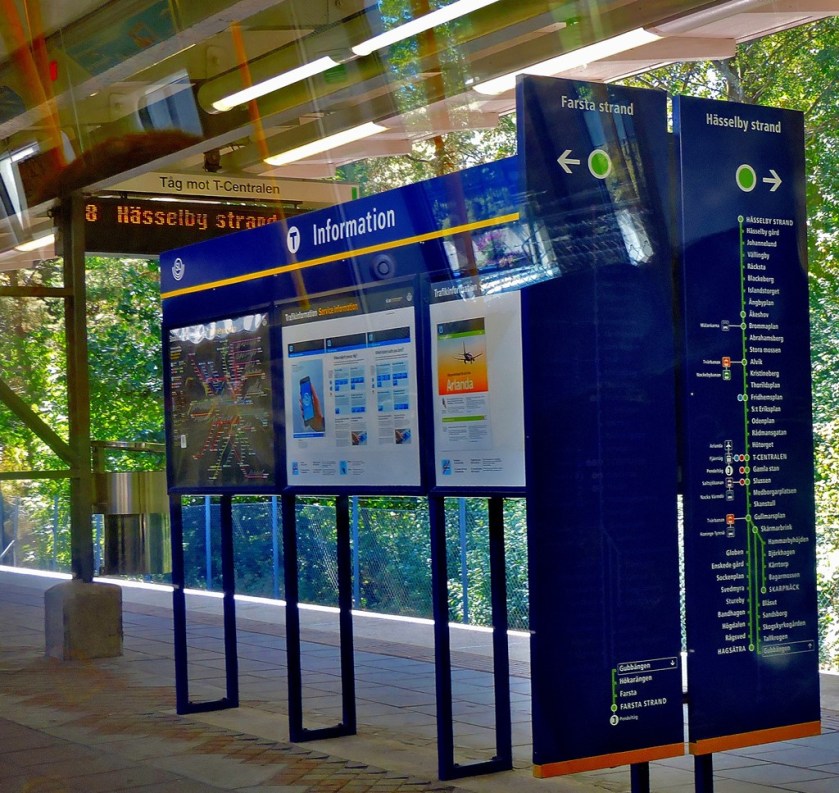
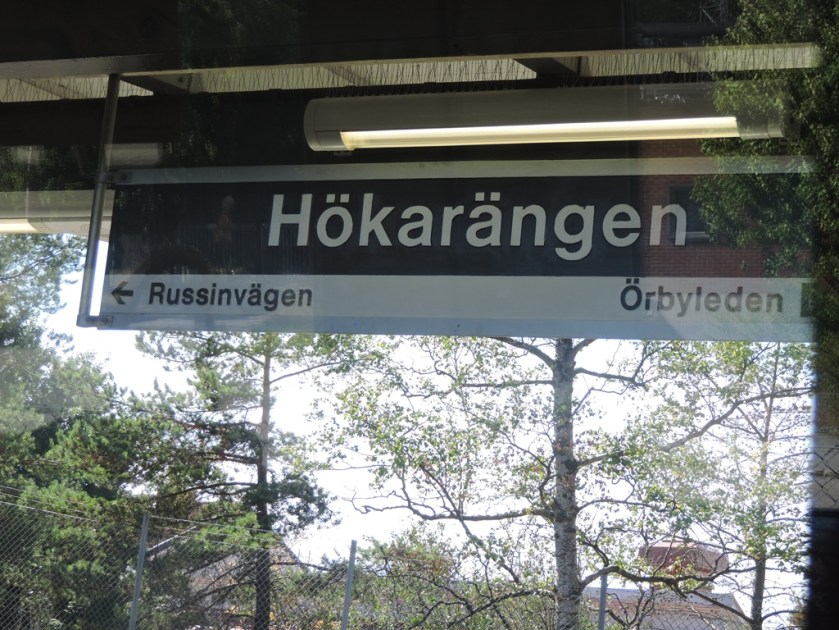
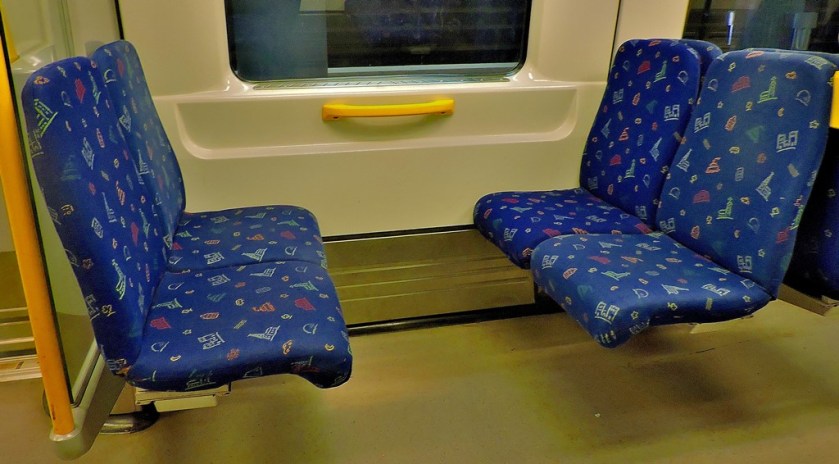
Although I had spent little time travelling on Tunnelbana in my first spell in and around Stockholm I did get some pictures…
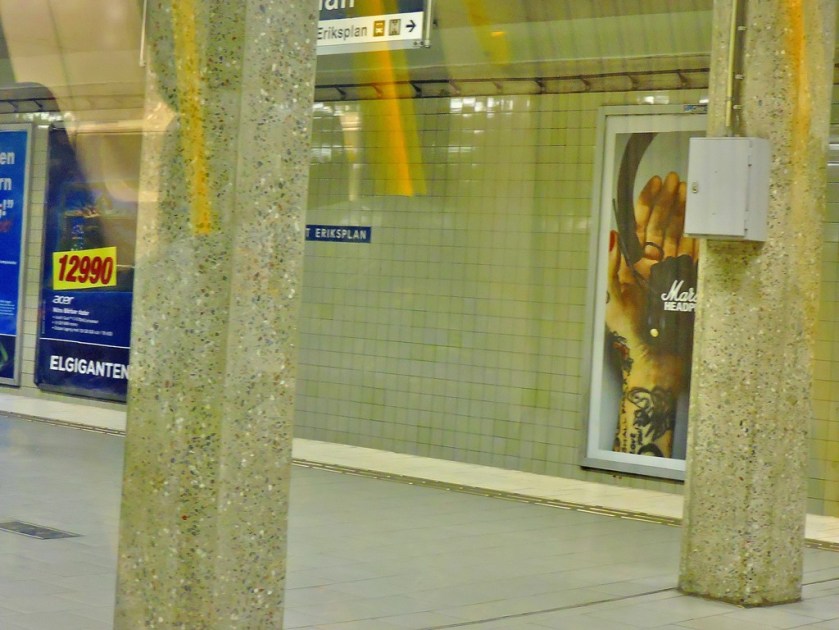
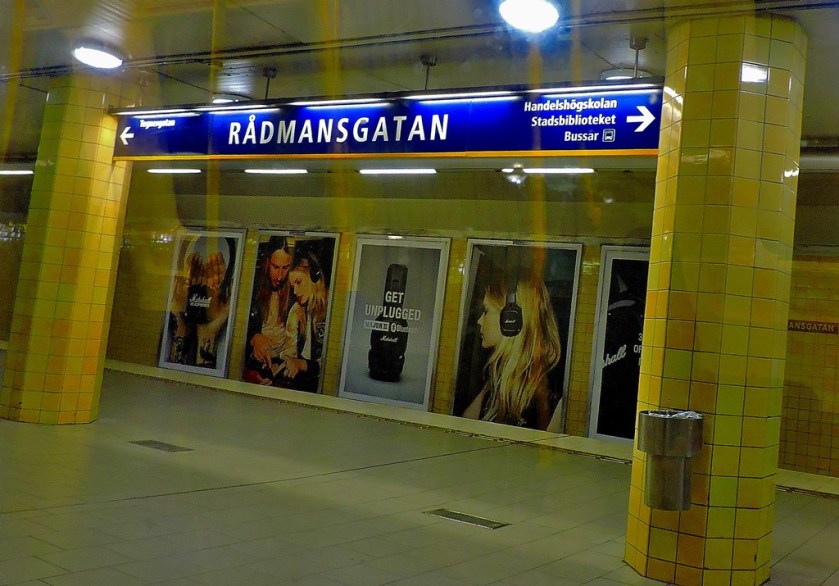
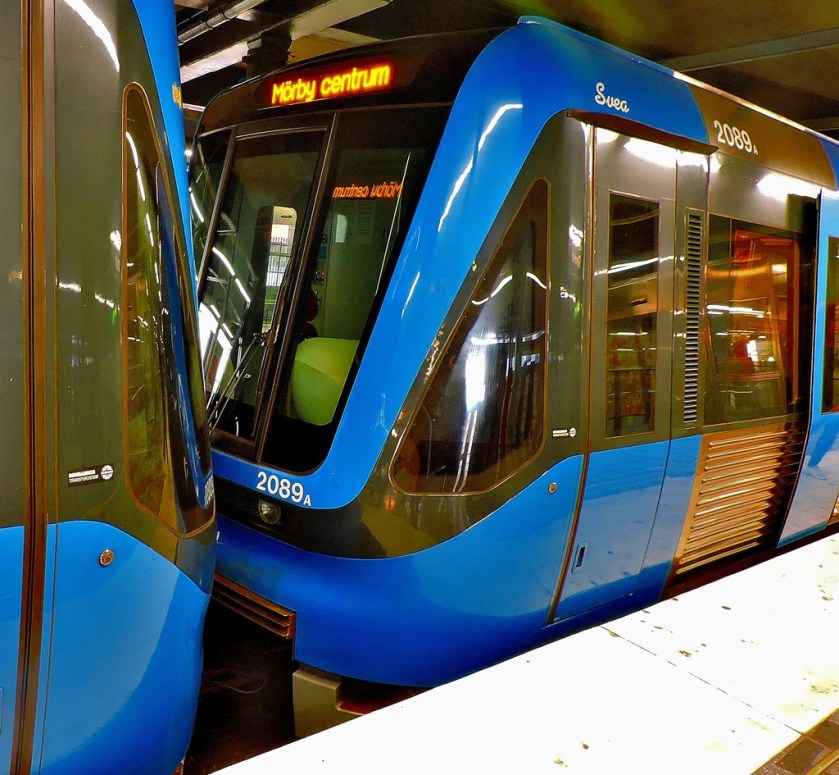
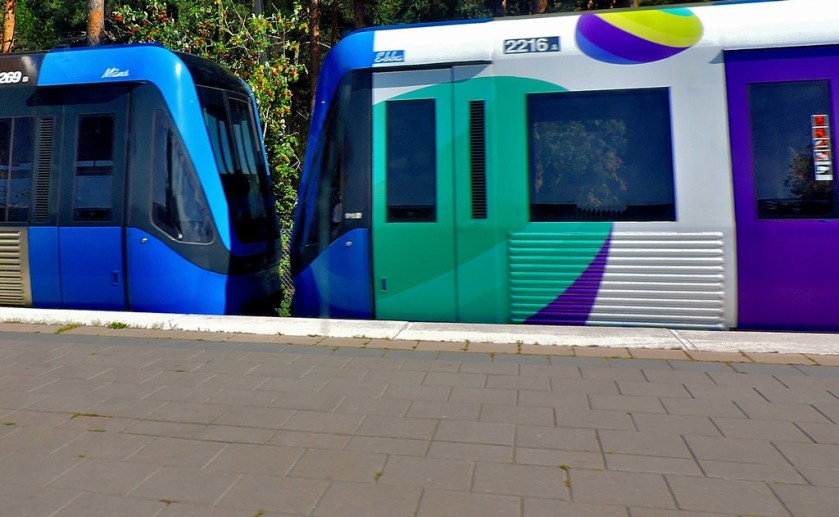
A Tunnelbana train – notice the articulated units, each the equivalent of three standard carriages (this train consists of two such, at busy times they sometimes have three).
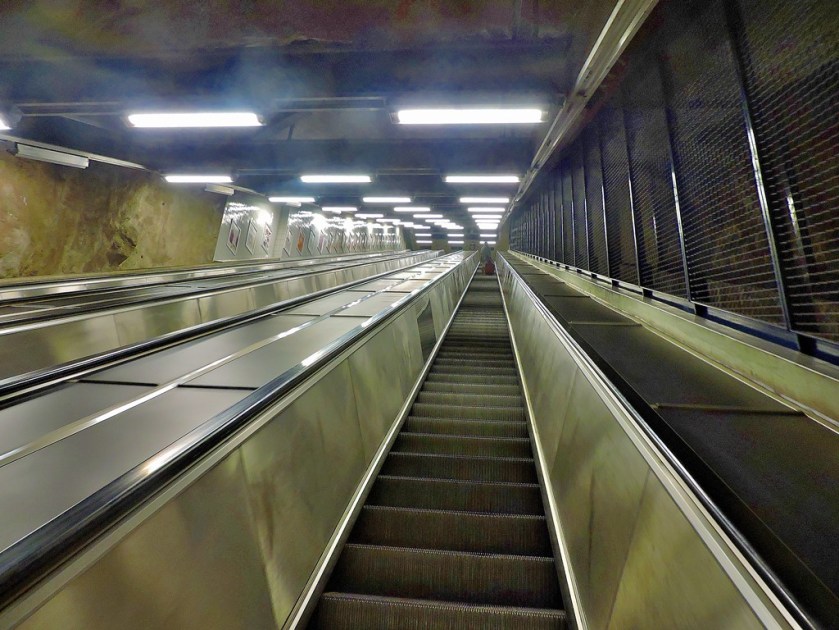
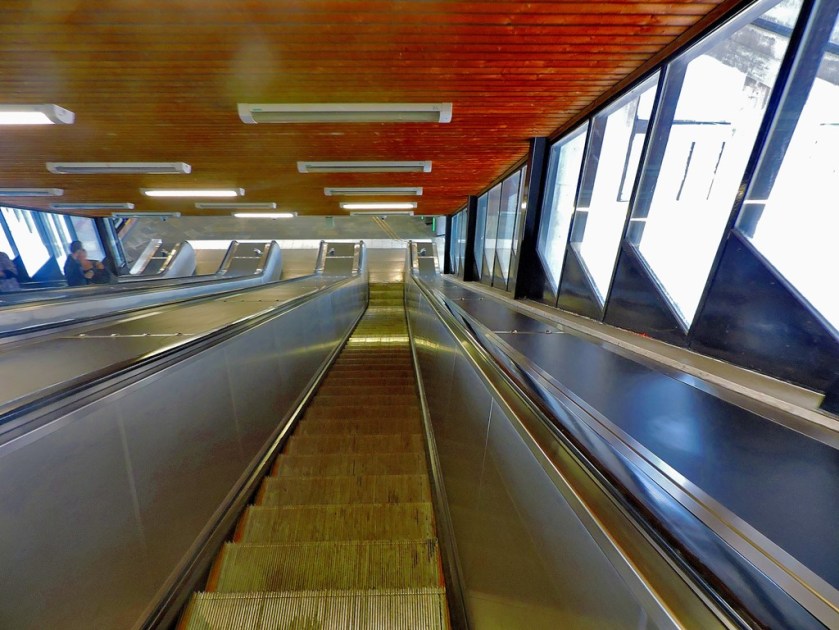
The escalators at Huvudsta.
A SYSTEM OF TWO PARTS
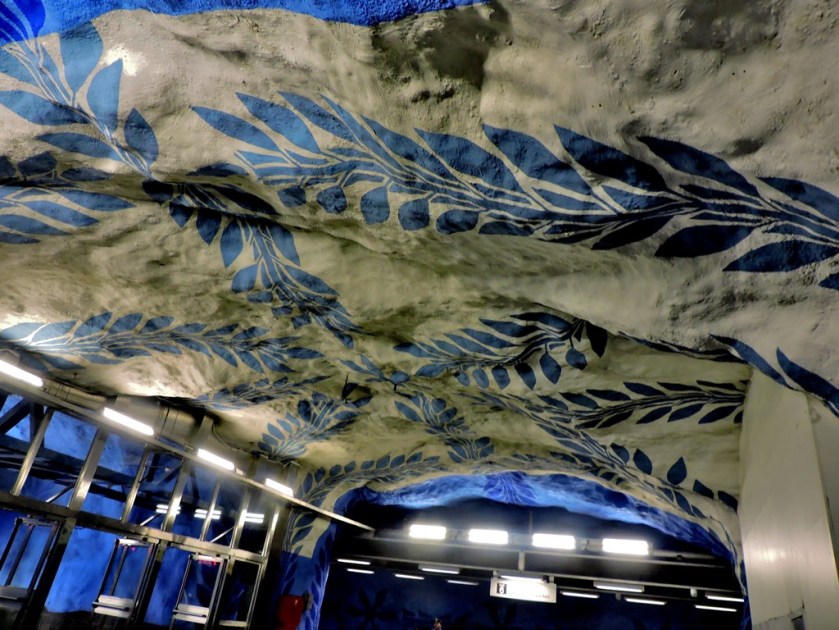
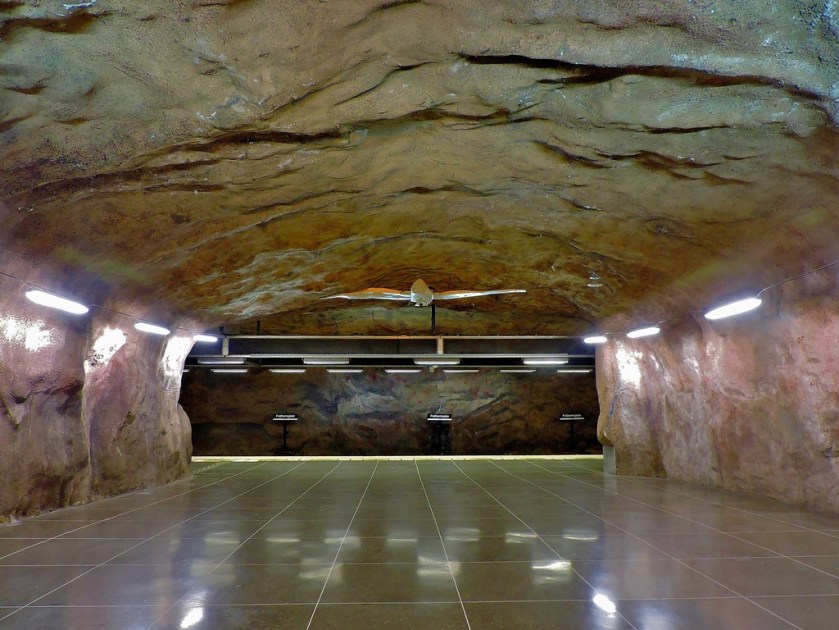
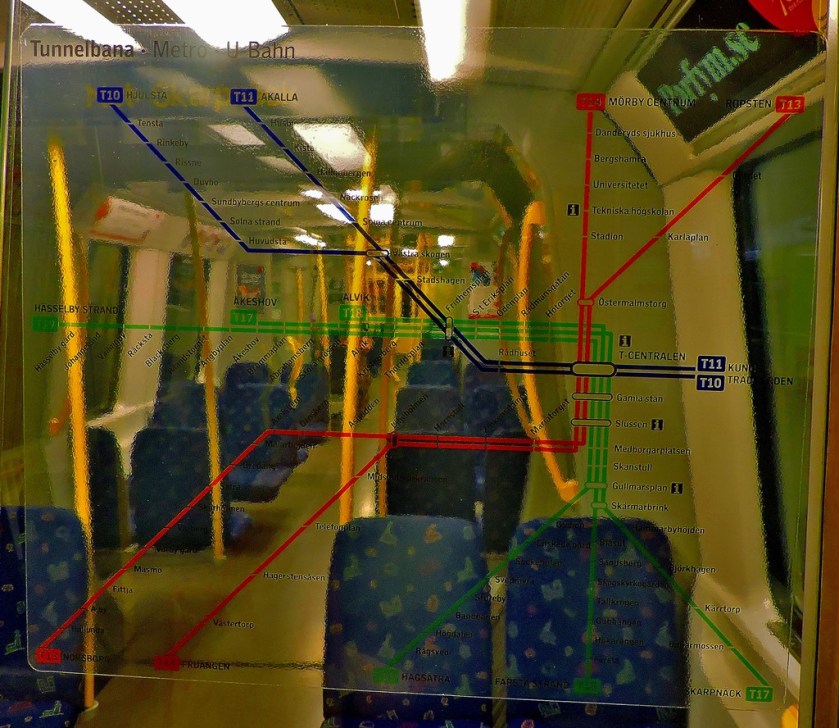
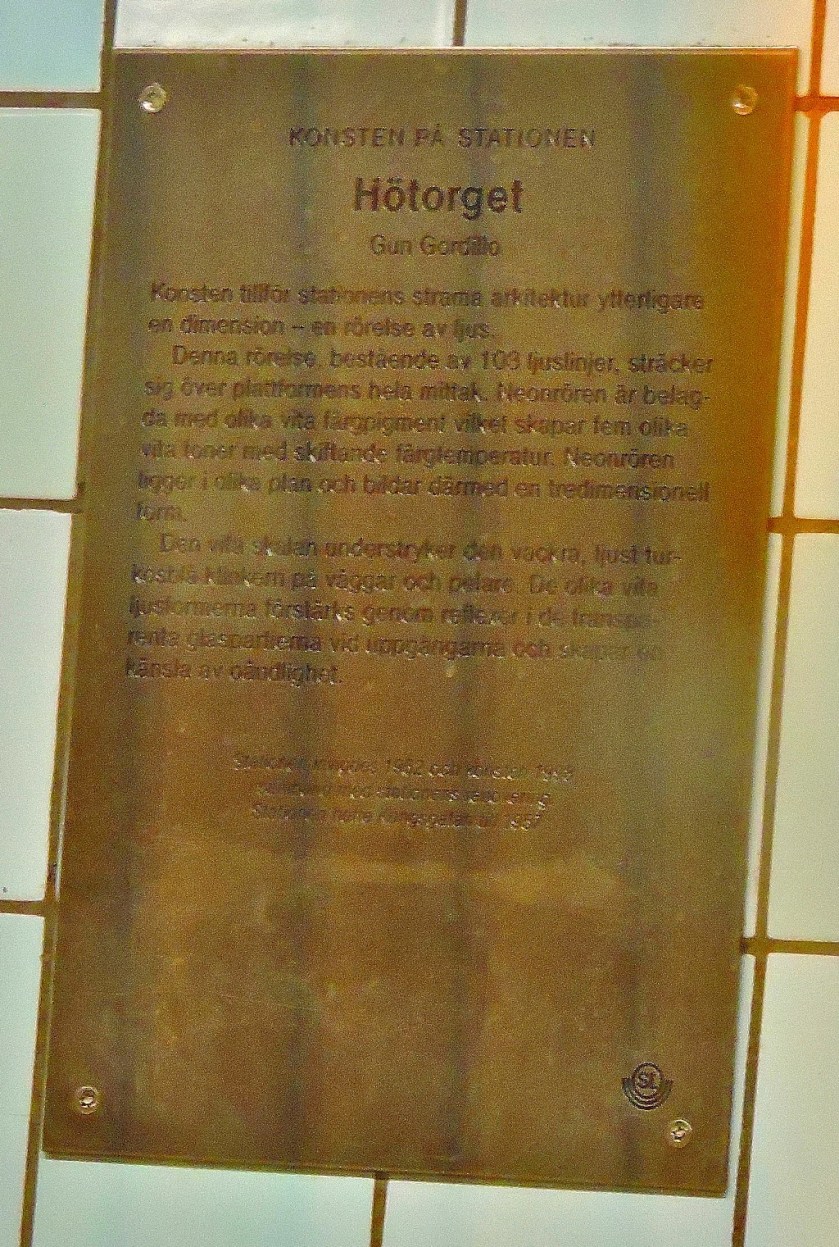
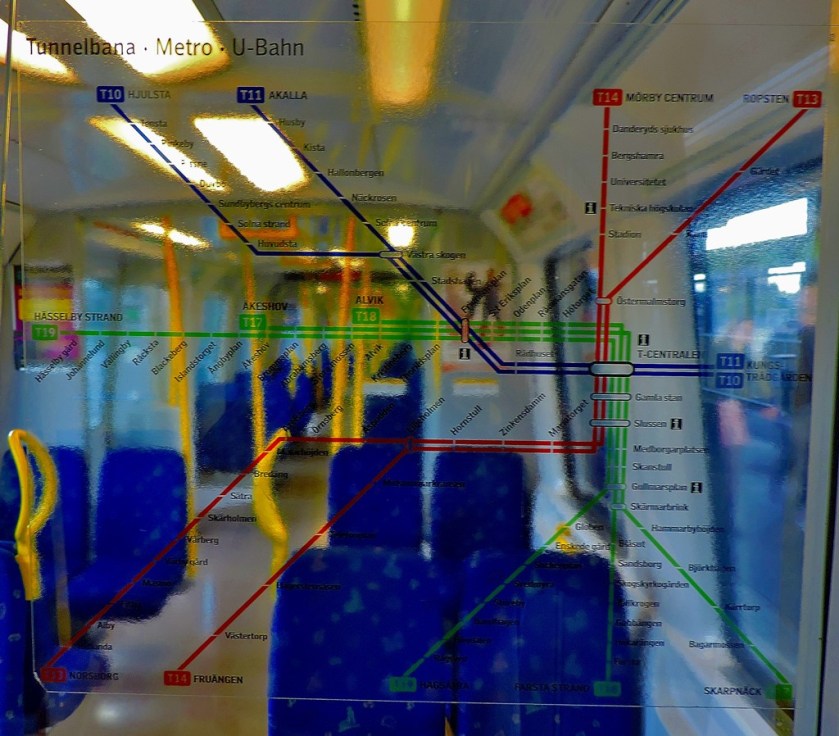
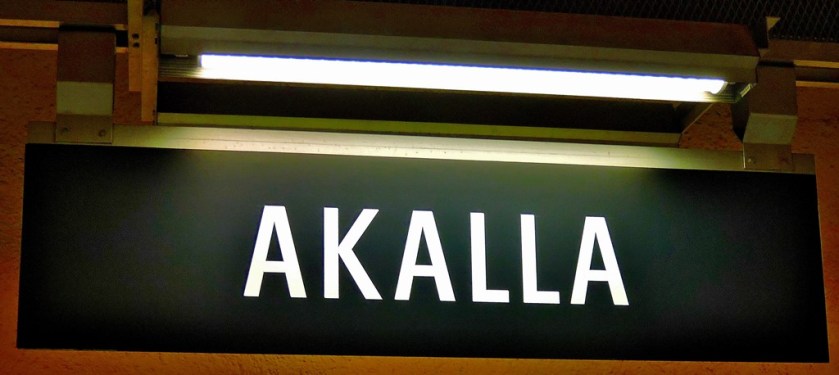
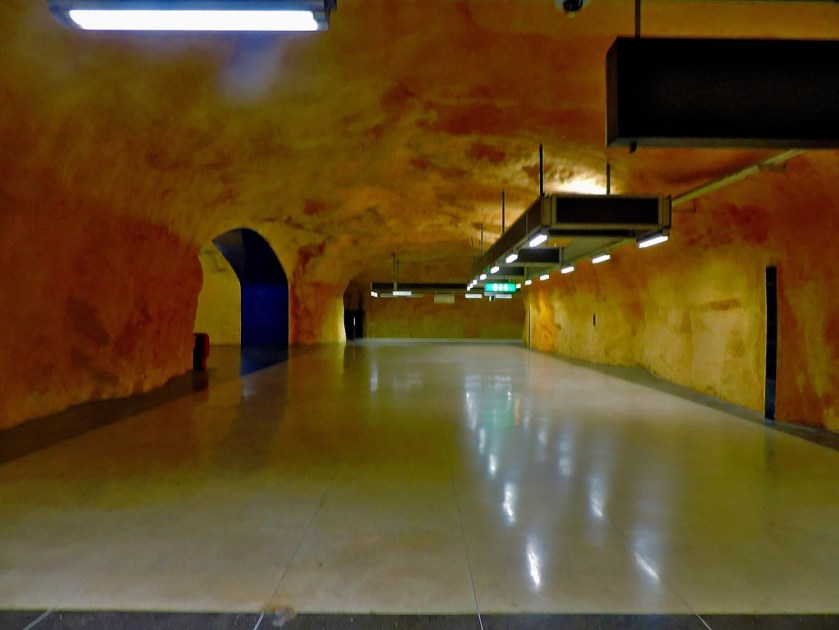
If you consult the system map included below the introduction you will note that there are three lines, coloured red, green and blue on the map. The red and green lines are older, and their tunnel sections, which make up a small minority of their length, are standard tunnels. The blue line is newer, and bar one station on the Akalla branch is in tunnel the whole way. It is the blue line that features the cave like station sections.
A BYZANTINE INTERCHANGE
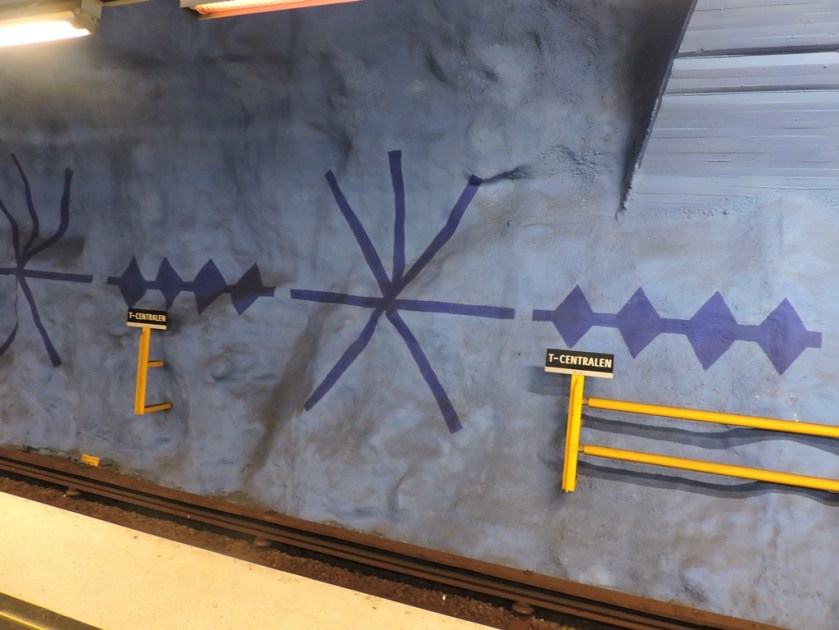
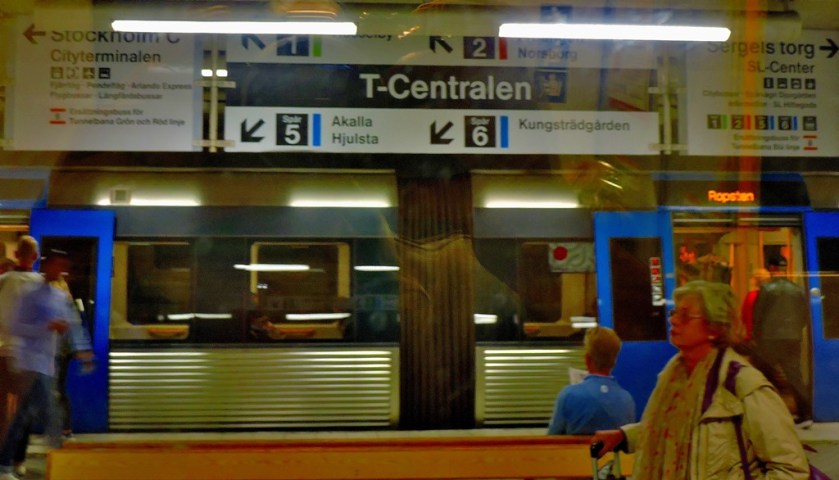
The only place where all three lines meet as at T-Centralen, and the interchanges between the blue line and the others are very long at that station. With only three lines meeting plus an interchange to mainline railways the arrangements here are not as labyrinthine as at the Bank-Monument complex in London which is probably the world record holder for user-unfriendly interchanges. Thus, when out on my own on that last full day I decided that I would avoid T-Centralen, making use of the interchange I had noted at Fridhelmsplan between the blue and green lines and the cross-platform interchanges available between the green and red lines at Gamla Stan and Slussen. The Fridhelmsplan interchange involves going up a travalator (it is not an escalator as it is smooth rather than stepped) but is very straightforward, unlike the multiple escalators and horizontal travalator of the T-Centralen interchange.
GAMLA STAN
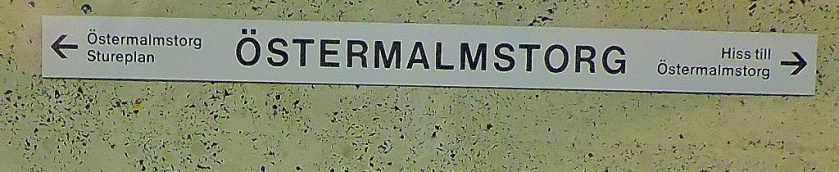
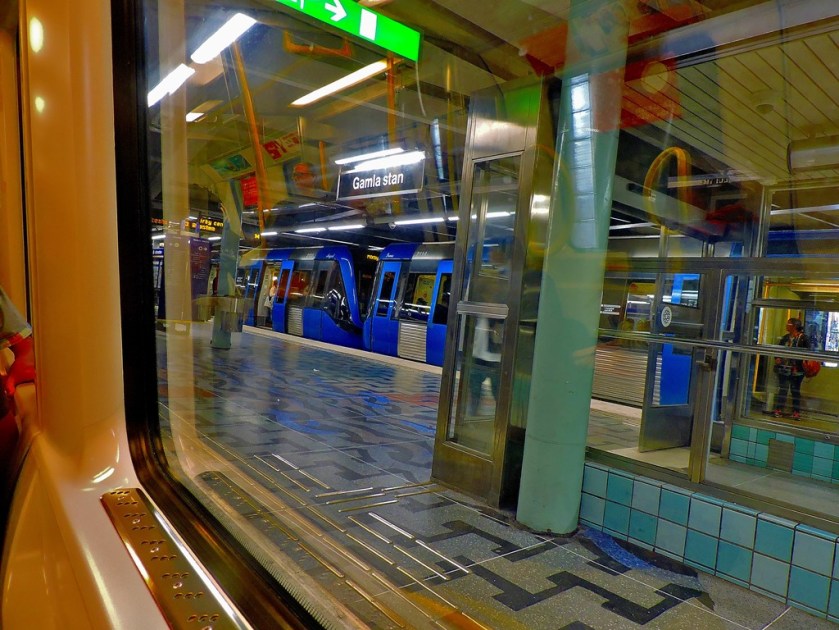
Having changed at Fridhelmsplan I took a green line train to Gamla Stan, where I went for a long waterside walk which will feature in another post in this series. It was after this walk the my serious explorations began.
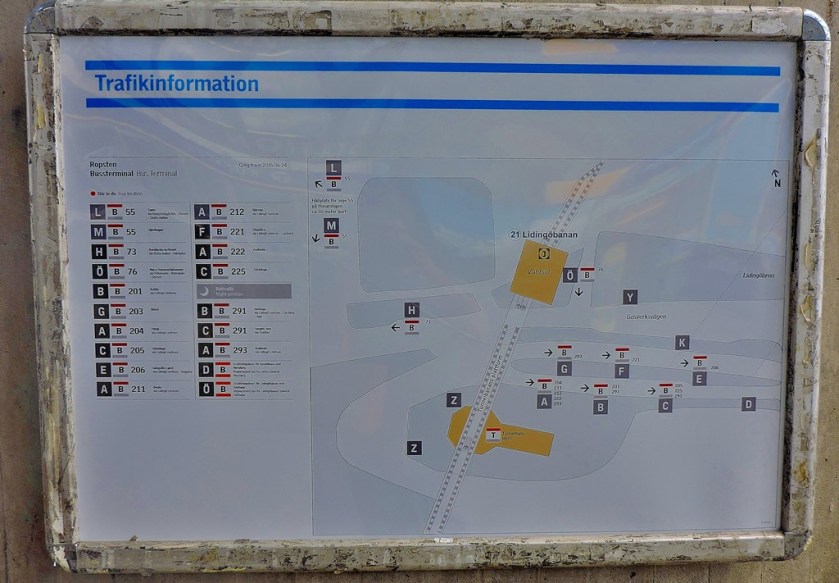
My first target was Ropsten on the red line…
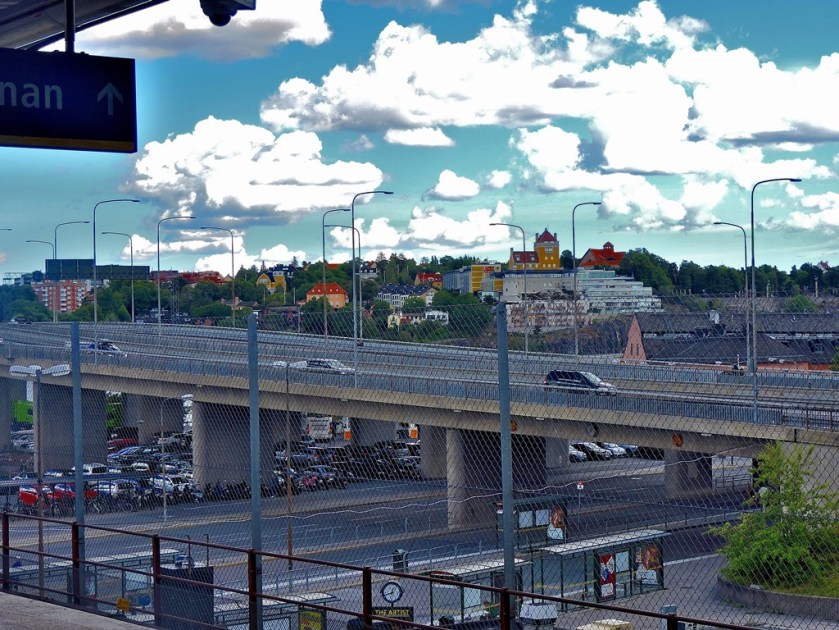
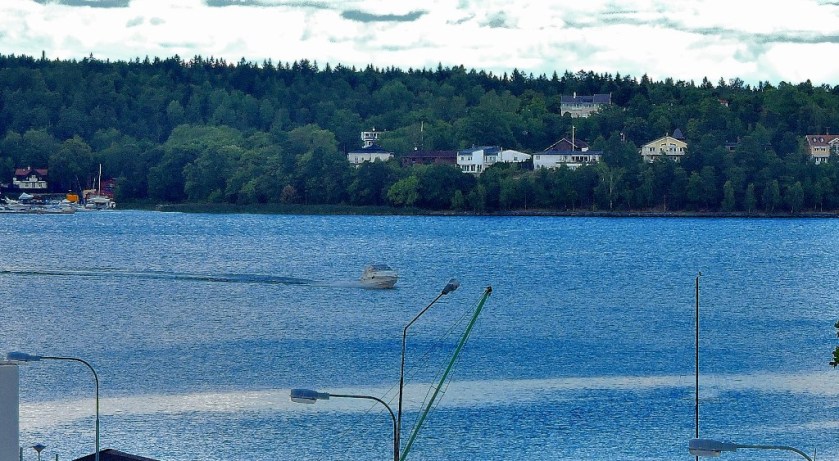
The first of four pictures taken at Ropsten.
On on-train map.
My next move once I reached a suitable interchange point was to switch to the Green line and head to one of its terminus stations. The train I boarded was headed for…
FARSTA STRAND
This journey was almost all open to the air, with parts of it being quite scenic.
At Farsta Strand I went for a bit of a walk to get a feel for the area.
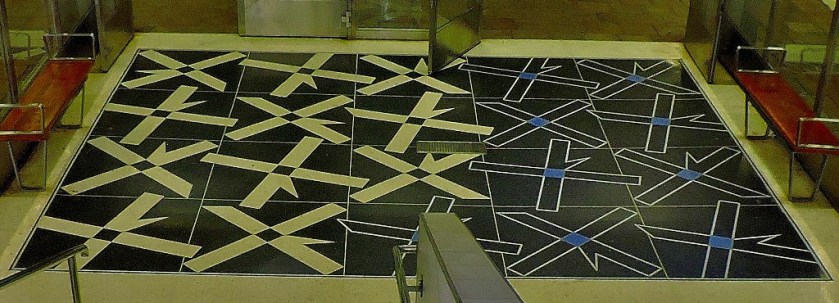
This floor is on the way out of Farsta Strand
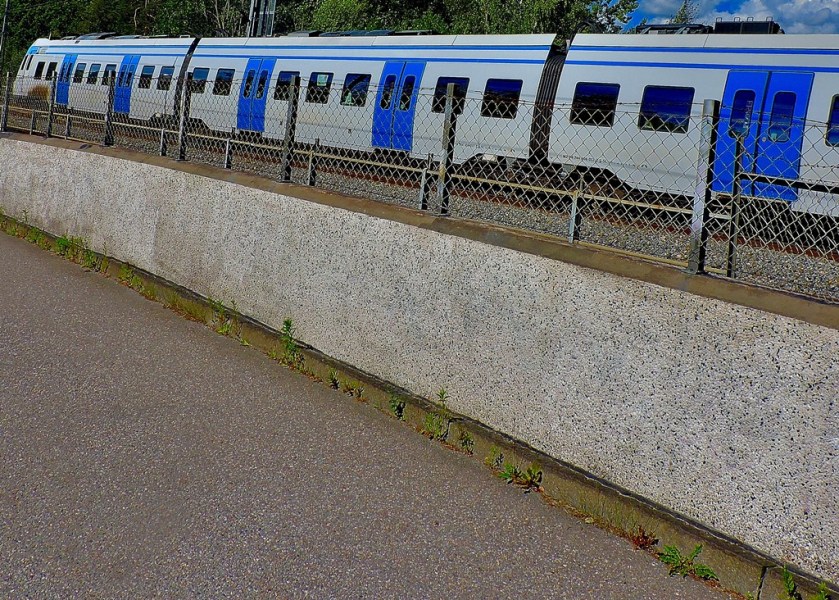
A mainline railway train nearby.
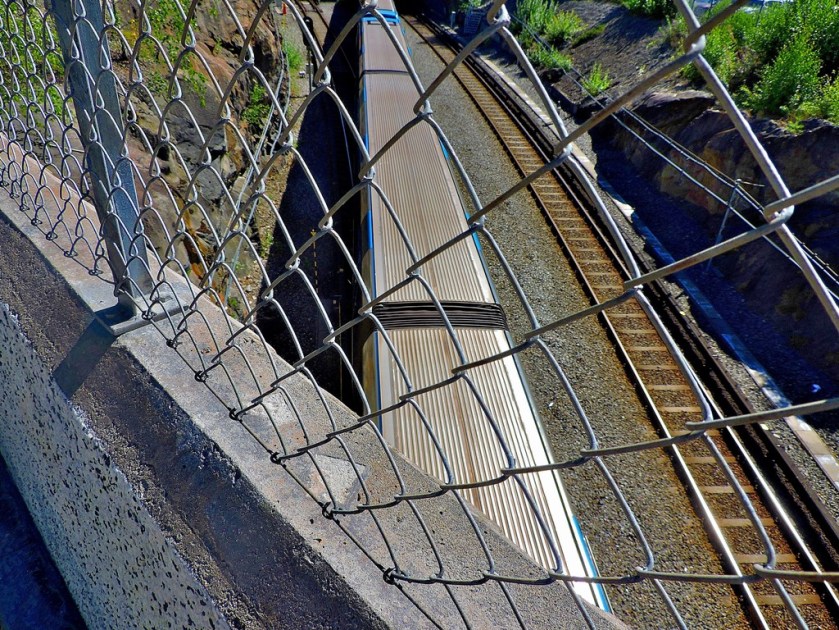
Four overhead shots of tunnelbana trains.
The station frontage at Farsta Strand.
From Farsta Strand I travelled to Fridhelmsplan where I changed to the blue line, having seen enough of the other two and having decided that I wished to see the whole of the blue line.
This shot has already featured in this series of posts, as a response to an MJP photo challenge.Back on the blue line.
THE BLUE LINE
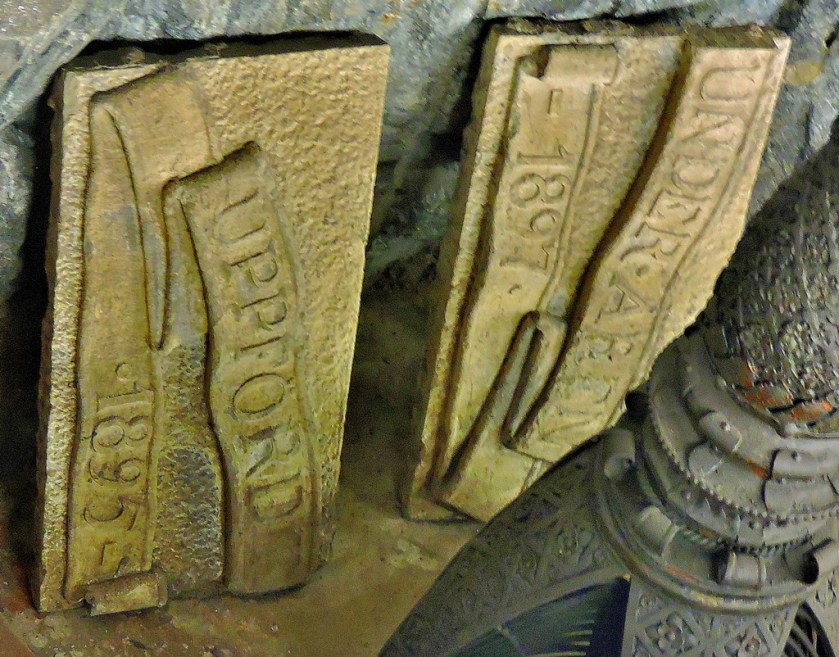
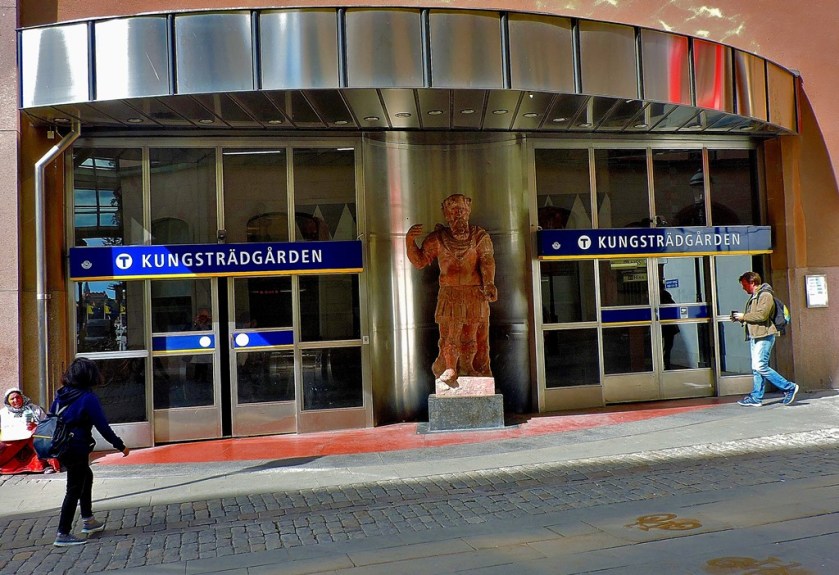
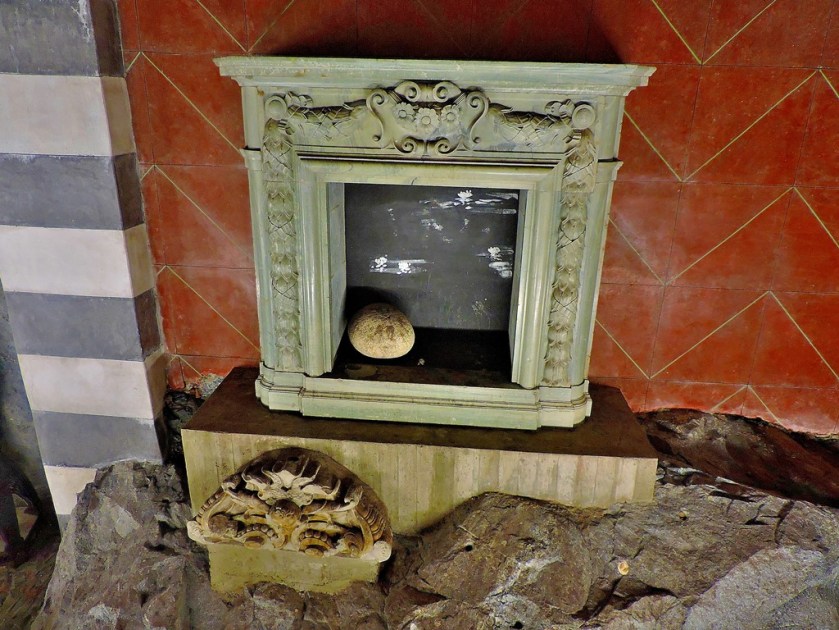
Back on the blue line I decided that my first move would to be explore Kungstragarden. I will be putting up a whole post about Kungstragarden, because there is so much to see at the surface there. The station is practically a destination in its own right, as the following pictures will indicate…
All of the 39 pictures in this set were taken at Kungstragarden (yes there is that much on display there at the station alone)
The surface building
Having explored Kungstragarden (and had lunch there), my next move was to get a train to…
AKALLA
The journey to Akalla and then back as far as Vastra Skogen to change to the Hjulsta branch featured the only above ground section of the blue line, and plentiful art works some of which I was able to capture with my camera. Of course at Akalla and also at the change point of Vastra Skogen I had the advantage of not being on the train the whole time.
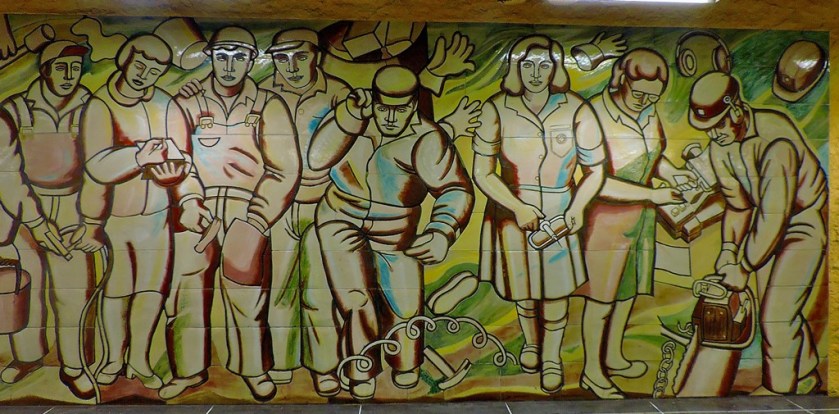
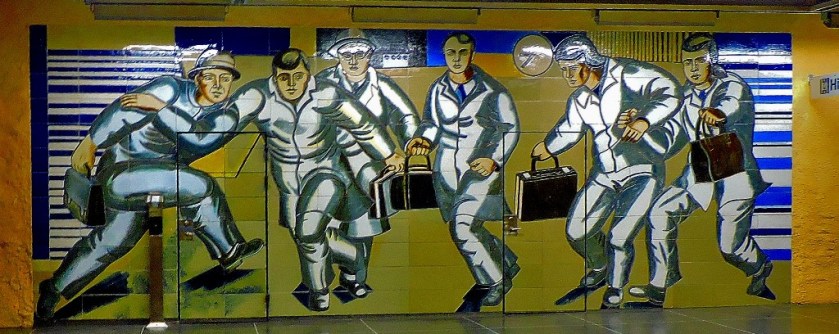
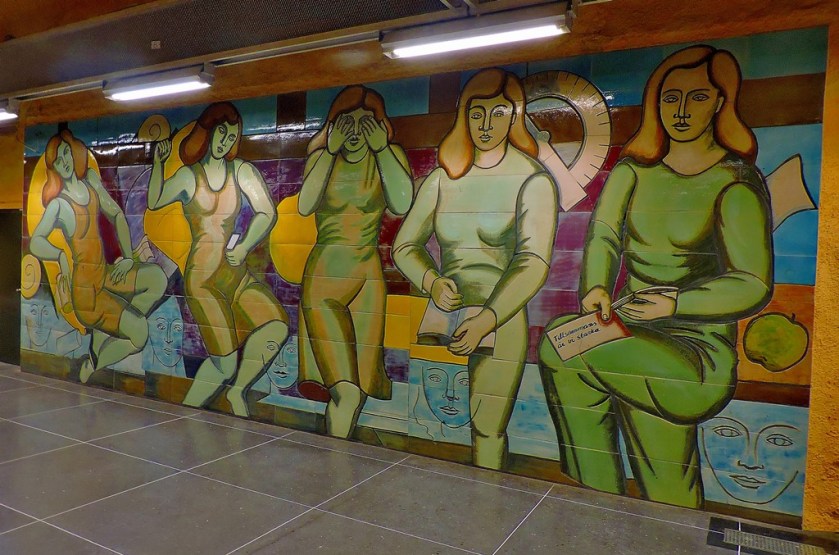
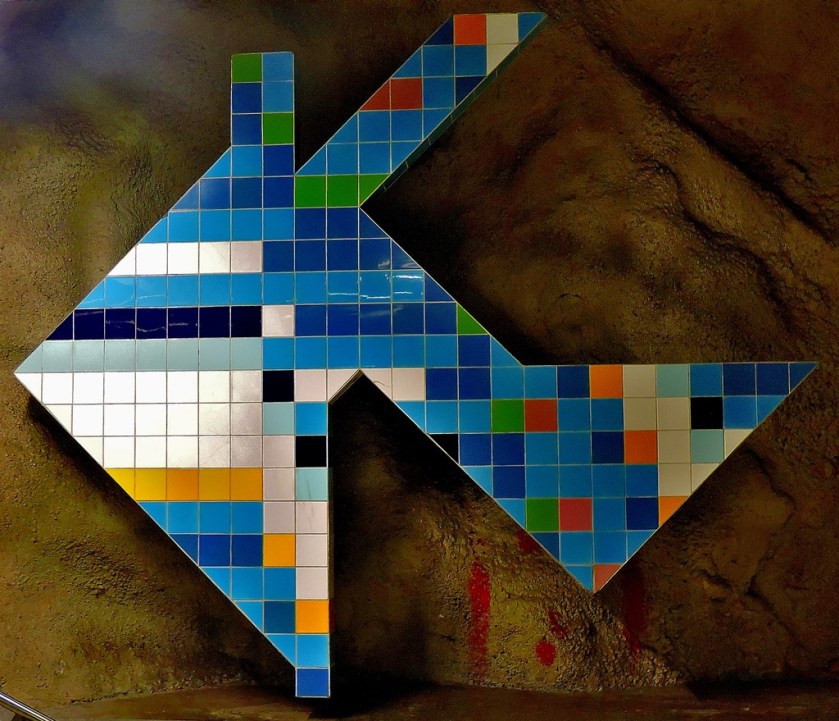
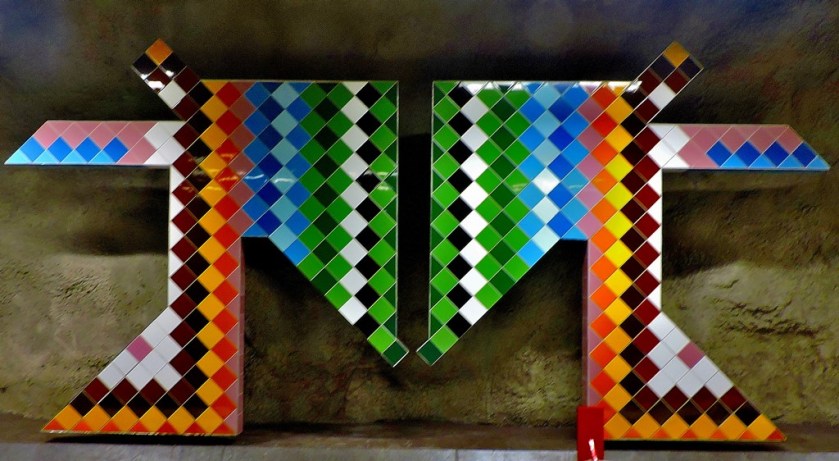
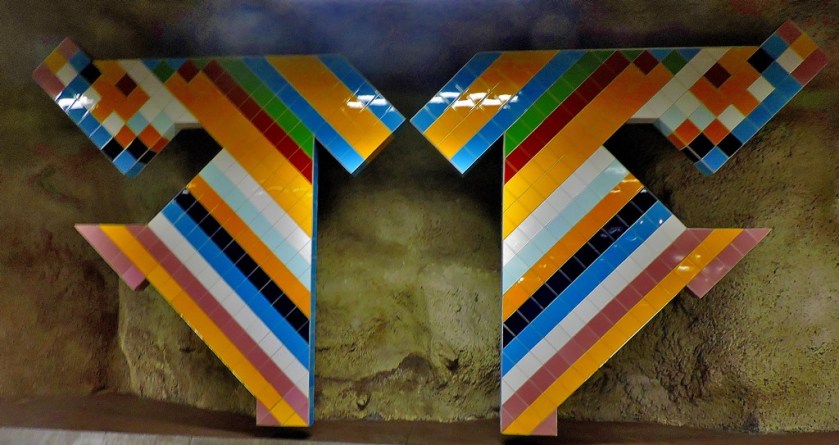
The first of several decorative tiling arrangements at Vastra Skogen (I do not think that when the individual pieces are this big one can fairly use the word mosaic).
My last travelling of the day was from Vastra Skogen to Hjulsta, and then back from Hjulsta to Huvudsta where I was being accommodated. I only got a few pictures from this last section of the journey.
FINAL THOUGHTS ON TUNNELBANA
Tunnelbana is a superbly efficient system, and the artwork which can be found everywhere on it, and especially the cave like station platform and passageway segments on the blue line boost it from the merely utilitarian (itself a level considerably above that usually attained by London Underground these days!) and make it a genuine attraction. Unless you are going to be catching a train from Stockholm Central I would recommend that you follow the approach I took on my day of exploration and avoid using T-Centralen as an interchange. I also recommend that you obtain a free Stockholm map (it includes the system diagram that appears at the top of this post). I have seen three underground systems that in different ways can claim uniqueness – London is the original, St Petersburg is further below the surface than any other, and Stockholm for reasons outlined above and (I hope) demonstrated throughout this post. I conclude by saying that I hope you have enjoyed this virtual tour of the Tunnelbana as much as I enjoyed both the real thing and creating this post.
The latest post in my series about my recent holiday in Sweden.
INTRODUCTION
Welcome to the next installment in my series of posts about my recent holiday in Sweden. I finished my previous post with an account of my accommodation in Gothenburg, and this post picks things up the following morning.
GETTING STARTED
Since breakfast was included in the price of the room I was always going to partake. Everything about that breakfast was good, and I set off for Gothenburg Station in very good time, having booked myself on to a slow service to Stockholm. I took some photos on the walk to the station…
Having arrived at Gothenburg Station much earlier than needed I took the opportunity to take some photos there before heading for the platform a sensible 20 minutes before the train was due to depart…
One way to present a map of a long thin country (pity about the lighting which spoiled the top part of the pic.
The train I was to travel on was a double decker (yes, on some Swedish routes they run double decker trains), although I my seat was on the lower deck.
I settled in to my window seat, camera at the ready…
Arriving in Stockholm I took a time out at Stockholm Central station before purchasing a 24-hour Access Card for Tunnelbana and heading to Huvudsta, where my cousin and his fiance have their flat, where I would be staying for the last two nights of my holiday. The combination off my inter-rail pass giving me eight days travel, my own desire to do some more exploring in Stockholm and the fact that I was catching an early flight from Arlanda to Gatwick on my final morning led to me making this arrangement.
THE REMAINDER OF THIS SERIES
My explorations in Stockholm will account for three posts (Gamla Stan, Kungstragarden and a post specifically about Tunnelbana), my departure one small post and a final ‘maps special’ post which will also serve as a kind of index – as with each map I shall include links to the posts to which that map relates. At the latest the final post in this series will go up on Saturday, since Sunday is Heritage Open Day and therefore the signal for the start of another series of blog posts, this time set closer to home.
The latest in my series of posts about my recent holiday in Sweden.
INTRODUCTION
Welcome to the latest in my series of posts about my recent holiday in Sweden. At the heart of this post is a largely photographic account of a very scenic railway journey.
LEAVING MALMO
I booked a seat on a train to Gothenburg that allowed me plenty of time to pack, check out and get to the station. For the price paid the STF Hostel at Malmo was a great success. My review as requested by booking.com can be seen here.
I was indeed at Malmo Central Station long before I needed to (pictures of this station can be viewed here). The platform I needed to catch my train from was displayed well in advance (no London King’s Cross style nonsense of showing the platform that you need to get to the far end of since your train splits at Cambridge with only the front portion continuing onwards a bare five minutes before your train will be leaving). Malmo Central has an unusual feature for a main-line railway station in that some of the platforms are underground, reached via lifts or escalators. These platforms feature a film-type display based on views through a train window to relieve the monotony:
The route from Malmo to Gothenburg travels along the only West facing coastline in Sweden (just north of Gothenburg you reach the start of the long land border with Norway, which continues north and then east until you arrive at the much shorter land border with Finland, which ends at the top of the Gulf of Bothnia, after which it is coastline all the way round to Gothenburg), and is very scenic…
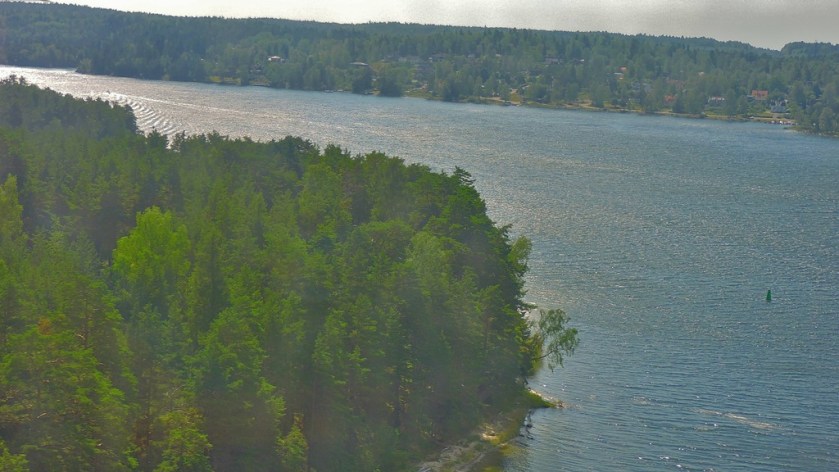
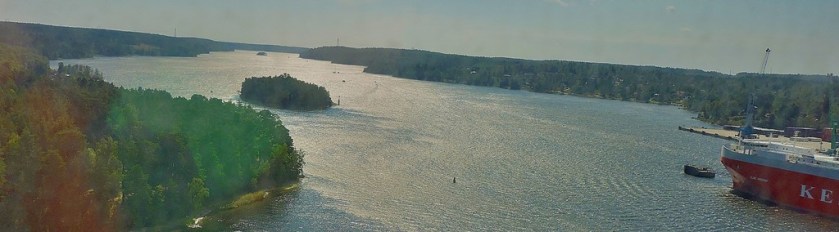
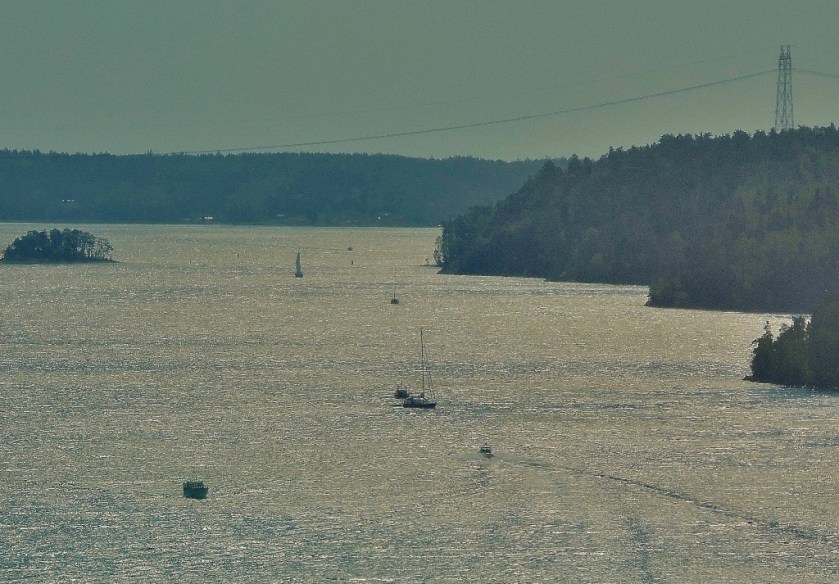
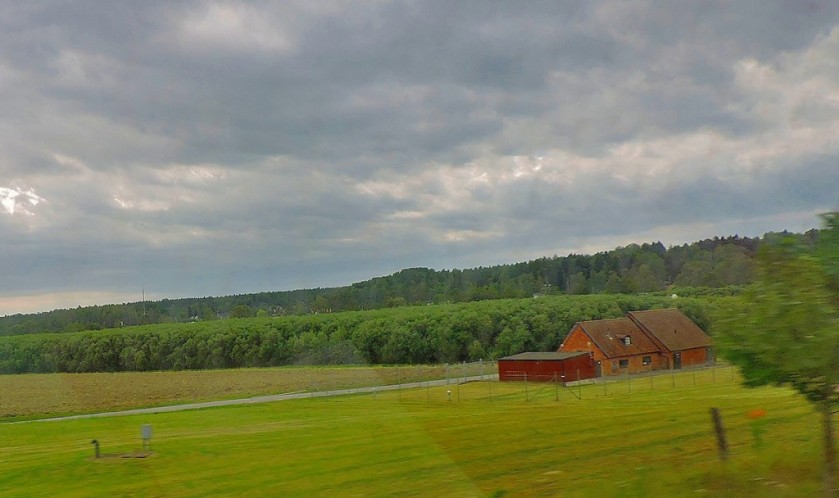
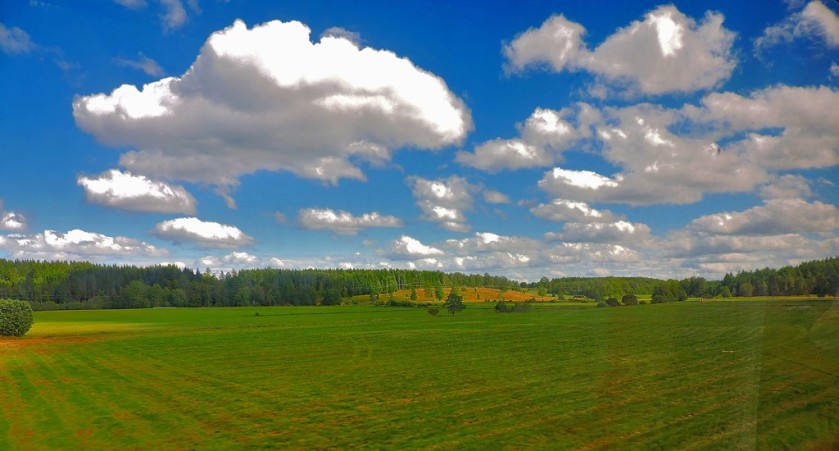
All of the pictures you see in this section of the post were taken through the window of a train.
The rain made this one even more of a challenge.
LOCATING MY HOTEL
The main tourist information office in Gothenburg is located inside a large shopping centre which is accessible directly from the station. They were able to equip me with a map and directions to my hotel, and I set about finding my way there…
This is at Gothenburg stationCrossing a canalWater transport.
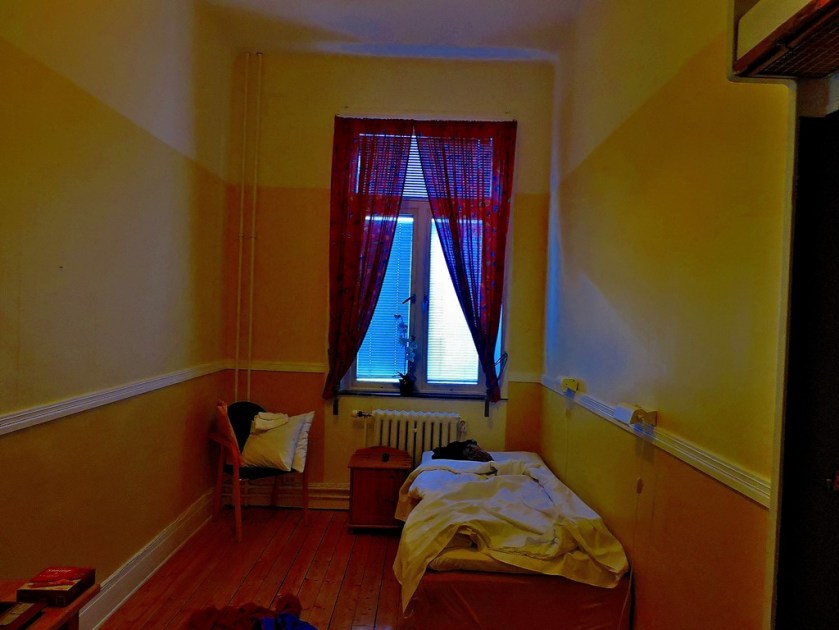
My room at the City Hotel Avenyn – small, but not sharedA painting that hangs on the second floor of the hotel, just along the corridor from my room.
Just before I reached the City Hotel Avenyn I noted the City Pub next door it. After paying for my room I still had nearly 1,o00 Kronor left, so I decided to treat myself to a meal at the pub.
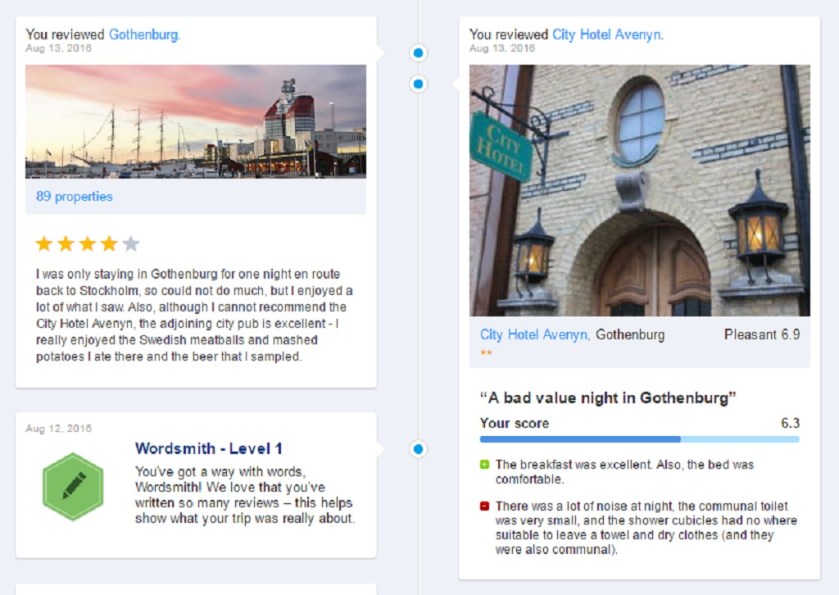
I consumed an excellent meal of Swedish meatballs and mashed potato, washed down with a couple of glasses of a good local beer. While I was there, one of the TV screens was showing an Olympic handball match between Sweden and Russia. The Swedes won – it was close for most of the first half, but then Sweden pulled clear and were never seriously threatened thereafter. After that it was time to head back to my room. Unfortunately, there was a lot of noise during the night. Here, courtesy of a screen-grab from booking.com is what I had to say about Gothenburg itself and my accommodation:
However, it was now time to move on, with the next destination being Malmo. Leaving the hotel I headed for the station, could not work out which train was best to take with my destination being Malmo or spot a member of staff to ask, so I boarded a train bound for Stockholm Central, reasoning that there would probably be a direct connection from there to Malmo and if not there would be staff there.
Other than having to get a later connection than I would have like to Malmo, due to the necessity of reserving a seat (Stockholm-Malmo is a route on which such is required), I got my onward train from Stockholm with no great difficulty. I did what I had done on the Inlandsbanan journey and spent the journey looking through the window, taking photographs along the way…
A MINOR DIFFICULTY IN MALMO
My train was scheduled to arrive at Malmo at 16:47, which of course it did, Malmo’s tourist information office closes at 17:00. I failed to locate it before it had closed, and the various people I asked for advice about how to get to my accommodation were unable to be of much assistance. Eventually I ascertained that by catching a bus to Davids Hall I could get close. Sadly, it was not possible to pay cash on the bus, and at Pressbyran, where the driver had said I could buy a ticket they directed me elsewhere. Unable to find the place to which I had been directed I finally resorted to a taxi. On this occasion I was booked into a six-bed dorm. This proved rather more commodious than the four-bed dorm at Uppsala. While I was still on a top bunk, this one was properly accessible.
I had seen enough in the environs of the station and on the taxi ride to suggest that Malmo would repay detailed exploration on the morrow…
The latest installment in my series about my holiday in Sweden.
INTRODUCTION
Welcome to the latest installment in my series of blog posts about my recent in Sweden. This is my final post about my time in Lulea.
LAKESIDE PERAMBULATIONS
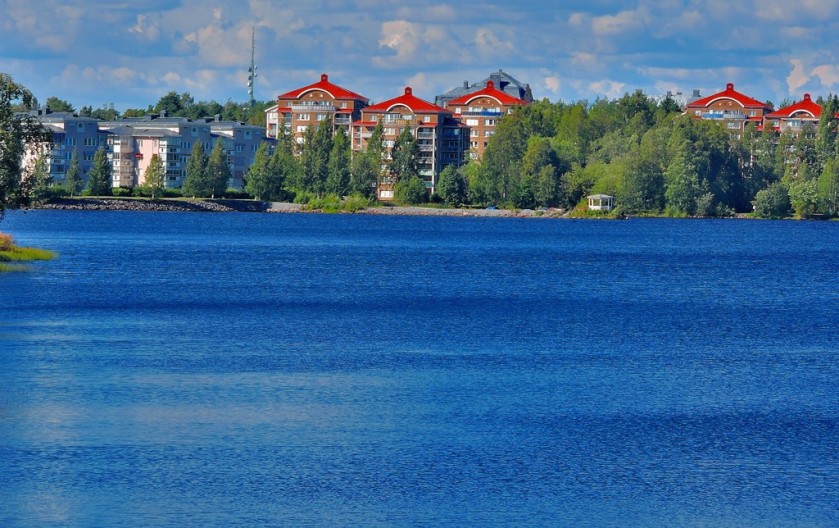
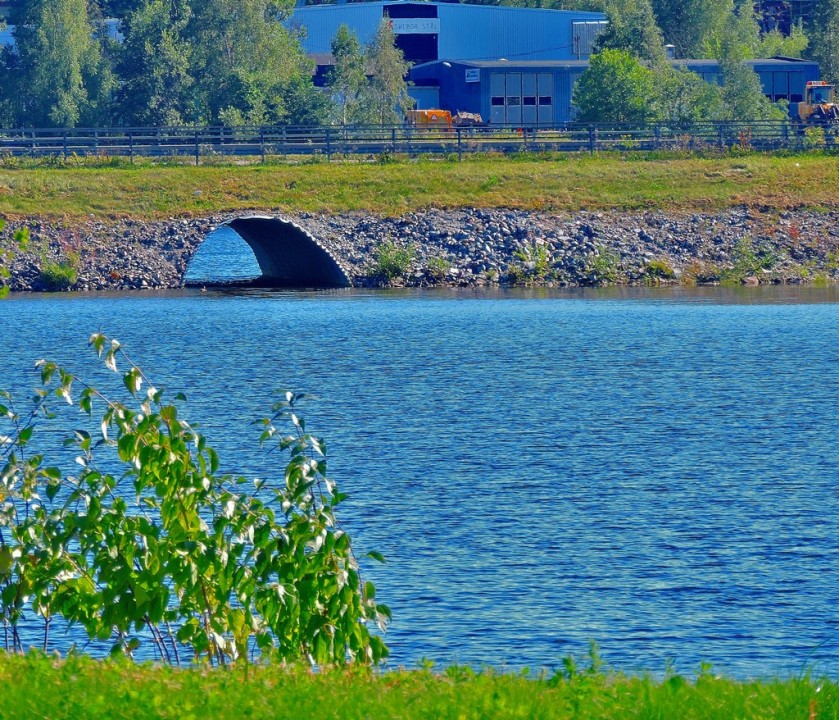
I had noticed just on the other side of the railway tracks from the the main part of town was a lake and I finished my explorations by heading that way. I crossed the lake on a bridge and found a footpath along the other side of the lake. Reaching a second bridge I crossed back and looked to walk back along the other side. Unfortunately I came to a point where the path was blocked off by high metal fencing. I attempted to find a way round and was unable to do so. Partially in consequence of this I ended up taking a much longer route back towards the station than I had originally envisaged (but was still never in danger of not getting to the station in time to retrieve the bag I had left there). Here are my lakeside pics…
BACK AT THE STATION
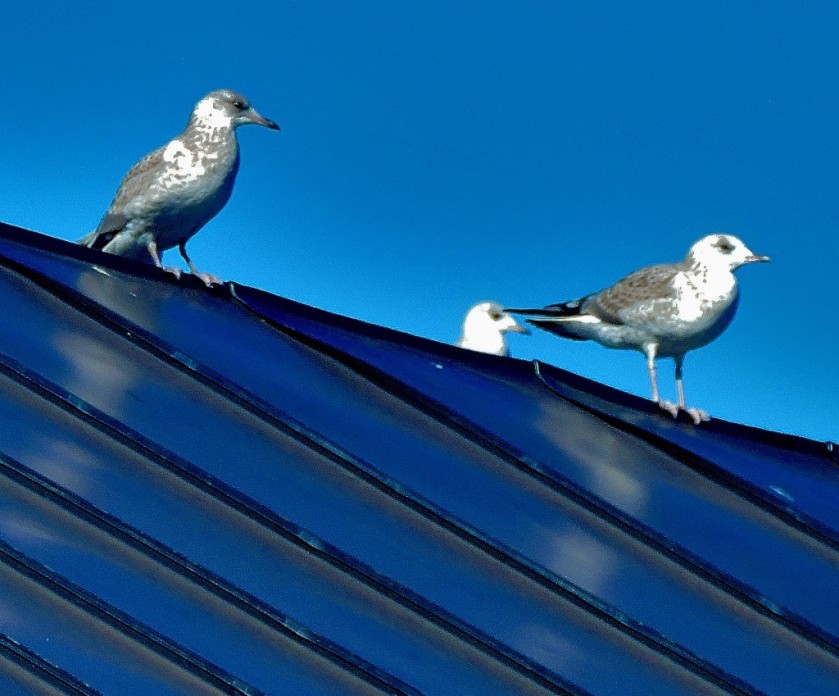
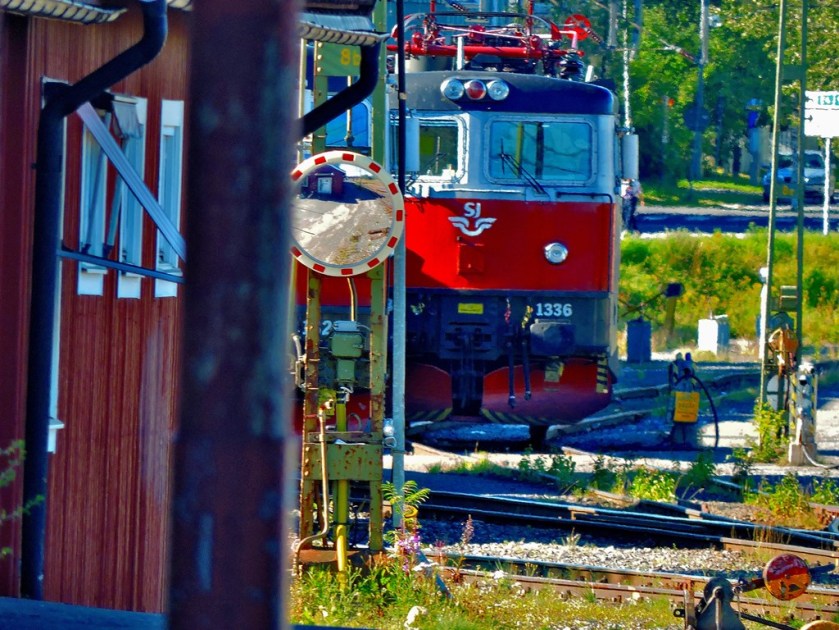
Having a little time left before needing to collect my luggage and head for the platform I stopped for a cold (non-alcoholic) drink at the station cafe and to recover from my walking exertions. I took a few more photos while consuming my drink…
For photographing this car I used the same approach I would take to photographing a toy – although this is big enough for an adult to drive a toy is effectively what it is!The second shot with the engine on show.A close up of the engine.
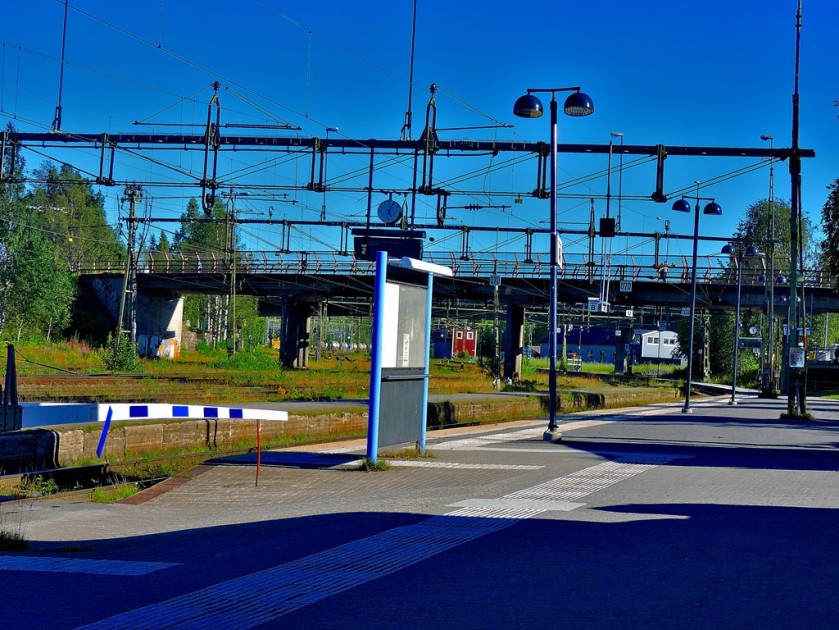
Even waiting on the platform there were things to photograph…
The train Ii would not be getting.Yes – a railway station message board warning Pokemon Go players not to go on the tracks!
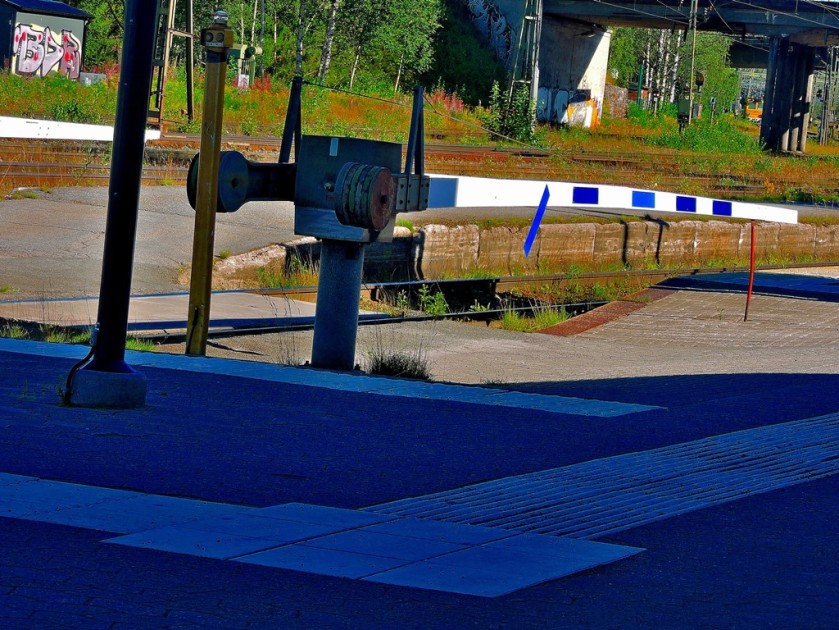
The barrier blocking off the crossing point.
A glimpse of the hotel in which I had stayed to night before.The very door by which I boarded the train.
The next installment in my series about Sweden, and the finale to the sub-series about the Inlandsbanan experience.
INTRODUCTION
Welcome to the latest installment in my series of posts about my recent holiday in Sweden, and the end of the sub-series of posts about my northward journey along Inlandsbanan.
THE JOURNEY
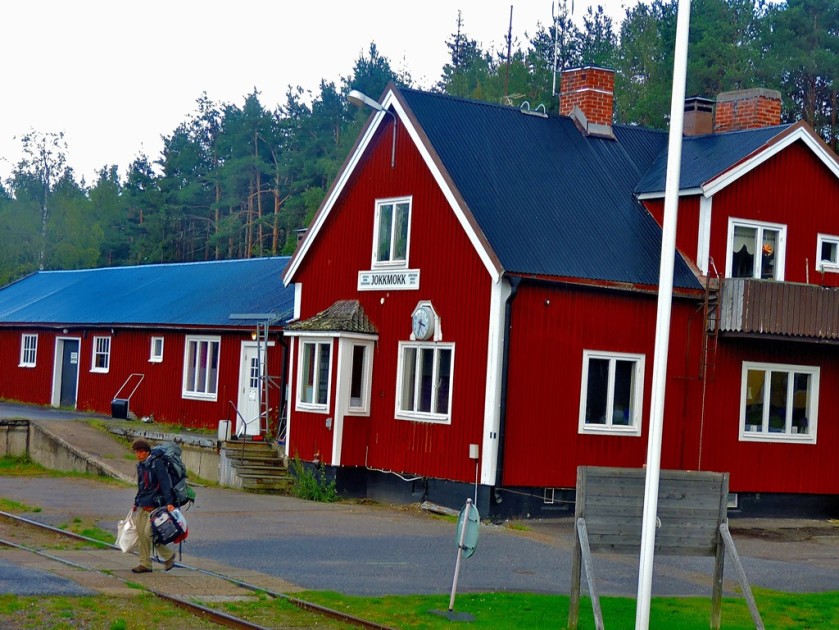
By this stage we were nearing the end of the journey from Ostersund to Gallivare, although there was still the second meal stop to come. In the brief period between restarting the trip from the edge of the arctic circle and arriving at Vaikijaur for the second meal stop we passed a place called Jokkmokk.
Vaikijaur was not especially memorable, although the food was excellent. Here are the pictures I took.
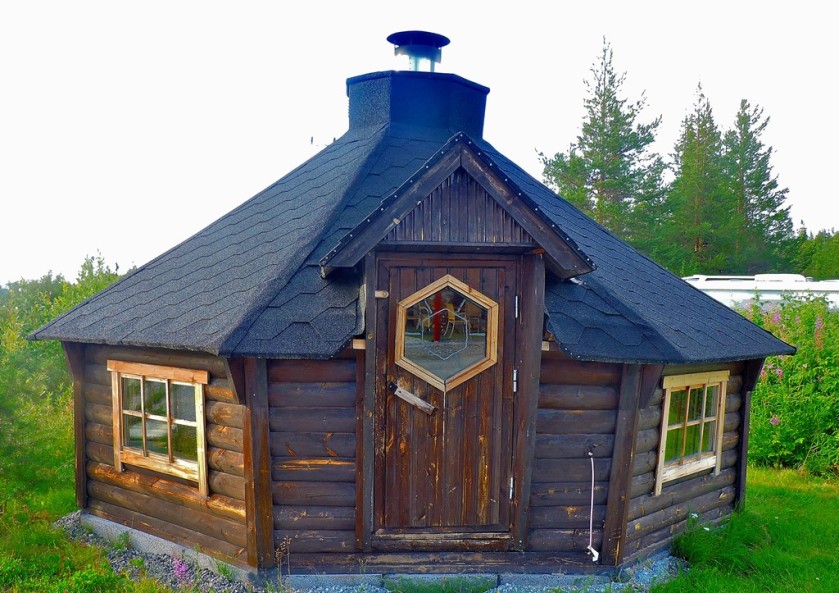
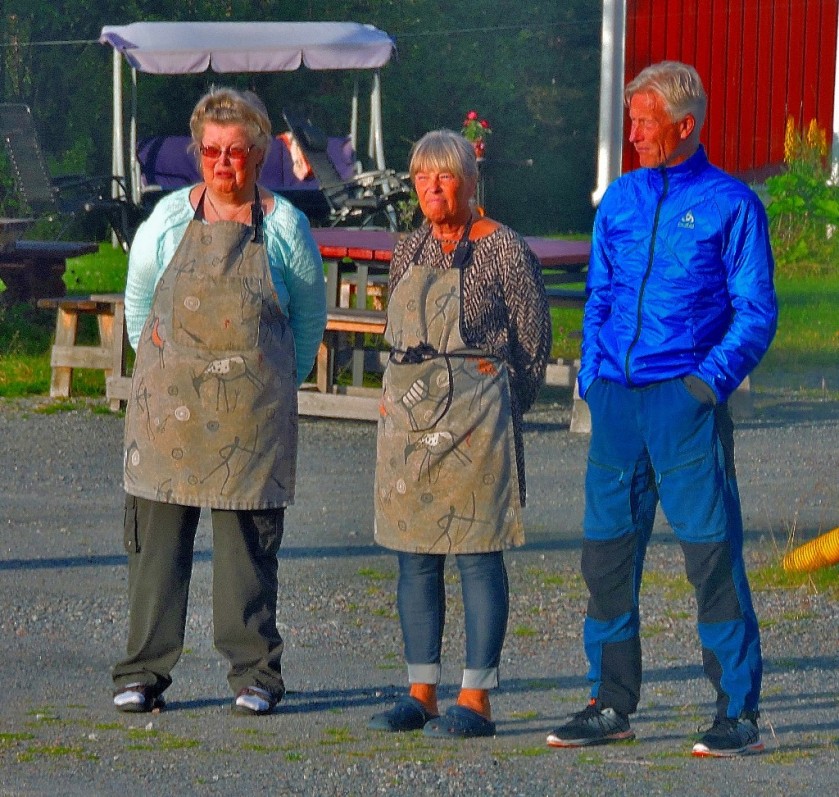
A side view of this quirky little buildingThe front viewThe people who had produced our food.
We had no further significant stops before Gallivare although we did pass through a town called Porjus. The train pulled into the platform at Gallivare exactly as scheduled at 21:39. Here are the photos of the last part of the journey…
SLEEPLESS IN GALLIVARE
I had booked two nights at the Hotel Dundret i Centrum, planning then to take a morning train to Lulea on the Gulf of Bothnia and then an overnight train from Lulea to Uppsala, birthplace of Carolus Linnaeus also known as Carl Von Linne. However, while I located the establishment in question, there was no one at reception, and it turned out that to gain access my room I needed to make a call on a mobile phone (had booking.com mentioned this detail I would have booked somewhere else) and I had accidentally left mine at the flat in Stockholm where my cousin and his fiance live. I waited a few minutes in the very unimpressive communal seating area just in case but it was soon obvious that no one would show up.
While I could have sat there until the morning doing so would then involve having an argument over payment because there was no way I would pay for a night in which I had not access to my room, so I decided to cut my losses and headed back to the station to wait the night out. Before continuing this story here is the one photo I took in Gallivare (I knew the camera battery was low, and that I would not be able to charge it that night).
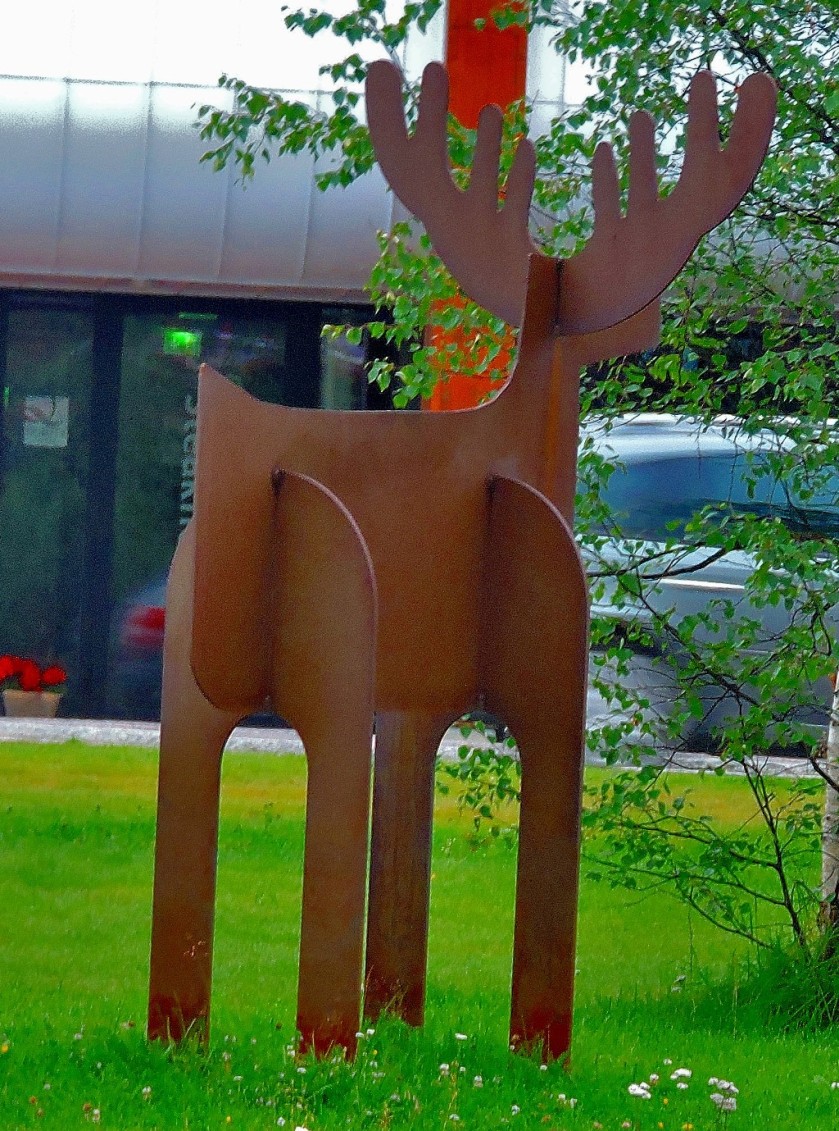
This sculpture is on the roundabout just opposite the station in Gallivare.
I did make a couple of attempts to get some sleep but they were unsuccessful. I was thankful that I had had the foresight to pack a long sleeved top just in case the Swedish summer weather was not quite as good as it might be, since while it does not get dark in Gallivare in August it does get quite nippy at night (as a cricket fan I would have said that the light was never even at its least good unplayable in). Had the sky been clear I might have had a glimpse of the famous midnight sun, but as it was solidly cloudy I was denied even that small pleasure.
At 6 o’clock I was able to get inside and think about my next move. Having ascertained that train tickets could be bought at the Pressbyran next to the station, which was now open, I paid for a ticket on 7:08 train to Lulea (the full price since I did not wish to burn a whole day’s travel for a shortish journey – btw train tickets are one of the few things that are not more expensive in Sweden than in GB – the Swedes don’t have the likes of Branson coining it from failing to provide proper train services), having decided that I would get back on track with my original plans by staying overnight in Lulea and catching the sleeper as intended the following day.
THE INLANDSBANAN EXPERIENCE
I rate this as one of the finest railway experiences I have ever had. I encountered some wonderfully scenic journeys in Scotland and on my first visit to Nordic lands many years ago. More recently I experienced some very scenic journeys in Australia, including Melbourne – Adelaide.
Although I, with my Colbeckian enthusiasm for all things railwayana thoroughly enjoyed all three legs of the Inlandsbanan journey and would recommend the experience to anyone I could also see merit in missing the Kristinehamn-Mora section and doing Mora-Ostersund and Ostersund-Gallivare having found some other route to Mora. If not constrained by budget I would recommend the onward trip from Gallivare to Narvik and some exploration in Norway as well. I also mention that there are places along the route where one could stay overnight if wanted to spend many days over making the journey, but with an inter-rail pass giving me eight days of travel and a desire to see as much of Sweden as I could encompass such was not on the table for me personally.
If anyone involved in the publication of the Rough Guide to Sweden happens to see this may I suggest that you think about turning my last eight blog posts into a chapter about Inlandsbanan since it is absurd that this incredible experience is not covered in your pages.
The latest installment in my series about my recent holiday in Sweden. We are still travelling north on Inlandsbanan and this post takes us to the arctic circle.
INTRODUCTION
Welcome to the next installment in this series of posts about my recent holiday in Sweden. In this post we are back on the move, heading north along Inlandsbanan.
THE JOURNEY
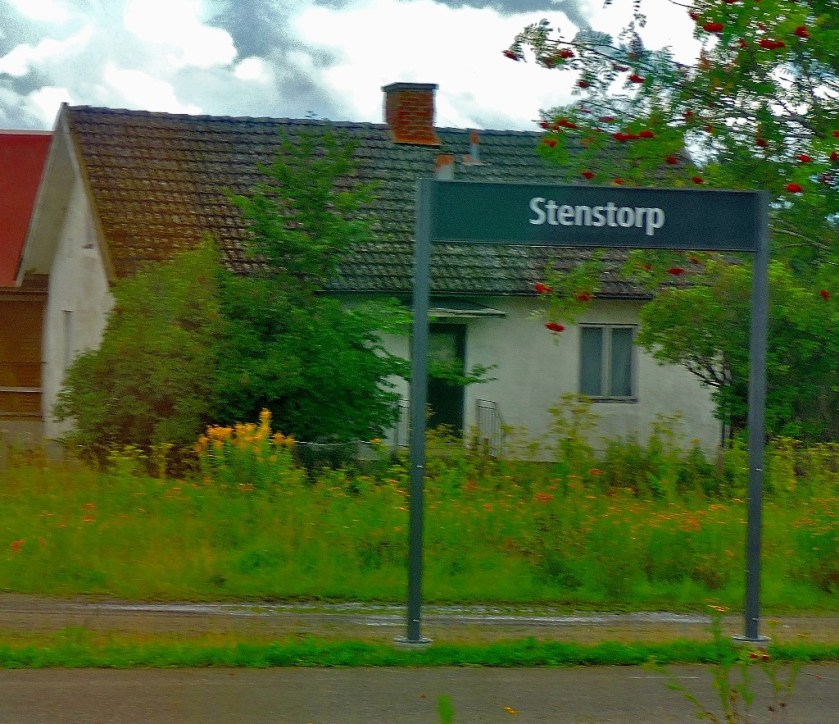
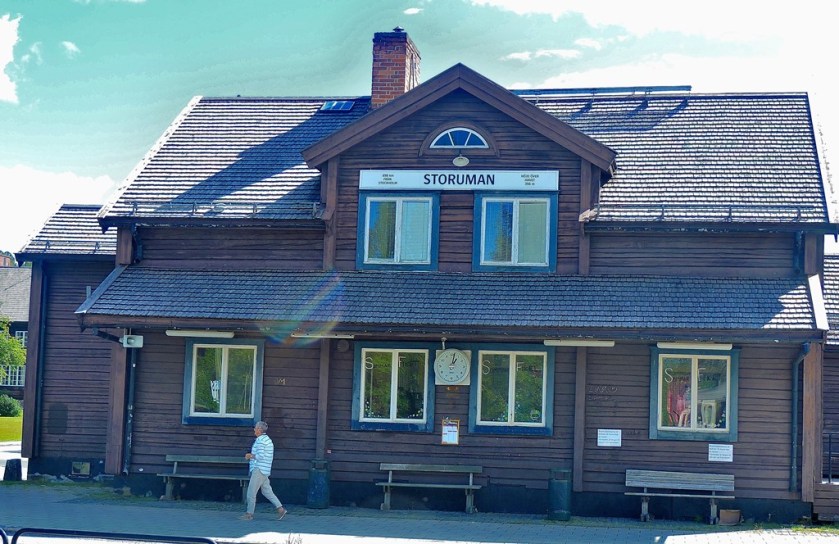
Very soon after leaving Vilhelmina Norra behind us we made a brief stop at Storuman.
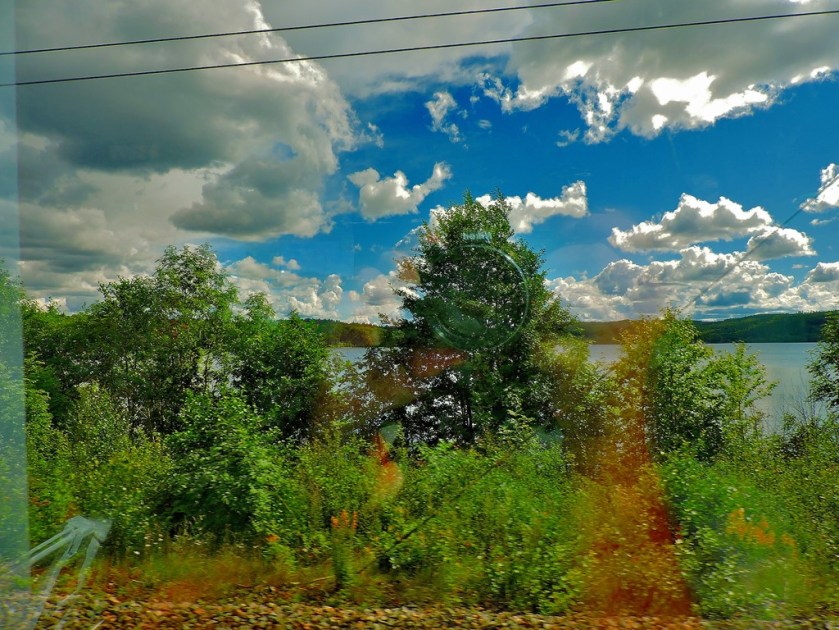
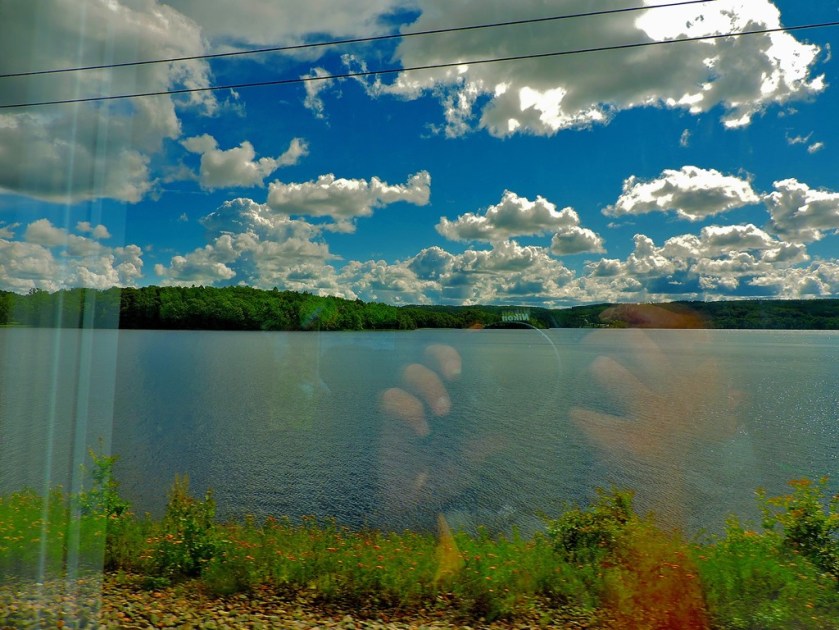
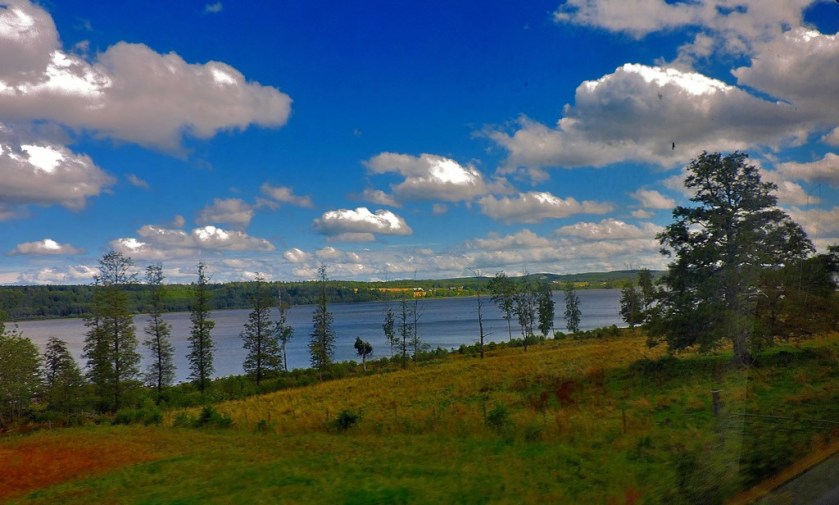
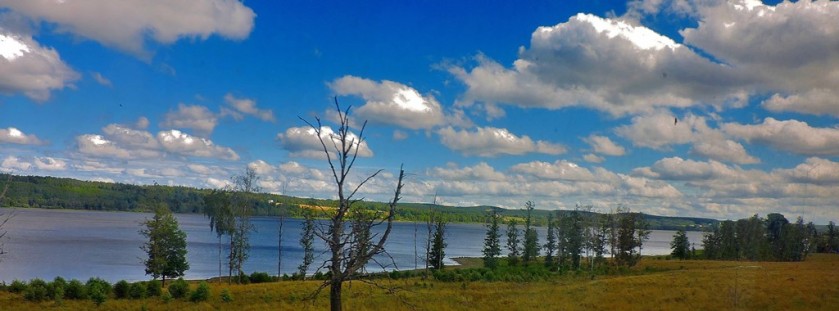
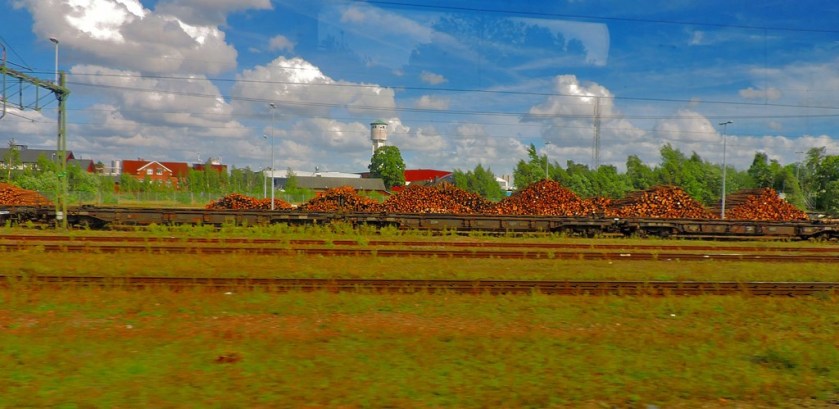
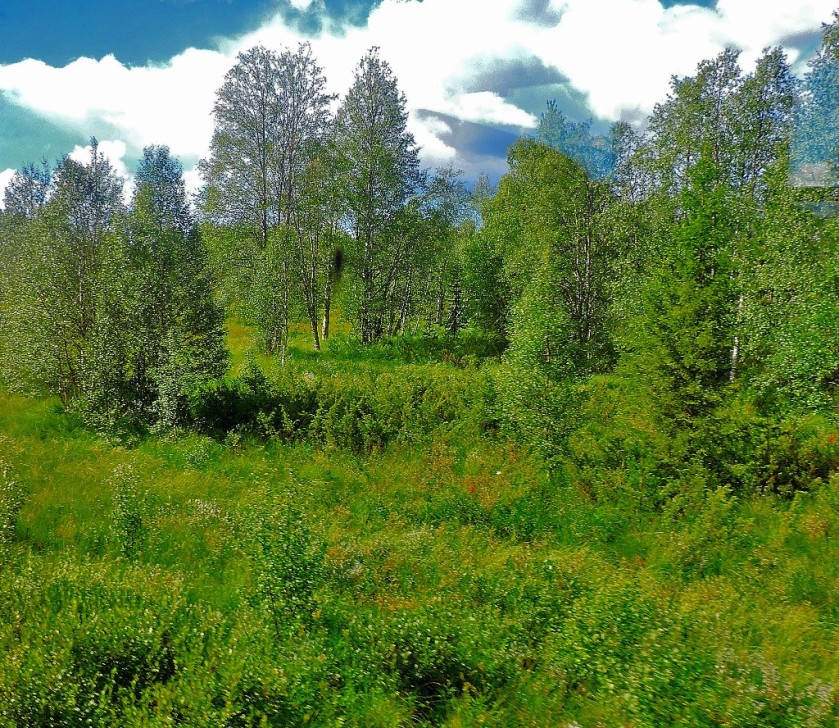
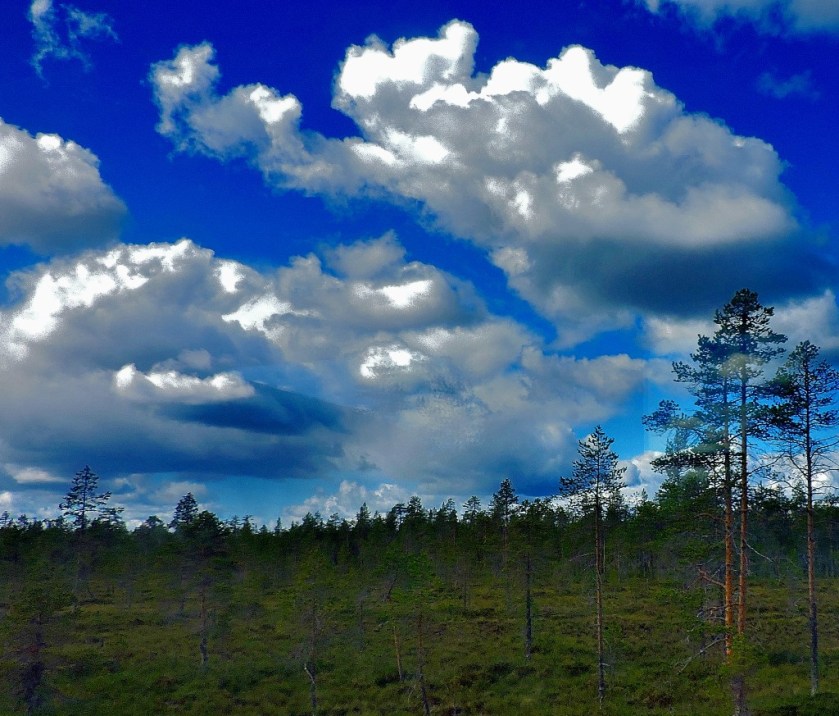
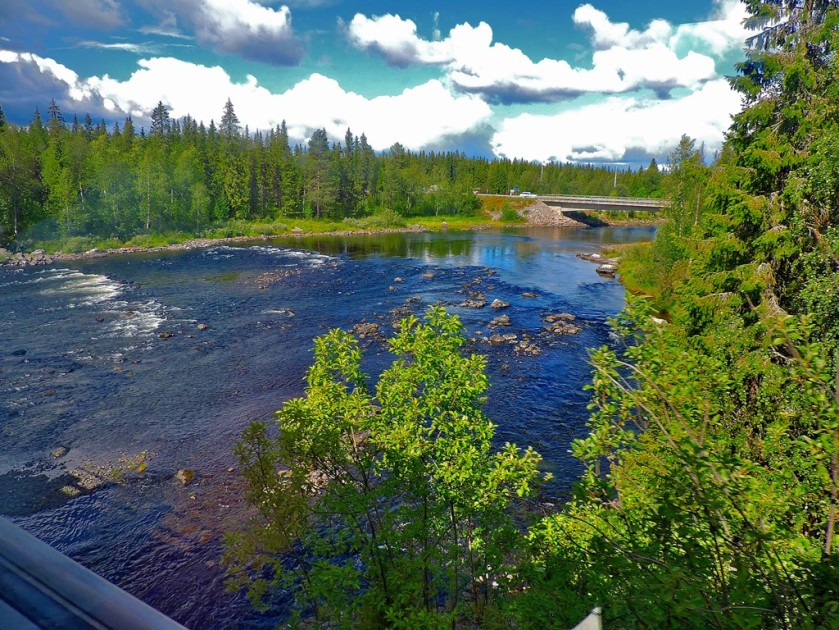
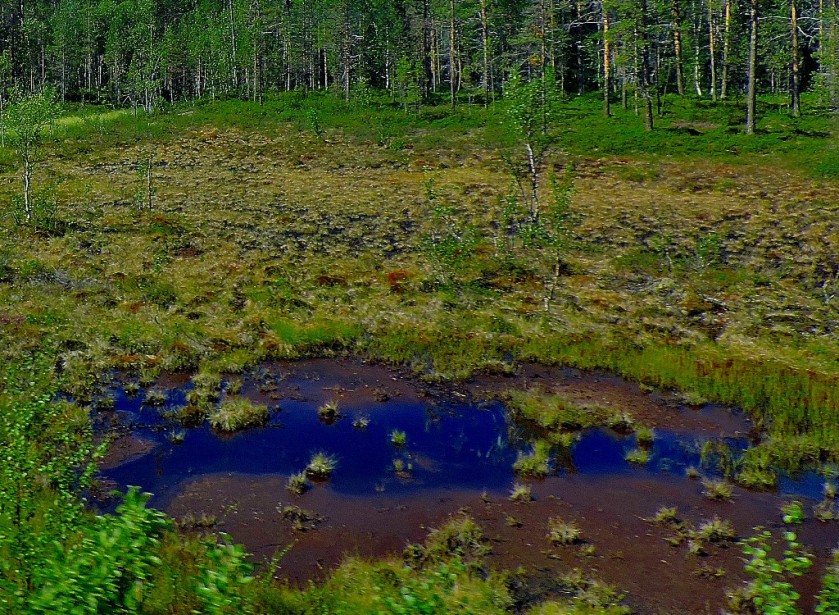
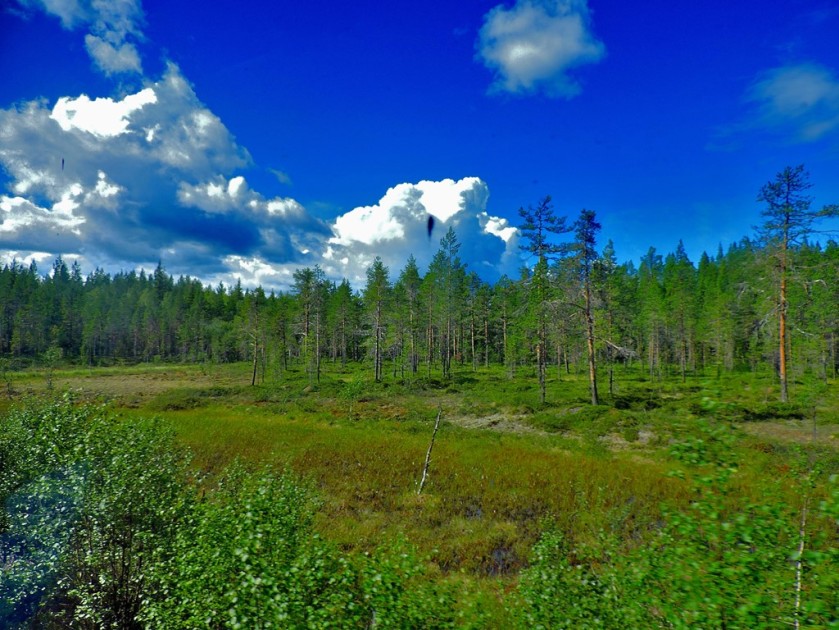
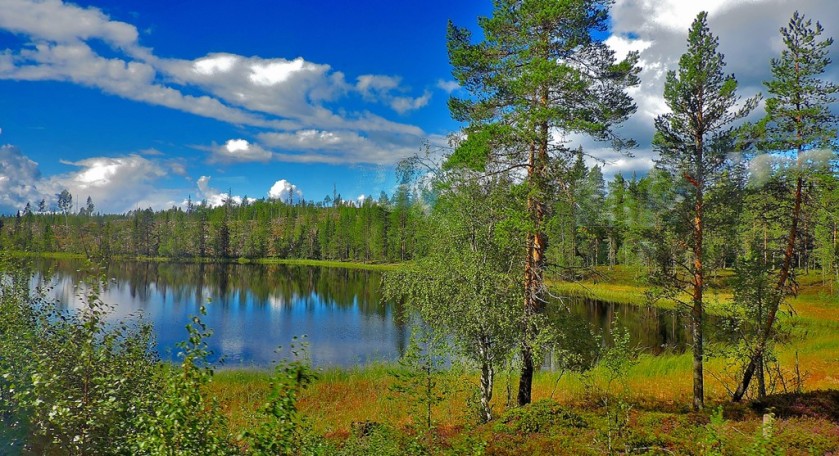
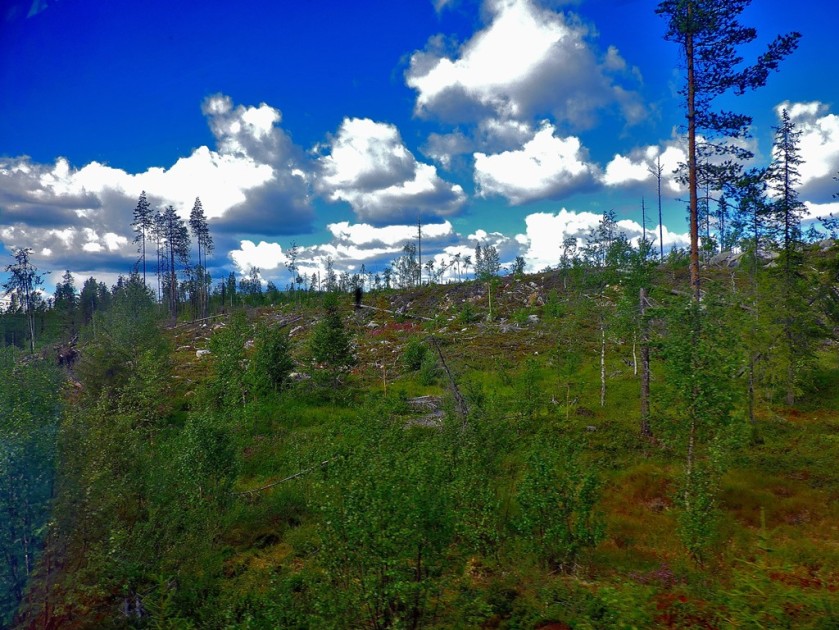
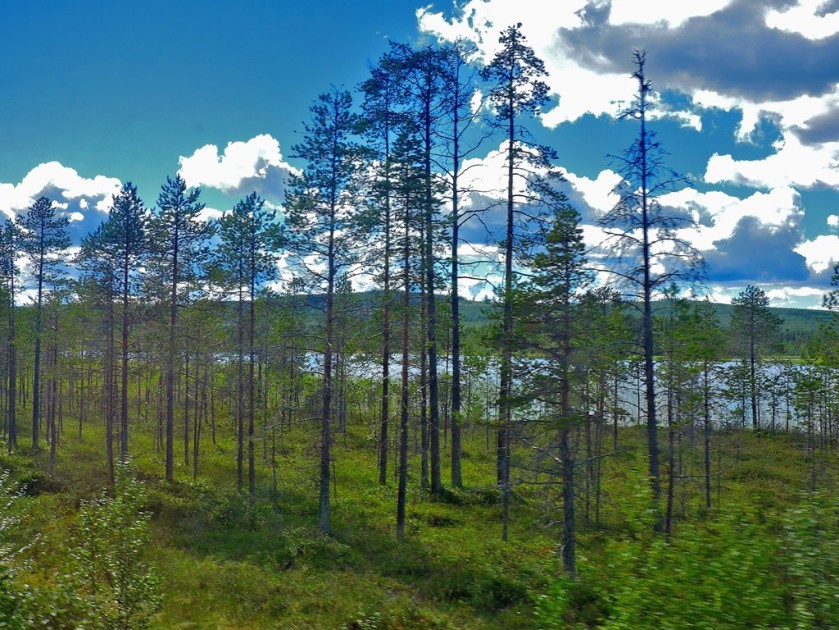
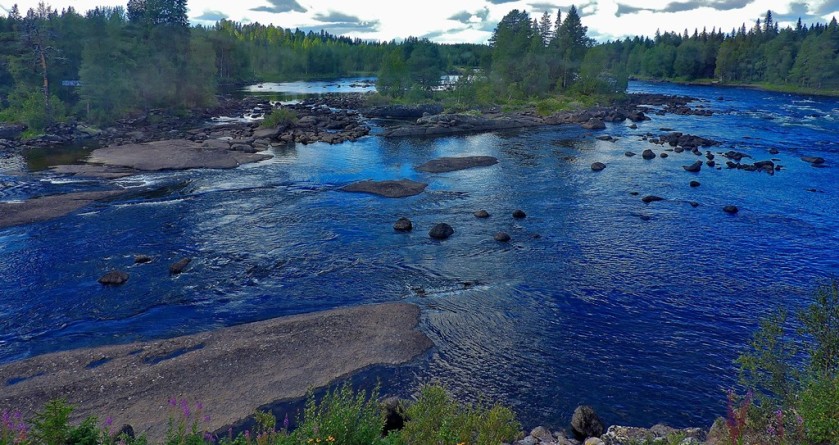
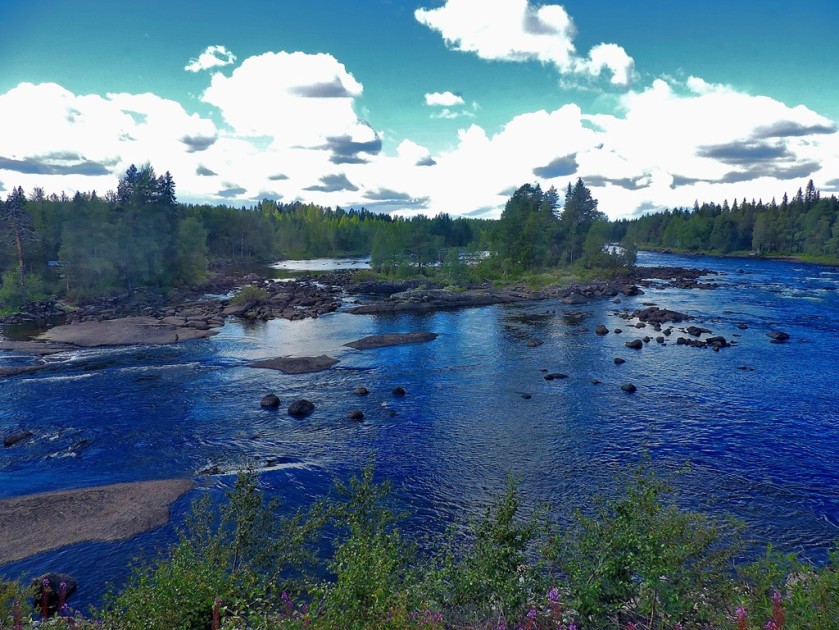
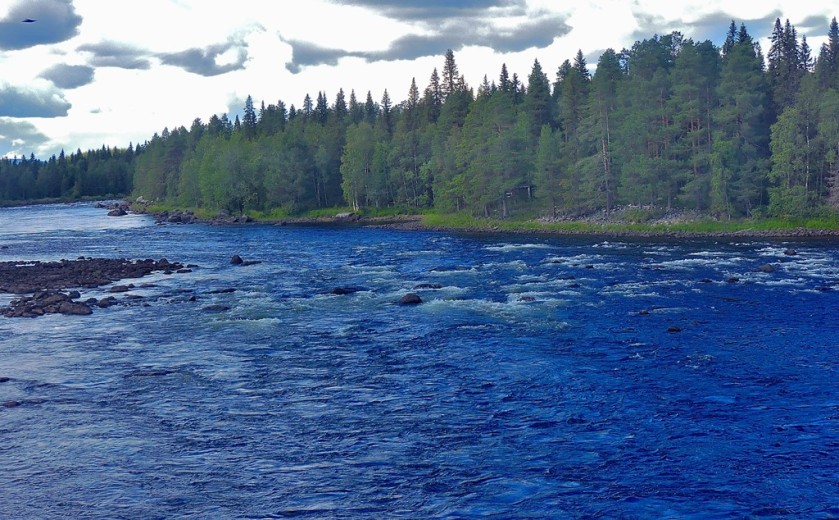
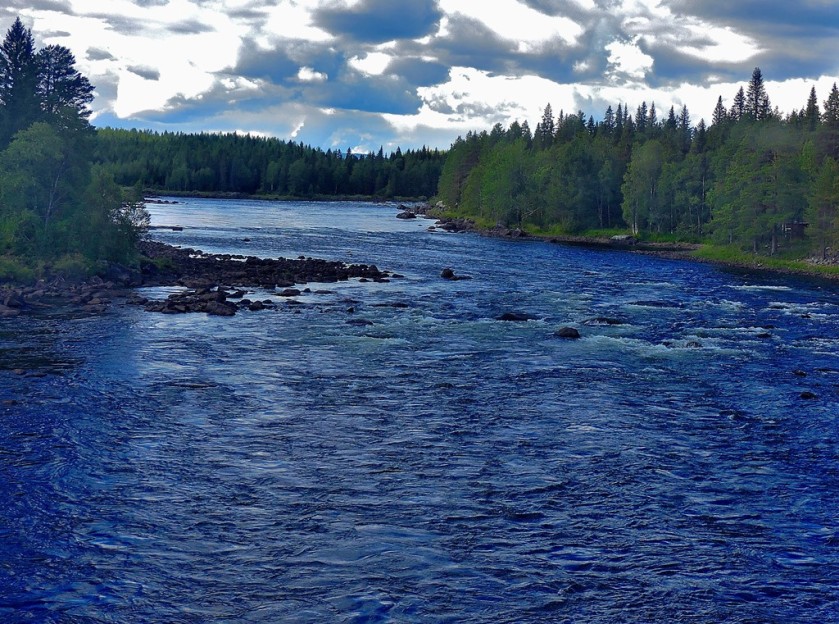
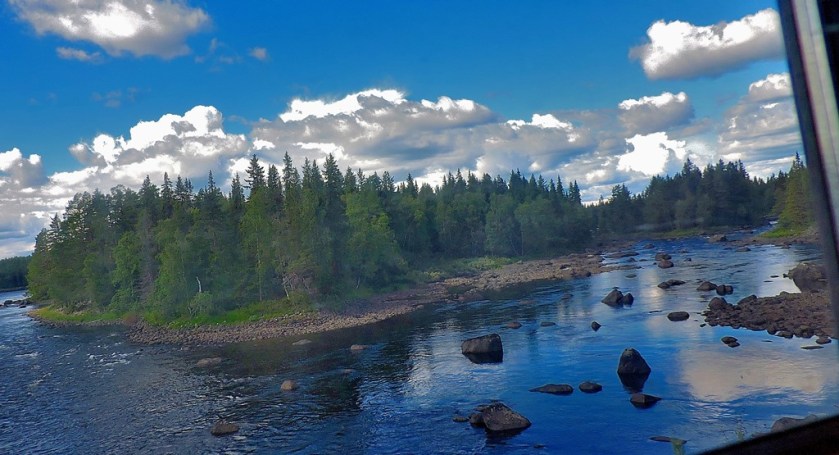
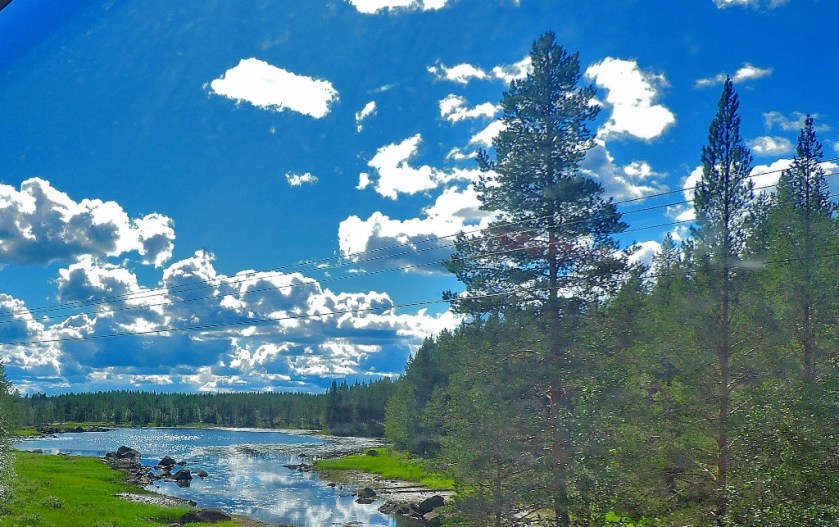
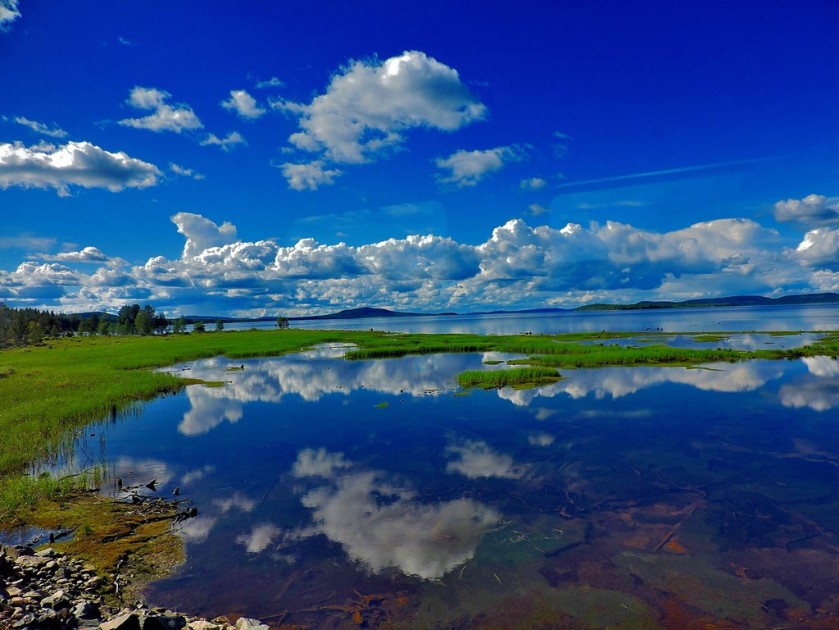
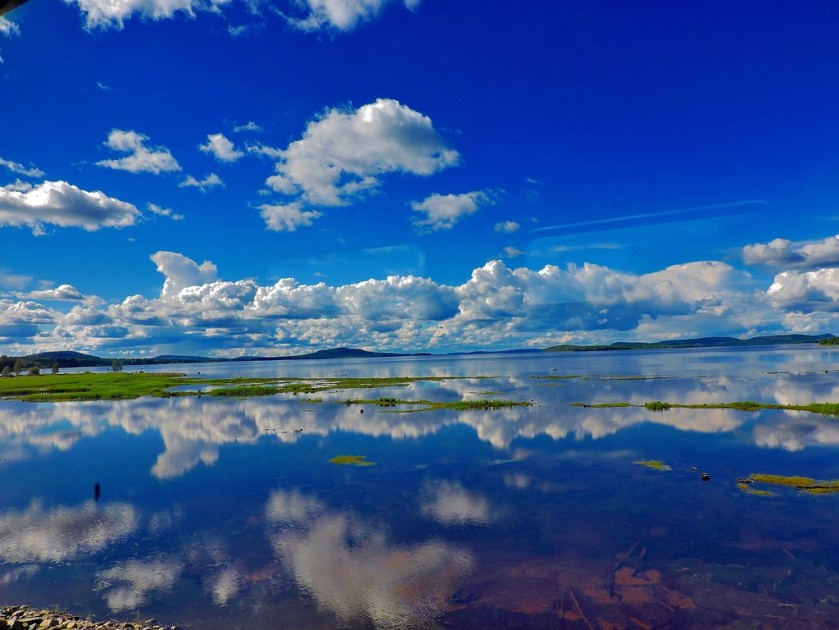
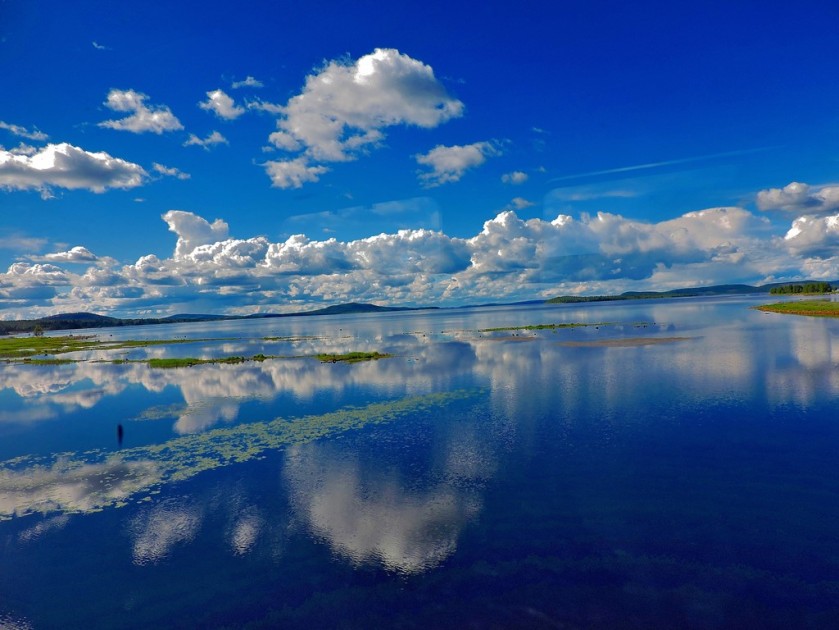
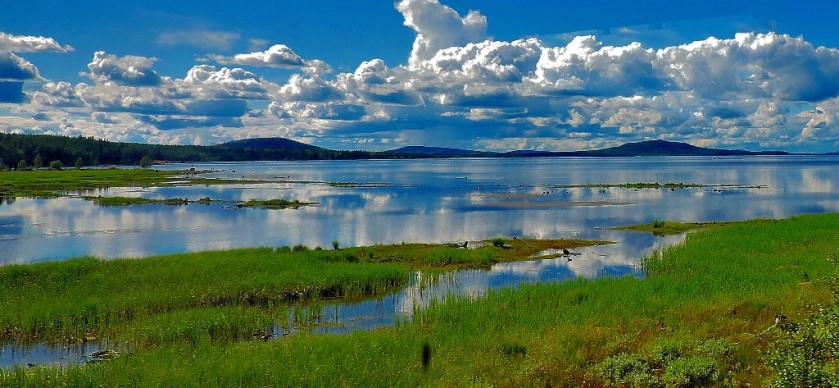
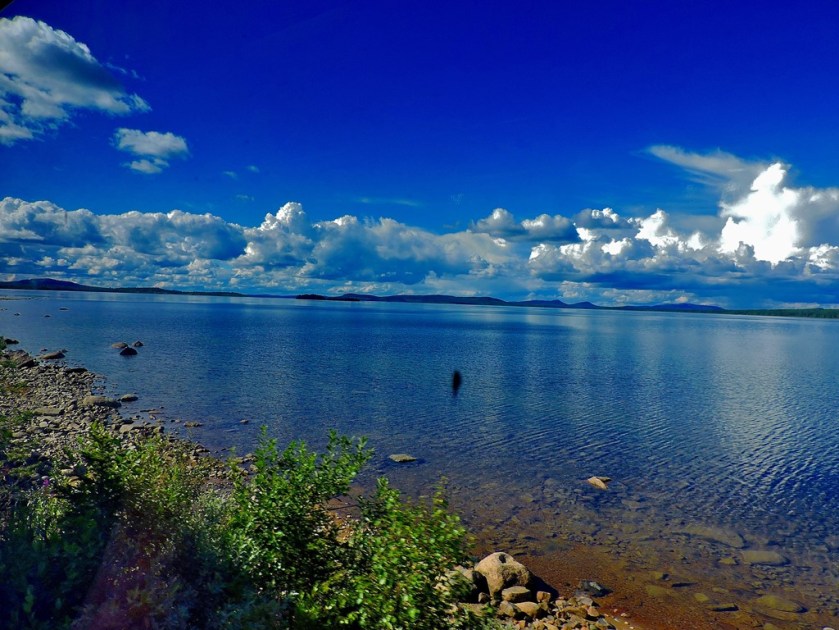
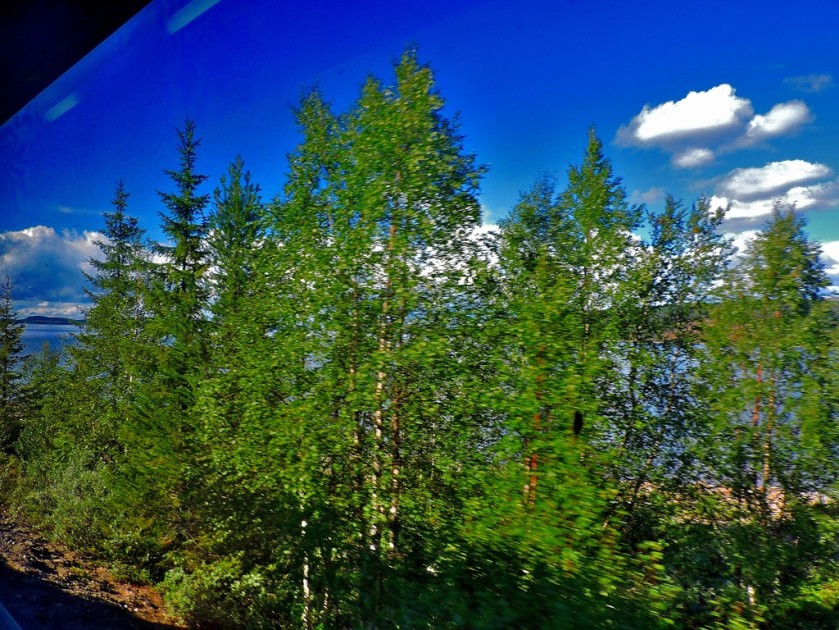
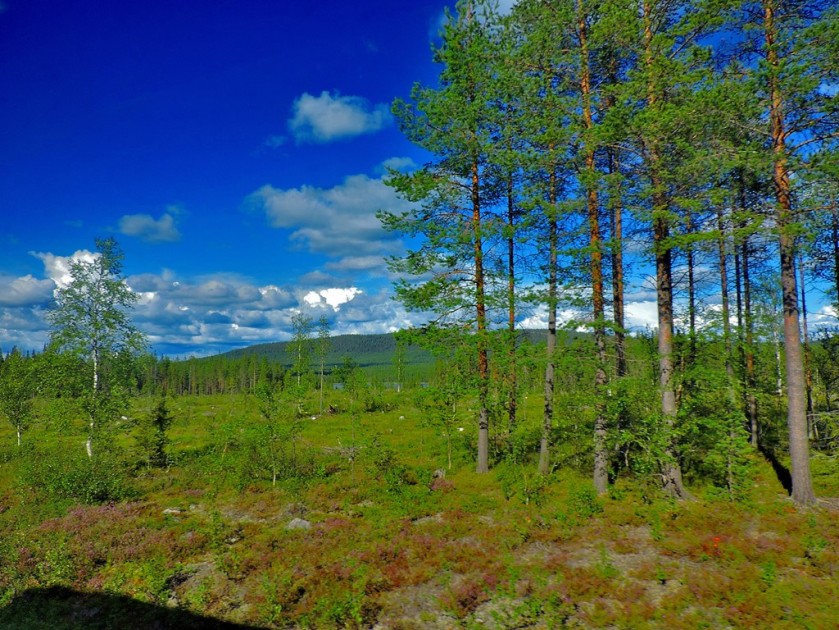
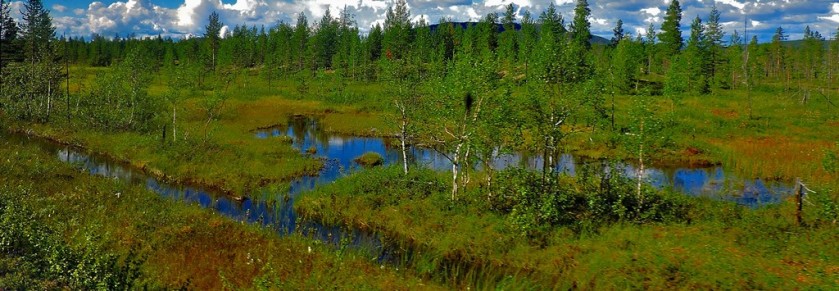
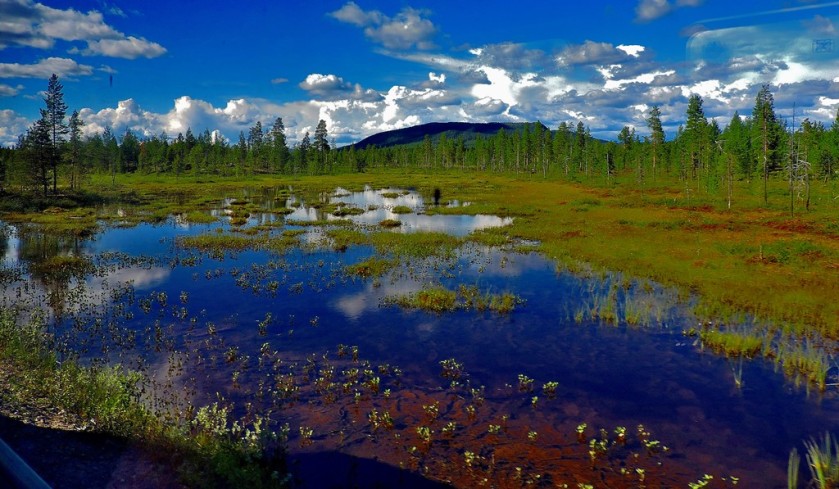
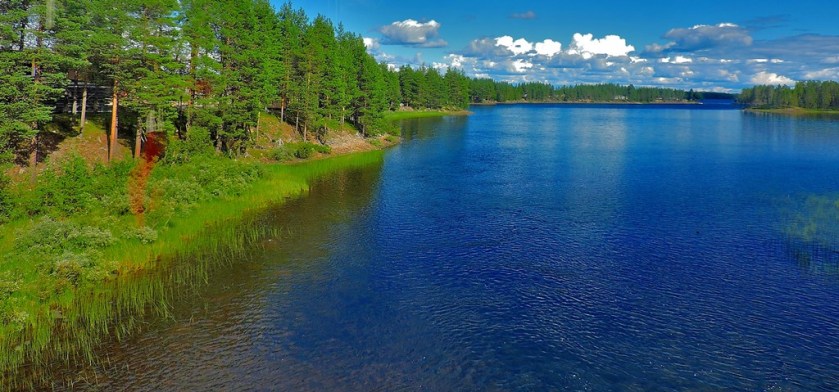
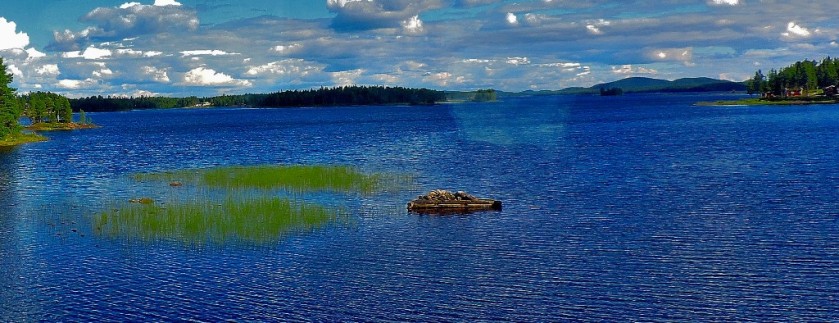
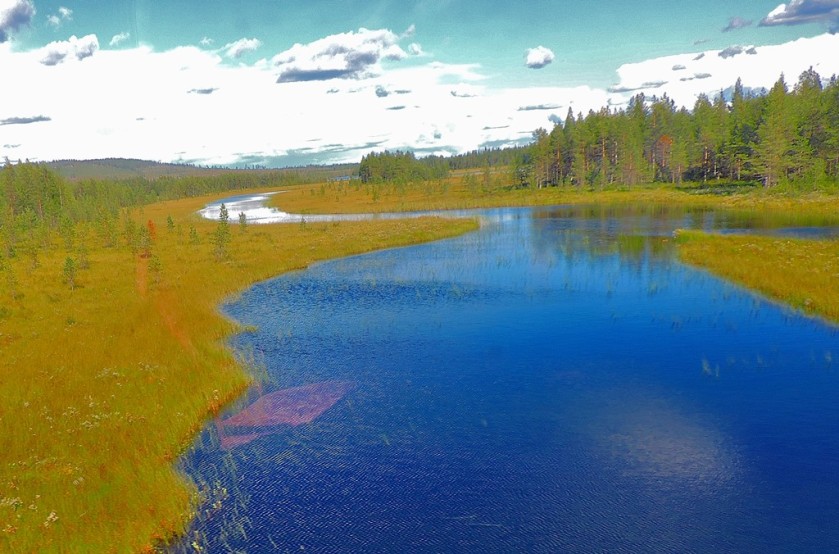
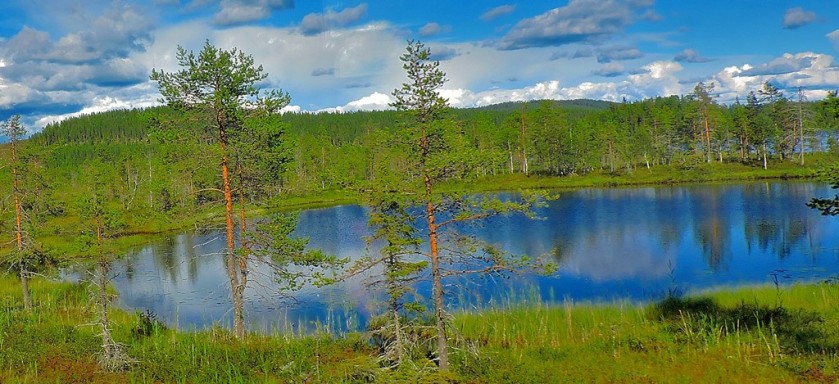
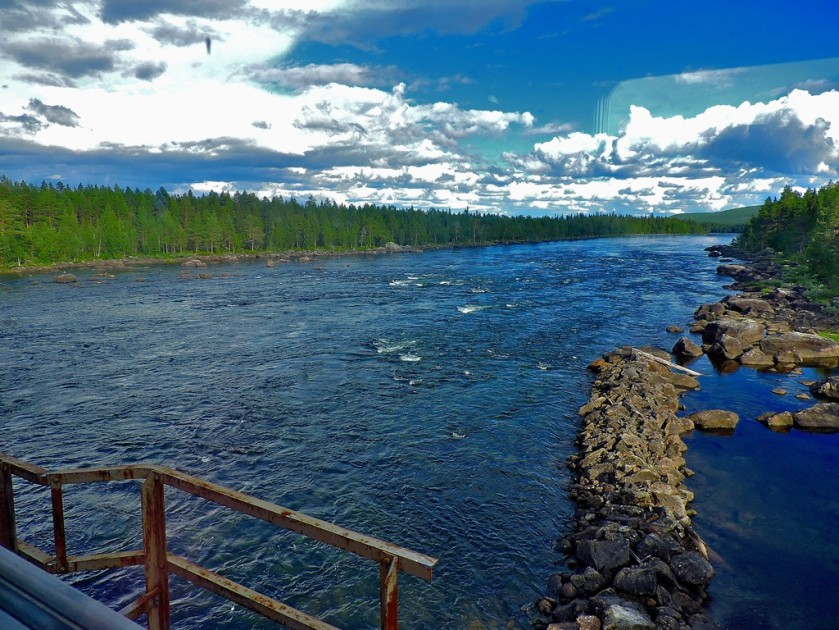
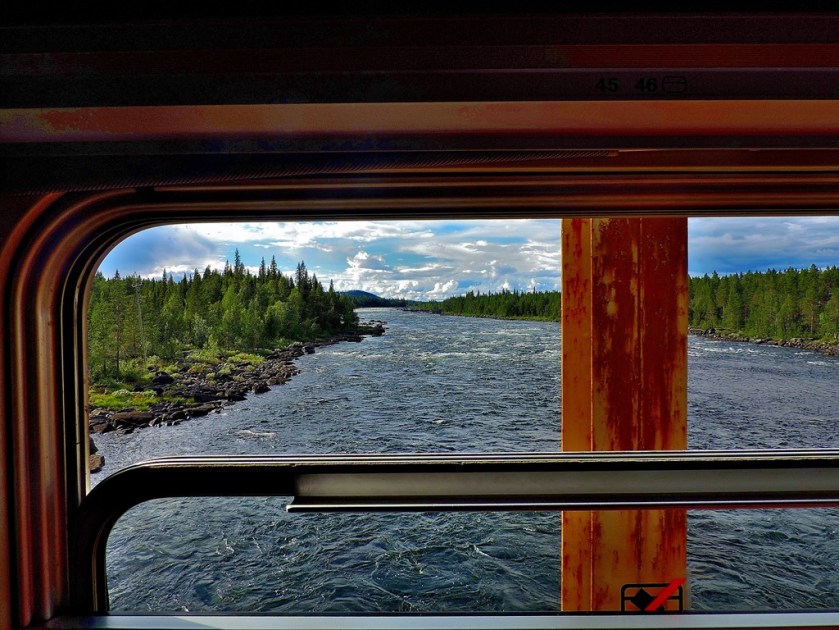
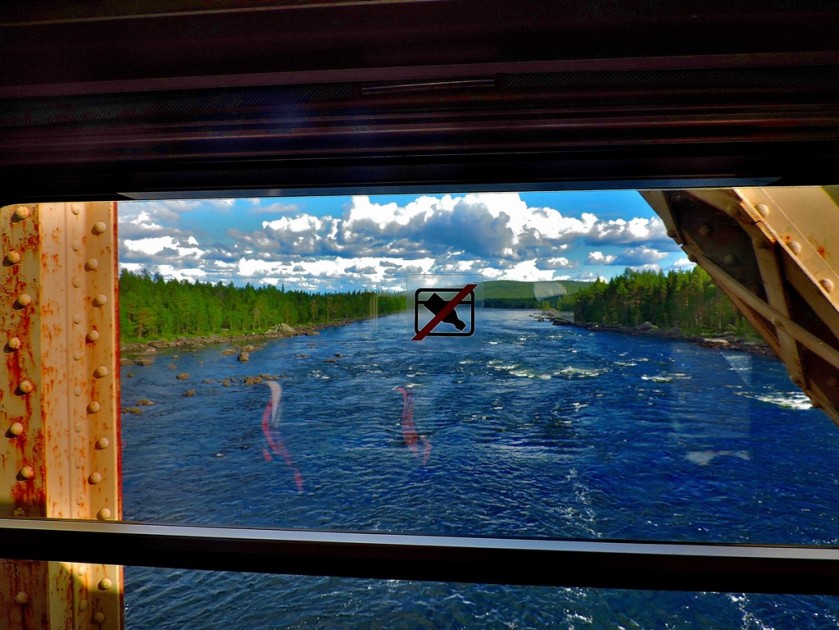
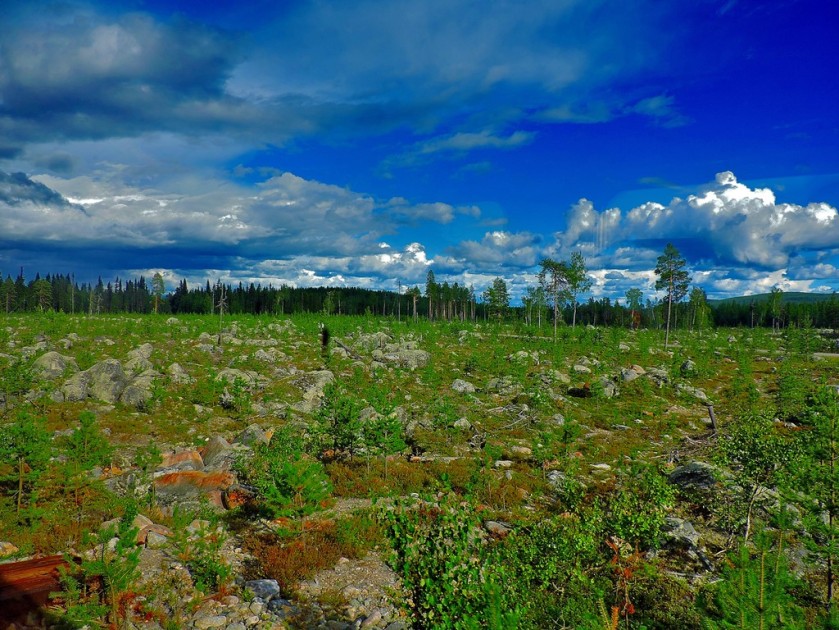
After Storuman there was again a period of taking pictures through the window of a moving train.
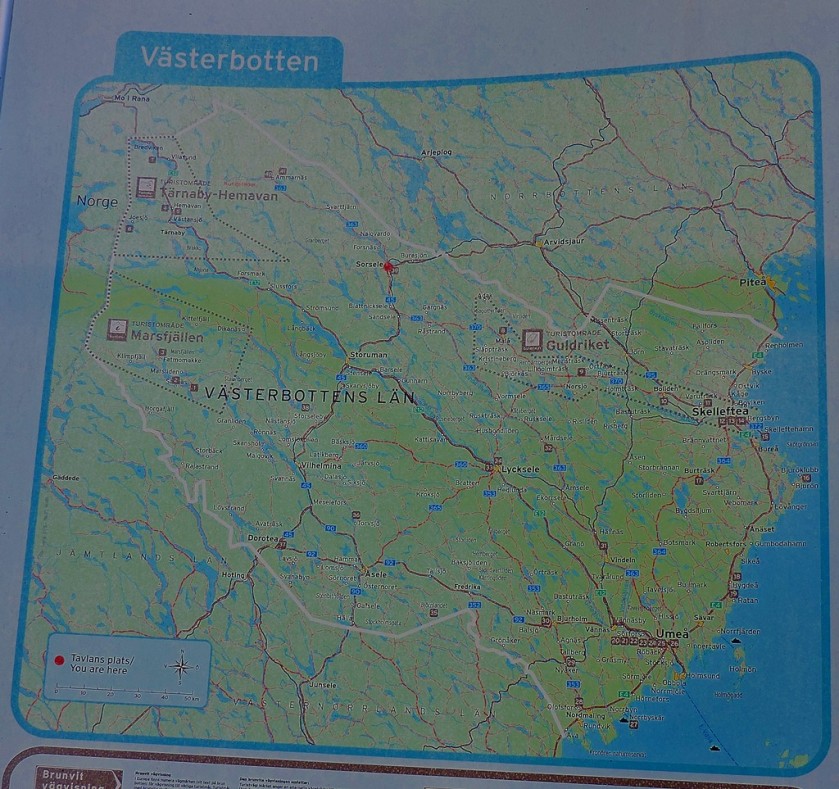
Shortly after I had taken the picture above we arrived at Sorsele, which is significant as…
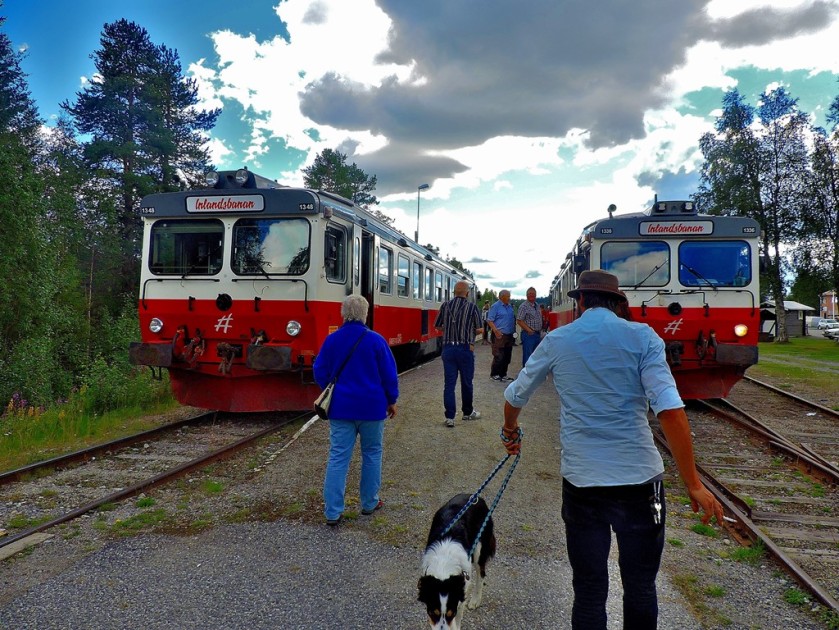
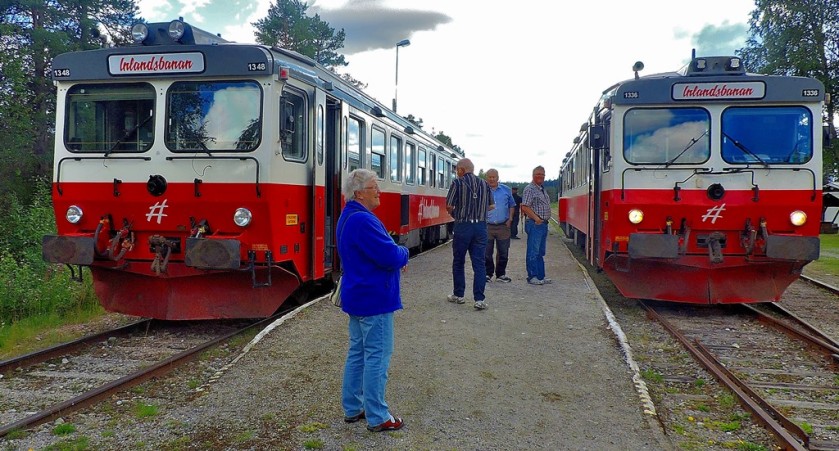
THE STATION WHERE INLANDSBANAN TRAINS MEET
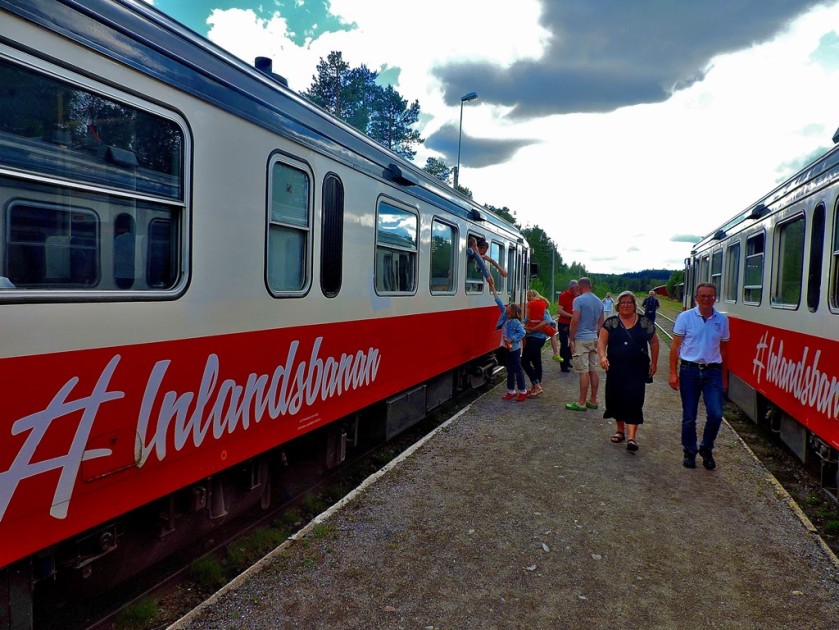
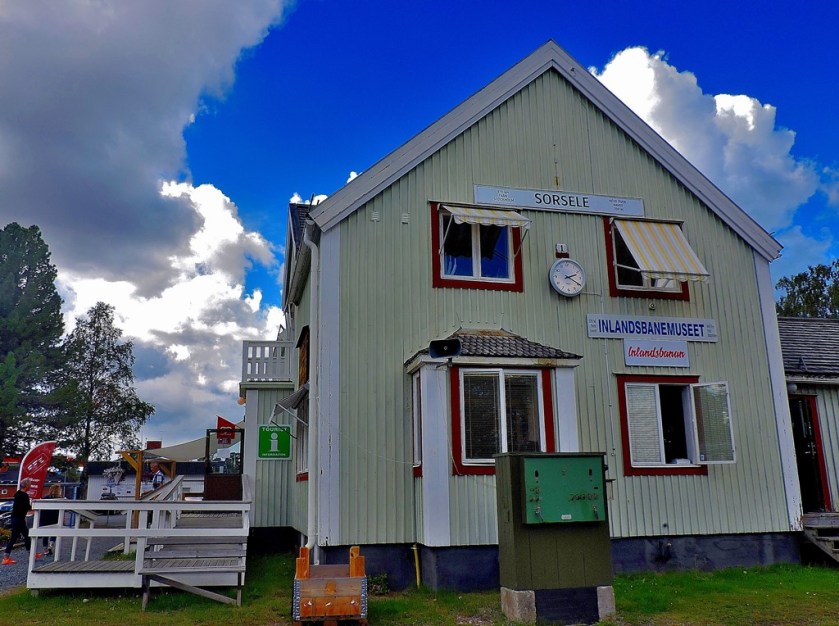
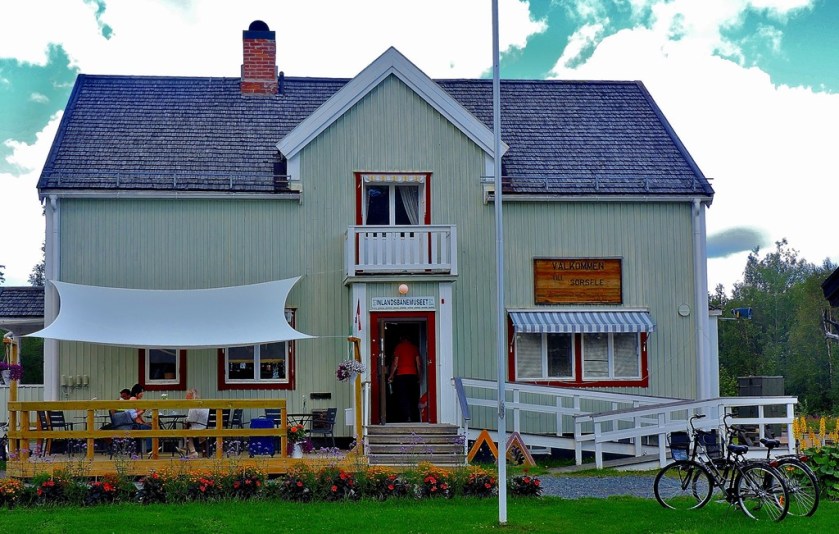
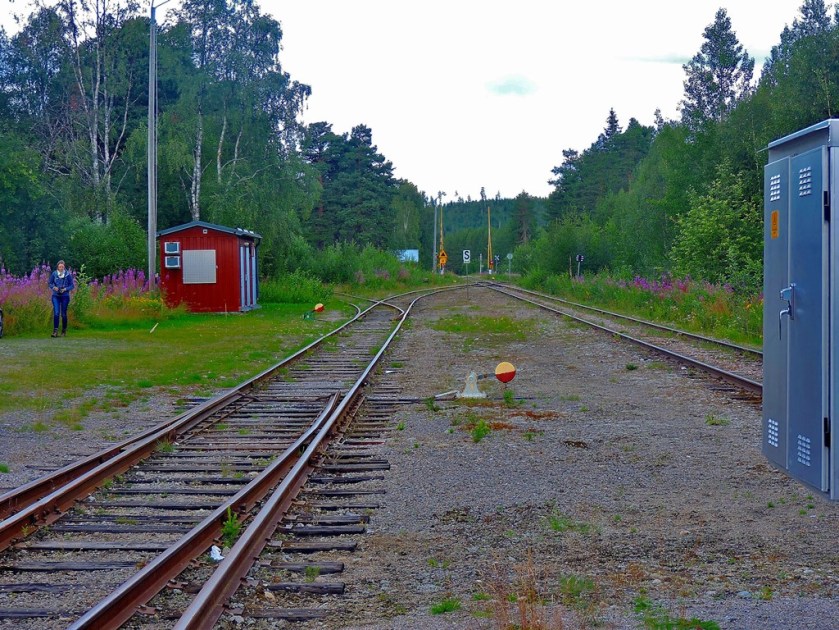
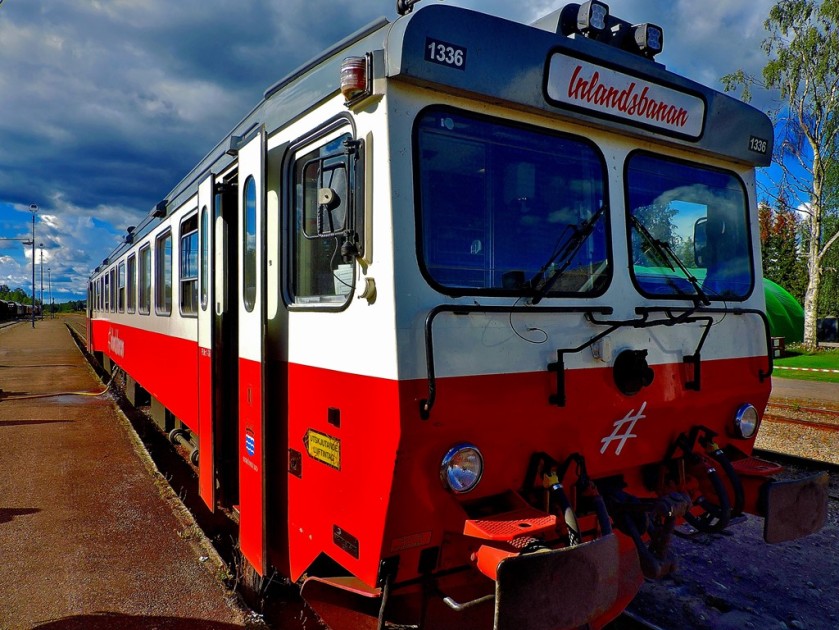
Yes, it is at an otherwise insignificant dot on the map called Sorsele that the northbound Ostersund-Galiivare service overlaps with the southbound Gallivare-Ostersund service. Sorsele is also home to the Inlandsbanan Museum, although I chose not to go inside. Thus I have many photographs of this location that is so important in the workings of Inlandsbanan…
My first shot of the two Inlandsbanan trains together at the platform
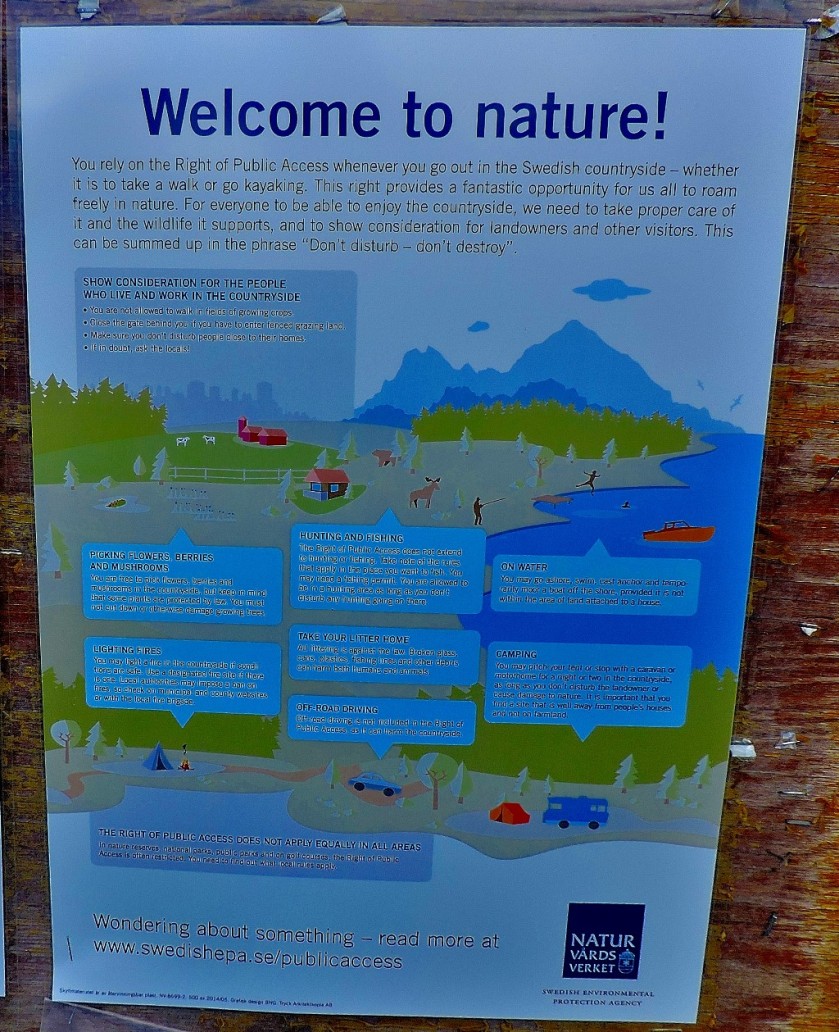
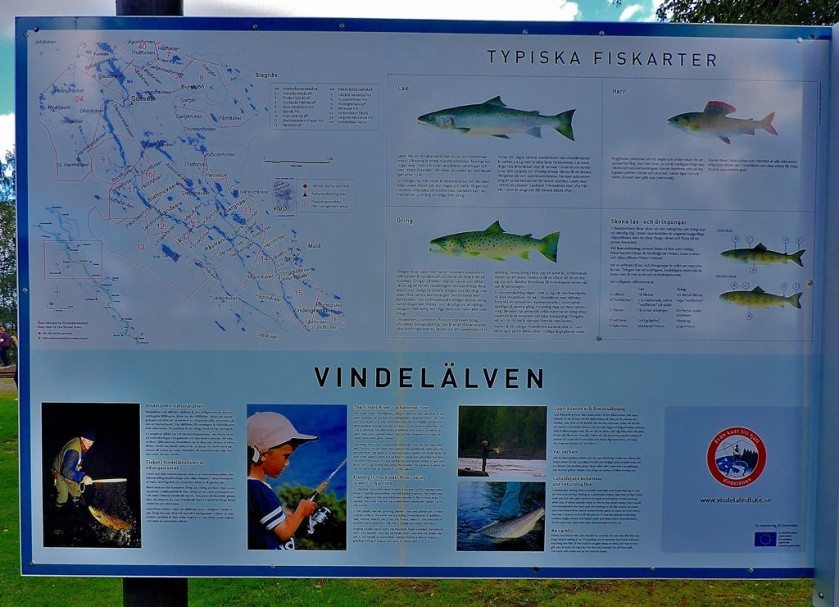
A wonderful signboard, one of many here.
The external view of the Inlandsbanan museum.
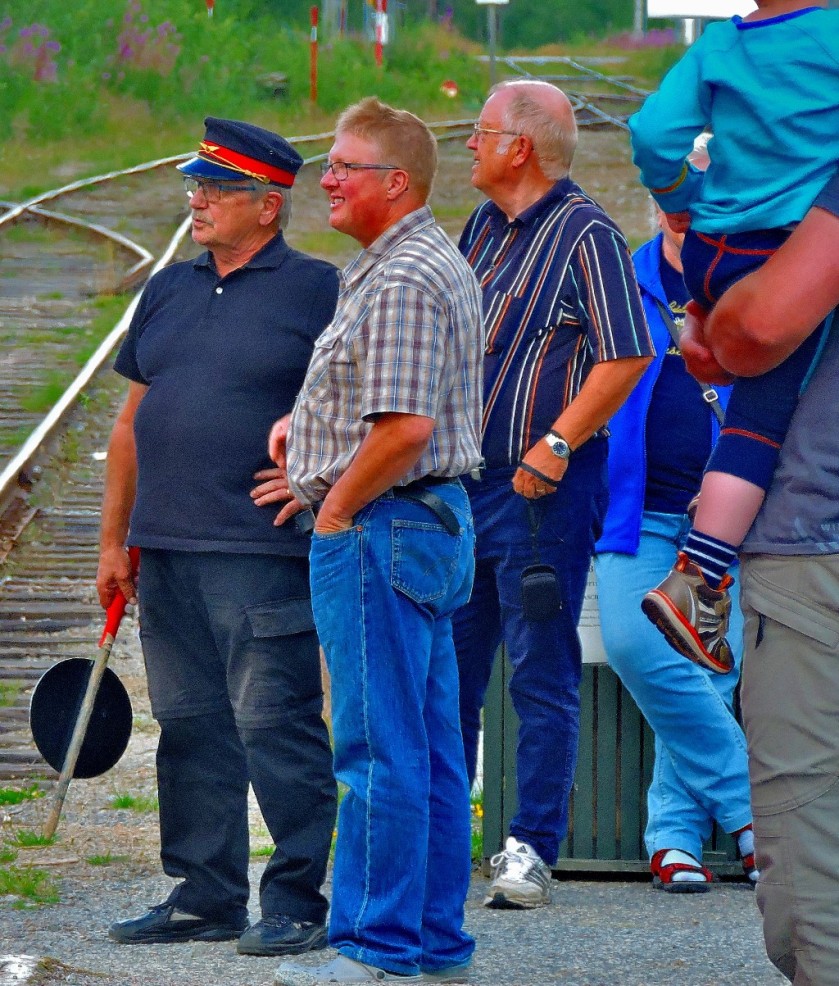
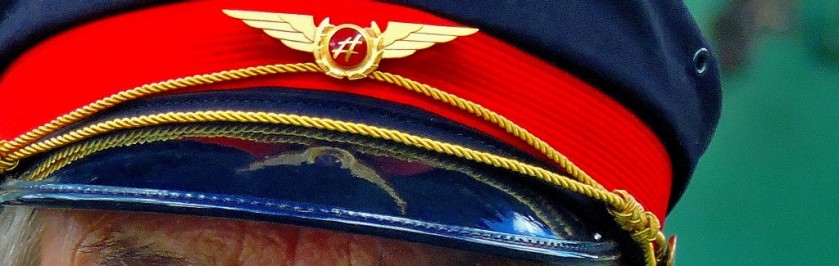
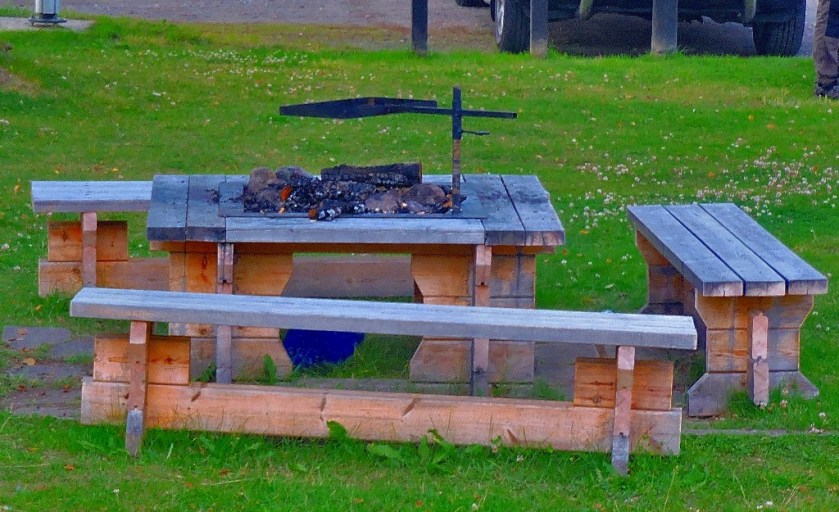
A disused platform.The guard about to indicate the departure of the southbound service.Where personal meets professional – as someone who images auction items and has an interest in railwayana I particularly wanted to get a close-up of the Inlandsbanan cap badge.Outside cooking – probably a rare pleasure in this part of the world!
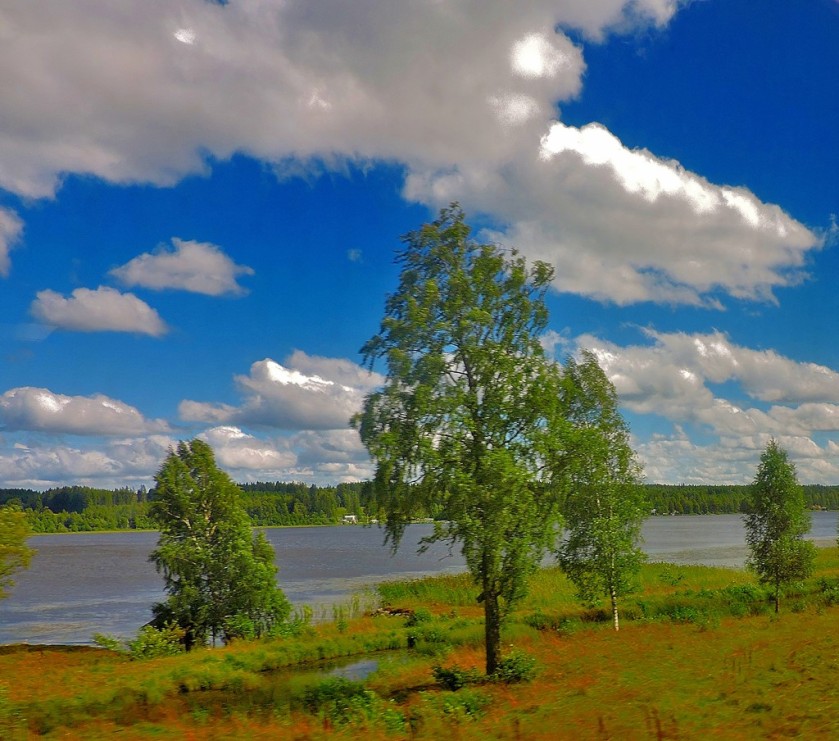
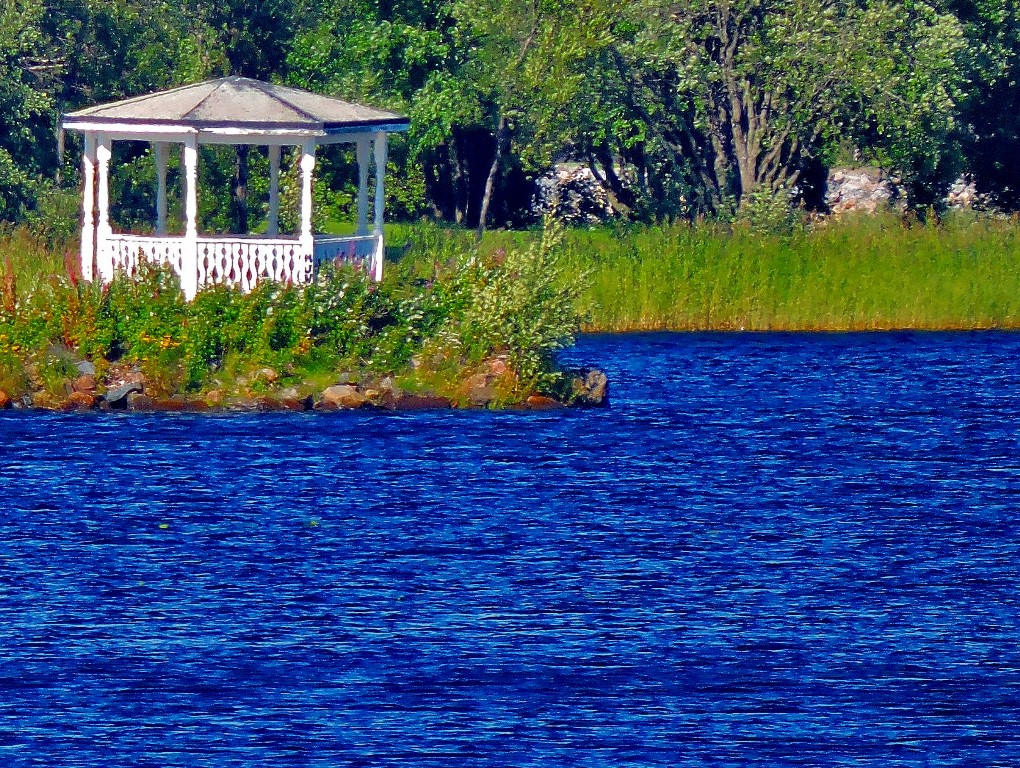
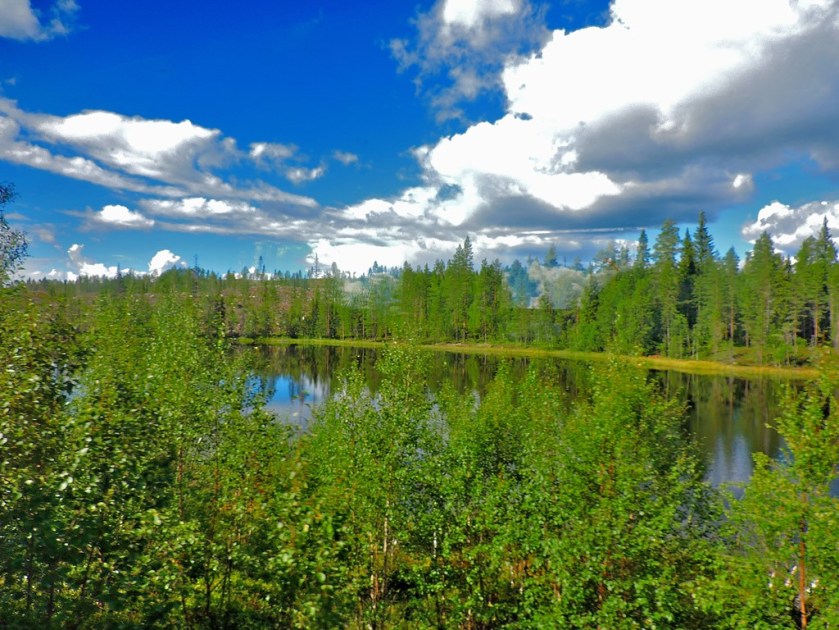
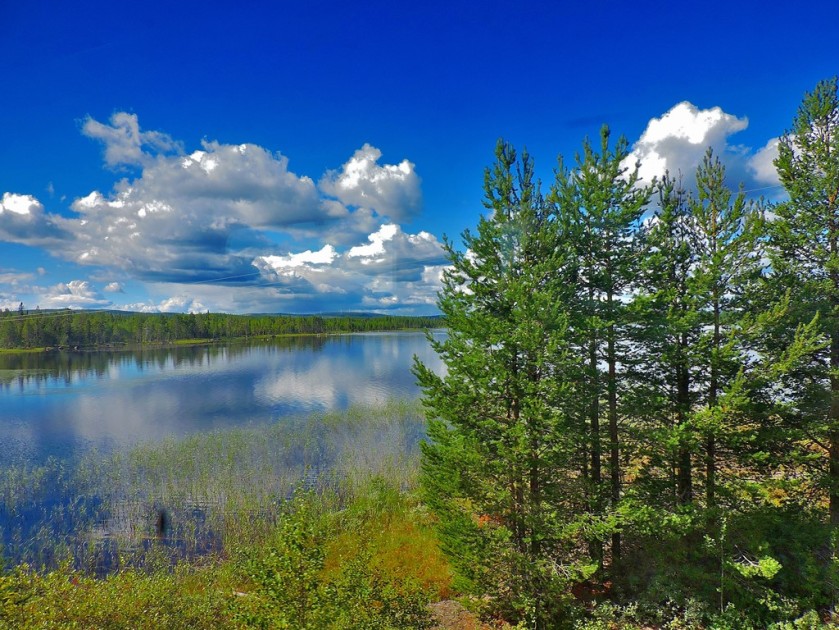
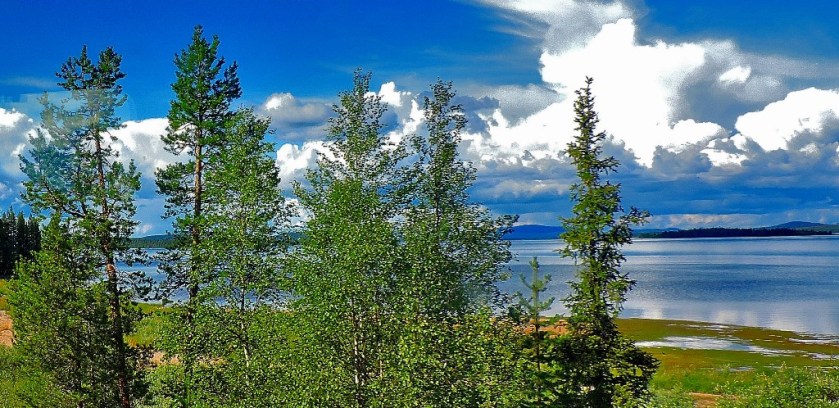
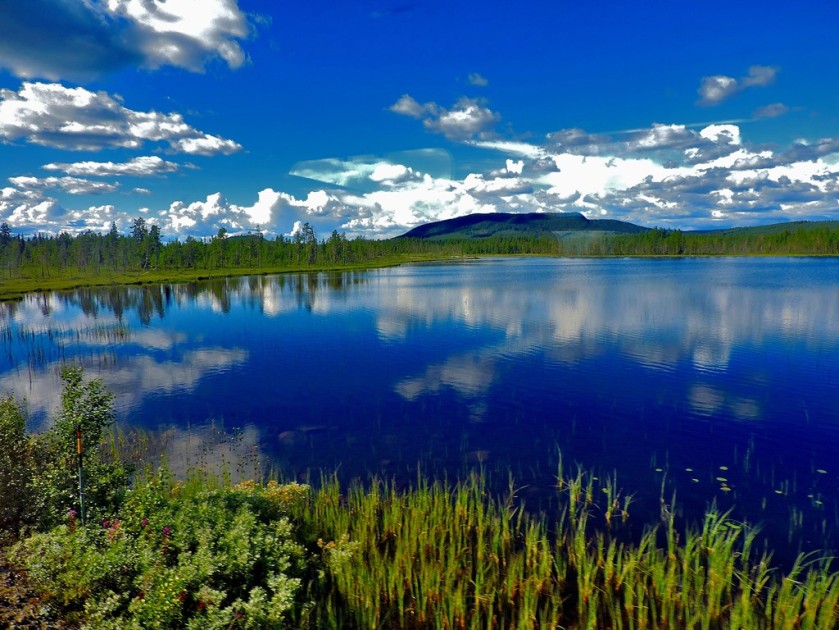
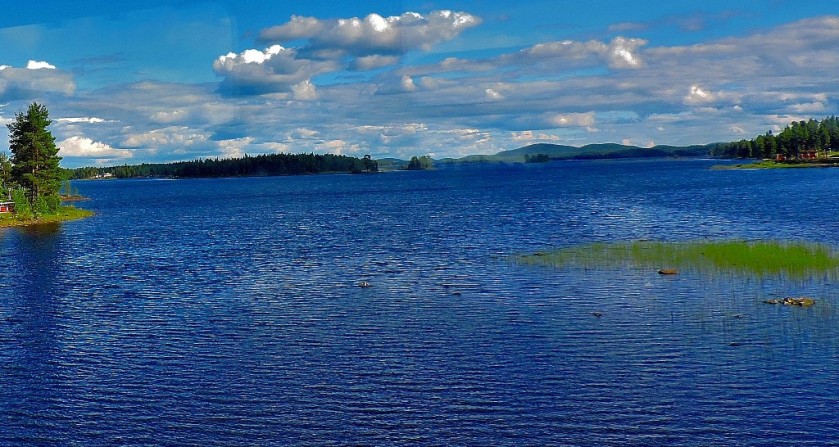
After a brief move we including the lake below we arrived at Slagnas
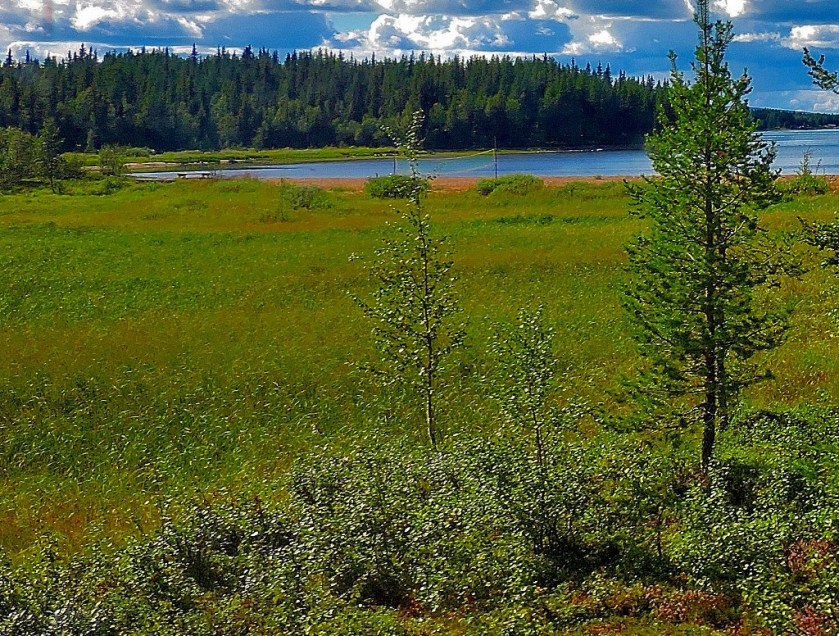
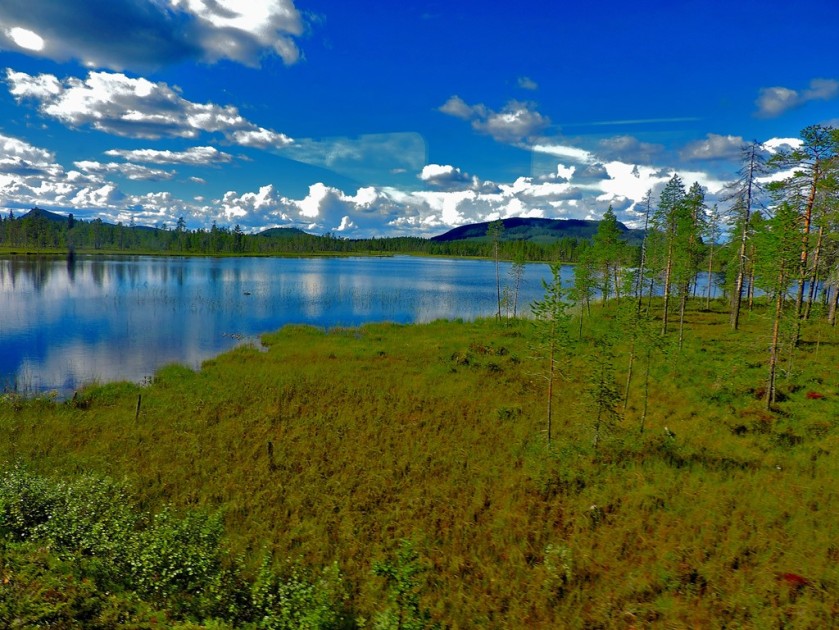
After leaving Slagnas there was a reasonably long period of forward travel…
We then had a stop for long enough to stretch our legs at…
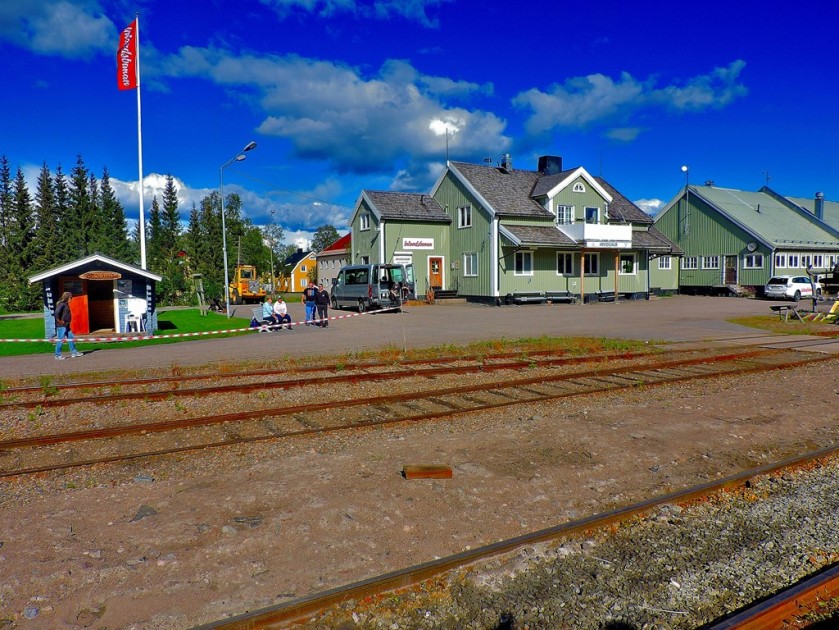
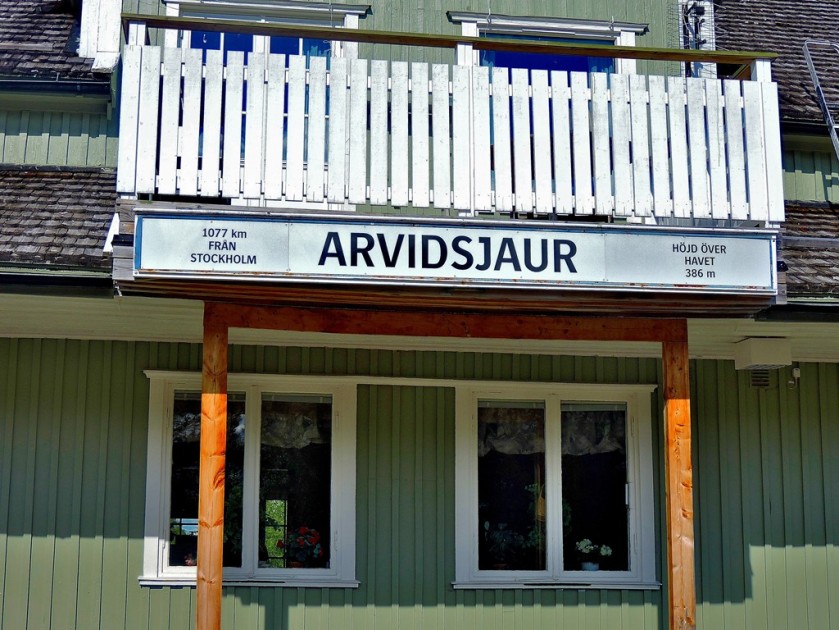
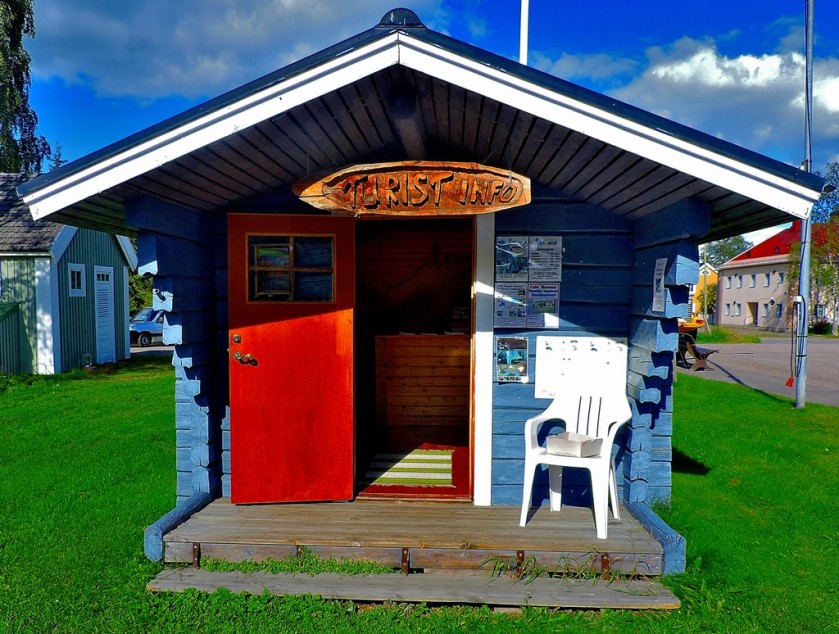
ARVIDSJAUR
I was able to take a few pictures here before we moved on.
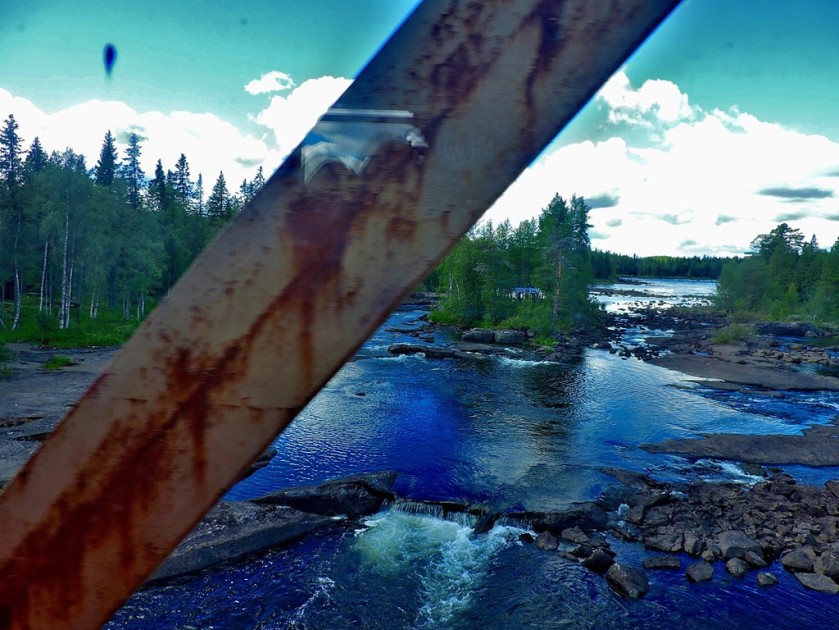
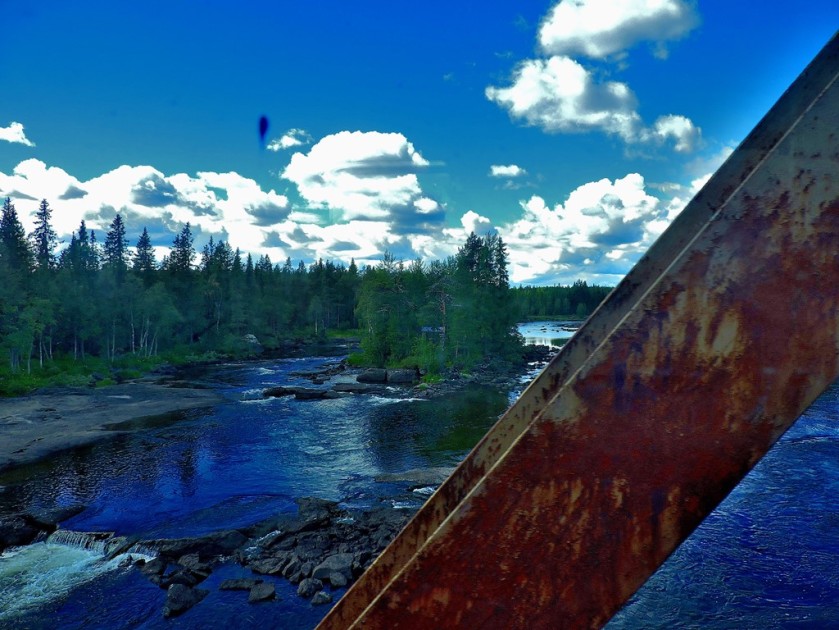
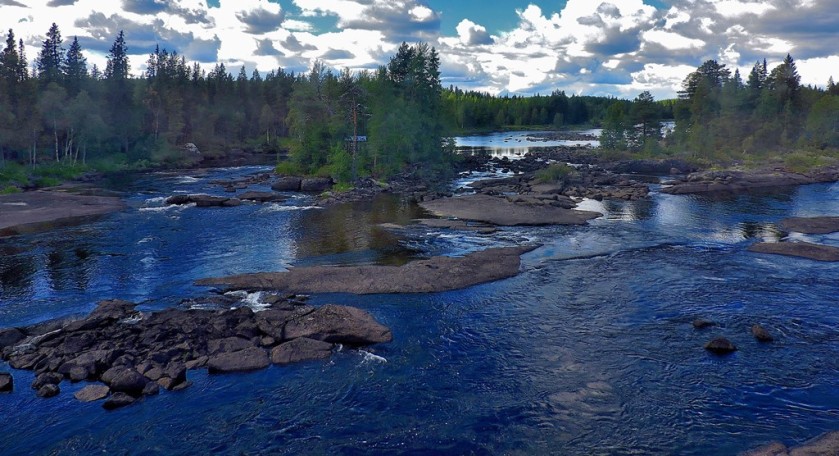
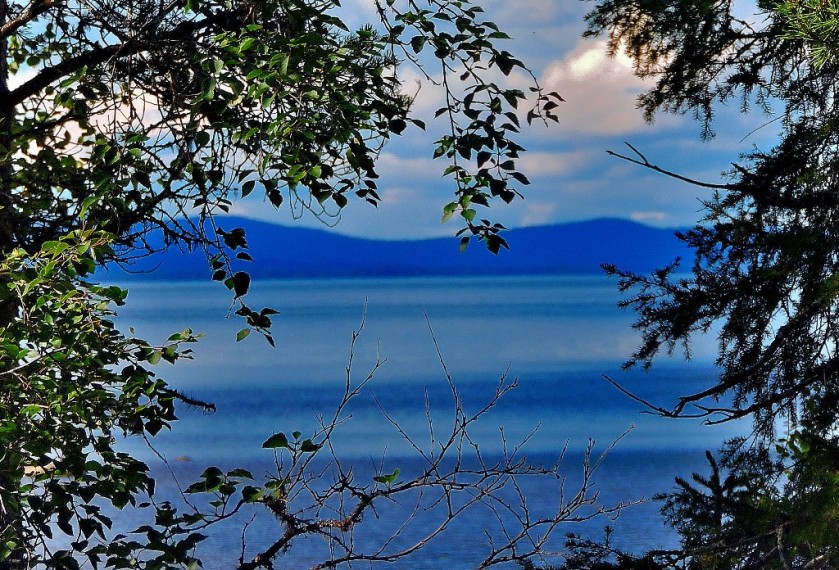
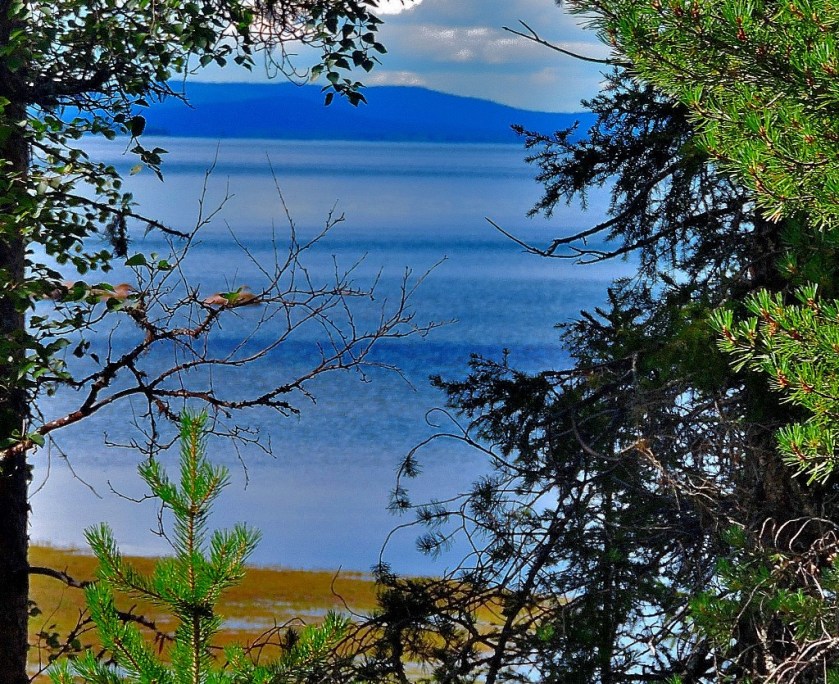
Moving forward again, I was still taking pictures through the train window…
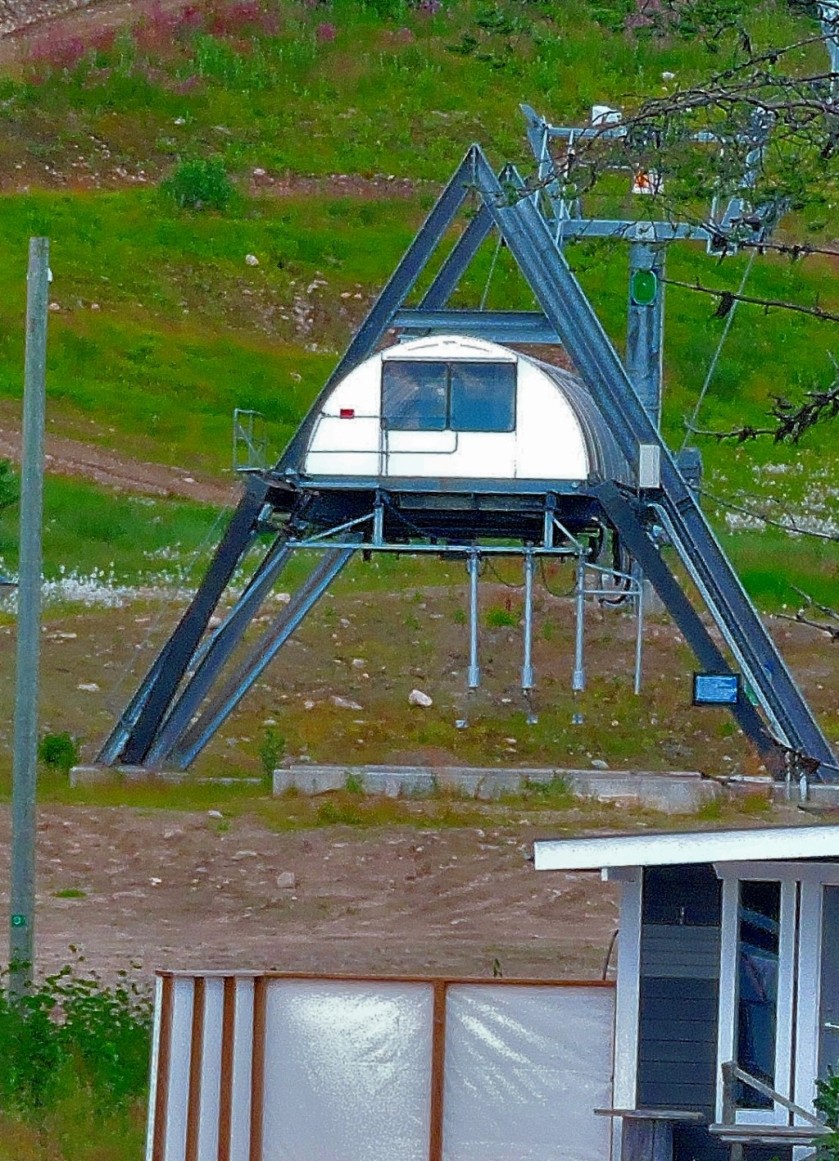
I reckon this must be the lower terminal of a cable car route.
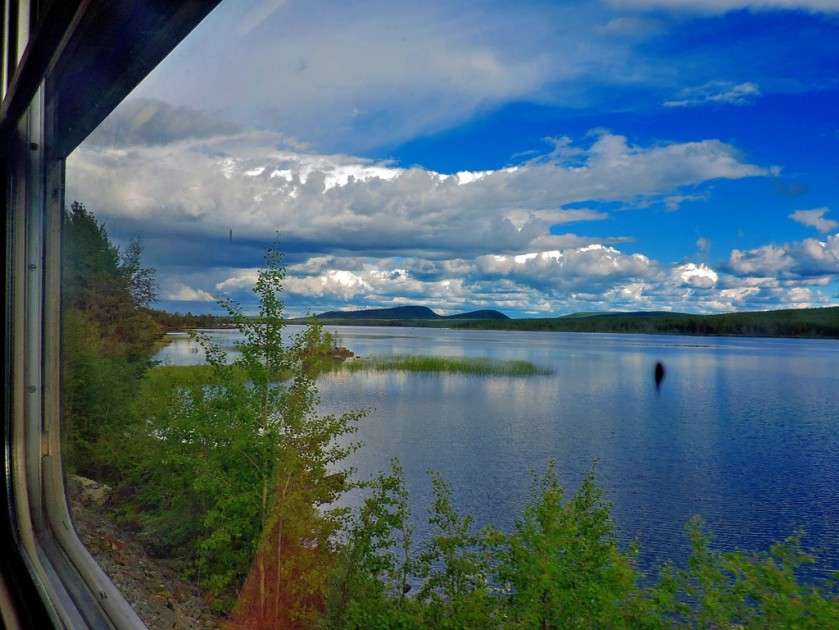
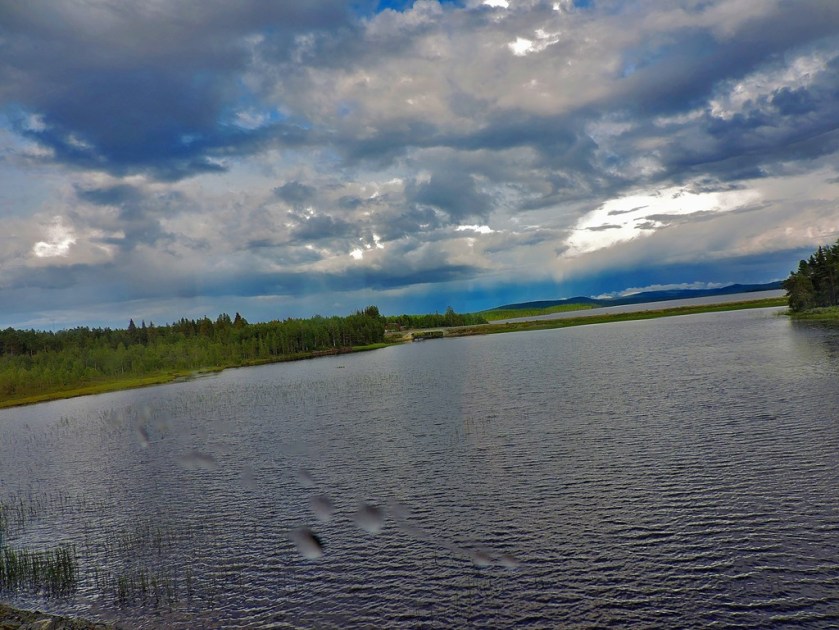
What looks like a black raindrop in the picture above is actually a mark on the window that got into more than one of my photos! It was very soon after this picture was taken that we arrived at…
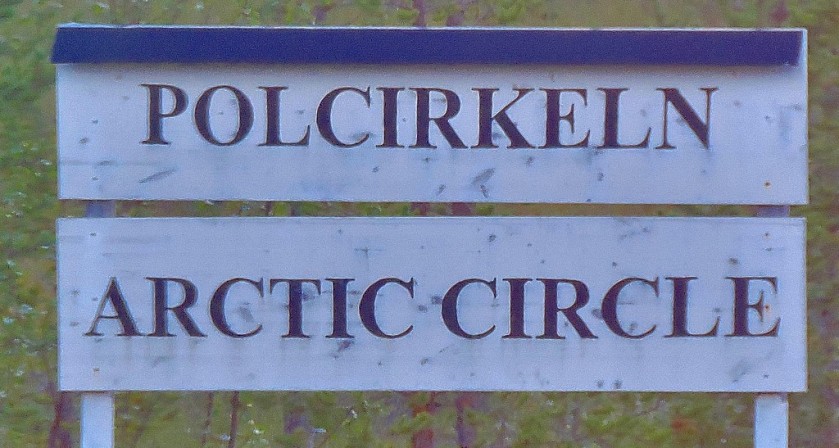
THE ARCTIC CIRCLE
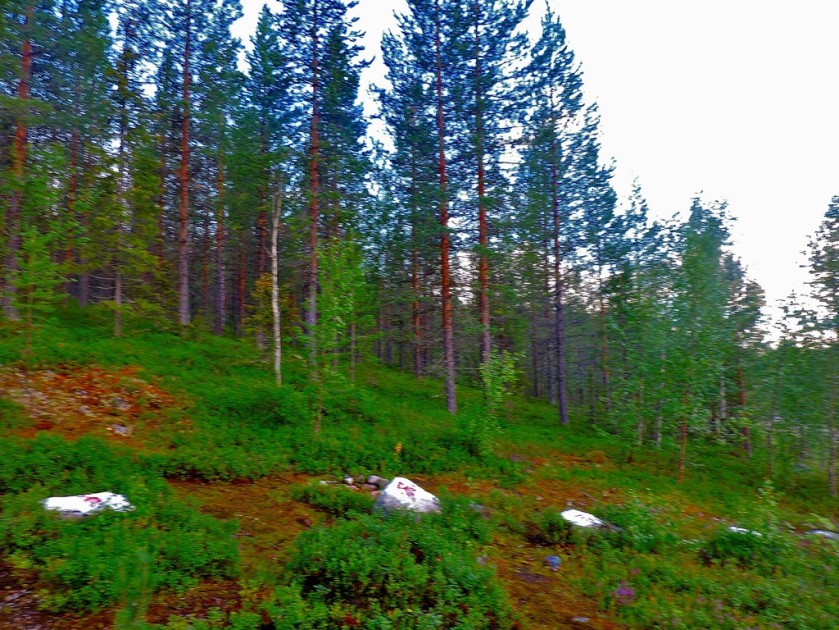
This was not the first occasion I had been into the arctic – on my only previous visit to Nordic lands in 1994 I had gone by train from Helsinki to Narvik in Norway, with a brief bus ride from Haparanda to Boden in the middle,, and after a night in Narvik had caught a bus to Tromso before then travelling by boat to the most northerly town in mainland Europe, Hammerfest. However in those days I had no camera, and also the point at which we reached the arctic circle was not announced. Here are the shots i took from inside the train before I knew that there would actually be a stop:
I end this post with pictures taken out in the open at the arctic circle:
The train at the arctic circle.
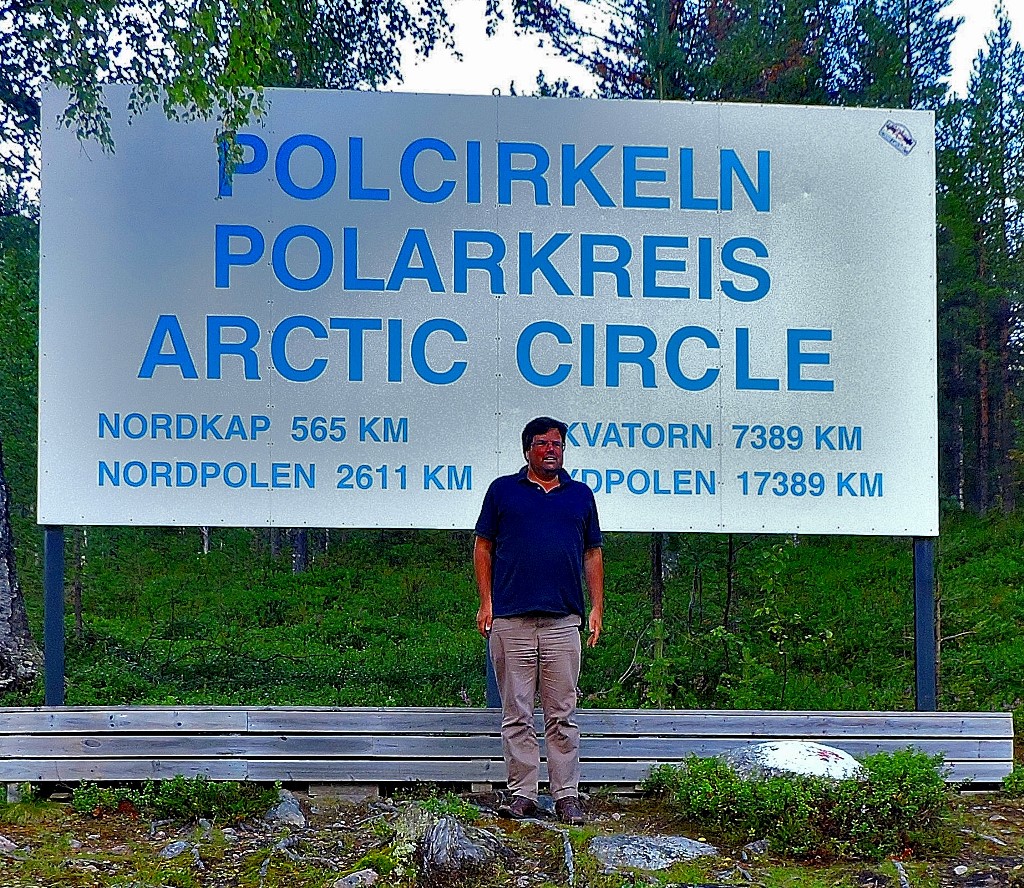
A fellow passenger was kind enough to take the picture from which I extracted this image of myself standing in front of the arctic circle sign.