All Time XIs – The BS Clash

Today in ‘all time XI’ territory cricket and politics overlap as a team of players whose surnames begin with B take on a team of players whose surnames begin with S for the Johnson-Cummings trophy. Also a few extras.

INTRODUCTION

Welcome the latest in my series of variations on an ‘all-time XI‘ cricket theme. Today’s takes its inspiration from recent developments in British politics.

THE BRIEF

The Johnson-Cummings scandal now has more legs than a millipede, as both leading figures in it provided media appearances which managed to conflict with both the truth and each other. One government minister has already resigned in protest, and others may well follow. Today’s variation on an all-time XI theme therefore sees a team og players whose surnames begin with B pitted against a team of players whose surnames begin with S, combining to form BS, competing for the Johnson-Cummings Trophy.

THE B XI

  1. Sidney Barnes – right handed opening batter. A combination of World War II and conflicts with various authority figures limited his test career, but the few matches he did get to play yielded an average of 63.05 at that level. His most famous match was at Sydney in the second match of the 1946-7 Ashes when he and Don Bradman each scored 234, sharing a 5th wicket stand of 405.
  2. Bill Brown – right handed opening batter. Had a fine record at the highest level, with a test best of 206. He was briefly before his death the oldest living test cricketer.
  3. *Don Bradman – right handed batter, captain. The greatest batter the game ever saw.
  4. Ken Barrington – right handed batter, occasional leg spinner. Averaged 58.67 in test cricket. His first nine test centuries were all scored away from home, his first three figure test innings in England being the 256 he made at Old Trafford in 1964 to save that match for England after Bob Simpson, given a plumb pitch on which to take on the task of ensuring at least a draw to guarantee his side retention of the Ashes managed to do so quite literally off his own bat, making 311 in just over two full days at the crease.
  5. Basil Butcher – right handed batter. He averaged 43 in test cricket with a highest score at that level of 209. However, his greatest and most important test knock came at Lords in 1963, when his 133 with the West Indies otherwise doing very little with the bat in their second innings helped save the match for the visitors. A great spell of fast bowling by Wes Hall almost won it for the West Indies, but Colin Cowdrey came out to bat one handed when the ninth England wicket fell, and David Allen survived the last two balls with England needing six for victory.
  6. Ian Botham – right handed batter, right arm fast medium bowler, ace slipper. The designated all rounder in this side, although in truth the 6.7 and 8 slots could be moved around without difficulty.
  7. +Ben Brown – wicket keeper, right handed batter. The Sussex stumper has a first class batting average of 40 (he has never had the opportunity to play at the top level, and by now is too old for such to be a realistic prospect) and is a highly regarded keeper.
  8. Billy Bates – off spinner, right handed batter. He played 15 tests in the 1880s, averaging 27 with the bat and 16 with the ball. His greatest highlight came at Melbourne in 1882-3 (as part of Ivo Bligh’s mission to regain ‘The Ashes of English Cricket’, following the defeat at The Oval in 1882 and Regunald Shirley Brooks’ mock obituary in The Sporting Times) when he took 7-28 including the firt hat trick by an English bowler at test level, scored 55 and then took 7-74 to give England an innings win.
  9. Sydney Barnes – right arm fast medium bowler. The greatest there has ever been in this department, 189 wickets in just 27 test matches at 16.43 each.
  10. Bishan Bedi – left arm orthodox spinner. The former Indian skipper had a splendid test record and also did well for Northamptonshire as an overseas player.
  11. Jasprit Bumrah – right arm fast bowler. The best genuine quick bowler his country has ever produced (they have not been overstocked in that department down the years), a rare visiting fast bowler who managed to rattle the Aussies in their own backyard.

This team features a very strong top five, two bowling and one wicket keeping all rounder and three of the finest specialist bowlers you could wish to meet. With Bumrah and Barnes to share the new ball, Bedi and Bates to bowl spin and the ‘golden arm’ of Botham as fifth bowling option a good number of bowling bases are covered. It is true that with Barrington the best available the leg spin department is under stocked, but this side should be able to cope with that.

THE S XI

  1. Bert Sutcliffe – left handed opening batter. One of the greatest batting talents ever produced by New Zealand.
  2. Herbert Sutcliffe – right handed opening batter. Statistically England’s greatest ever opener, averaging 60.73 in test cricket, including 2,741 Ashes runs at 66.8S. The two great Sutcliffes complement each other nicely, Bert the New Zealander being left handed and attack minded, Herbert the Englishmen being more inclined to dig in for the long haul (although never neglectful of scoring opportunities).
  3. *Graeme Smith – left handed batter, captain. A third recognized opener just to make sure that the middle order are not exposed too early. He was a fine captain of his country, and his many batting feats included scores of 259 and 277 in successive matches against England.
  4. Steve Smith – right handed batter, occasional leg spinner. His current test batting average places him second to Bradman among those who have played at least 20 games on the all-time list.
  5. Garry Sobers – left handed batter, left arm bowler of every type known to cricket, ace fielder. The most complete cricketer there has ever been.
  6. Ben Stokes – left handed batter, right arm fast bowler. A clash of the all round titans as he goes head to head with Botham. In this team it is his batting that will count for more, his bowling being used in short sharp bursts.
  7. Greville Stevens – right handed batter, leg spinner. Averaged 29.56 with the bat and 26.84 with the ball in first class cricket.
  8. Amar Singh – right arm fast medium bowler. One of the greatest pace bowlers his country ever produced, capturing his wickets at 18.56 each in first class cricket, at a time when Indian cricket was chiefly known for tall scoring. He is at no 8 here because his batting record included first class centuries.
  9. Harbhajan Singh – Off spinner, occasionally useful lower order batter. His performance against the 2001 Australians when he took 32 wickets in a three match series was the highlight of his career.
  10. +Herbert Strudwick – wicket keeper. Born in Mitcham in 1880 (even today, though to a large extent swallowed by the sprawl of London, Mitcham is classed as Surrey – I grew up a few miles away from there in Tooting, which is very definitely southwest London), he made his Surrey debut in 1902, beginning an association with the county that would last in various guises for over six decades. His first class career, which lasted until 1927 (and he was keeper in the 1926 Ashes) saw him take 1,237 catches and execute 258 stumpings. His 28 test matches yielded 61 catches and 12 stumpings. The batting available to this team, and Strudwick’s brilliance as a keeper between them are enough to pick a specialist with the gloves in this XI.
  11. Brian Statham – right arm fast bowler. 252 test wickets at 24, his overall first class bowling average was a mere 18. He has an end named in his honour at the Old Trafford ground that he graced for so many seasons.

This team has a strong if not entirely aesthetically pleasing top four (remember, there are no style marks in cricket), the most complete player there has ever been at no 5, an x-factor all rounder at six, another genuine all rounder at seven, three bowlers and one of the greatest keepers ever to play the game. The bowling has all bases covered – there is outright pace from Statham and Stokes, fast-medium from Amar Singh, anything left handed that conditions call for courtesy of Sobers, Harbhajan Singh’s off spin and Stevens’ leg spin.

HONOURABLE MENTIONS

For the B XI Alec Bedser missed out as IMO SF Barnes would do the same job better, I considered Palwankar Baloo for the role I gave to Bishan Bedi, and Bernard Bosanquet would have dealt with the leg spin shortage. For the S XI the biggest miss is John Snow, but I rated Statham higher. If I wished to include an extra pace option and sacrifice the leg spinner then Franklyn Stephenson could come in for Greville Stevens. Finally, there would be some who would have given a batting slot to Guyanese stayer Ramnaresh Sarwan.

THE CONTEST FOR THE
JOHNSON-CUMMINGS TROPHY

Even though the ‘B’ XI has both Bradman and SF Barnes in its ranks, and they are well backed by quite a few other greats, I do not consider this to be a one-sided contest – the S XI have a quite awesome top five, a keeper in Strudwick who will miss nothing and some awesome bowling options. I cannot predict a winner.

A COUPLE MORE CUMMINGS STORIES

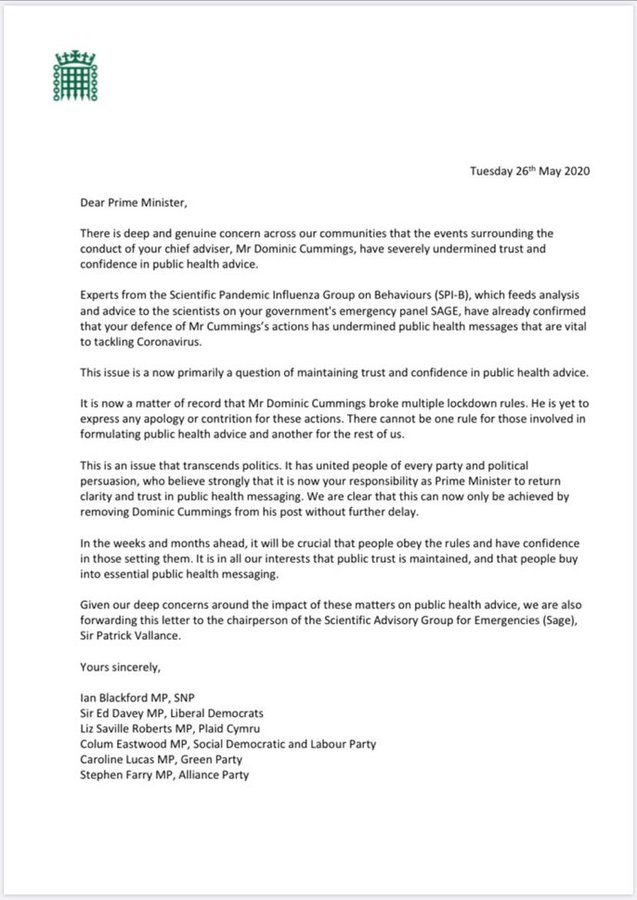
Having introduced the two teams who fill the BS brief and will compete for the ‘Cummings-Johnson Trophy’. I have a couple more bits for you. Fintan O’Toole has a piece in The Guardian comparing the arrogance of Cummings and Johnson with that of the Catholic Church in O’Toole’s native land and notes that the behaviour of the church cost it most of its influence in that country. The Tory Fibs twitter account has brought my attention the letter signed by leaders of six opposition parties (Labour being cunningly, forensically absent from the list). The letter is below:
Image

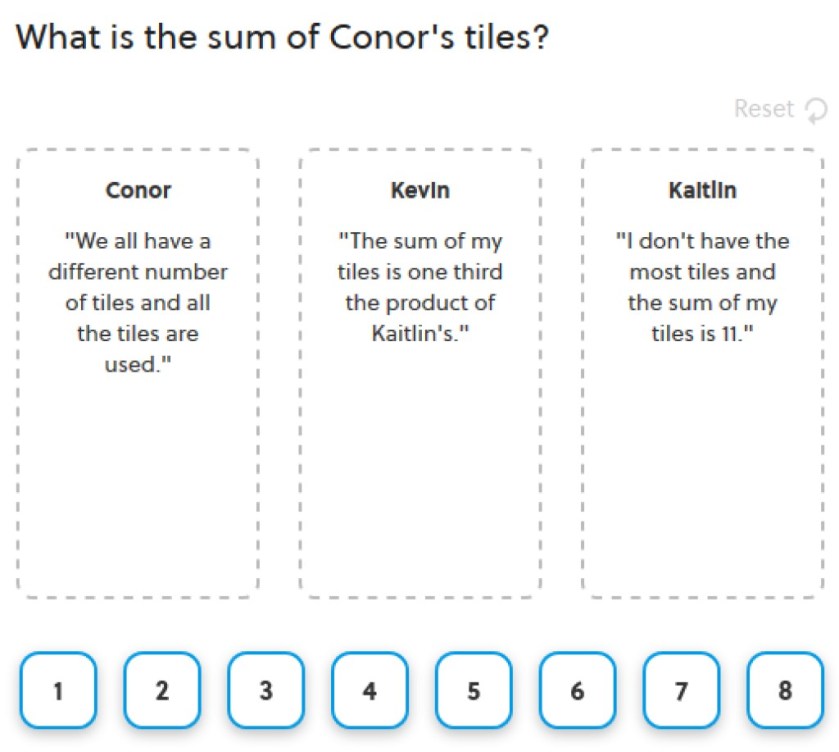
A MATHEMATICAL TEASER

Can you solve this little tester from brilliant.org:
Brilliant

Solution will appear in a later blog post.

LINKS AND PHOTOGRAPHS

Just before we come to the pictures I have a few more links to share:

Now it is time for my usual sign off:

P1330166 (2)P1330169 (2)P1330171 (2)P1330173 (2)P1330174 (2)P1330175 (2)P1330176 (2)P1330178 (2)P1330181 (2)P1330182 (2)P1330183 (2)P1330184 (2)P1330185 (2)P1330186 (2)P1330187 (2)P1330188 (2)P1330189 (2)P1330190 (2)P1330191 (2)P1330192 (2)P1330193 (2)P1330194 (2)P1330195 (2)

P1330197 (2)
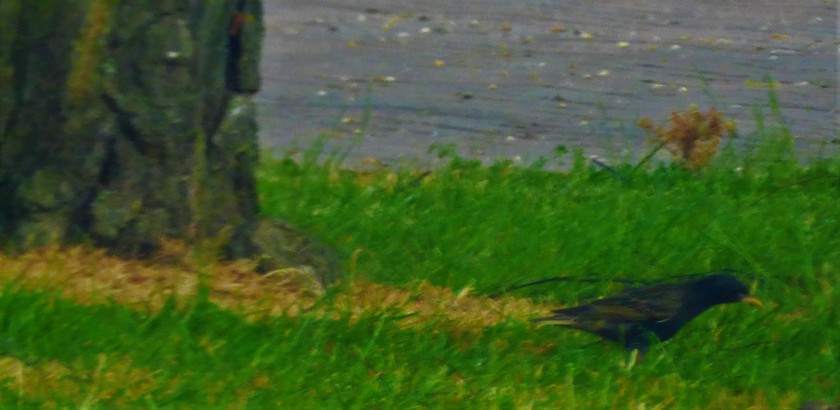
This goldfinch shot was blurry (due to the nature of the light I could not really see what I was doing – but was not remotely tempted to head off for a jaunt to a castle).
P1330198 (2)
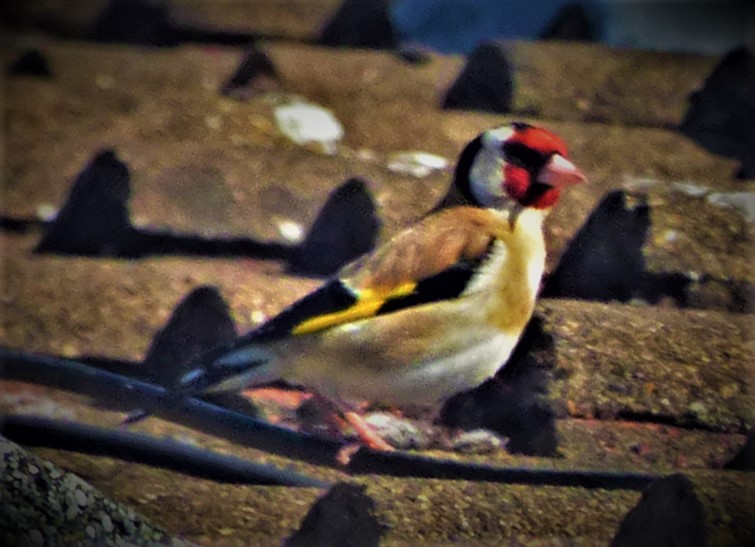
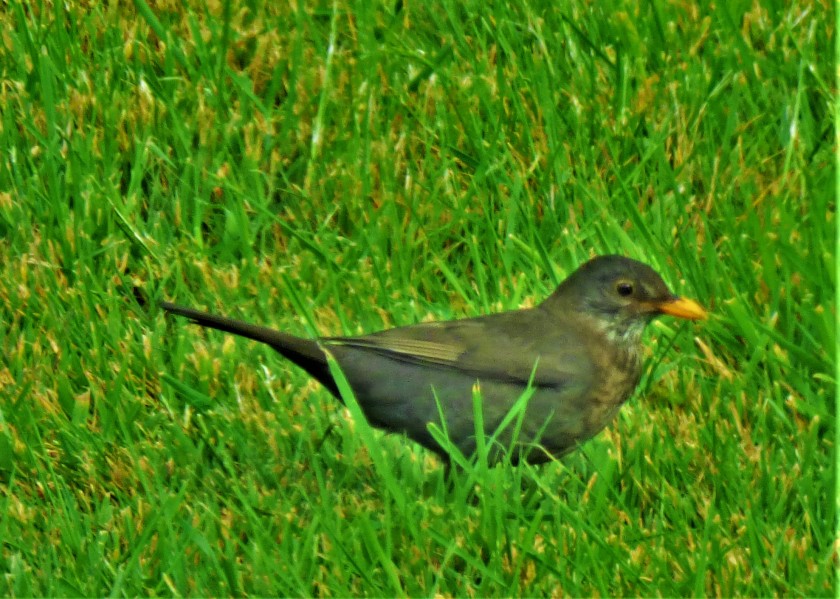
This was a better shot, and I was able to extract from it…
P1330198 (3)
…this magnificent close up.
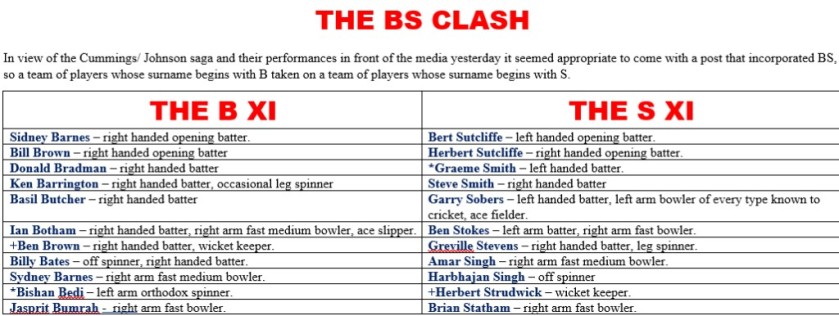
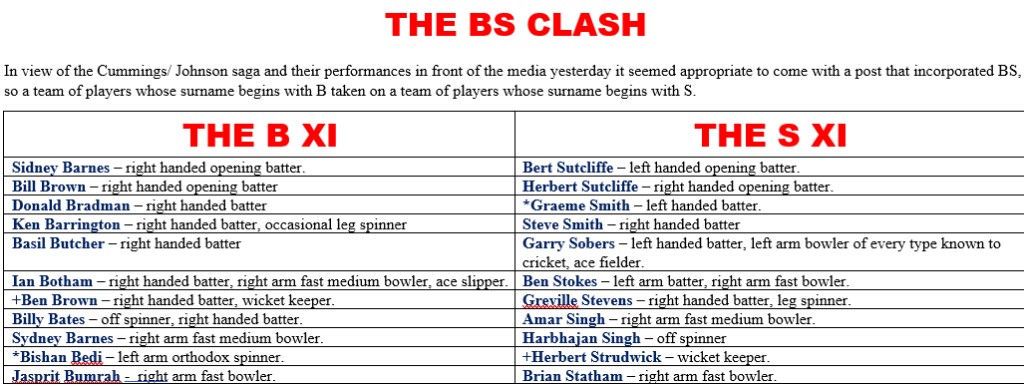
BS Clash
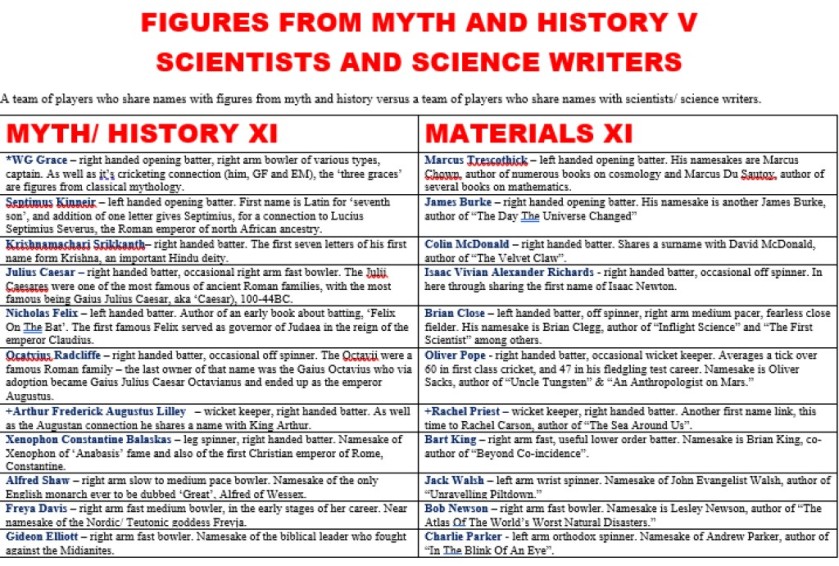
The teams in tabulated form.

All Time XIs – Myth & History vs Science

Today’s variation on the all-time XI theme links science, mythology and history. I also use this post to highlight the Dominic Cummings situation.

INTRODUCTION

Welcome to today’s ‘all time XI‘ cricket themed post. I have a Sunday spectacular for you, with a team of players who share names with characters from history or mythology taking on a team of players who share names with scientists or science writers.

THE MYTH & HISTORY XI

  1. *WG Grace – right handed opening batter, right arm bowler of various types, captain. The three Graces in a cricketing contest refers to this man and his brothers EM and GF who all played for England, all featuring in the Oval test match of 1880. The Three Graces were three sisters in Greek mythology, daughters of Zeus and the nymph Eurynome. Their names were Aglaia, Thalia and Euphrosyne. You can fet full details here.
  2. Septimus Kinneir – left handed opening batter. In a first class career that began in 1898 and ended in 1914 he amassed 15,641 runs at 32.72, with a best score of 268 not out. Septimus is a Latin name meaning ‘seventh son’, and if you add an ‘i’ you get Septimius, which gives Lucius Septimius Severus, one of the better Roman emperors.
  3. Krishnamachari Srikkanth – right handed batter. His 38 was the highest individual score of the 1983 World Cup final (India 183 all out beat West Indies 140 all out by 43 runs, in one of the greatest of all sporting upsets). The first seven letters of his forename spell out Krishna, an important Indian deity.
  4. Julius Caesar – right handed batter, occasional right arm fast bowler. I have not made him up – he played for Surrey in the 1850s. The Julii Caesares were a famous Roman family, the most famous of all being the original ‘Caesar’, murdered on the ides of March in 44BCE. Appropriately enough given his name the cricketing Julius Caesar took a very aggressive approach to his batting.
  5. Nicholas Felix – left handed batter. Another legendary player of the mid 19th century. His real surname was Wanostrocht (‘pronounced one-horse-trot’), but he played under the nom de guerre ‘Felix’ because he was also a schoolmaster and did not wish the parents of his charges to know about his cricketing sideline. He was an early player turned writer, author of ‘Felix On The Bat’. His name sake for this purpose was Felix, governor of Judaea in the reign of the emperor Claudius.
  6. Octavius Radcliffe – right handed batter, occasional off spinner. He played for Gloucestershire, and got selected for the 1891-2 Ashes tour. The Octavii were a Roman family which had two known branches, one of which was senatorial for most of its existence but died out in the mid 80s BCE, and the other of which did not number any senators until the very time that the senior branch died out, when Gaius Octavius whose father had made a fortune as banker was accepted into the senate. He reached the rank of Praetor, second highest in the ranking of magistrates in the Roman republic but died before he could become consul. His son, also Gaius Octavius was adopted in the will of his great uncle Julius Caesar and became Gaius Julius Caesar Octavianus, and eventually the emperor Augustus.
  7. +Arthur Frederick Augustus ‘Dick’ Lilley – wicket keeper, right handed batter. We have already met the emperor Augustus, but his first given name, Arthur gives him a link to the mythical King Arthur.
  8. Xenophon Constantine Balaskas – leg spinner, right handed batter. We have already met him in ‘The CLR James Trophy‘. As well as the historical Xenophon who I mentioned in that post his middle name connects to the first christian emperor of Rome, Constantine.
  9. Alfred Shaw – right arm slow to medium bowler. One of the most economical bowlers ever to play the game, he paid just 12 per wicket through a long career in which he bowled more overs than he conceded runs. His historical namesake isof course the only English monarch ever to have been dubbed ‘the Great’, Alfred of Wessex, king from 871 to 899CE.
  10. Freya Davies– right arm fast medium bowler. She is only just starting her career, but she has seven T20I wickets at 21 each, and an economy rate in that format of 5.88, which is highly impressive. If you add a j to her first name you get Freyja, a nordic/ teutonic goddess.
  11. Gideon Elliott – right arm fast bowler. I covered his brief but spectacular first class career in ‘Days In The Sun‘. His analogue is the biblical Gideon, who fought against the Midianites. His story appears in The Book of Judges, and I am both unrepentant and unapologetic in describing both that and indeed the bible of which it is part as mythology.

This team has a respectable top six, a fine keeper and four skilled and well varied bowlers. It is a fairly impressive looking side, especially given the selection criteria.

THE SCIENCE XI

  1. Marcus Trescothick – left handed opening batter, occasional medium pacer, slip fielder. I covered him in my Somerset post. He serves here as an introduction to two authors. Marcus Chown writes about cosmology, and among the books of his to be found on my shelves are “The Never Ending Days of Being Dead”, “We Need To Talk About Kelvin” and “Afterglow Of Creation”. He currently has a short article of the 1665 plague here. Marcus Du Sautoy writes about mathematics, and became the second holder of the Charles Simonyi Chair for the Public Understanding of Science after Richard Dawkins. His books, all highly readable, include “The Music of Primes” and “Number Mysteries”.
  2. Jimmy Burke – right handed opening batter. An adhesive opening batter who once scored 28 not out in four and a quarter hours (he was playing unselfishly, feeding his partners the strike, and in company with Norman O’Neill who played plenty of strokes, he saw Australia to victory). His full name was James Wallace Burke, which means he shares two names with his analogue, James Burke, author of “The Day The Universe Changed.”
  3. Colin McDonald – right handed batter. He usually opened, but I have dropped him one place in order to preserve the left-right opening combo. He was the batting star of the 1958-9 Ashes, well chronicled by Jack Fingleton in “Four Chukkas to Australia”. His counterpart is David McDonald, author of “The Velvet Claw”.
  4. Isaac Vivian Alexander Richards – right handed batter, occasional off spinner. I have rolled his full name rather than simply calling him Viv Richards because it is that first given name, Isaac, that gets him in here. His scientific counterpart is of course Isaac Newton, to date the only person from the Grantham area to have done anything that warrants being remembered. Newton was one of the greatest of all scientists. Patricia Fara is the author of an excellent book about him, “Newton: The Making of Genius.”
  5. Brian Close – left handed batter, off spinner and occasional medium pacer, fearless close fielder. His England career spanned 27 years, his debut coming in 1949 at the age 18, and his final appearances at that level being against the West Indies in 1976. Ten years after even that he turned out for a match in the Scarborough festival, and with his side due to field noted that protective gear had been set out in the dressing room. He asked about this and was told that it was the short leg fielder. The then 55 year old Close responded to that with “Well, ahm at short leg today and ah doan’t need it.” His scientific counterpart is Brian Clegg, author of “Inflight Science” and “First Scientist”, a biography of Roger Bacon, among others.
  6. Oliver Pope – right handed batter, occasional wicket keeper. He averages just over 60 in first class cricket, 47 in his fledgling test career, but I have kept him down at no 6 in this team because there have been suggestions regarding England moving him up, and I believe that at this stage of his career that would be a mistake. His analogue is Oliver Sacks, author of “Uncle Tungsten” and “An Anthropologist on Mars”. I especially recommend the former volume, which is indeed about a relative who worked with and was obsessed by tungsten.
  7. +Rachel Priest – right handed batter, wicket keeper. The Kiwi stumper gets in as counterpart to Rachel Carson, whose ‘Silent Spring’ made waves when it was first published. I have a copy of “The Sea Around Us” on my shelves and have read a couple of other books of hers. Anything with her name on the cover will be worth reading.
  8. Bart King – right arm fast bowler, right handed lower order batter. The greatest cricketer ever produced by the USA. The science link is to Brian King, co-author with Martin Plimmer of “Beyond Coincidence.”
  9. Jack Walsh – left arm wrist spin bowler. The Australian who played most of his first class cricket for Leicestershire took 1190 first class wickets at 24.55. His full name was John Edward Walsh, as compared to John Evangelist Walsh, author of “Unravelling Piltdown”, an account of one of the most famous of all scientific hoaxes, which identifies the culprit beyond any real doubt.
  10. Bob Newson – right arm fast bowler. His test bowling average was a horrible 66.25, partly because of his involvement in the infamous timeless test at Durban in 1939. Near the end of that match before the weather made its final intervention he took what was the 12th new ball to be used in its absurd duration. His first class record was 60 wickets at 26.03 each, or outside the test arena 56-1297 for an average of 23.16 each. His scientific counterpart is Lesley Newson, author of “The Atlas of the World’s Worst Natural Disasters”.
  11. Charlie Parker – left arm orthodox spinner. The third most prolific wicket taker in first class history with 3,278 scalps. Joint second in the list of first class hat trick takers, having performed the feat on six occasions. His counterpart is Andrew Parker, author of “In The Blink Of An Eye”, a natural history of the eye, and the role that the development of that organ played in the ‘Cambrian Explosion‘. Simon Ings is also the author of a book about eyes, “The Eye”, will Richard Dawkins’ “Mount Improbable” contains a chapter called ‘The Fortyfold Path to Enlightenment’, a title referring the minimum number of times on which eyes have evolved in the history of life on our planet.

This team has a fine top six, a keeper who can bat, and four well varied bowlers, with Close as a back up option in that department.

THE CONTEST

This should be a fine contest. My money would just about be on the team with scientific links.

A LINK AND SOME PHOTOGRAPHS

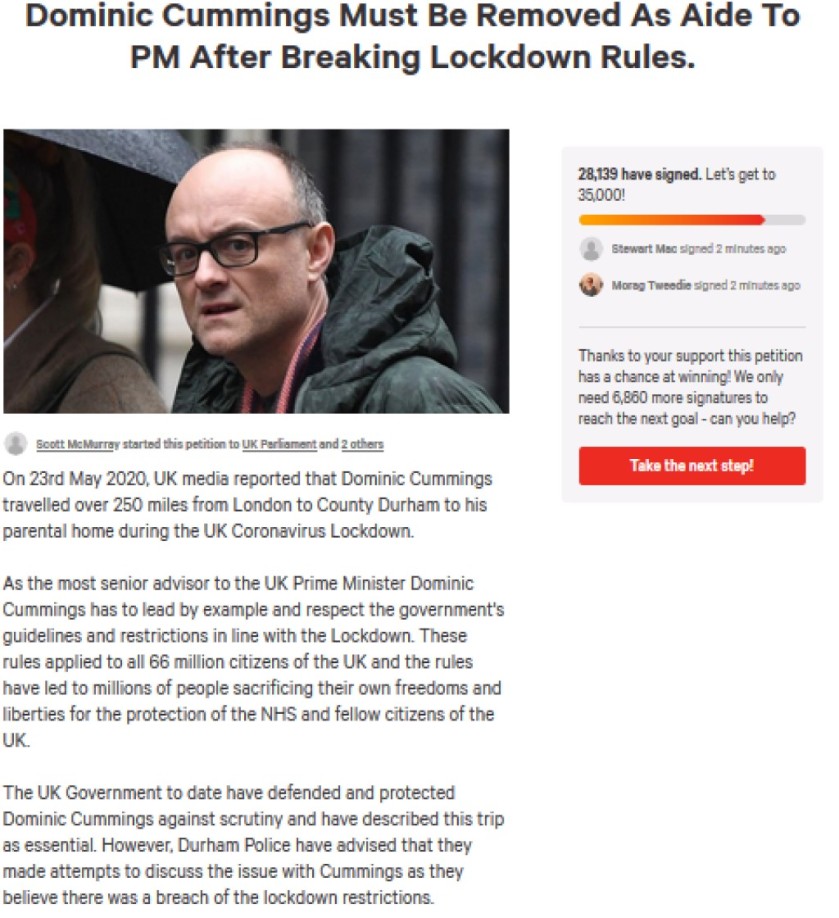
I have introduced the teams, but there is one thing to do before signing off. As some of my readers will be aware Dominic Cummings, the Rasputin of 21st century Britain, is in deep trouble. Yesterday it was revealed that he had travelled to Durham at the height of the lockdown, and then after some hours of various senior Tories sacrificing their credibility in desperate efforts to defend him, perpetrated at the behest of puppet prime minister Johnson, a second revelation came out yesterday evening regarding a trip to Barnard’s Castle during the lockdown period. The story had moved even further on, with a further sighting of Cummings in Durham on May 10th attested to by multiple witnesses. The lockdown policy, which was sensible but introduced far too late by the Johnson misgovernment, is unenforceable so long as Cummings remains in office, and those calling for his removal now include at least eight Tory MPs, with others doubtless to follow. I fully agree that his position is entirely untenable, and there is a petition running on change.org calling for his removal, which I have already signed, and now I urge all of you to sign and share it by clicking the screenshot below.

Scummings petition

Finally, it is time for my usual sign off…

P1330123 (2)P1330124 (2)P1330125 (2)P1330127 (2)P1330128 (2)P1330129 (2)P1330130 (2)P1330131 (2)P1330132 (2)P1330133 (2)P1330134 (2)P1330135 (2)P1330136 (2)P1330137 (2)P1330138 (2)P1330139 (2)P1330141 (2)P1330144 (2)P1330147 (2)P1330148 (2)P1330149 (2)P1330150 (2)P1330151 (2)

Science v History
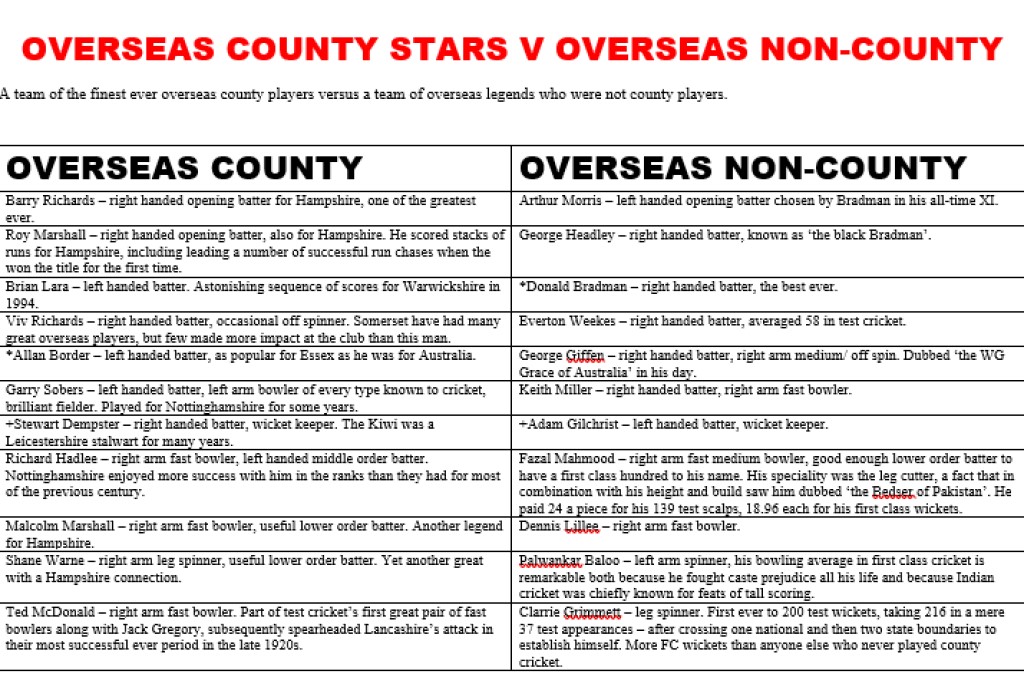
The teams in tabulated form.


All Time XIs – Overseas Stars

Today is overseas players day as an XI of the best county overseas players to on an XI of the best overseas players not to play for counties. Also features a very important petition, a measure of mathematics and some very interesting links, as well as my usual photographs.

INTRODUCTION

Welcome to my latest variation on the All Time XI cricket theme. Today overseas players have the floor, as I pit a team of the best county overseas players against a team of overseas stars who were not county players.

THE COUNTY OVERSEAS PLAYERS

  1. Barry Richards – right handed opening batter. Played for Hampshire for many years, producing a number of extraordinary performances. See my recent South Africa post for more about him.
  2. Roy Marshall – right handed opening batter, occasional off spinner. The Barbadian scored a huge number of runs for Hampshire, and the speed with which he scored them was a crucial factor in Hampshire’s first ever County Championship, when he several times led successful run chases.
  3. Brian Lara – left handed batter. The holder of the highest individual scores in both test and first class cricket, the latter made for Warwickshire against Durham in his and their record breaking 1994 season.
  4. Viv Richards – right handed batter, occasional off spinner. An all-time great who featured in my West Indies team but had to make do with an honourable mention in the Somerset post due to my selection policies regarding overseas players.
  5. *Allan Border – left handed batter, occasional left arm orthodox spinner. The Aussie was as respected for Essex as he was in native land.
  6. Garry Sobers – left handed batter, left arm bowler of every kind known to cricket, brilliant fielder. The most complete all rounder ever to play the game, he played for Nottinghamshire for a number of years.
  7. +Stewart Dempster – right handed batter, wicket keeper. One of the most talented cricketers ever to come from New Zealand, he averaged 65.72 in his brief test career before signing up to play for Leicestershire, whom he served well for a number of years.
  8. Richard Hadlee – right arm fast bowler, left handed attacking middle order bat. The Kiwi legend was also outstanding for Nottinghamshire over a number of years. In 1984 he achieved the double of 1,000 runs and 100 wickets in the first class season, the first time it had been done since the reduction of first class fixtures to make space for the John Player League in 1969. Could such a ‘double’ be achieved in a 14 game first class season such as has been the case in England in recent years? Yes – WG Grace once had a run of 11 matches in 1874 in which he achieved the feat, but anyone who does manage it will achieve a feat comparable to the great George Hirst’s 1906 season when he scored 2,385 first class runs and took 208 wickets, the only ever season’s ‘double double’.
  9. Malcolm Marshall – right arm fast bowler, right handed lower order batter. The biggest haul of wickets in a first class season since the reduction of fixtures referred to above is 134, taken by Marshall for Hampshire, for whom he played over the course of a number of years.
  10. Shane Warne – leg spinner, right handed lower order batter. Our fourth player with a Hampshire connection and the greatest leg spinner of the modern era.
  11. Ted McDonald – right arm fast bowler. One half of the first great pair of fast bowlers in test history along with Jack Gregory, and the first truly great player to come from Tasmania (with due respect to Charles Eady who once took a seven-for and then scored 566 in a club final, and to Kenny Burn, selected for an England tour as reserve keeper after a misunderstanding – he was a specialist batter, and his brother was a keeper), he then signed up to play as a Lancashire League pro and ultimately signed for the county, and was fast bowling spearhead for them during their greatest ever period, the second half of the 1920s. In 1930 when Bradman was taking all the headlines McDonald greeted the boy wonder by rolling back the years, posting five slips, making the ball fly and dismissing him for nine.

This XI features a stellar top five, the greatest of all all rounders, a keeper-batter and four fabulous and varied bowlers. The batting is very deep with Shane Warne due to come in at no 10, and the three fast bowlers, Hadlee, Marshall and McDonald backed by Warne and Sobers with Roy Marshall, Richards and Border in reserve looks like a superb bowling attack as well.

THE NON-COUNTY XI

  1. Arthur Morris – left handed opening batter, named by Bradman as the best he ever saw.
  2. George Headley – right handed batter. He was known as ‘the black Bradman’, and his average at test level was 60.83. He usually batted three, but the West Indies so often lost an early wicket that he was effectively opening anyway,  so I have promoted him to do that job, making way for…
  3. *Donald Bradman – right handed batter, the best ever.
  4. Everton Weekes – right handed batter. He averaged 58 in test cricket, including five successive centuries. He also played Bridge for his native Barbados.
  5. George Giffen – right handed batter, right arm medium/ off spin. An all-rounder whose deeds saw him dubbed ‘the WG Grace of Australia’, his most astounding match performance came at the expense of Victoria when he hit 271 and then took 7-70 and 9-96. In the 1894-5 Ashes he scored 475 runs and took 34 wickets, still finishing on the losing side. I decided that my top four here were so strong that I could afford to start the all rounders at no 5, naming two as compensation for the presence of Sobers in the ranks of the opposition.
  6. Keith Miller – right handed batter, right arm fast bowler. Australia’s greatest ever all rounder. 2,958 test runs at 36.97 and 170 wickets at 22.97 at that level.
  7. +Adam Gilchrist – left handed batter, wicket keeper. Statistically the best keeper batter in test history.
  8. Fazal Mahmood – right arm fast medium bowler. His size and build combined with his mastery of the leg cutter led to him being labelled ‘the Bedser of Pakistan’. He took 12 wickets in the match when Pakistan achieved their first test victory. His test average per wicket was 24 for 139 wickets, while his fast class wickets came at 18.96 each.
  9. Dennis Lillee – right arm fast bowler. He did play a few games for Northamptonshire, but he was not a regular county cricketer. He took a then record 355 test wickets from 71 appearances at that level, 167 of them against England.
  10. Palwankar Baloo – left arm orthodox spinner. I wrote about him in my piece on India. I consider his 179 wickets in 33 first class games at a mere 15.21 each doubly outstanding because he contended against caste prejudice all his life (he was one of three ‘untouchables’ who negotiated the pact that ended Gandhi’s fast against separate electorates for depressed castes) and because Indian cricket was chiefly known for tall scoring rather than for any sort of bowling success.
  11. Clarrie Grimmett – leg spinner. He crossed the Tasman from his native New Zealand, and then twice moved states in his new adopted home before establishing himself as a first class cricketer. In consequence of this circuitous route to the top he was 33 years old when he finally got to don the baggy green. He took 11-82 on test debut v England and never looked back. In all he played 37 test matches and took 216 wickets, his career at that level ending when he was passed over for the 1938 tour of England, but he was still taking big first class wicket hauls two seasons later than that. In all first class cricket he captured 1,424 wickets, a record for anyone who never played county cricket (we met no2 on this list yesterday), from 248 appearances, averaging over 5.7 wickets per match.

This team has a top four with a combined average of approximately 267 at test level, two quality all rounders at five and six, a great keeper batter at seven and four excellent and varied bowlers. The bowling, with Lillee and Miller as outright fast bowlers, Fazal Mahmood’s cutters, Baloo and Grimmett as specialist spinners plus Giffen also looks highly impressive.

THE CONTEST

These are two awesomely strong and well balanced sides, and the only thing I can say for sure about the contest is that it would be an absolute humdinger.

A SOLUTION AND A NEW PROBLEM

Yesterday I offered you a little teaser from brilliant.org

This is how I resolved this:

  • The bottom shape is a right angled triangle and we are told that all angles of the same colour are identical. This means that 180-90 = 3x yellow angle, so yellow angle = 90/3 = 30 degrees.
  • The four top left triangles together form an angle of 180 degrees, and three of the four contain the blue angle, while the other contains the yellow angle, established at 30 degrees, so (180-30)/3 = blue angle, this simplifies to 150/3 = blue angle = 50 degrees.
  • The big central triangle is a right angled triangle with a blue angle and the green angle. Since the internal angles of a triangle sum up to 180, 90 + 50 + green =180, which means that the green angle that we are looking for is 180 – (90 + 50) which equals 40 degrees.

From the same source comes another teaser, this time on the theme of pattern recognition:

Square spiral

As with the previous one this was originally multiple choice but I am just leaving you to work out the answer.

AN IMPORTANT PETITION

A petition seeking justice for Belly Mujinga, a transport worker who died after being spat at by someone who knew they had covid-19, is running on change.org. There was a second victim of this despicable assault who did not die, so when the perpetrator is found they should face a charge of attempted murder as well as one of murder. Please sign and share the petition by clicking on the screenshot below.

Mujinga

LINKS AND PHOTOGRAPHS

Just a few links before it is time for my usual sign off:

  • Marina Hyde hits top form on the subject of Johnson apparently needing a baying mob behind him to be able to handle Prime Ministers Questions, with this splendid piece in The Guardian.
  • Elizabeth Dale who runs a blog called Cornish Bird which is devoted to revealing some of the less well known parts of her home county has a splendid post up at the moment about St Loy Cove, Penwith.
  • National Geographic have a post up at the moment introducing the guina, a tiny South American wild cat weighing just six pounds and in danger of extinction.
  • Finishing these links where we started, with The Guardian, Lucy Jones has a piece titled “Noticing nature is the greatest gift you can get from lockdown“, which is both an excellent read, and an appropriate place from which to provide my usual sign off..

P1320698 (2)P1320700 (2)P1320701 (2)P1320702 (2)P1320704 (2)P1320705 (2)P1320706 (2)P1320707 (2)P1320708 (2)P1320709 (2)P1320710 (2)P1320711 (2)P1320712 (2)P1320714 (2)P1320715 (2)P1320716 (2)P1320717 (2)P1320718 (2)

Overseas
The teams in tabulated form.


All Time XIs – Sussex

The latest in my series of All Time XIs, this time featuring Sussex. Also includes a couple of bonus links.

INTRODUCTION

Welcome to the latest post in my “All Time XIs” series. This post has been more fraught with difficulties than most in this series because Sussex, today’s subject, have a very long but not particularly glorious cricketing history.

SUSSEX ALL TIME XI

  1. Charles Burgess Fry – an extraordinary character, in many ways the UK’s nearest equivalent to Leonardo Da Vinci. In public examinations he outdid two of the leading scholars of his day, F E Smith (later Lord Birkenhead) and John Simon who later got to put a Sir in front of his name. He represented his University (Oxford) in Athletics, Football and Rugby as well as cricket (and for 18 months, a period that has been massively exaggerated in some accounts, he was joint holder of the world long jump record). He played football as well as cricket at full international level, and had he learned in time that the 1896 Olympic was happening would probably have been a medallist there, while only an injury prevented him from making history by becoming a triple international (rugby, as well as football and cricket). He ran a training ship (The Mercury) at Hamble. He stood for election three times but was unsuccessful at that. He was even considered as a potential candidate for the throne of Albania! In amongst these and other varied activities he played enough first class cricket (including a stint at Hampshire) to amass over 30,000 runs at an average of 50, including 94 centuries. In 1912, when both South Africa and Australia visited for the Triangular Tournament (a rain ruined disaster) he captained England and emerged from his six game tenure with four wins and two draws. He once scored six successive first class centuries, a performance equalled by Bradman but unsurpassed. Iain Wilton is the author of a definitive biography of him, simply titled “C B Fry”, which I recommend.
  2. John Langridge – over 30,000 first class runs including 76 centuries and precisely zero international recognition. He shared an opening partnership with Ted Bowley worth 490 against Middlesex, Sussex’s record stand for any wicket and one beaten in English cricket only by two Yorkshire pairs, Brown and Tunnicliffe who put on 554 against Derbyshire in 1898, and Sutcliffe and Holmes who beat that stand by one run in 1932 against Essex.
  3. Ted Dexter – an attacking right handed batter, a fine fielder and a useful bowler of above medium pace. In 1962-3 he captained England in Australia and in the five test matches scored 481 runs at 48.10. Dexter, like Freddie Brown who I mentioned in passing yesterday, has a place in the ‘Exotic Birthplaces XI’ although Milan, Italy does not quite match Lima, Peru.
  4. Kumar Shri Ranjitsinhji – a right handed batter who pioneered the leg glance, averaged 56 in his long and distinguished first class career and had a fine if brief test career. His two centuries at that level, 154 not out on his debut at Old Trafford (a match I wrote about in my Warwickshire piece in connection with Dick Lilley) and 175 in the first match of the 1897-8 Ashes show that he could make big hundreds. During his Cambridge days he achieved at Parker’s Piece, the green space that used to be considered the demarcation between ‘town’ and ‘gown’, the rare feat of three individual centuries on the same day, in three different matches that were taking place there.
  5. Kumar Shri Duleepsinhji – nephew of ‘Ranji’, and possibly an even better batter. His career was cut short by health problems, but he scored 989 test runs at an average of 58, including 173 on debut against Australia at Lord’s (a match Australia won by seven wickets in spite of England tallying 800 in their two innings). For Sussex he once scored 333 in less than a full day’s play, which stood as a county record until Murray Goodwin who subsequently alo played for Glamorgan surpassed it in 2003.
  6. +Matthew Prior – a fast scoring middle order batter and a fine wicket keeper. In 2010-11 his keeping and ability to score middle order runs when needed played a major role in England’s first Ashes triumph down under since the 1986-7 series.
  7. *Tony Greig – a genuine all rounder, an attacking middle order batter, two kinds of bowler (medium-fast or off spin according to conditions – he once took 13 wickets in a test match in Trinidad using the latter method) and a great fielder. Controversial because of his tendency to make ill-advised comments (e.g. “I intend to make them grovel” in the run up to the visit of the 1976 West Indies, who were provoked by the fury they felt at this to new heights of brutal destructiveness) and his activities as a recruting agent for Packer while still official England captain, but his record speaks for himself, and as Greig the commentator might have said of Greig the player “he could certainly come to the party”.
  8. James Langridge – brother of John, a slow-left arm bowler good enough to take seven wickets in an innings on test debut (which came late due to him being overshadowed by Hedley Verity) and a useful middle order batter, who often had to play the sheet anchor role in the weak Sussex sides of his time.
  9. Maurice Tate – More first class wickets than any other Sussex bowler – 2,784 of them, and a useful middle order batter as well. His official bowling designation of ‘right arm fast medium’ tells only part of the story – on all surfaces and in all types of conditions he could get significant lateral movement (both Woolley in “King of Games”, see my Kent piece, and Monty Noble in “Gilligan’s Men”, his account of the 1924-5 Ashes tour state that Tate never spun the ball at all, so trusting the judgement of these two writers who had both been top class all rounders before taking up the pen I will assume that he achieved his movement either by means of swing or cut), including 38 wickets in the 1924-5 Ashes.
  10. John Wisden – right arm fast bowler, also good enough with the bat to make two centuries in major matches during his career. He is the eponym and original creator of the Wisden Cricketeter’s Almanack, also known as “The Cricket Bible”. His greatest bowling achievement was to take all 10 wickets in an innings, all clean bowled.
  11. John Snow – right arm fast bowler. Between the retirement of Trueman and the emergence of the 2005 Ashes winning attack probably only Bob Willis and Devon Malcolm on his good days among English bowlers bowled as quick as Snow. In the 1970-1 Ashes, when England reclaimed the little urn after 12 years, Snow joined Larwood (Nottinghamshire) and Tyson (Northamptonshire) as an England quick who could claim to have blitzed the Aussies in their own backyard. I am relying with this selection on skipper Greig to be able to administer a metaphorical kick to the Snow backside when needed, as Snow was a somewhat temperamental character. Snow could be a bit of a practical joker: once at Leicester he bowled a bouncer with a soap cricket ball purchased at the local Woolworths, the batter, Peter Marner, hooked fiercely and the ball shattered into fragments. The scorer put an asterisk next to the dot and at the bottom of the page recorded, dead pan, “ball exploded”. On another occasion, Snow, desirous of spinning things out a bit and knowing the character of the bowler’s end umpire, deposited a pocketful of cake crumbs at the end of his run up, whereupon “birds swooped, Bird (the umpire) panicked, Snow smiled.”

This team comprises a high calibre top five, a good no six who was also a fine wicket keeper, two genuine all-rounders at seven and eight  and three guys picked predominantly as bowlers. The bowling, with two purveyors of outright pace, Tate’s swing and cut, two genuine spin options in James Langridge and Greig and two medium-fast options in Greig in his other style and Dexter also looks strong and varied, missing only a leg spin option for completeness.

HISTORICAL FOOTNOTE ON THE FIRST GREAT BOWLING PARTNERSHIP

In the 1820s and 30s Sussex had the first documented example of a genuine bowling partnership, William Lillywhite and James Broadbridge, whose exploits made Sussex a force capable of taking on and beating the rest of England, a position they have never since occupied (nb if you think this is taking things a long way back, Philippe-Henri Edmonds begins his “100 Greatest Bowlers” with David Harris, star of Hambledon in the 1770s and 1780s, while the first known match to have taken place between teams using county names was between Kent and Surrey in 1708, there are verifiable references to cricket from the late 16th century, and some claim references from even earlier than that). I gave serious consideration to including this pairing in my all-time Sussex XI, but decided that the documented test match successes of Snow and the historical significance of Wisden just had the edge, with the latter being a nod to the old guard as well). The fact that one of this duo was a Lillywhite leads on to…

CRICKETING FAMILIES

You will have noted that my XI included an uncle and nephew pairing and a pair of brothers. Sussex has a more extensive history of family involvement in cricket than anywhere else I can think of. The first of Sussex’s cricketing families were the Lillywhites, who as well as William produced among others John, and James who led the 1876-77 tour party to Australia that inaugurated test cricket. The ruling family of Nawanagar have already been covered by the inclusion of two of them in the XI, as have the Langridges. Maurice Tate was the son of Fred Tate, a Sussex stalwart in his day and a one cap wonder for his country. Tate Sr’s sole test experience, at Old Trafford in 1902 was eminently forgettable – he got to play because of a spat between chairman of selectors Lord Hawke (Yorkshire) and skipper MacLaren (Lancashire), and was involved in two very unfortunate incidents in that match. First, in the second Aussie innings, Fred Tate, who normally fielded close to the bat, found himself at deep square leg because MacLaren would not countenance making the gentleman amateur Lionel Palairet (Somerset) move all the way from deep square leg to the right hander to deep square leg for the left hander. The left hander Joe Darling sent a skier in that direction which had it been held would have made Australia 16-4, but it went to ground, and Darling went on to 37, and Australia, who would not even have topped 50 without the reprieve, scraped up 86 setting England 124 to win. Then, England suffered a major attack of nerves in the chase, and Fred Tate found himself walking in to bat at 116-9, eight still needed to win. He snicked a four to halve the requirement, but then Jack Saunders produced his quicker ball (there were suspicions about his action when he bowled that one – such are nothing new under the sun), which also kept fiendishly low, and all poor Fred Tate ever knew of it was the death rattle as it clattered into the timber behind him to give Australia victory by three runs. Afterwards someone tried to console him and he said “I’ve got a little lad at home who’ll make the Aussies pay for this”. The boy was of course Maurice Tate, and 24 years later he was a key part of England’s first post World War 1 Ashes winning combination.

Among other Sussex family combinations were Albert and Bob Relf, brothers who were both considered all rounders of differing types. Albert had a curious tour of South Africa in which he scored 404 runs at 25.25 and took 16 wickets at 25.25 – he conceded precisely as many runs as he scored and took the same number of wickets as he suffered dismissals. Bob Relf was once sent in as nightwatchman with no prior notice by his captain CB Fry and is alleged to have said to Joe Vine who he joined at the wicket “right, let’s keep the old B__ waiting all today tomorrow as well”. The two of them stayed together until after 5PM the following day, before Vine was out, with Relf on about 130. Fry finally got his innings and found himself in the shadow of Relf who was by now thoroughly enjoying himself, and ultimately finished the innings on 210 not out. George Cox Sr and George Cox Jr between them spanned 66 years (Sr made his debut in 1895, Jr played his last first class game in 1961), the latter once scoring 234 v India in a tour match. In more recent times there have been the Wellses, of whom Colin, Alan and Luke have all played first class cricket, with Alan experiencing test cricket, although not much of it – his test batting career lasted one ball. Finally, there is the commentator-player link of Christopher and Robin Martin-Jenkins (whose middle order batting and right arm medium-fast were not sufficiently potent to merit serious consideration), father and son.

OMISSIONS

Other than Bowley and Vine who have already been mentioned in passing Roger Prideaux and David Smith (who attended Battersea Grammar, one of the forerunners of my own secondary school, Graveney) also had respectable records. Bill Athey, who made Sussex his third home after spells at Yorkshire and Gloucestershire was good without ever approaching greatness. Chris Adams, Paul Parker, Neil Lenham and Martin Speight all had decent records in the middle order without seriously challenging my chosen nos 3,4 and 5. Billy Griffith, Tim Ambrose and Michael Burgess all had or have good records as wicket keepers, with the first two having received England recognition, and the third possibly in the frame (although the England selectors have still not got the message, clear to everyone else, that Jos Buttler is not, repeat not, a test cricketer or even a particularly good wicket keeper, and Ben Foakes, Ben Cox of Worcestershire and Oliver Graham Robinson of Kent would all probably be ahead of Burgess in the queue). Among the home grown bowlers not making the cut were Jason Lewry, a left arm paceman who had been a yard or two quicker than he actually was would have given me pause at the very least, Ed Giddins and James Kirtley who both did gain England recognition, Ian Thomson, who once took a first class all-ten but was basically a workaday medium pacer, and also Ian Salisbury, a leg spinner who could bowl good ‘uns, but also bowled far too many bad ‘uns to warrant serious consideration. Also of course there is the old (in two ways) record breaker James Southerton who used to regularly turn out for both Surrey and Sussex before qualification rules were tightened and who was one of the combatants in the inaugural test match, becoming at 49 the oldest ever test debutant, which record he is likely to hold for ever more.

Of the overseas players I might have considered, Murray Goodwin was ruled out on my usual ‘go for a bowler’ grounds, while neither Imran Khan nor Garth Le Roux had sufficiently imposing records to warrant excluding any of my chosen XI, though at a pinch Imran might have got in in place of John Snow. The foreign omission I felt most keenly was Mushtaq Ahmed, the leg spinner who played such a key role in Sussex’s first ever County Championship win.

If you are going to suggest changes, which you are very welcome to do, please consider the balance of the side, and who you would displace for your chosen ones.

LINKS AND PHOTOGRAPHS

Yes, our excursion along the highways and byways of Sussex cricket has reached its end, but before my usual sign off I have a couple of things to share. Firstly, a piece by Richard Murphy of Tax Research UK titled “The FT says its time for the Bank of England to start direct funding of the government: modern monetary theory has won the day.

Second, Ritu Bhathal who has an author website and also blogs at But I Smile Anyway has a novel titled “Marriage Unarranged” out, and she has recently done a very entertaining interview with Rebecca at The Book Babe – please do take a look.

Finally, it is time for my usual sign off…

P1310605 (2)
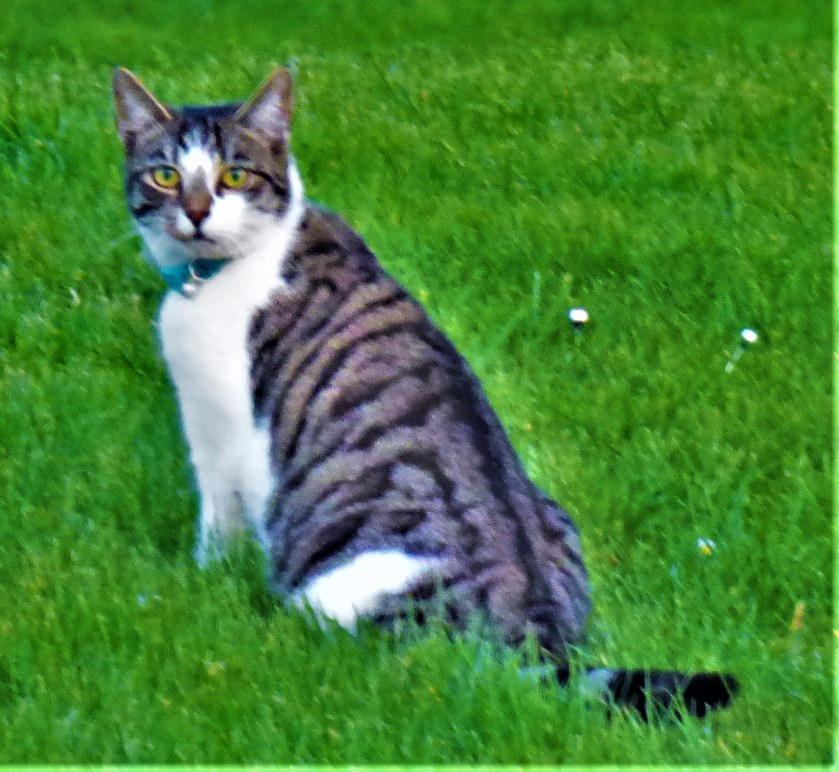
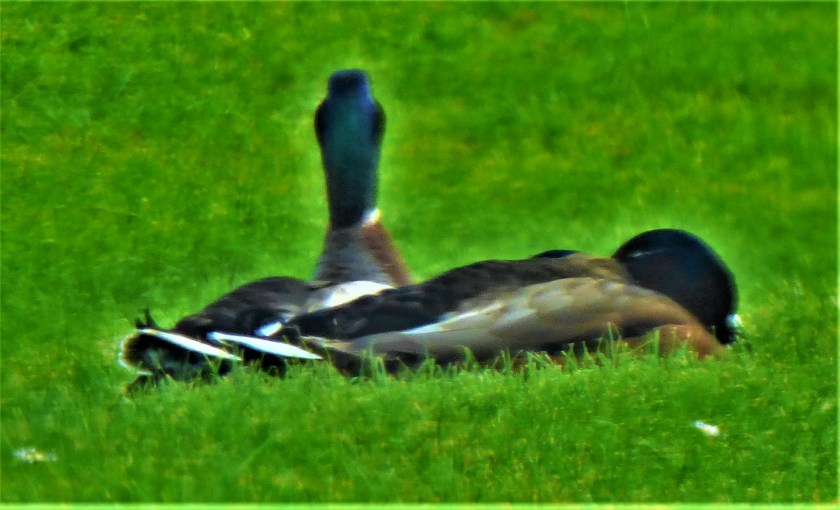
This cat was in a very typical feline pose on the patch of grass outside my bungalow yesterday, but any hope it might have had of finding prey was thwarted – the only other creatures outside with it were a couple of mallard drakes – somewhat too substantial for a cat of this size to have a go at!

P1310606 (2)

P1310607 (2)
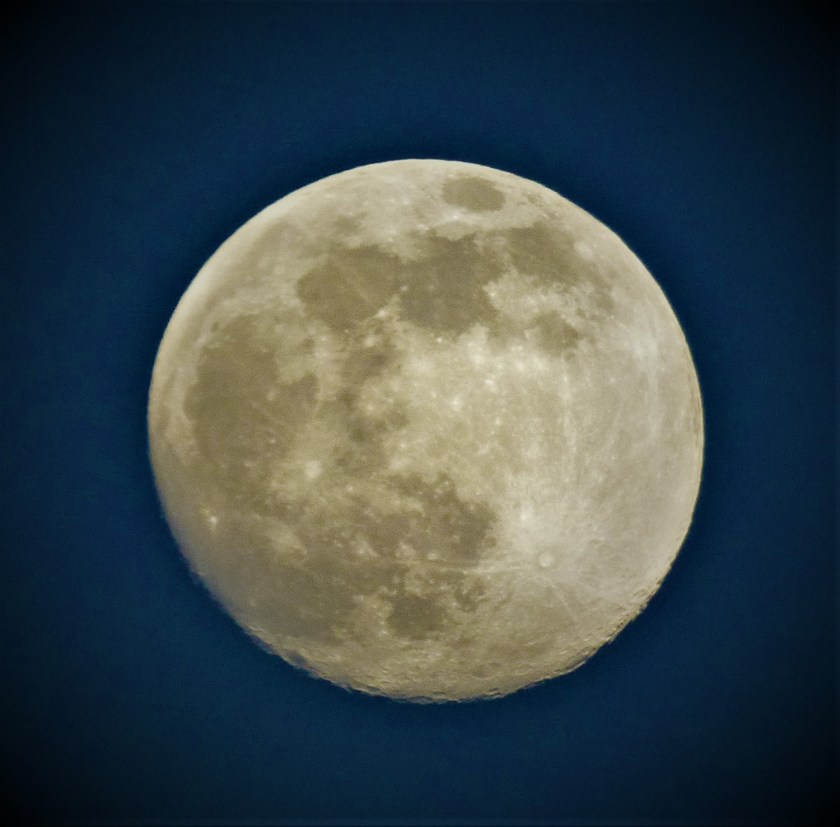
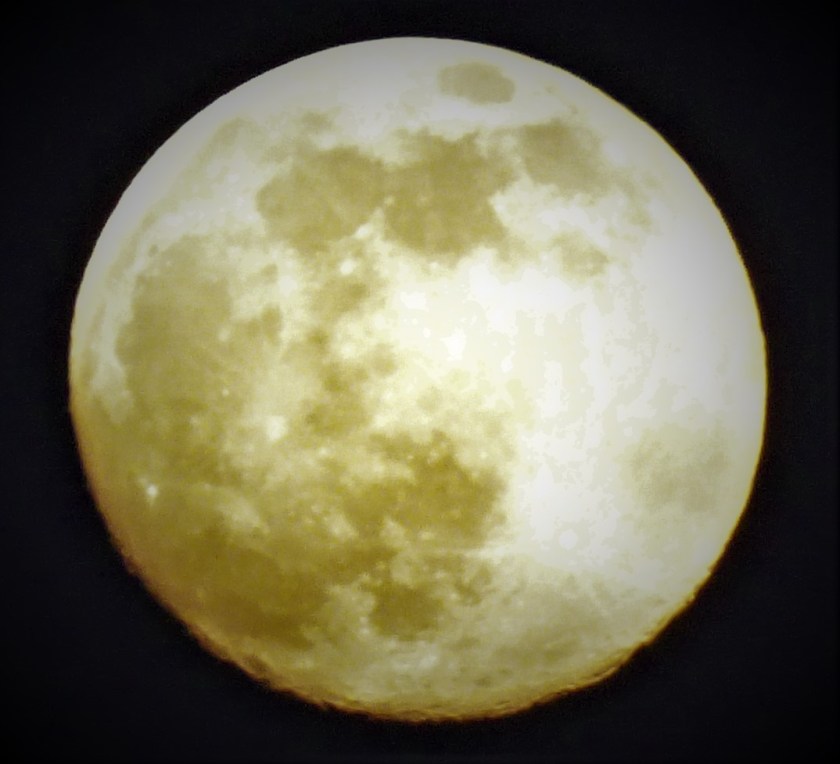
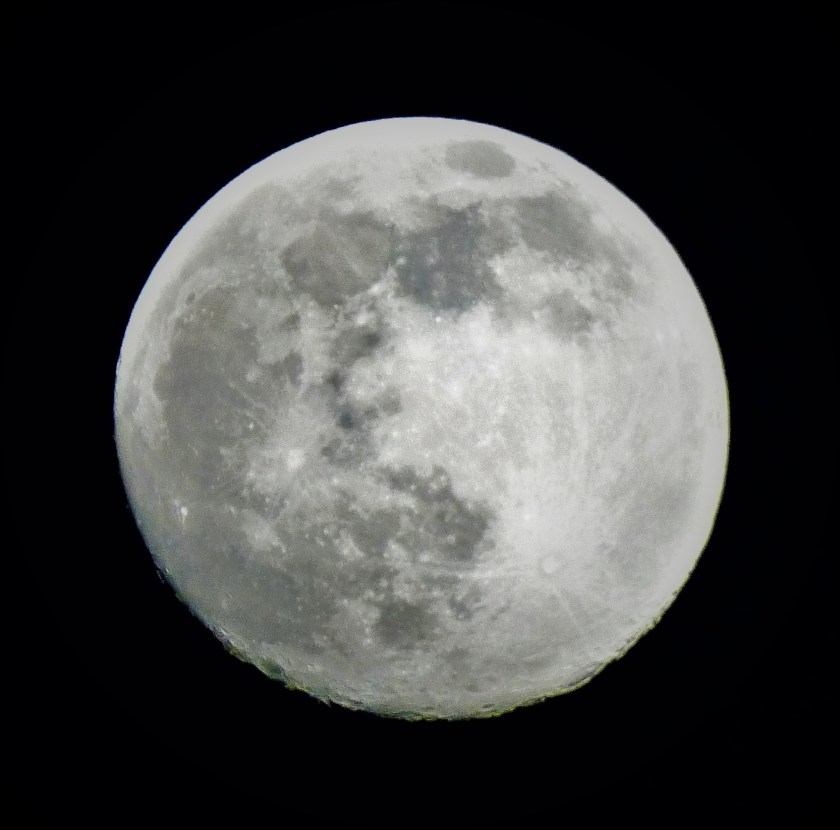
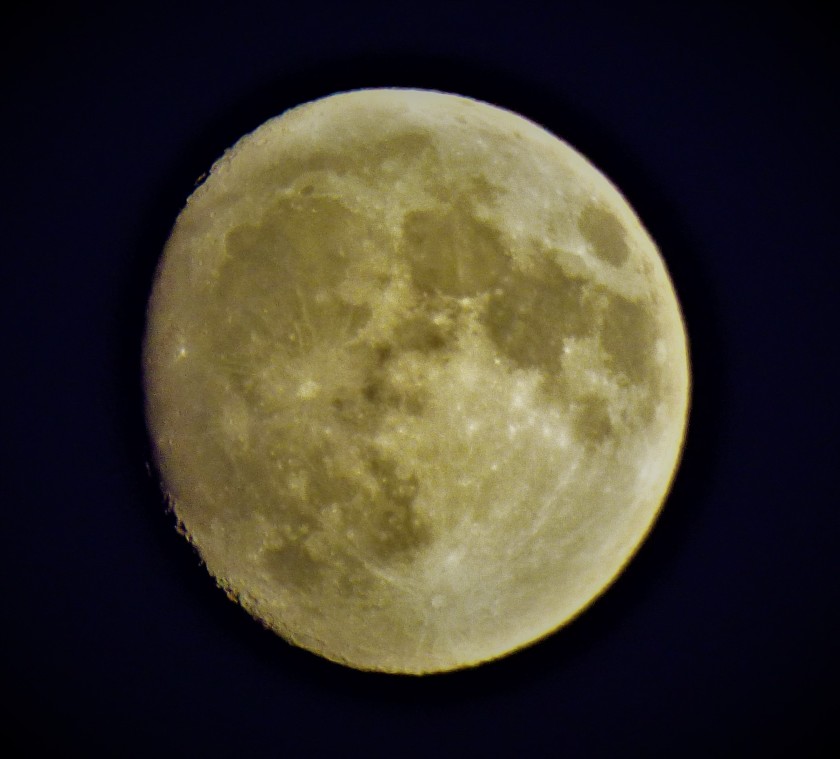
A full moon last night, and the sky was clear enough to see it. Trying to do the sight justice is a challenge, but I hope that some these pictures come close.

P1310608 (2)P1310608 (3)P1310609 (2)P1310610 (2)P1310611 (2)P1310611 (3)P1310611 (4)

P1310612 (2)
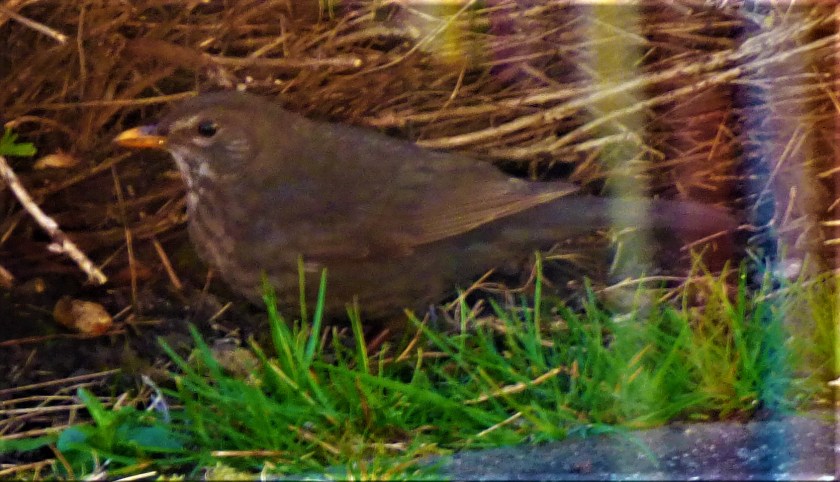
An unobtrusive little bird that I spotted early this morning.

P1310614 (2)


Post Election Thoughts (And Other Stuff)

Some thoughts on GE2019, cricket, an autism related twitter thread and of course a few photographs.

INTRODUCTION

I am not going to relive Thursday night and Friday morning here. I am going to look to the future.

LOOKING AHEAD

After the carnage of the 2019 General Election Johnson has emerged with a substantial majority, Northern Ireland has a majority of non-unionist MPs for the first time ever and Scotland saw the expected SNP tsunami. Labour has fewer MPs than at any time since 1935 – 203 – but also more female MPs than any party has ever had (see here), the Liberal Democrats had a disaster relieved only by Sarah Jane Olney winning Richmond Park from Zac Goldsmith, and the Greens failed to increase their MP count, but did get 850,000 votes in total, in yet another election that showed FPTP in a terrible light. Those MPs who switched parties and were standing for a new party for the first time all lost, though the vile Tory masquerading as Lib Dem Sam Gyimah (aided by a mendacious article in the Observer on the Sunday before the election) did enough to cost Emma Dent Coad Kensington and Chelsea.

The Liberal Democrats and Labour are both looking for new leaders. The likely pick for the LDs is Layla Moran. Labour need to work hard to regain trust in the North, and for that reason I think they need to select a leader who is not London based. For me (although this is not a prediction) the obvious choice, given that Laura Pidcock was among the election casualties, is Angela Rayner, with another northerner as deputy (possibly Chi Onwurah, the first MP to be officially confirmed as such at this election, and a north-easterner to go with north-westerner Rayner). Among Labour’s few bright spots was the election of 23 year old Nadia Whittome in Nottingham – and she has immediately announced that she will be taking only £35,000 of her £79,000 salary, the rest going to local charities. As this piece in The Mirror makes clear she is doing this not to say that MPs are overpaid but to say that nurses, teachers and the like are underpaid.

Labour, LDs and Greens are going to have to get better at working together to do anything in the ‘lesser Britain’ comprising England and Wales that we are likely to see in the not distant future (Scotland will go independent one way or another, and a united Ireland is firmly on the cards – note that the DUP’s Westminster leader Nigel Dodds lost his seat to John Finucane (son of murdered lawyer Pat Finucane).

CRICKET

England Women have been playing Pakistan Women in Kuala Lumpur. In the two ODIs that had enough play for a definite result England won comfortably both times. In the first openers Dani Wyatt (promoted, as following the retirement of Sarah Taylor, Amy Jones is now first choice keeper and has dropped to no 5 in the order) and Tammy Beaumont both racked up centuries, Kate Cross took four wickets and debutant spinner Sarah Glenn took 2-38. In the second match Natalie Sciver scored 100 not out, Heather Knight 86 and Fran Wilson a blistering 85 not out off 49 balls in a total of 327-4 and Pakistan were all out for exactly 200 in 44.5 overs. Anya Shrubsole, Sophie Ecclestone, Knight, and once again Glenn (2-37 this time) each took two wickets.

Meanwhile, although it has been spoiled by rain, test cricket has returned to Pakistan itself for the first time in a decade, with Sri Lanka (it was an attack on their team bus in Lahore that led to the removal of test matches from that country) the visitors.

In blazing Perth New Zealand have become the latest visitors to discover that Australia is a tough place to go – the home side began by racking up 416, with Marnus Labuschagne racking up his third successive test century, and then dismissed the Kiwis for 166, and declining to enforce the follow-on had reached 167-6, a lead of 417 by the close. Labuschagne managed a beggarly 50 this time round, with Joe Burns making 53. Assuming that Australia do not declare overnight Messrs Wade and Cummins are in occupation.

AN AUTISM RELATED THREAD

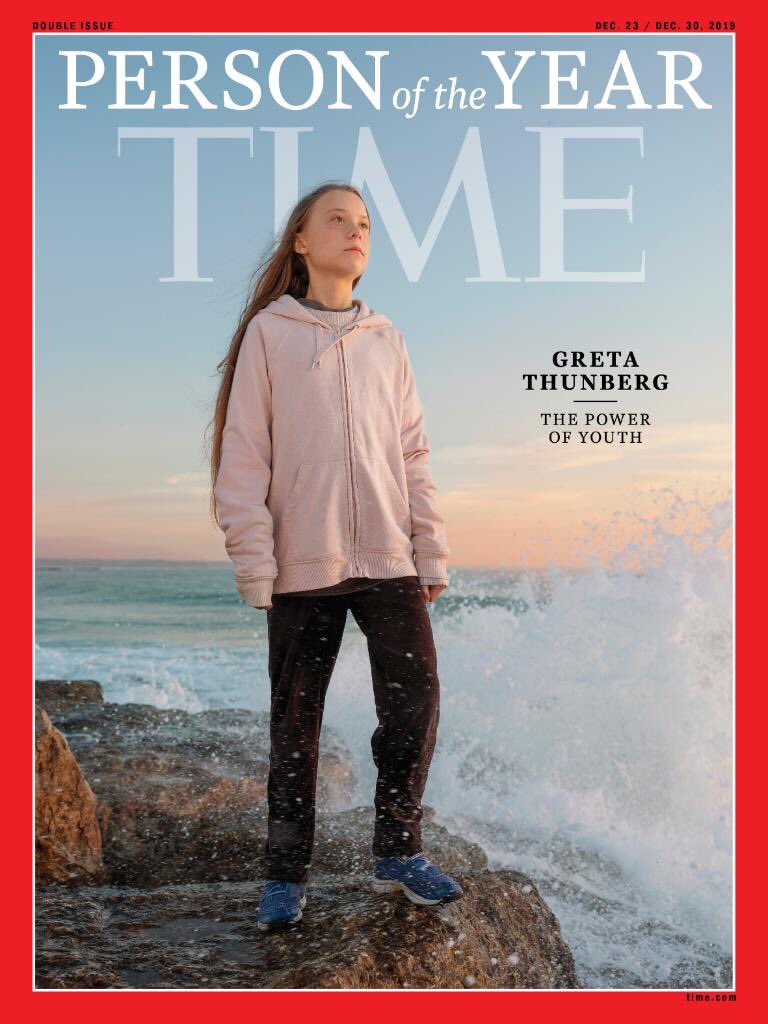
Steve Silberman, author of THE definitive history of Autism, Neurotribes, has produced this twitter thread about Greta Thunberg, Time “Person of the Year” for 2019:

A thread on the historical significance of @GretaThunberg being chosen as the first proudly autistic @Time Person of the Year. The fact that autistic folks often speak the truth bluntly, even rudely at times, is often framed as a social deficit. [1/7]
In Greta’s case, her relentless reiteration of the facts of #climate change, and the importance of science, has made her a focus of incandescent hatred by the same pompous liars and paid-for buffoons who are selling the earth from under the feet of their own grandchildren. [2/7]
The “autistic” qualities of Greta’s war on the status quo – her visceral distrust of rationalizations and vacuous rhetoric – are precisely the qualities all humanity must emulate at a time when global political discourse is dominated by nonsense and gaslighting. [3/7]
As the author of a history of autism, I’ve said for years that gut-level loathing for unfairness and injustice could practically be added to the diagnostic criteria for autism. At this point in human history, when lies and denial of facts are dooming future generations… [4/7]
Greta’s monotropic insistence on “walking her talk,” and her impatience even for vacuous praise instead of meaningful action, are vivid demonstrations of the role neurodivergent people can play in the advancement of human civilization. In the case of #climatechange… [5/7]
the “social deficits” are all on the neurotypical side, on Greta’s opponents and critics, who use misogyny, ableism, and ageism against her. They lie for a living, deceiving millions of fellow neurotypicals in the process. [6/7]
The success of climate disinformation campaigns in sowing seeds of doubt about science is proof of a potentially fatal “truth dysfunction” in non-autistic people. Want to know the role of #neurodiversity in our collective future? We may not have one without it. Go, Greta! [7/7]

PHOTOGRAPHS

My usual sign off…

P1280871 (2)
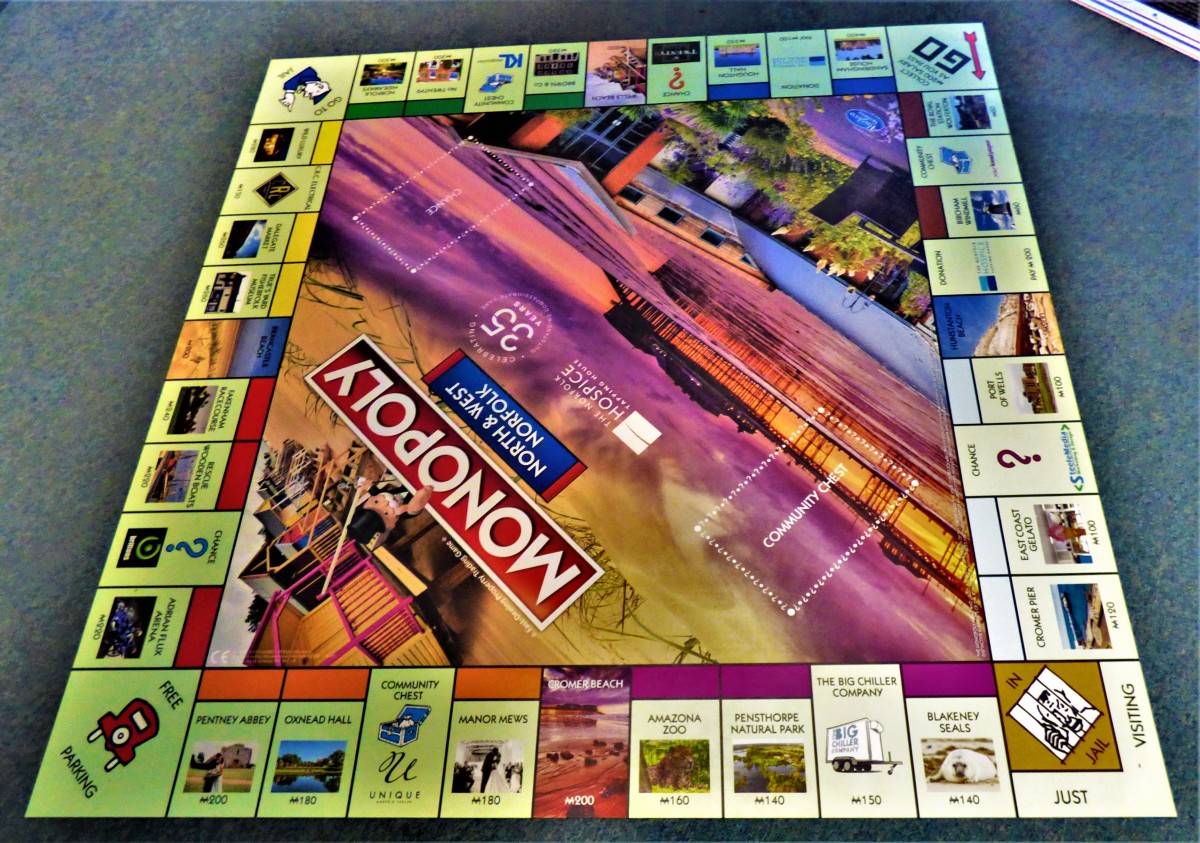
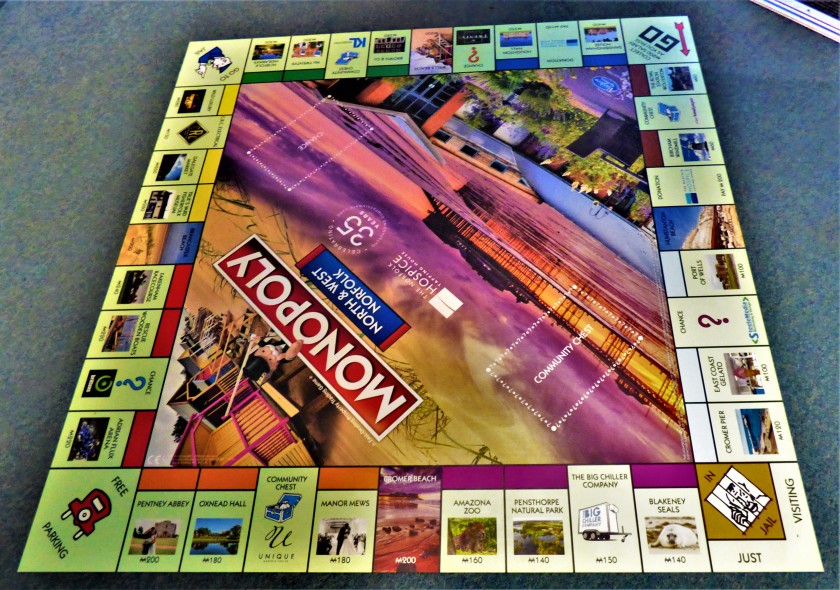
This giant monopoly board is in the foyer of the Norfolk Hospice, Tapping House (I went there on Monday to tell them my story for use in subsequent publicity materials).

P1280872 (2)P1280873 (2)P1280874 (2)P1280875 (2)P1280876 (2)P1280877 (2)P1280878 (2)P1280879 (2)

P1280880 (2)
My favourite set on this board – note the Pall Mall equivalent, the seals at Blakeney.
P1280881 (2)
About the only time you will see this in Norfolk!

P1280882 (2)P1280887 (2)P1280889 (2)P1280890 (2)P1280891 (2)P1280892 (2)P1280893 (2)P1280895 (2)P1280896 (2)P1280897 (2)P1280898 (2)P1280899 (2)P1280901 (2)P1280903 (2)P1280904 (2)P1280905 (2)P1280905 (3)P1280910 (2)P1280911 (2)P1280912 (2)P1280913 (2)P1280917 (2)P1280918 (2)


England In Control In 1st Test

Cricket, Politics, Public Transport and Photography, features two excellent videos.

INTRODUCTION

This post looks at the goings on in the first test in New Zealand and at the upcoming election. I also have plenty of photographs to share.

ENGLAND IN CONTROL

England had made a solid start on day 1, reaching 241-4. Burns while never really looking convincing managed to chisel out a half century, while Denly and Stokes also made runs. Day 2 started with a lot of the good work being undone, as Stokes and Pope each played loose strokes to surrender their wickets, and Curran and Archer fell cheaply. However, Jack Leach’s adhesiveness combined with Buttler’s strokeplay to save England’s blushes, and a final total of 353 looked respectable. Sibley on his test debut managed 22, and shared a half-century opening stand with Burns.

By the end of the day it was looking rather more than respectable as New Zealand were 127-4, with the prize wicket of Kane Williamson falling just before close when a delivery from Curran leapt at him and he could only fend it behind for a catch. The Williamson dismissal indicates a pitch that is just starting to misbehave, and the kiwis will have to bat last on it. I would reckon that even 250 in that fourth innings will be too many for the kiwis.

An end of day 2 scorecard can be viewed here, and thefulltoss blog’s take on these first two days can be read here.

GE2019 LATEST

First of all, a little local item:

Video featuring Labour candidate Jo Rust speaking to two first time voters:


A good lead in to detail on the Labour party Manifesto…

The Labour Party’s manifesto was launched yesterday, and it is excellent. Here are several links for you to follow:

  1. Your starting point – the page from which you can visit the entire manifesto and all related documents.
  2. The environmental policies, for which they have used the title “Green Industrial Revolution“.
  3. Working in two links at once, Brexit and Internationalism.

Please read it all for yourself (a PDF version is here), including the accompanying documents.

To end this section, another video, courtesy of GMB by way of The Skwawkbox hilariously showing Johnson trying to concoct a manifesto:

A MORNING JOURNEY

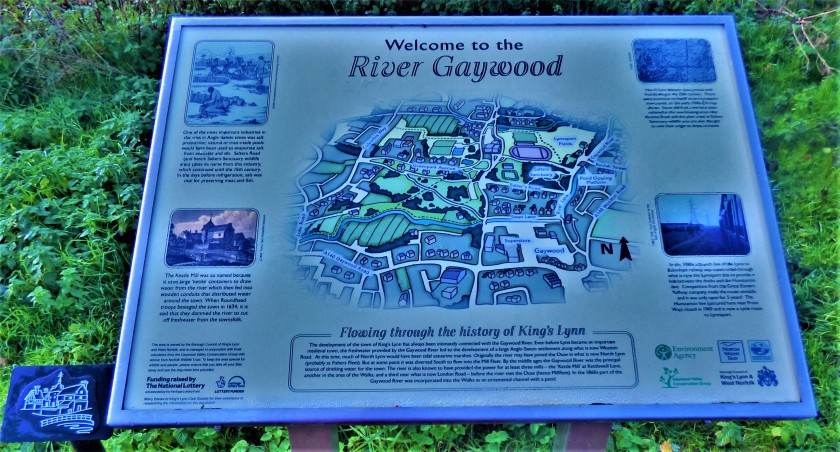
I was required to be at Queen Elizabeth Hospital’s Opthalmology reception by 8AM today. Making my usual allowances for things to go wrong I arrived there at 7:30AM. Just about an hour later it was time for the return journey, and I discovered that I had hit the start of a long gap between services heading into town. This strikes me as a something of a problem for a service catering among others to hospital patients, but I am fortunately in fairly good physical shape nowadays, and decided that rather than hang around waiting I would do some walking. Getting to the bus stop at which the routes from the Fairstead estate joined those from the hospital I checked the timetable, and seeing that I would not have much less long to wait even there, I kept walking, deciding that I would break for homeward journey by making a brief visit to Gaywood Library, after which I would leave the main road and head home by way of the Gaywood River path. I arrived back at just after 9:30AM having enjoyed the walk but conscious of the fact there would have been some who could not have avoided waiting for the bus, and conscious also of the crying need for the integrated public transport system outlined in yesterday’s manifesto. I have presented photos of the information boards along the Gaywood River path before, but deem them worth seeing again:

P1280669 (2)P1280670 (2)P1280671 (2)P1280672 (2)P1280674 (2)P1280673 (2)

PHOTOGRAPHS

Here are the rest of my photographs for this post…

P1280636 (2)

P1280640 (2)
Hunstanton Library, where I was on Wednesday morning.

P1280641 (2)P1280642 (2)P1280643 (2)P1280647 (2)

P1280648 (2)
Michael De Whalley’s leaflet (two images) – I understand that he is good local councillor, and I would be more than willing to vote for his party, but the only chance of non-Tory MP for my constituency is to vote Labour.

P1280649 (2)P1280651 (2)P1280652 (2)P1280653 (2)P1280654 (2)P1280656 (2)P1280657 (2)P1280658 (2)P1280659 (2)P1280660 (2)P1280661 (2)P1280662 (2)P1280663 (2)

P1280666 (2)
Taken on the walk back from QEH this morning.

P1280667 (2)P1280668 (2)


The Northwest Norfolk Hustings

An account of last night’s Northwest Norfolk hustings meeting which I was bale to follow courtesy of the Lynn News live blog (to which I have linked in this piece), and my usual sign off.

INTRODUCTION

This event took place last night at the Methodist Chapel on London Road, King’s Lynn. I found out about it too late to attend the venue in person, but through the good offices of The Lynn News, who organized the event, I was able to follow it via a live blog, with extra detail from the twitter feed of Northwest Norfolk Labour’s Jordan Stokes. This post looks back at the event before and at what it means for this seat.

THE DRAMATIS PERSONAE

There were five people on the platform: Rob Colwell (Liberal Democrat), Michael De Whalley (Green), Jo Rust (Labour), James Wild (Conservative) and Allister Webb (The Lynn News, moderator but not contributor – BBC panel shows/ interviews please take note of the but in bold).

INTRODUCTIONS

Each candidate had two minutes to introduce themselves, and three of the four managed this feat without any missteps. The exception was James ‘parachute candidate’ Wild whose hamfisted effort suggested that he had learned all the wrong things in his time as advisor to Mr Johnson.

THE REST OF THE EVENING

The main event was divided into sections in which various issues were raised, with questions coming from members of the audience. Rob Colwell and Michael De Whalley both gave good honest answers throughout, with Michael demonstrating why he is a well respected local Councillor. However, at every point they were equalled or bettered by Jo Rust, who made some outstanding contributions. James Wild did little to help himself during the course of the evening. Near the end he was asked if he planned to move to the area, and at least managed to get that one right, when he said “yes, if I am elected”. Any other answer would have increased the damage he had sustained on the evening – a straight yes without amplification would have sounded arrogant, as though he believed that it was already in the bag, while a a ‘no’, no matter what it was accompanied by, would have holed his campaign below the waterline.

LOOKING AHEAD TO DEC 12TH

The only chance of getting a non-Tory MP in this constituency is to vote for Jo Rust, and my reckoning is that she gave her chances a big boost last night. Mr Wild had a poor time, and that should also work in Jo’s favour. I respect Michael De Whalley, and but for the continuing use of the outmoded FPTP system I would be voting for his party, and he was undoubtedly impressive last night. Rob Colwell said a lot of the right things last night but his party stand no chance in this constituency and have not been distinguishing themselves of late. Had Sir Henry been standing for re-election it would have been a seismic shock for this seat to go to Jo Rust, but, especially after last night, I reckon she has a genuine chance of beating James Wild. An account of last night can be seen here, and you can relive (to an extent) the live blog experience here.

PHOTOGRAPHS

P1280578 (2)P1280579 (2)P1280581 (2)P1280583 (2)P1280584 (2)P1280587 (2)P1280588 (2)P1280589 (2)P1280590 (2)P1280591 (2)P1280592 (2)P1280593 (2)P1280594 (2)P1280595 (2)P1280604 (2)P1280605 (2)P1280606 (2)P1280607 (2)P1280608 (2)P1280609 (2)P1280610 (2)P1280611 (2)P1280612 (2)P1280613 (2)P1280614 (2)P1280616 (2)P1280618 (2)P1280623 (2)P1280624 (2)P1280626 (2)P1280627 (2)P1280629 (2)P1280635 (2)

More Election Thoughts and England in NZ

A look at developments in GE2019, England’s warm=up for the test series in New Zealand and plenty of photographs.

INTRODUCTION

This post features GE2019 once again, with thoughts on both the local and national picture. I also mention England’s preparation for the test match series in New Zealand, and of course I have plenty of photographs.

GE2019: THE PICTURE LOCALLY AND NATIONALLY

Nationally the importance of getting the Tories out has been further emphasized by a number of developments, including another major fire caused by the use of flammable cladding (that the cladding used on the student hall in Bolton is not the same as that used on Grenfell is a pathetic red herring). The Liberal Democrats are doing shockingly, with Swinson’s delusions, Ed Davey’s plan to keep government spending in surplus (for an explanation of exactly what this policy means and why it is so despicable check out this post from Richard Murphy of Tax Research UK) and Sam Gyimah’s vile campaign in Kensington & Chelsea (which has placed Emma Dent Coad in personal danger) all working against them.

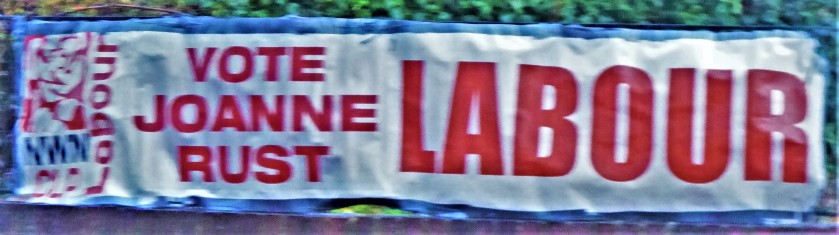
Locally the picture looks brighter for Jo Rust than it did when this election was called. In place of Sir Henry Bellingham who declined to stand for re-election the Tory candidate is someone who a) was parachuted in and b)has no recommendation for the post beyond having been an advisor to Mr Johnson (i.e no recommendation for the post). Parachute candidates do not have a good history in this constituency – Manish Sood for Labour garnered only just over 6,000 votes in 2010 (as compared to 15,000 for Jo in 2017). Henry Bellingham standing down reduced the climb for Jo from Himalayan to Alpine proportions, and the selection of this candidate has further reduced it from Alpine to Scottish Munro. Just to the south Liz Truss is being challenged by another excellent local candidate, radio presenter Emily Blake. .

A few related links….

First, courtesy of The Skwawbox who presented it in this post, a video that will be the best 108 seconds of viewing you get today:

Next, a video from Northwest Norfolk Labour candidate Jo Rust:

Finally, a video from Michaela about voting (courtesy of Hope not Hate):

Remember, use your right to vote, and please vote against Tories (if you are unfortunate enough to be in one of the handful of seats that is genuinely a Tory/ Lib Dem marginal, then in that circumstance a vote for the Lib Dems is probably the least of evils) wherever you are.

ENGLAND IN NEW ZEALAND

England’s final warm-up match before the test series in New Zealand finished in a draw, but with several pluses for England: runs for the restored Pope, tidy bowling from Jack Leach, wickets in both innings for Jofra Archer and in the second for Sam Curran, and an overall very dominant performance – New Zealand were 66 ahead with two second innings wickets standing when time ran out. It actually looks like England have a sensible red ball combo.

PHOTOGRAPHS

P1280508 (2)P1280509 (2)P1280510 (2)P1280511 (2)P1280513 (2)P1280514 (2)P1280515 (2)P1280516 (2)P1280519 (2)P1280520 (2)P1280521 (2)P1280523 (2)P1280524 (2)P1280526 (2)P1280527 (2)P1280528 (2)P1280529 (2)P1280530 (2)P1280531 (2)P1280532 (2)P1280533 (2)P1280534 (2)P1280535 (2)P1280536 (2)P1280537 (2)P1280538 (2)P1280539 (2)P1280540 (2)P1280541 (2)P1280542 (2)P1280543 (2)P1280544 (2)P1280545 (2)P1280546 (2)P1280547 (2)P1280548 (2)P1280549 (2)P1280551 (2)P1280551 (3)P1280552 (2)P1280554 (2)P1280555 (2)P1280557 (2)P1280558 (2)P1280559 (2)P1280561 (2)P1280563 (2)P1280565 (2)P1280566 (2)P1280567 (2)P1280573 (2)P1280575 (2)P1280576 (2)

Election News

Thoughts on two important election developments and England’s T20 series victory. Also plenty of photographs.

INTRODUCTION

The main body of this post is inspired by two developments that have occurred today. There is also some other stuff later.

TWO MAJOR ELECTION DEVELOPMENTS

It has been announced today that the Brexit Party will not be standing in any Tory held seats, a development that leads to me to suspect that if the election goes as planned for Johnson and cronies there will soon be a Lord Farage of Dot-on-the-Map (he does not plan to stand as a candidate for his party, being 0 for 7 in that area, and he does nothing without having his price).

The other big development is that The Greens have stood aside in Chingford & Wood Green to give Faiza Shaheen a clear run at Iain Duncan Smith. I am firmly of the opinion that a degree of reciprocation is called for. My immediate suggestions in that regard are:

1)Stand aside in Brighton Pavilion so that Caroline Lucas has a clearer run at retaining her seat.

2)Stand aside on the Isle of Wight, so that Vix Lowthion is in a straight fight with the Tories there.

Also, the grubby Farage/ Johnson stitch up really does make this The Rest vs The Hard Right, so everyone who does not want Johnson running riot in the commons backed by Farage in the Lords must be prepared to vote for whoever can give them a non-Tory. In my own constituency I have a very obvious and appealing choice – Jo Rust and Labour. Elsewhere in the mainland I would vote Labour, Green, SNP, Plaid Cymru or Liberal Democrat according who could defeat the Tories in that area. In NI things are different, but there is even one seat there where my vote might be dictated by necessity – unappealing as voting for Unionist of any stamp would be to me I would were I in her constituency vote for Lady Hermon to reduce the chances of those Tory stooges the DUP taking it.

Following on from that last paragraph, this necessity of tailoring one’s vote to fit the circumstances in one’s area is why I devoutly hope that GE2019 will be the last to be held using the outmoded FPTP method. Proponents of this thoroughly discredited method for running elections say that it delivers stable majority governments. Well, in appropriate language for the season: Oh No It Doesn’t – since Labour’s last majority in 2005 only Cameron in 2015 has had an outright majority, and that was very slender – and if GE2019 produces an outright majority for anyone I will be very surprised. Also, after the five years of the coalition we are now looking at a third GE in less than five years – some stability! For another interesting take on this election visit Miles King’s latest post on A New Nature Blog by clicking here.

Finally, before moving on to other matters, it will surprise no one to read that I consider a head to head debate between Johnson and Corbyn unrepresentative of the current state of British politics – I would also include the Lib Dems (presumably Swinson), Plaid, SNP (Sturgeon or if it must a Westminster figure either Joanna Cherry or Mhairi Black), The Greens (I would reckon that Sian Berry would be their best spokesperson) and possibly even representatives from Northern Ireland.

ENGLAND WIN T20 LEG OF NZ TOUR

For the second time this year England and New Zealand could only be split by a Super Over, and for the second time this year England emerged with the spoils, although this time they won the Super Over outright, rather than further tie-splitting being needed. Rain delayed the start of the fifth and final match of the T20 series, and reduced to an 11 overs per side contest. With three balls left England needing 147 to win had 134 and it looked like New Zealand were snatching it at the death, but Chris Jordan, who has had a fine series, hit those last three balls for 12 to level the match and bring about the Super Over. England batted first in the Super Over and Bairstow and Morgan combined to rack up 17 of Trent Boult’s over. Jordan, who would have been England’s third batter had they lost a wicket (one is allowed to lose one wicket, but two ends one’s batting effort) then prepared to bowl the deciding over, while New Zealand sent Guptill and Seifert in to bat (De Grandhomme waiting in the wings). Jordan’s second delivery was called wide, somewhat harshly, but thereafter a combination of good bowling from him and a little too much cleverness on the part of Seifert worked in England’s favour. Seifert’s dismissal left 10 needed off two balls, with Guptill on strike (the batters having crossed before the catch to dismiss Seifert was taken). Guptill was held to a single, and Jordan just had to bowl a legal delivery to win it for England. He did so, and De Grandhomme was unable to score off it, meaning that England had won the Super Over by a comparatively enormous margin of nine runs. The red ball stuff starts tonight GB time with day 1 of a two day practice match, and then there is one proper first class match before the two test matches end the tour.

PHOTOGRAPHS

My usual sign off…

P1280455 (2)P1280456 (2)P1280457 (2)P1280458 (2)P1280459 (2)P1280460 (2)P1280461 (2)P1280462 (2)P1280463 (2)P1280464 (2)P1280465 (2)P1280466 (2)P1280467 (2)P1280468 (2)P1280470 (2)P1280471 (2)P1280472 (2)P1280474 (2)P1280475 (2)P1280476 (2)P1280477 (2)P1280478 (2)P1280479 (2)P1280480 (2)P1280481 (2)P1280482 (2)P1280483 (2)P1280484 (2)P1280488 (2)P1280492 (2)

P1280493 (2)
A large gathering of….
P1280493 (3)
…lapwings

P1280495 (2)

P1280496 (2)
Two flying cormorants
P1280497 (2)
And completing the set of cormorant pics this one is swimming.

P1280498 (2)P1280502 (2)

NZ v England T20 Series Goes To Decider

An account of England’s victory over New Zealand in the 4th T20I, some thoughts about General Election 2019 and lots of photographs.

INTRODUCTION

As well as some thoughts on the T20 series in New Zealand I am going to mention the General Election, and my constituency in particular. As usual I have plenty of photographs to share.

ENGLAND ROAR BACK INTO T20 SERIES

In the third match of this five match series England had seemingly been cruising to victory before a collapse in which they lost five wickets for just 10 runs handed the game and with it a 2-1 series lead to New Zealand. Thus in game four in Napier England needed a win to keep the series alive.

England batted first and made a slow start, with only 18 coming from the first four overs. Even when Eoin Morgan joined Dawid Malan in the eighth over the score was not looking that impressive. However Malan and Morgan shared a vicious partnership, Malan reaching a 48 ball century will Morgan outdid him for run rate by monstering 91 off just 40 balls. In among the carnage Ish Sodhi got slapped for 28 in the 17th over of the innings (and was lucky it was not even worse – 26 had come off the first five balls. England finished with their highest ever T20I score of 241-3. New Zealand got away to a flying start in response and were briefly threatening to chase down this imposing total, but Matt Parkinson showed New Zealand just what a real legspinner could do in the conditions. In spite of two chances not going to hand he bagged four wickets in the spell that consigned the Kiwis to defeat. England claimed the final wicket off the penultimate ball of the 17th over with the total at 165, giving them victory by a massive (in this format) 76 runs. I now make England favourites to win the decider – it will not be easy for NZ to recover from this blasting. I suspect that Yorkshire will not be seeing all that much of their new signing Dawid Malan next year as after this he has to be considered an essential part of England’s white ball plans. Parkinson, the young legspinner, has a huge future in (for my money) all formats, and although it would be hard on Leach to be dropped I would consider (especially if he takes more wickets in the final match of this series) picking him as first spinner for the test matches that conclude this tour, or maybe even, unlikely as a such a suggestion seems for a series in New Zealand, going with both specialist spinners. Full scorecard of the game here.

GENERAL ELECTION THOUGHTS

The Tories are lurching from one gaffe to another in this election campaign. Whether it is an empty chair subbing for James Cleverly (the chair certainly fared better than Mr Cleverly would have done), Johnson’s launch taking place in a near empty room or a succession of candidates standing down for various reasons they have been having a shocker. The long standing Tory MP for Northwest Norfolk, Sir Henry Bellingham, is one of those not standing for re-election. I think this is good news for Jo Rust, the Labour candidate, for two reasons. Firstly Sir Henry undoubtedly garnered some votes that were for him personally and not for his party as such. Secondly, and more important, the Brexit Party, who may well have stood aside for Sir Henry will now undoubtedly contest the seat, further cutting into the Tory vote. Overarching these two factors is that rather than being a seat with a Tory incumbent it is now a vacant seat. If you are in Northwest Norfolk and want a non-Tory MP voting for Jo Rust on December 12th is your chance, and it is a better one than in some considerable time. A couple of links to end this section, both from Tax Research UK:

  1. Confirmation that this is The Climate Election in the form of this piece titled “People want zero carbon by 2030. It’s what the Green New Deal requires.
  2. The Tax Research UK take on the succession of Tory Disasters.

PHOTOGRAPHS

My usual sign off…

P1280404 (2)P1280405 (2)P1280406 (2)P1280407 (2)P1280408 (2)P1280409 (2)P1280410 (2)P1280411 (2)P1280412 (2)P1280413 (2)P1280415 (2)P1280416 (2)P1280417 (2)P1280418 (2)P1280419 (2)P1280420 (2)

P1280421 (2)
Two adult swans escorting three rather large juveniles (the grey plumage confirms that they are still technically juveniles).

P1280422 (2)P1280423 (2)P1280424 (2)P1280425 (2)P1280426 (2)P1280427 (2)P1280428 (2)P1280429 (2)P1280430 (2)P1280431 (2)P1280432 (2)P1280433 (2)P1280434 (2)P1280435 (2)P1280436 (2)P1280437 (2)P1280438 (2)P1280439 (2)P1280440 (2)P1280441 (2)P1280442 (2)P1280443 (2)P1280444 (2)P1280445 (2)P1280446 (2)P1280447 (2)P1280448 (2)P1280449 (2)P1280450 (2)P1280451 (2)

P1280452 (2)
A spider web in a section of town wall.

P1280453 (2)

P1280454 (2)
This spider web, enhanced by the effect if rain, is in my back garden – the handle of the peg basket is in shot to give it scale,