This is the final post I shall be producing about my first visit to my parent’s new home in Cornwall. There will be photographs of all the publicity materials that I picked up while down there, captioned where appropriate with links to the posts that they relate to, except for one section where I am following the route of my journey to Penzance and flag that at the start of the entire section. Thus, this post will contain links to every other post I have produced about the visit.
THE PUBLICITY MATERIALS
We start with…
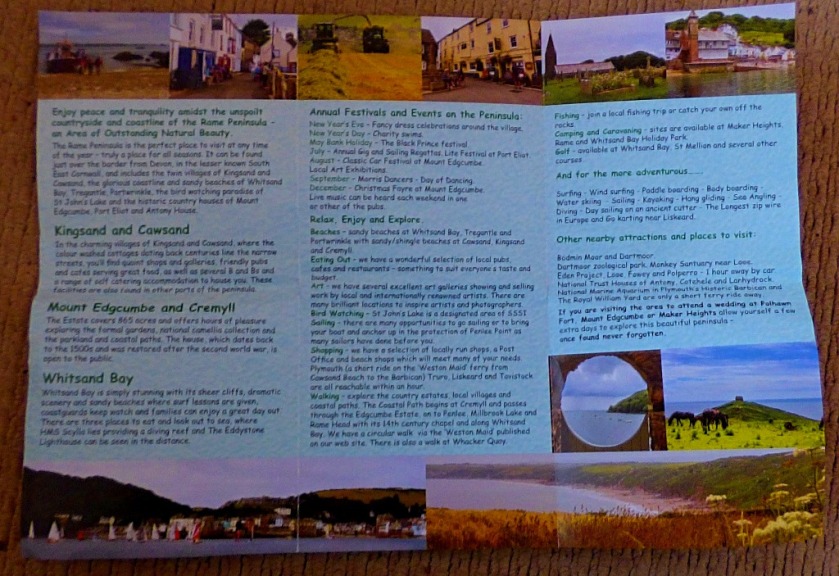
THE RAME PENINSULA OFFICIAL LEAFLET
This is the particular area in which my parents new home is located, so in one sense it relates to all of the previous posts in this series…
The posts that relate most closely to this are those relating to Thursday,Friday and Sunday.
Next we have…
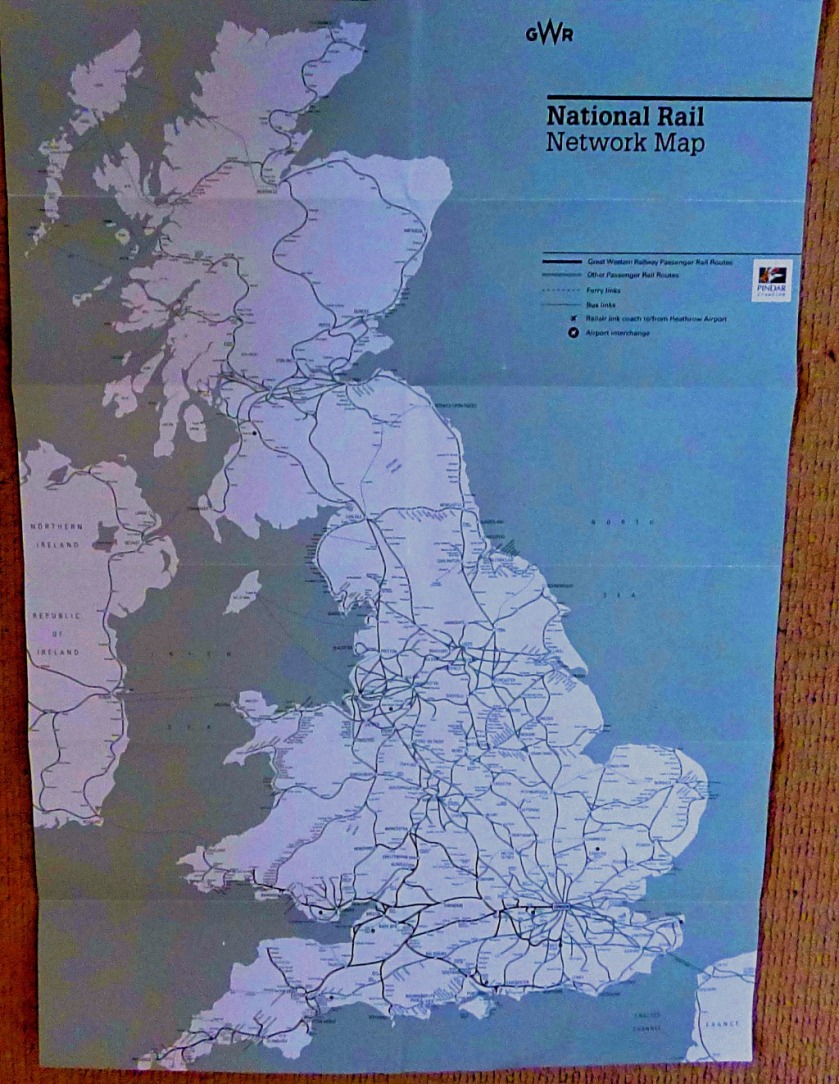
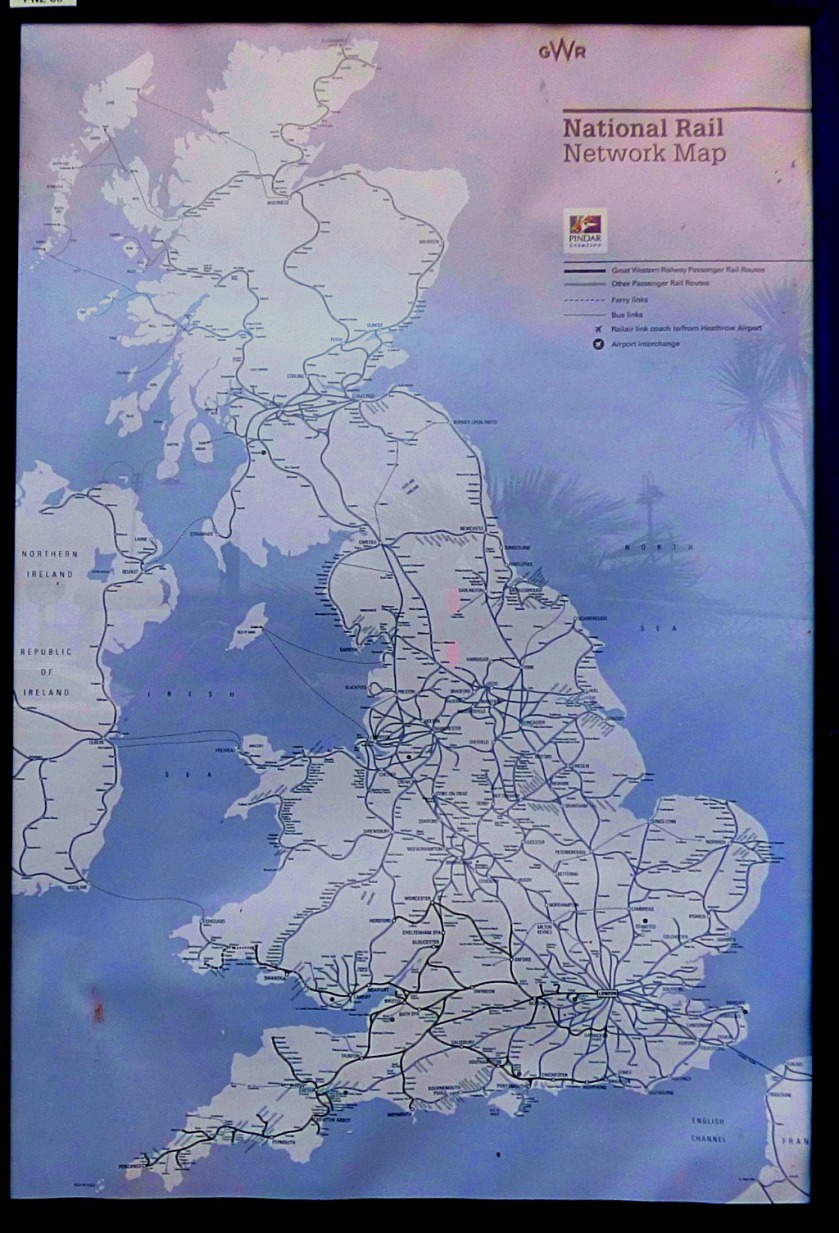
A DOUBLE SIDED RAILWAY MAP
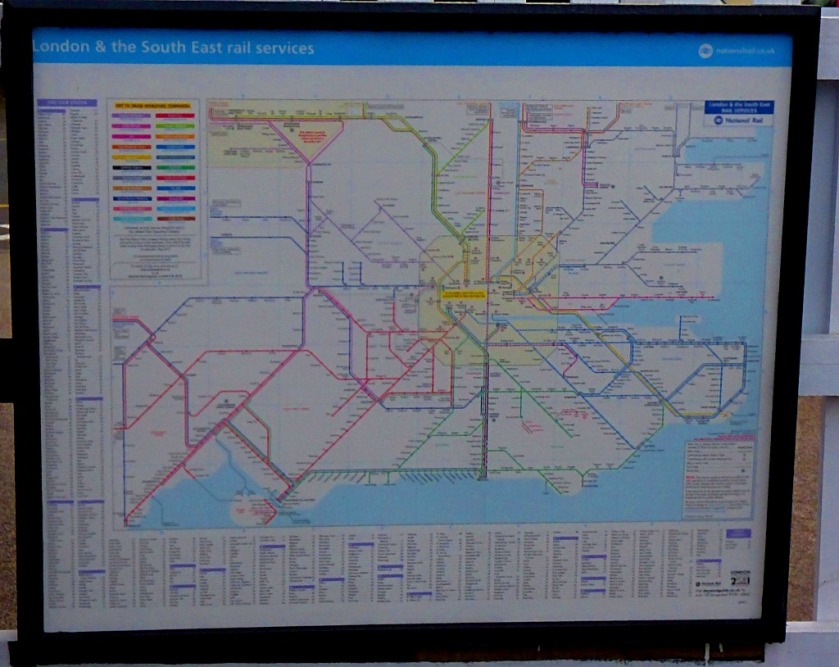
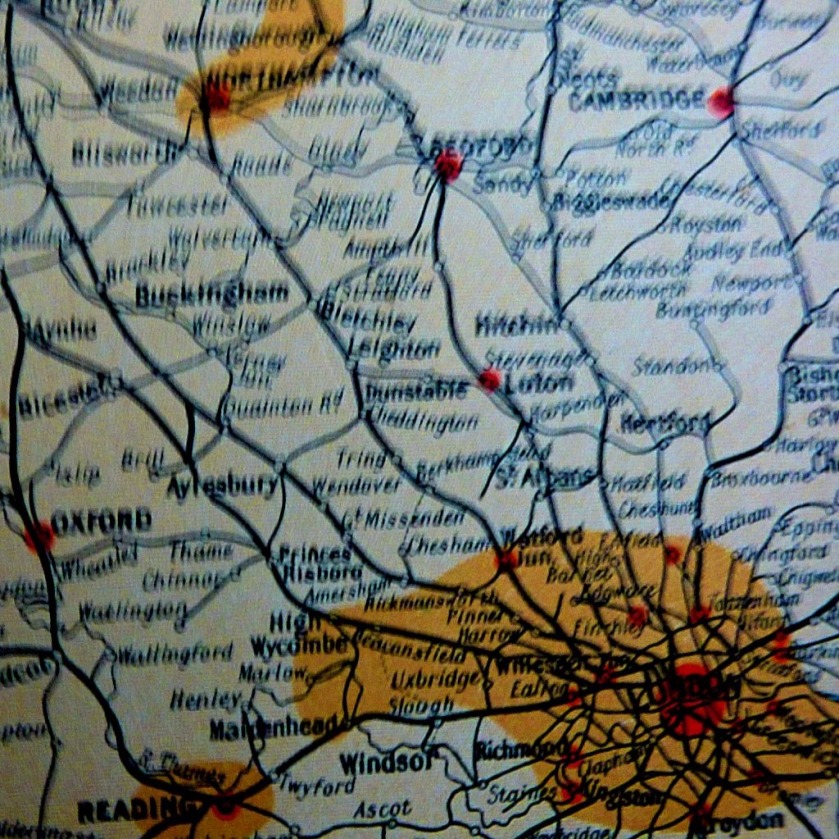
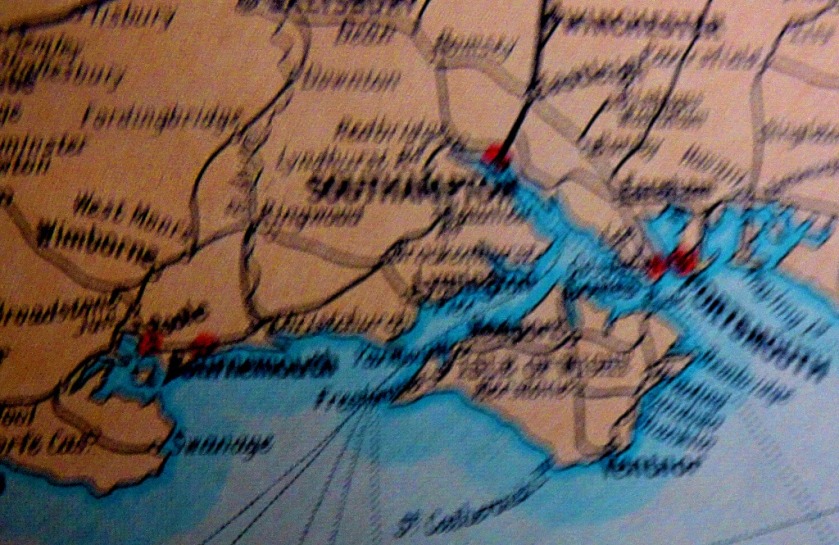
This features the Great Western Railway network map on one side and the whole national railway network on the other:
This map particularly relates to the posts for Wednesday, the first of the Saturdayposts and Monday.
Our next port of call is…
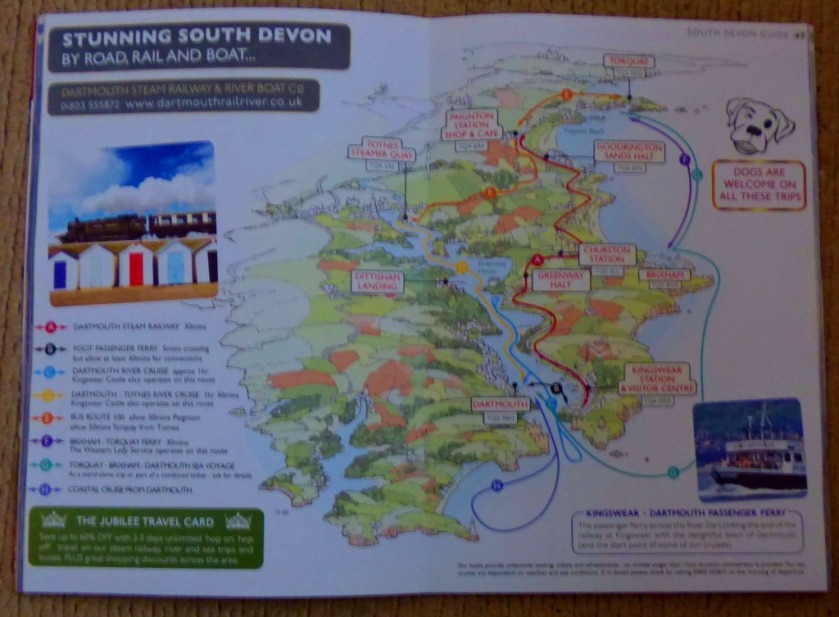
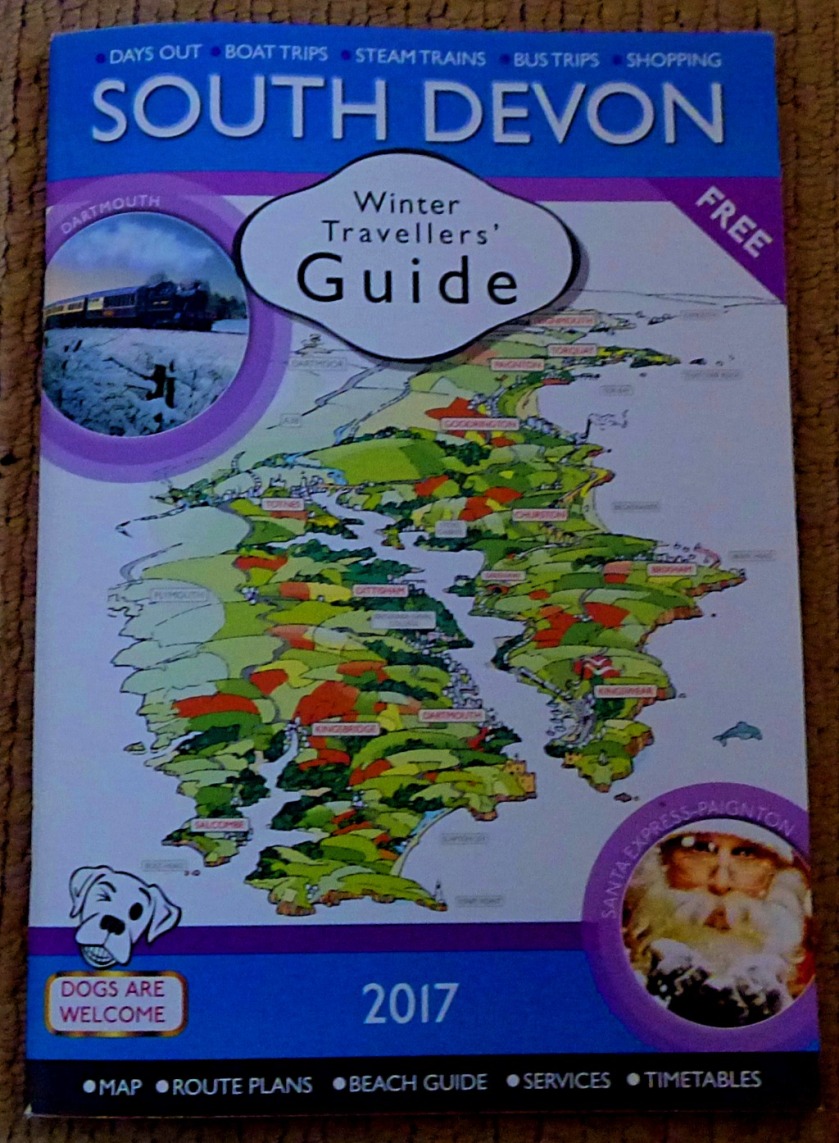
A SOUTH DEVON GUIDE
This is a stout little booklet, with a pictorial map as a centrepiece:
Next we come to…
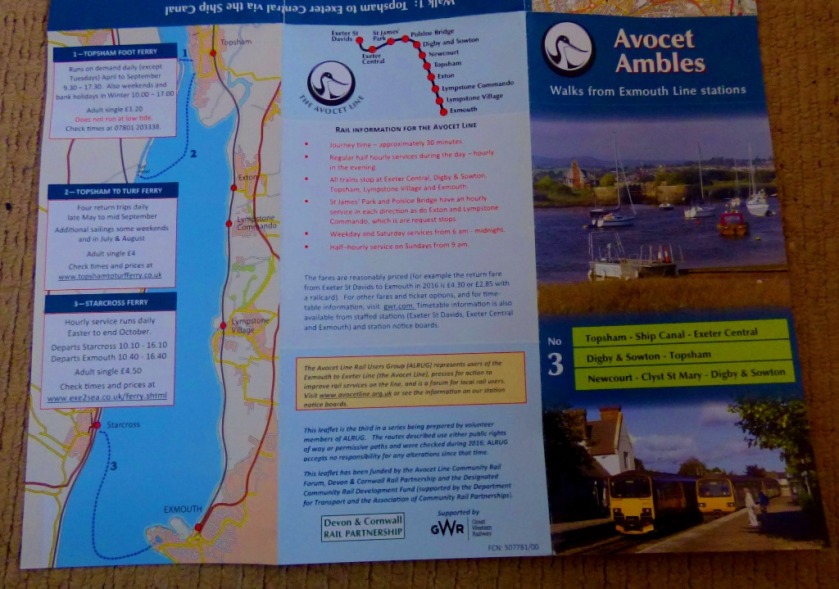
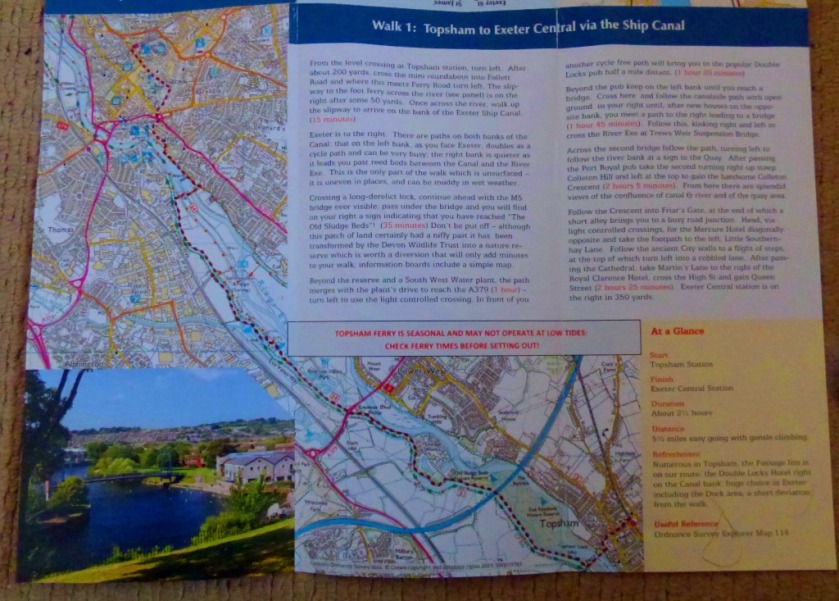
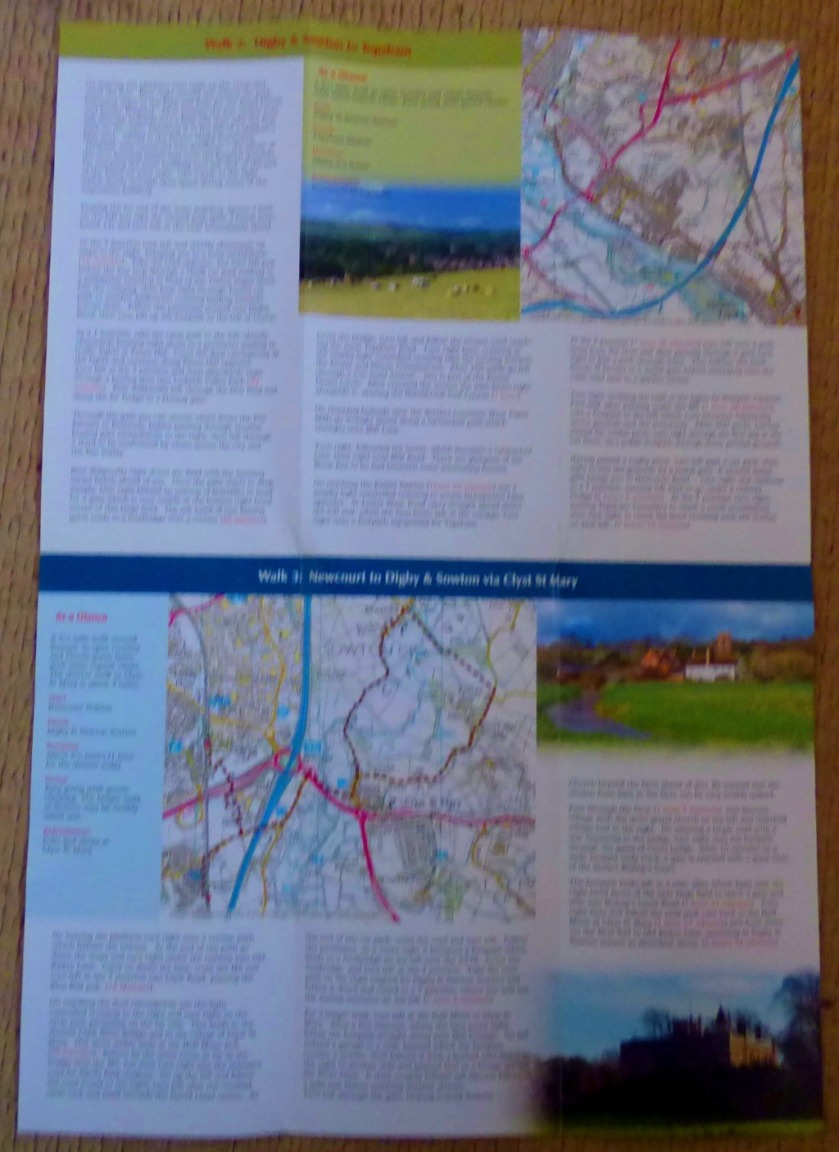
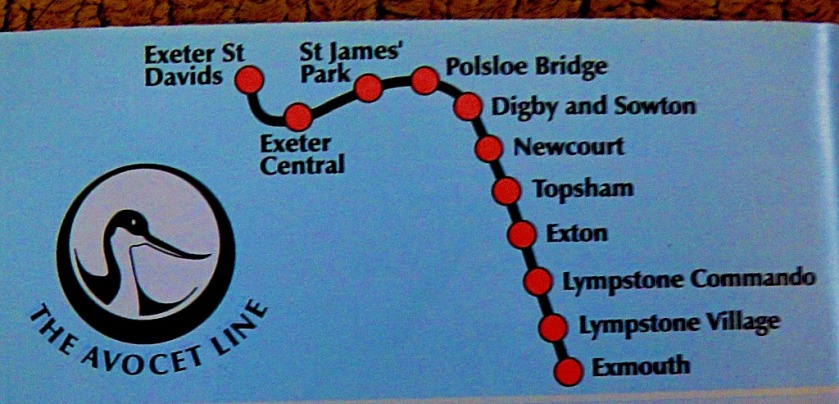
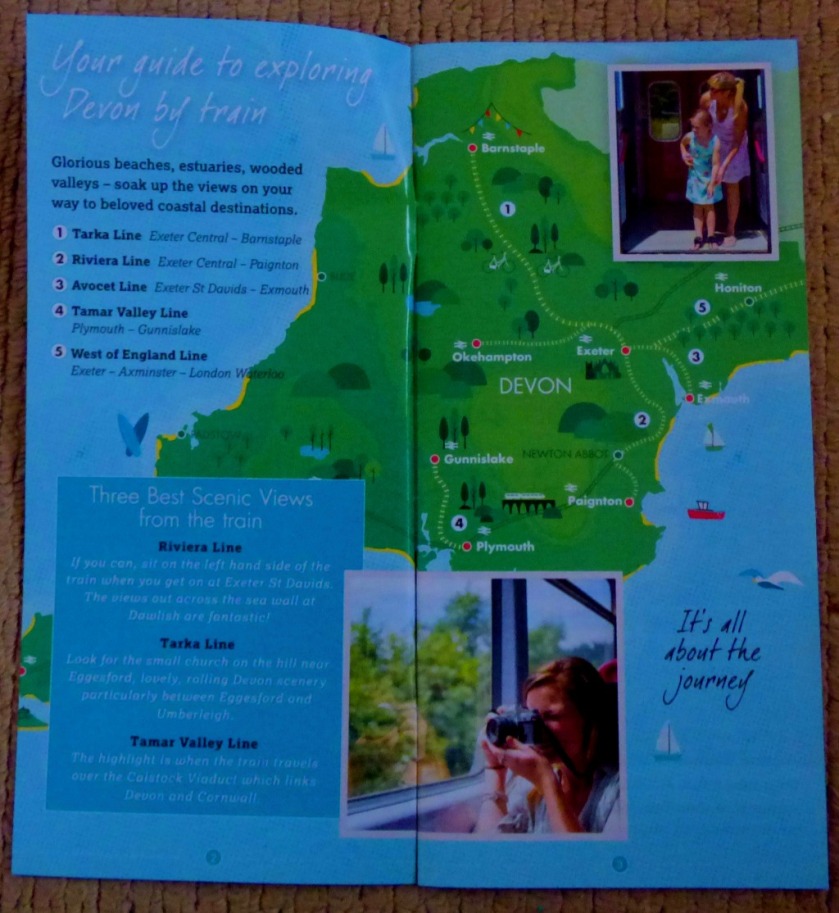
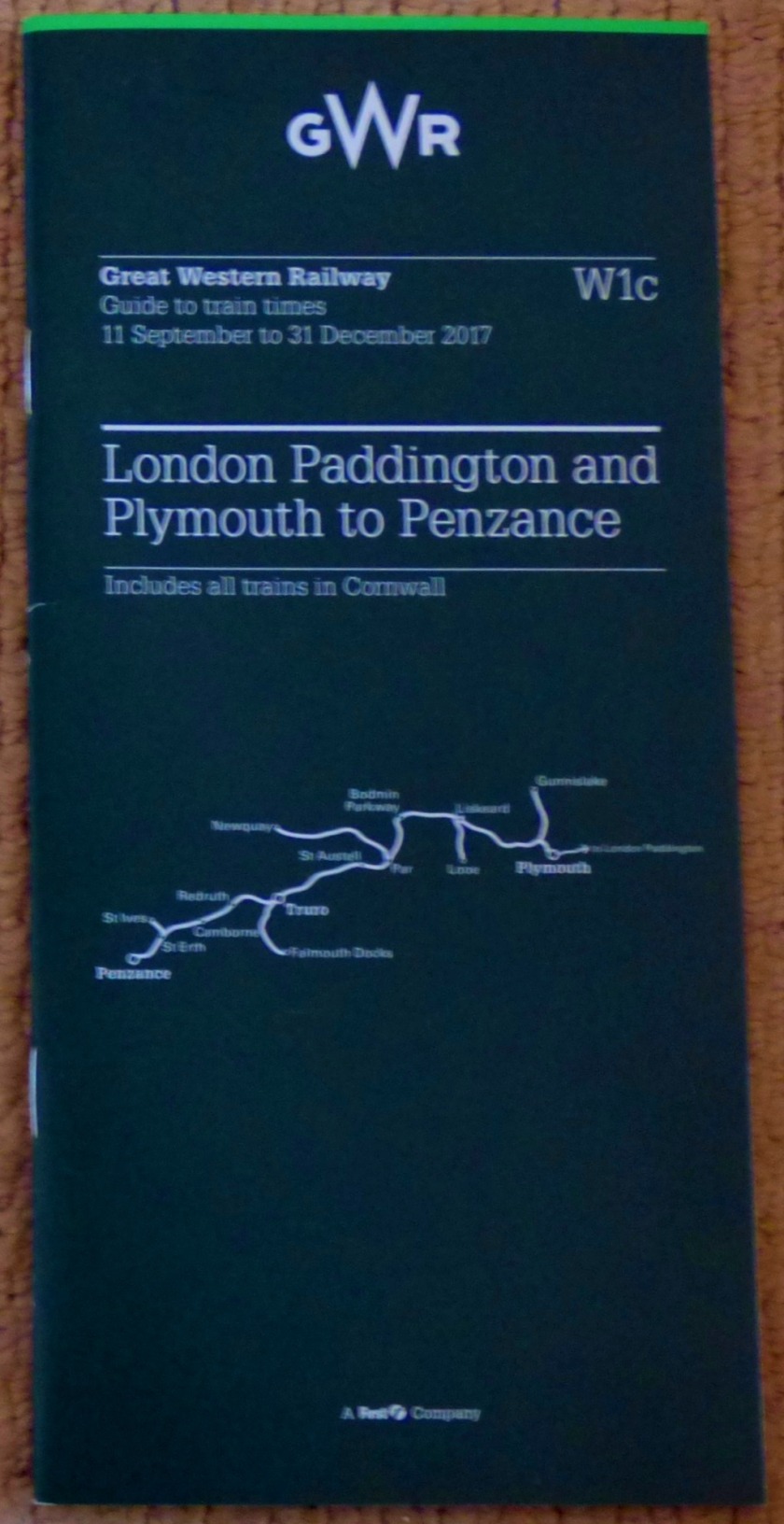
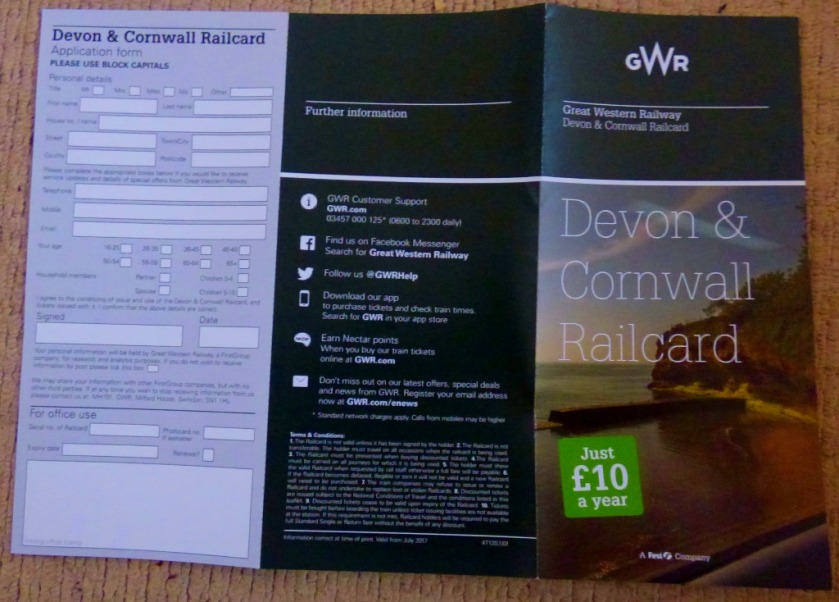
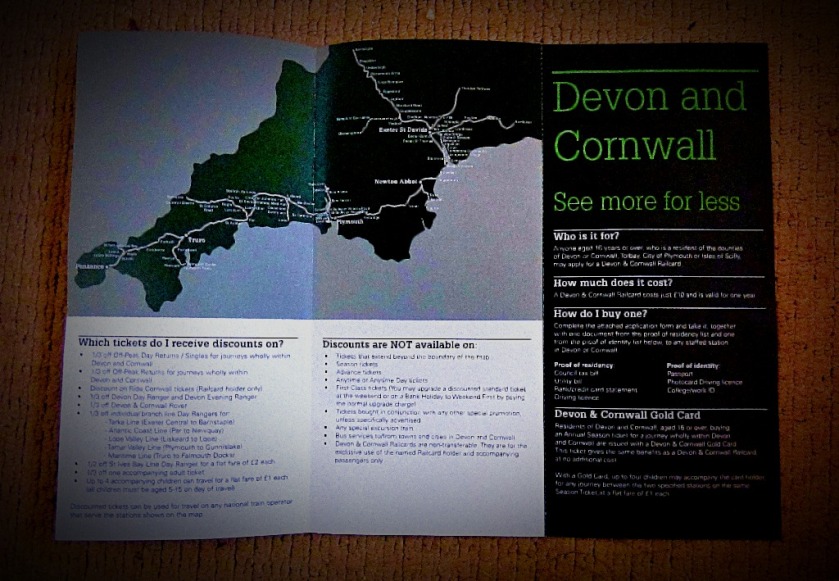
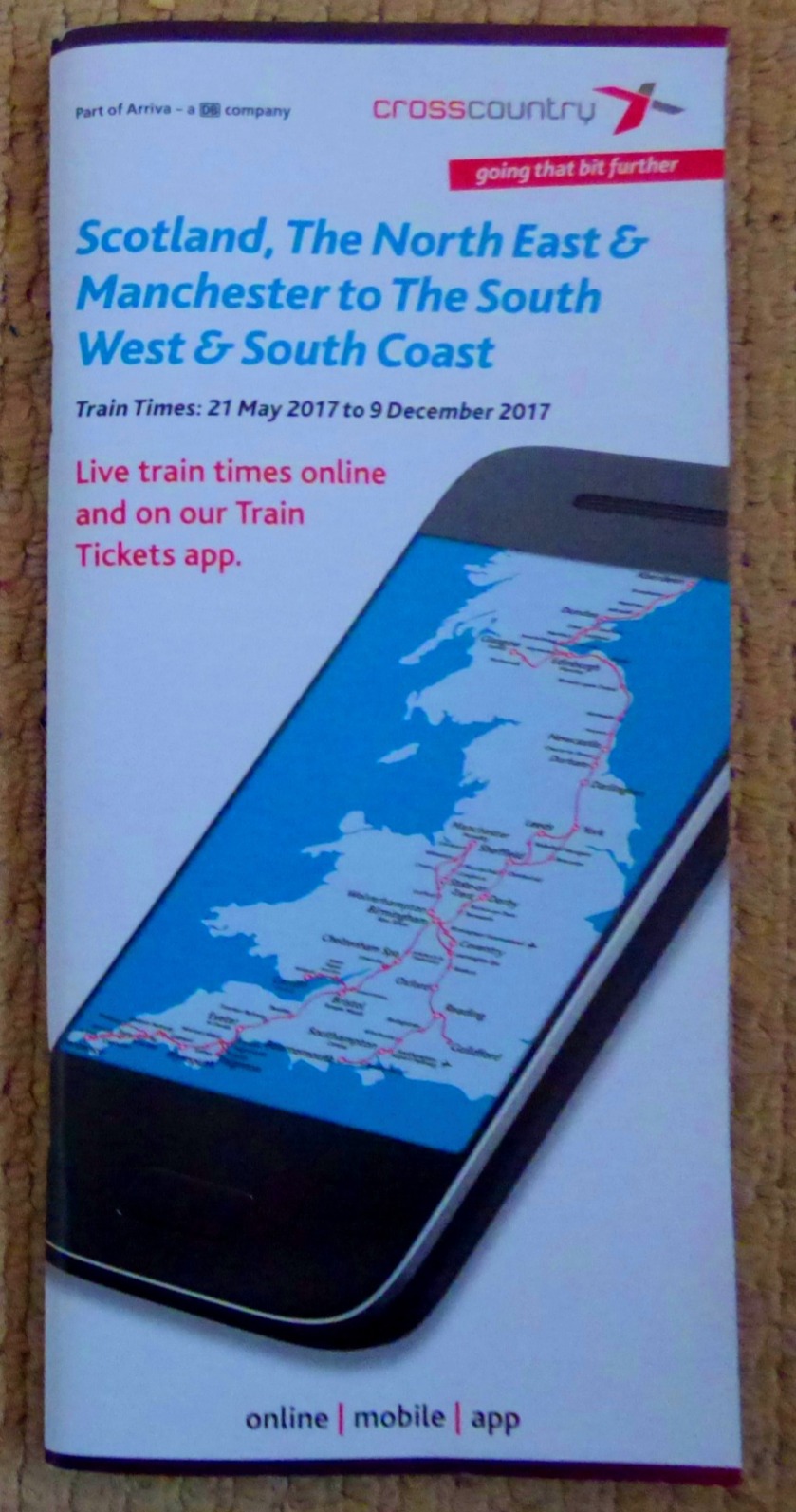
A SELECTION OF RAILWAYANA
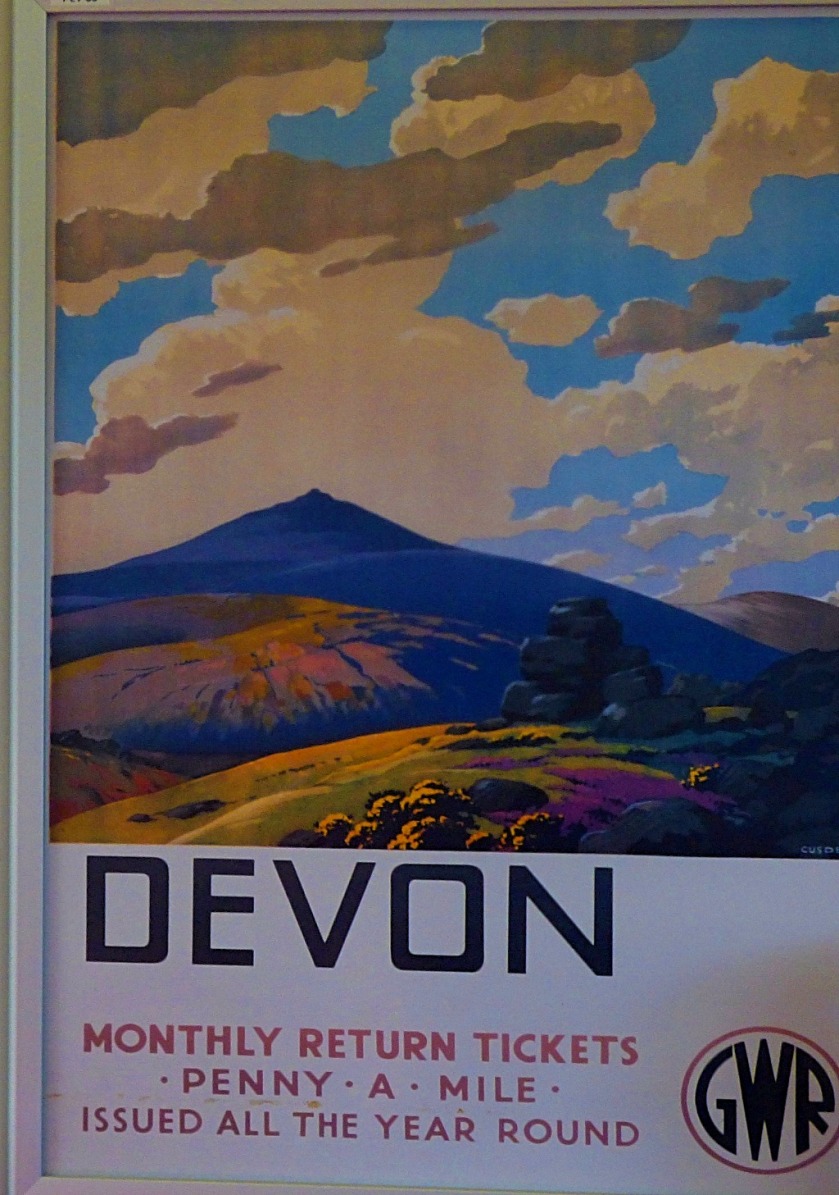
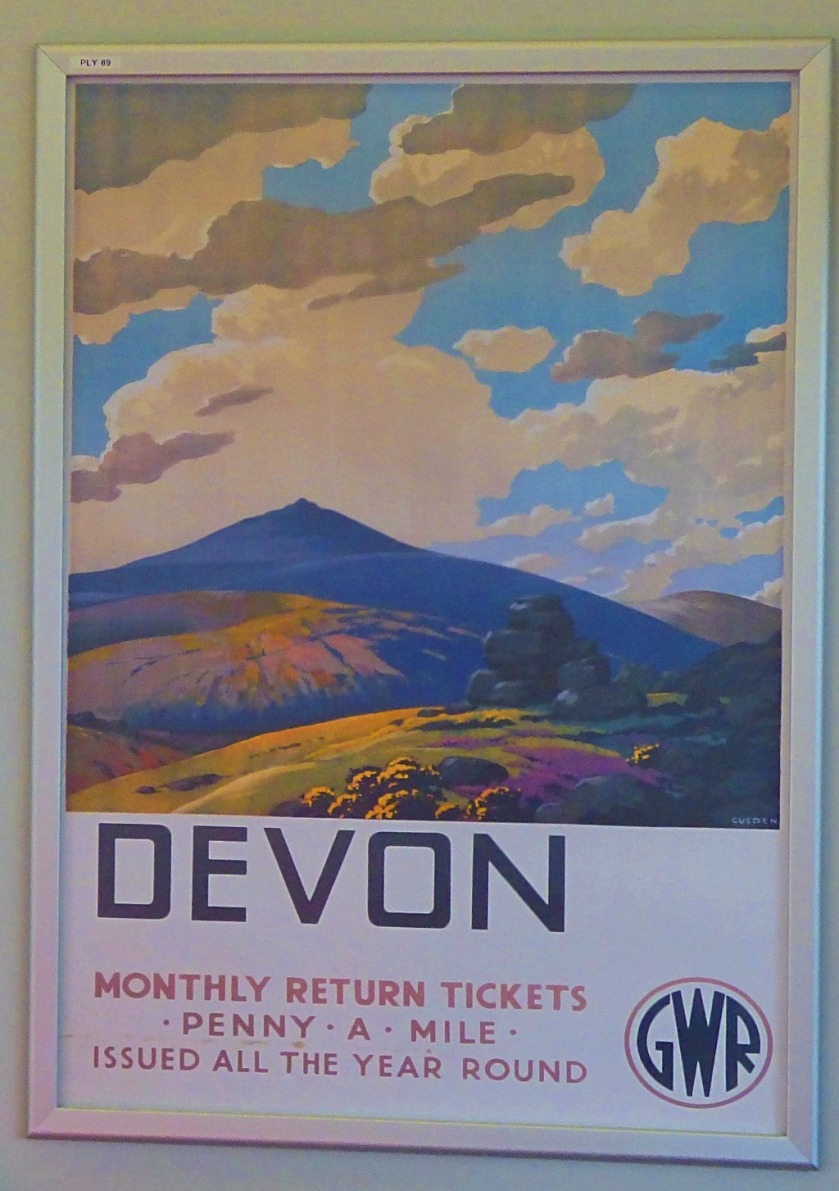
These are all unrelated to anything I blogged about, but represent things to consider for future visits…
We are now going to cover…
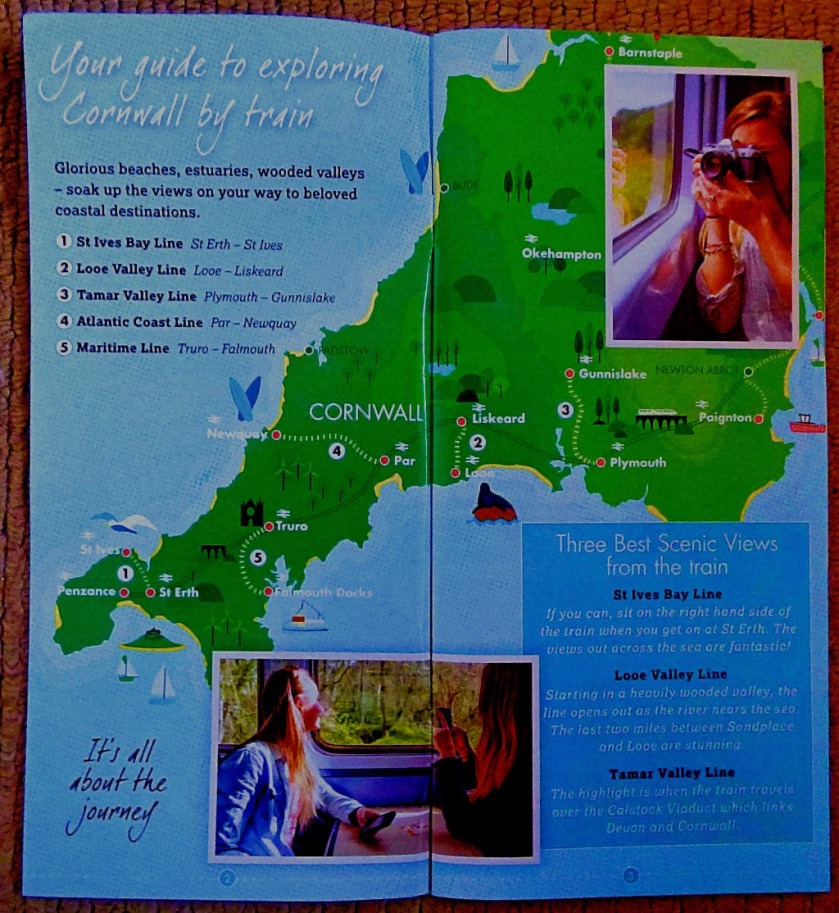
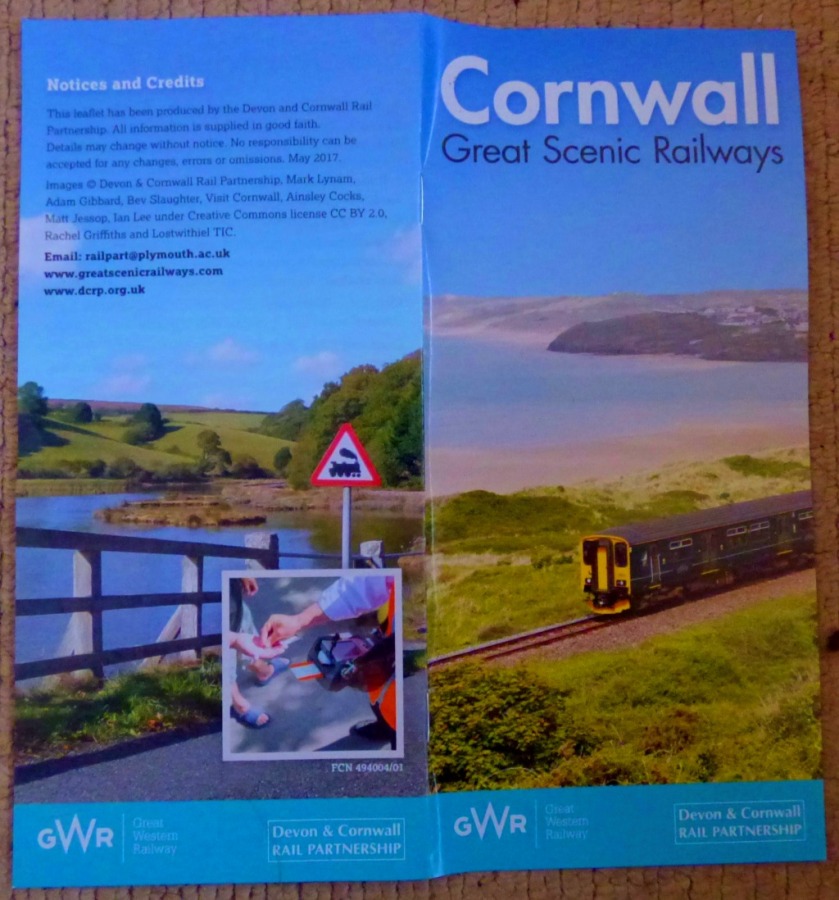
CORNISH TRAIN JOURNEYS
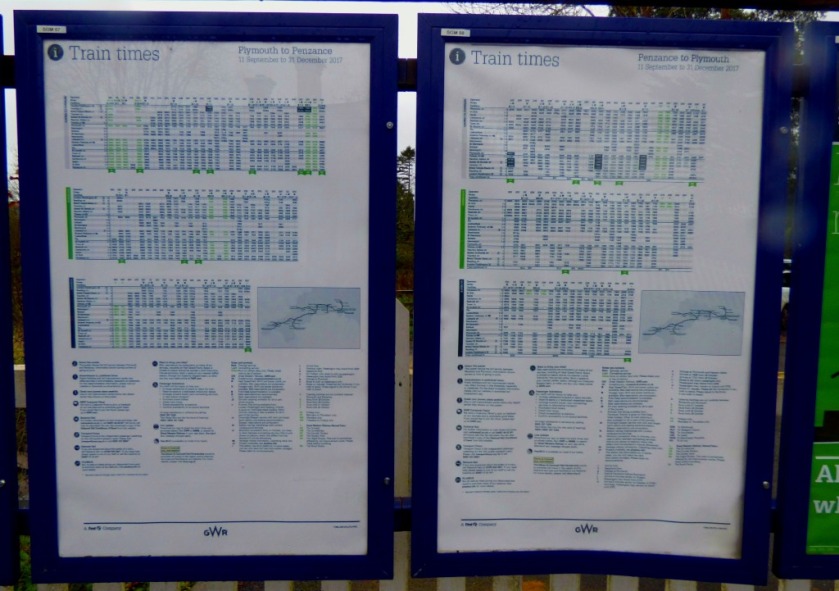
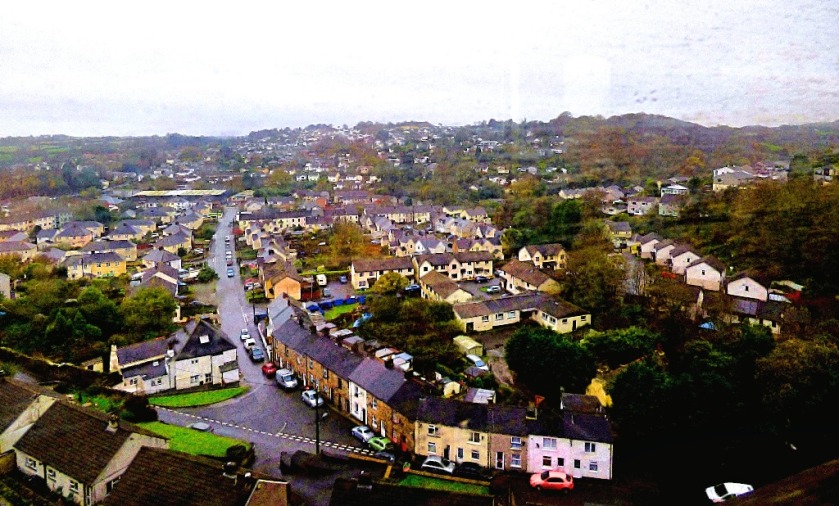
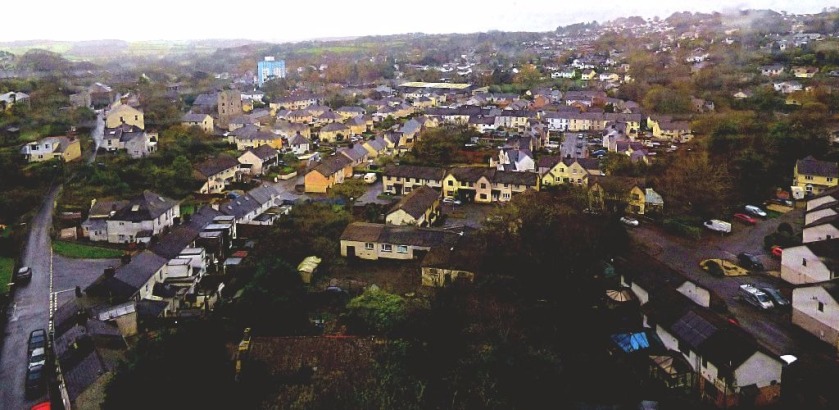
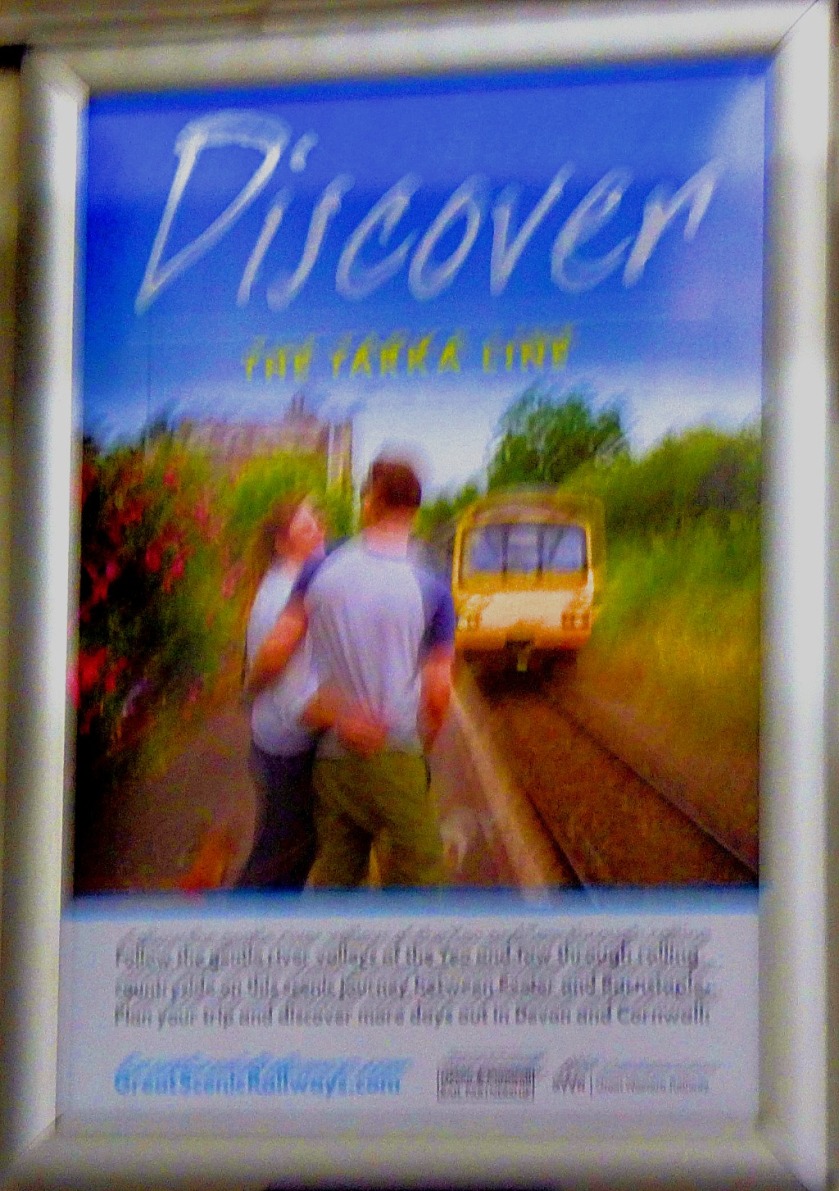
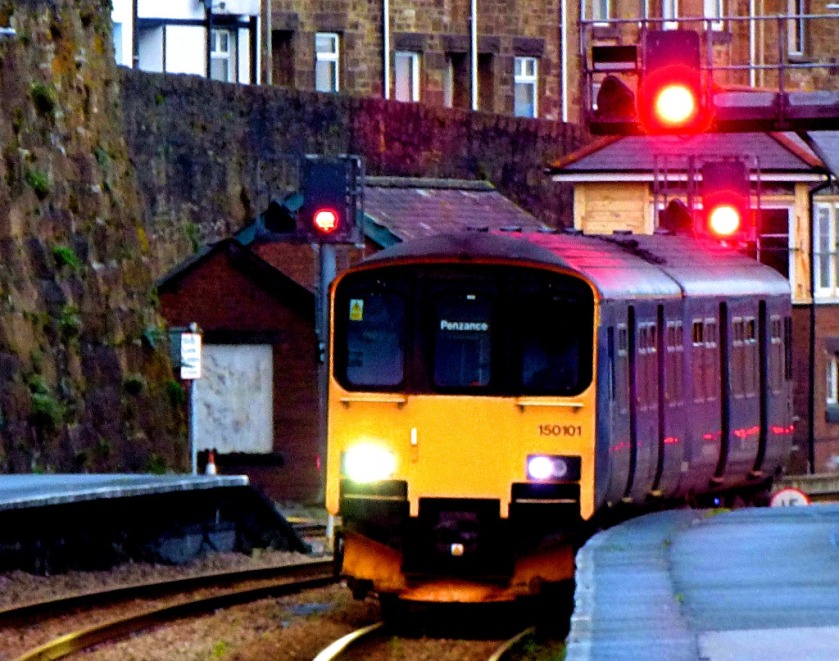
For most of this section we will be following the route of my journey to Penzance, but first a couple of pics to set the scene…
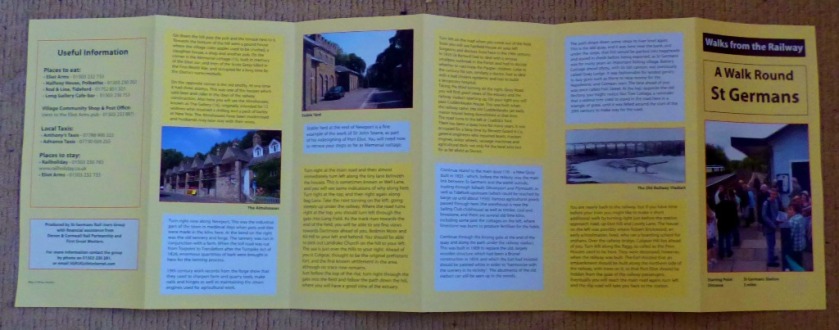
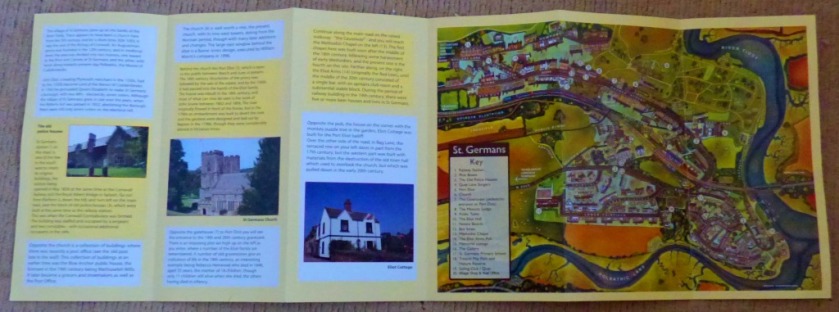
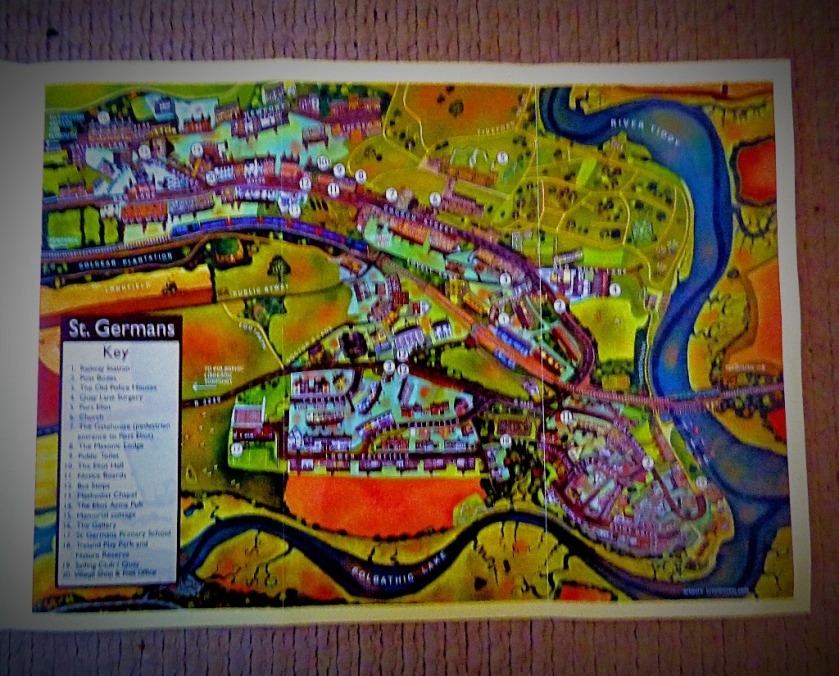
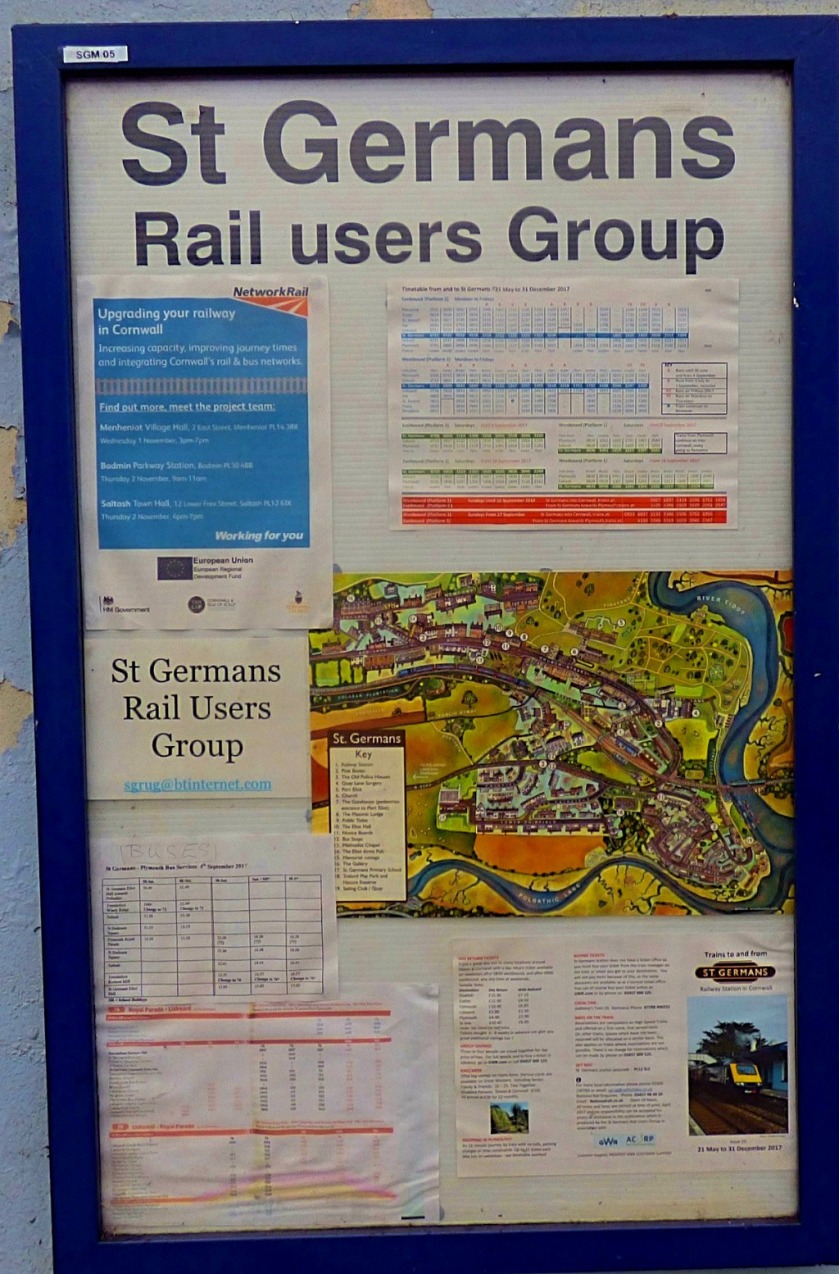
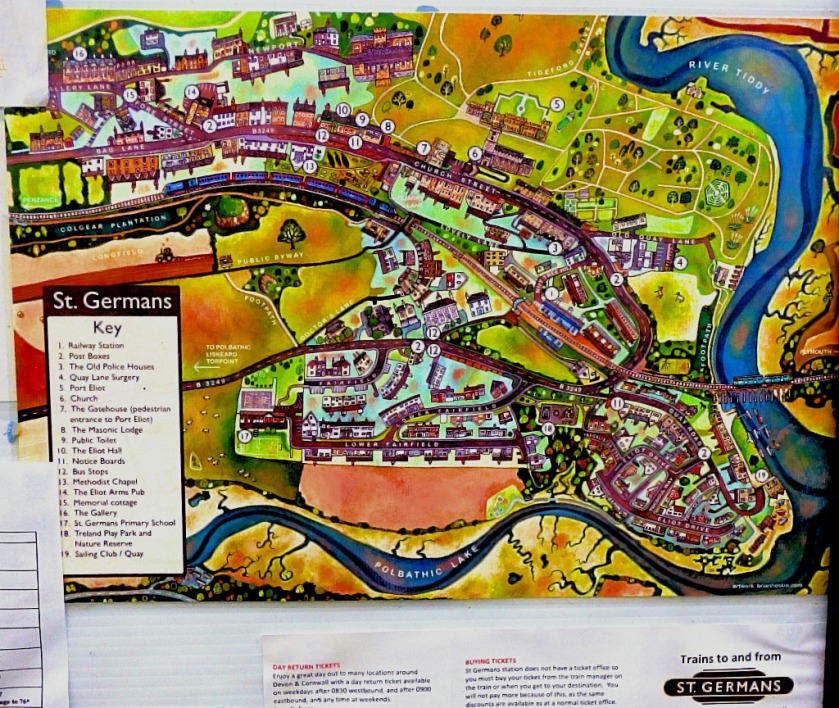
Now starting our survey of stuff that relates closely to my Saturday journey we begin with the St Germans Walk…
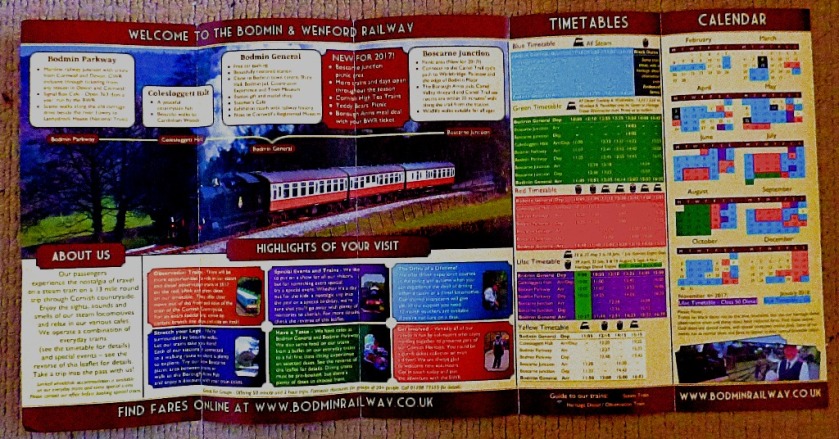
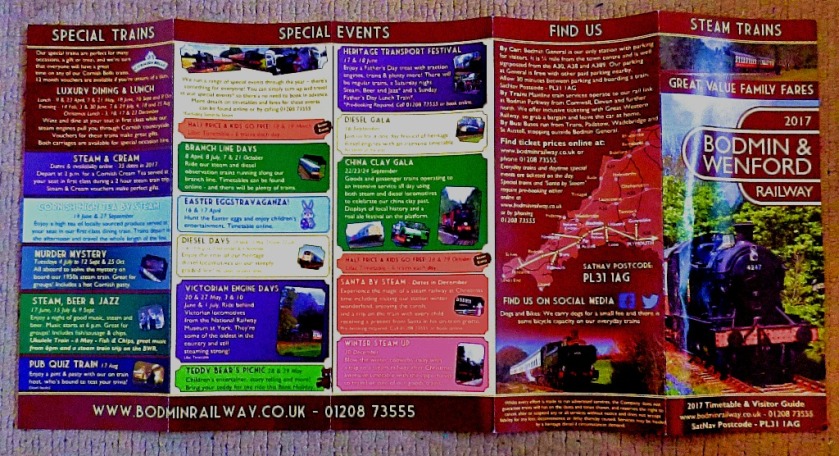
Our next staging post is Bodmin Parkway, for the Bodmin & Wenford Railway:
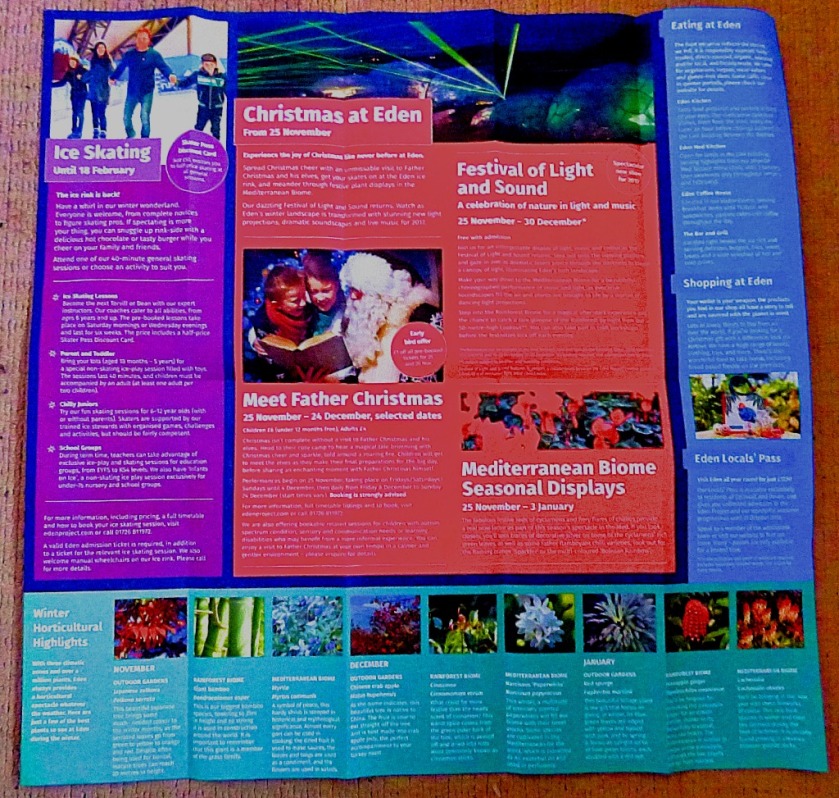
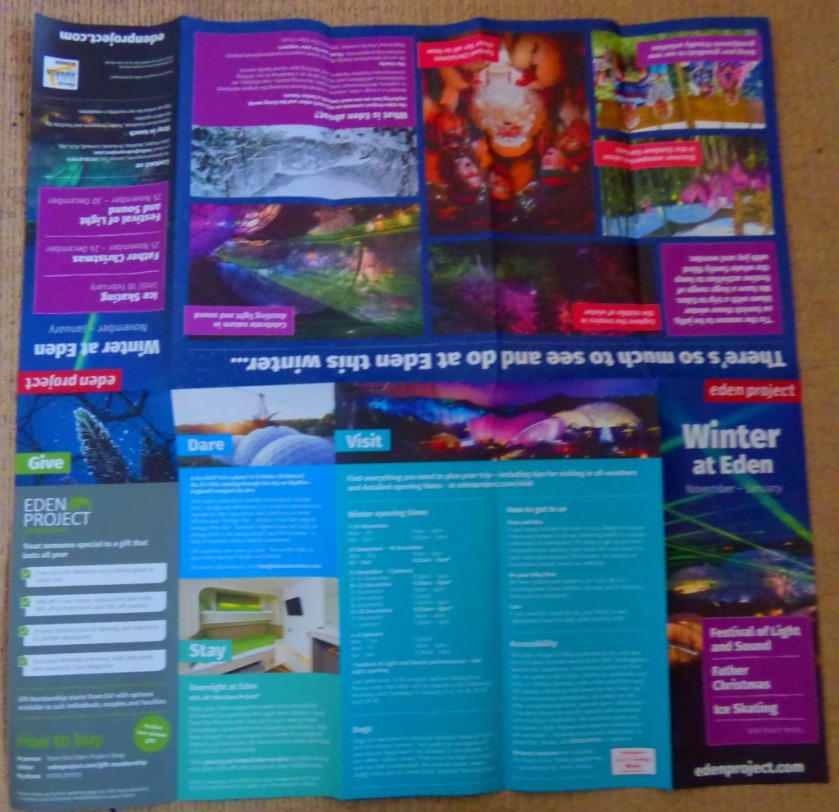
Continuing our westward journey our next diversion is at St Austell where those so minded can catch a 101 bus to The Eden Project (the officially recommended way of visiting that great attraction – they are not great admirers of the motor car).
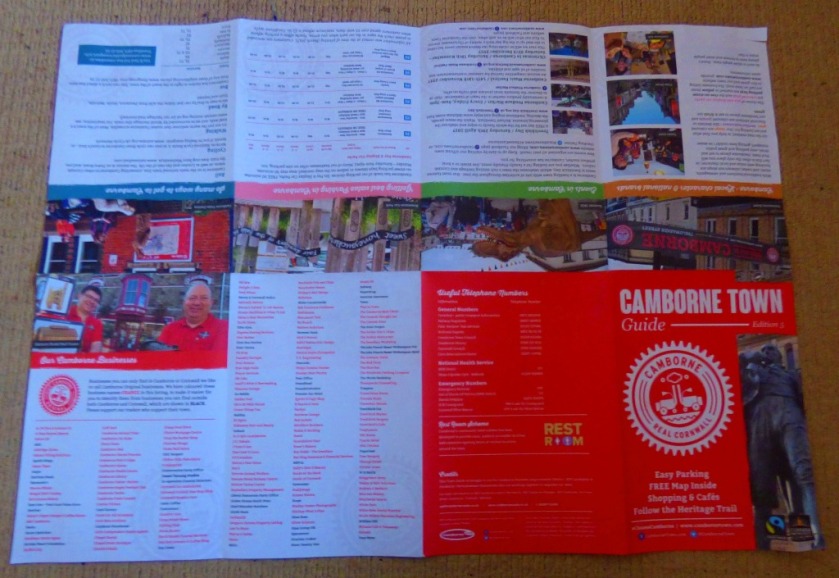
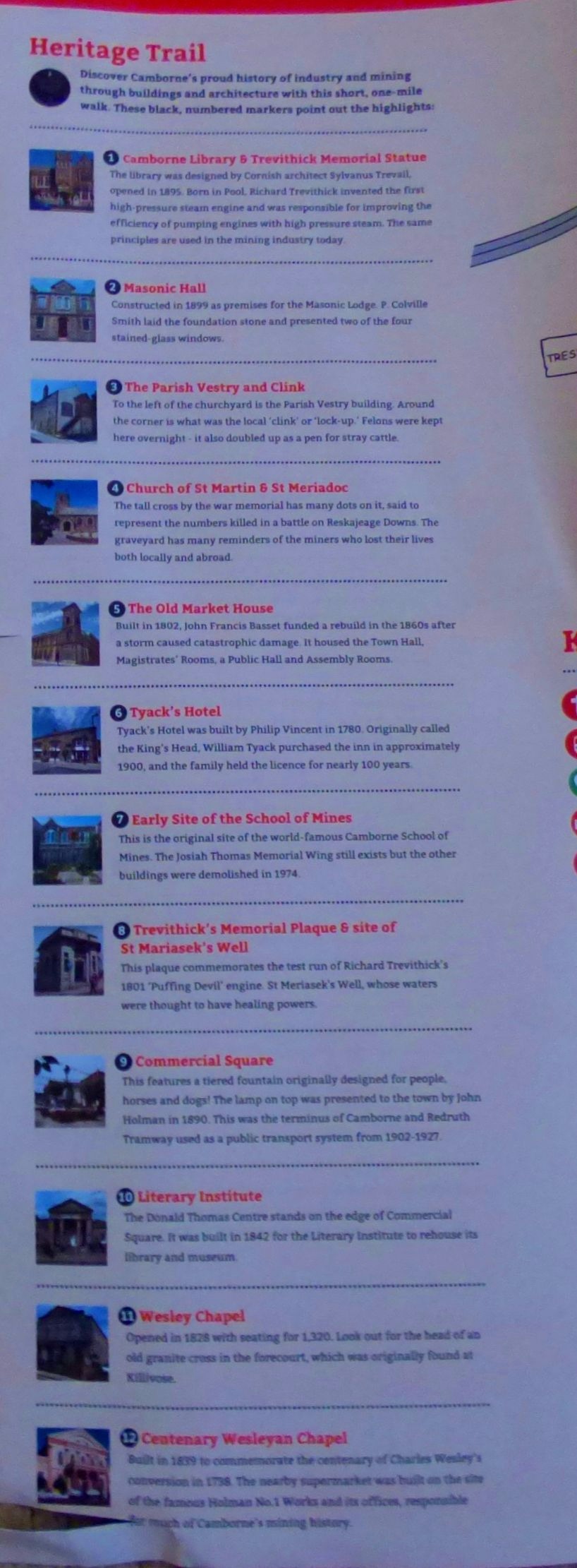
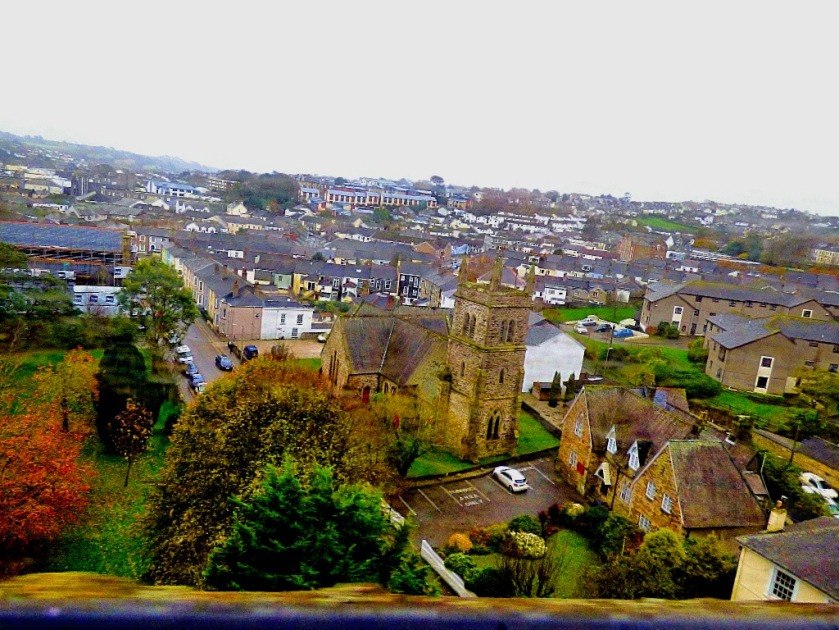
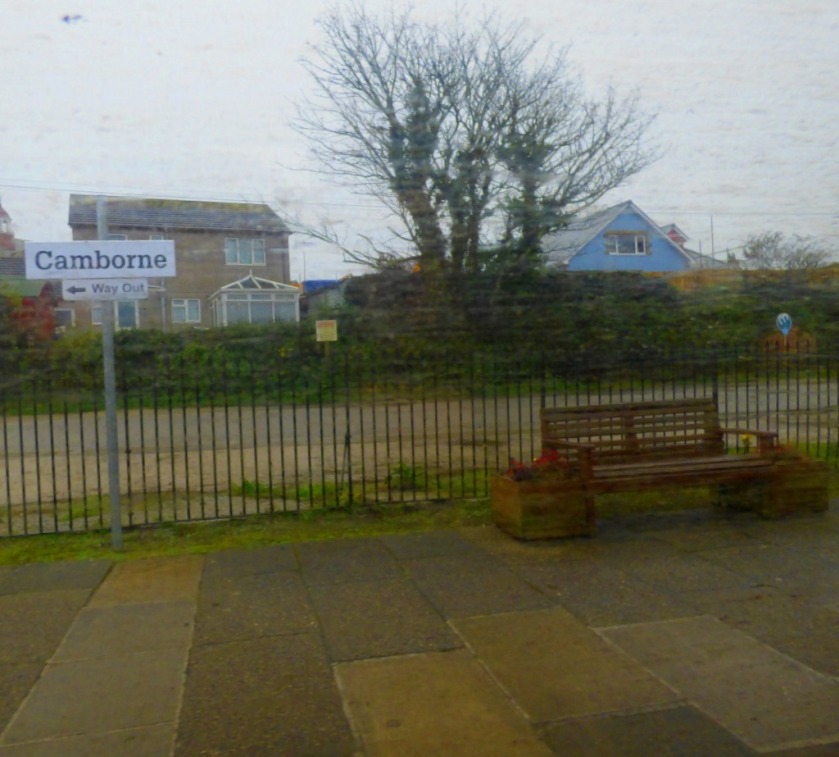
Before arriving at the destination for our next section we give a passing wave to Camborne Town:
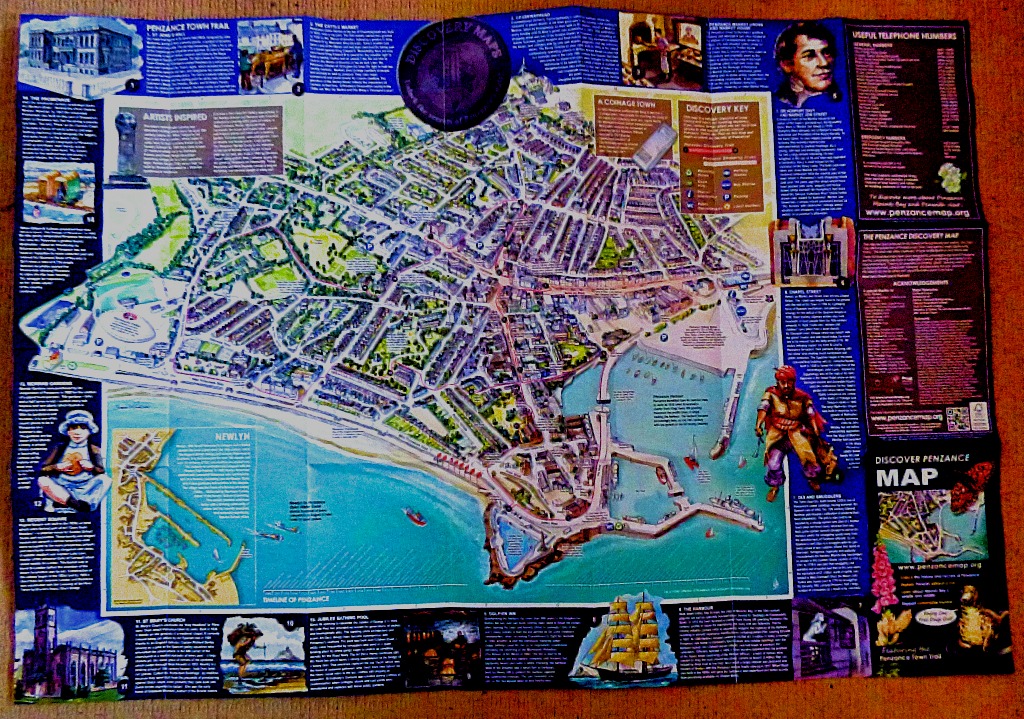
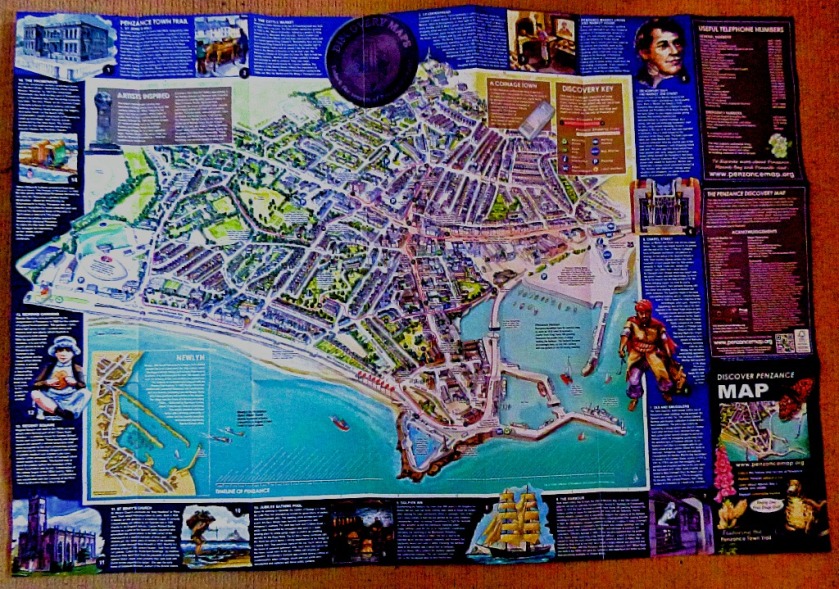
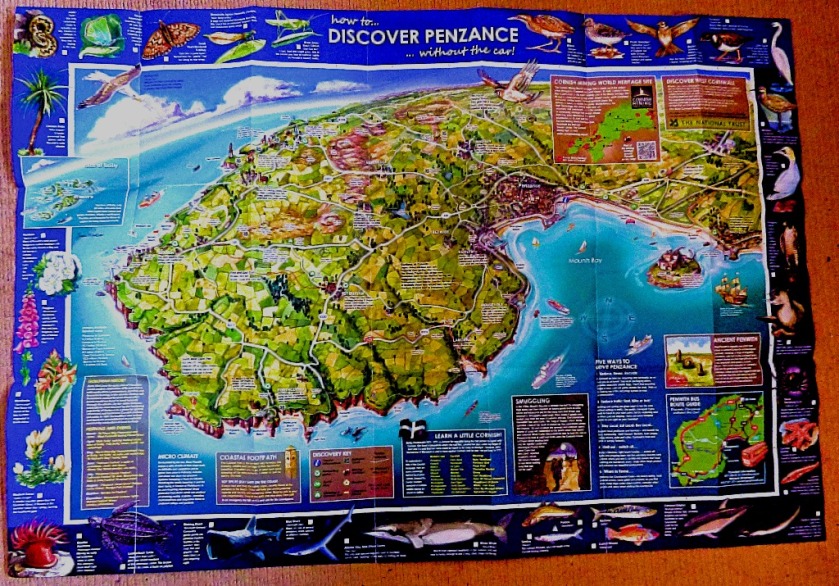
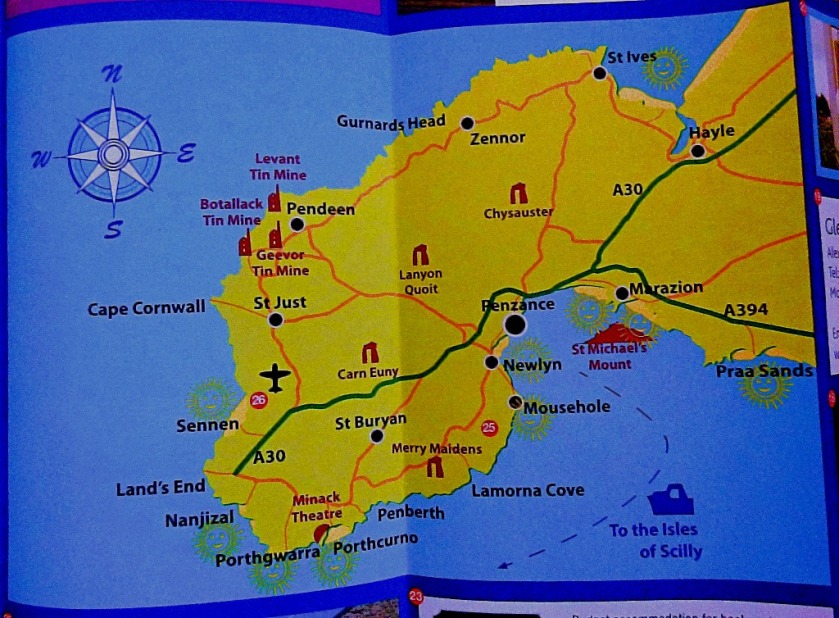
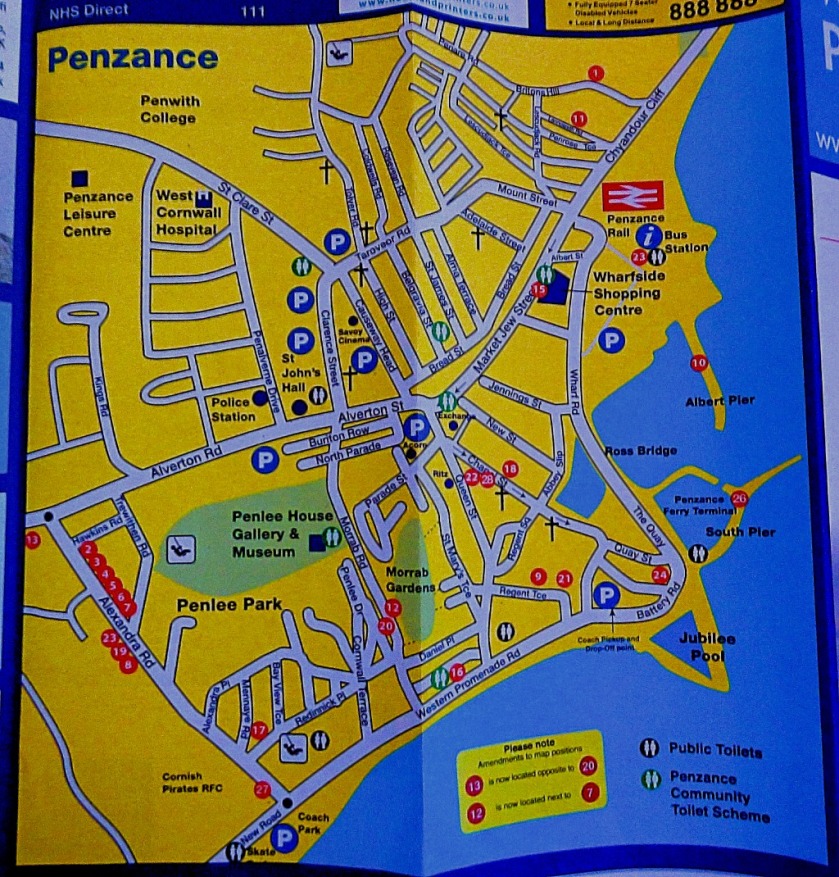
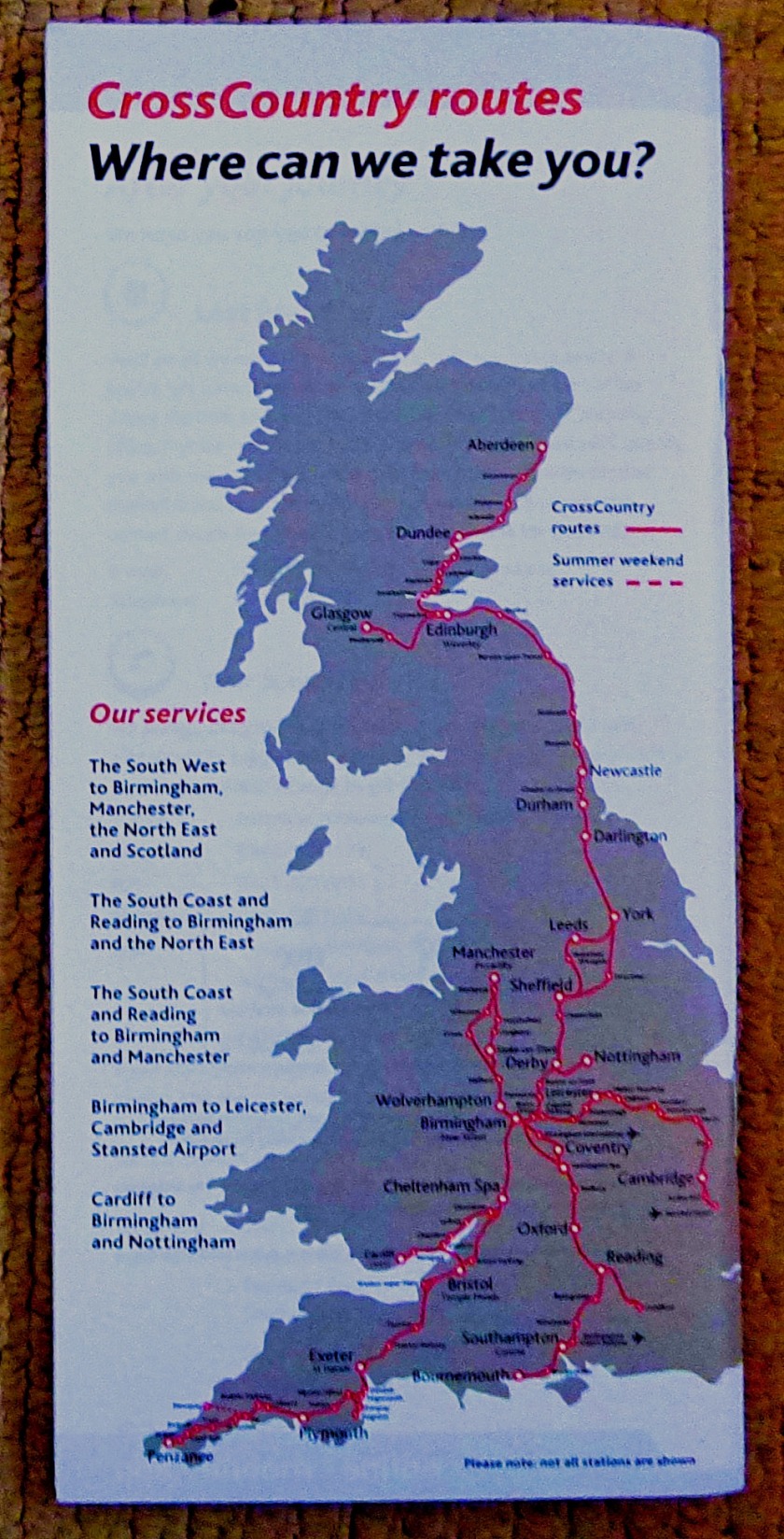
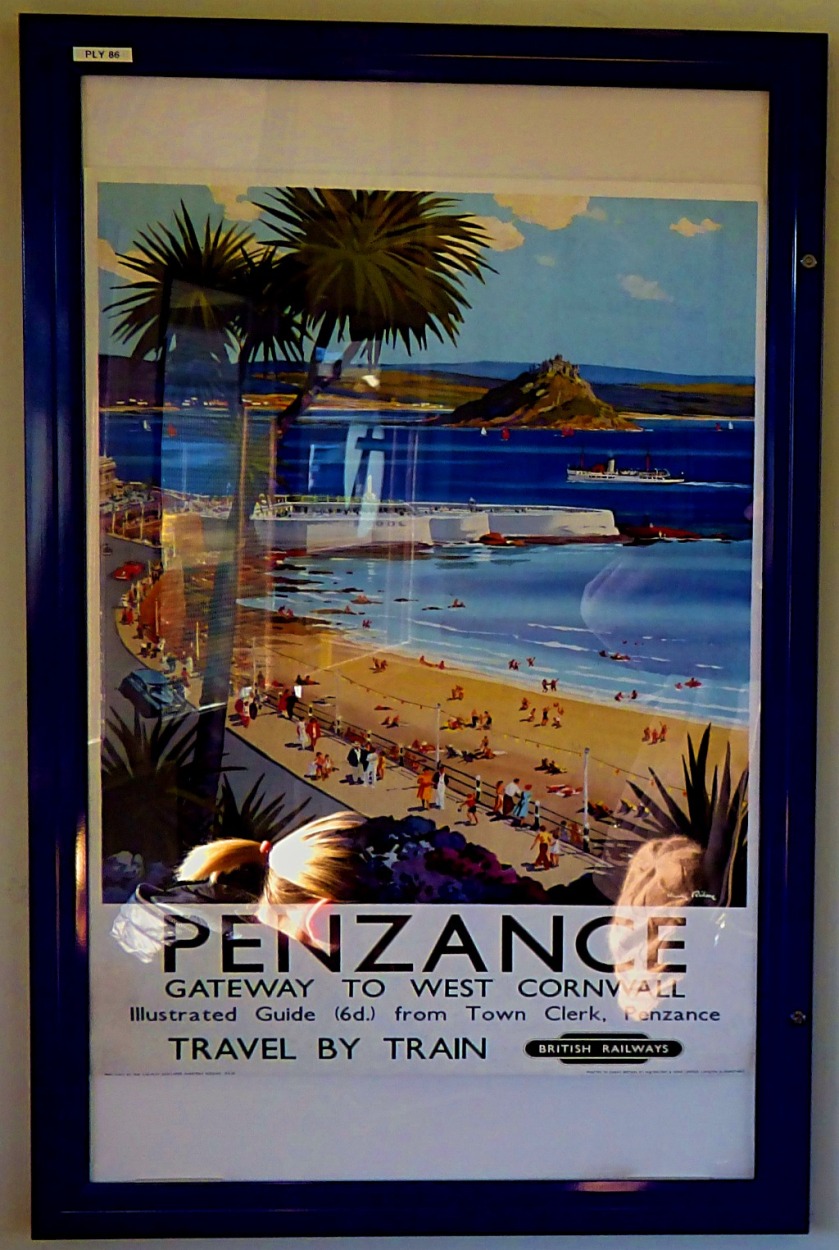
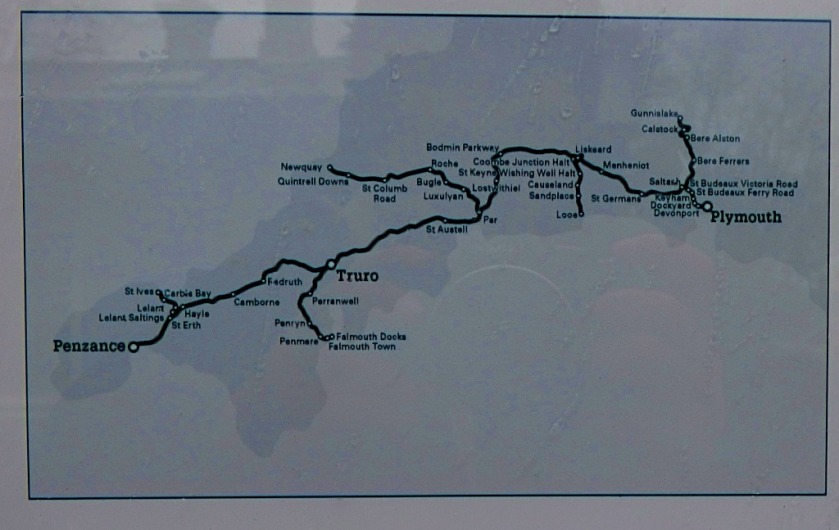
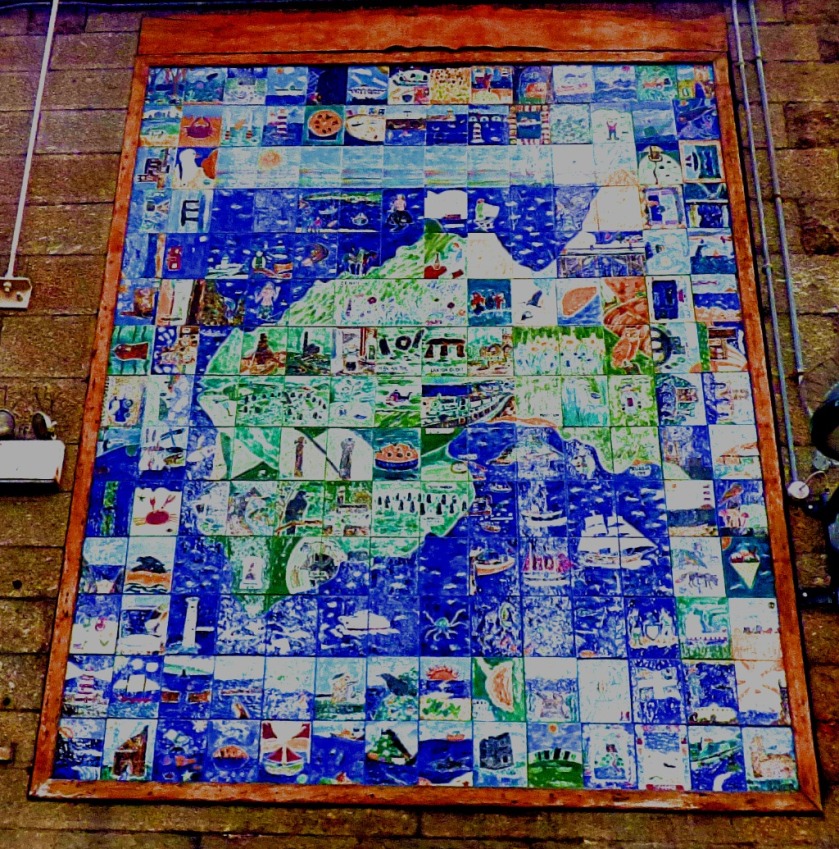
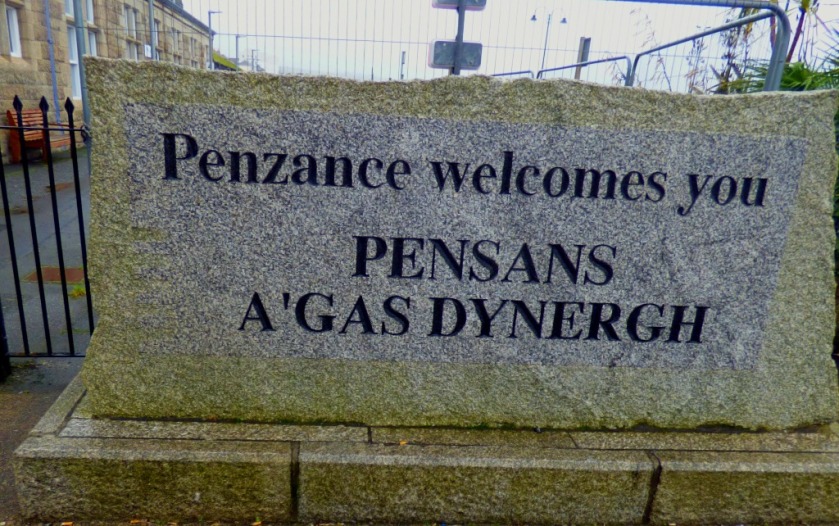
These maps relate to my post about my day in Penzance. The first two pictures are of the only item in this collection that had to be bought, for a whopping £1!
We have almost reached the end of this post, which we do with…
A FEW LAST PICTURES
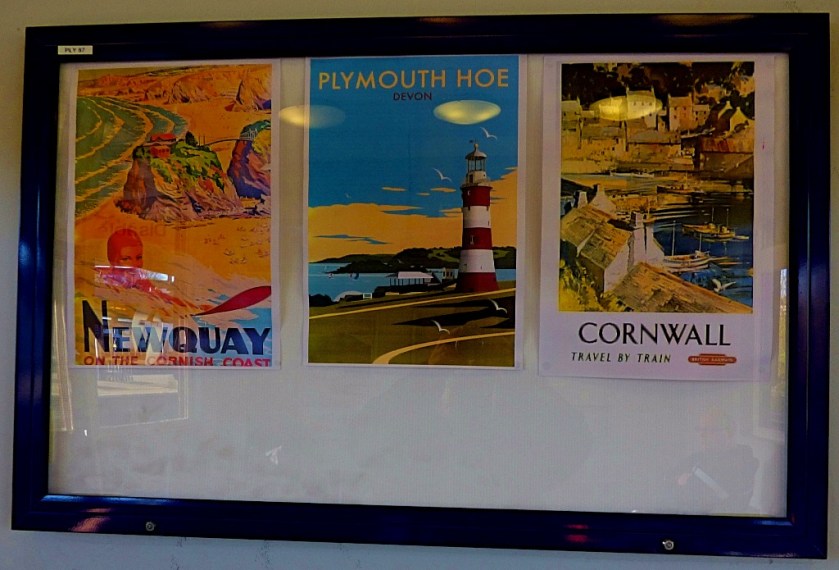
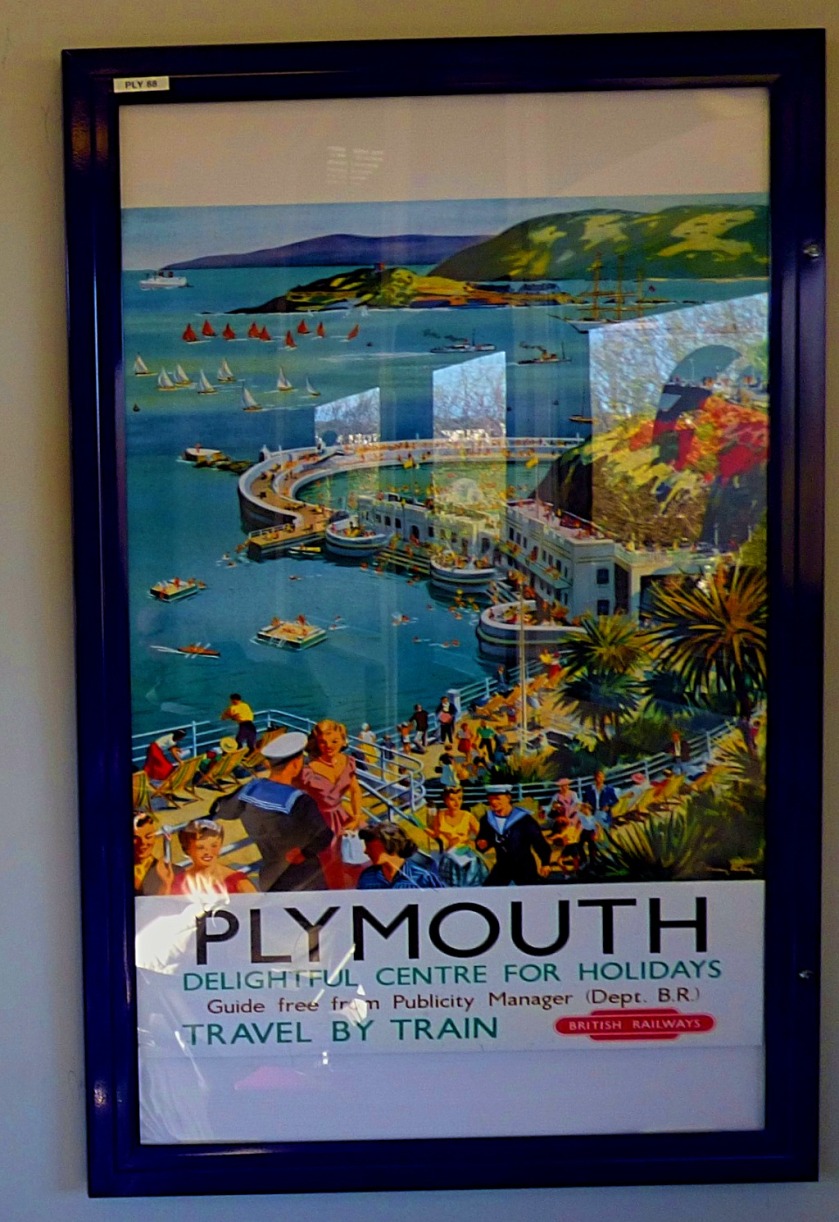
These are the last few bits…
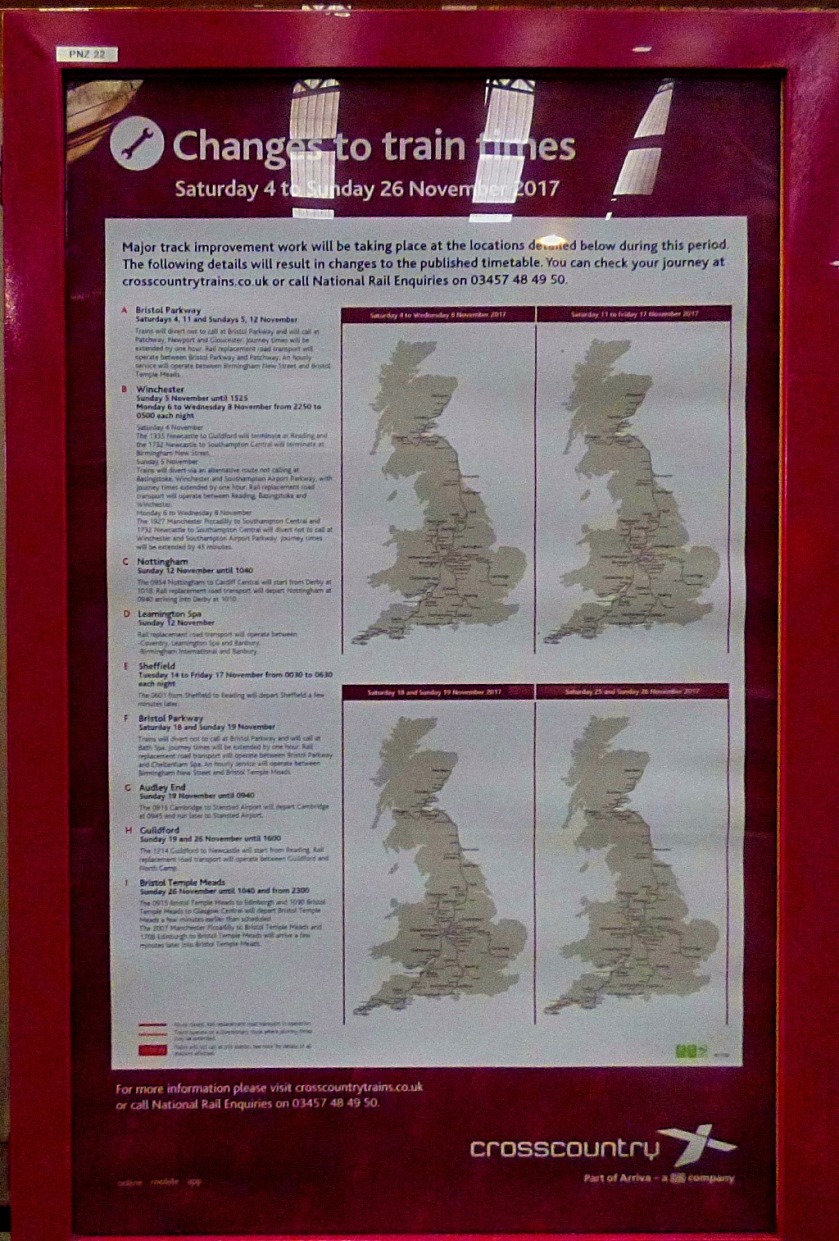
The official mainline timetableI will not be able to make use of this, but some of you might.
My account of the homeward journey from Fort Picklecombe.
INTRODUCTION
We have reached the penultimate post about my Cornish holiday – the last day. This post details the long journey home.
STARTING OFF
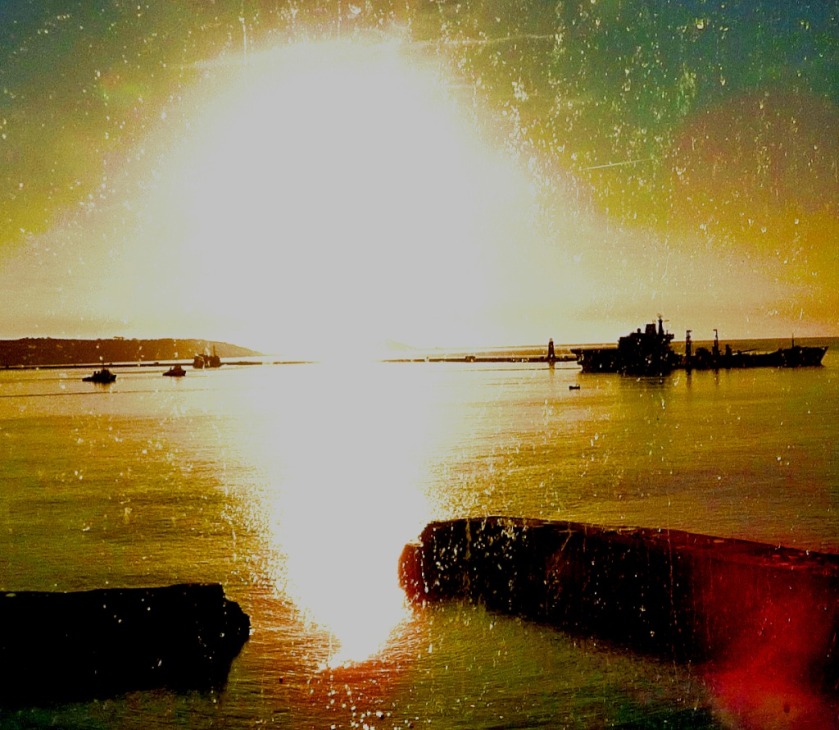
The length of time it took to get from Plymouth to Fort Picklecombe on the Thursday was playing on my mind, and I wanted to be sure that we were away before 9AM, since my train was due to depart Plymouth at 10:44, and I reckoned that a single ticket from Plymouth to London bought on the day (London-Lynn would still have been valid on the original ticket) woulkd probably cost more than my original ticket (in this assessment, to borrow from history, there was the proverbial “cubit of error my way that does not obscure the 99 cubits of error the other way” – actually said ticket would have been fractionally less. Nevertheless, I did get a few lasy pictures before leaving the fort:
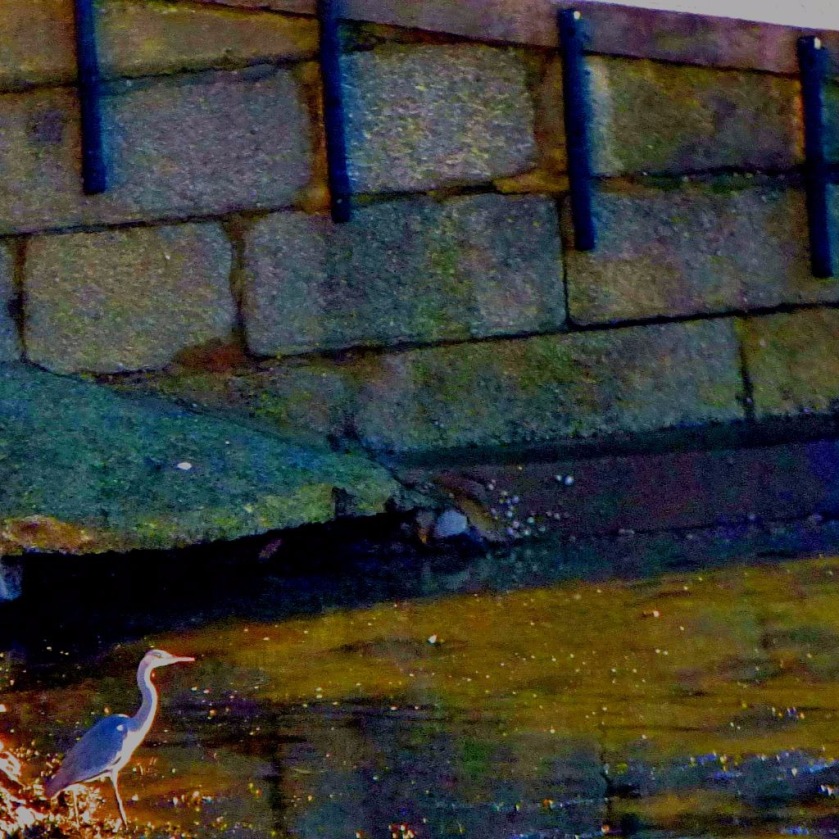
A first for me – the first time I have captured a heron on camera.
On the journey into Plymouth I managed to snap two pictures from the back of the camper van:
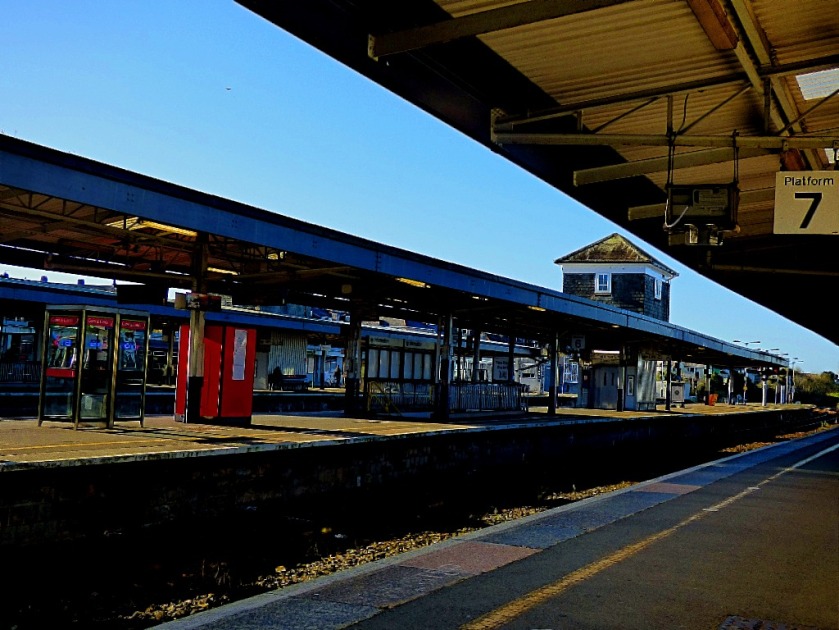
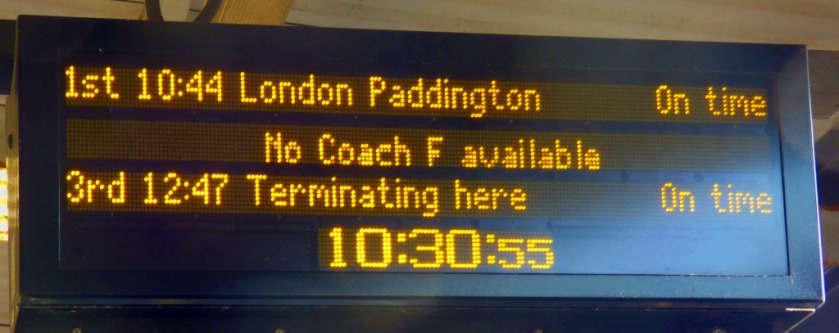
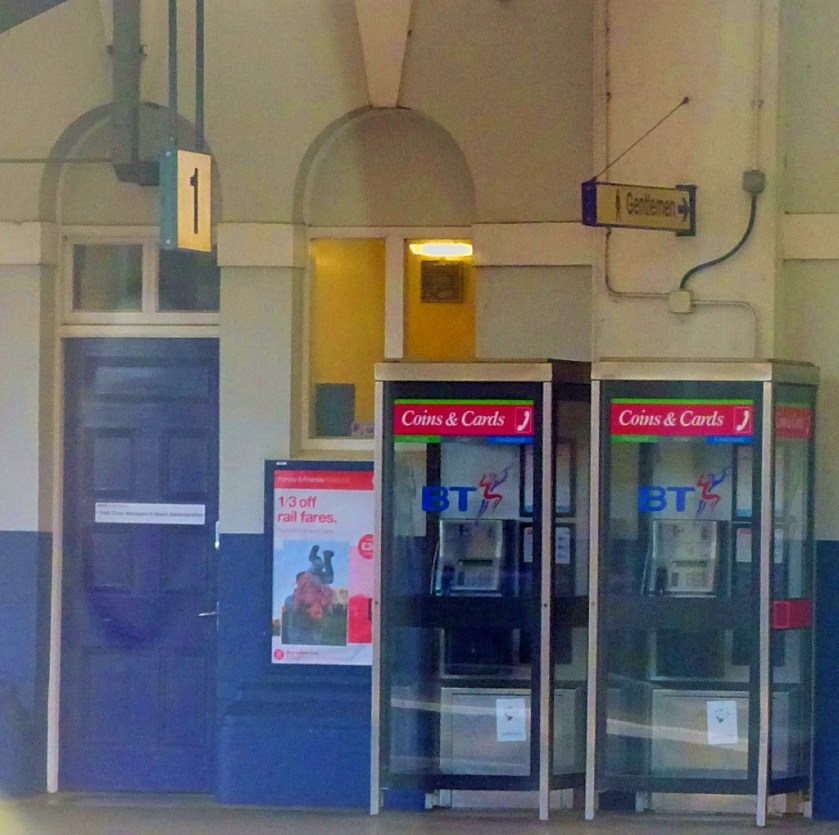
I had some time to kill at Plymouth station and did so by taking photographs…
An avian passenger?
PLYMOUTH – LONDON
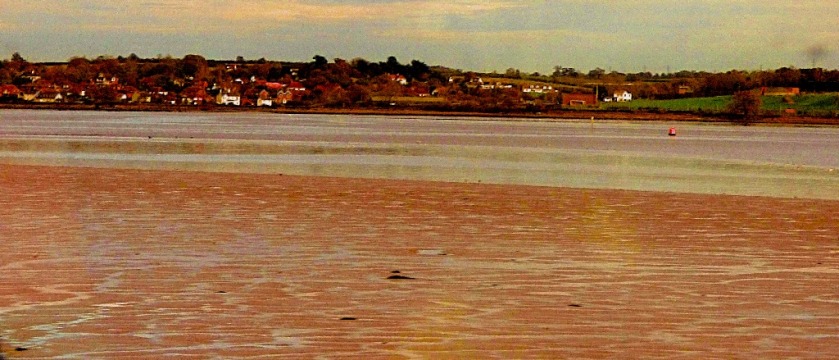
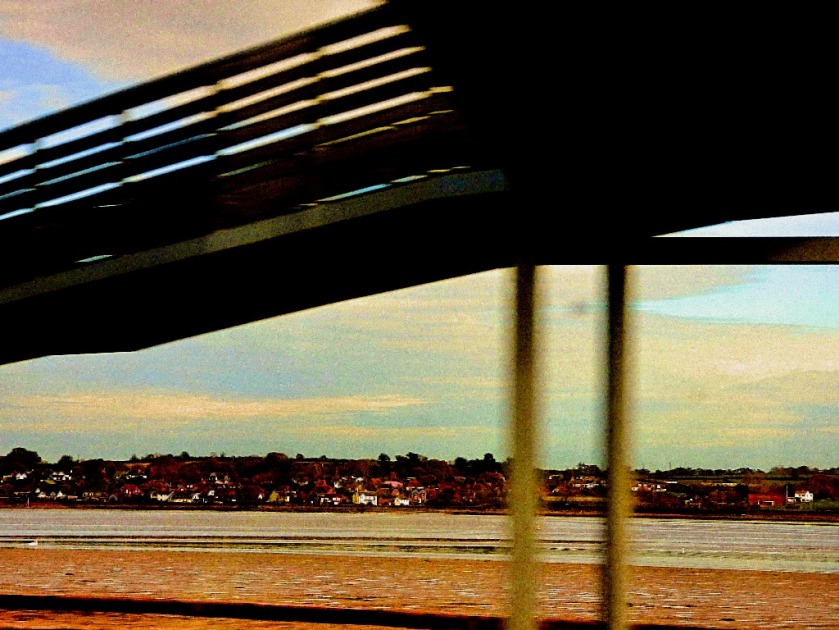
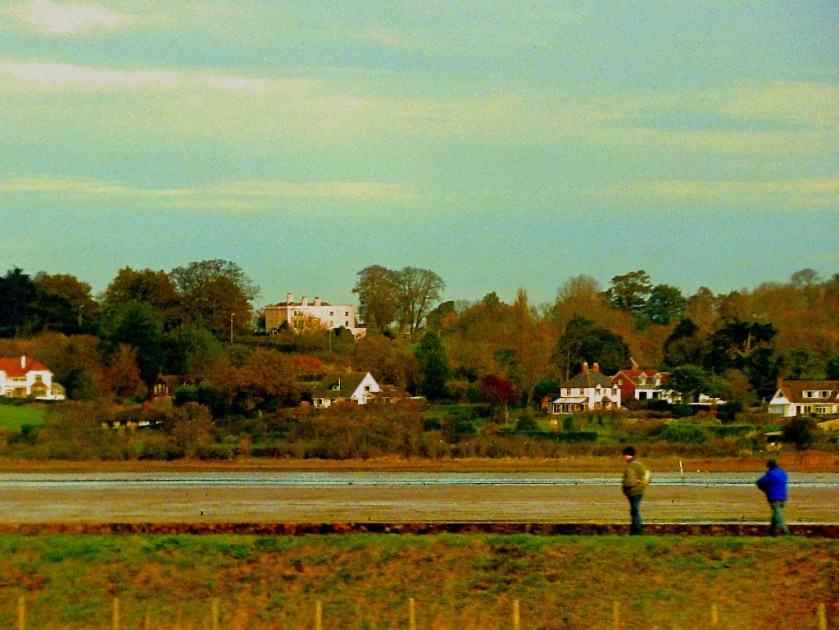
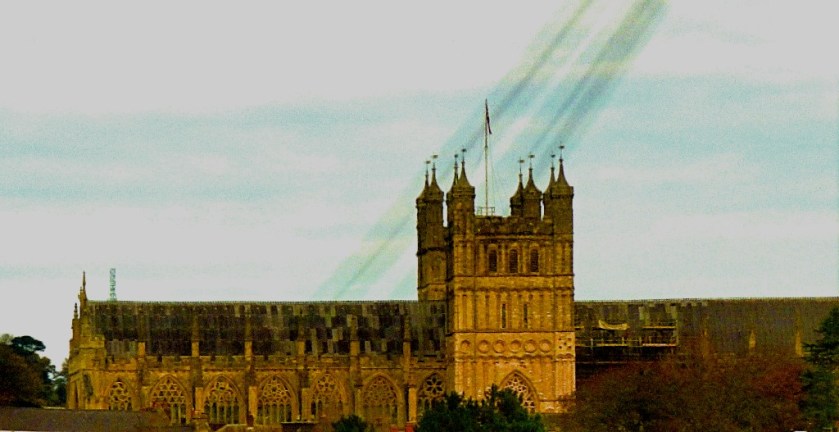
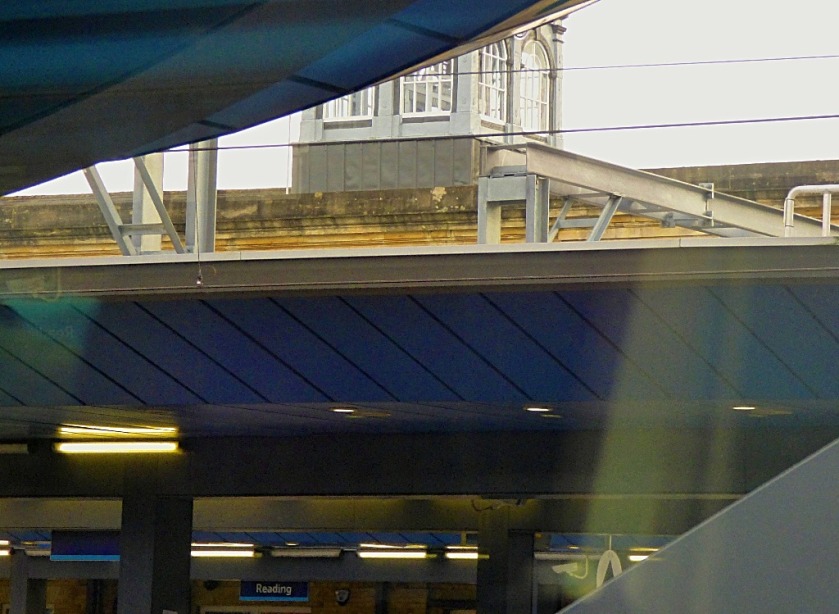
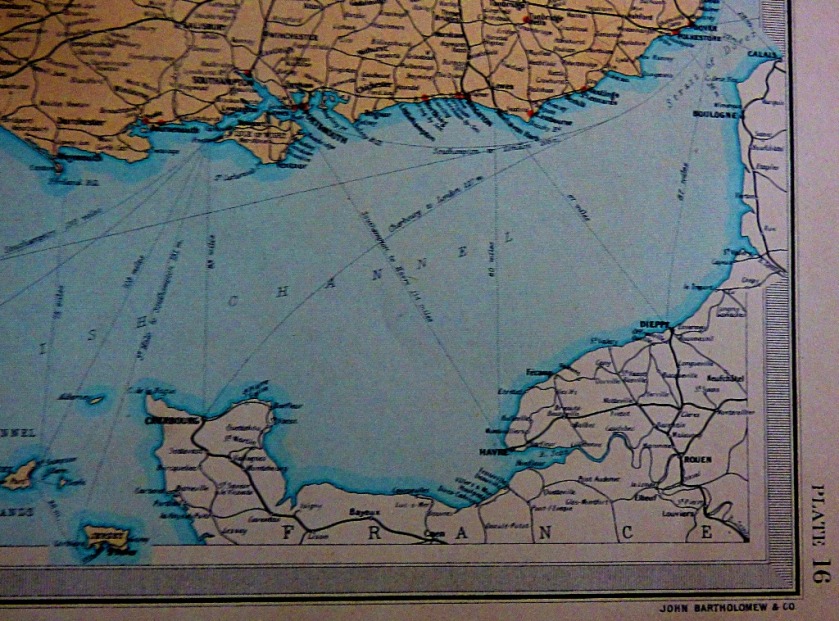
This train was a service called “The Cornish Riviera”, which starts in Penzance and snails up through Cornwall stopping pretty much everywhere and then makes up time by calling only at Exeter St Davids and Reading between Plymouth and London. Although I had an aisle seat on this journey, and no opportunity to move to the window seat I was not going to be denied at least some photos. I got a good few between Plymouth and Exeter and a handful thereafter…
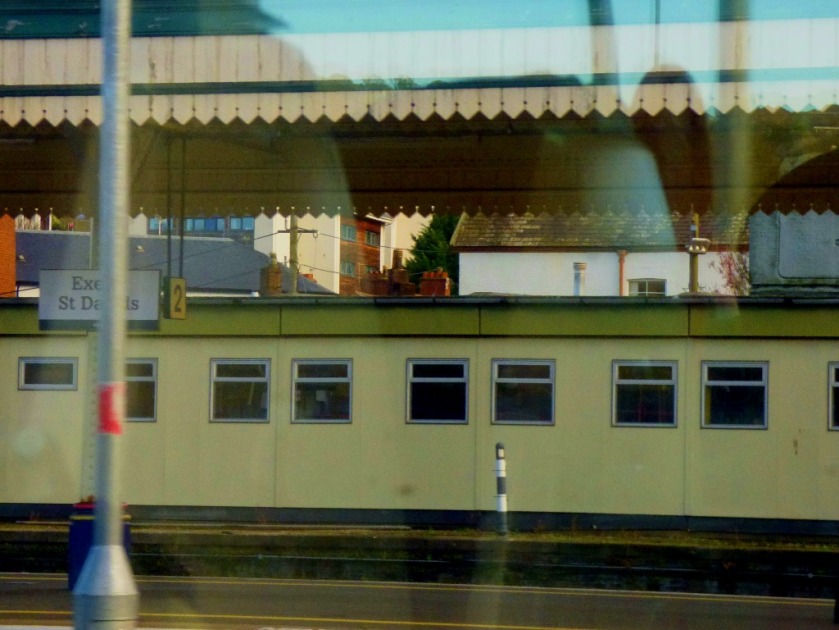
Exeter St Davids (two images)
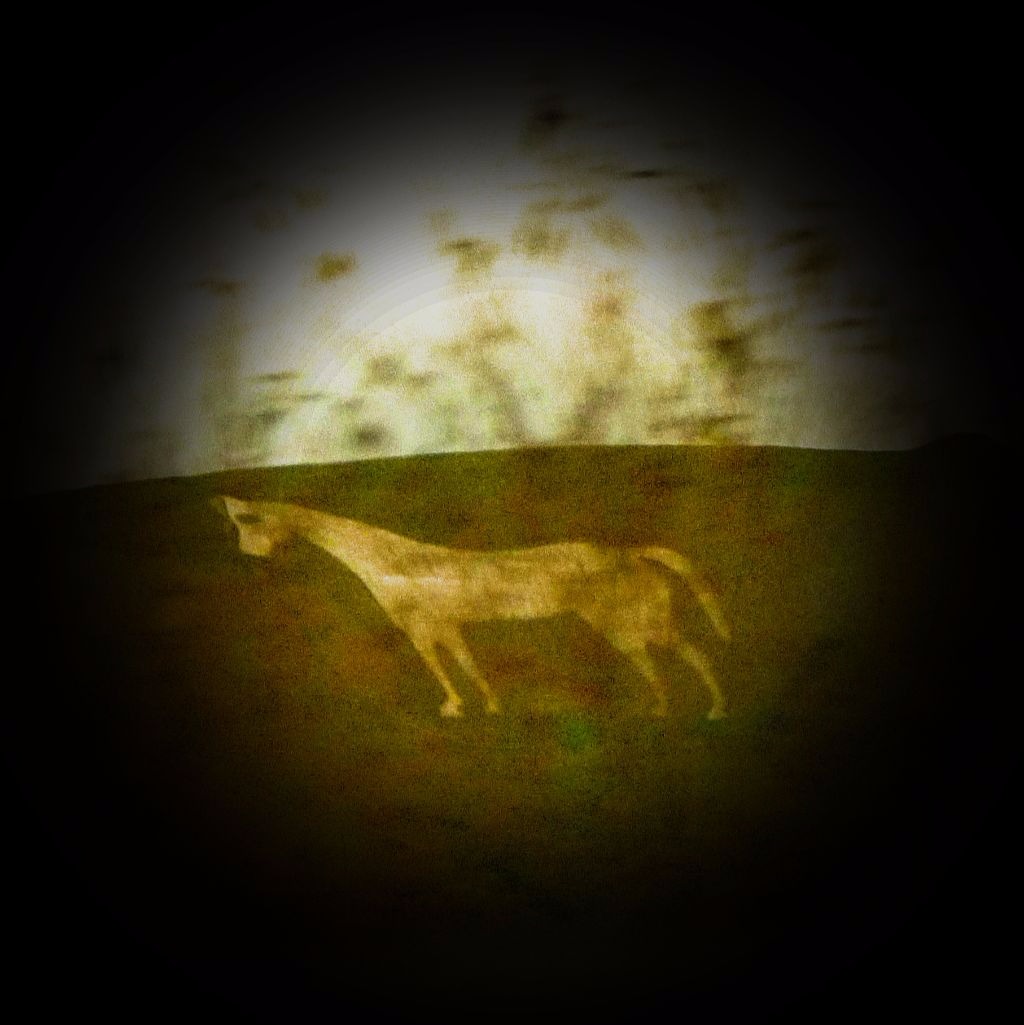
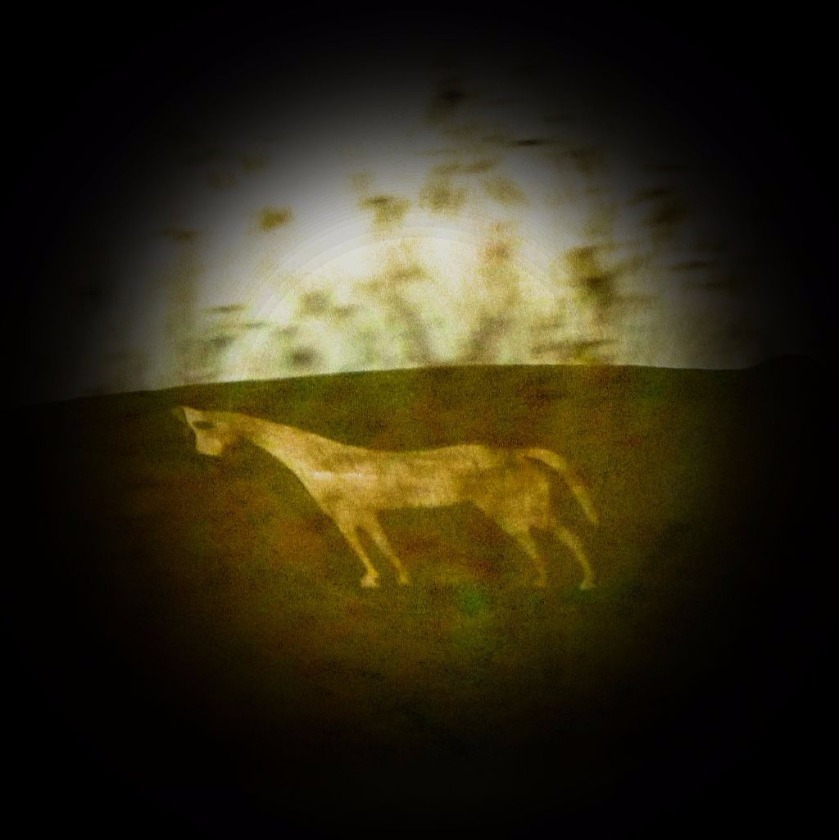
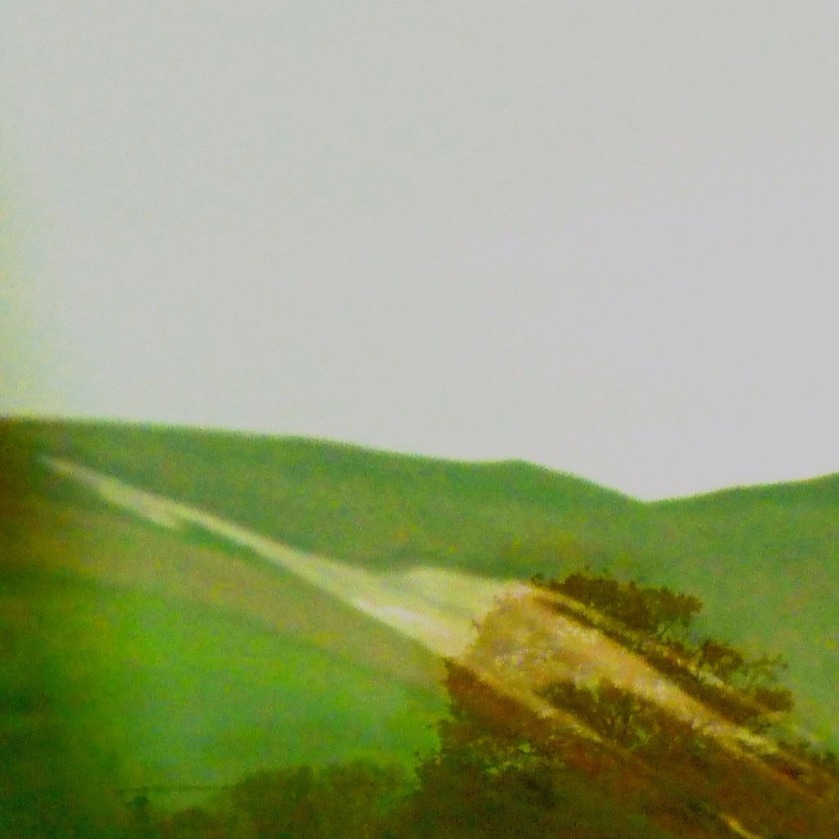
This chalk horse, carved directly out of the hillside, is visible at distance at a time when the train is at full speed.
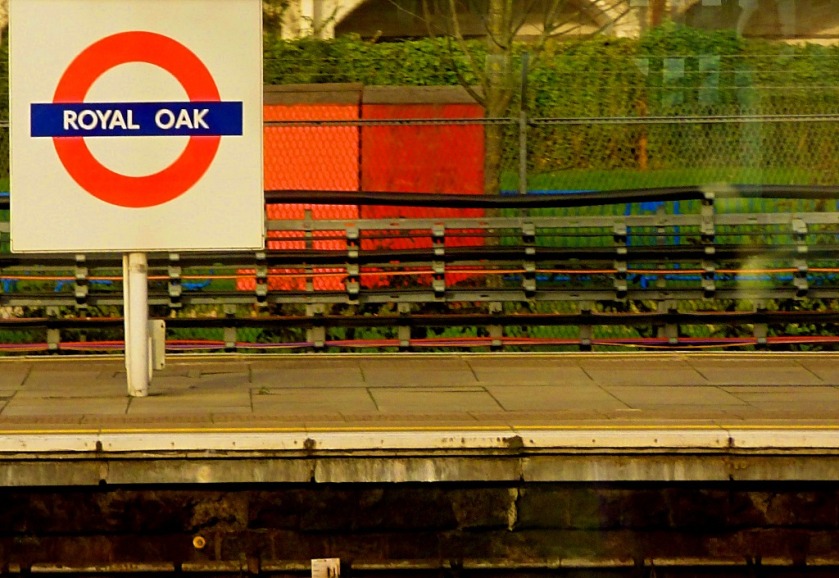
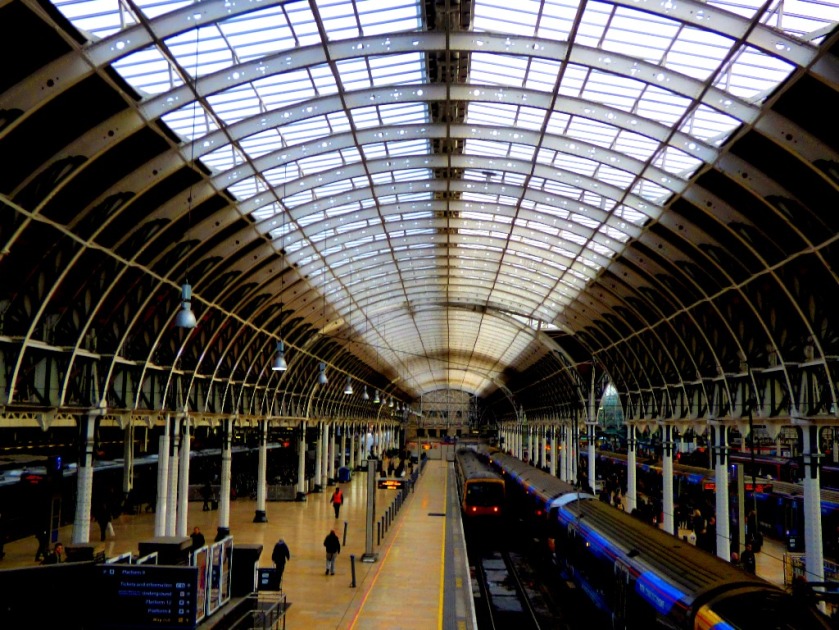
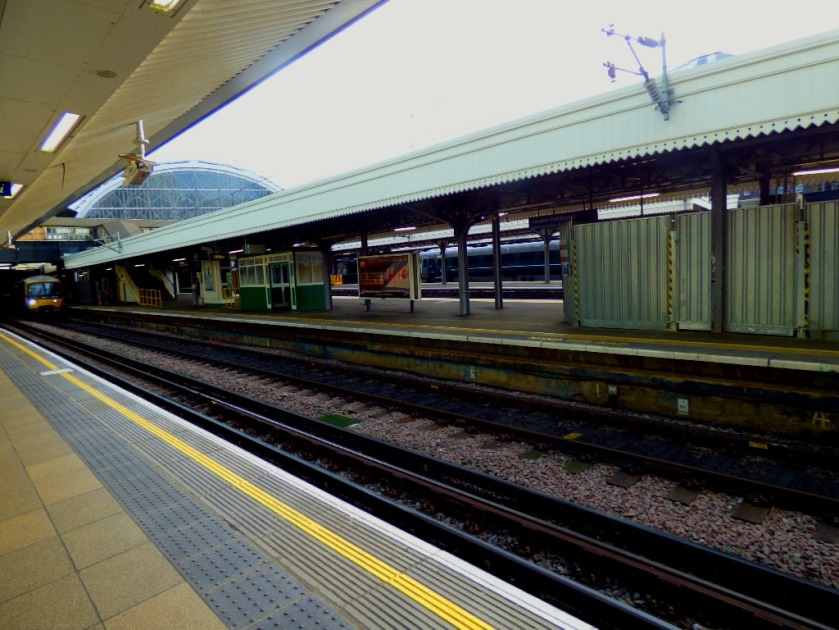
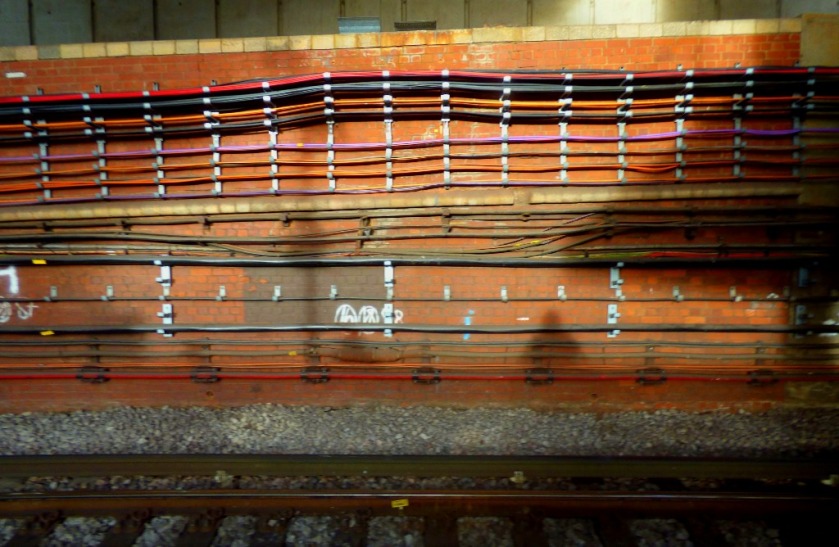
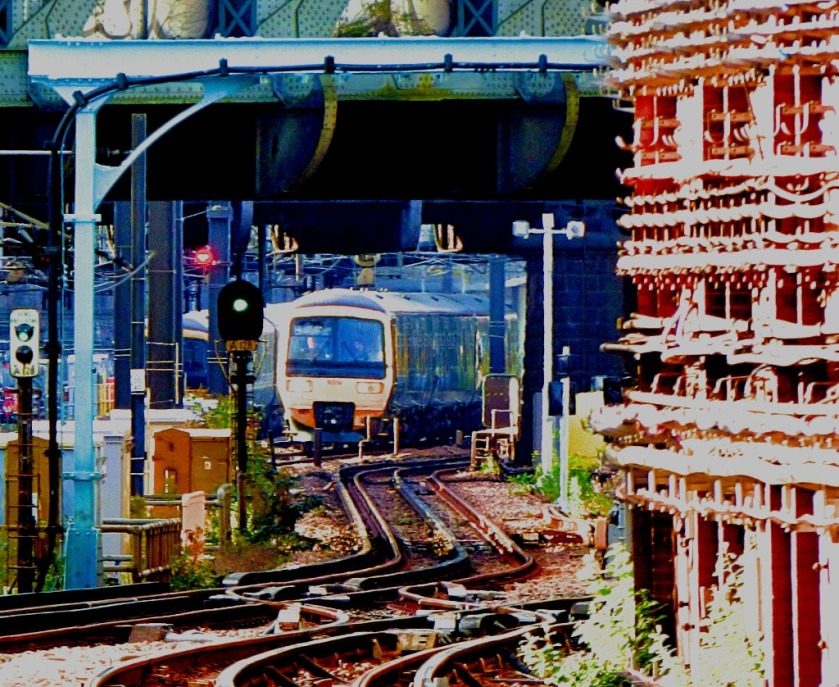
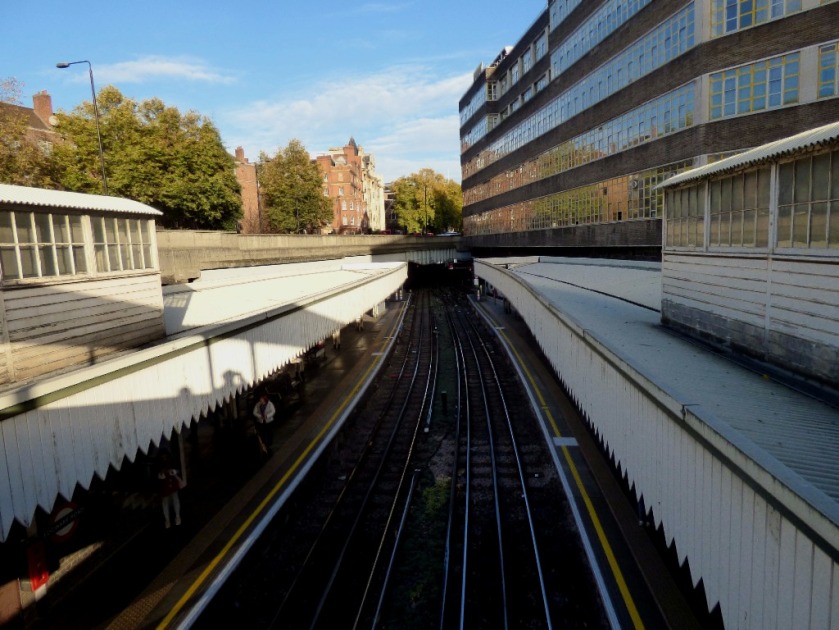
Reading stationRoyal Oak – the Hammersmith & City line’s last station west of Paddington. The next station towards Hammersmith, Westbourne Park, used to offer an interchange with mainline railways but nowadays Ealing Braodway is the last mainline station before Paddington. Back in the old days there was a connection – the first locomotives to run over what was then The Metropolitan Railway were supplied by the Great Western, while this extension to Hammersmtih opened in 1864, only one year after the original.
LONDON TO KING’S LYNN
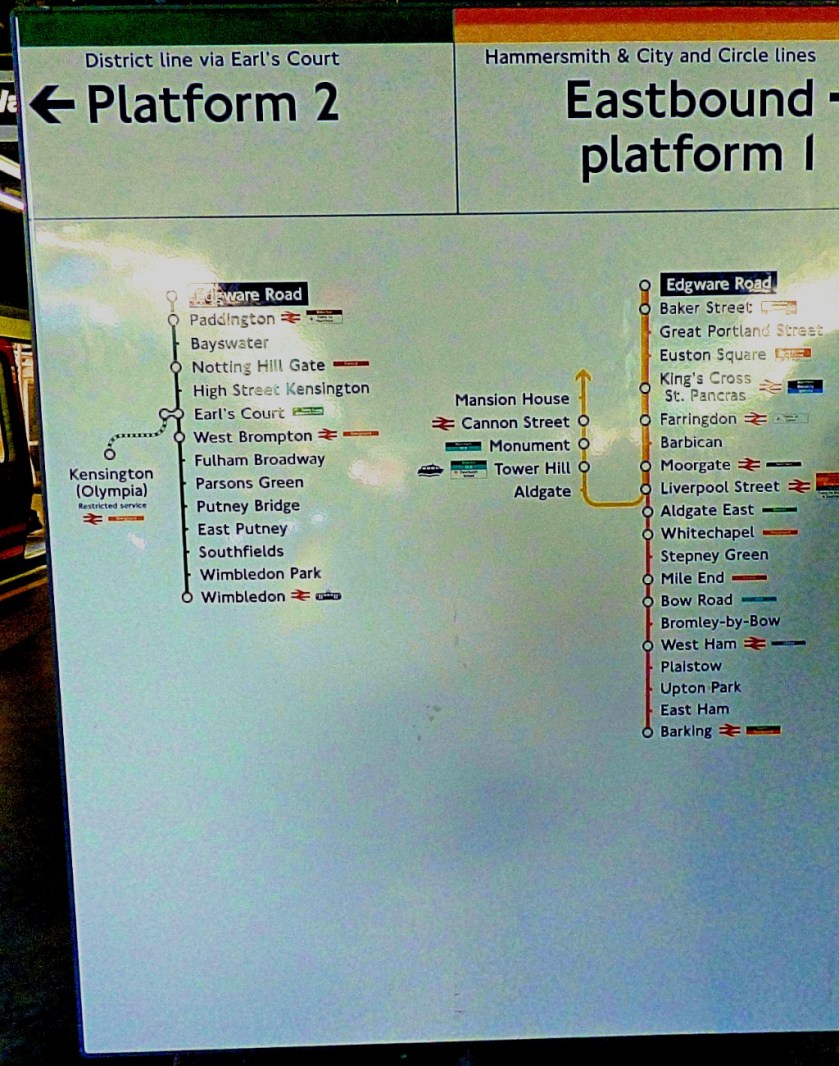
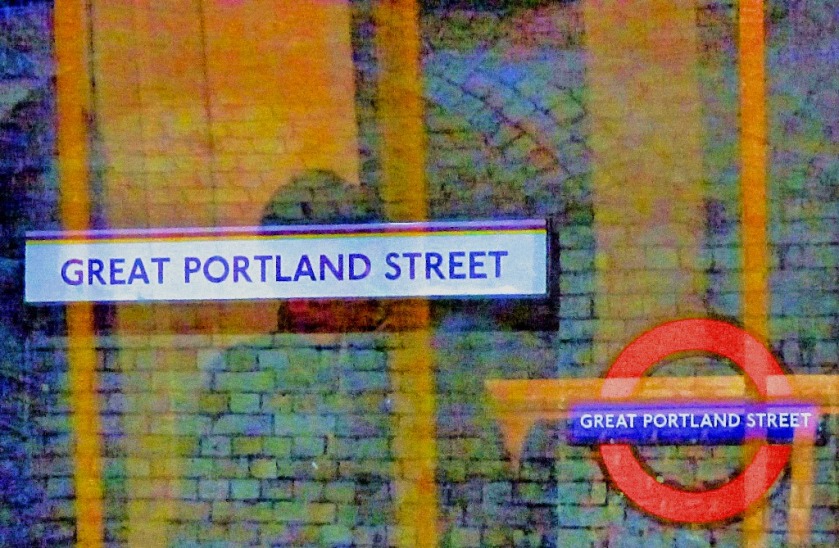
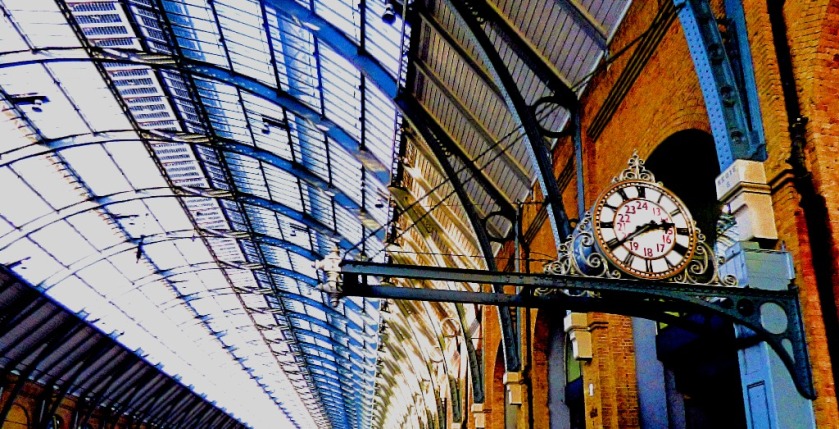
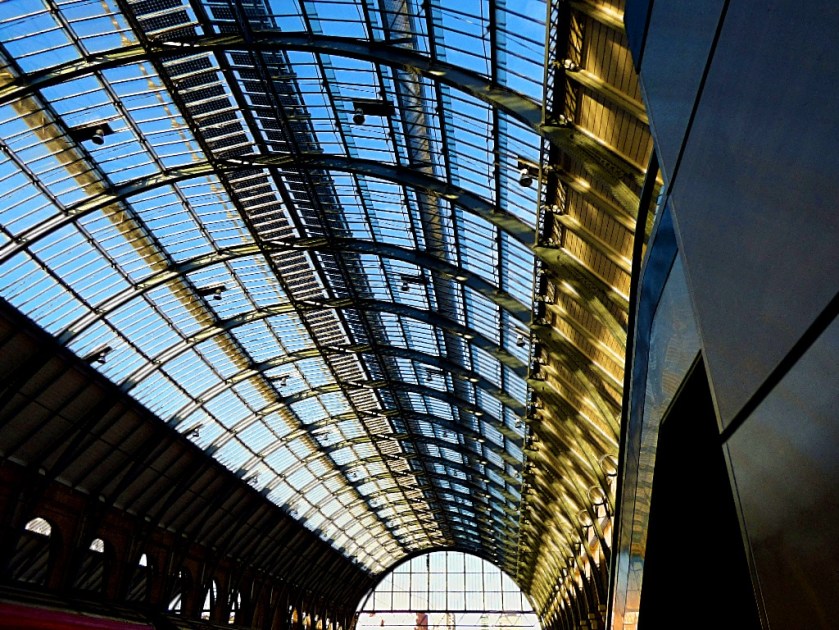
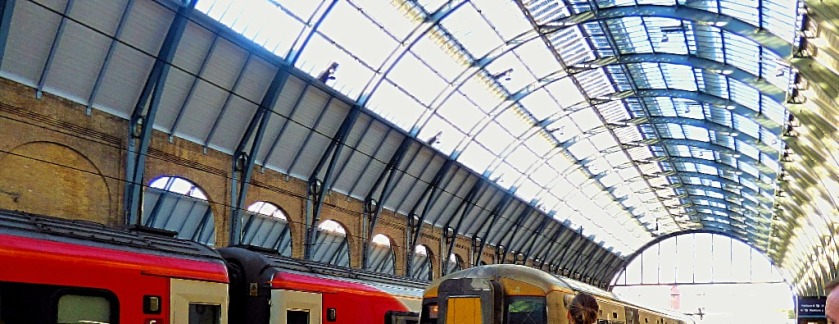
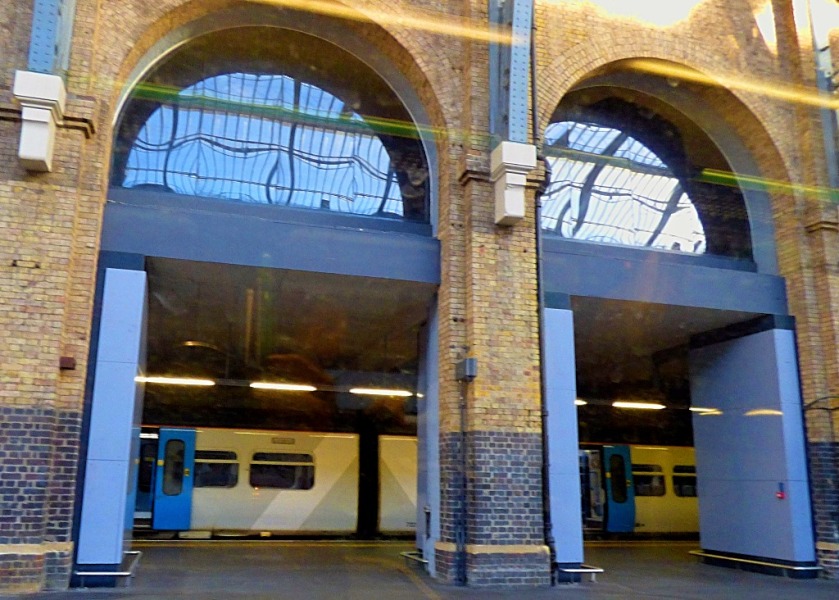
I crossed to the Hammersmith and City line platforms, nos 15 and 16 of the main station, and waited a long time for an eastbound train, then discovering that it was terminating at Edgware Road (very odd indeed for a train from Hammersmith), so I had to change again. I arrived at King’s Cross and was just in time to catch the 14:44 to King’s Lynn, which was not overfull (as the 15:44, the next service, certainly would have been). This means that I was at home and unpacking by 5PM.
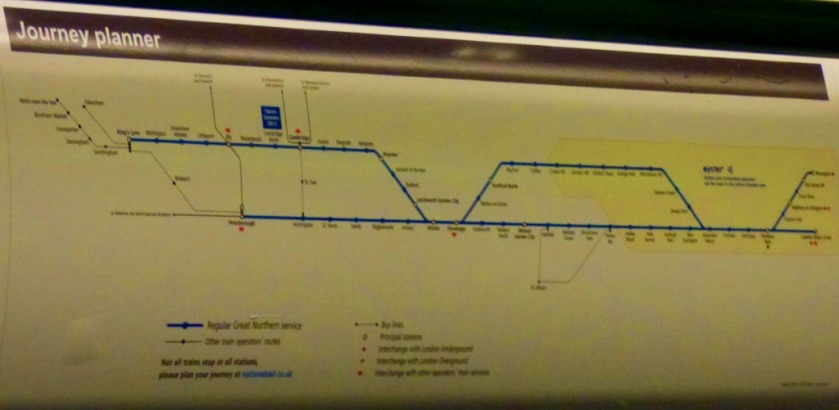
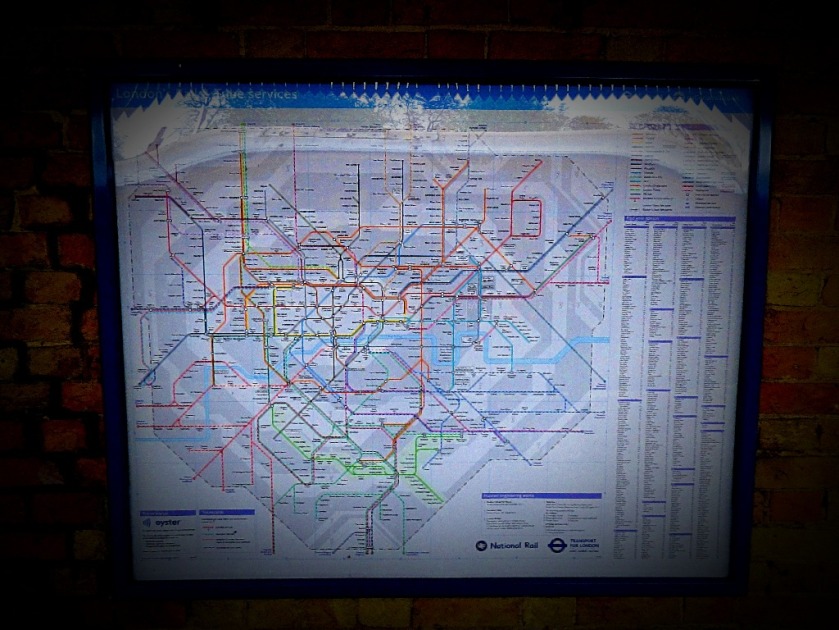
This picture was the cause of minor quarrel – I was challenged by another passenger as to why I was taking pictures of his friend, and it took my a while to get the point across that I was not, and that it was this map which was my target. His friend’s hat did appear in the uncropped version, but no face was visible, and my only interest was the map. I was perhaps a little harsh as I was fully expecting to miss my intended connection at Kings Cross due to the delays on this leg of the journey.
The platform from which the train to King’s Lynn was l.eaving was revealed with a mere eight minutes to spare, and if you going to Lynn you have to go to the front of the train (or else get out and dash along the platform at Cambridge).
An account of the journey to Penzance, setting the scene for my next post, about Penzance itself.
INTRODUCTION
This is continuing my account of my visit to Cornwall. We have reached Saturday, which for me featured a trip to England’s westernmost commercial railway station (note England not Britain – Arisaig on the Glasgow-Mallaig line in Scotland is further west), Penzance. The closest station in time terms to my parent’s new home is St Germans, and that is where my train journey started.
ST GERMANS
St Germans is completely unstaffed, and therefore, since there is no one to maintain it, has no ticket machines either. Tickets are purchased from the conductor once you are on the train. You are only allowed to do this at unstaffed stations – boarding without a ticket at a station where you can purchase one renders you liable to a penalty fare of £20 (I heard another passenger who had done this escaping with a warning not to do it again).
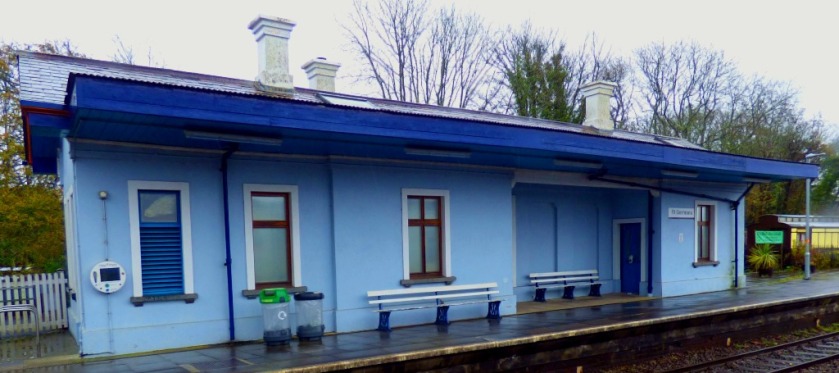
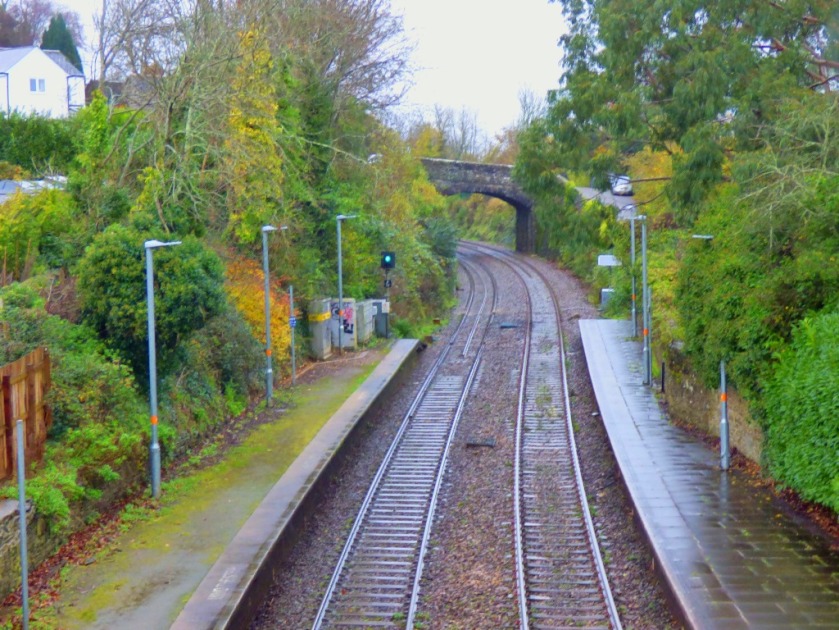
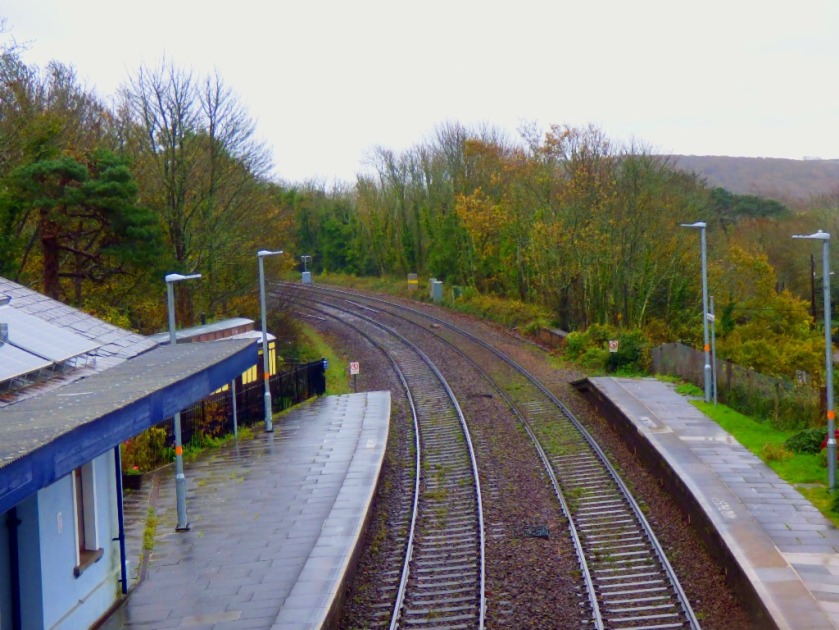
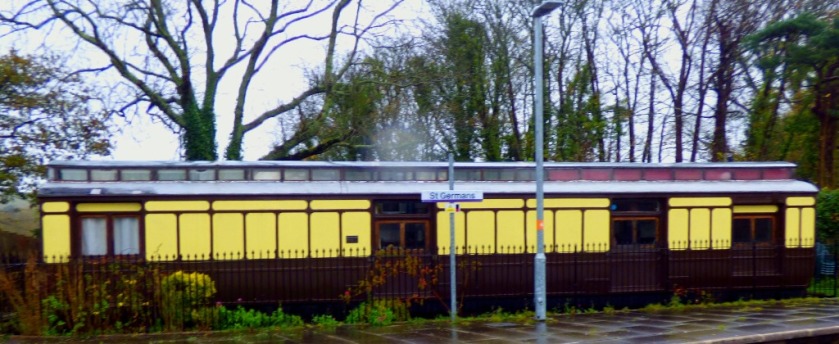
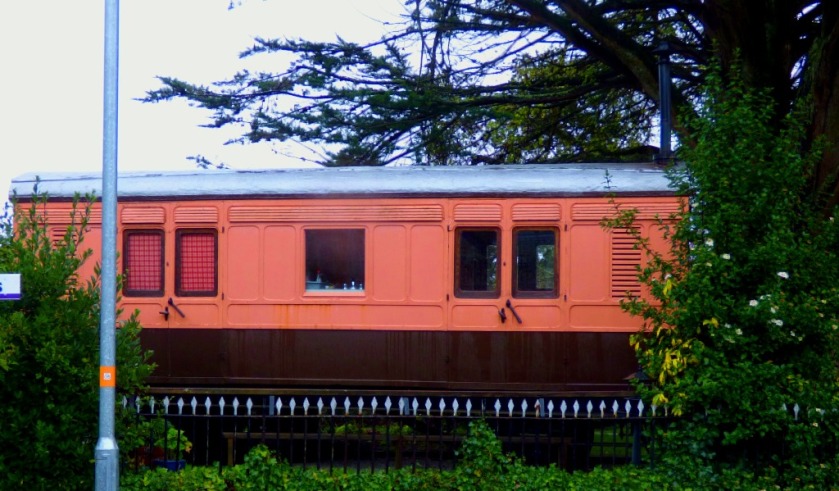
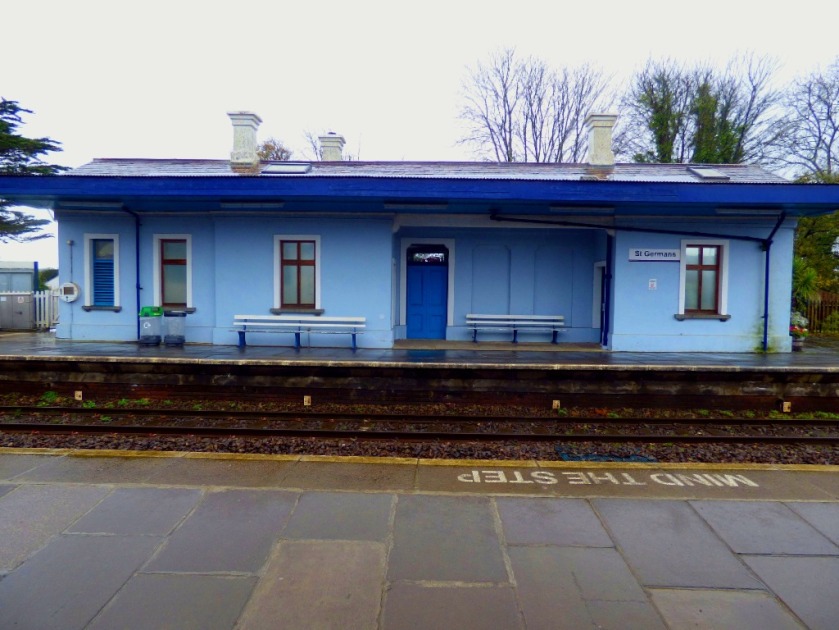
I had a bit of time at St Germans (given that the next train to call at St Germans was two hours later this was indubitably the sensible position to be in. Here are some photographs from the station…
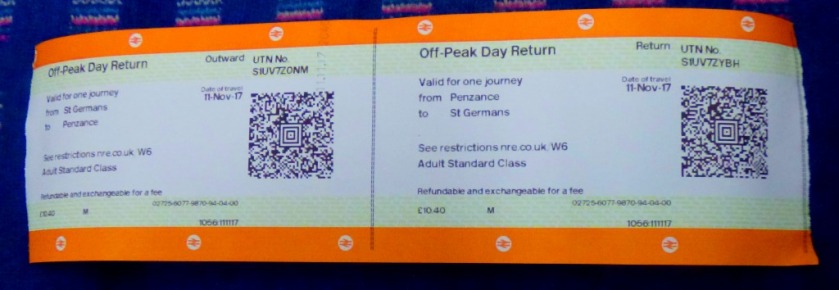
The ticket issued by the onboard conductor is much bigger than a standard train ticket.
THE JOURNEY TO PENZANCE
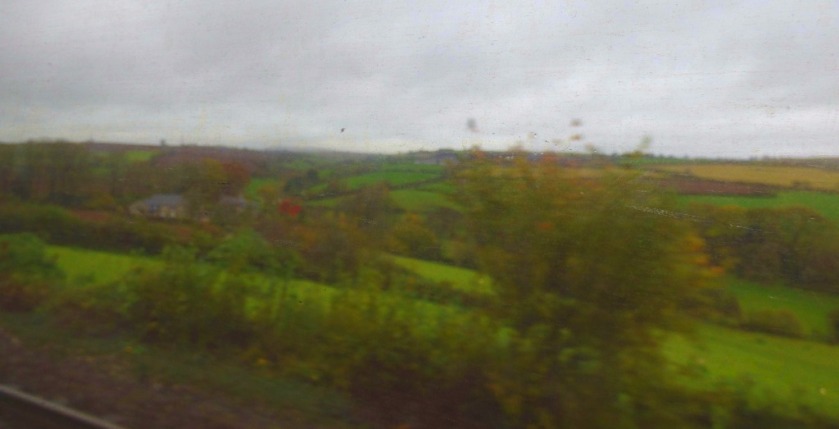
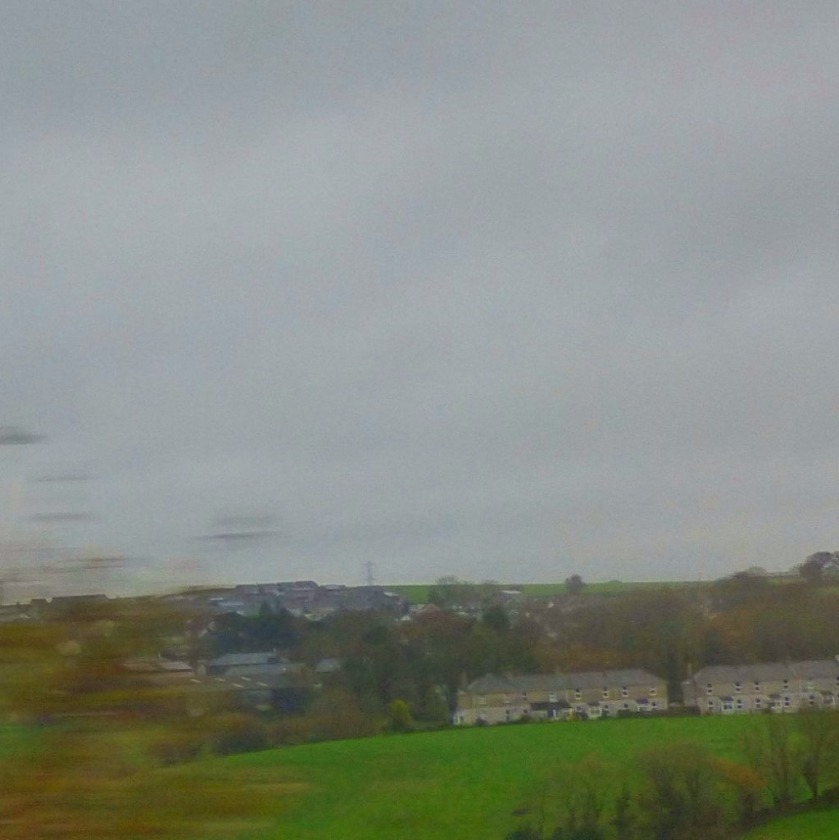
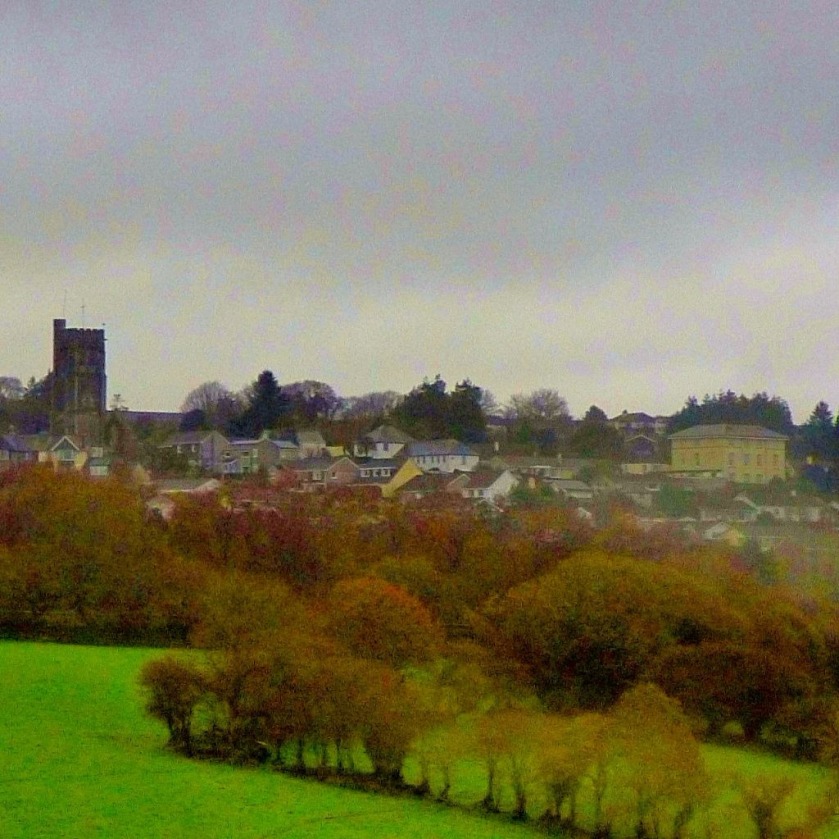
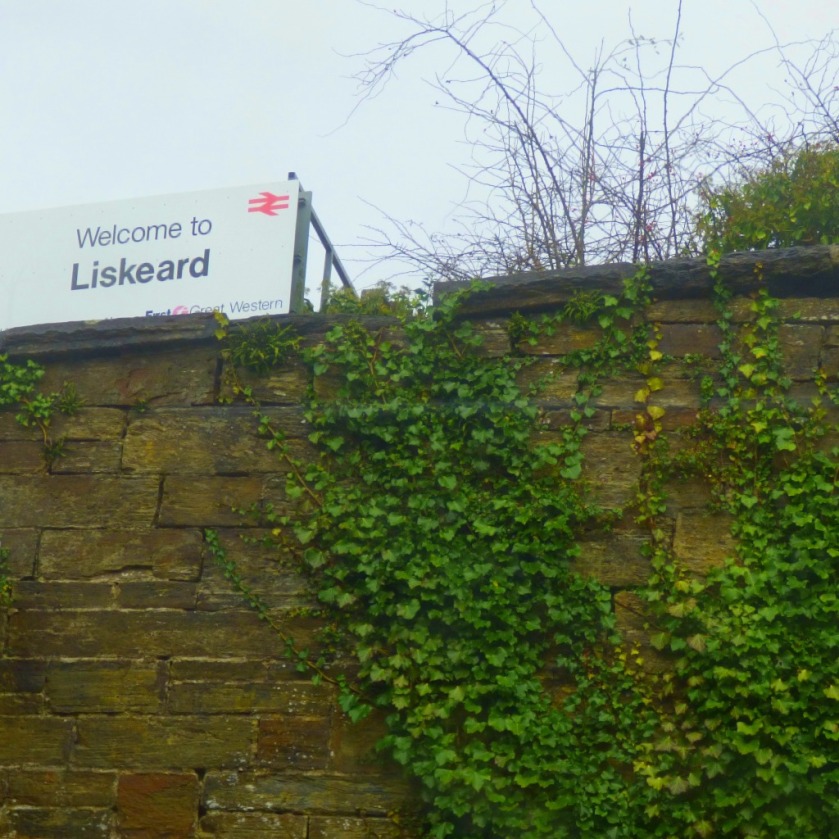
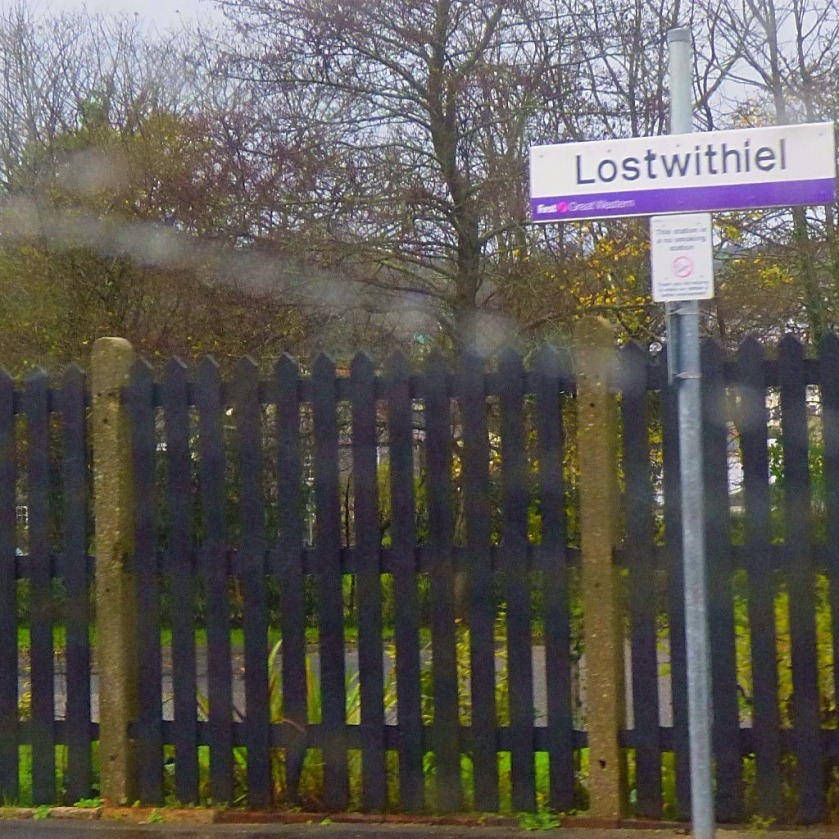
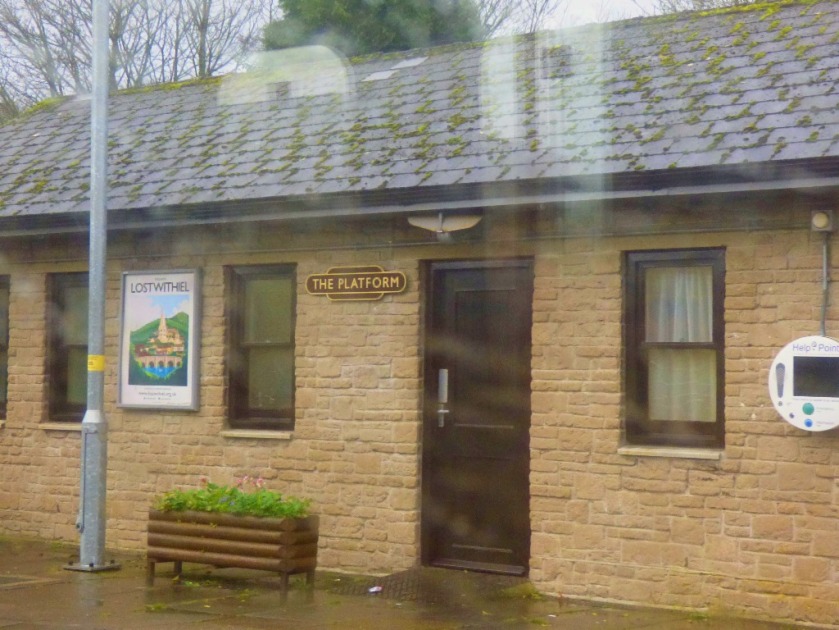
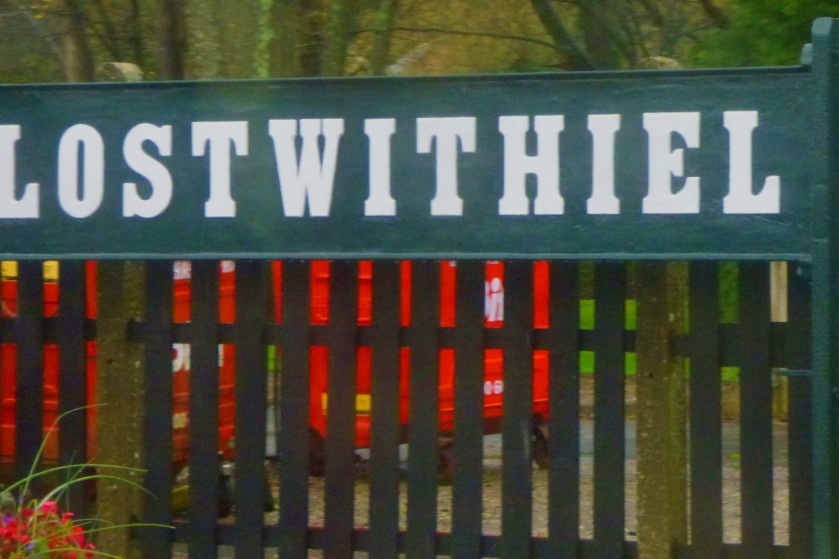
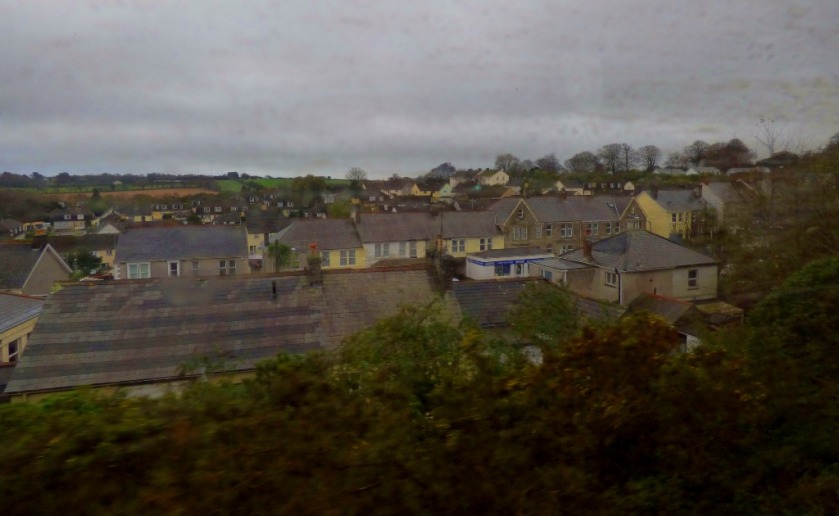
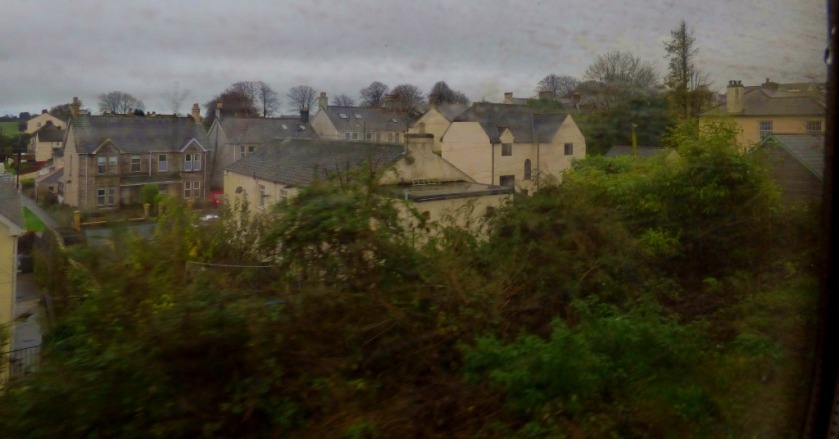
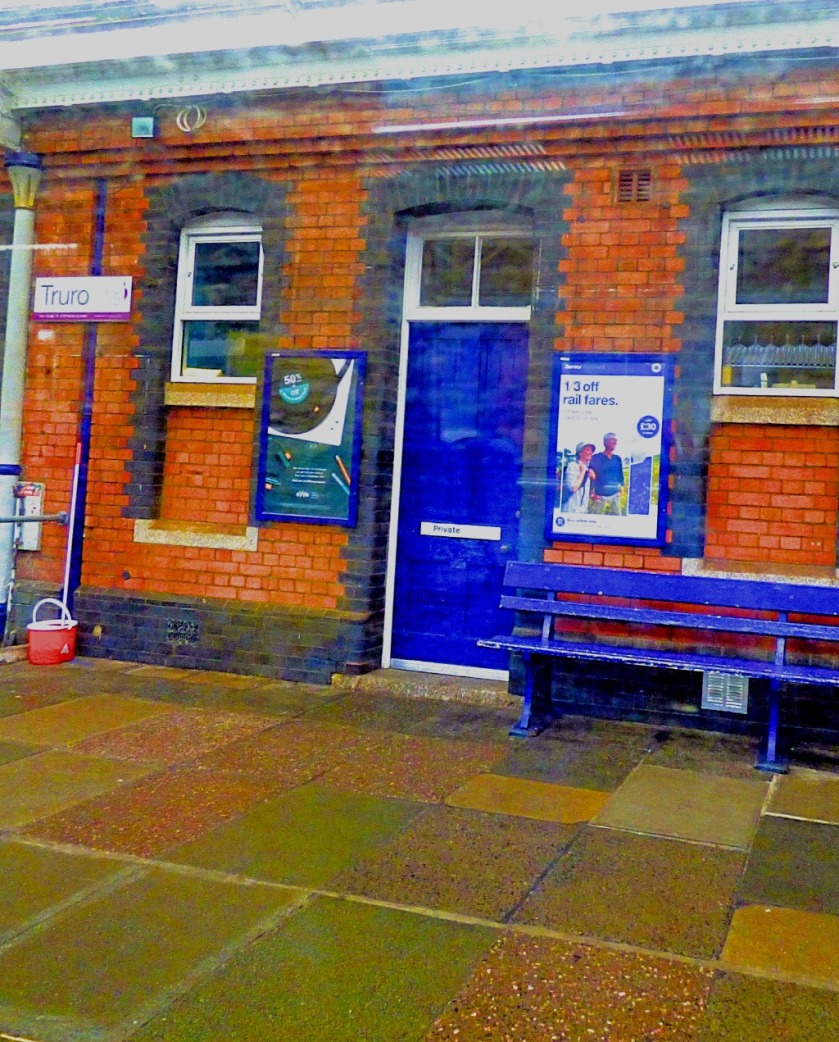
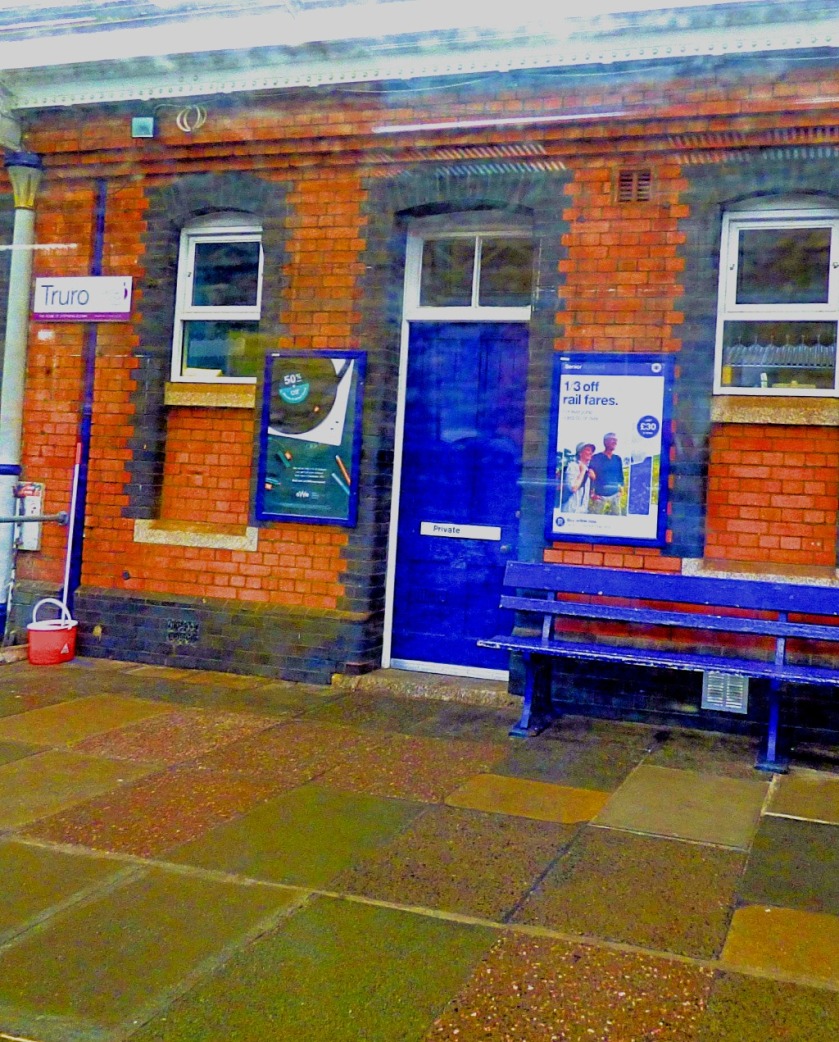
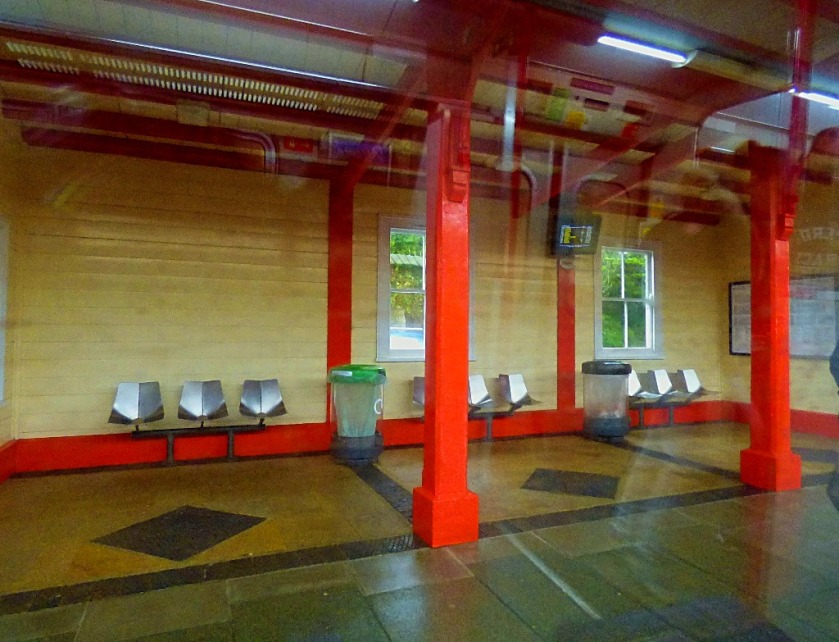
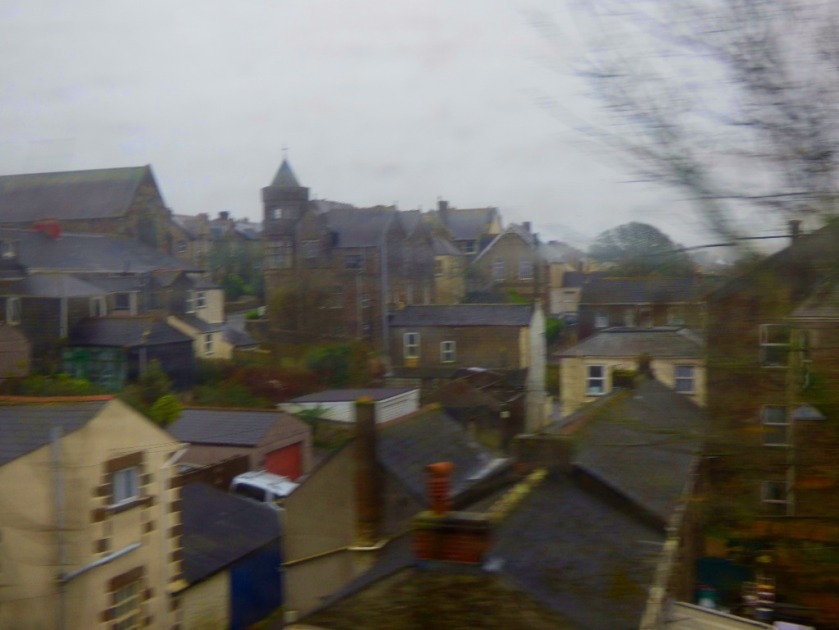
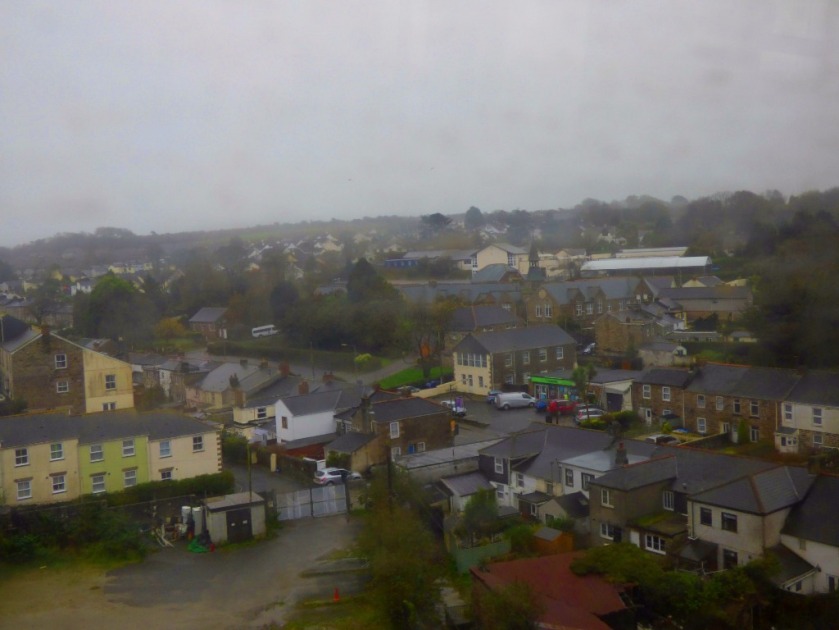
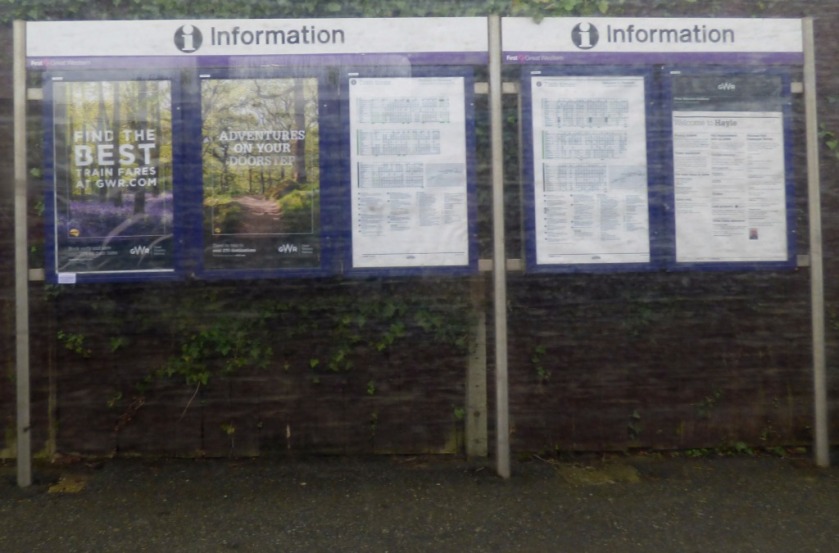
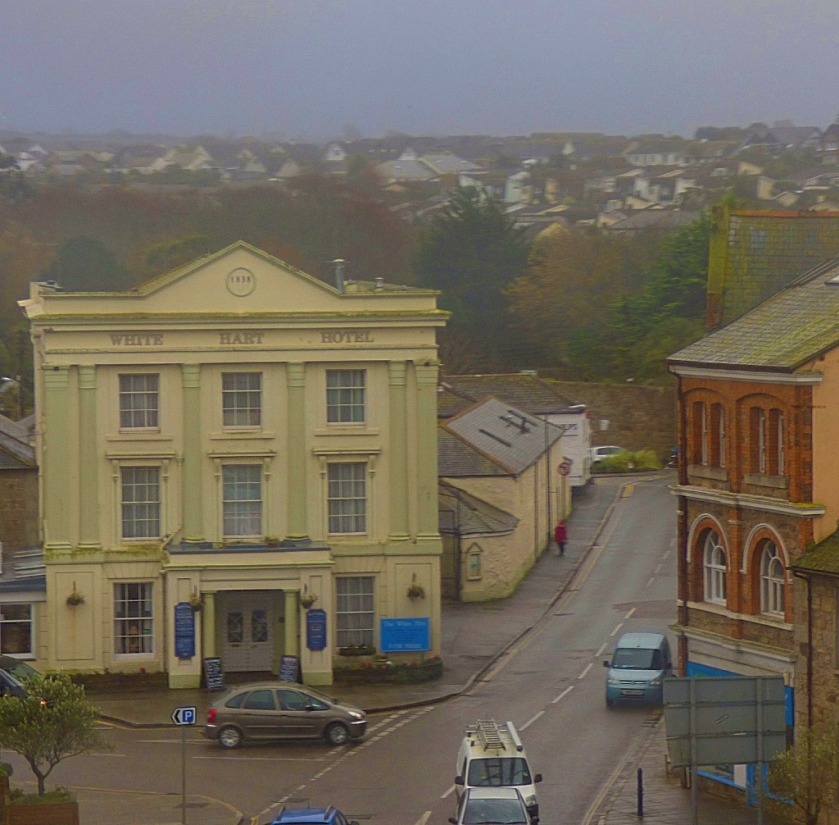
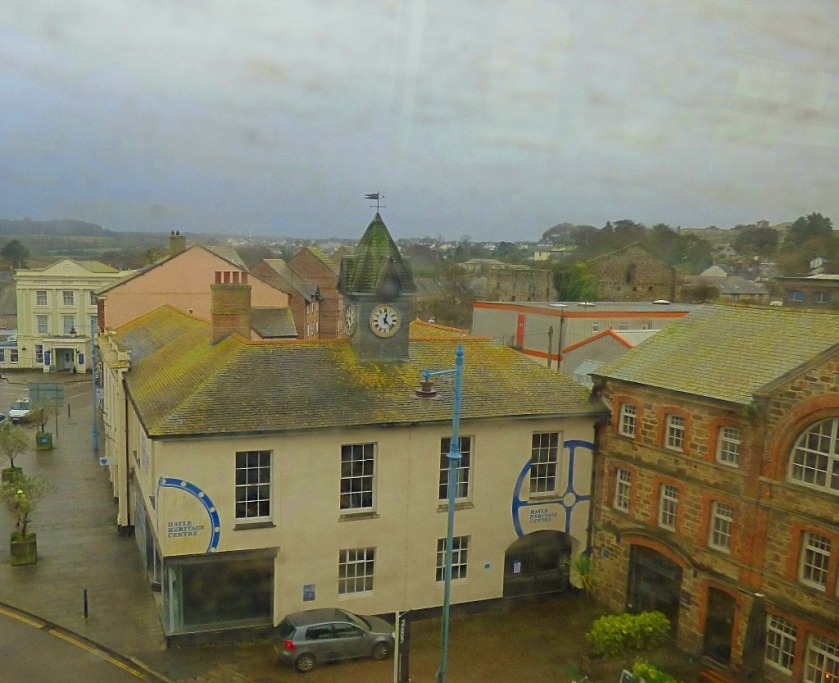
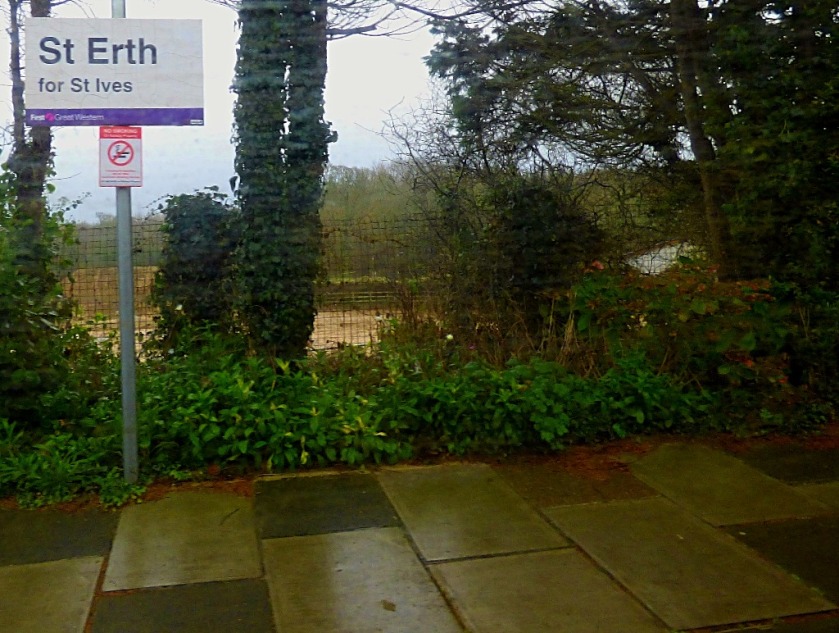
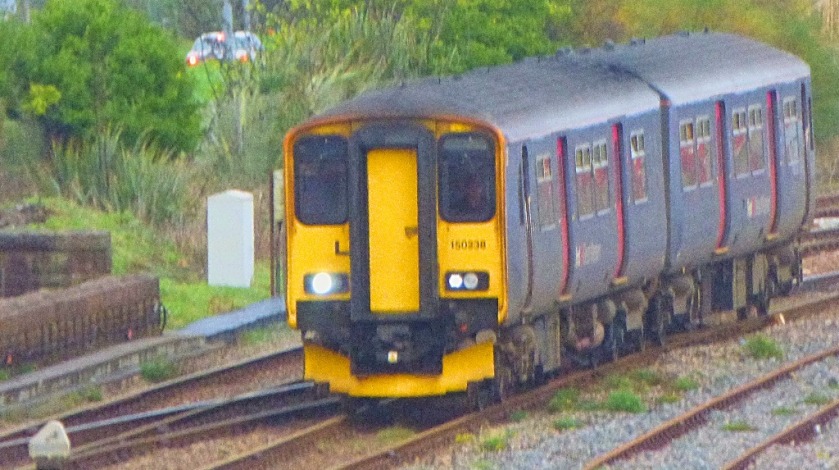
Taking pictures through the windows of a moving train is not especially easy, although I did at least have a window seat for the entire journey, so was never shooting across people. After leaving St Germans the train called at Liskeard (change for the Looe branch line), Bodmin Parkway, Lostwithiel (although the name might suggets otherwise as far as I am aware no elves live here!), Par (trains to Newquay depart from here), St Austell, Truro (Falmouth services diverge here), Redruth, Camborne, Hayle, St Erth (branch line to St Ives from here) and Penzance. Here are the pictures from this journey…
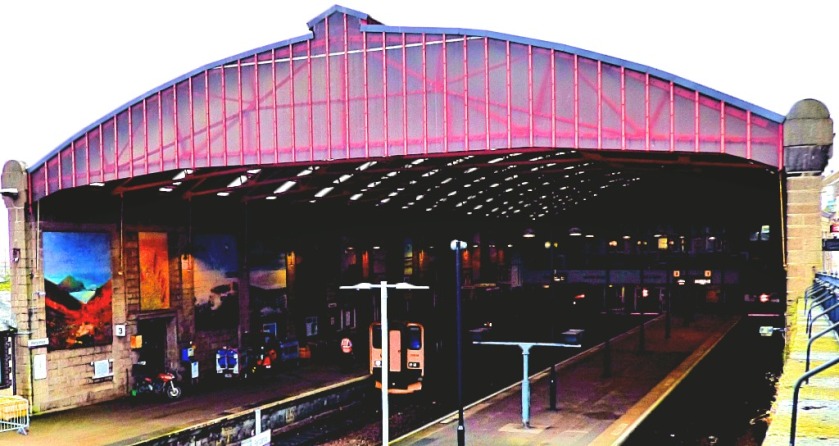
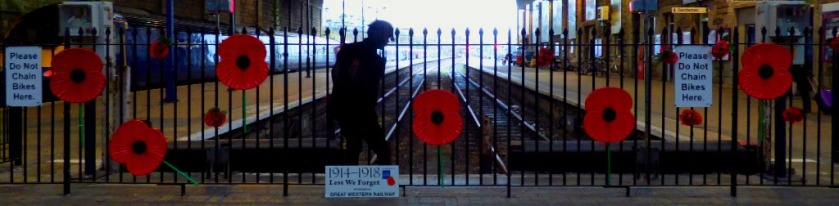
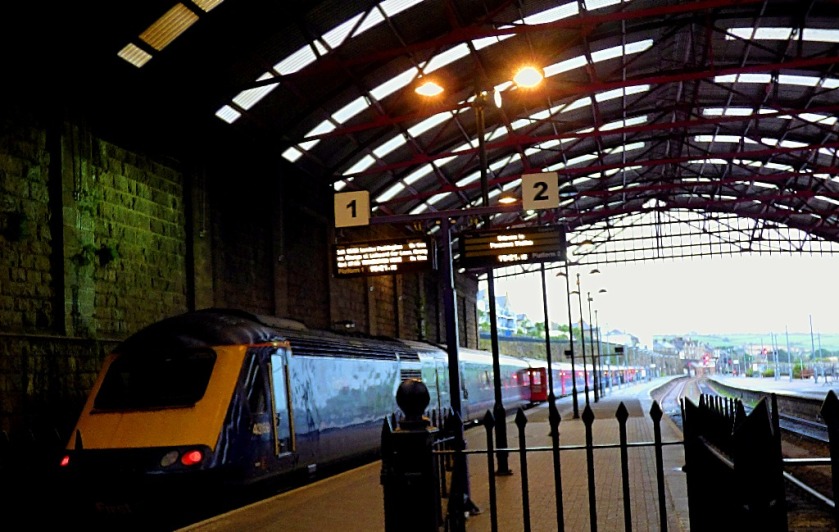
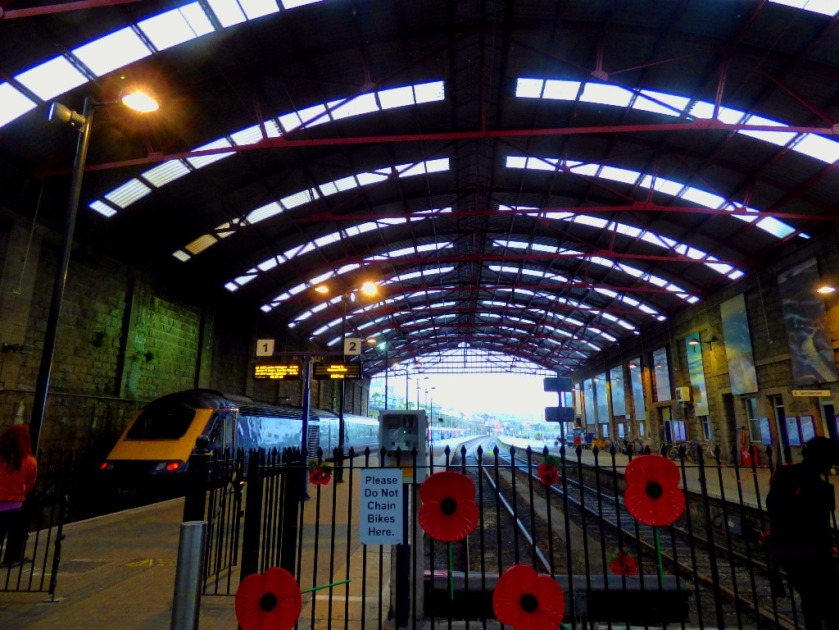
PENZANCE STATION
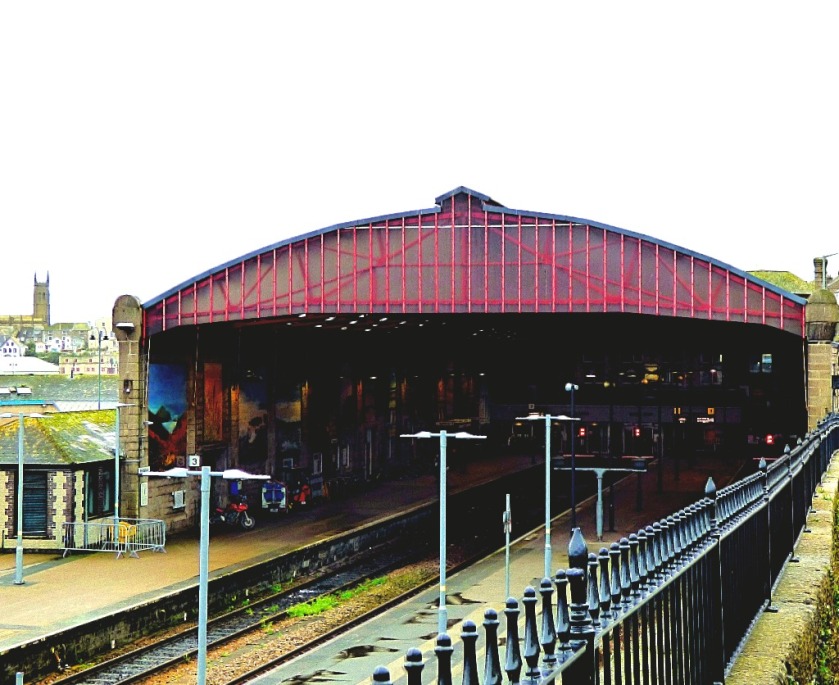
These pictures were taken both on arrival at Penzance, and towards the end of my time in Penzance.
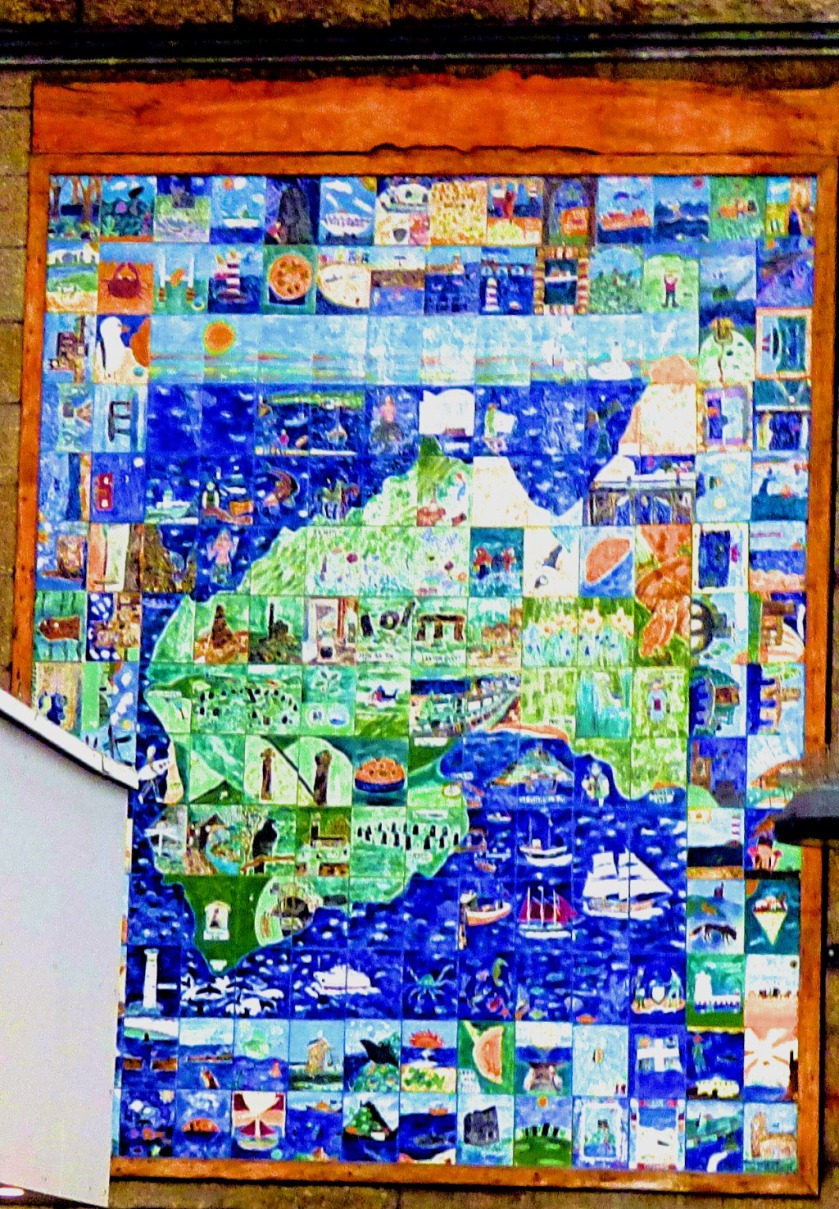
This was my first effort at capturing this tile picture……and this, later in the day, was my second and final effort.
A photographic account of Downham Market, an old market town in Norfolk.
INTRODUCTION
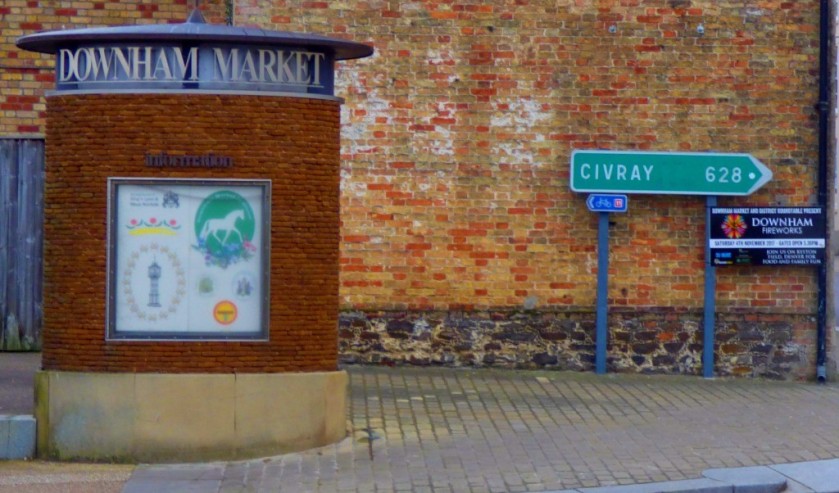
As those of you who read the post I put up earlier today will know I spent part of Saturday in the town of Downham Market. These post showcases everything I saw there other than the Town Hall.
THE STATION
This was my first visit to Downham Market, as opposed to passing through the station en route to further afield destinations. The pictures here were taken at two distinct periods, in the morning immediately post arrival, and in the afternoon when I had rather more time to kill than I would have wished. The only way across the tracks at Downham Market is by way of a level crossing, and the train from London to King’s Lynn arrives just before the one going the other way. The crossing gates close a couple of minutes before the King’s Lynn train arrives and stay closed until the London train has departed, which means that if you are looking to catch the King’s Lynn train, which departs from the far platform from the town centre and the crossing gates close you have missed it, and such was my fate on Saturday. For those affected this also explains both my later than usual arrival at the venue for Musical Keys and the fact that I was a tad breathless when I got there – I had stepped off a train at 15:20 at King’s Lynn and walked straight out to the Scout Hut in something of a hurry.
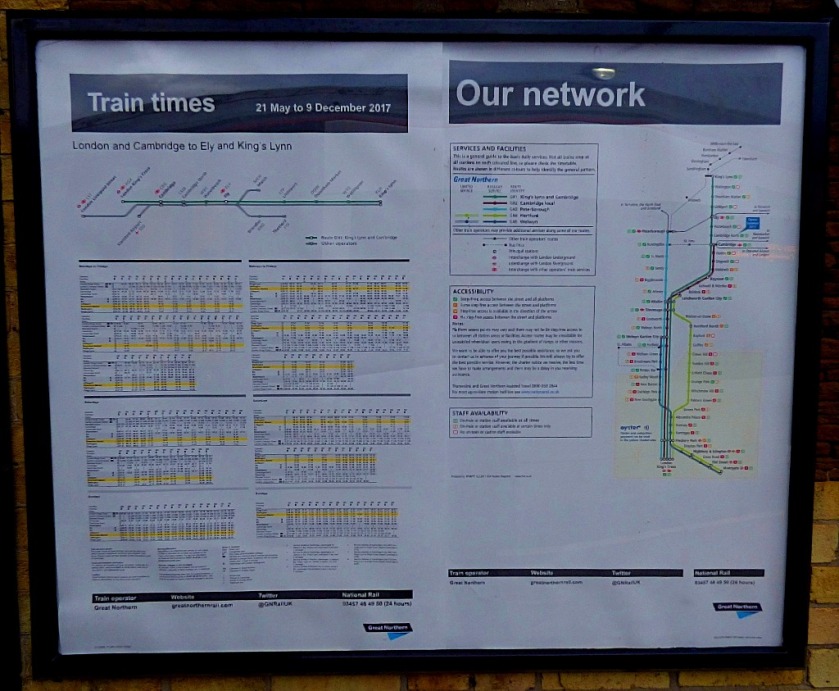
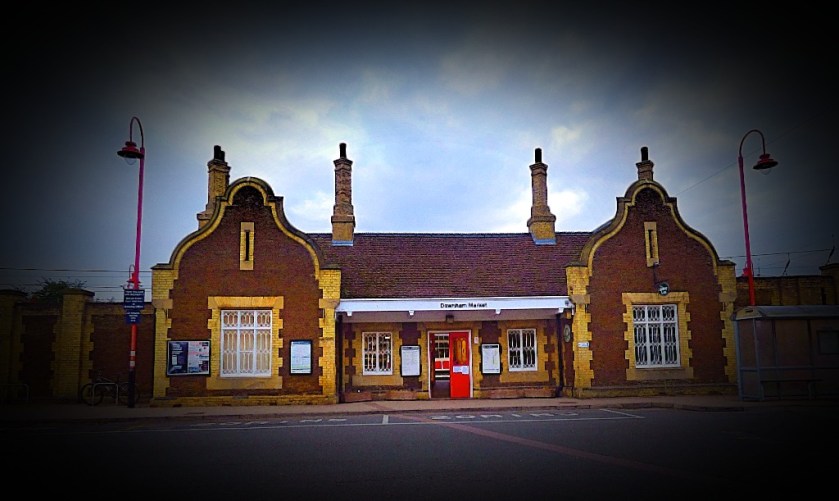
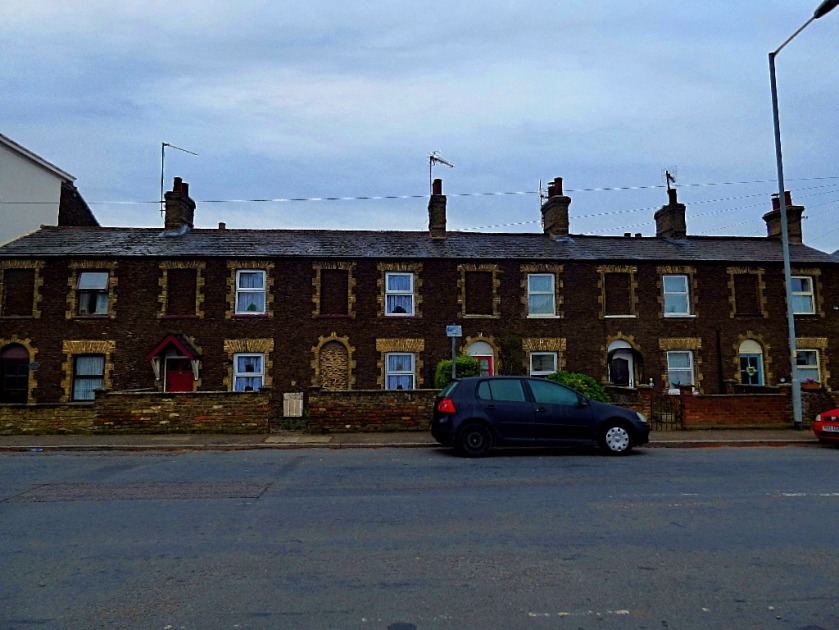
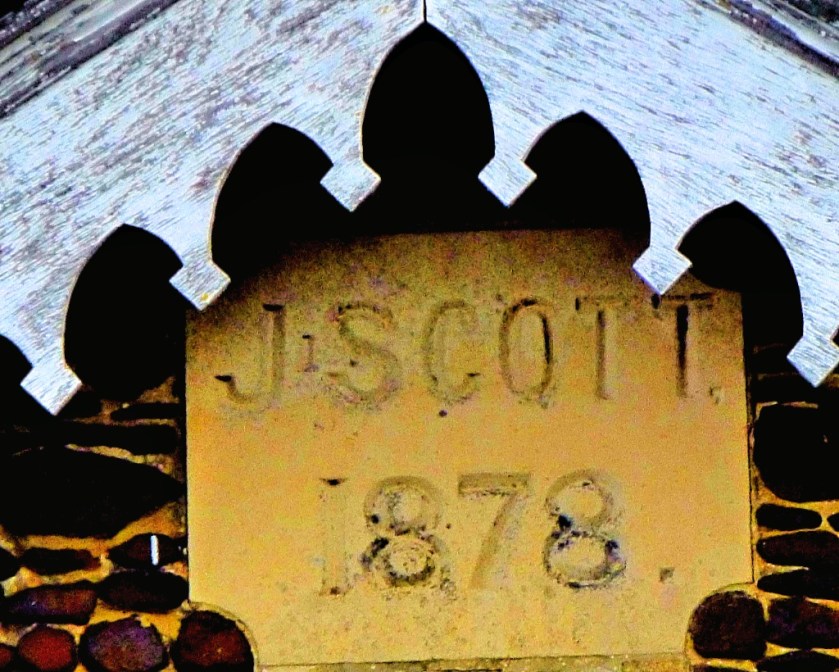
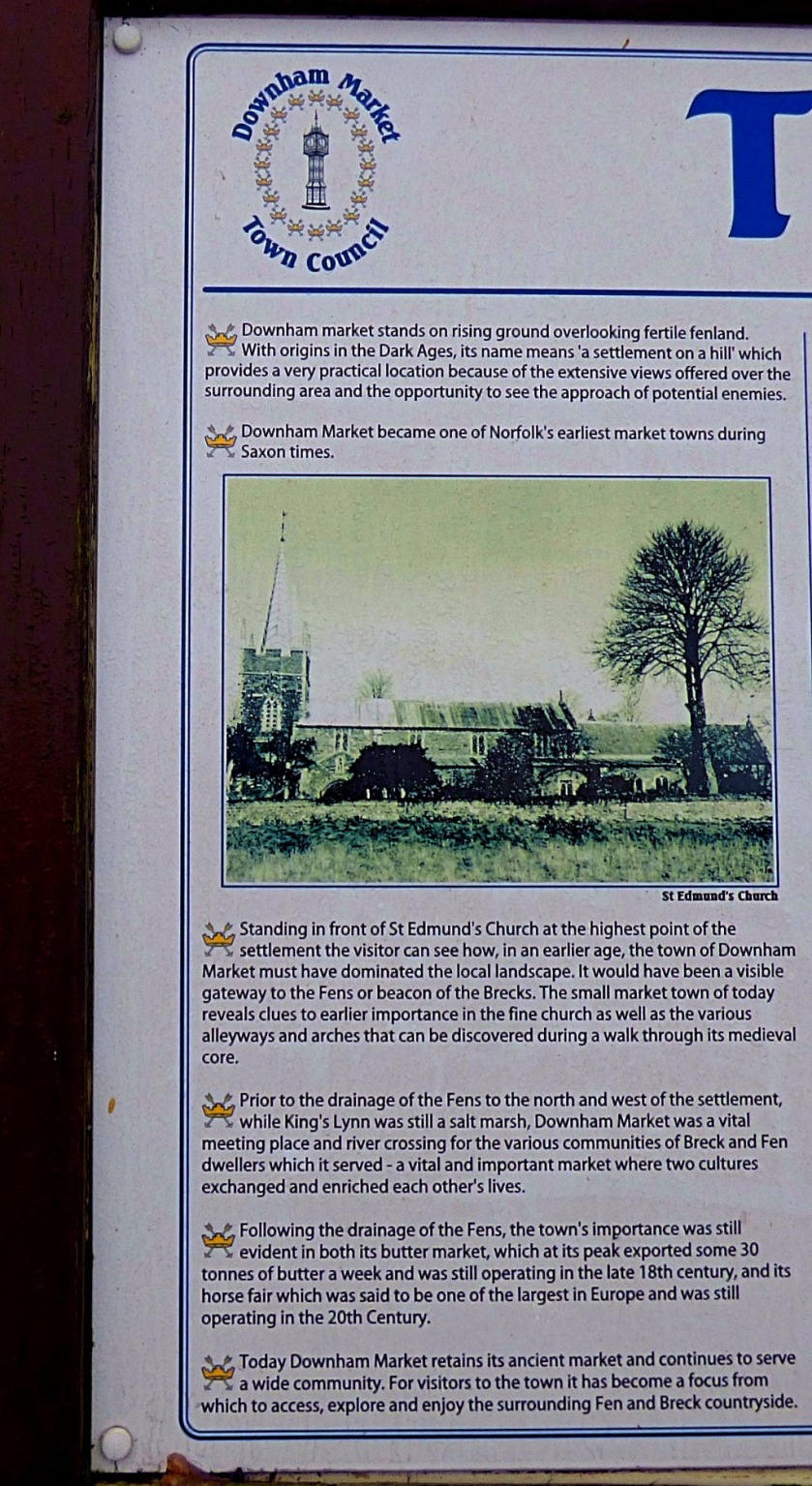
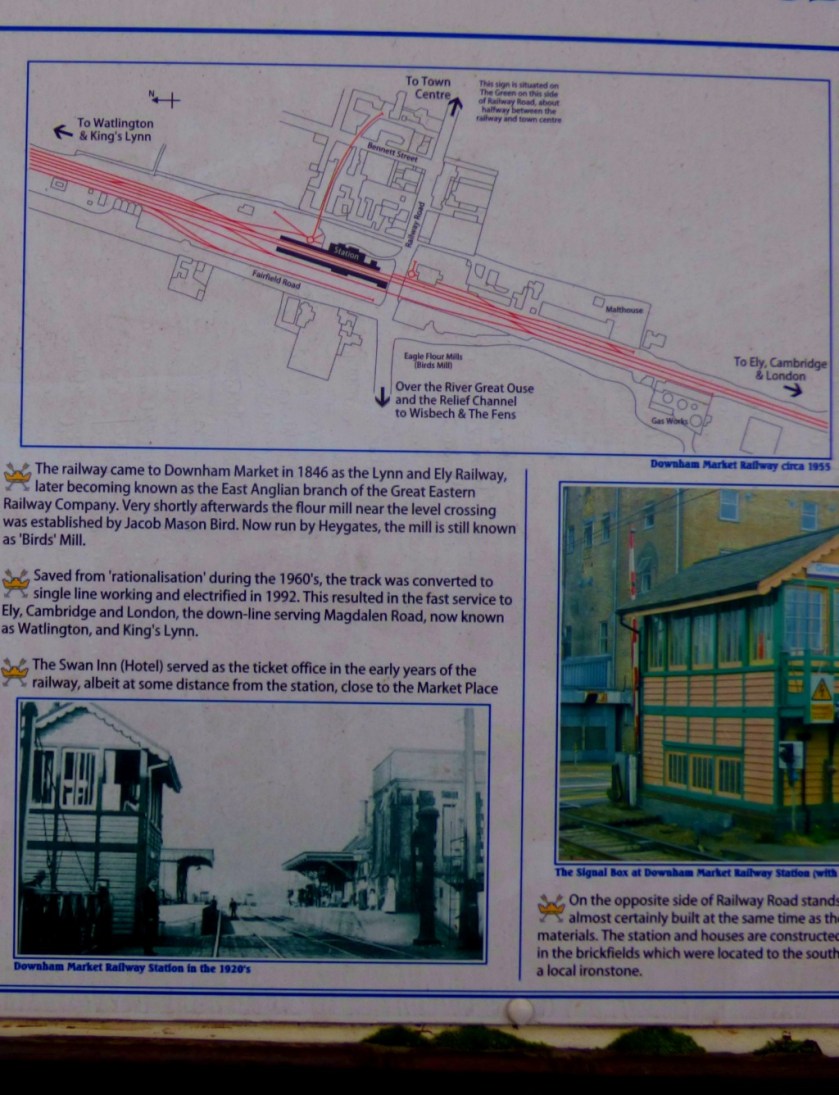
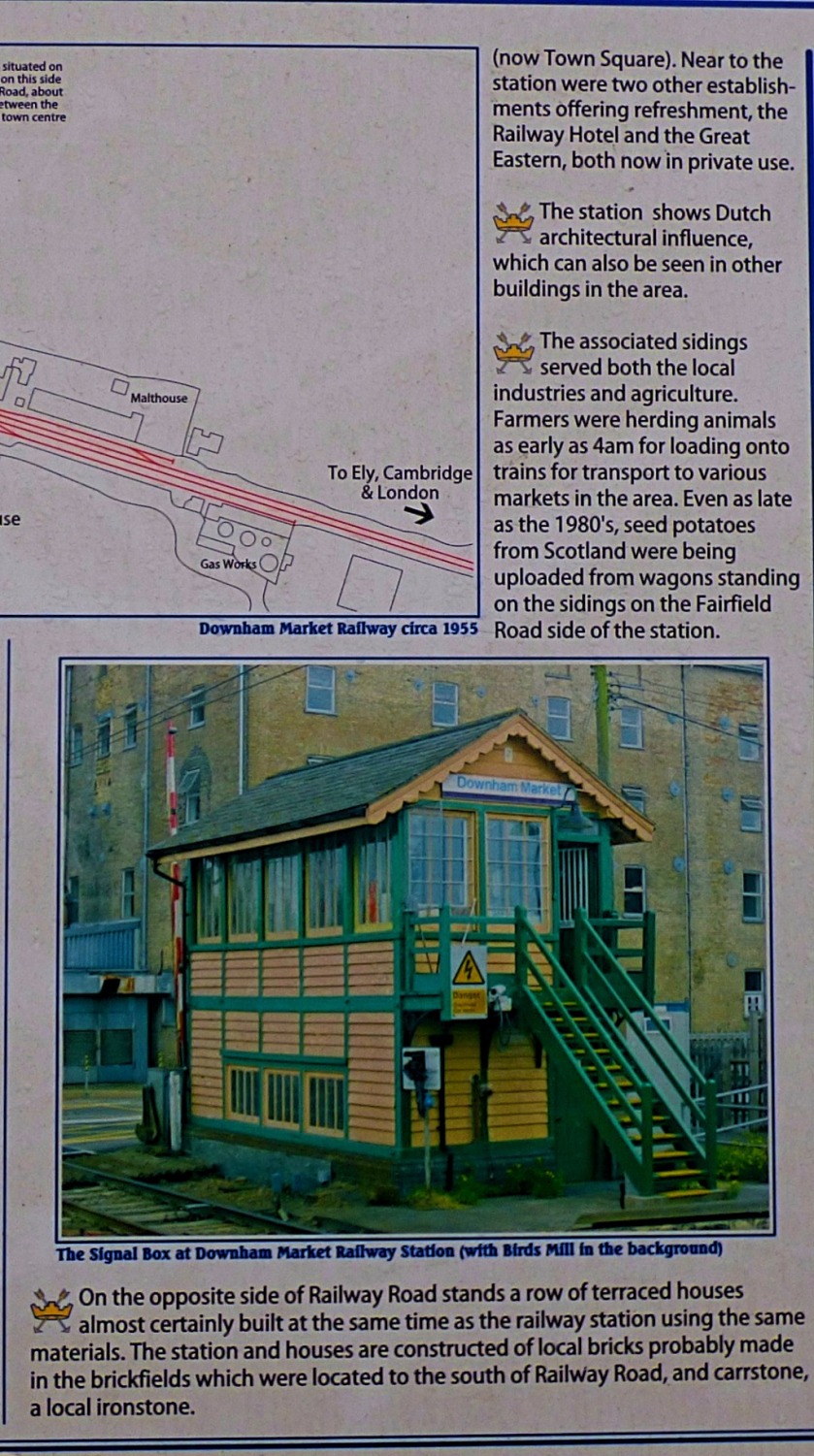
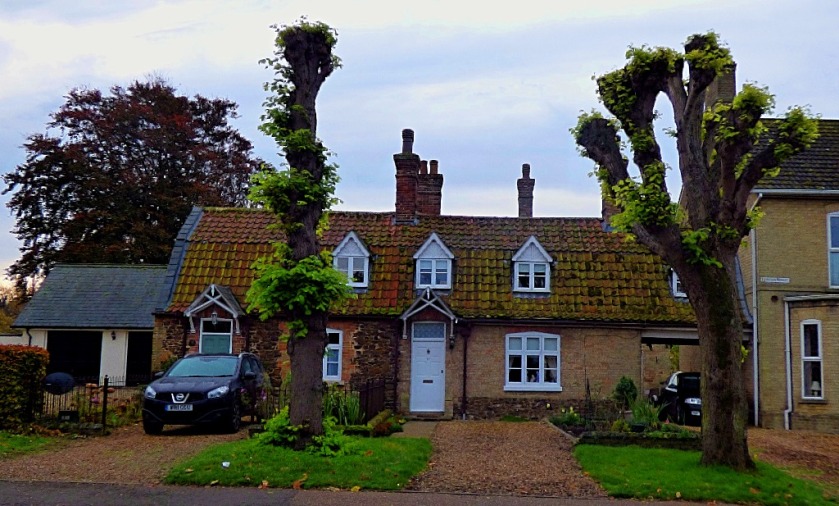
The signal box at Downham MarketThe station building – very impressive, and I was to discover quite typical of 19th century Downham Market buildings in the use of Carr (the brown coloured stone).A handy little map for working out one’s route from the station.I reckon (though I am opne to correction) that this little terrace was built to accommodate railway workers.This building is visible from the station platform.
THE REST OF DOWNHAM MARKET
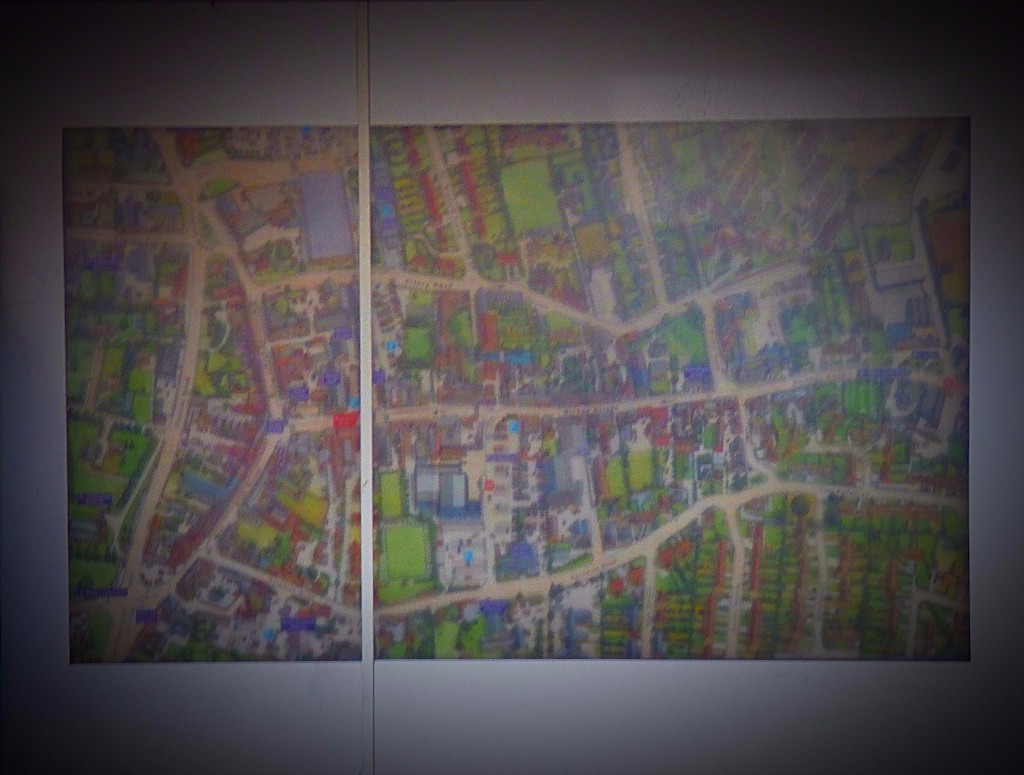
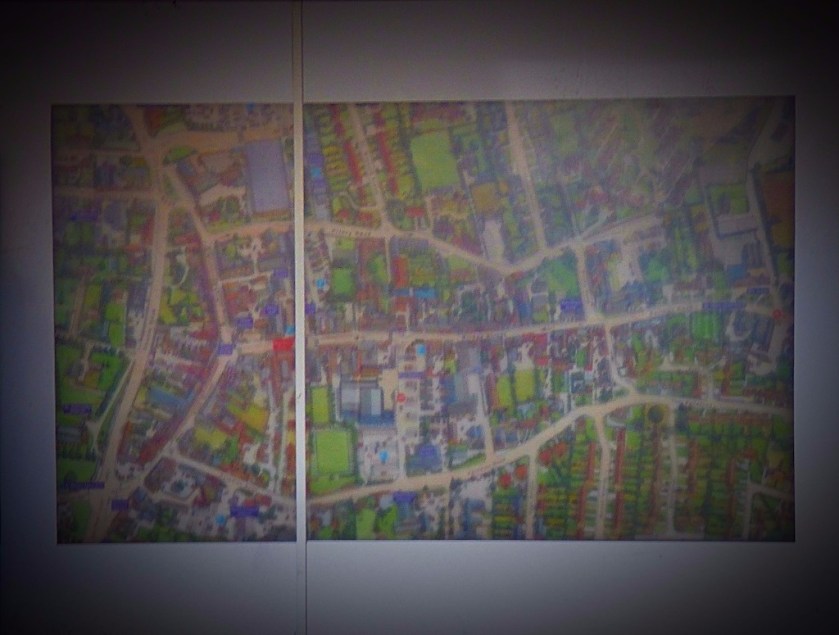
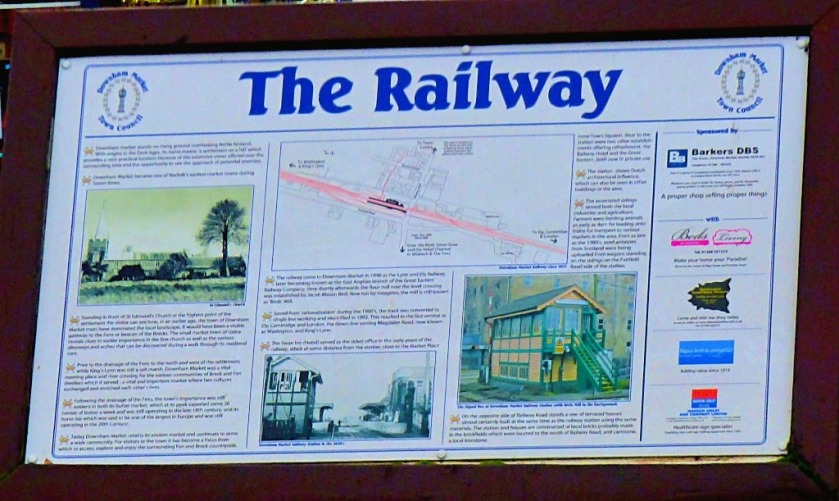
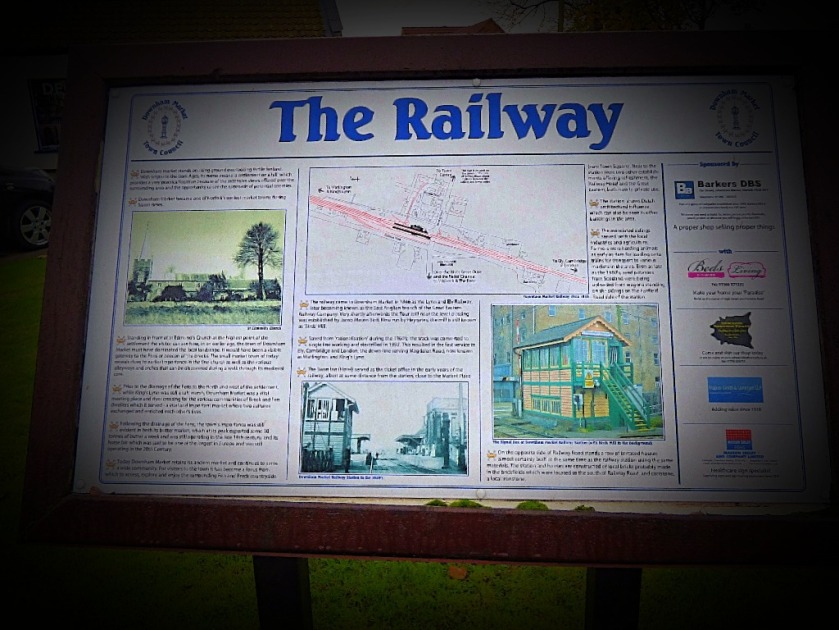
I start with two pictures to set the scene, a huge pictorial map which can be seen in the town centre and the information board about the railway:
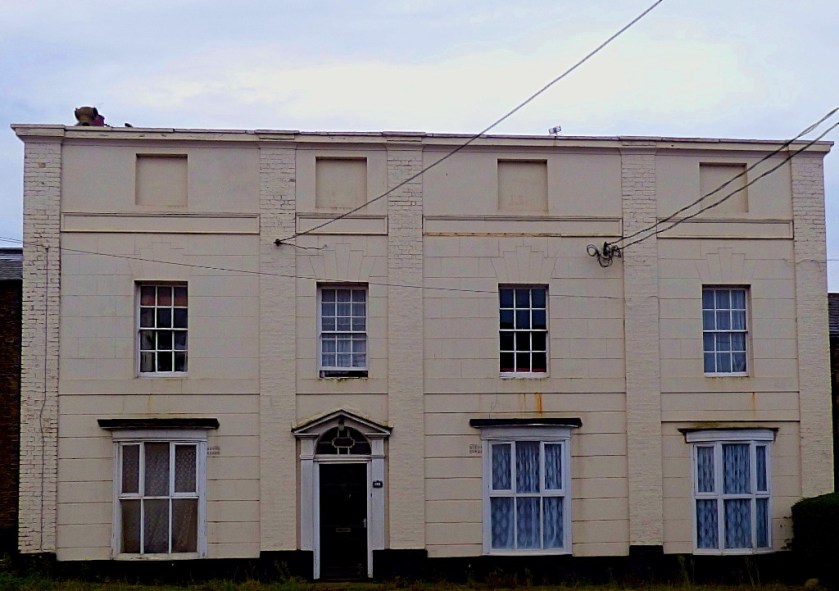
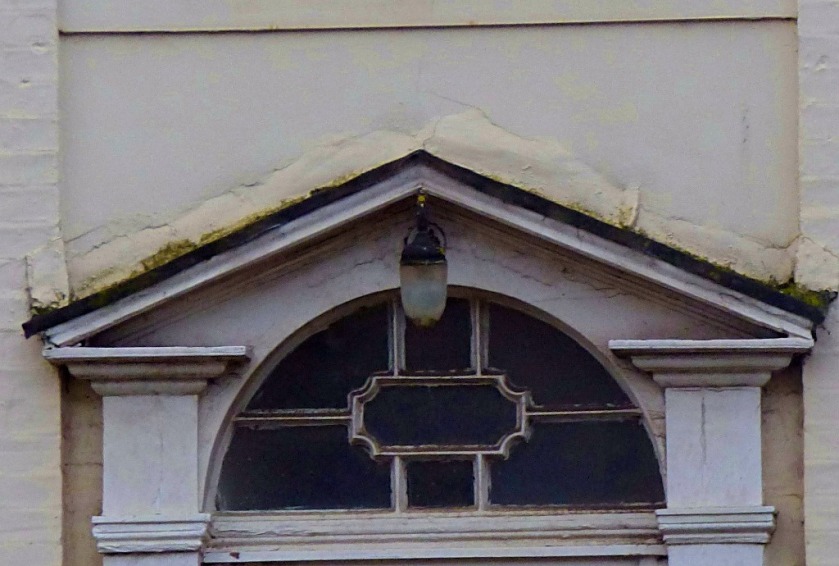
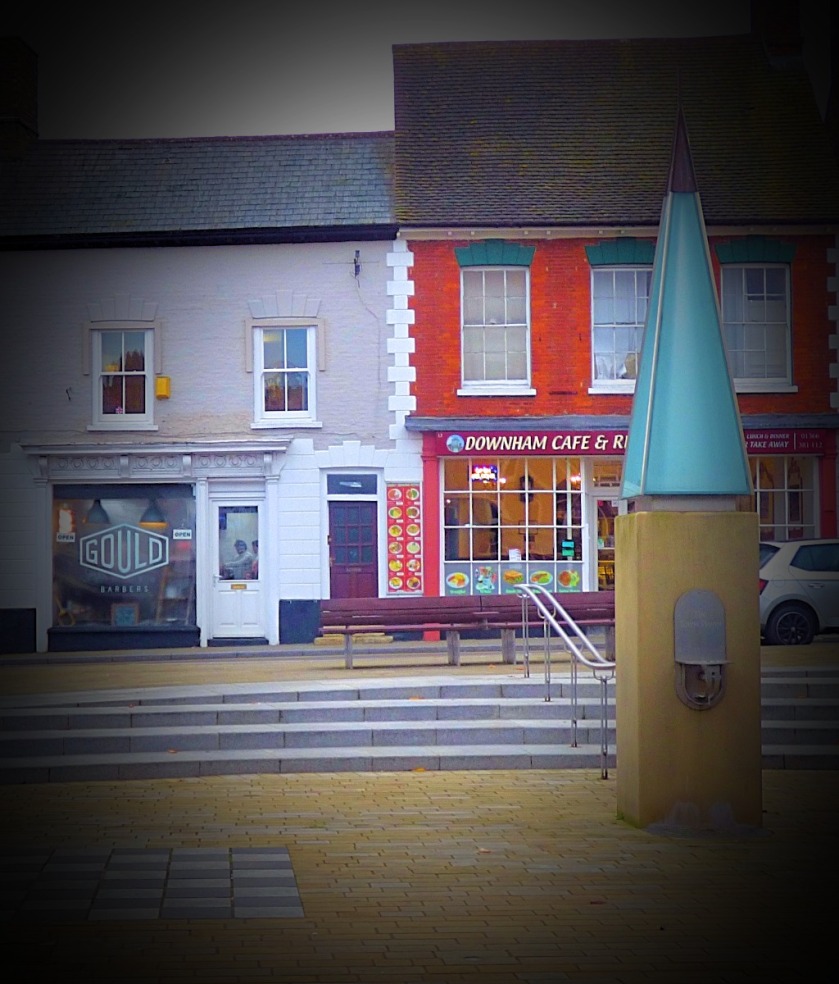
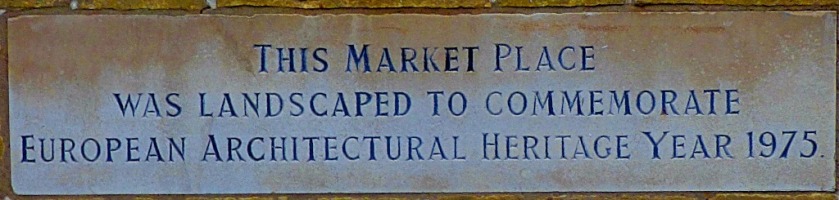
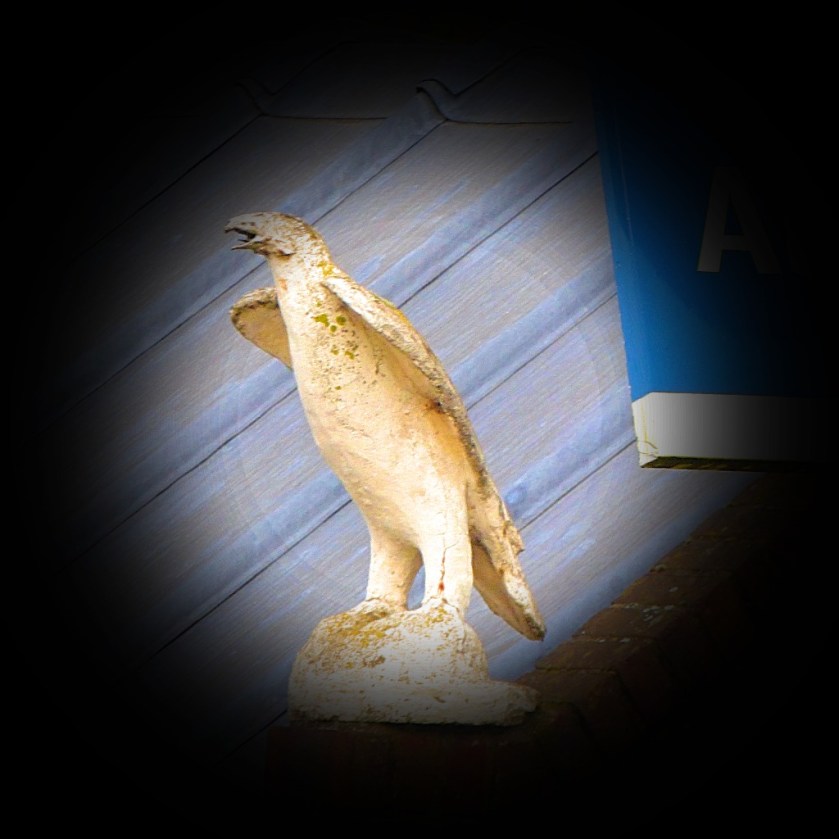
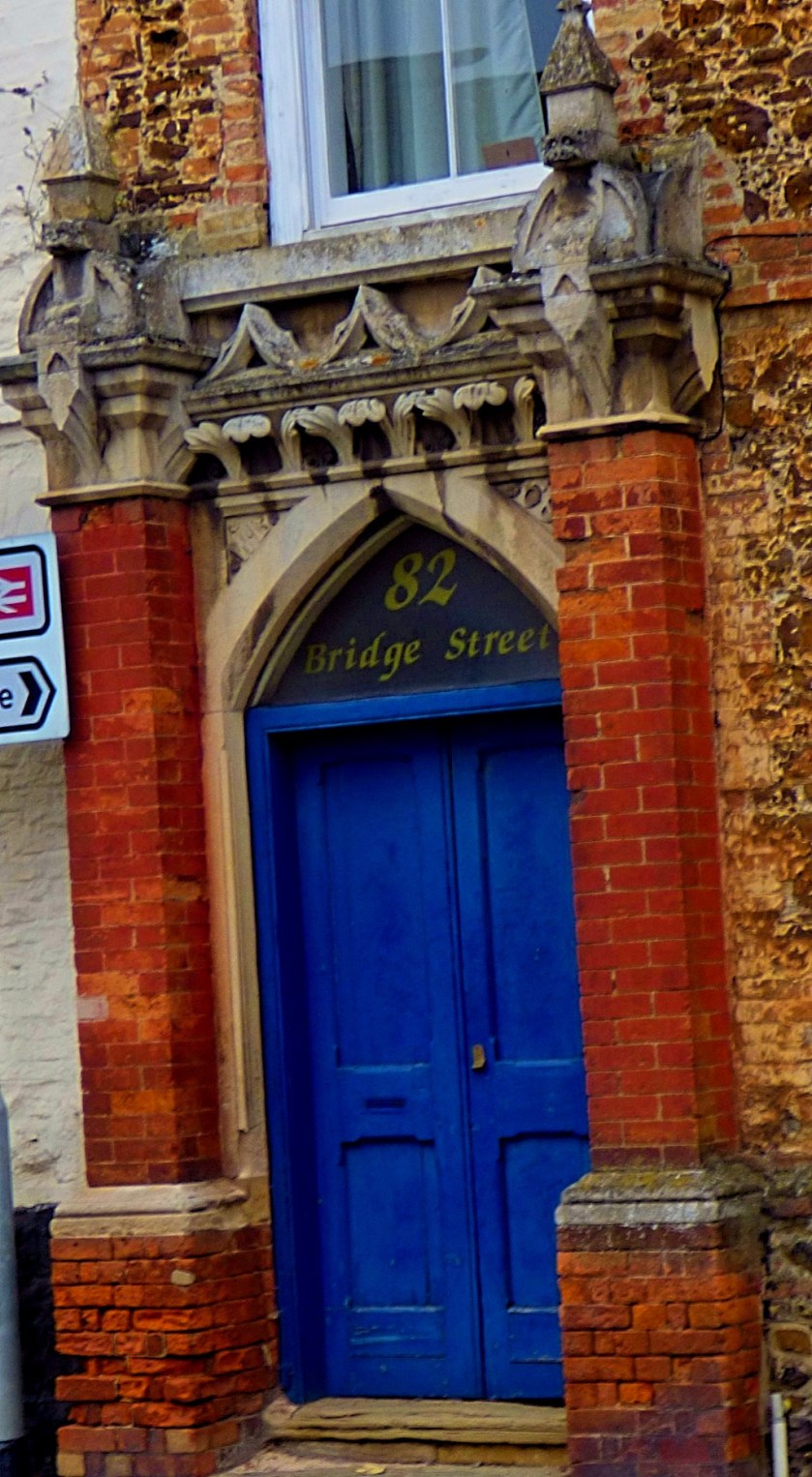
The ‘Downham’ part of Downham Market comes from Anglo-Saxon (afterall, we are in the lands of the North Folk of the East Angles) and literally means ‘homestead on a hill’, and indeed the market town that grew up around that homestead (it has been a market town since Anglo-Saxon times) is slightly elevated from the surrounding countryside, which in Norfolk constitutes being on a hill! These photos are presented in the order in which they were taken.
There will be more about Civray in the next section.
CIVRAY
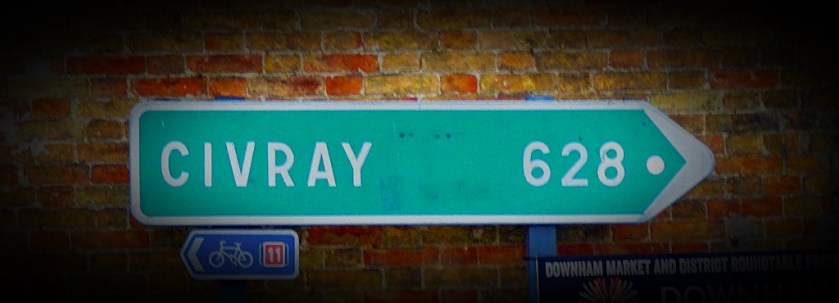
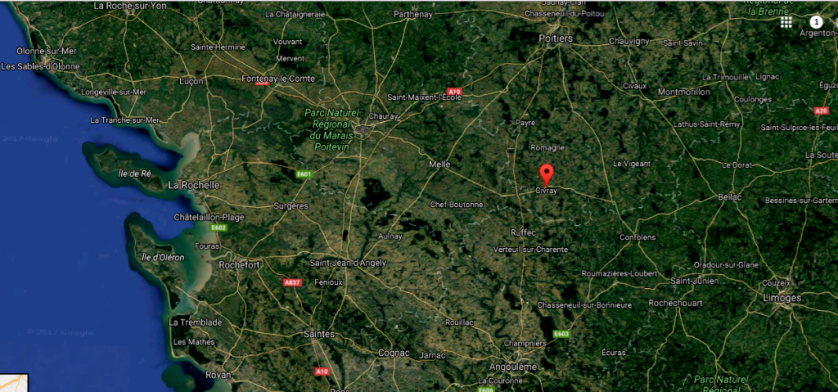
I realised that there could be only one explanation for a signpost in cengtral Downham Market giving the distance to the town of Civray, namely that the two towns are twinned. Civray for the record is pretty much exactly halfway between Poitiers and Angouleme, due east of La Rochelle. I include a map as well as a close up of the sign.
Some thoughts on shared space streets and Exhibition Road in particular.
INTRODUCTION
Much of this post will also be appearing on my London Transport themed website as well as here because of the location of the particular shared space road that brought this issue to my attention. That location is of course Exhibition Road, London – a location very familiar to me from when I lived in London and was a regular visitor to museums. Here is a map for you to orient yourselves:
WHAT IS A SHARED SPACE ROAD?
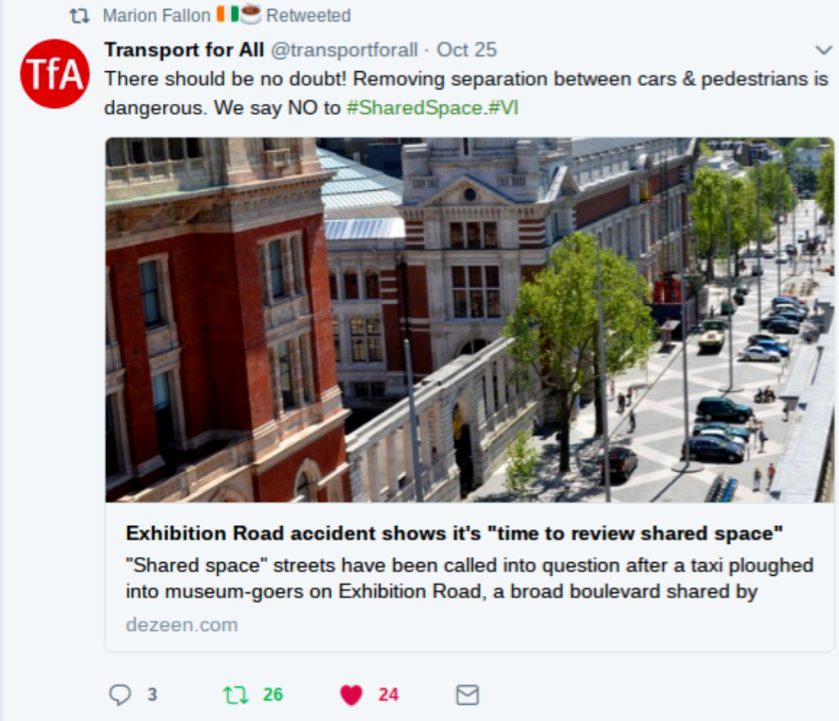
A shared space road is a road without pavements, with no clear distinctions between where cars, cyclists and pedestrians should be. According to some this arrangement reduces accidents. However, a recent incident on London’s Exhibition Road has called this into question. Here is a tweet from campaign group Transport for All:
This (to me) raises two questions to be taken in turn:
CAN SHARED SPACE ROADS WORK?
I am uncertain on this one and will welcome evidence from people with experience of shared space roads in their localities. My own view is that they could work but the following is necessary:
Clear signage explaining what a shared space road is and what that means.
A very low speed limit for motor vehicles (even lower than the 20mph which is now commonplace in the vicinity of schools) fiercely enforced – speeding on a shared space street should be punished more severely than speeding elsewhere because of the greater risk of hitting someone.
Referring back to my first bullet point it needs to made clear that motorists are always expected to give way to cyclists and pedestrians.
Given what I know of London drivers I do not think that London is the right city to be trialling these (although Rome and Paris would both clearly by even worse options!)
SHOULD EXHIBITION ROAD BE A SHARED SPACE ROAD?
Absolutely not – it should be completely pedestrianised. There are excellent public transport connections in this part of the world. Continue reading “Shared Space Roads ?”
Links, puzzles and pictures. Public transport features, as does some general politics, and mathematics. The pictures are of course my own.
INTRODUCTION
I have many links to share with you, and wilkl be setting a puzzle. I will be putting up another of my tree posts immediately after this one, so my pictures feature stuff other than trees.
PUBLIC TRANSPORT
This section comes in two parts, starting with…
NEWS FROM MY LONDON TRANSPORT WEBSITE
Just before lunchtime today I received the following email:
My name is Andrew and I work for Nicola at Tour London. Nicola is a tour guide in London UK who takes individuals and groups to the most famous landmarks in London, as well as discovering hidden gems along the way! We were wondering if it were possible for us to appear on your “links” page in any way given that we share such a similar topic.
Alternatively would you be interested in content pieces? Nicola has a vast knowledge of London and would love to share it with your audience. Finally, If not content, do you have any other advertising opportunities?
Naturally, I was delighted to receive such a communication, and I have since put in some links, done a special post about this site and ‘pressed’ a couple of their pieces. Please visit londontu.be to read about this in more detail, and then explore tourlondon to see what they have to offer.
WE OWN IT – TRANSPORT
The campaign group weownit have created a resource with the catchy title Privatisation Fails. Below is a screenshot of the homepage for this resource:
Of course, I followed up the bus and train links. Here is a paragraph from PrivatisationFails Buses:
Buses
30 years ago, our bus services were deregulated and privatised. This has been a disaster for our buses. Fares went up and routes that weren’t profitable were cut, meaning you now pay more for less. In 2017, the Bus Service Users Bill was passed, which included a clause which bans local councils from creating their own public bus companies.
On this page are the Big Five bus companies that grew out of deregulation and privatisation in the 1980s – together they control 70% of the bus travel industry in the UK. Many of these companies either own, or are owned by, rail companies as well.
Read more about bus services, and how and why we want to bring them into public ownership, here.
British Rail was broken up and privatised between 1994 and 1997, and since then rail services in the UK have been provided by private companies. There are 16 rail franchises in the UK, where the government gives train companies funding to run services for a certain period.
Many of the companies that run our trains are European state-owned companies who reinvest millions of pounds a year in dividends from their British operations into their own transport systems. As you’ll see, these companies often own franchises within franchises. You might be surprised to learn who owns your morning commute! We’ve also listed three ‘ROSCOs’ or rolling stock companies, who lease trains to rail companies.
Read more about the privatisation of rail and what we can do about it here.
POLITICAL LINKS
Royal Mail workers have voted by a huge margin to take strike action. The official voting figures are:
Turnout 73.7%
Yes 89%
No 11%
This means that 65.593% of all those eligible to vote cast their vote in favour of strike action. I did this calculation myself, entirely in my head, but here for the record is how to get there…
Calling Turnout T and Yes votes Y and Overall Percent Yes as O we have O = TY/100. Putting the known figures into this we have O = (73.7 x 89)/100. To avoid decimals until absolutely necessary we change this to O = (737 x 89)/1000. To calculate 737 x 89 we can reduce to single figure calculations as follows:
737 x 89 = (700 x 89) + (30 x 89) + (7 x 89), and then splitting these up 700 x 89 = (700 x 80) + (700 x 9), 30 x 89 = (30 x 80) + (30 x 9) and 7 x 89 = (7 x 80) + (7 x 9). We now have a series of multiplications which can all be treated as single figure multiplications, with in some cases zeroes to be stuck on the end. Multiplying them out gives us 56,000 + 6,300 + 2,400 + 270 +560 + 63. Adding these together we get 65,593, and dividing by 1,000 requires a decimal point to go between the first and second five, giving us 65.593%. PS It took a lot longer writing this out than performing the calculations in my head!
Why is it necessary to intervene with the natural course of being Autistic?
“Early” implies that there is a need to “catch” things early, before it progresses.
Autism is not a disease. It is not progressive. It just IS.
It is disrespectful because it ignores our own timing. Autism is a developmental disability and respecting that is important, instead of applying a neurotypical timeline of neurotypical milestones to neurodivergent children.
And while some aspects of occupational therapy and life skills can be beneficial, if there is no respect for each child’s timing, and if it is done in a manner that is compliance based/reward based, and if this is called “Early Intervention”, then it is just another name for ABA”
My next link is to thge early stages of wbhat looks set to be an excellent series of posts. BloggingAstrid is writing a series of posts about autism under the banner #Write31Days. I have two links for you:
My next two links come from firebrightstarsoul and both concern education and autism:
“Enough to break your heart” which deals with a school day which (due entirely to failings on the part of the school) went very badly wrong. I quote one paragraph, which comes near the end of the story: We were told we’d be given parent codes to log in to the school’s app so we could find her missing assignments and help her on the weekend until she’s caught up. She didn’t know where to even find this information on her laptop, and when she tried to tell the teacher she didn’t know what she was supposed to work on, the teacher smirked at her and dismissed her with the pithy remark, “I bet you do.”
“The one-room school-house” which (unsurprisingly given the above) looks at the possibility of homeschooling. Here is a picture from this piece:
Claire has autism and says: “The world is a very unpredictable and confusing place.” (Image: Transport for All)
Finally, a petition on the official site for petitioning the UK Parliament, which means that it is only open to UK citizens, calling for a necessary change to the PIP rules. Below is a screenshot link:
Please visit, sign and share.
LINKS RELATING TO RENATIONALISATION AND TRANSPORT
My first link in this section is to a piece on Vox Political titled “McDonnell States Labour Will Take Back Rail, Water, Energy and Royal Mail | Beastrabban\’s weblog” This excellent piece sets the stage for the rest of this section. Below is the single most important paragraph, by way of a tempter:
And if Labour does, as I fervently hope, renationalize those industries, I would very much like a form of workers’ control implemented in them. One reason why the Tories were able to privatize these industries was because, when Labour nationalized them after the Second World War, the party was too timid in the form nationalization took. The state took over the ownership of these industries, but otherwise left the existing management structures intact. This disappointed many trade unionists and socialists, who hoped that nationalization would mean that the people, who actually worked in these industries would also play a part in their management.
Since that piece was produced Richard Murphy of Tax Research UK has put up a post titled “The public want nationalisationbecause nationalisation makes sense” in response to a hand-wringing editorial in The Observer, which started from noting that a recent study had revealed the full extent of public support for renationalisation (water – 83% in favour, electricity and gas – 77% in favour andr railways – 76% in favour – leading the way) and went full-on Tory from there, regarding renationalisation as a bad thing and coming with ideas for how this ‘threat’ might be dealt with. Professor Murphy, like me, takes the opposite stand-point, and points out how flawed the Observer piece is.
PHOTOGRAPHS 1
This set of photographs is of Lot 553 from the auction of Monday September 25th (see this post):
SOLUTIONS TO PUZZLES
The first of three puzzles I set that I have not yet provided answers to was a question from Triva Hive:
In which country is Europe’s only desert located?
a)Italy b)Greece c)Poland d)Spain
I am sufficiently well informed about Italy, Greece and Spain that I was fairly sure that none of them is the answer. Thus, having ruled out the impossibles I was left withe one answer that however improbable must be the true one – Poland. The screenshot below shows that my Sherlockian approach to the question bore fruit:
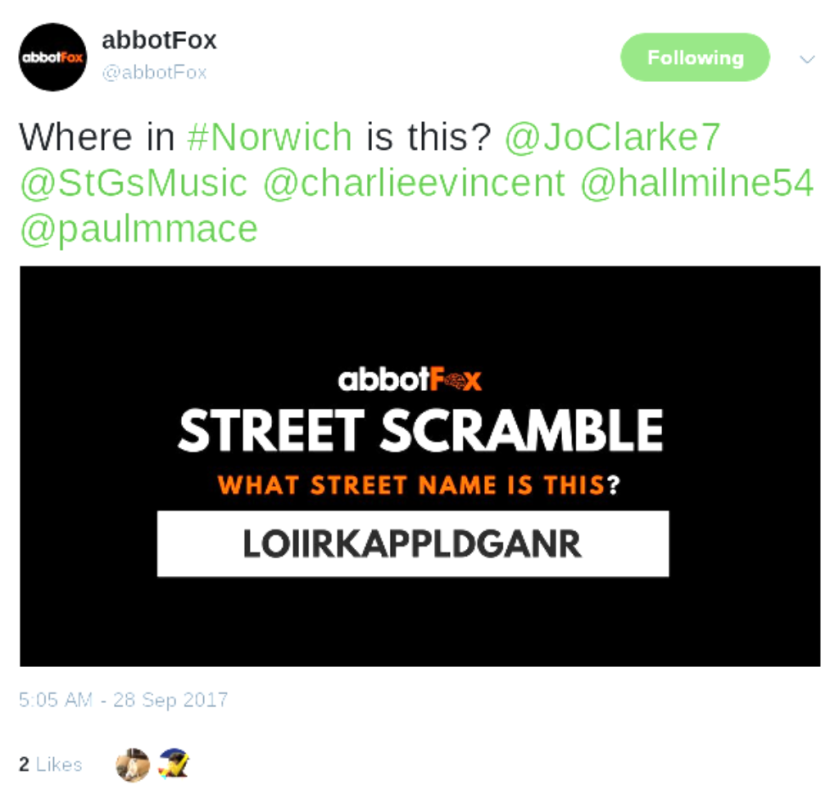
The second puzzle wasAbbotFox‘s “street scramble”:
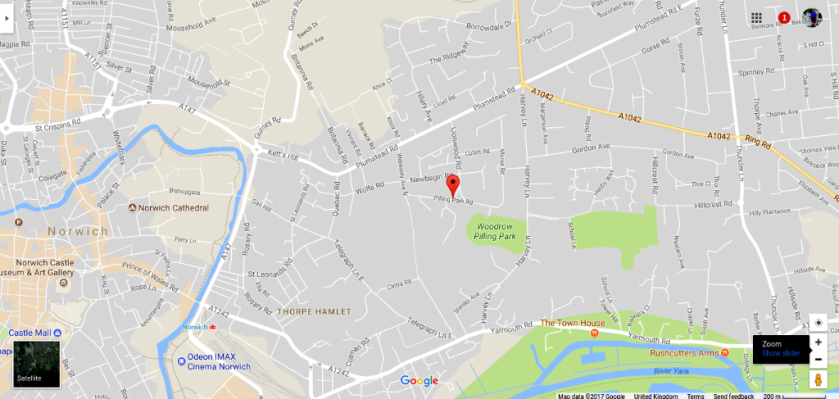
Unscrambling this gives “Pilling Park Road”, and the map below shows the location of said street:
The third problem came from brilliant and featured a treasure hunt. Below is the answer:
PHOTOGRAPHS
Just before I publish this and head out for a spot of ecotherapy and to top up the photo collection here are some non-tree pics from yesterday:
A rarity – a fish sufficiently close to the surface of the Gaywood River that I could take a picture of it that (just about) came out.
Letting people know that I will be visiting Cornwall in the near future, and a few other bits and bobs.
INTRODUCTION
My parents have recently moved to a place near Plymouth, and all they are currently out of the country travelling they will be back for a month or thereabouts from late October. I will be visiting their place in mid-November. I have asked for leave on the 9th and 10th of November so that I can go down on the 8th and come back on the 13th.
THE JOURNEY
To get from King’s Lynn to Plymouth (nearest station to my parents’ new place) by public transport one needs to to travel from King’s Lynn to London King’s Cross, get a Hammersmith & City line train from King’s Cross to Paddington and then travel from Paddington to Plymouth (I already knew this). The journey takes in the region of six hours (I expected this to be the case but until I investigated did not know for certain). This why I requested leave for the two days concerned because the two days on which one travels are not going to be much use for anything else.
THE TICKETS
I discovered via www.thetrainline.com that tickets were available for £57. Thus I have made the booking and picked up the tickets.
COLLECTING THE TICKETS
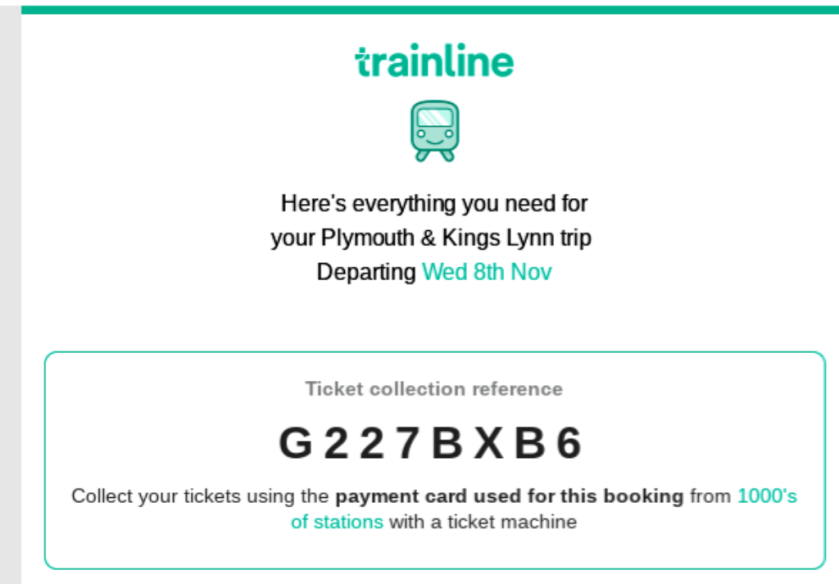
Having made the booking I was assigned a code I could use to collect the tickets:
I decided that memorising an alphanumeric code of eight characters would be a bit of an ask even for me, so I called in at the library where I could screenshot the email containing the above, paste into paint and edit as appropriate before printing at a cost of 10p.
From there it was a short walk through the park to the station to pick up the tickets.
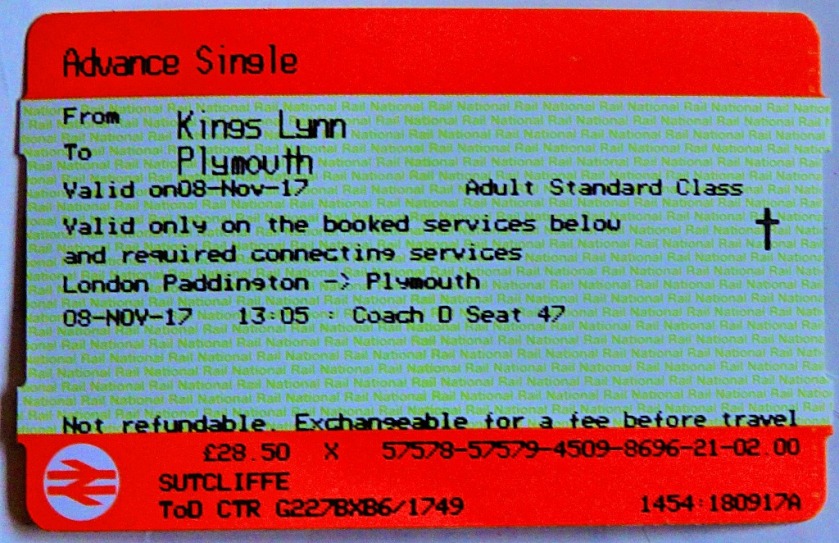
Outbound ticketThe Homebound ticket
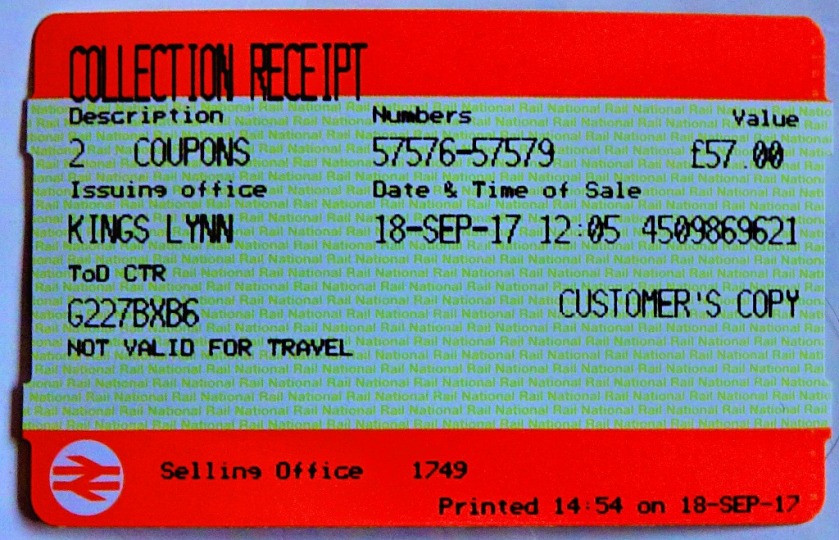
The receipt.
The email giving me the code to collect my tickets also included itineraries for both journeys.
This is a little stretched out, but I for one would not care to be on a train the was due to arrive at Kings Cross at 12:35 when I had to make a connection at Paddington at 13:05 – given British public transport’s usual “punctuality” that would be courting disaster.
The journey back could be a little quicker – but note that since there is no pre-booking on the London to Lynn line it is merely an annoyance should I miss the 14:44.
THE BRILLIANT.ORG 100-DAY
SUMMER CHALLENGE
I recently received (by email) my certificate for having attempted all 100 of the problems (almost 50,000 people attempted at least one of these problems, of whom 1,797 attempted the whole lot).
Before moving on to the photographs that will conclude this post I offer you…
A PUZZLE OF MY OWN CREATION
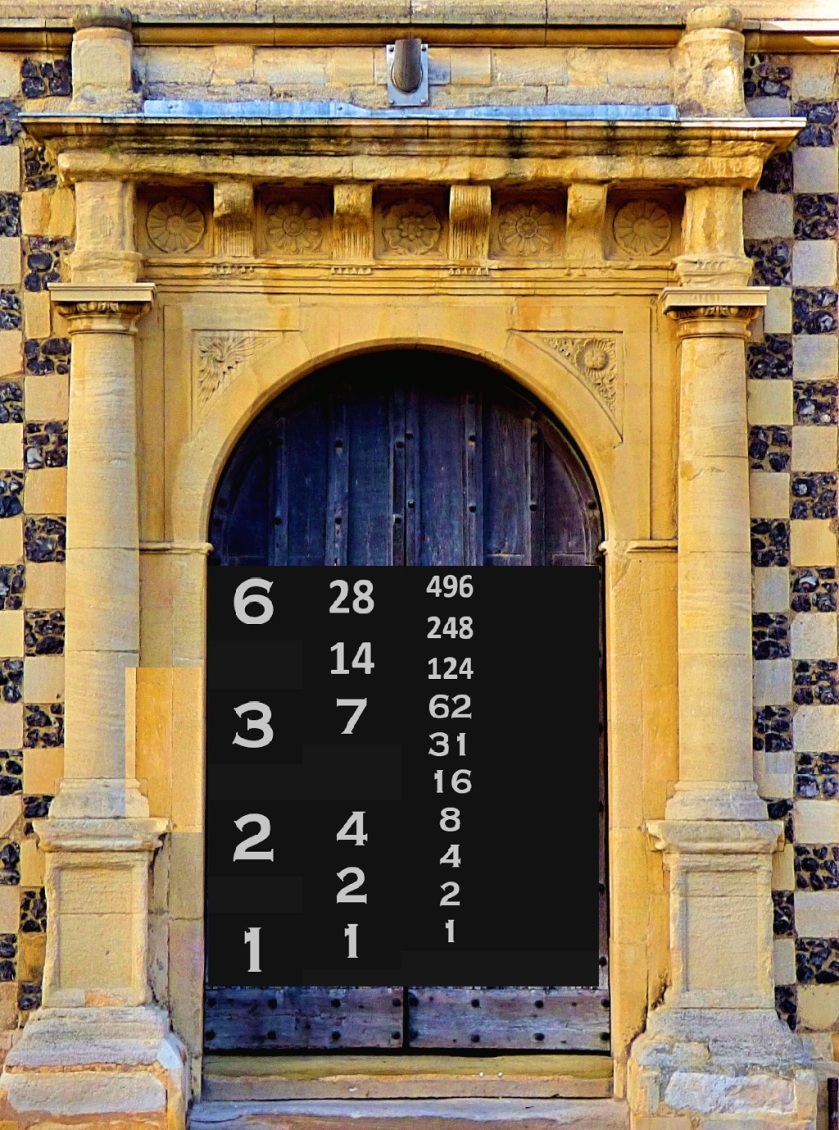
Archaeologist and adventurer Idaho Johnson is near to making the biggest find of her life, but to do so she needs to get past the “Door of Death”:
Can you fill in the missing fourth vertical panel of numbers and get Ms Johnson through the “Door of Death”? As a bonus question can you identify the real door that I have used to create the above image?
Various links as indicated by the title of this post, the solution to one problem and a new problem. All topped off with the some photographs.
INTRODUCTION
This post features links, puzzles and pictures. The title refers to the subjects officiallly covered within the post.
A NEW AUTISM RESOURCE
The Neurodivergent Rebel has produced a post that could become a goldmine. Titled “Web Resources” she describes it as a growing list and ends the post with this:
If you can think of anything to help the Neurodivergent Rebel expand this list please use the quote out above, which if you click on it will open up an email message addressed to her which you can then complete.
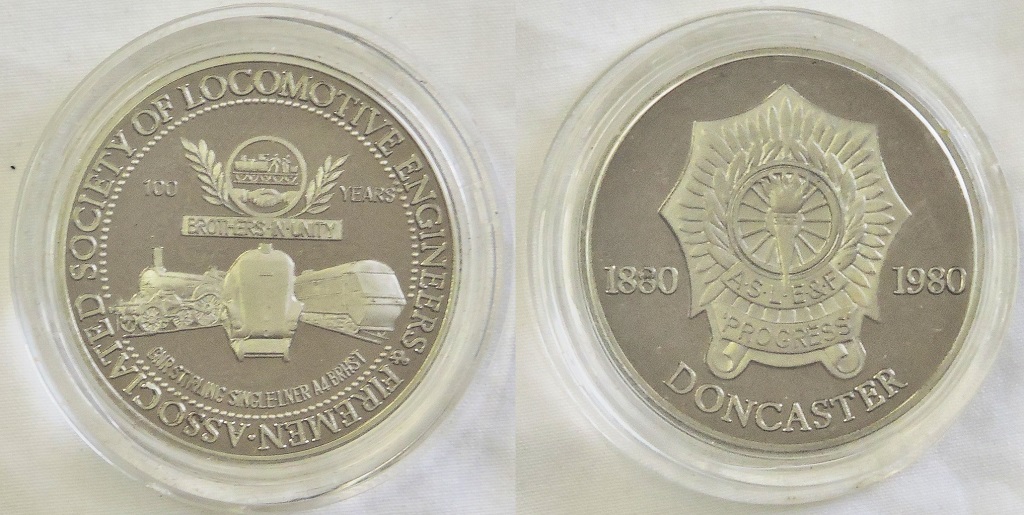
The second piece concerns the make up of the Labour Party’s National Executive Committee – the detail contained in the title “EXCL: PRO-CORBYN ASLEF, FBU TO TAKE NEC SEATS” means that at least for the present, and for the very first time, the NEC will have a pro-Corbyn majority. Here is an ASLEF related picture:
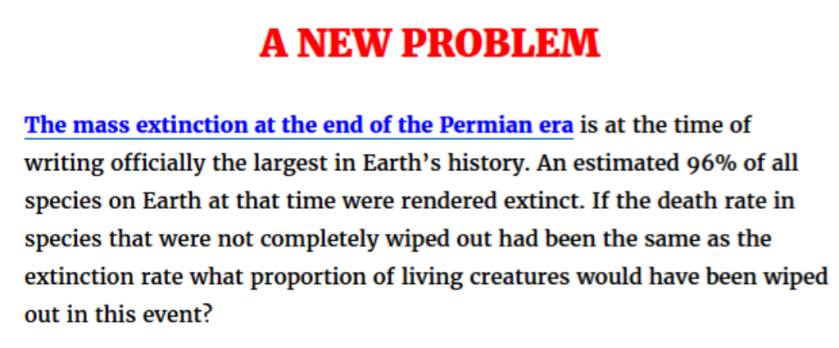
The solution is 96% + 96% of 4%. 96% of 4 is (4 x 96)/100 = 3.84. 96 + 3.84 = 99.84, os the answer is that if the death rate in surviving species had been the same as the overall extinction rate then 99.84% of all living things would have died in that event.
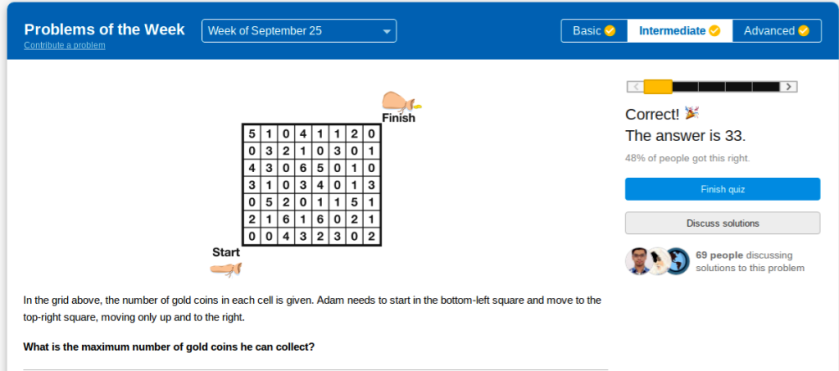
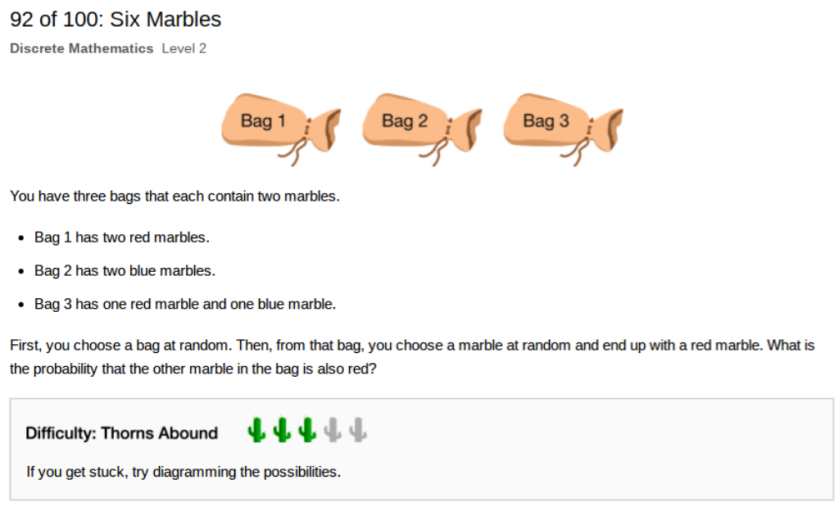
For my next puzzle I turn once again to Brilliant and offer up the following:
I will probably provide a solution on Wednesday.
PHOTOGRAPHS
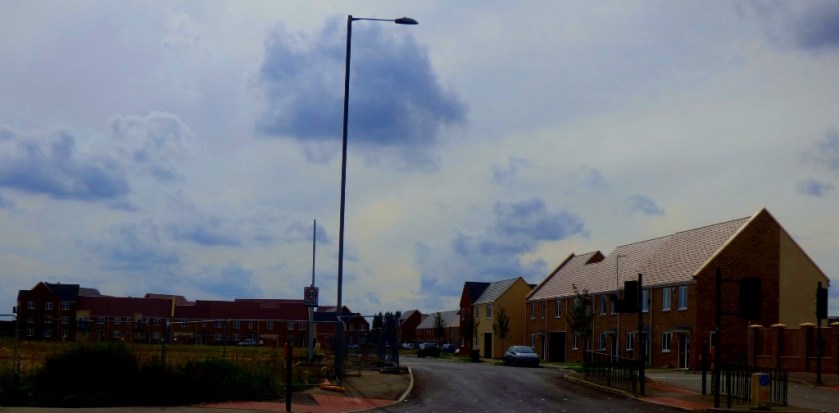
Nar Valley Park – this development is now approaching completion.
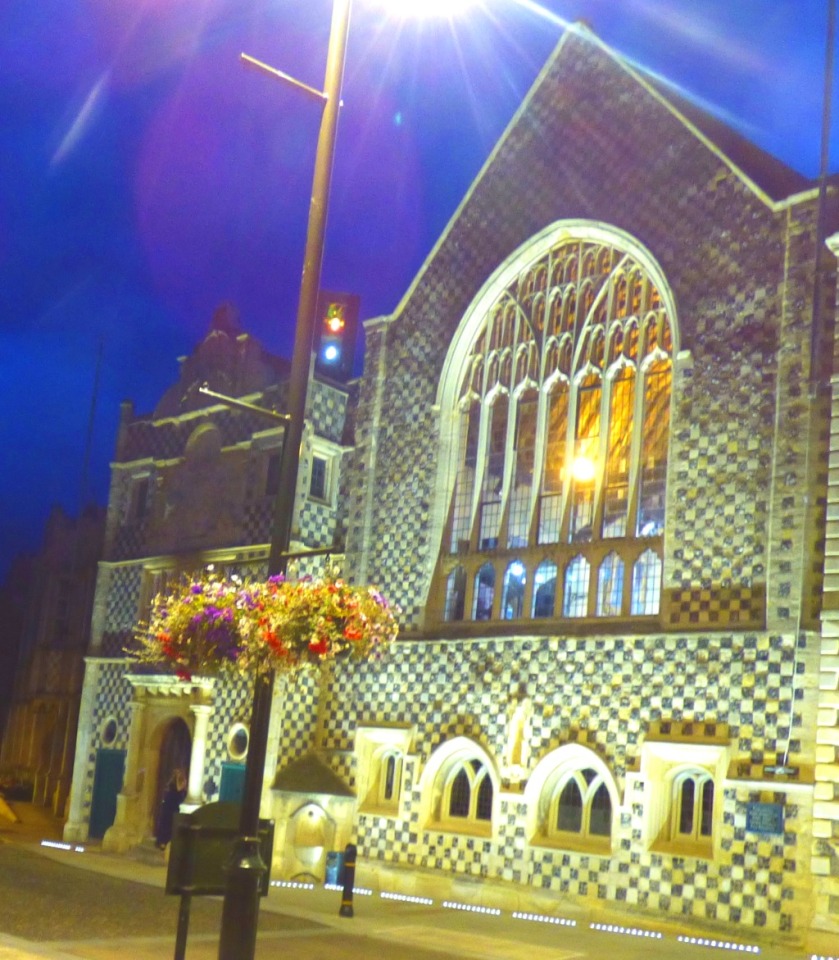
The next four pictures were taken on Thursday night – I had been acting as stand-in host on my aunt;s behalf, welcoming an airbnb guest to her house, and it was getting dark as I returned.
Some recent internet finds and some of my own photographs.
INTRODUCTION
This post features links to some recent internet finds and some of my own photographs.
SOME SCIENCE AND NATURE LINKS
I start with a piece from mongabay which argues that “The Sixth Great Extinction” is actually “The First Biotacide“. Below is a picture from this article:
My next piece comes from Vox Political, who got direct from the person whose story it is, Paula Peters. The title of the piece “Bus driver subjects disability activist to humiliating discrimination” gives you a good idea of the nature of the story. British law on this matter is unequivocal – the bus driver is legally obliged to give wheelchair users priority over mothers with buggies (this courtesy of a court ruling in January). Given the completeness of the information Paula provides, the bus company in question have only one option open to them both legally and morally – they must sack the offending driver and must make sure that all their drivers are aware of their responsibilities to disabled passengers.
I started this post with a couple of science and nature related links, and now as we approach my photographs we are finishing where we started with stuff about nature, first of all Cindy Knoke with a wonderful post about a castle that has been dedicated to raptors, titled “Castle Rapture“.
With the last word before my photographs is Anna, who has recently posted part 13 of her amazing Paradise on Earth series, this time focussing on some of the smaller creatures who live in and around Trosa.
PHOTOGRAPHS
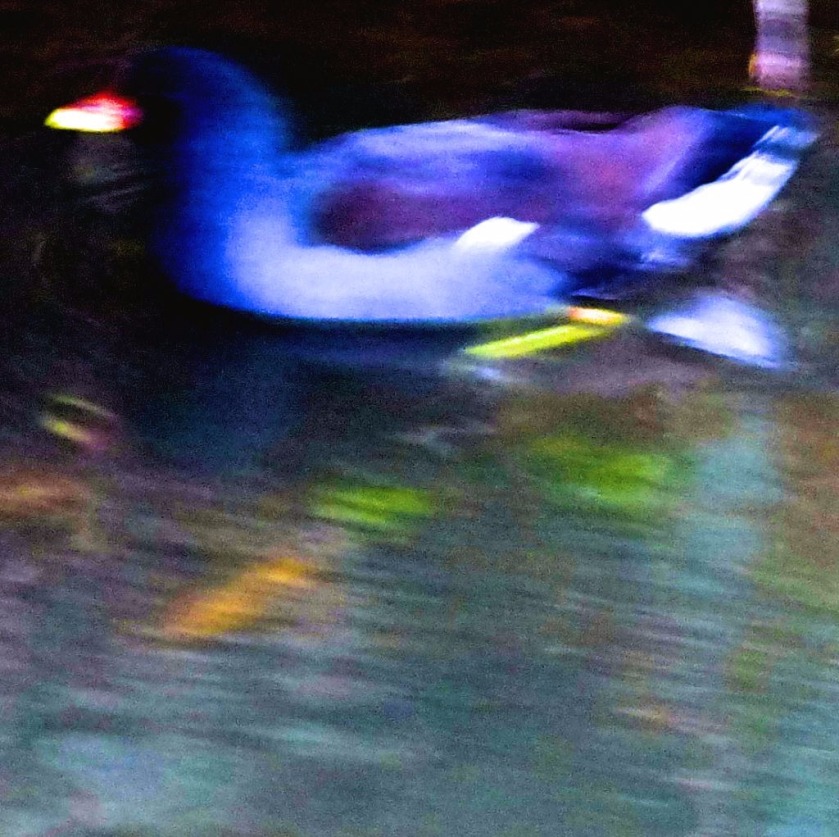
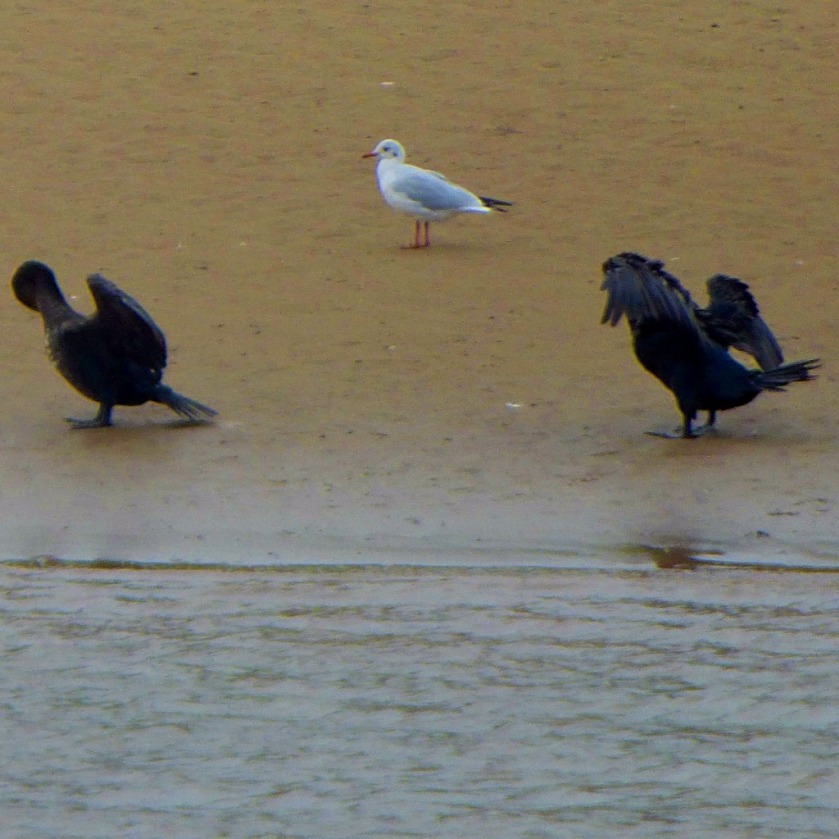
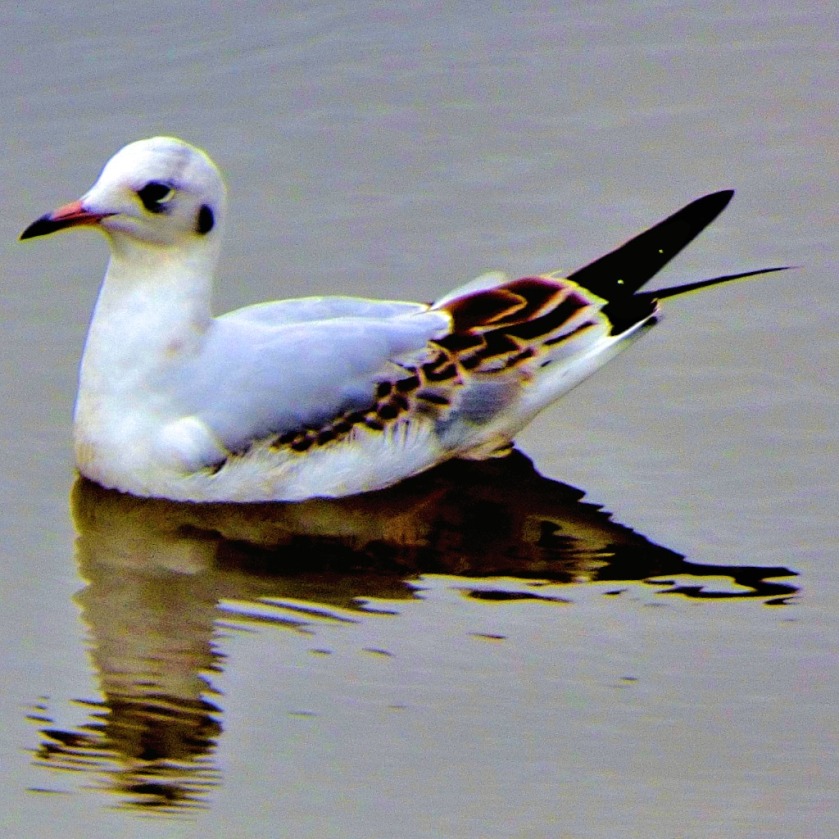
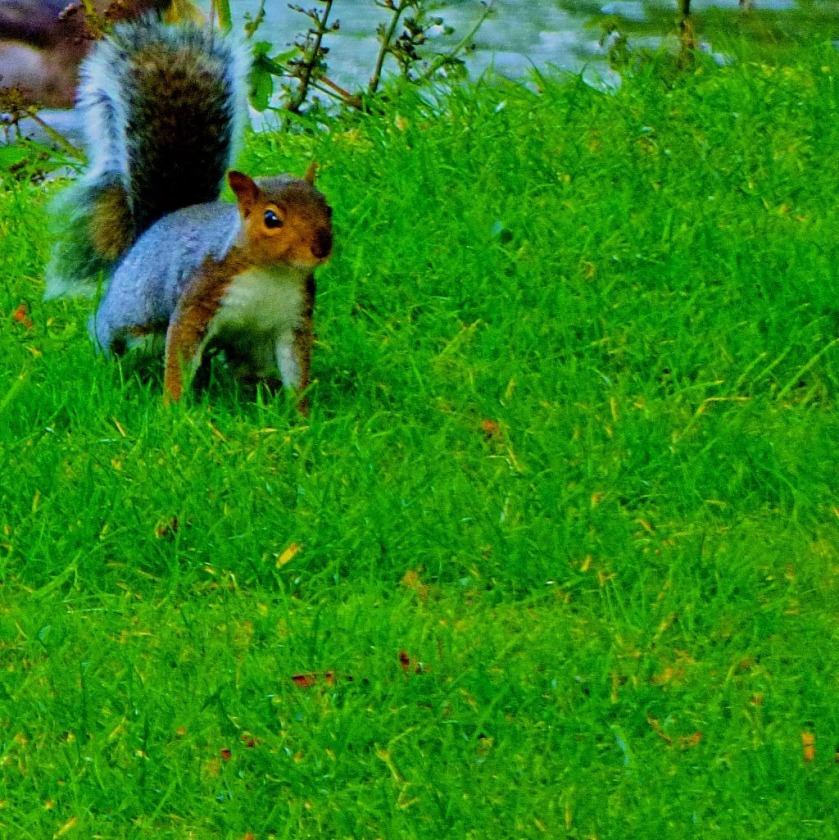
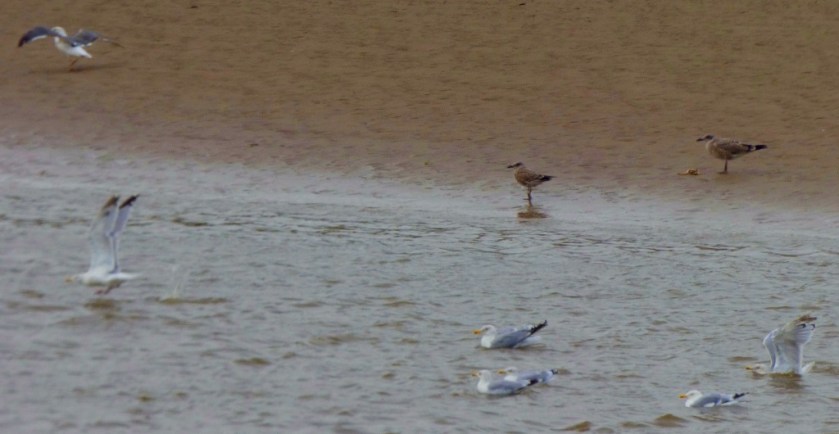
I will start this set of photographs with some of the smaller creatures I have recently captured, before finishing with some general pictures. These pictures were all taken yesterday.



































































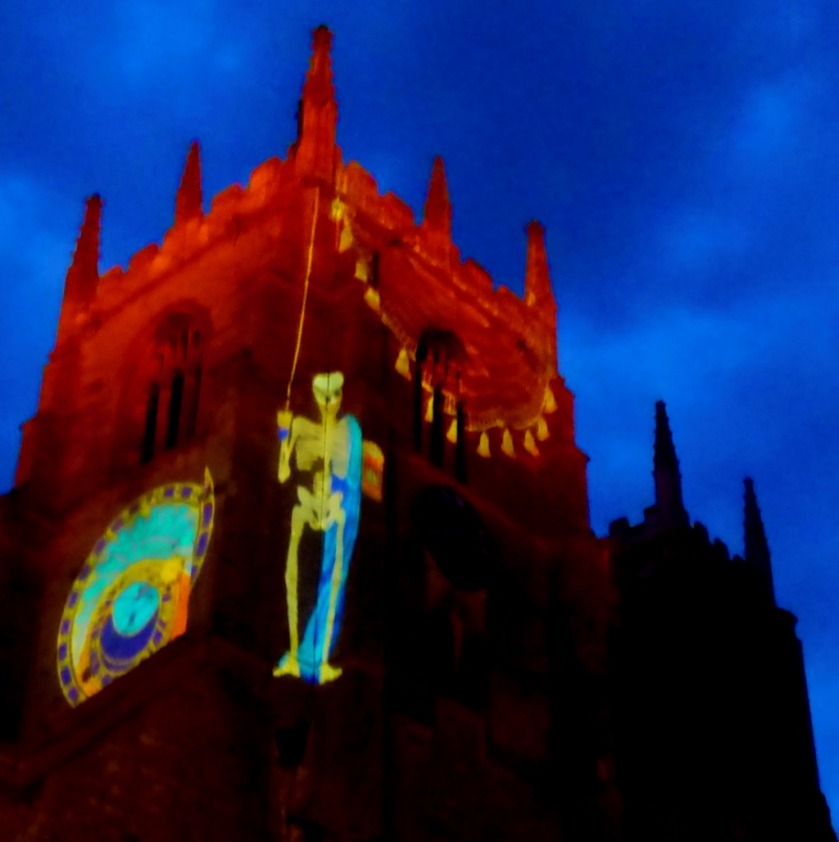
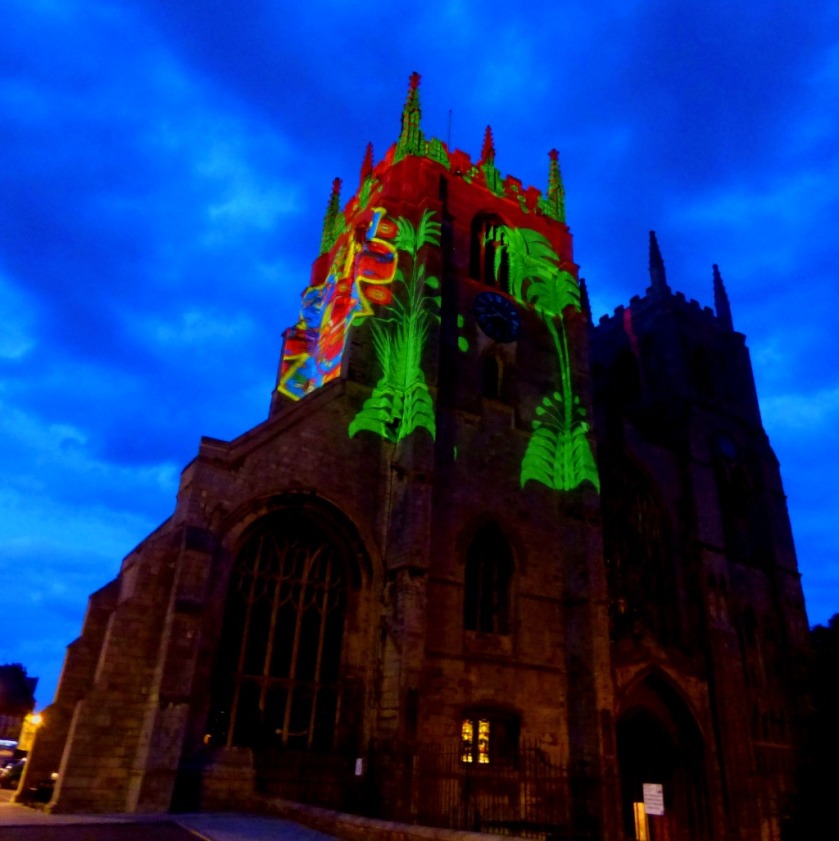

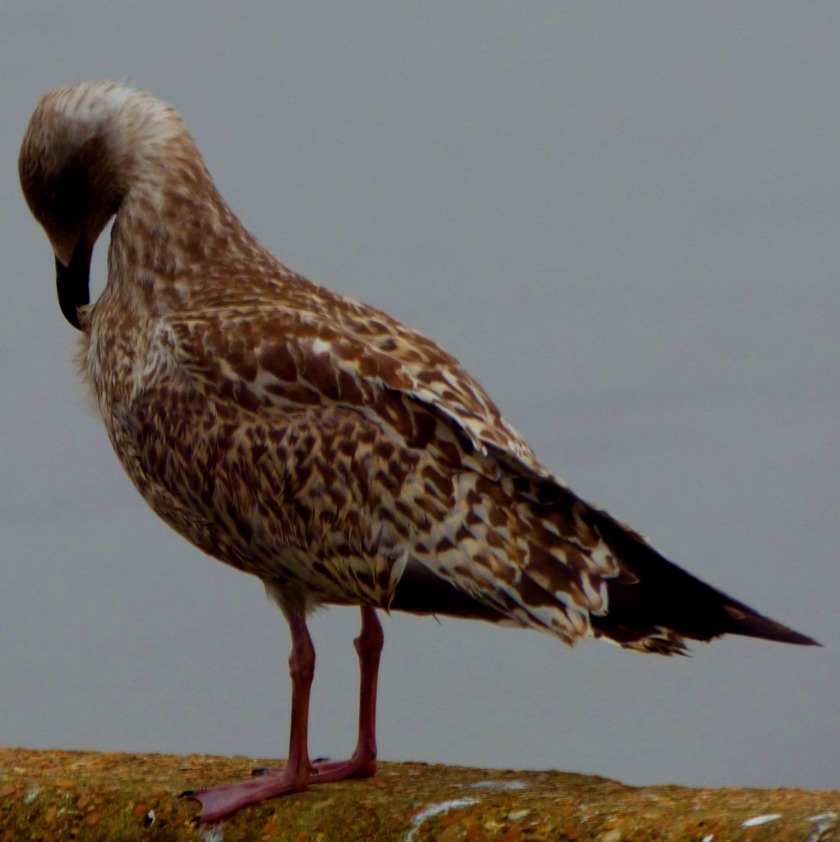



 Steller’s Sea Cow holds the the world record for rapidity of extinction. Illustration from “Extinct monsters,” London: Chapman & Hall, 1896. Photo via Wikimedia Commons, licensed under CC BY 2.0.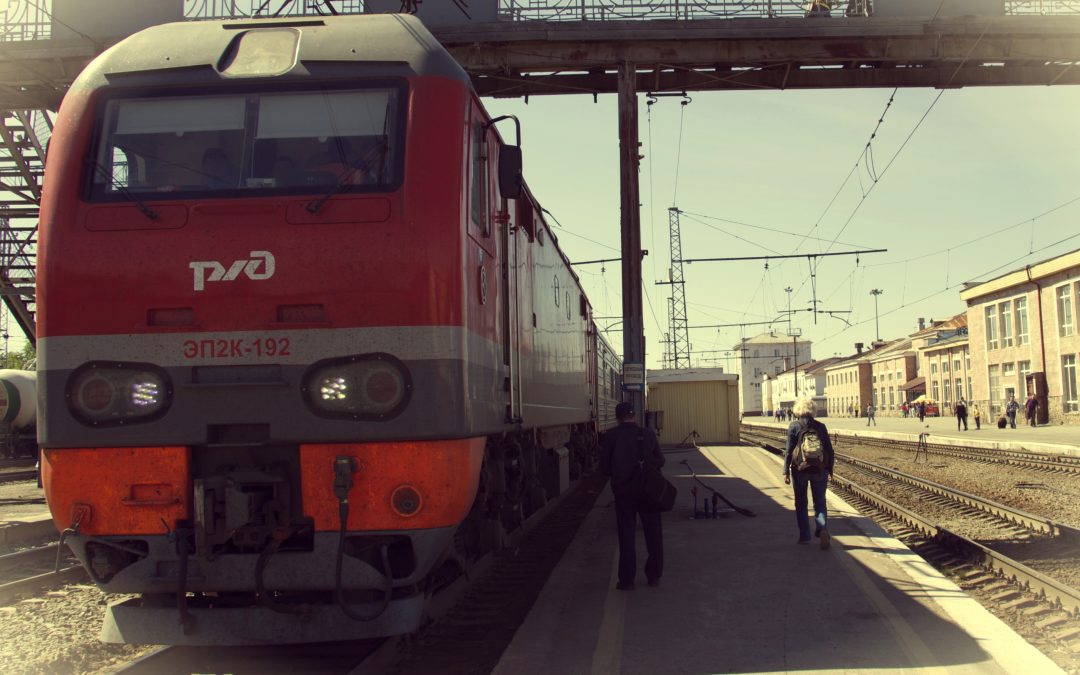

















 aspiblog