A puzzle based on a blog post, a solution to an old puzzle, another puzzle from brilliant and some photographs
INTRODUCTION
Earlier today I put up a post titled “About Autism“, and because that post contained so much stuff this post is going to be much smaller – and with only a few links, all in one way or another puzzle connected.
DERIVING A PUZZLE FROM A BLOG POST
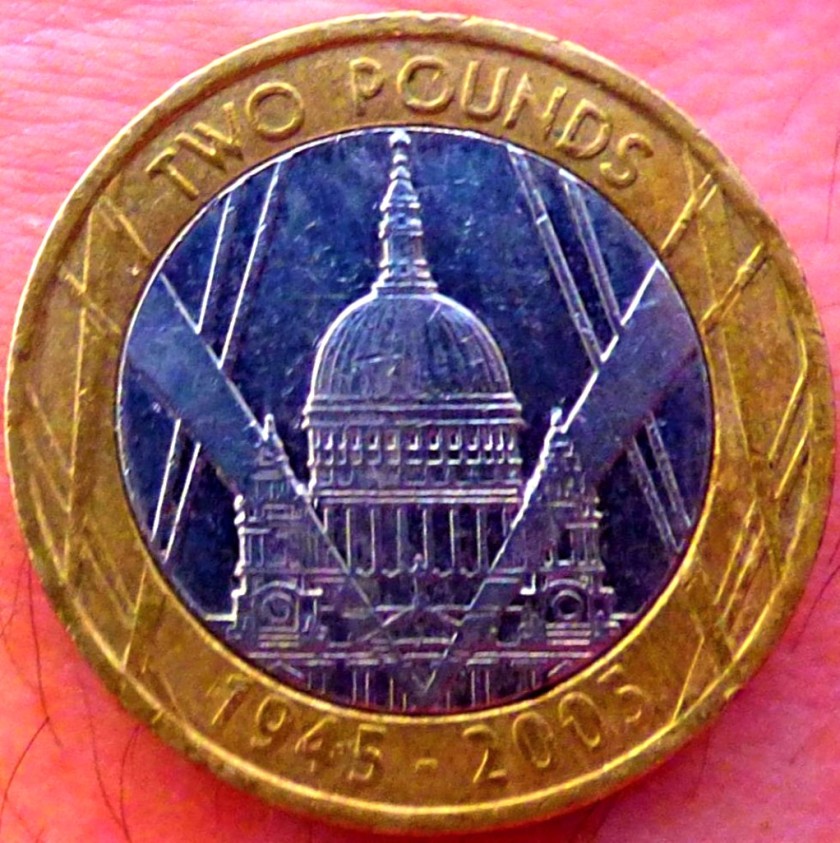
Esterput up a post titled “Year 1729“, which featured the image below:
The puzzle I am attaching to this is: which two famous mathematicians are linked by the number 1,729 and how did that link come about?
Some nature themed links and some of my own photographs. Snakes, butterflies and slugs feature prominently in this post, hence its title.
INTRODUCTION
Welcome to this nature themed post on aspi.blog. The title is formed from the initial letters of snakes, butterflies and slugs, all of which feature prominently.
SOME SWEDISH STUFF
Of course when posting about nature and mentioning Sweden, Annais going to feature prominently, but also featured here is the work of two Swedish photographers, Ingrid Benson who specialises in butterflies and John Jonasson who photographs reptiles.
A SERIES OF BUTTERFLY POSTS
Some of you may remember that I reblogged a post from fargaregardsanna about butterflies in and around Trosa that was marked as the first of a series. Well that series now runs to six posts, four posts based on the work of Ingrid Benson and two more featuring some of Anna’s own photographs. I now provide links to all of them:
Anna put up a post titled “Snake day” featuring some pictures of snakes near where she lives… …at the end of it she included a link to the site run by John Jonasson and featuring pictures and information about snakes.
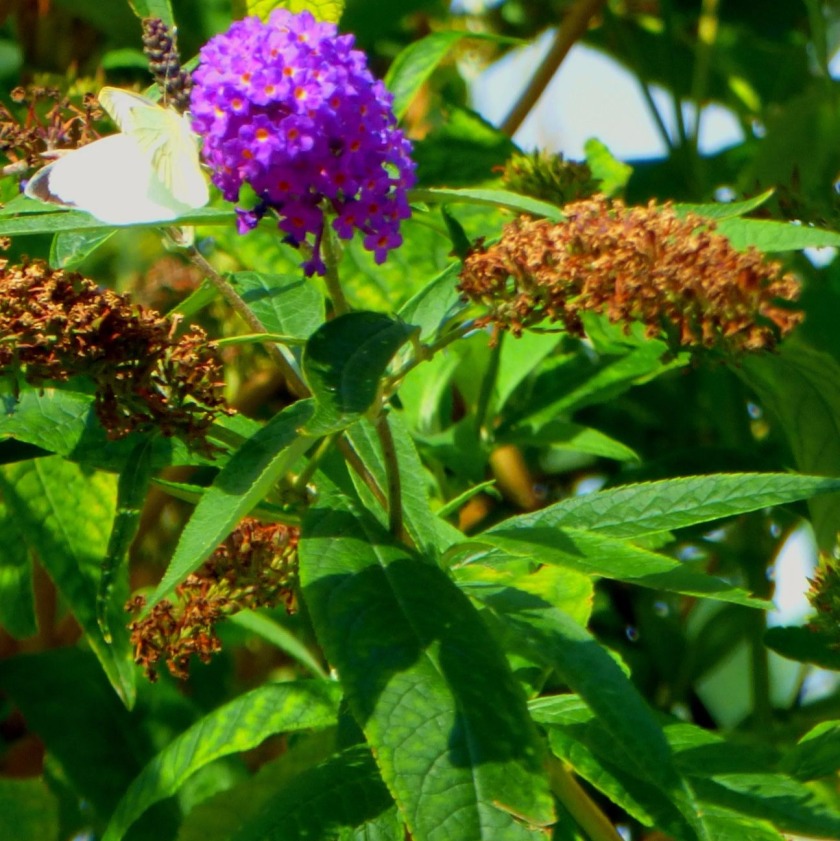
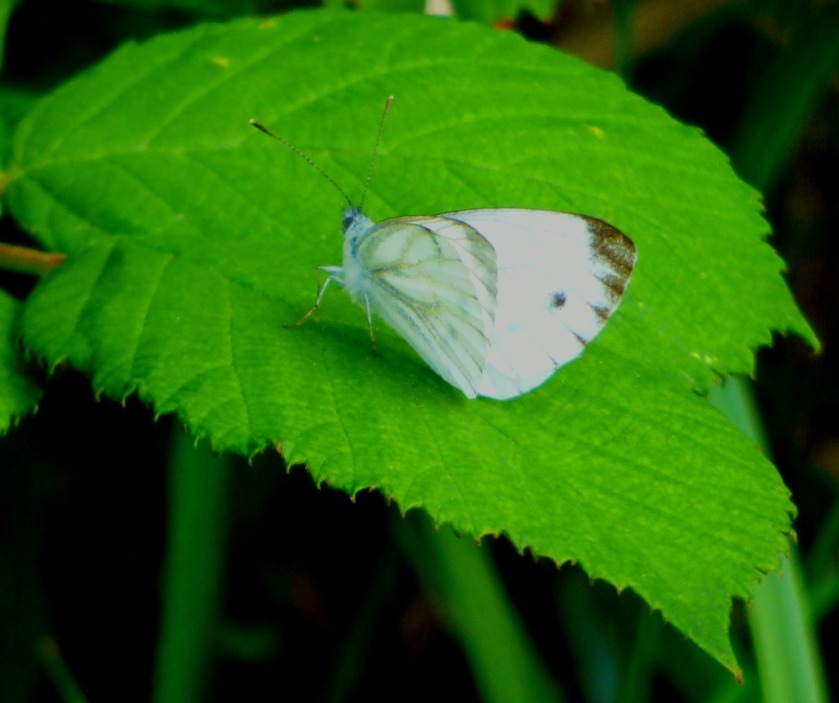
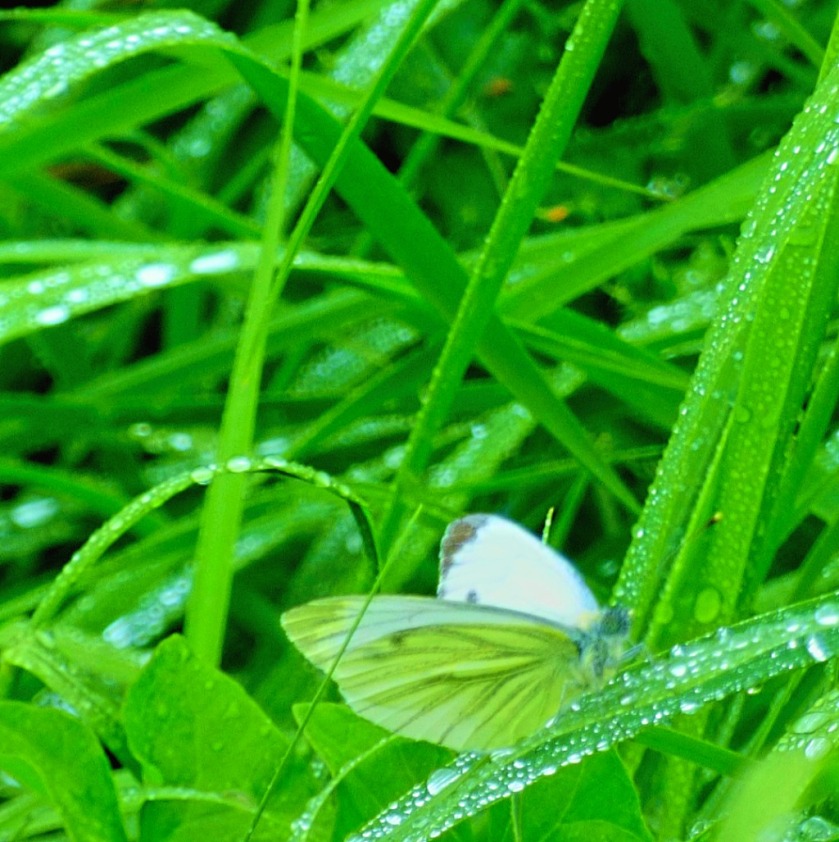
The first four of the six butterfly pics that open this set of photos were taken yesterday.
This was taken today, and I thought even at the time that it was out of focus, but luckily…I then got this.
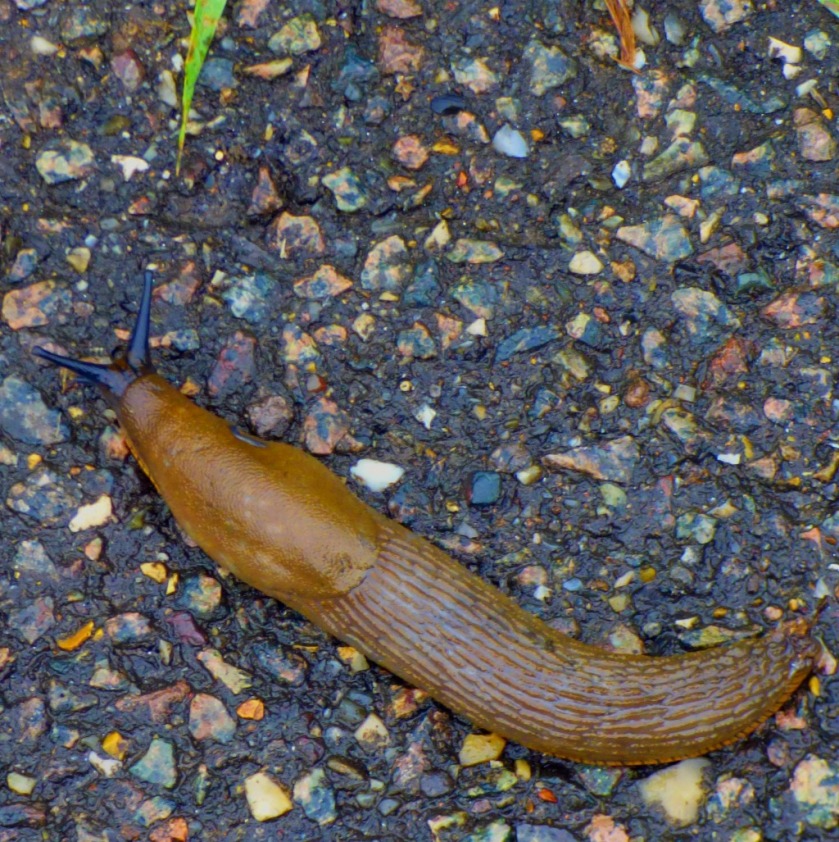
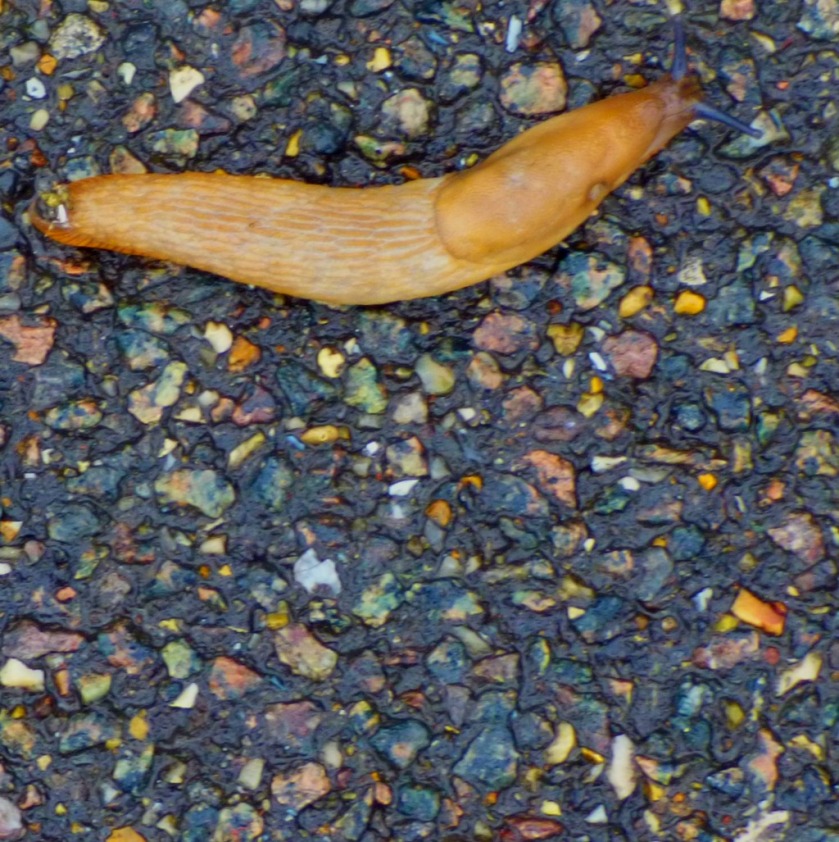
This was floating along the Gaywood river too rapidly for its progress to be down to the flow of the river (which is sluggish).The slugs (three pics) – today is warm and just a bit damp – and the slugs love it that way.
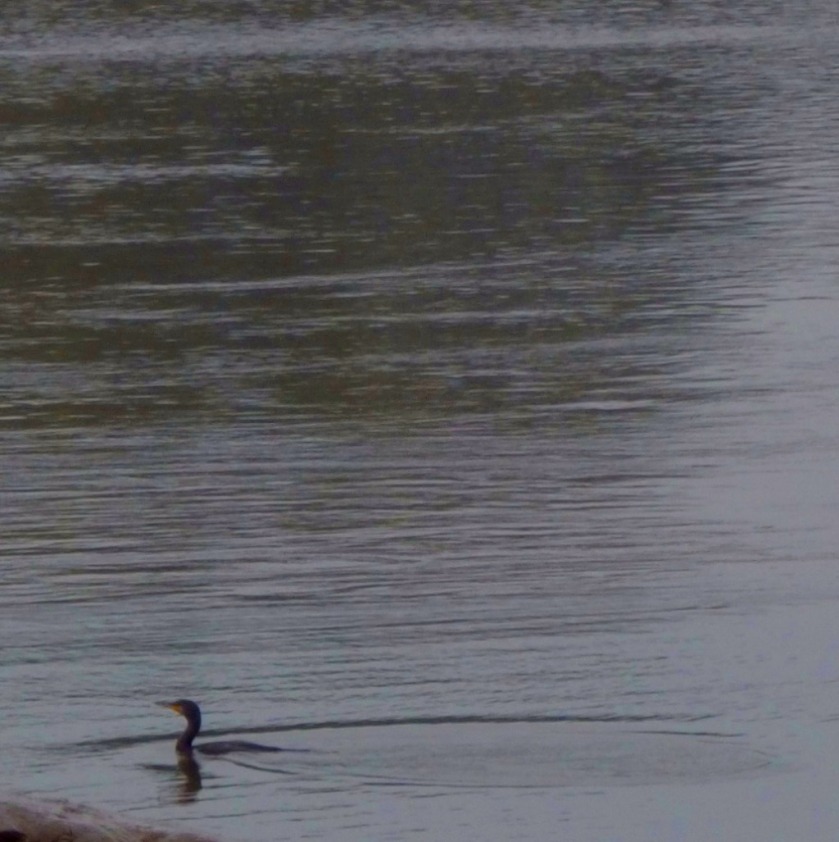
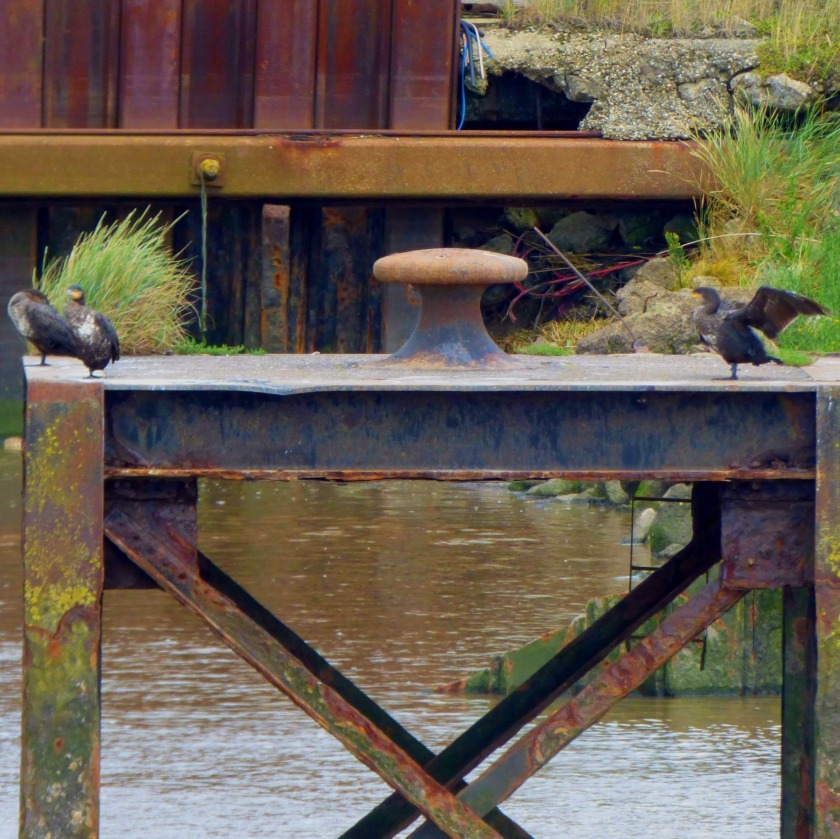
Two swimming cormorants in one shot – a first for me.This cormorant went into a dive as I was clicking the shutter……but then came up again not much later.
Lionks to various pieces I have found on the internet, an answer and solution to one problem and a new problem, and some photographs.
INTRODUCTION
This is a sharing post with some of my own stuff as well. I hope you enjoy it.
CROSSBOW BOLT STOPPED PLAY
Play between Surrey and Middlesex at the Oval has been halted and the ground has been locked down because a crossbow bolt was fired from outside the ground into the ground. Everyone at the ground is now in sheltered areas not out in the open. Armed police are now present at the ground. The match has now been officially abandoned, and a controlled evacuation of the ground is now underway.
I start with a tool created by the Labour Party called the living wage calculator. You enter your postcode and it tells you how many people in your area would benefit from the minimum wage being increased to £10 per hour. Below is what is says about my postcode:
“CONFIRMED: IT’S #LEONARD V #SARWAR FOR SCOTTISH LABOUR” electing Sarwar would mean a continuation of the approach that has failed miserably for both Kezia Dugdale and her predecessor Jim Murphy, whereas Leonard would be a move to the left.
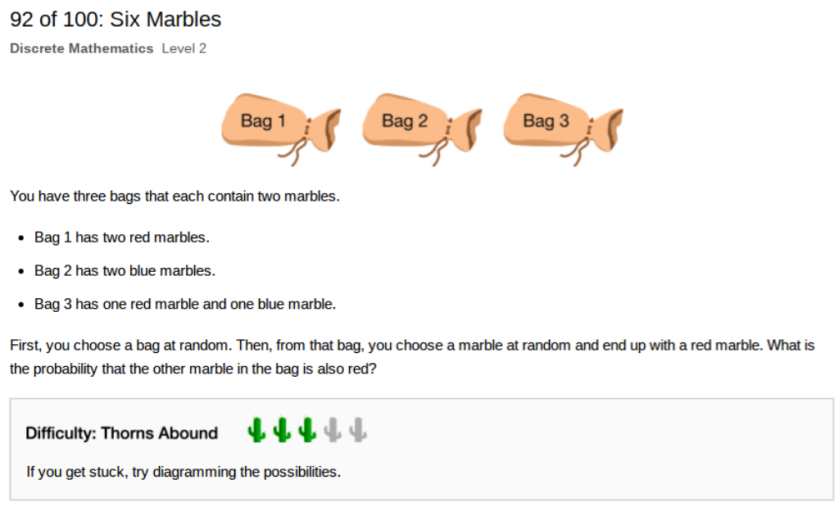
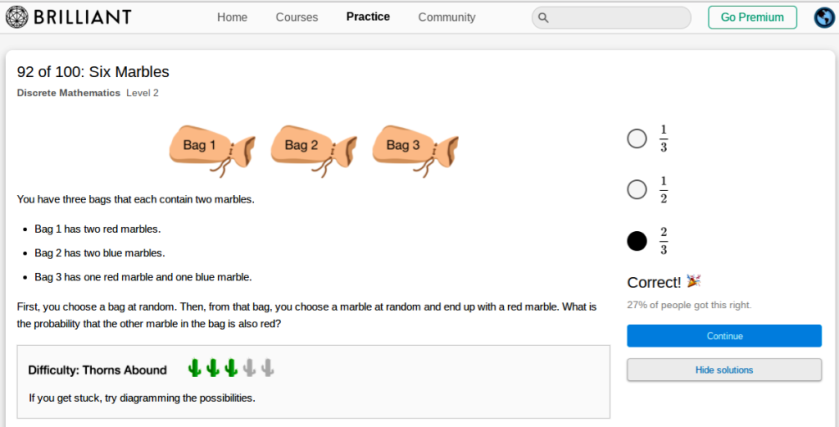
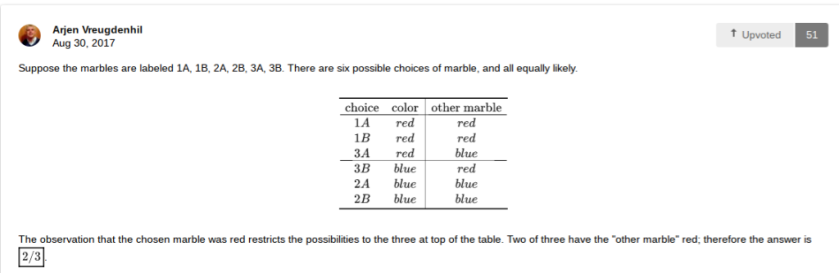
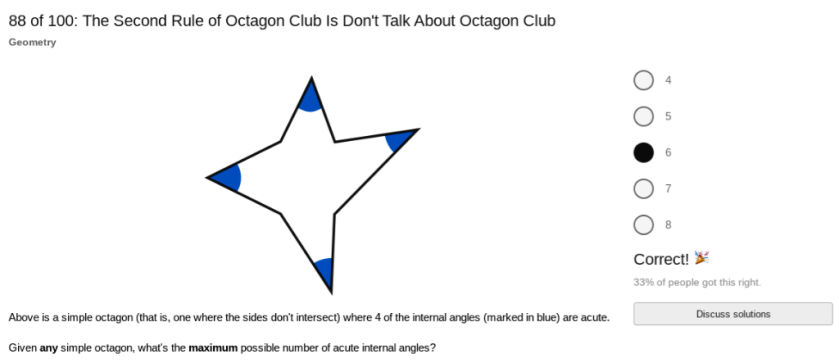
In one of my posts on Monday I set a problem from brilliant. Here is I show the answer and an impressive solution. I also offer a new problem to end the section.
Thomas’ answer:
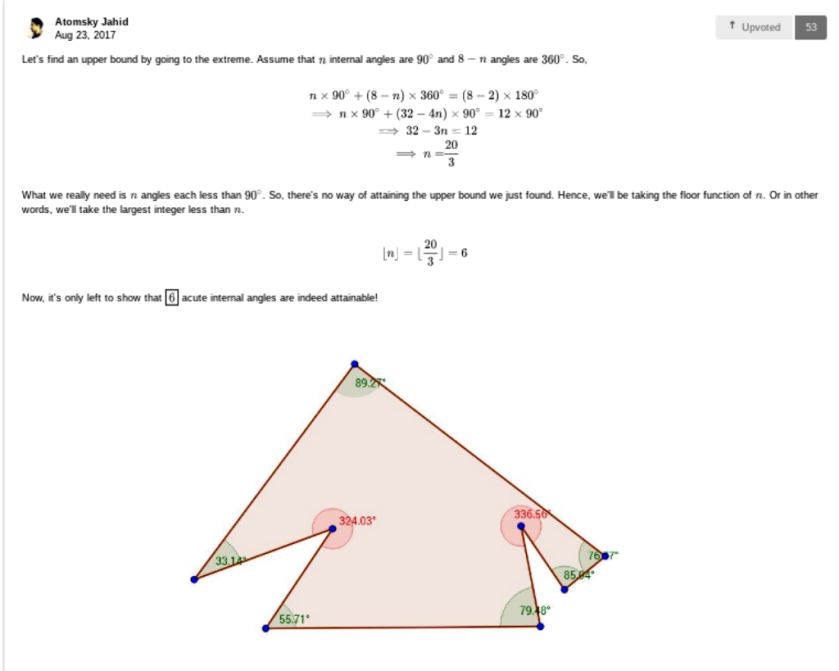
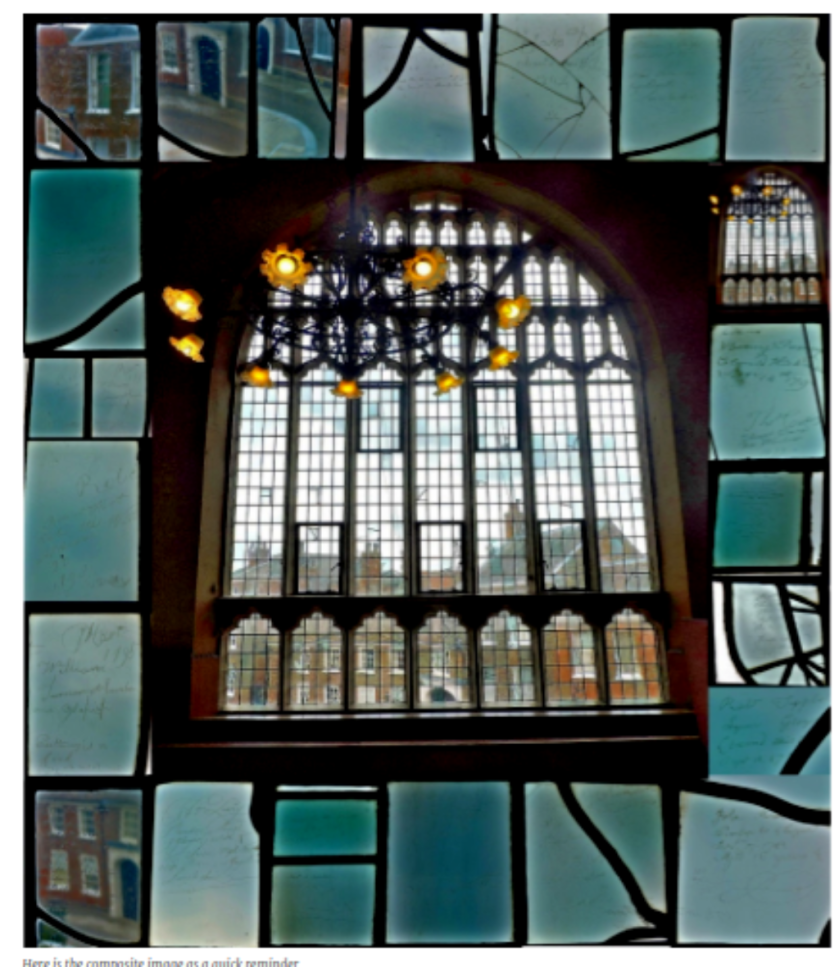
I admit to being lazy on this one – knowing that the internal angles of an octagon add up to 1080 degrees and that 7 x 90 = 630 I realised that with seven acute angles the remaining angle would have to be over 450 degrees, and the max is just under 360 degrees which takes you back to where you started. However 6 x 90 = 540 which means that the remaining two angles would have to add up to something in excess of 540 degrees, which is no great difficulty. Therefore I gave the correct answer of six (in less time than it has taken me to type this). However, one solver by the name of Atomsky Jahid produced a splendid effort:
A NEW PROBLEM
The mass extinction at the end of the Permian era is at the time of writing officially the largest in Earth’s history. An estimated 96% of all species on Earth at that time were rendered extinct. If the death rate in species that were not completely wiped out had been the same as the extinction rate what proportion of living creatures would have been wiped out in this event?
PHOTOGRAPHS
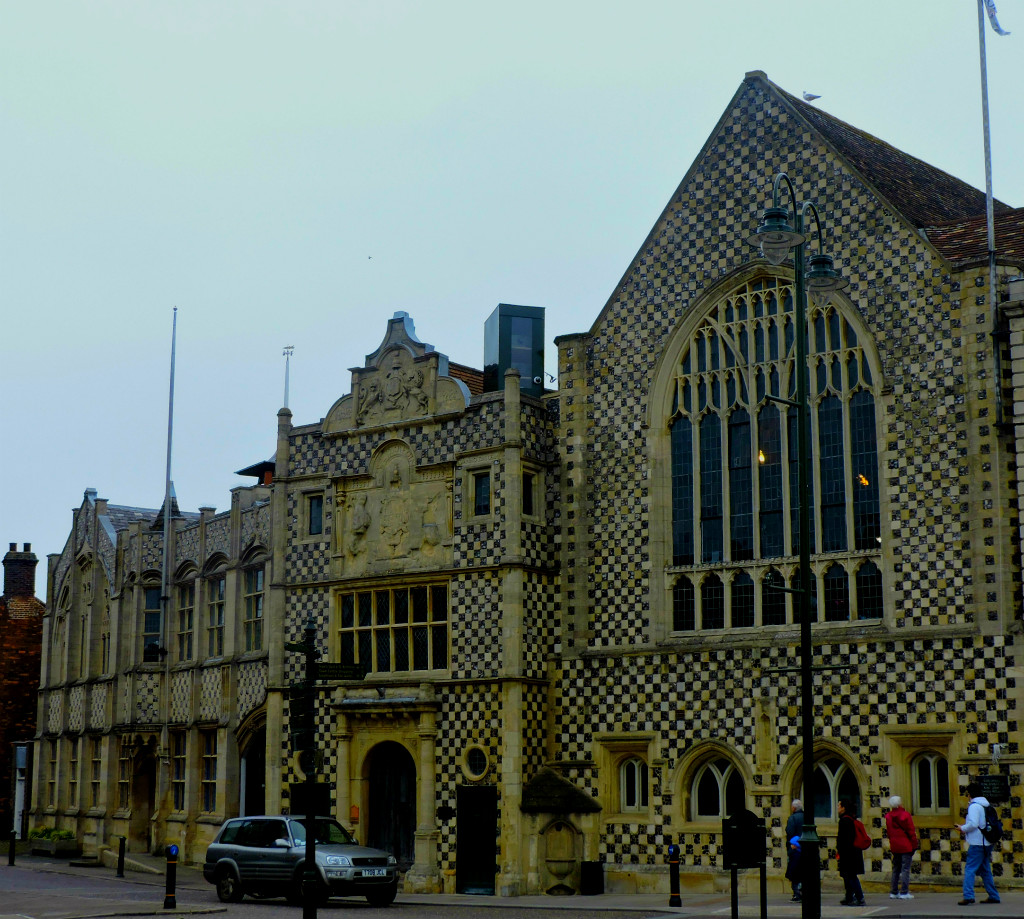
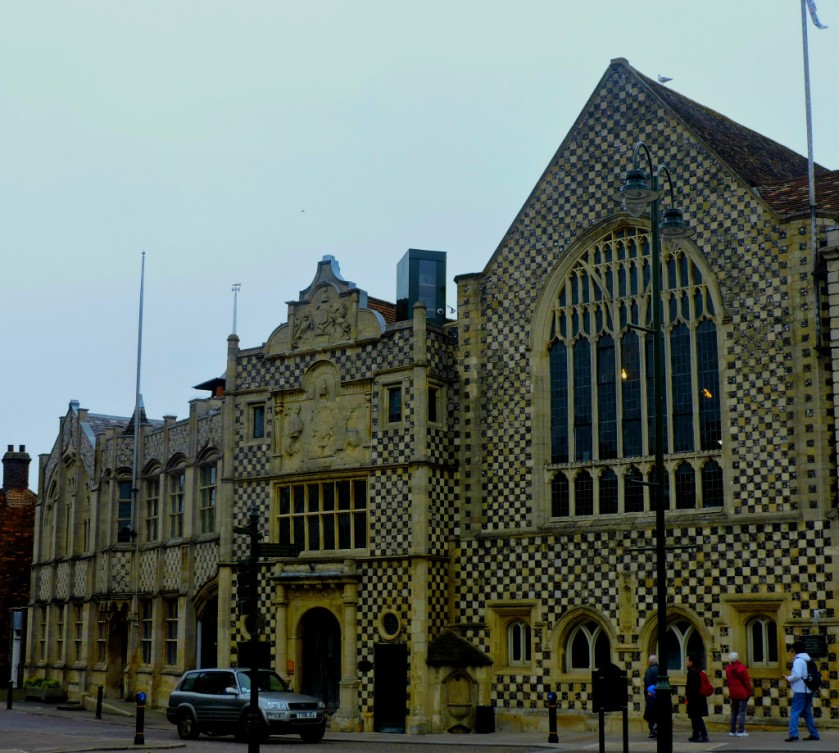
With Heritage Open Day coming up soon I decided to revisit these first two pics which feature thw town hall.
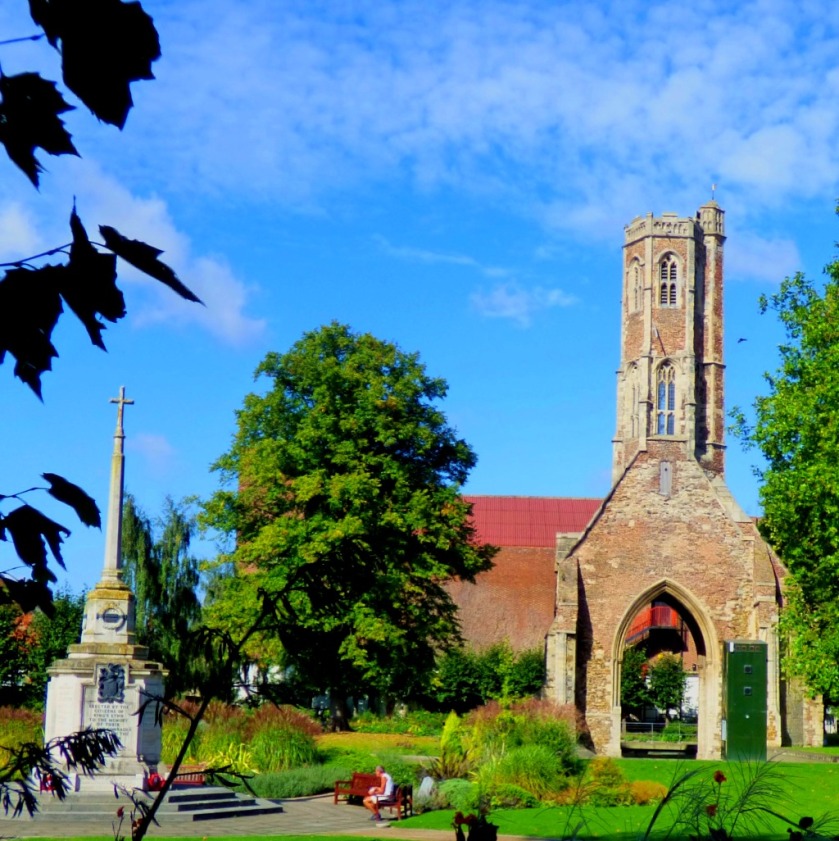
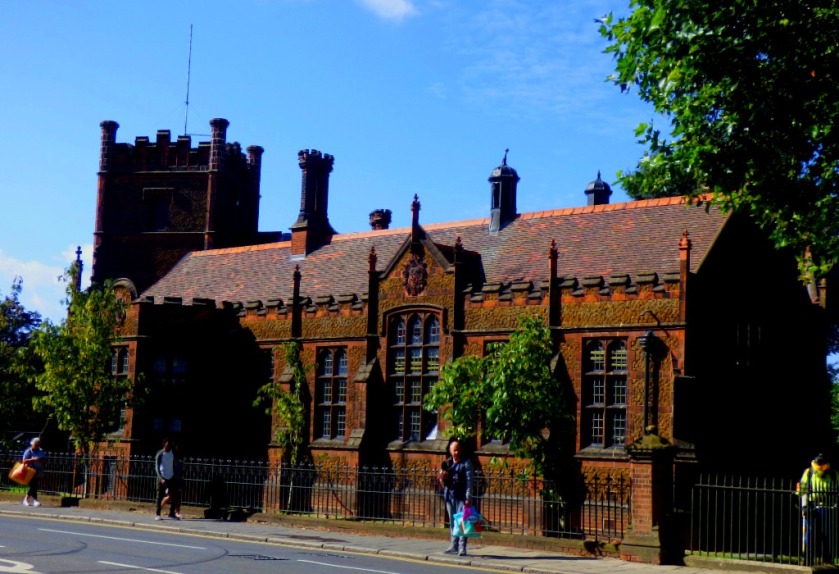
Greyfriars tower and the war memorialThe library, taken today
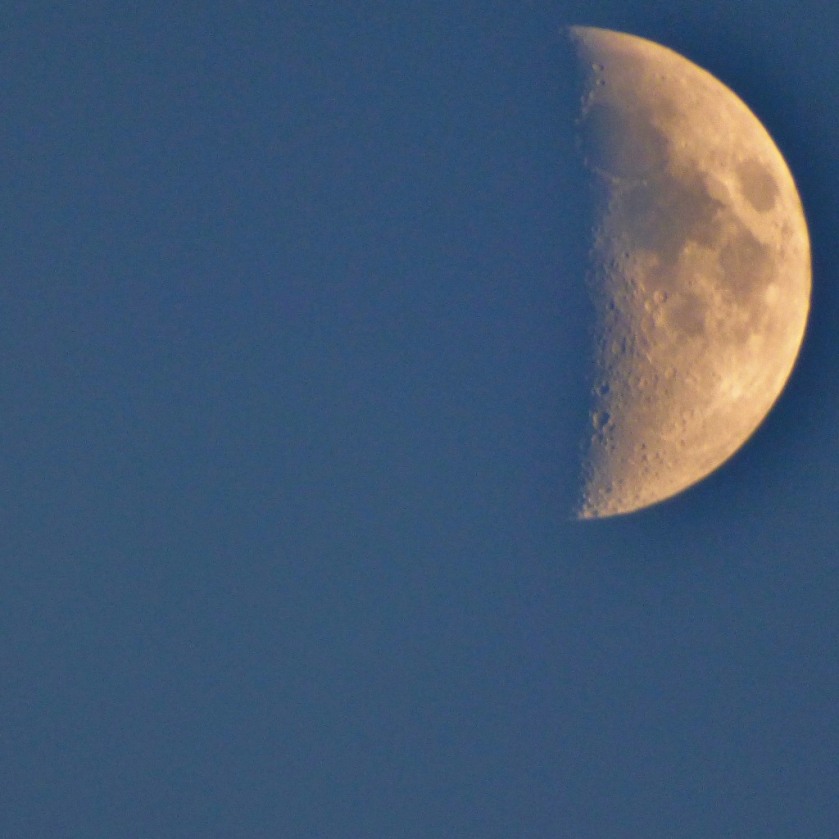
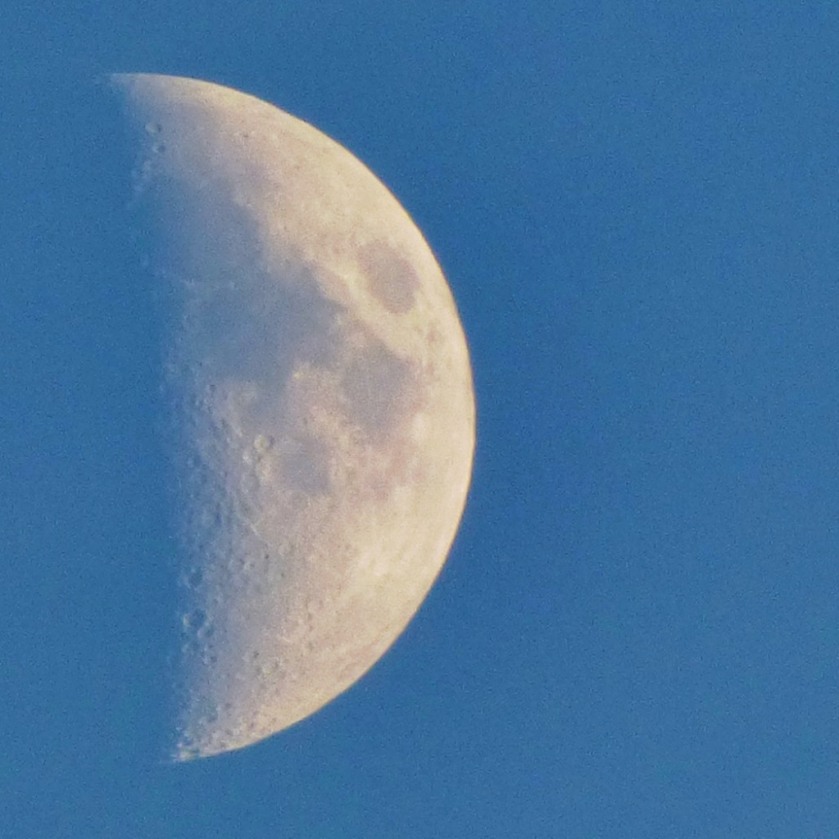
A hald-moon in an early evening sky.The first of three closer up and enhanced shots of the half-moon.
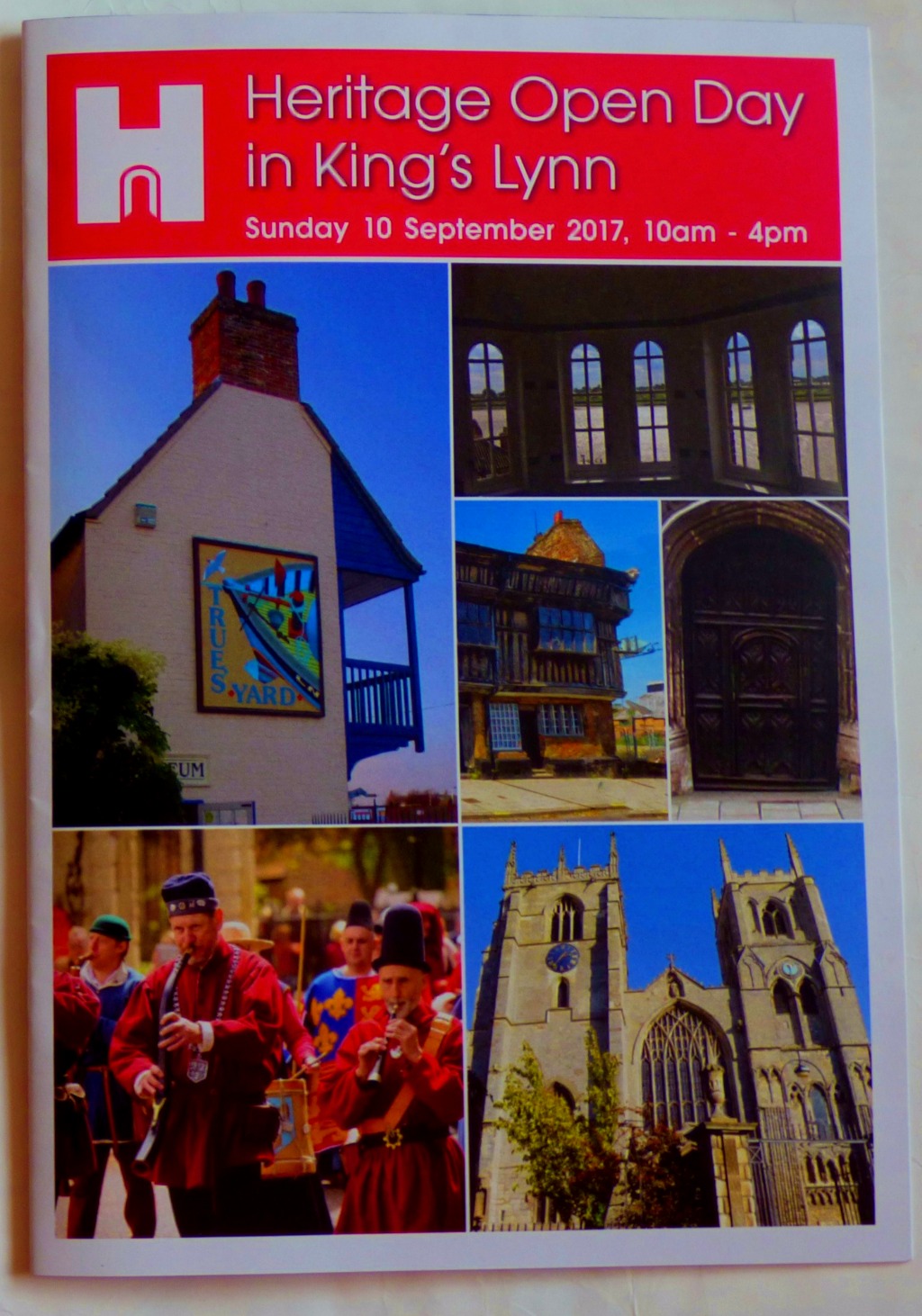
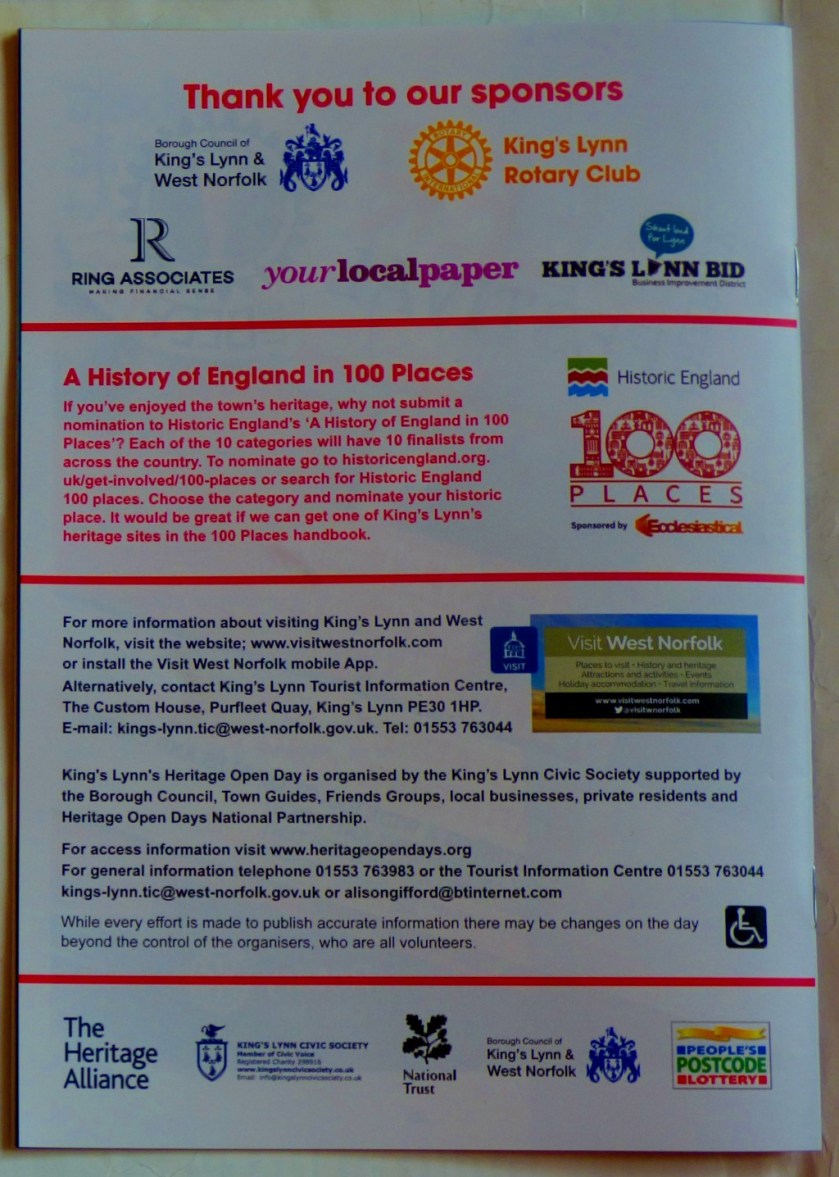
Official publicity for Heritage Day 2017 in King’s Lynn.
INTRODUCTION
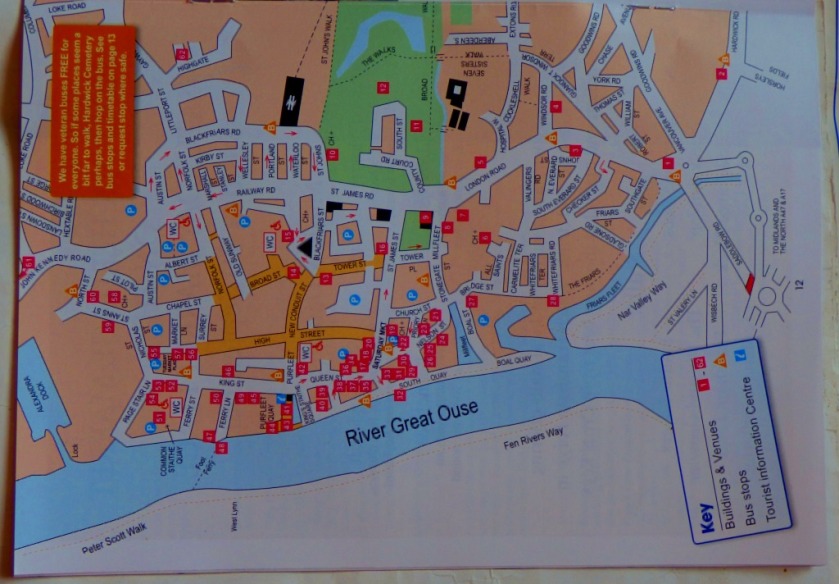
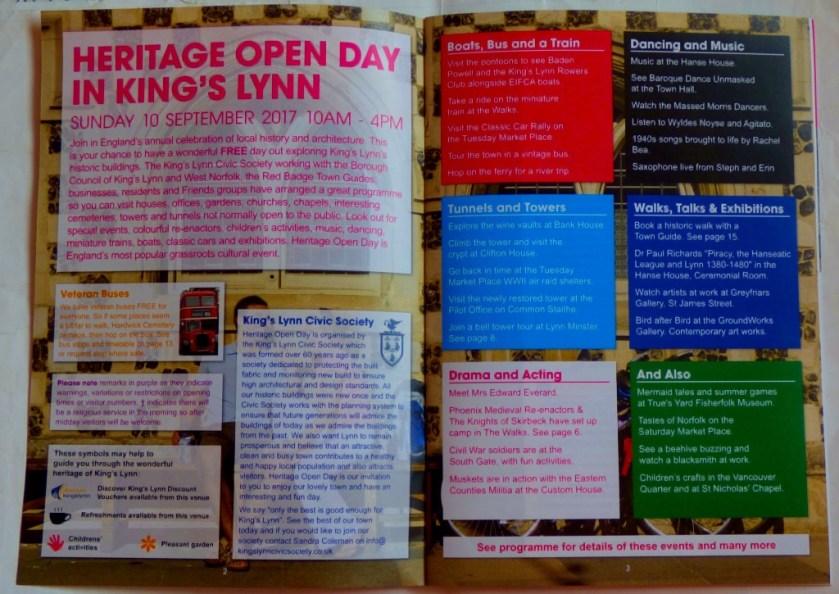
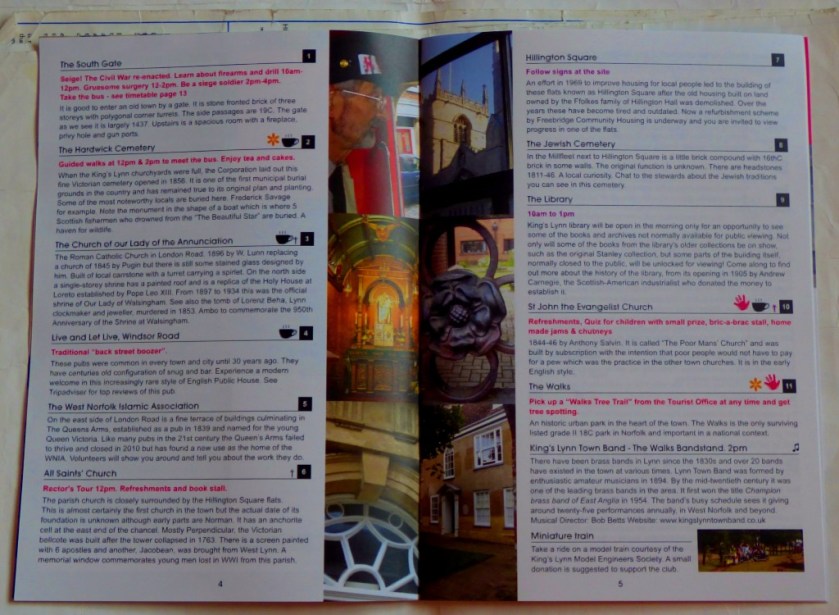
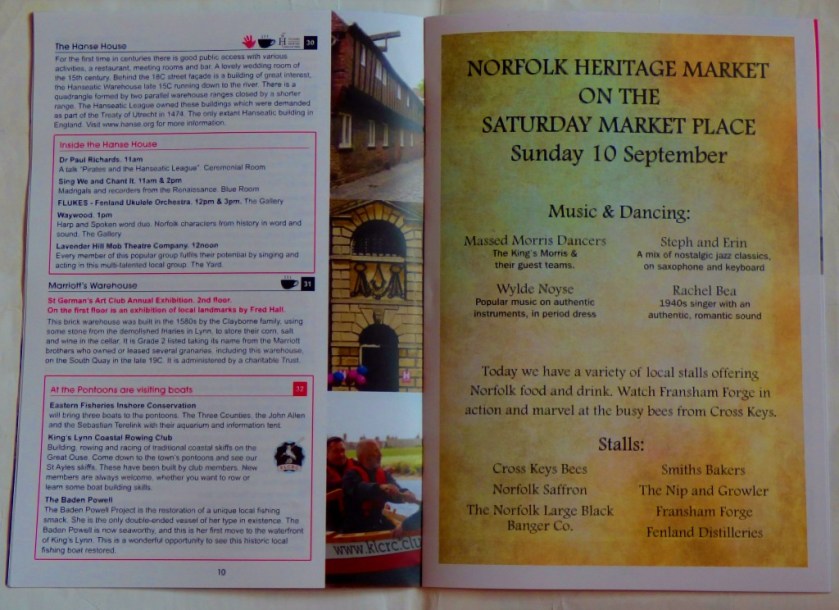
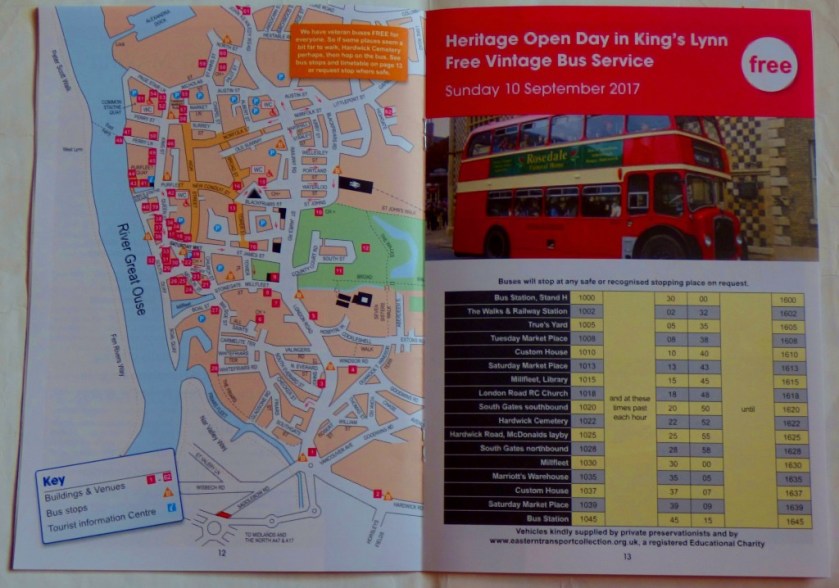
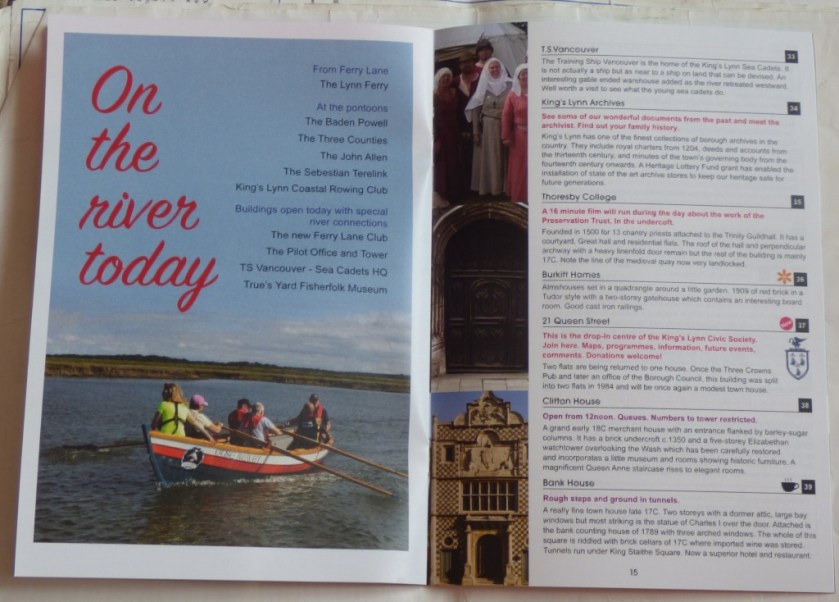
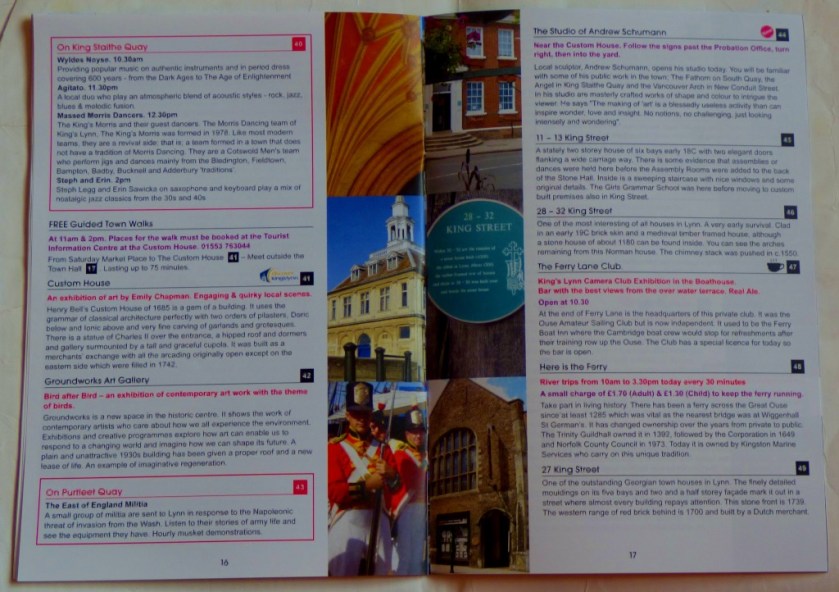
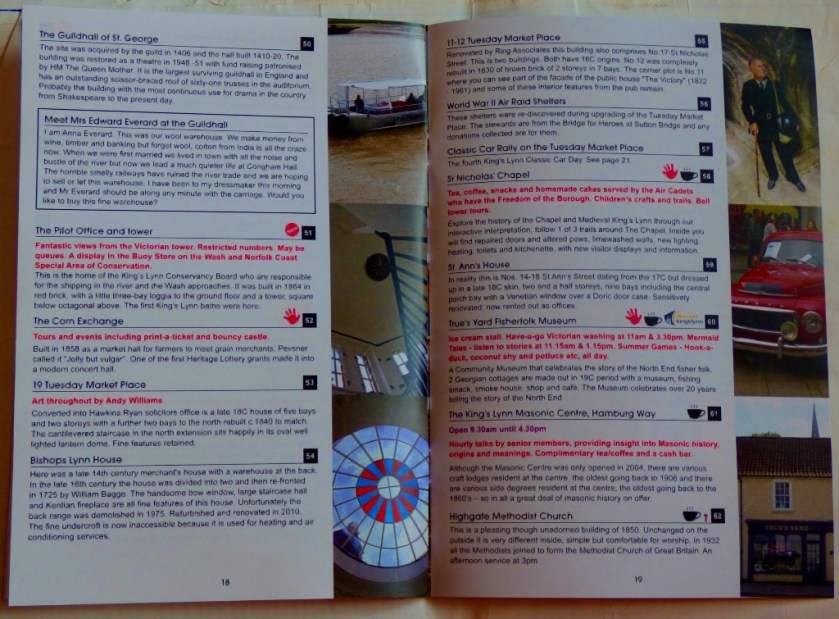
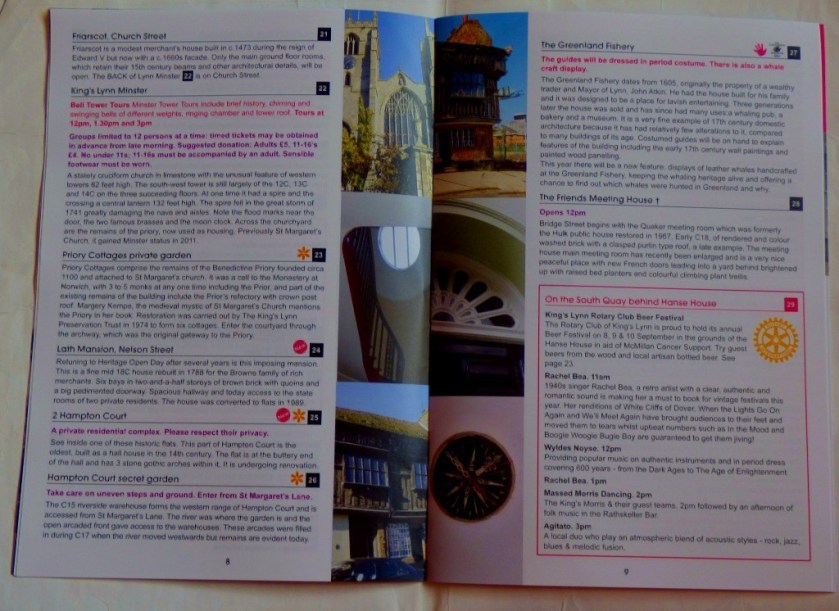
I have mentioned Heritage Open Day 2017 several times in this blog, including the fact that I will be stewarding at 11-13 King Street between 12 and 2PM. The official pamphlet for the event is now out, and with just less than two weeks to go I take this opportunity to share it with you.
THE MAP
Here is the map that is in the middle of the pamphlet, to help you orient yourselves:
THE PAMPHLET IN ORDER
This section shows the full pamphlet in all its glory:
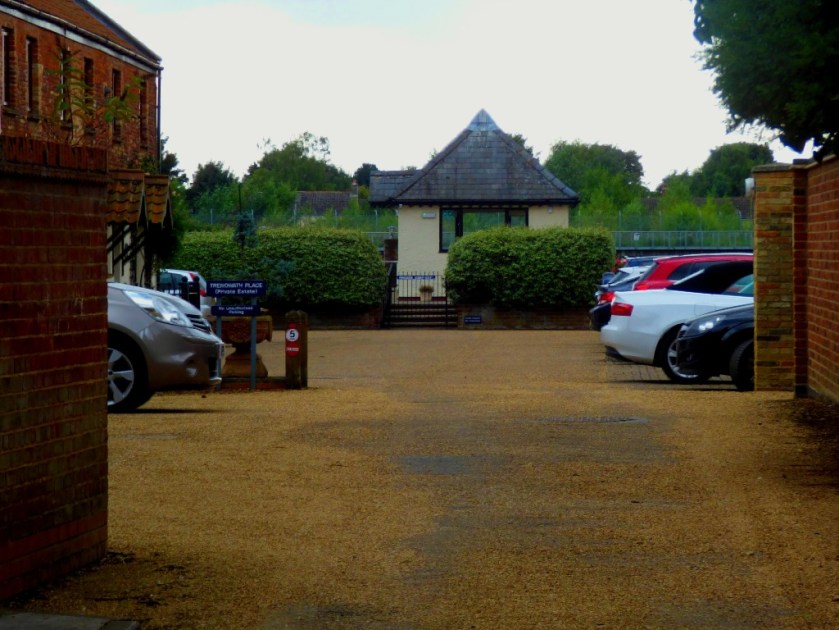
A COUPLE OF CLOSE FOCUSES
The first place I havce chosen to focus on is Hampton Court, where my aunt lives:
An eyewitness statement regarding a fire that I regard as highly likely to have been the result of arson, although accident is a possibility.
INTRODUCTION
I am putting this post up as a witness statement regarding an incident that happened somewhere in the region of one hour ago.
THE STORY
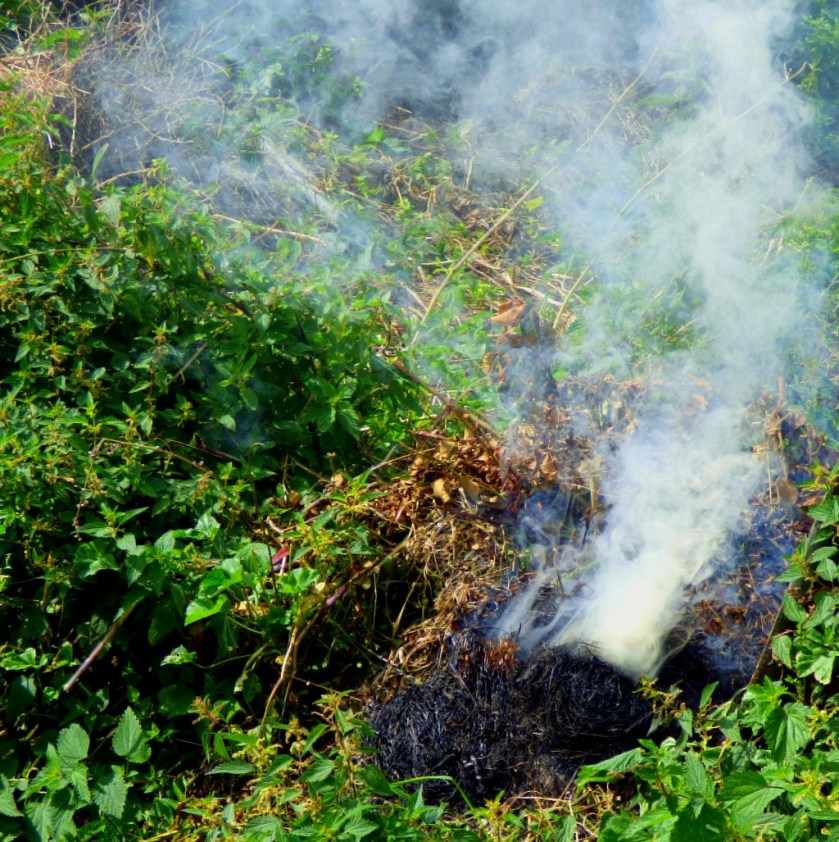
I went out for a walk, to take some photos and do some thinking. I set out across the upper Purfleet, on to King Street and thence via the Tuesday Market Place and St Nicholas Chapel to the start of the footpath that runs alongside Bawsey Drain as far as Lynnsport. My initial plan was to cross a bridge that leads into a field, head via Kettlewell Lane to the train station, then through the parkland to Seven Sisters, down past the South Gate and across the Nar to hit the Great Ouse by way of Harding’s Pits and thence back into town along the river. However, I was approaching this bridge when I saw white smoke rising from the field on the other side of the river. A cyclist approaching the bridge from that side was there before me and phoned the fire brigade, who sent people out to deal with it. When the fire engines arrived a few moments later I waited on the bridge while the cyclist went to meet them and guide them to the spot.
The fire was only a small one, though very close to the bridge and to the footpath leading away from the bridge, and fortunately had not yet spread, although the smoke had noticeably thickened by the time the fire brigade got there. They were able to deal with it quickly and easily, and apart from a small blackened patch of burned vegetation there was no lasting damage.
POSSIBLE CAUSES OF THIS FIRE
Sadly Bawsey Drain is treated as an all-purpose dumping ground by those who live alongside it, so there are two possible causes, both human in origin, given in order of where my personal suspicions based on observation lie:
1)Arson – a fire started deliberately by some person or persons who neither thought nor cared about the possible consequences of their actions.
2)Accidental but very stupid and selfish human action (e.g someone tossing a cigarette that they imagined to be out but was not onto the vegetation, thereby starting the fire).
SOME PHOTOGRAPHS OF THE FIRE
As well as this written account I have some pictures:
The first two images sbhow how close to the bridge and footpath the fire was, the third and fourth, courtesy of a telescopic zoom lens focus more closely on the fire.
FOOTNOTE: SPECIES IN THIS AREA
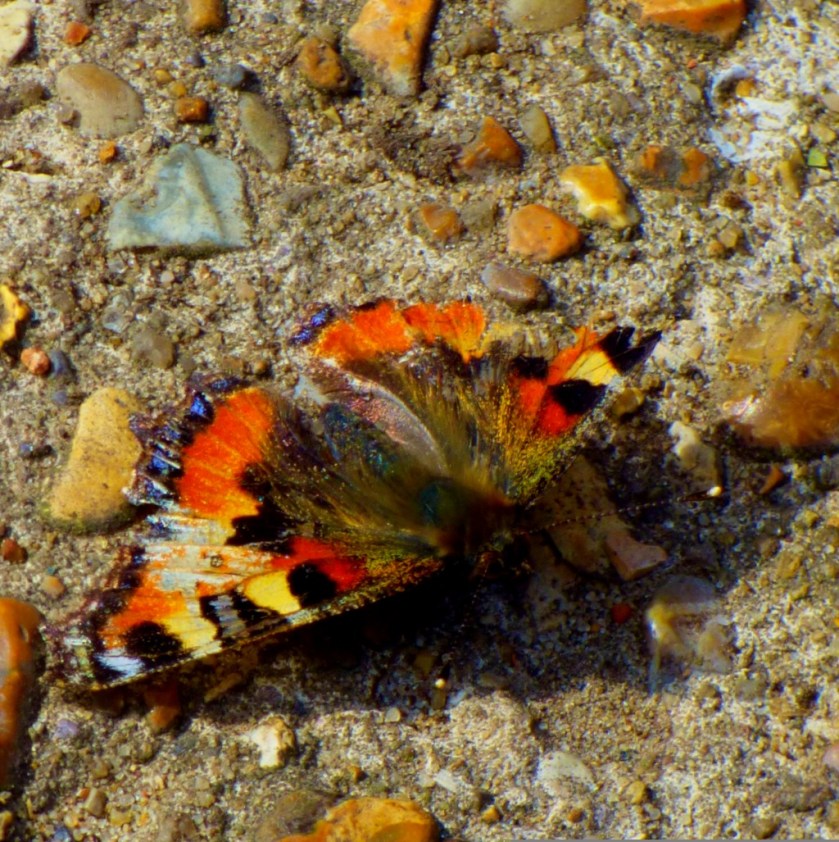
Although I only edited those photos between the first and last fire shot, I captured two of the butterfly species that along with various birds live in this area regularly. I have also seen rabbits, hares and small deer in that location on previous occasions. This fire potentially endangered all these as well as the plants it had already started to burn. Here are some Butterfly pics from that area, taken today, to end with:
These last two pictures were taken while waiting for the fire brigade to arrive, while I was on the bridge.
This is an example of why Erin Human is a firm favourite of mine. This post has wonderful title: “Diversity is Beautiful“. Below is a screenshot of the feature infographic. I urge all of you to visit the original and read the accompanying text.
NAS WEST NORFOLK OFFICIAL POST ABOUT THE TENTH ANNIVERSARY
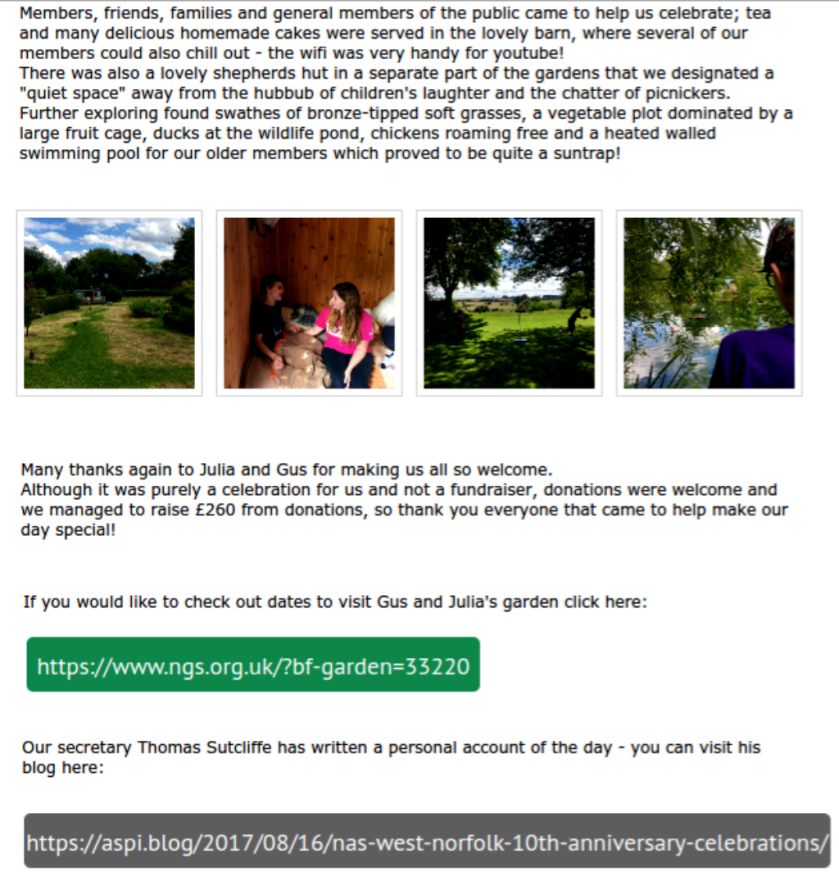
Our vice-chair Rachel Meerwald with some input from the rest of the committee created a post for our website about this event, which you can see here. Below is a screenshot of the end of the piece (my reasons for choosing this section will be instantly apparent!).
A FEW FINAL PHOTOGRAPHS
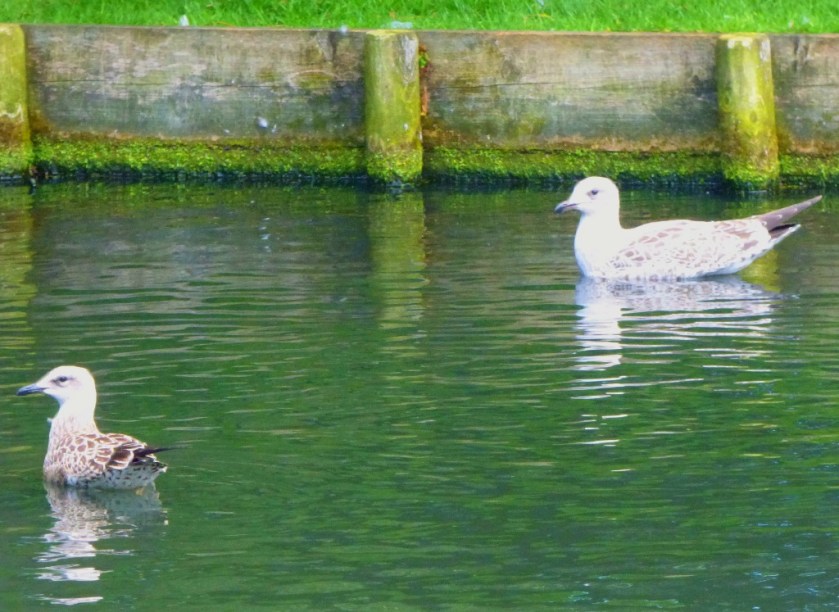
This is either an Iceland Gull or a Glaucous Gull (they have very similar colouring).
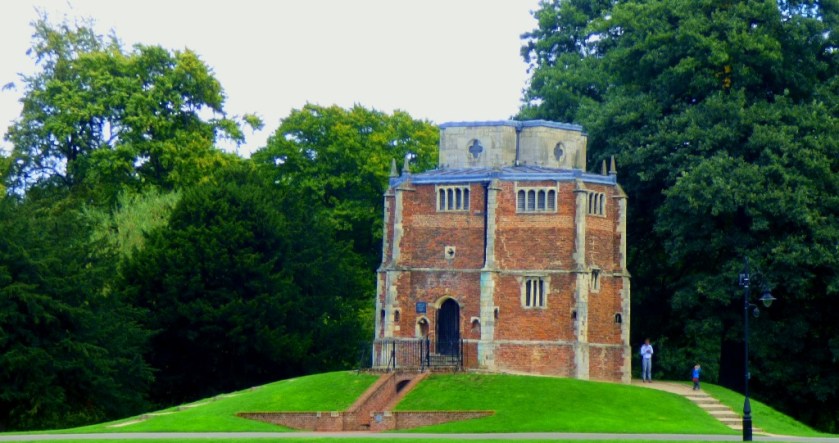
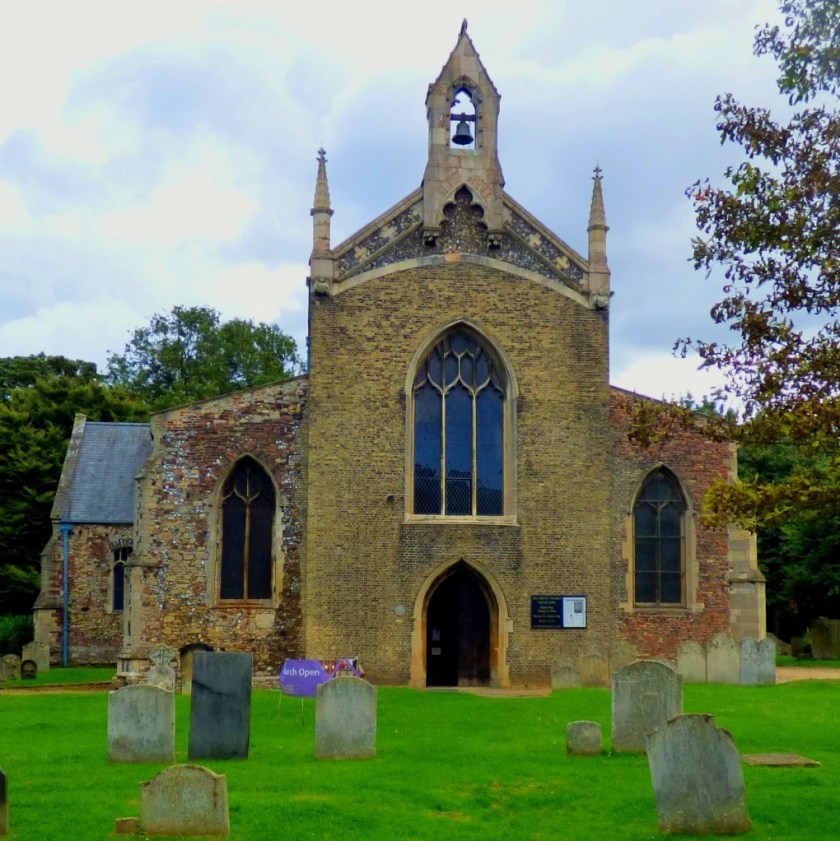
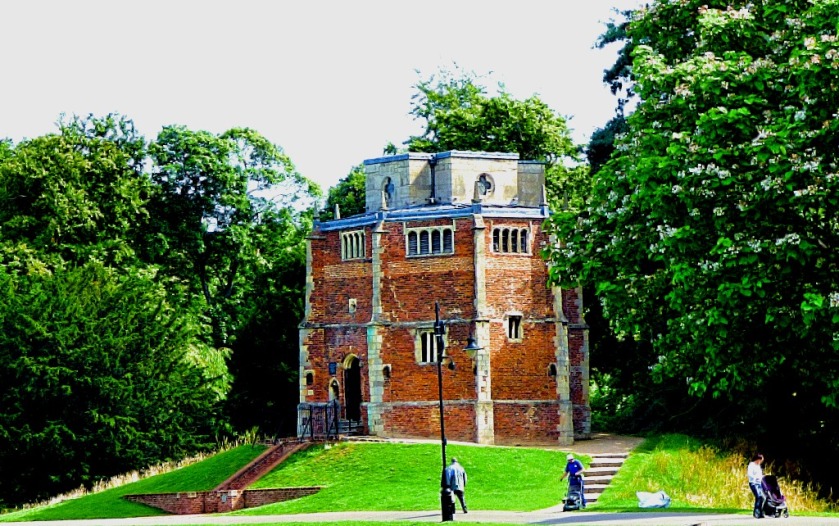
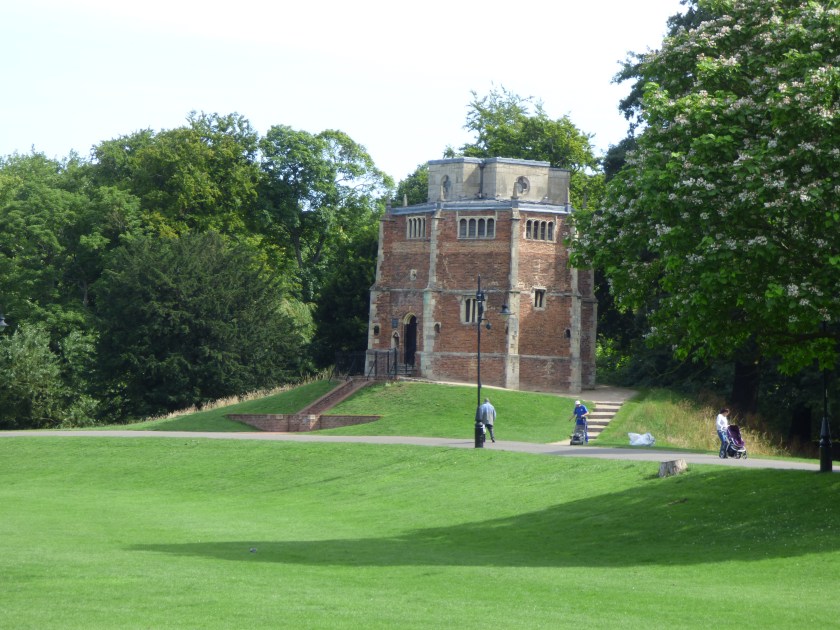
The Red Mount Chapel, a sprightly 600 year oldThese last two shots are of All Saints Church, reckoned to be the oldest in King’s Lynn, which means that ;parts of it date back a thousand years.
I am planning a major blog post for tomorrow morning, but there are a couple of things I wish to share now.
HERITAGE OPEN DAY
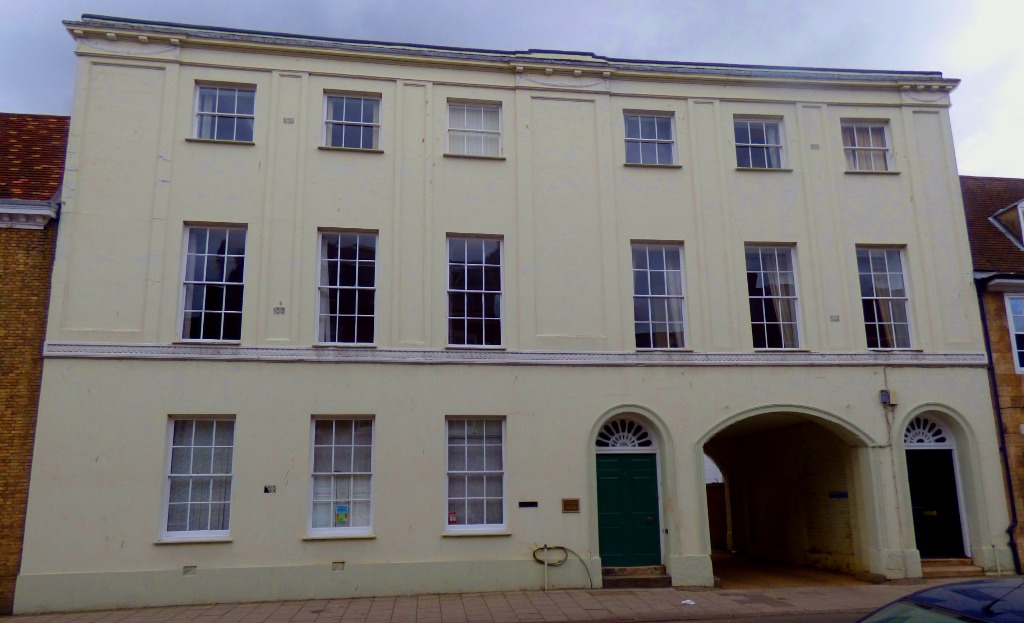
Heritage Open Day 2017 is on Sunday September 10, and as usual many King’s Lynn buildings will be opening their doors for the occasion. This year I will be among the volunteers. I will be stewarding at 11-13 King Street between 12 and 2PM. Here are a few pictures of the place taken today:
11-13 King Street, where I will be stewarding from 12 to 2PM on Heritage Open Day.
A WARNING FROM AMERICA
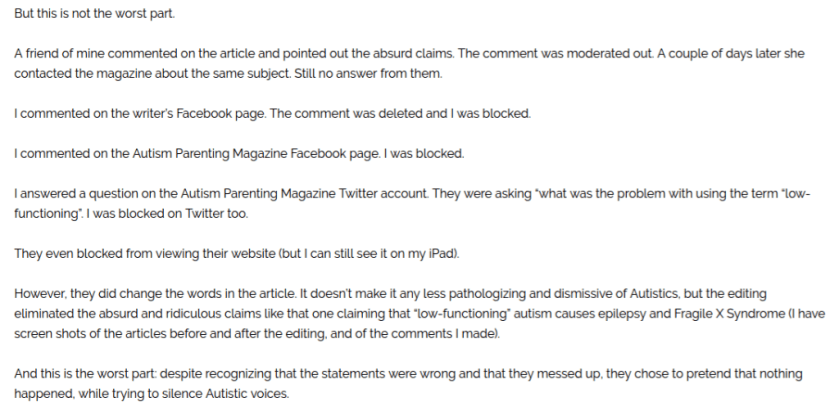
There is an online magazine called Autism Parenting Magazine. Amy Sequenzia, a very well known autistic person and autism advocate has had a very bad experience with them recently, as has one of her friends. I found out about this from americanbadassactivists, who put up a post linking to Amy’s original, which appears on the Autism Women’s Network. As someone who is both autistic and heavily involved witha charity that helps autistic people I am shocked by the attitudes and behaviour of the people who run this online magazine. Below, in screenshot form, is some of the detail from Amy’s piece:
A POSITIVE ENDING AND PHOTOGRAPHS
I always like to end my posts with pictures, but before I do here is a link to something much more positive than the last piece I linked to. This piece, from Science Whysis titled “We Are Family” and it ends with a wonderful quote from Maya Angelou: “We are more alike, my friends, than we are unalike.”
Now for those photographs:
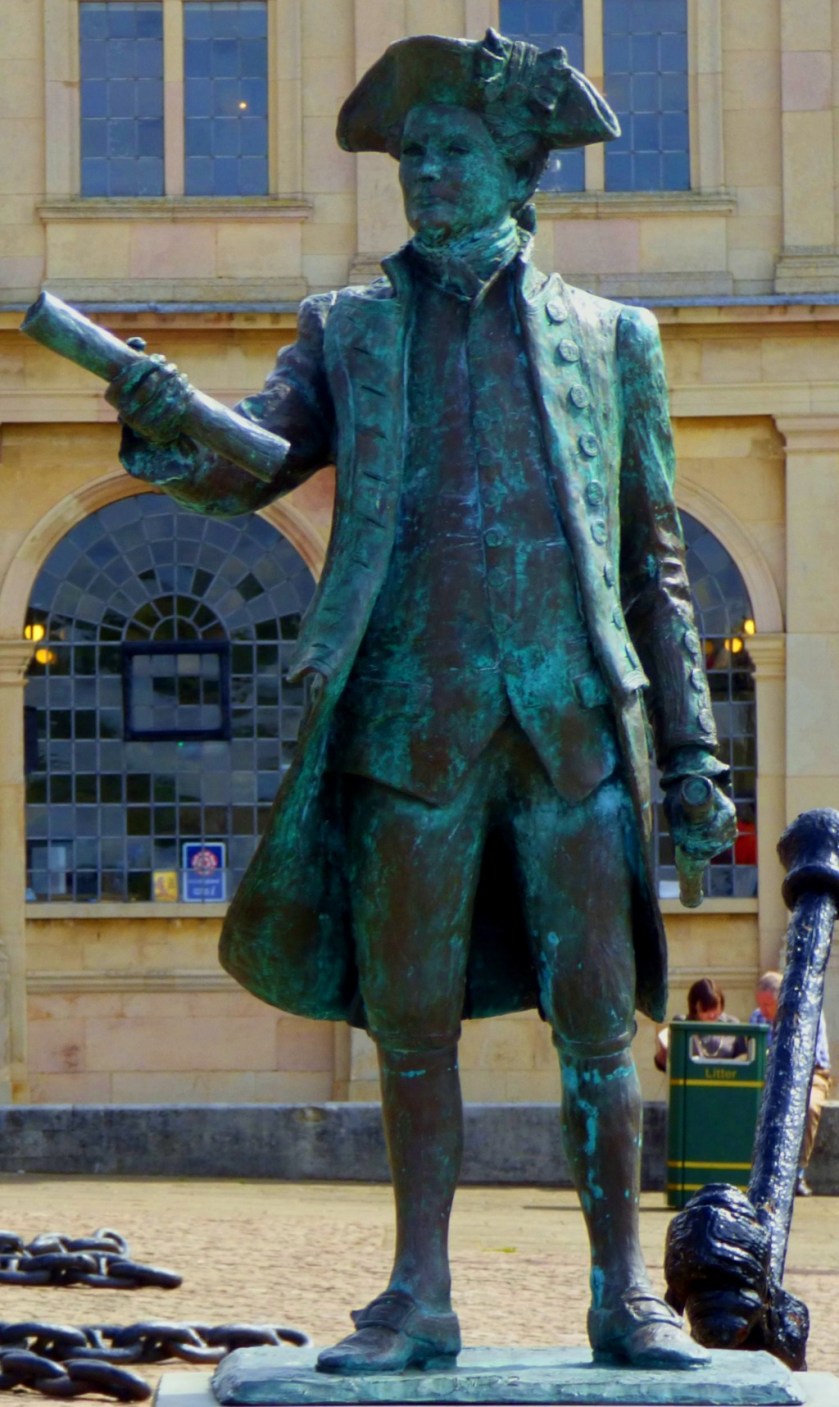
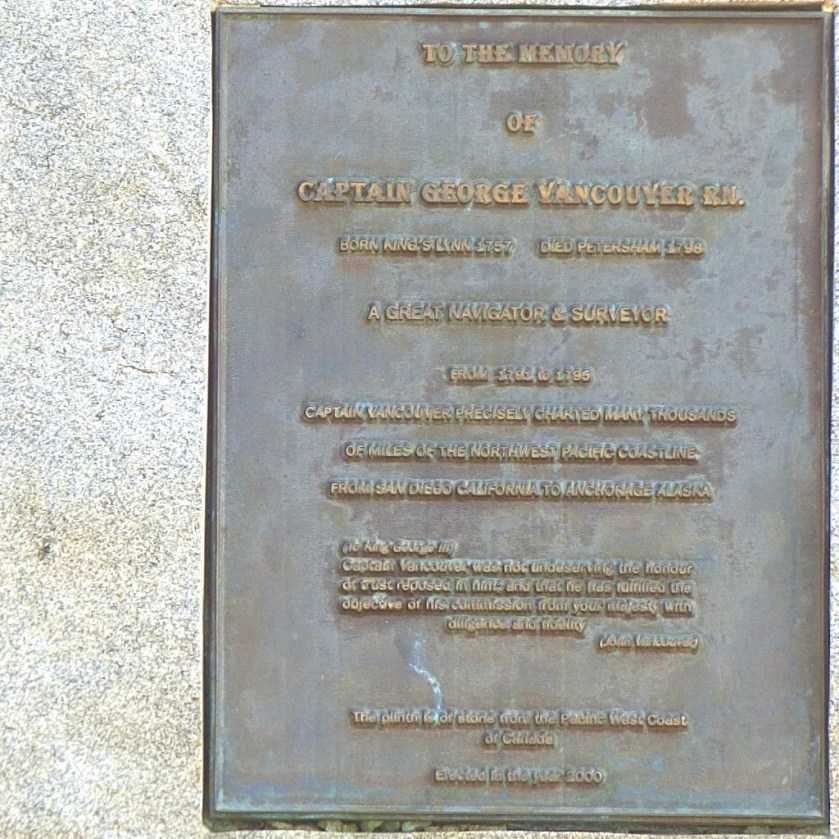
The Vancouver statue (3 images)
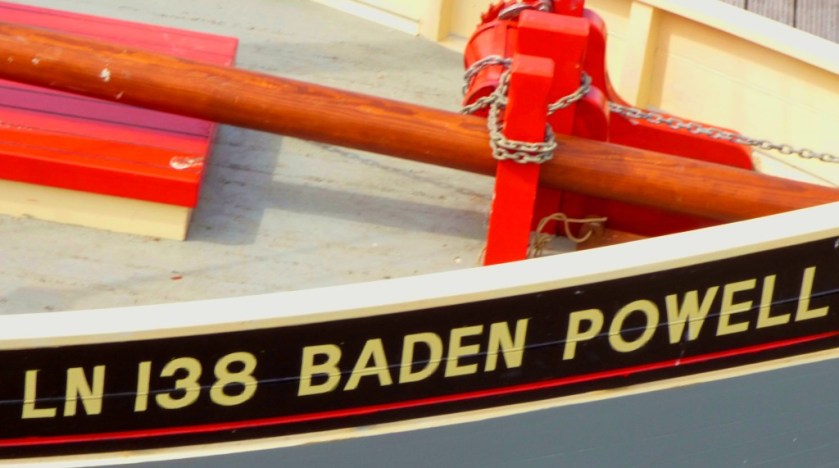
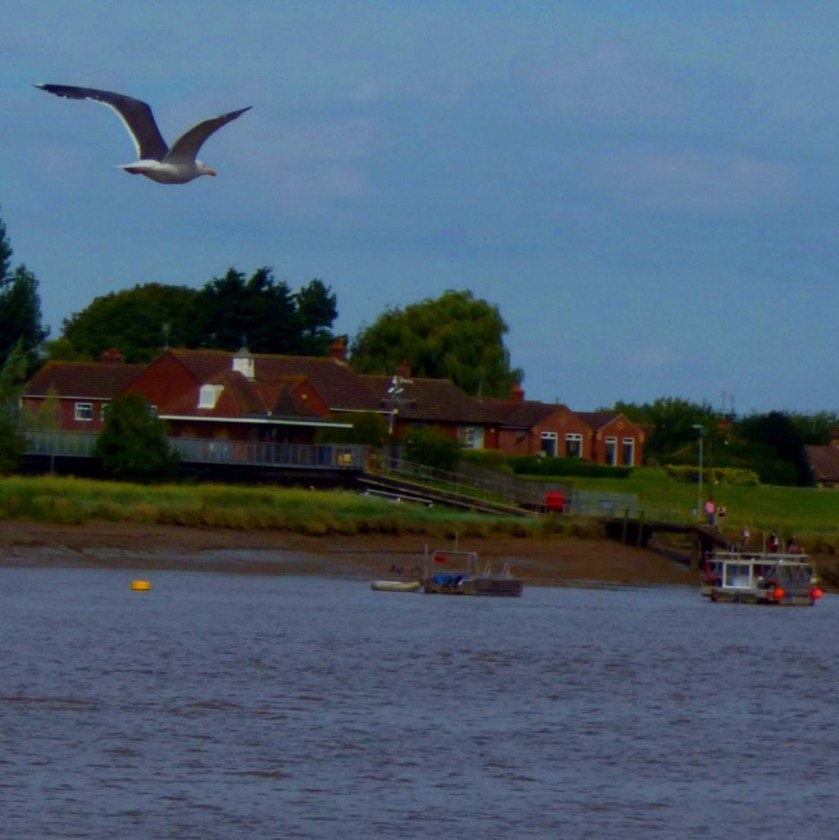
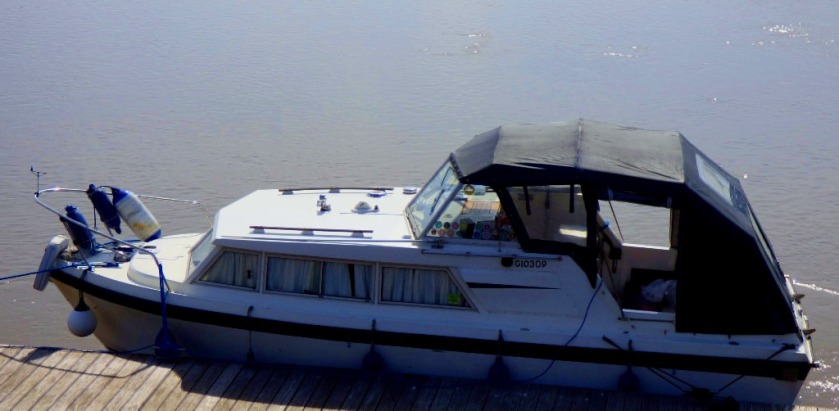
A double ended cockling boat, the Baden Powell, currently moored at the jetty near Marriott’s Warehouse (four images)
Swallows often fly over the Nar outfall, but capturing them is hard due to their sheer speed.
Some links to posts about the fight to save Trosa nature and a few of my own pictures from today.
INTRODUCTION
It will be no news to regular followers of this blog that I have been supporting Anna in her fight to protect nature in her part of Sweden for some time. In this blog post I share links to some of her recent posts on this issue, and urge you to follow them up. At the end there are some photos of mine from today featuring creatures I saw while out walking this morning.
SETTING THE SCENE –
VICTOR, YANNO & DUNNO
The beautiful area of Sweden in which Trosa lies is threatened by a proposal to build a big new road which will bring large amounts of money to a few and destruction of priceless natural beauty as an inevitable consequence. This tale sets out the story of the road building plan through three characters, Victor, Yanno & Dunno. The feature graphic shows Yanno & Dunno as puppets being controlled by Victor:
This third post about the wildlide of Trosa and the Tureholm Peninsula is devoted to birds. My bait to lure you in is a Heron…
SOME OF MY PICTURES FROM TODAY
I finish this piece with some pictures from earlier today, starting with…
A LITTLE EGRET SEEN IN THE RIVER NAR
The point where the River Nar joins the Great Ouse is about 10-15 minutes walk from the centre of King’s Lynn, and I regularly see interesting stuff there, but before today I had not seen a Little Egret there (as well as the two pictures I took of the bird I have a picture of the relevant page of my bird book):
My second set of pictures are…
A SNAIL, A DUCKLING AND A HOVERING INSECT
The footpath above which this little beauty was hovering does not make a great background, bjut I hope you can see the delicate wings that keep that body airborne.
A couple of classic autism infographics I spotted in the last 24 hours and some photographs of my own.
INTRODUCTION
The photographs which will be appearing in two tranches at the end of this post are mine, all taken yesterday. The two autism related infographics are shared from elsewhere (credit given at appropriate points). I saw the first of these yesterday evening and the second this morning.
AUTISM INFOGRAPHICS
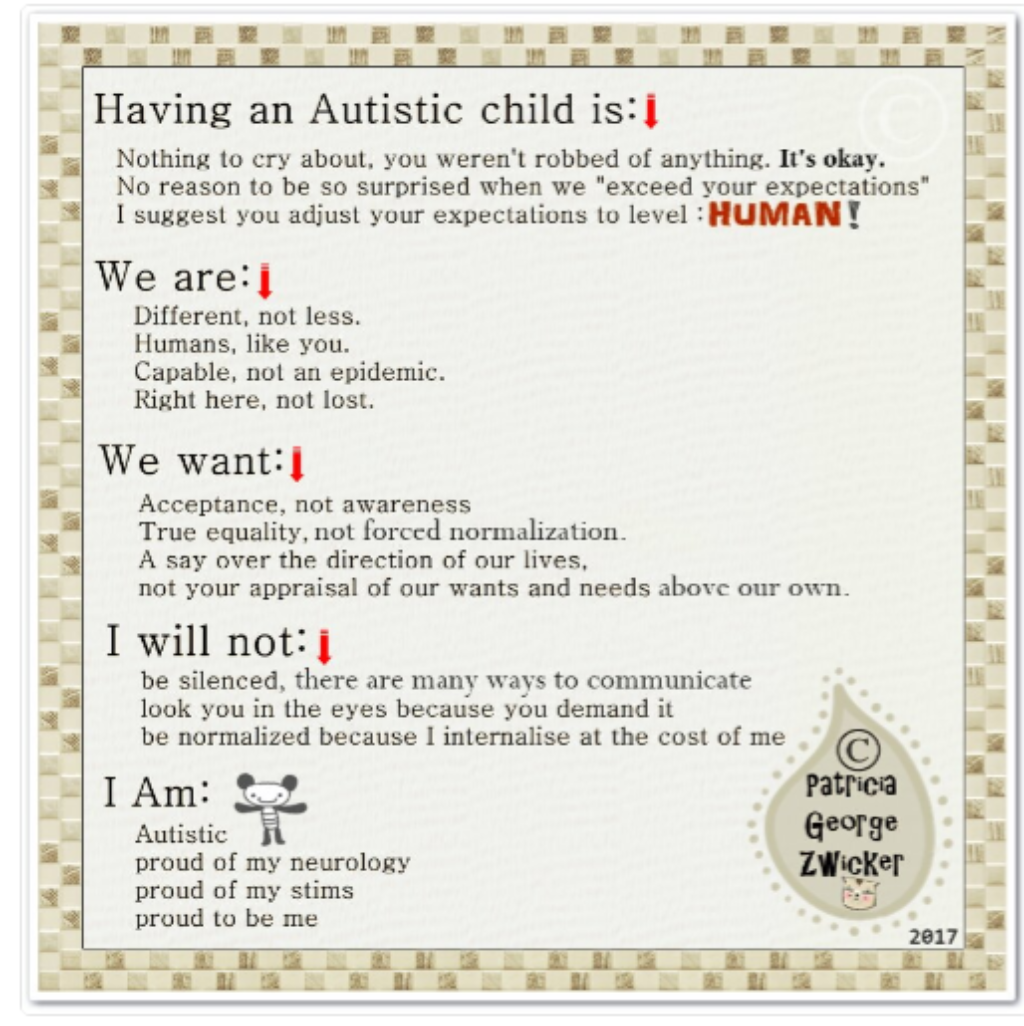
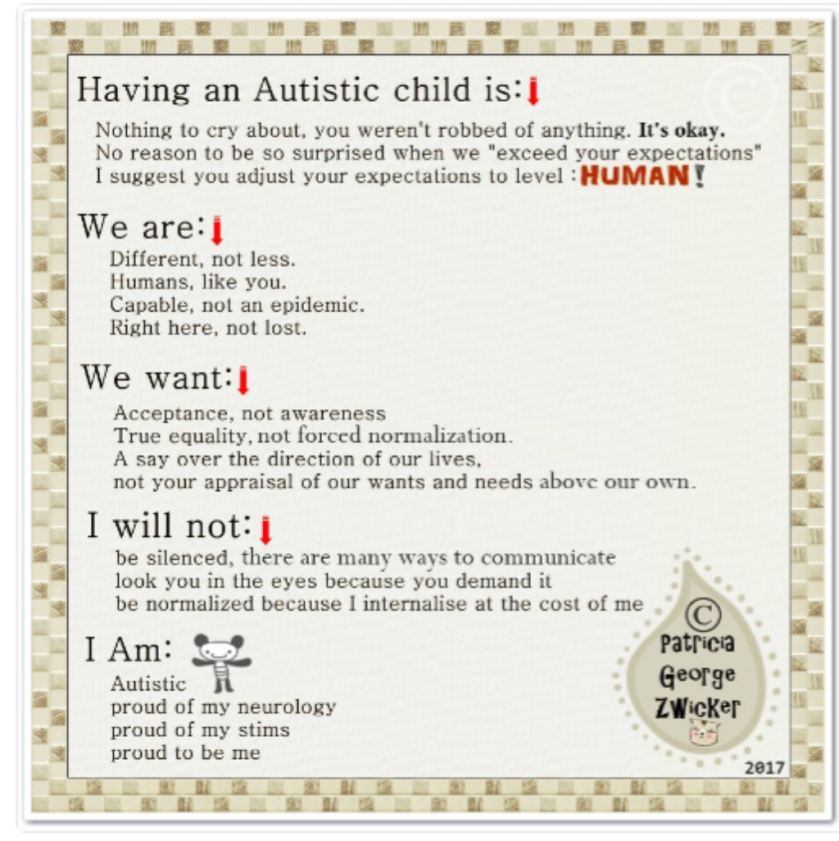
First, courtesy of Patricia, who tweets as @pgzwicker, comes this gem:
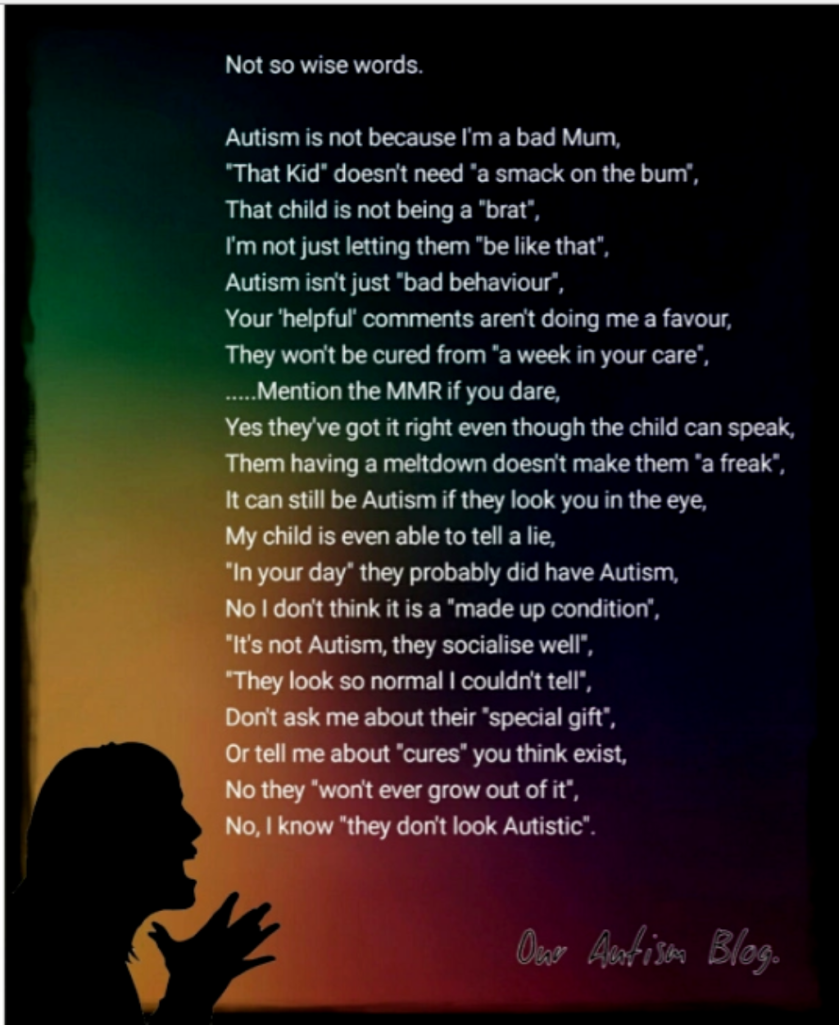
The second was originally posted on Our Autism Blog this morning, and I link to that post so that you can comment on it there should you wish:
PHOTOGRAPHS
The first of the two sets of my photographs that I am putting up here were taken while out walking yesterday morning:
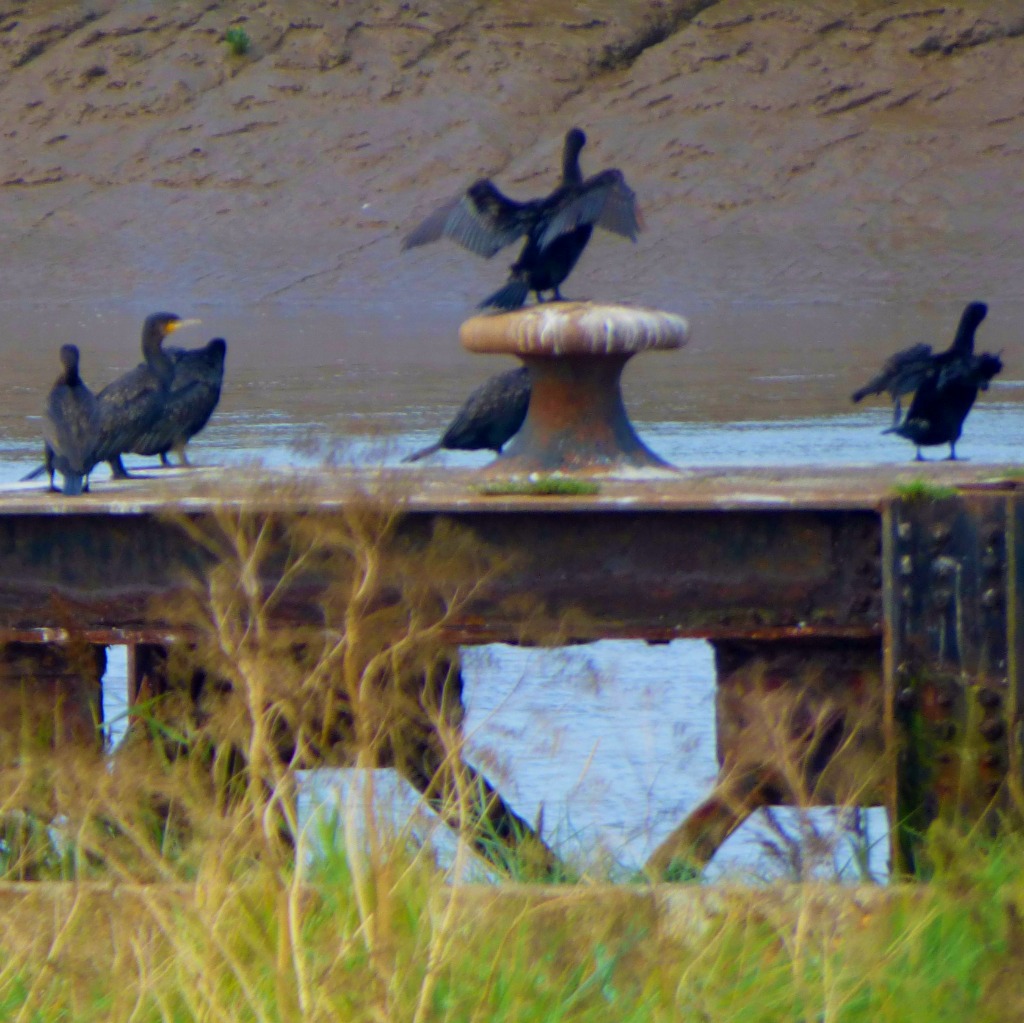
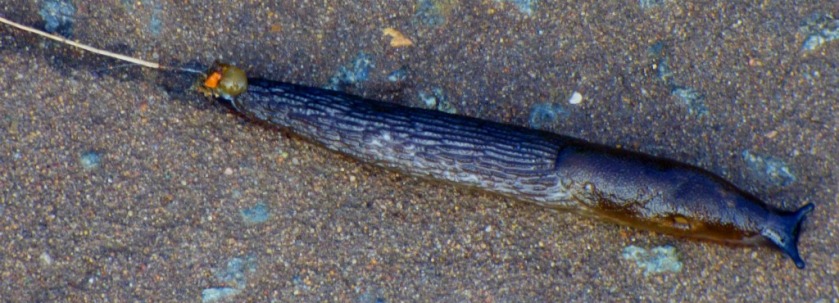
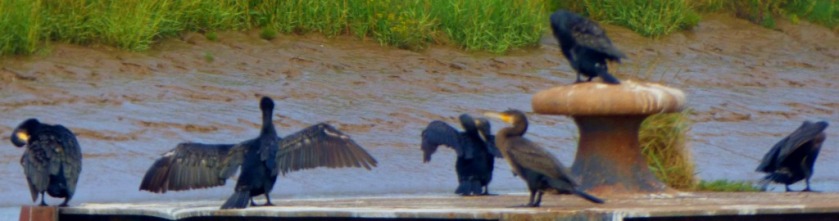
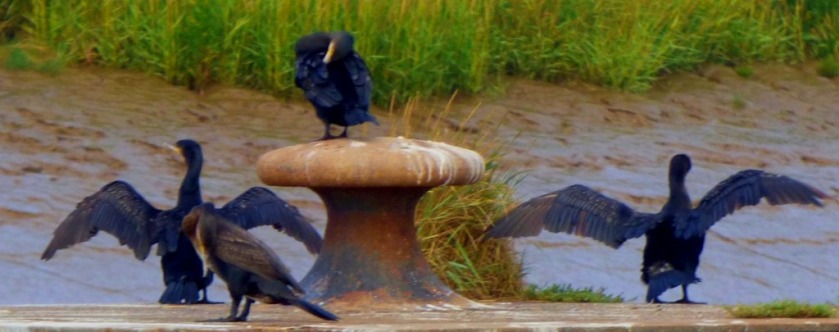
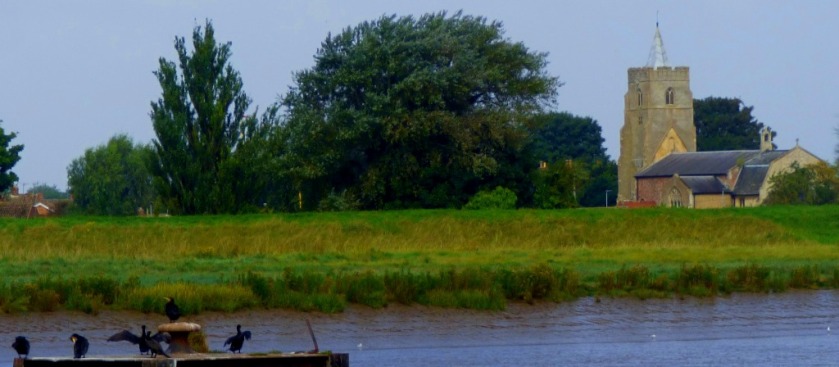
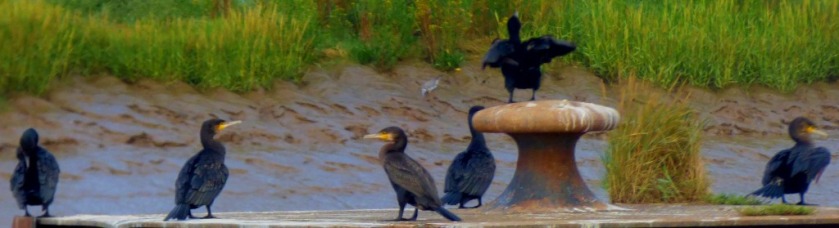
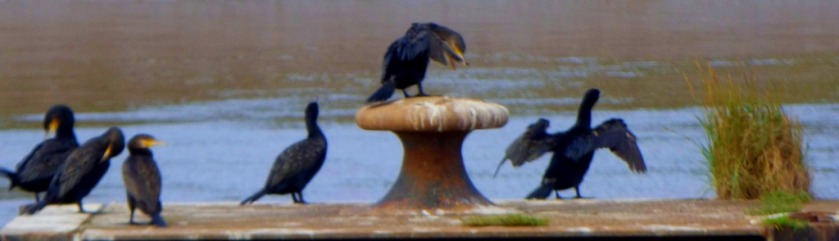
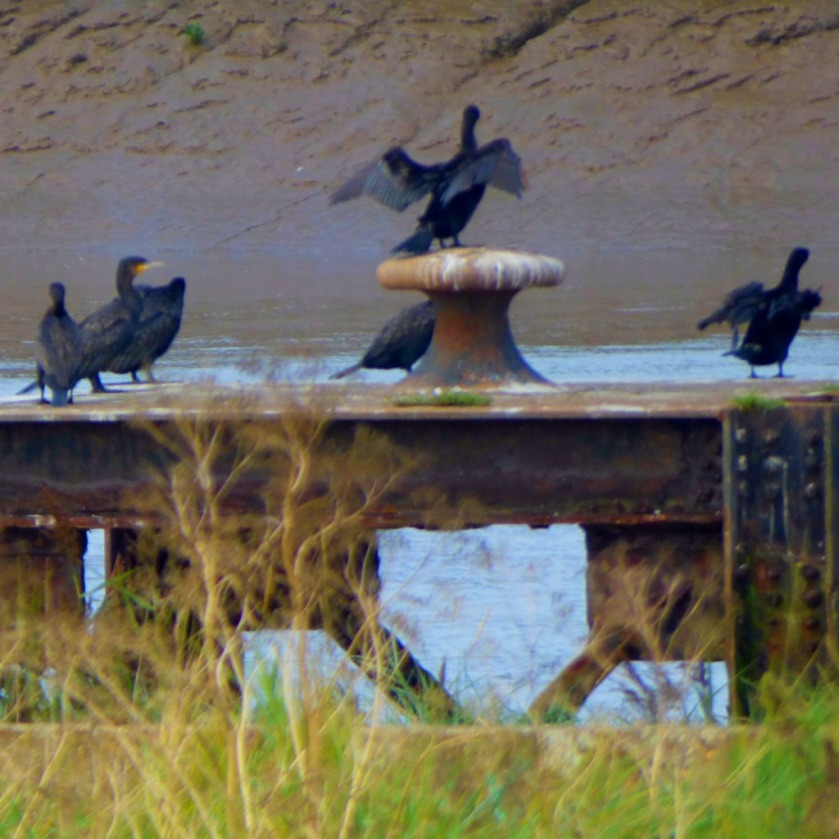
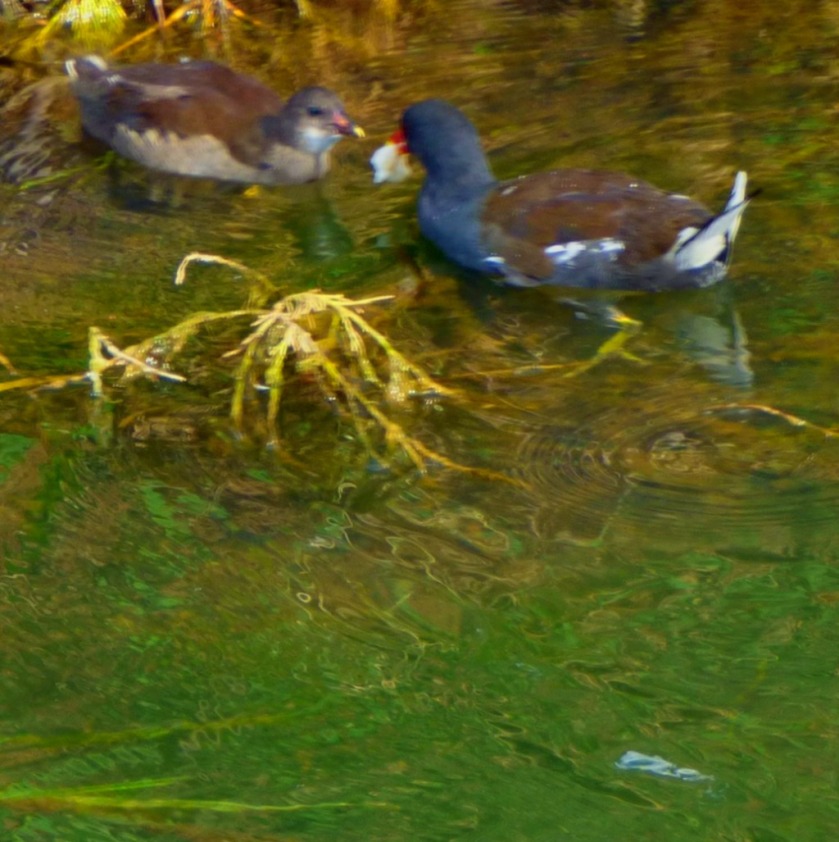
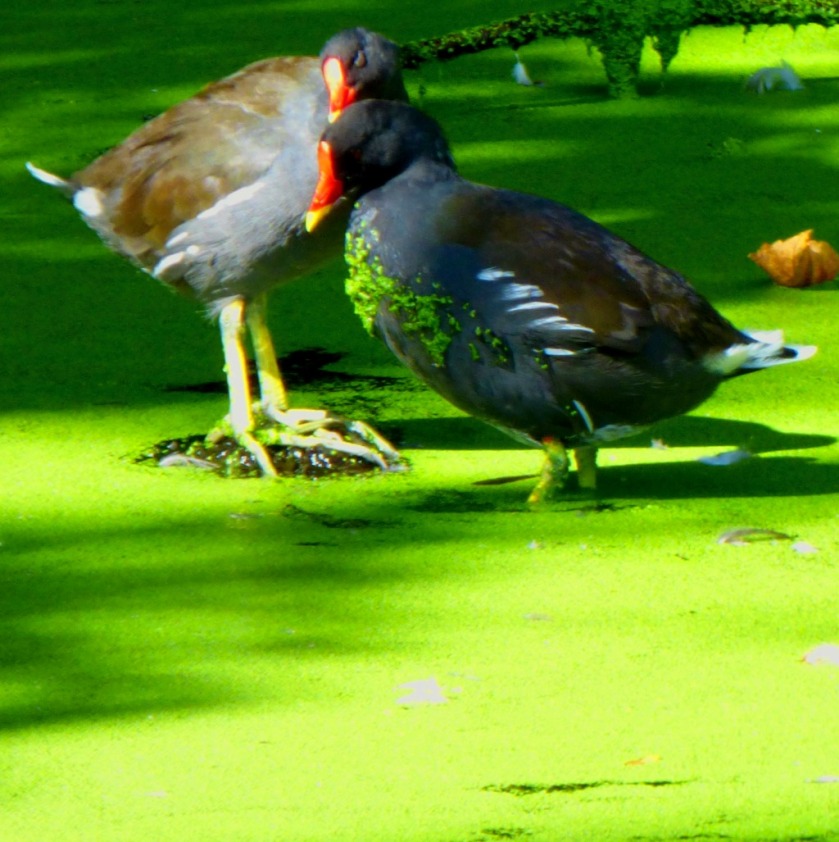
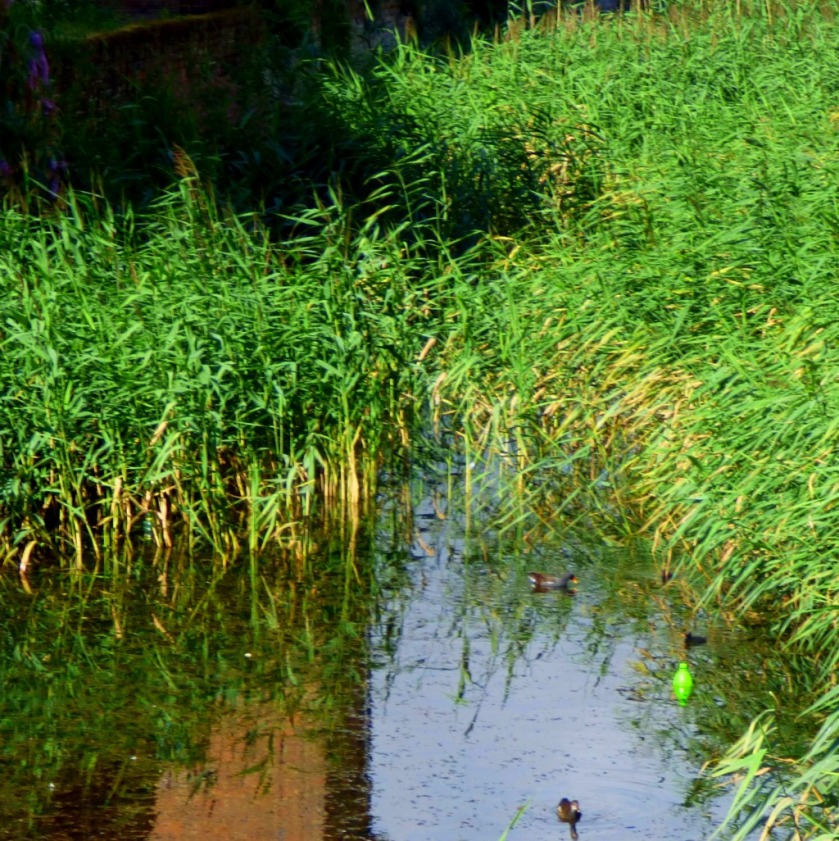
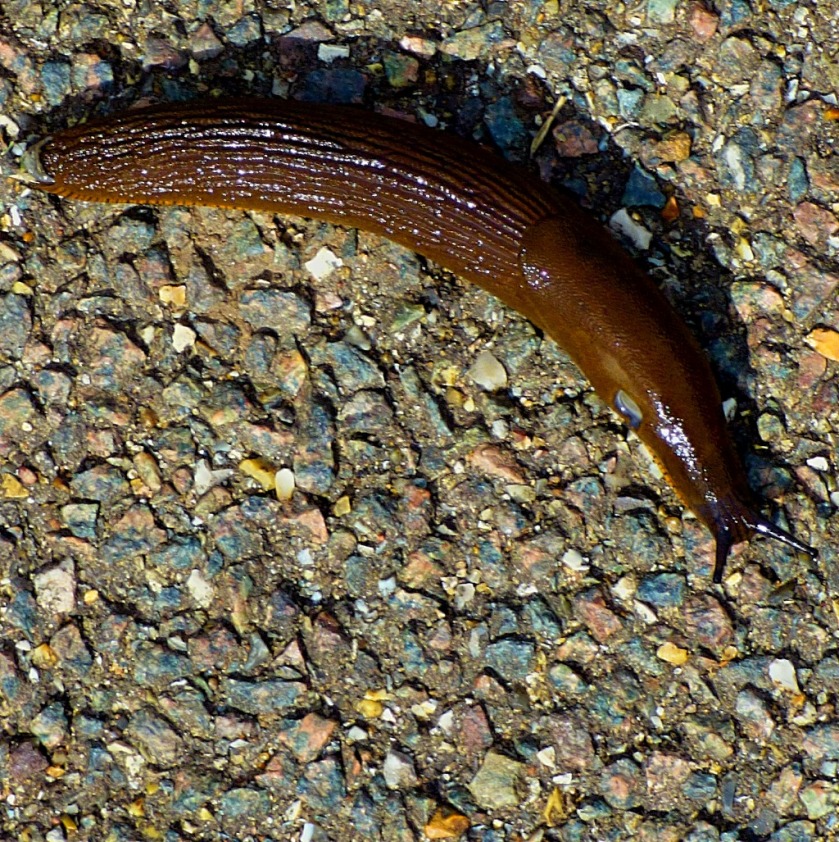
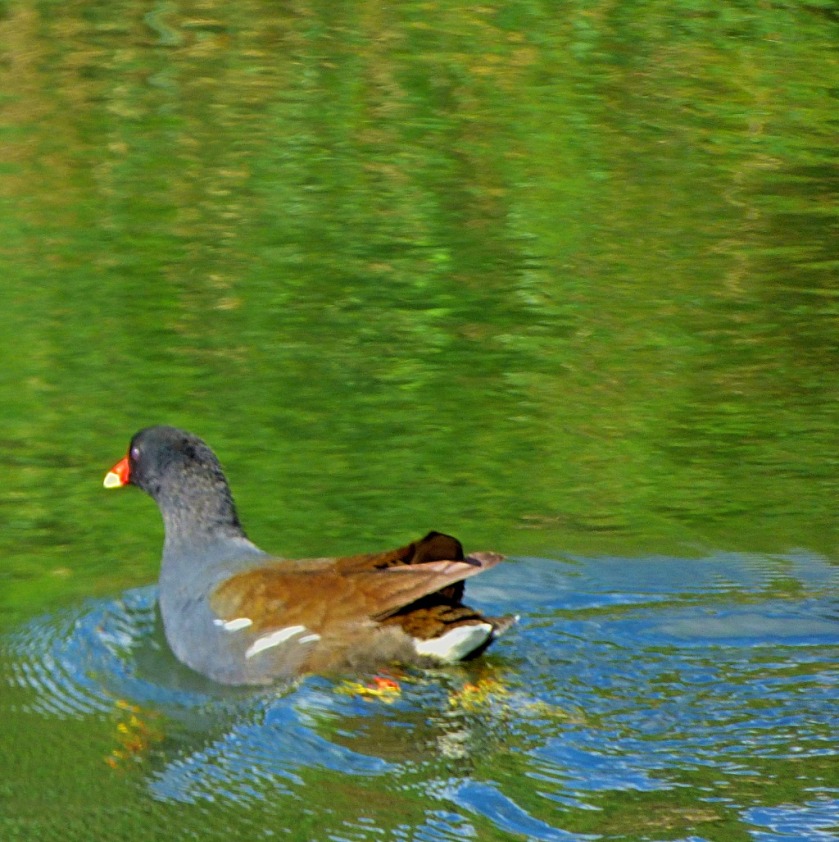
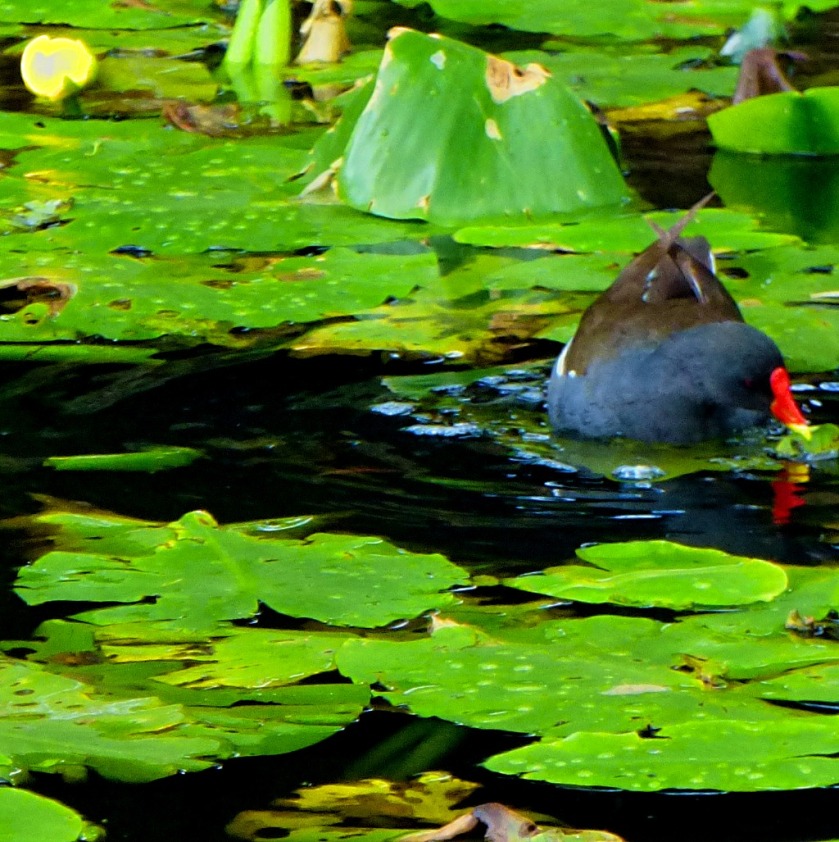
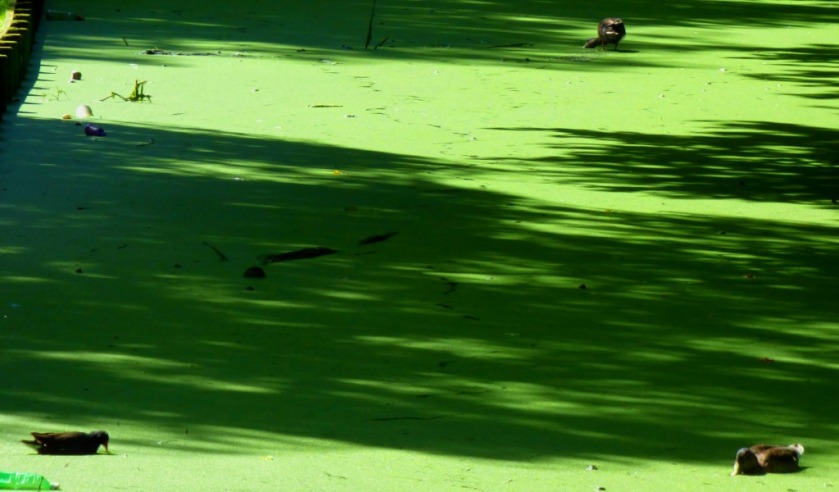
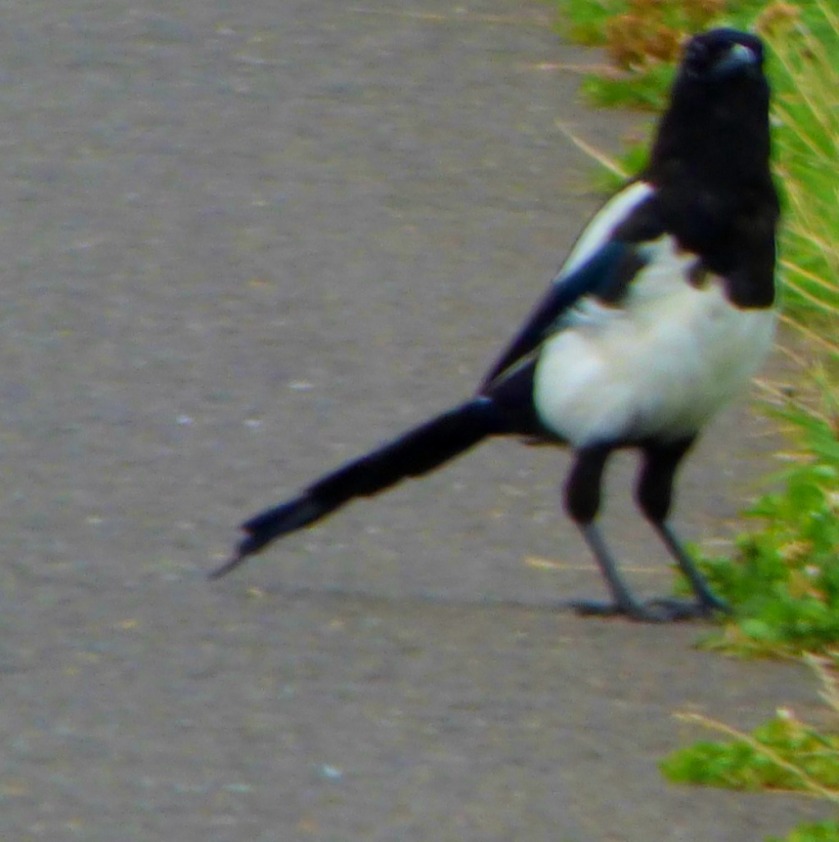
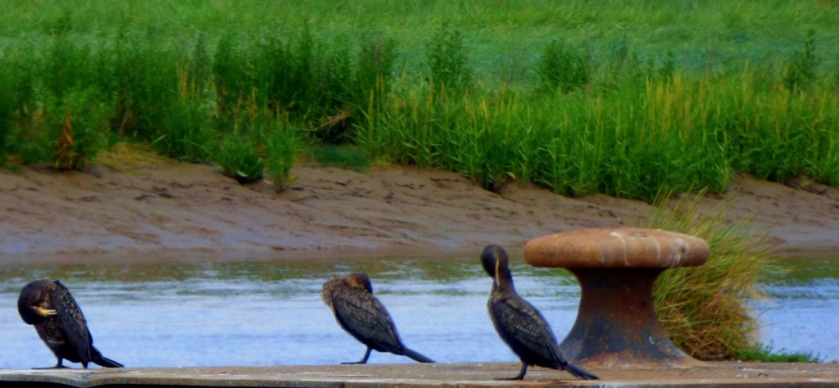
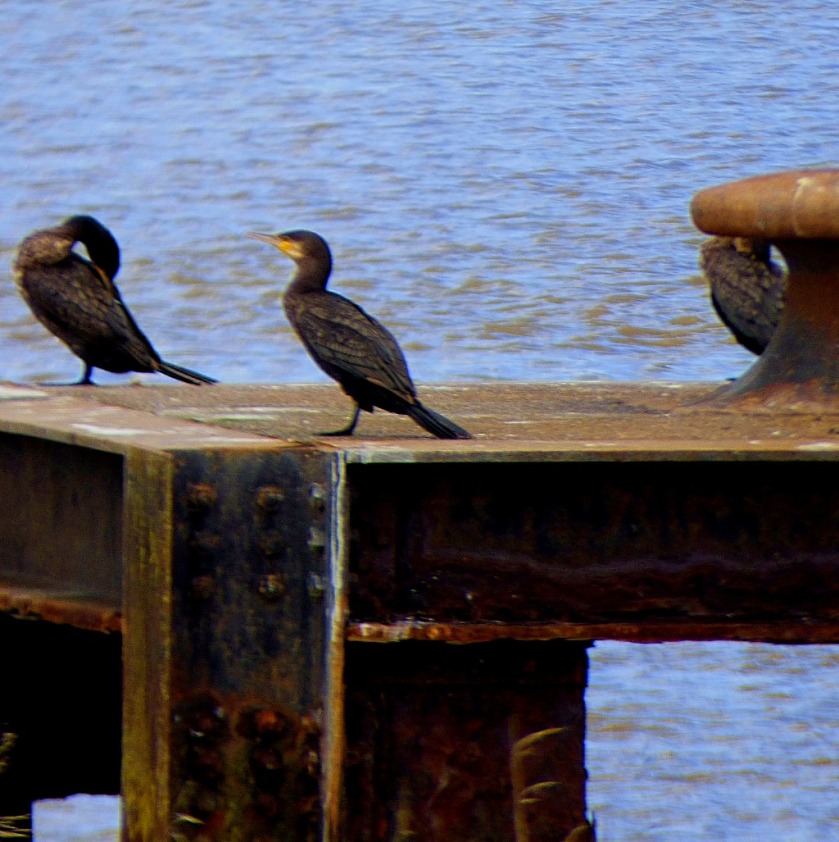
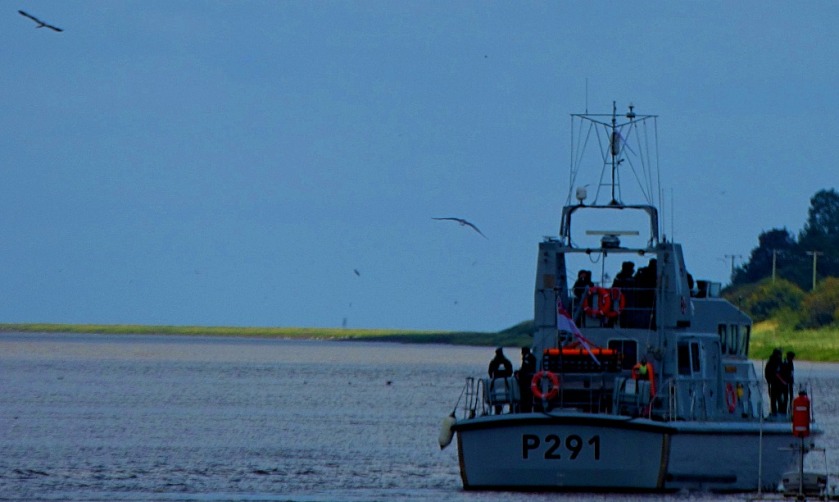
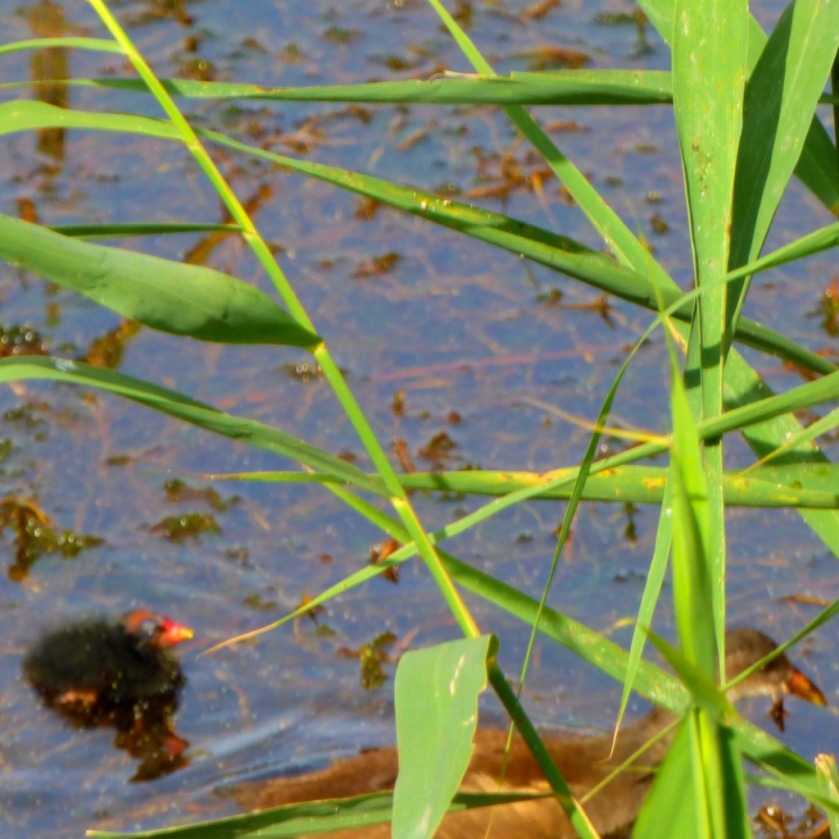
The Upper PurfleetA giant slug on the path alongside Bawsey DrainA moorhen swimming in a clear poolThis second pool was covered in water lilies.A town centre section of the Gaywood RiverIn the parkland area – this stretch of river is covered in algae.A magpie on the path alongside the Great OuseNear the end of the walk – some shots of cormorants and boats on the town centre section of the Great Ouse.
The last few pictures for today were taken yesterday afternoon while sitting outside my parents house in East Rudham. These are probably the last shots I will have from there as my parents are moving to Plymouth.
An account of two recent cricket matches involving England and South Africa, first the England men’s humiliation at Trent Bridge, and then the nailbiter of a Women’s World Cup semi-final at Bristol.
INTRODUCTION
Both of the matches of my title were cricket matches between England and South Africa. The first was the test match between the men’s teams, and the second was the women’s world cup semi-final. A couple of notes about links in this piece:
Some links are in red – these are to video footage.
IT WAS THE WORST OF TIMES
England had won the first test match of the series handily, with Joe Rootscoring 190 in his first innings as England captain and Moeen Ali being player of the match for his first inning 87 and match haul of 10-112. Among England’s male players only Ian Botham with 114 not out and 13-106 v India in 1979 has topped Ali’s all-round haul in a single game (Enid Bakewell was the first player of either sex to combine a match aggregate of 100 runs with a haul of 10 or more wickets, hence the earlier caveat).
Thus at Trent Bridge England should have been strong favourites. South Africa won the toss, batted first and made 335 in their first innings and England by bad batting handed South Africa a lead of 130, South Africa extended this to 473 with two days to play before sending England back in, messrs Elgar and Amla having demonstrated how to make runs on this pitch, each batting a long time. England’s second innings was quite simply shambolic, with batter after batter handing their wickets away. Four wickets down by lunch on the penultimate day it worse afterwards, with England being all out for 133 at approsimately 3PM. South Africa, having given themselves two days to dismiss England a second time had required less than two full sessions and were victors be 340 runs.
ENGLAND’S MISTAKES
The first mistake England made was with the selection of the side. According to the powers that be Moeen Ali is happier as a second spinner than as either a sole spinner or as first spinner. However I find it hard to believe that even he could really consider himself no2 to Liam Dawson. Dawson is an ill thought out selection reminiscent of the dark days of the 1990s. For his county he averages in the low thirties with the bat and the high thirties with the ball, so even at that level he comes out as clearly not good enough in either department to warrant selection – the reverse of the true all-rounder. If a pitch warrants two spinners (and no Trent Bridge pitch in my lifetime ever has) the other spinner should be a genuine front-line option such as Dominic Bess (first class bowling average 19.83 per wicket – what are you waiting for selectors?). The other logical alternative would have been to bring in an extra batter (there are any number of possibilities) to strengthen this department. England’s batting in both innings smacked of panic. Other than Root whose 78 in the first innings was a gem and Cook who played well for a time in the second no England batter is entitled to be other than embarrassed by the way they played in this match. The scorecard, in all it’s gory detail, can be viewed here.
IT WAS THE BEST OF TIMES
On what should have been the final day of the men’s test match but for England’s spinelessness the women’s teams convened at Bristol for a world-cup semi-final. The final will be played at Lord’s and is already sold out. South Africa batted first and were restricted to 218-6 from their overs, Mignon Du Preez top scoring with 76 not out, and Laura Wolvaardt making 66. South Africa bowled better than they had batted, and the outcome remained in doubt right to the end. Anya Shrubsole who had earlier finished with 1-33 from her 10 overs settled things by hitting her first ball, the third-last possible ball of the match through the covers for four. Sarah Taylor’s 54 and a brilliant wicket-keeping performance highlighted by the spectacular stumping of Trisha Chetty off the bowling of Natalie Sciver earned her the player of the match award. Sciver incidentally is the pioneer of a shot that in honour of her first name and the f**tballing term ‘nutmeg’ commentator Charles Dagnall has dubbed the ‘Natmeg’, one example of which she played in this match. Video highlights of this amazing match can be seen here (runs for just under five minutes), while the scorecard can be viewed here.
THE ROLE OF EXTRAS
To set the scene for the rest of this section here are the extras (a cricket term for runs scored not off the bat) from both innings:
When South Africa batted:
Extras
(w 4)
4
When England batted
Extras
(b 5, w 17, nb 3)
25
A note on the designations within extras: Byes (b) stands for runs scored when there is no contact made with the ball but either the batters are able to take runs, or the ball goes to the boundary unimpeded, legbyes (lb), of which there were none in this match, are runs scored when the ball hits the pad but not the bat. Wides are deliveries that are too wide for the batter to be able to play, and no-balls are deliveries that are ruled illegal for some other infraction (bowler overstepping the crease, high full-toss etc). The 21 run difference between the two tallies shown above is of major significance given that England reached the target with just two balls to spare, and there is yet a further point.
WIDES AND NO-BALLS – WHAT APPEARS IN PRINT DOES NOT TELL THE FULL STORY OF HOW EXPENSIVE THEY ARE
England bowled four wides in the match, South Africa 17 and three no-balls. That is a 16-run difference, but the actual costs are likely be even more different because:
When a delivery is called wide, as well as incurring a one-run penalty an extra delivery must be bowled to replace it. Thus a wide costs the original penalty, plus possible extras (if it goes unimpeded to the boundary it costs 5, the original 1, plus four foir the boundary) plus any runs scored off the seventh delivery of the over, which the bowler had they been disciplined would not have had to bowl
When a delivery is called a no-ball, the batter can still score off it, the delivery immediately following it is designated a ‘free-hit’, meaning that the batter cannot be dismissed off it, and as with a wide an extra delivery must be bowled to replace it. Thus a no-ball actually costs the original penalty, any runs hit of that delivery, the lack of a wicket-taking opportunity on the next delivery and any runs of the seventh delivery of the over (which would otherwise not have needed to be bowled).
Therefore the discrepancy between the sides in terms of wides and no-balls is probably much greater than shown on the score-card, and this in a very close match. Sarah Taylor certainly deserved her player of the match award, but the much tighter discipline shown by England’s bowlers than their South African counterparts was also crucial to the result.
PHOTOGRAPHS
After over 1,100 words those of you are still with me deserve some pictures, so here we are:
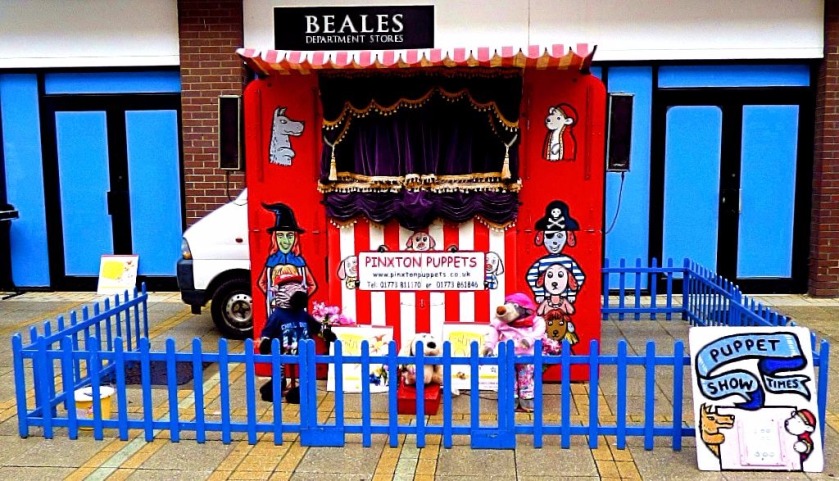
This puppet theatre is in town for the Lynn Festival
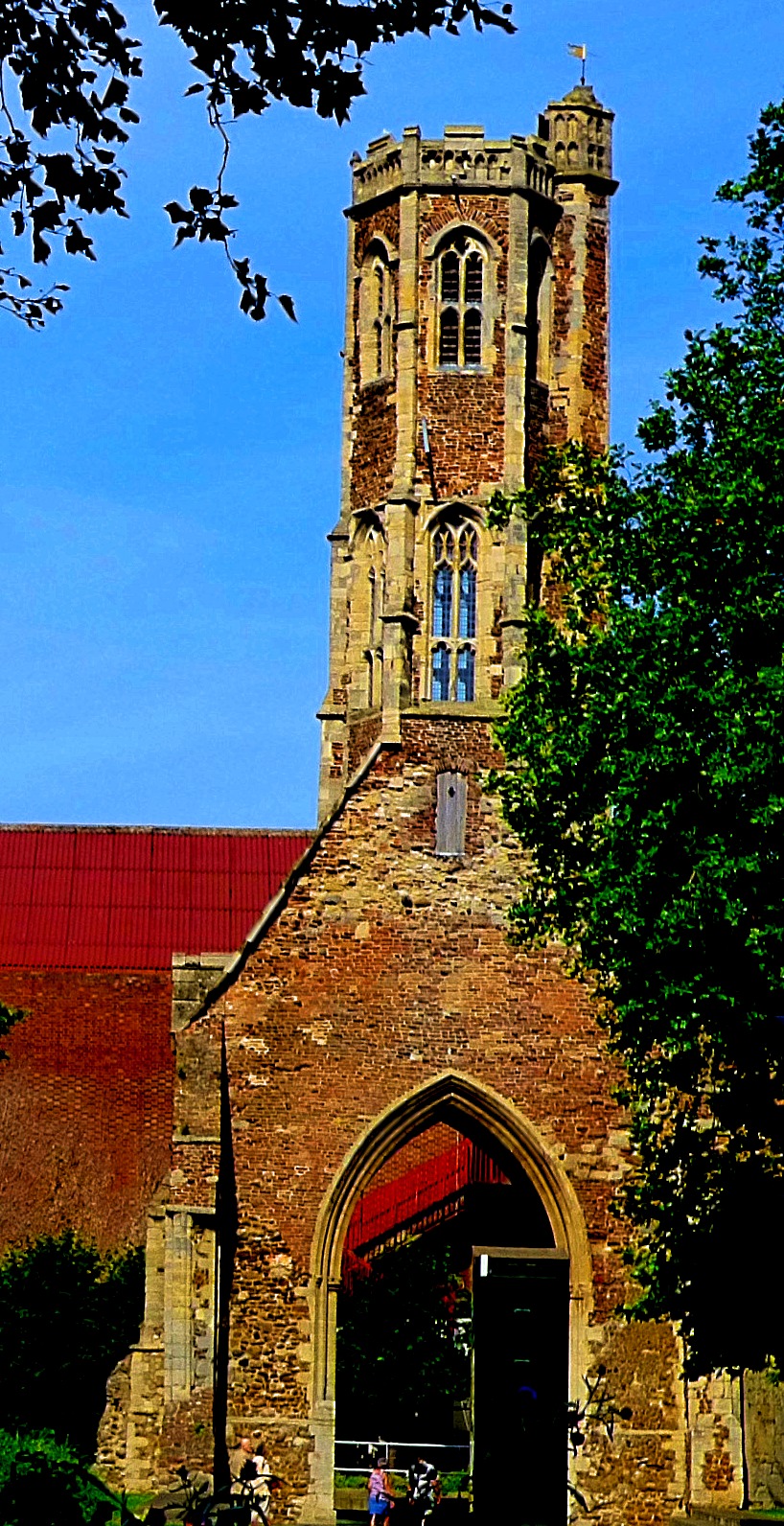
Greyfriars TowerKing’s Lynn library
The Red Mount ChapelThe unedited Red Mount chapel picture.The Guanock Gate
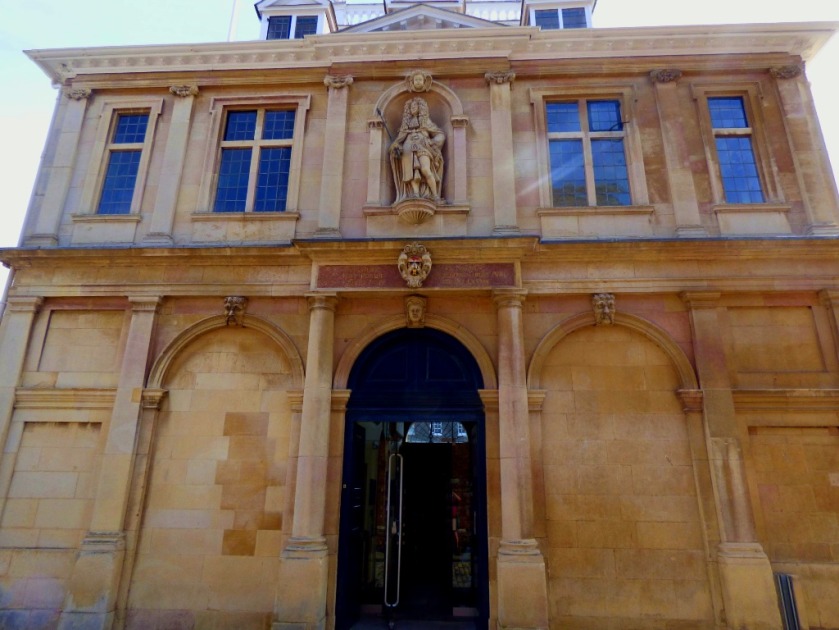
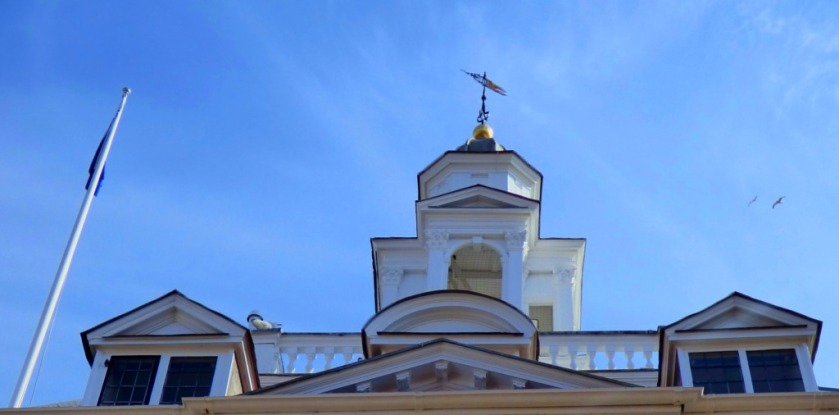
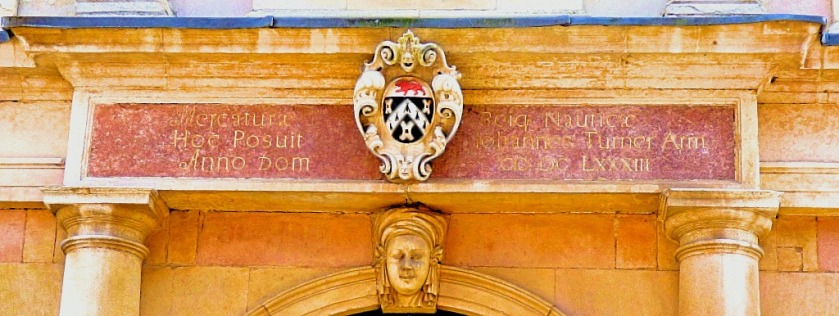
The first of three pictures featuring the Custom House
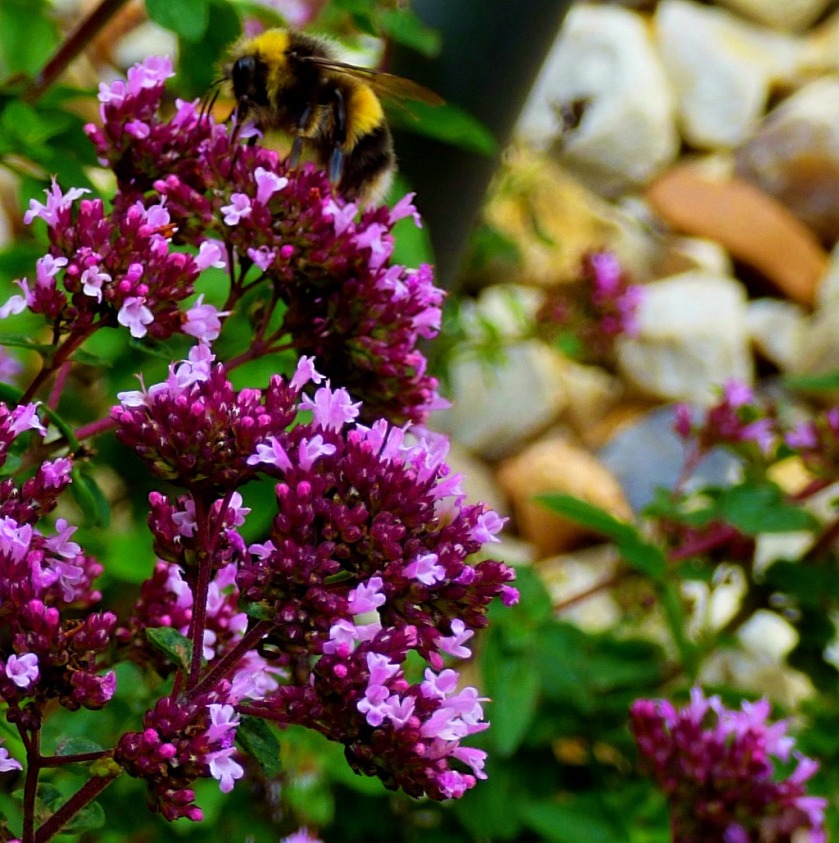
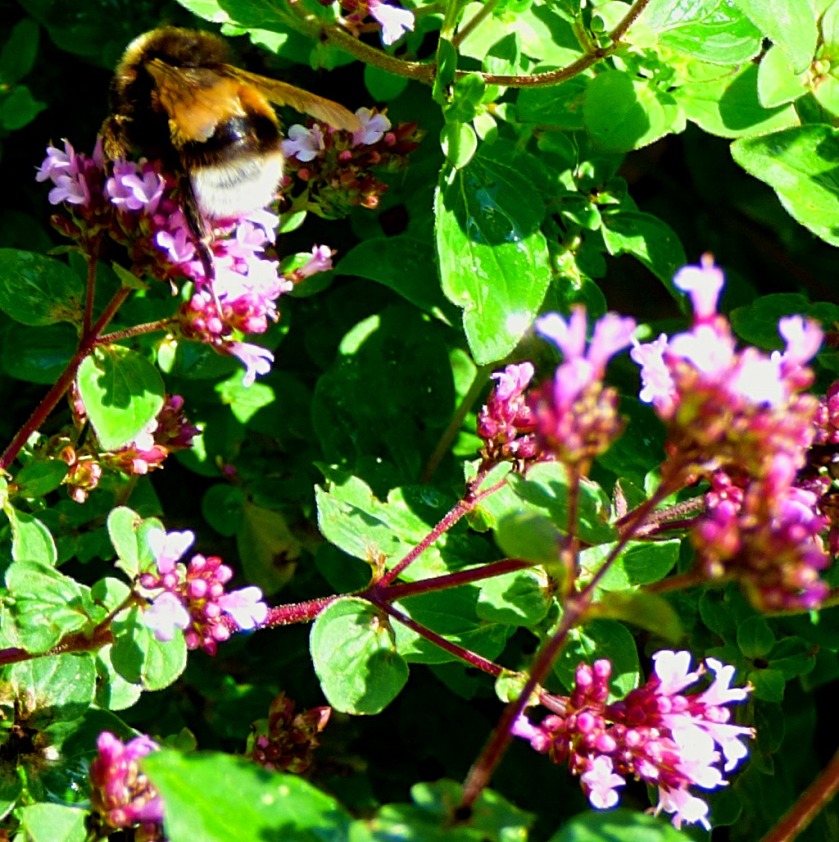
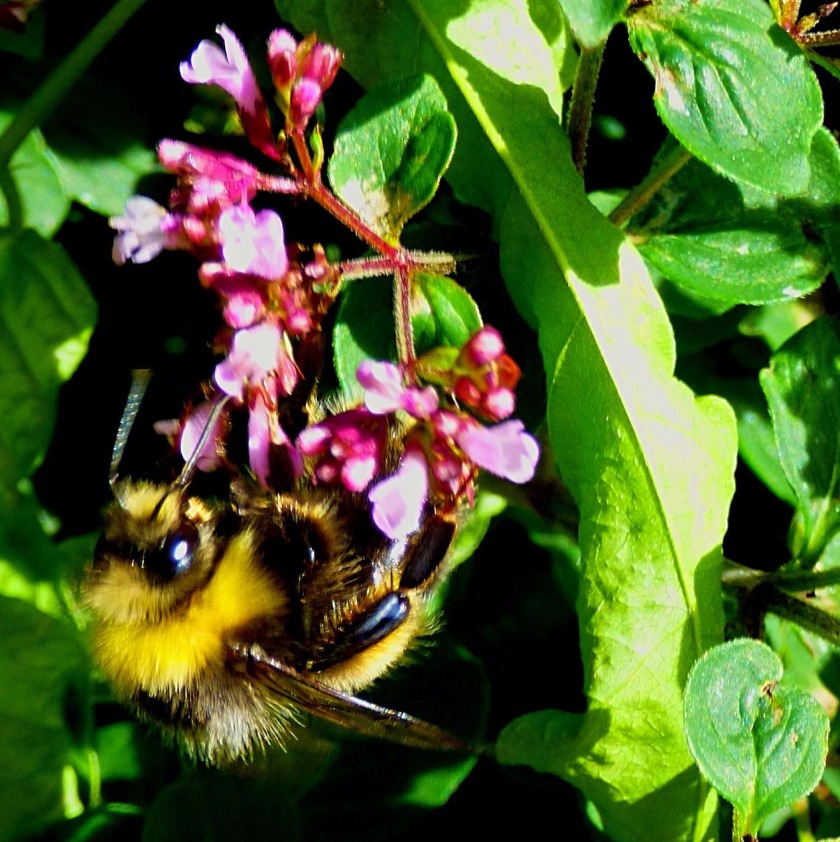
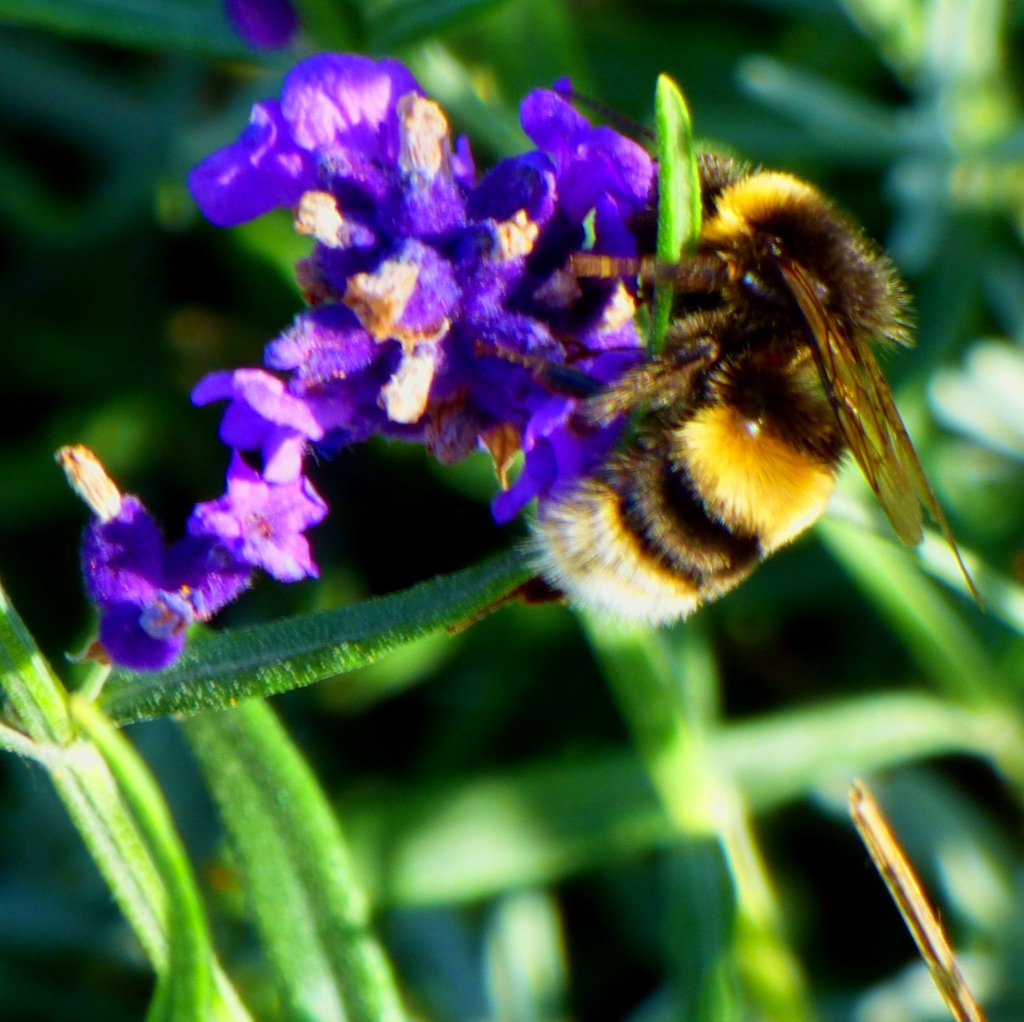
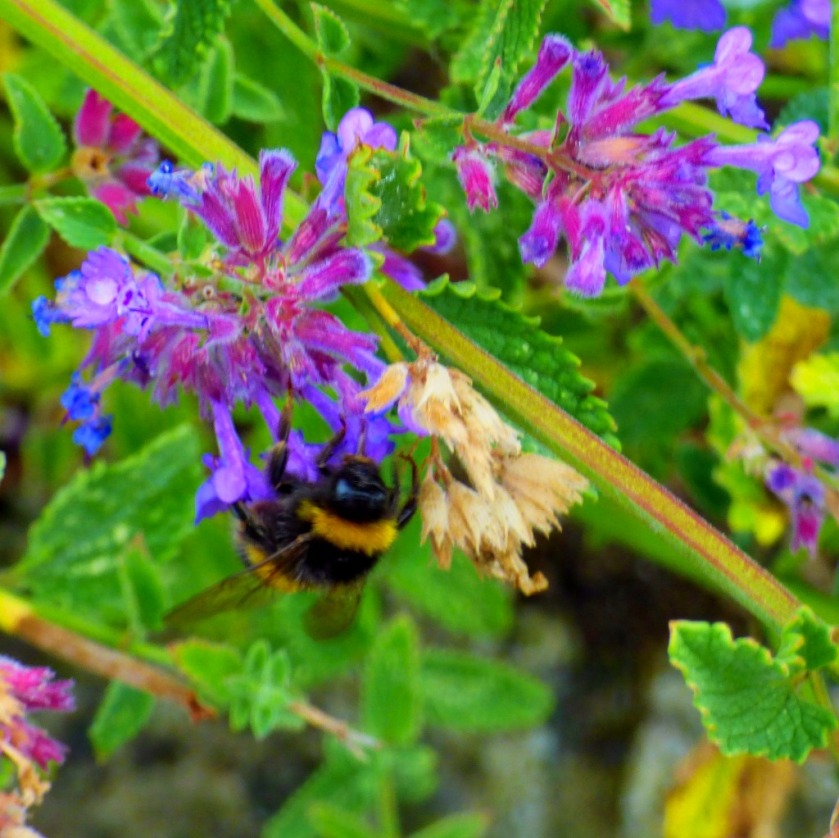
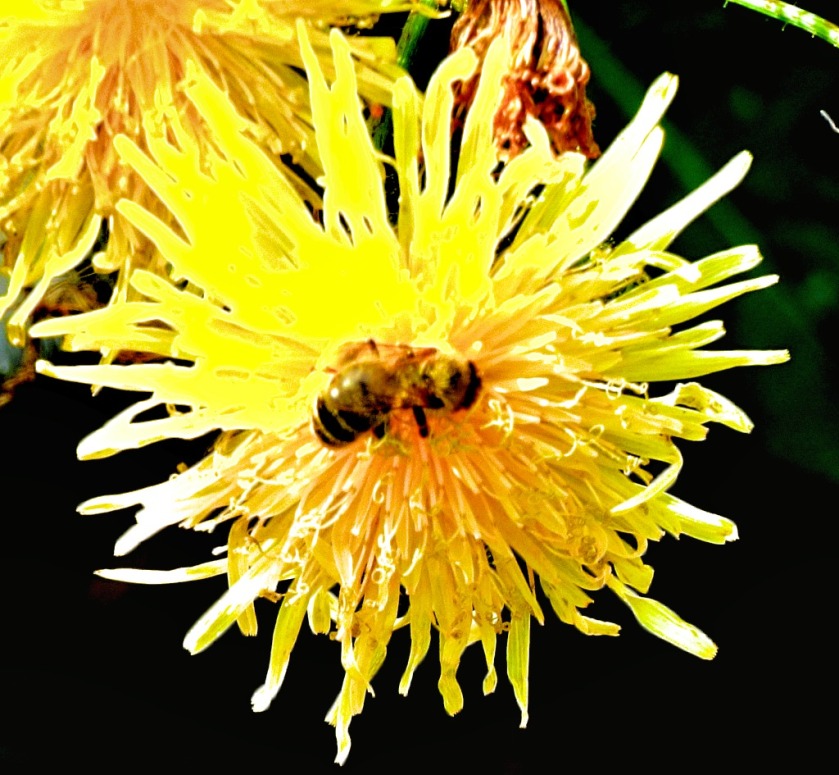
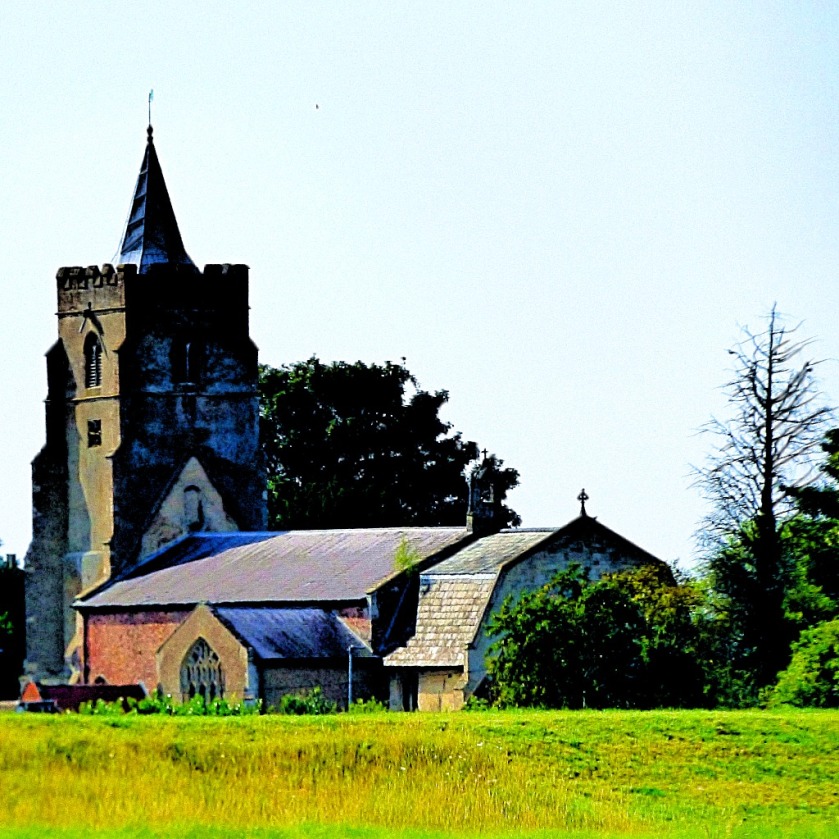
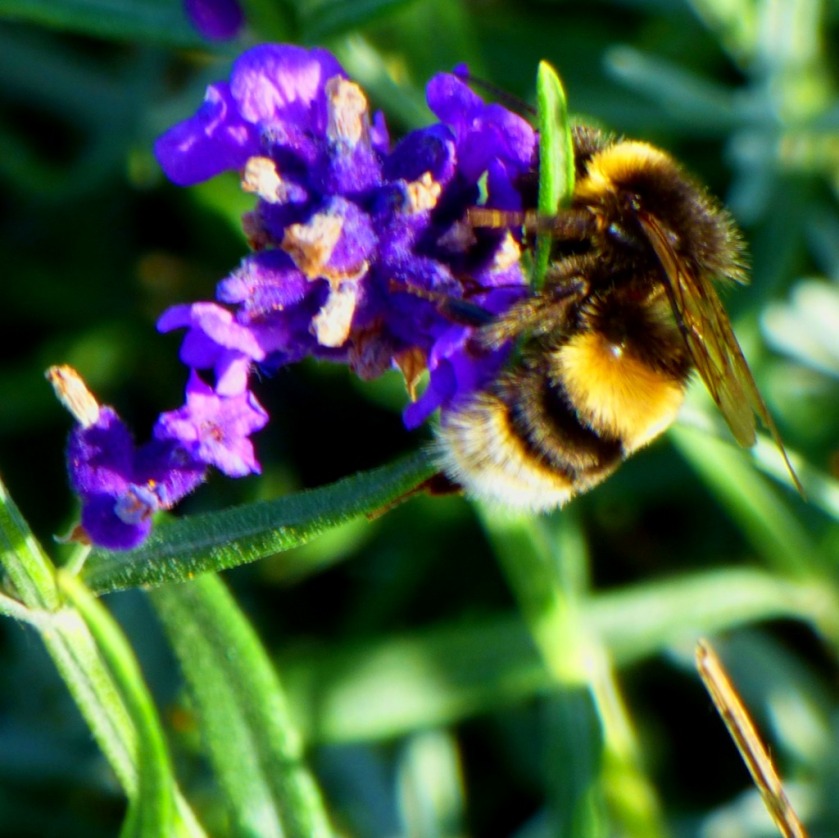
West Lynn ChurchJust as a bee pic was worthy start to this series of photos, another bee pic is a worthy finish to it.































 are deliveries that are too wide for the batter to be able to play, and no-balls are deliveries that are ruled illegal for some other infraction (bowler overstepping the crease, high full-toss etc). The 21 run difference between the two tallies shown above is of major significance given that England reached the target with just two balls to spare, and there is yet a further point.





 aspiblog